Build a routine for a cyclist, not another cycling workout
Many riders approach the gym as another place to chase fatigue. They choose a fast circuit, rush between stations and finish with burning legs. That may feel familiar, but it does not automatically deliver the controlled strength work they intended. A useful off-bike session has a clear purpose and enough space to perform the chosen movements well.
British Cycling includes several strength movement patterns in its educational resources, while general activity guidance also distinguishes aerobic, strengthening and balance work. The practical lesson is variety of demand, not a guarantee that lifting prevents every injury. Riding more miles and adding more resistance exercises are not interchangeable ways to solve every weakness or symptom.
This page is about organizing a routine around sensitive knees and a cycling schedule. It is not a detailed tutorial for one squat variation. Our cyclist squat guide covers that specific exercise. You do not need to use it merely because its name contains the word cyclist.
Decide whether this is training or rehabilitation
A person with occasional familiar stiffness is not in the same situation as someone with a recent injury, joint swelling or a postoperative restriction. If you already have a rehabilitation program, keep that plan in charge. Adding a general online routine on top can unintentionally double the same work or conflict with the intended range and progression.
Ask what each exercise is meant to accomplish. Is the priority learning a movement, building strength, improving confidence or meeting a specific rehabilitation goal? These aims can require different choices. A heavy version of an exercise is not automatically more suitable than a supported version, and discomfort is not proof that the desired adaptation is happening.
Seek professional advice for persistent or worsening knee symptoms. A hot swollen joint, inability to bear weight, locking or a major change after an injury needs attention rather than a new gym challenge. A coach can help organize training, but an unexplained medical problem should not be diagnosed from a squat video or a cycling power graph.
Use movement categories to avoid an overloaded exercise list
A short routine can cover several useful tasks without collecting every exercise you have seen online. Think in categories: a knee-bending movement, a hip-dominant movement, calf work, an appropriate single-leg or balance task, and trunk control. Not every category needs a demanding version in the first session, and some may be inappropriate until assessed.
The categories are a planning aid, not a claim that five exercises form a complete prescription. A clinician might emphasize one task, temporarily omit another or add a movement for a particular limitation. What matters is that the selection has a reason and that its combined demand remains compatible with your cycling and daily life.
| Pattern | Possible starting option | What to check |
|---|---|---|
| Knee bending | Sit-to-stand or a comfortable squat | Controlled movement within a suitable range |
| Hip dominant | Unloaded hinge with instruction | Hip movement without rushing or losing position |
| Calf work | Supported calf raise | Steady rise and lowering, with secure support |
| Single-leg task | Supported split stance or low step task | Balance, symptoms and an appropriate challenge |
| Trunk control | Suitable wall or raised-surface variation | Comfortable breathing and maintained control |
Start the knee-bending task at a useful level
A stable chair can provide a clear reference for sitting down and standing up. Chair height, hand support and movement range change the difficulty, so choose them deliberately. The aim is a controlled task you can understand and repeat, not the deepest possible position. Ensure the chair cannot slide and keep the surrounding floor clear.
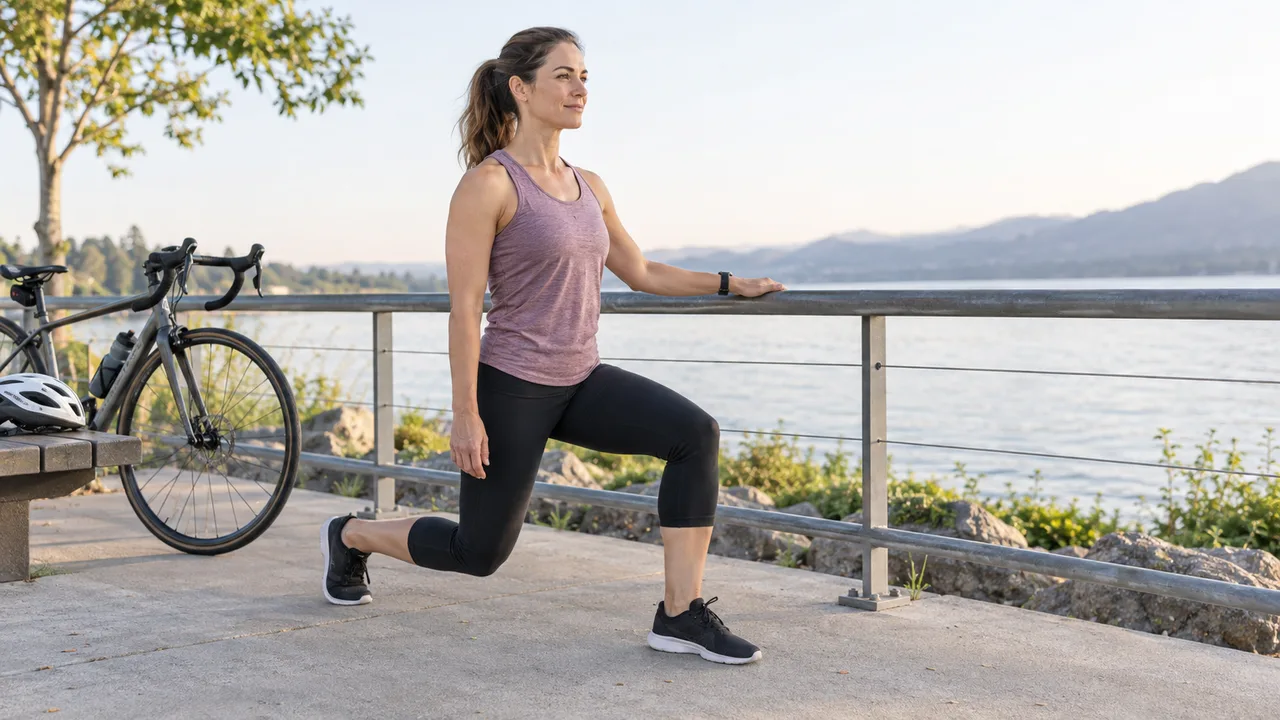
A squat may be suitable for some riders, but there is no rule that it must be narrow, heel-elevated or heavily loaded. Avoid copying a variation whose demands you do not understand. If a particular range causes symptoms, do not force it to match a photograph. Ask a qualified professional about an appropriate adjustment or alternative.
Record the version you actually perform. A note saying squats is less useful than a note describing the support, approximate range and external load. That detail makes future changes easier to interpret. It also prevents a session from quietly becoming harder because you used a lower chair or a different variation without counting it as progression.
Learn the hip hinge before adding weight
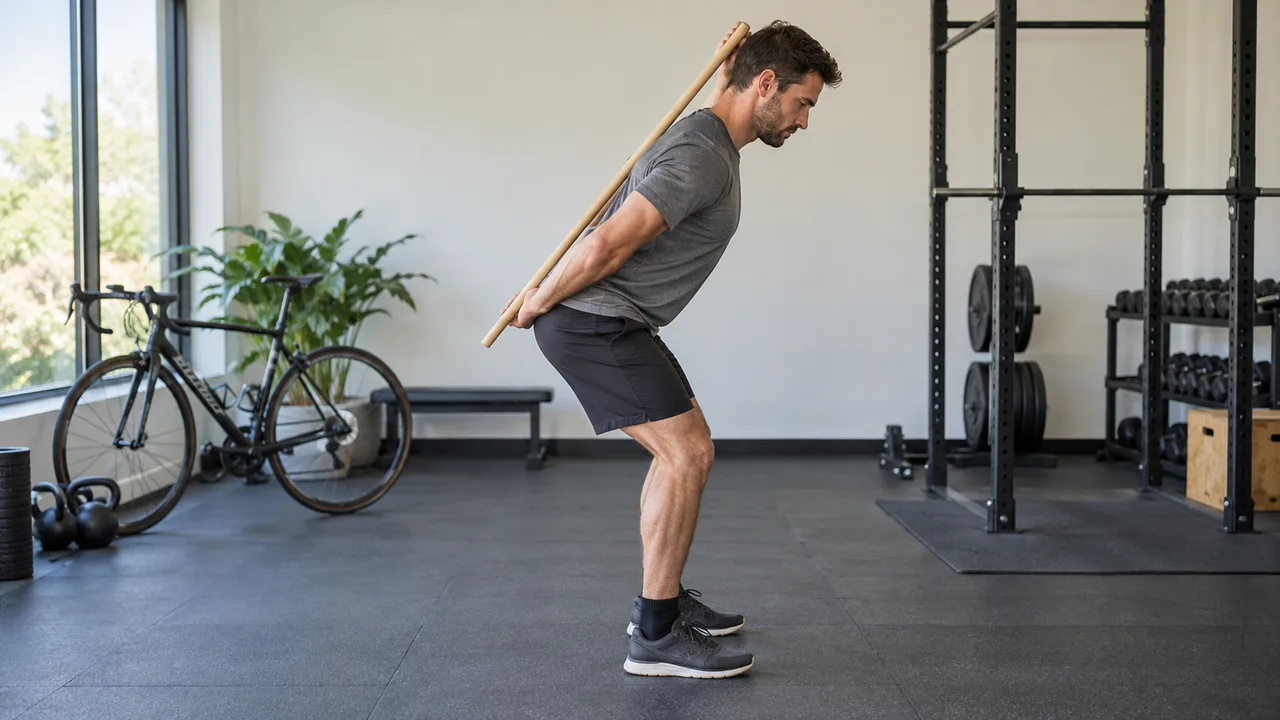
A hinge emphasizes movement at the hips and is distinct from simply bending the knees into a squat. It can be useful to learn the pattern without external load first. A qualified trainer or therapist can help you understand the movement and choose a version that suits your back, hips and balance as well as your knees.
Do not assume that an exercise with less visible knee bend is automatically safe for every person. The load still has to be controlled, and other areas may limit the task. If you feel uncertain about the movement, adding a heavier dumbbell is unlikely to make it clearer. Reduce complexity and get instruction before pursuing a performance target.
When resistance is appropriate, select equipment you can pick up and put down safely. The setup and finish count as part of the exercise. A weight that is manageable during the repetitions may still be awkward to retrieve from the floor. Planning those transitions is especially useful when training at home without a rack or adjustable supports.
Calf, balance and trunk work need their own purpose
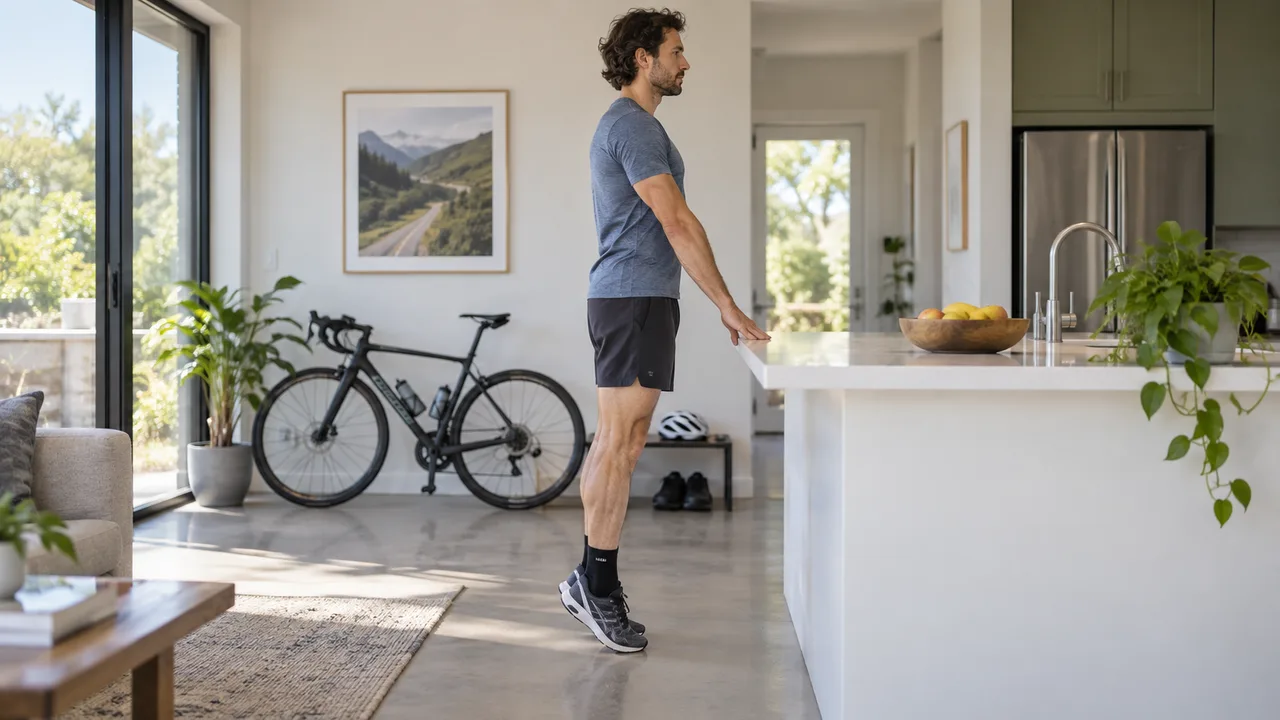
A supported calf raise offers a different task from a squat or hinge. Use a stable surface for support rather than a movable chair or a bicycle that could roll. Keep the movement controlled and avoid bouncing to complete a target. The appropriate range and amount depend on your current capacity and any relevant foot, ankle or neurological condition.
Single-leg work can introduce a balance demand as well as a strength demand. If balance is the main obstacle, support may let you practice the intended movement more effectively. Do not remove that support simply to make the exercise look advanced. A wobbling attempt can be a different task from the one your program was supposed to train.
Trunk exercises should also fit the person. A wall or raised-surface variation may be more manageable than a floor position, particularly when kneeling or getting up is difficult. Choose an option that permits steady breathing and control. There is no requirement to hold a position until shaking or collapse to make the session worthwhile.
Fit strength into the week before adding more sessions
List the hard rides you already do, including indoor classes, long climbs and group rides that usually become competitive. Add demanding work or household tasks. Only then decide where strength sessions could fit. Looking at the whole week often reveals that the apparent rest day is actually a day of prolonged standing, lifting or travel.
A common mistake is introducing several unfamiliar exercises immediately before an important ride. The later soreness and fatigue can make both activities harder to judge. When possible, learn a new routine during a period with room to adapt. A qualified coach or clinician can help decide how to arrange sessions around your priorities and symptom response.
Some experienced athletes intentionally combine hard training demands on selected days. That does not mean the same strategy suits a beginner with sensitive knees. Do not borrow a professional schedule without its context. Your available recovery time, health, technique and total workload matter more than whether the calendar resembles an elite training plan.
| Situation | Planning question | Avoid |
|---|---|---|
| A long ride is approaching | Is this a sensible time to introduce unfamiliar leg work? | Testing several new exercises at once |
| Work has been physically demanding | What extra load has already accumulated? | Counting only recorded workouts |
| The knee is worse than usual | Does the plan need review or clinical advice? | Making up missed repetitions later |
| The routine is consistently manageable | Which single demand is appropriate to progress? | Increasing load, volume and riding together |
Choose an initial dose that leaves room to learn
There is no universal combination of sets, repetitions and weight for every cyclist with knee pain. If a professional has prescribed these details, follow that plan. Otherwise, begin by learning suitable movements at a manageable effort and seek guidance about dosage. Copying a demanding general fitness program can obscure whether the exercise itself or simply its amount was unsuitable.
The first session should leave you able to evaluate technique and later response. It does not need to establish your maximum capacity. Rest enough between tasks to regain control rather than rushing because the session feels less athletic than a hard ride. Strength work can be purposeful without reproducing the breathlessness of an interval session.
Progress one meaningful variable at a time. More repetitions, a larger range, less support and a heavier weight can all increase difficulty in different ways. Treat each as a change worth recording. If you increase them together, it becomes harder to understand why a previously manageable routine suddenly interferes with the next day's ordinary activities.
Distinguish muscle soreness from a concerning response
Unfamiliar exercise can be followed by muscle soreness, but not every discomfort should be dismissed as normal adaptation. Note where it occurs, when it begins and whether there is swelling or a change in joint function. A sharp, escalating or distinctly different knee pain deserves a different response from general muscle fatigue after a new task.
Follow any symptom-monitoring guidance agreed with your clinician. This article does not impose a universal pain score that grants permission to continue. If the knee becomes more swollen, movement changes or ordinary walking is worse, review the activity rather than trying to earn a better result through more repetitions. Persistent problems should be assessed.
Our post-ride recovery guide helps organize the later part of the day and the next-morning check. It is useful after combined cycling and strength work too. Keep the central distinction clear: a pleasant recovery ritual does not prove that the training load was appropriate or that you should increase it again.
Home equipment should simplify the routine
You may be able to begin learning suitable movements with a stable chair, a clear floor area and secure support. Buying several bands and weights before understanding the program can add clutter without direction. If equipment is needed, choose it for the selected exercise and check its condition, anchoring requirements and safe storage.
Do not anchor a resistance band to a door or bicycle unless the setup is specifically designed and secured for that use. Keep pets, children and loose objects away from the exercise area. These practical details are less glamorous than a new workout, but they determine whether you can repeat the routine reliably without avoidable distractions or hazards.
Keep optional comfort separate from strength gains
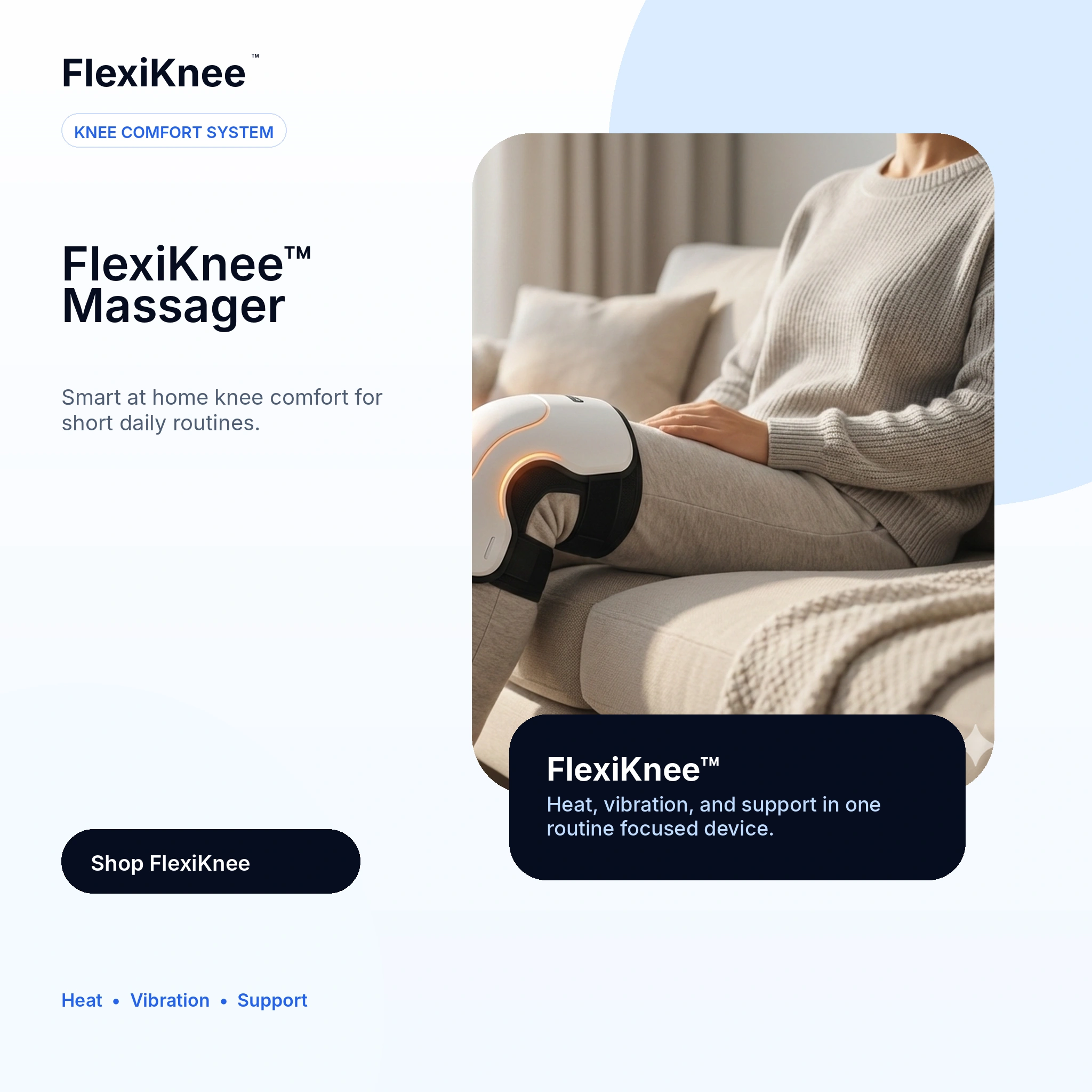
A suitable warmth routine may feel pleasant after activity, but a consumer knee massager does not build the strength that the exercise program is intended to develop. It also does not replace assessment or make an excessive session appropriate. Treat any such device as an optional comfort tool, not the mechanism that earns permission to train harder.
Follow product instructions and clinical advice. Avoid warmth on a newly injured, hot or swollen knee, and ask for guidance if circulation or sensation is impaired. If you need an accessory to get through a routine that consistently worsens symptoms, revisit the routine itself. The goal is a sustainable program, not a growing list of ways to tolerate an unsuitable one.
Review the plan by function, not exhaustion
At a follow-up, ask whether the chosen tasks are becoming more controlled, whether cycling remains manageable and whether daily activities are stable or improving. Bring your simple record of variations and workload. These observations give a coach or clinician something concrete to work with, whereas a report that every session felt hard provides much less direction.
A useful routine can change as your goals and riding season change. Keep the movement selection intentional, the progression understandable and the recovery expectations realistic. Strength training should widen the activities you can manage, not compete with every ride for the last available effort in your legs.
Frequently Asked Questions
Does cycling replace strength training?
Cycling and resistance exercise have different demands. A broader activity plan may include both, with exercise selection and workload matched to your health and goals.
What are useful strength exercises for cyclists with sensitive knees?
Options to discuss include a suitable sit-to-stand or squat, hip hinge, calf raise, supported single-leg task and trunk exercise. No single exercise or range is right for every painful knee.
Should I lift weights before or after a hard ride?
There is no universal order. Consider your main goal, fatigue, technique and later response, and avoid introducing demanding unfamiliar strength work next to an important hard ride.
Are cyclist squats necessary?
No. They are one exercise variation, not a requirement for cyclists. A comfortable conventional squat or another suitable movement may fit your current needs better.
Should I train through knee pain?
Do not force sharp, escalating or unfamiliar joint pain. Follow any clinician-agreed symptom guidance, and seek assessment for persistent pain, swelling or reduced function.
How do I progress an off-bike routine?
First establish controlled movement and a manageable response. Then adjust one demand, such as repetitions or load, while considering the rest of the cycling week. A clinician or qualified coach can individualize the plan.