Start with what changed, not which recovery product to buy
A ride can feel successful on the bike and less comfortable once you stop. Perhaps the legs are generally tired, the knee feels stiff after dinner, or one spot becomes painful when you walk upstairs. These are different observations. Before choosing a stretch, another ride or a recovery device, describe the problem in ordinary language and compare it with your usual response to similar sessions.
This guide concerns the period after cycling. If symptoms reliably appear while pedaling or followed a saddle, shoe or pedal change, use our cycling knee pain and bike-fit guide alongside an appropriate assessment. A soothing evening routine cannot compensate for a persistently unsuitable riding position or a training load that exceeds what you can currently manage.
Do not treat every post-ride sensation as evidence of damage, but do not dismiss every sensation as training adaptation either. The useful middle ground is a short, repeatable check that considers function and the overall trend. You are collecting information to make the next decision, not trying to diagnose your knee from a photograph, a pain map or an online checklist.
Muscle tiredness and knee symptoms are not interchangeable
After an unfamiliar hill session, the thighs may feel broadly worked on both sides. A sharp point at the joint, visible swelling or difficulty straightening the knee tells a different story. Delayed muscle soreness can occur after unfamiliar exercise, but the fact that discomfort began the following day does not prove it is harmless muscle soreness. Location, severity, function and the preceding events all matter.
| Observation | Useful context | Planning implication |
|---|---|---|
| Broad thigh tiredness | Unfamiliar hills, intervals or other leg training | Review the combined workload and ordinary recovery habits |
| Focal knee discomfort | Exact location, repeated pedal phase and walking response | Do not automatically classify it as muscle soreness |
| Stiffness after sitting | Duration, ease of movement and whether it is recurring | Consider comfortable position changes and review the trend |
| New swelling or changed walking | Sudden event, warmth, instability or reduced motion | Stop using recovery routines as a substitute for assessment |
Comparisons are most useful against your own recent baseline. A friend finishing the same route comfortably does not establish what your knee should tolerate. They may have different training, health, equipment and recovery opportunities. Equally, a previous injury does not mean every future ache is the same injury returning. Recurrent or unexplained symptoms deserve a proper clinical history and examination.
The first hour: make the transition uncomplicated
Finish in a safe place, dismount without rushing and notice whether normal walking feels different. Get out of restrictive or wet clothing and organize the basics: somewhere comfortable to sit, fluids and a normal meal when appropriate. If you have an established medical condition or dietary restriction, follow that advice rather than a generic sports recovery checklist found online.
Do not turn the immediate aftermath into a second workout. Repeated deep squats, forceful stretching or hard foam rolling can add an unfamiliar load just when you are trying to understand the response to the ride. Gentle movement may feel pleasant, but it should remain comfortable and appropriate. A knee that is giving way or cannot bear weight is not something to test repeatedly.
Also record unusual events before they are forgotten. A long climb in a harder gear, an unexpected sprint or several hours without a break may not appear clearly in the ride's average speed. These details can explain why two rides of equal distance were different experiences, without making a claim that one particular feature definitively caused an injury.

Food, fluids and sleep belong in the plan
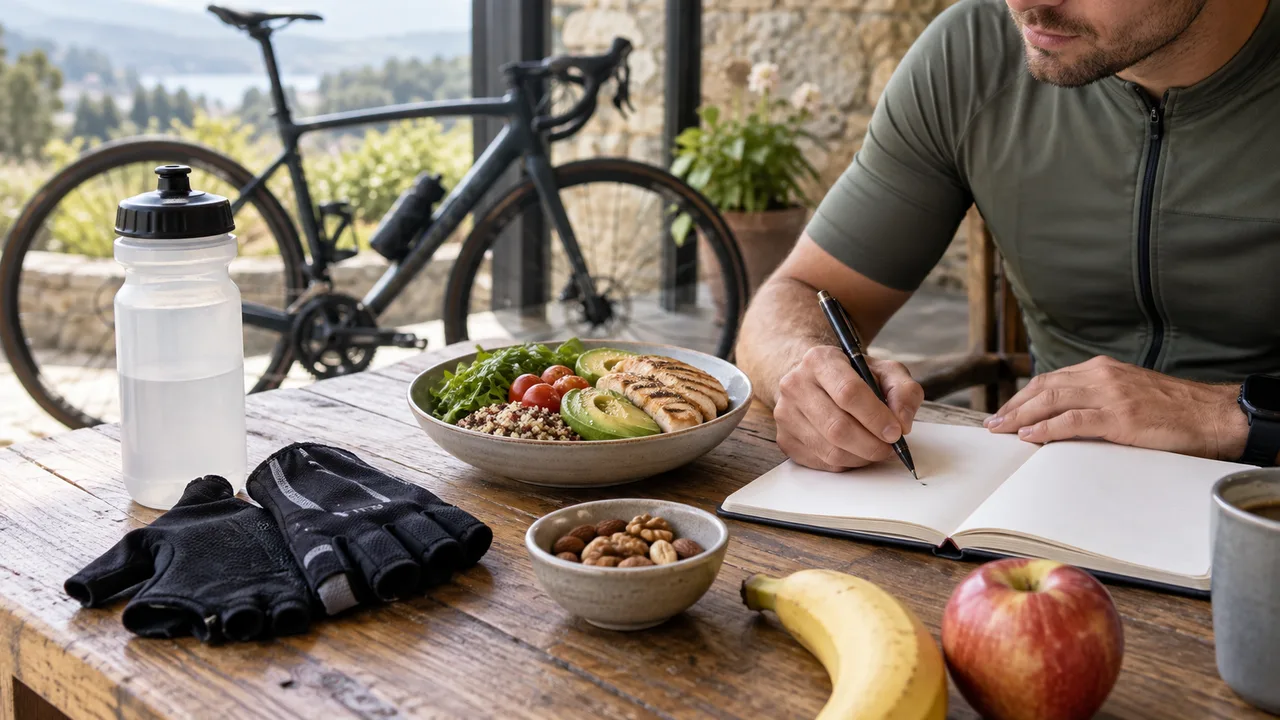
Recovery marketing can make ordinary habits seem less important than specialized equipment. In practice, review whether the ride displaced lunch, whether you returned very thirsty and whether another late workout will shorten your sleep. These are practical questions, not a prescription for exact quantities. Nutrition and hydration requirements vary with the person, conditions and duration of exercise.
A straightforward meal and a realistic bedtime may be easier to maintain than a complicated supplement routine. Avoid using alcohol or unnecessary medication as a strategy for getting through the next ride. If you need individual guidance about fueling, especially for long events or a medical condition, a registered dietitian or your healthcare team is more appropriate than a universal formula.
Consider the whole day rather than only the ride. Working a physical shift after a long outing is not equivalent to having an easy afternoon. Travel, caregiving and poor sleep can affect how manageable another session feels. Putting those demands on the same calendar makes your recovery plan more honest and helps prevent an easy-looking schedule from becoming an exhausting week.
Evening stiffness: move comfortably, not compulsively
Some riders notice the knee most when standing after a long period on the sofa. If suitable for you, changing position occasionally and using a few comfortable movements may be preferable to remaining in one position all evening. This is different from forcing the knee through a prescribed range or repeatedly checking whether it still hurts. Keep the response, not a repetition target, central.
Choose a seat that lets you get up without an awkward struggle. Place belongings within reach and avoid unnecessary floor-level chores when you are already uncomfortable. These small arrangements are not treatments, but they remove avoidable demands from the evening. If ordinary movements become progressively harder, the answer is not simply to buy a softer chair or a stronger massager.
For a recurring first-movement problem, our guide to knee pain after sitting discusses that pattern in more detail. Keep it separate from the question of whether your cycling week needs adjusting. Several contributing factors can coexist, and an article cannot determine which tissue or condition is responsible for your individual symptoms.
Where warmth, cold and massage fit
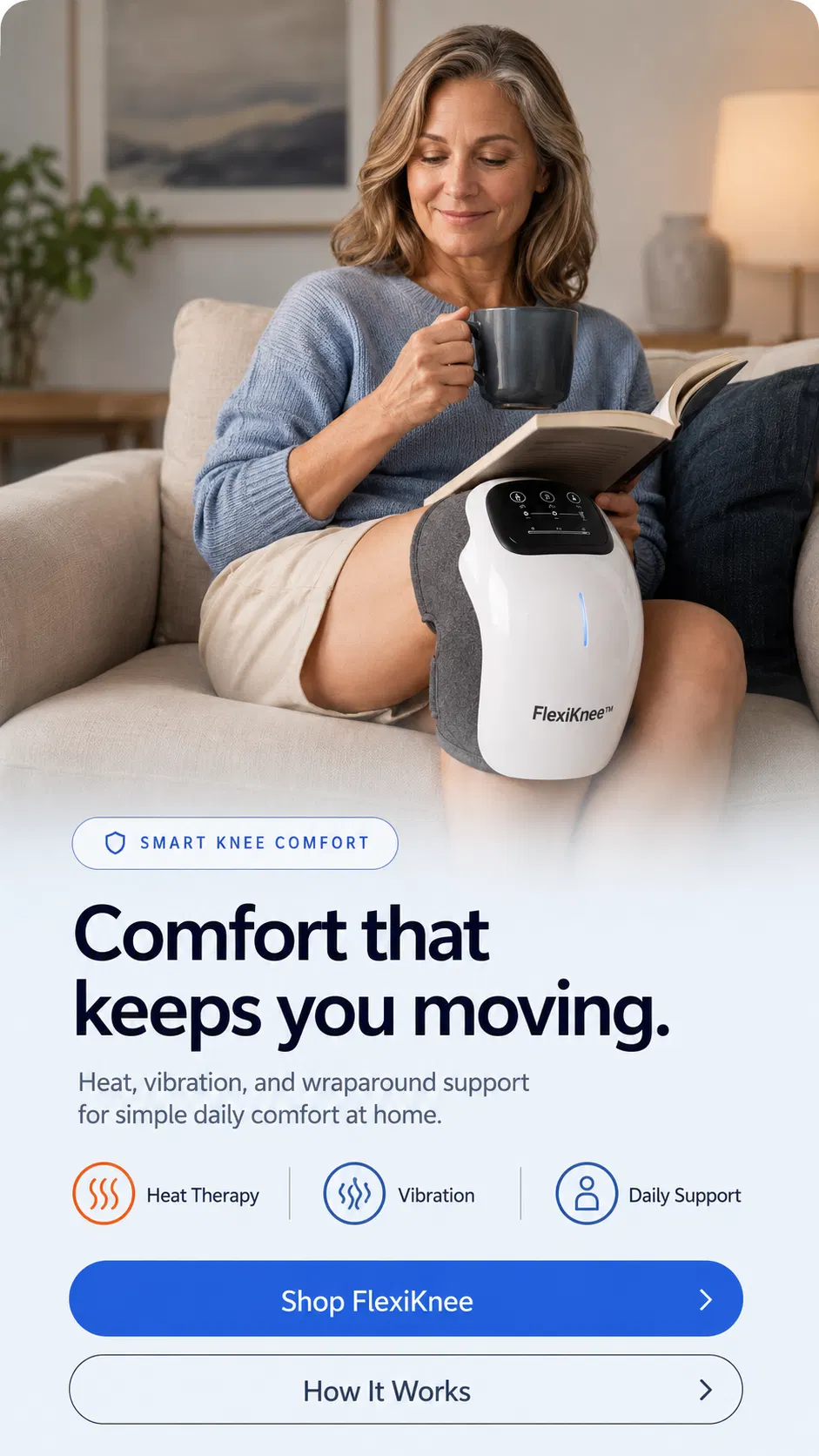
Comfort measures should have a modest job: helping an appropriate person feel more comfortable, not providing permission to ignore symptoms. A newly injured, swollen or unusually hot knee should not be placed into a heat routine by default. People with altered sensation, circulation problems, fragile skin or relevant health conditions should ask a clinician before using heating or cooling products.
If a device is suitable, follow its instructions and skin checks, remain awake and stop if it becomes uncomfortable. More intensity or a longer session is not automatically better. Do not wrap a heating device under additional layers to amplify its effect, and do not use it to mask symptoms immediately before a demanding ride. Our heat versus ice guide explains the broader distinctions.
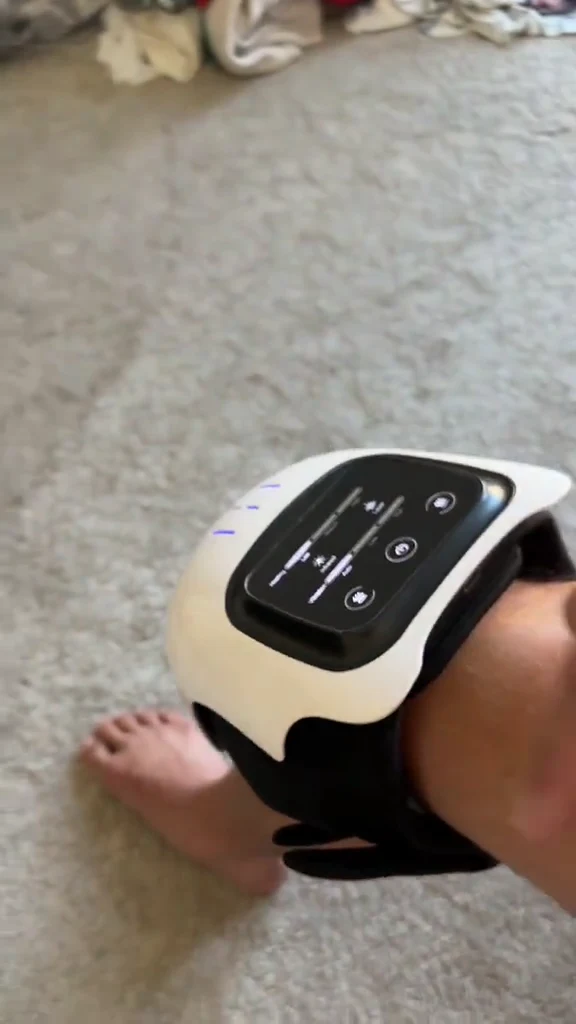
A systematic review of hands-on sports massage found no direct improvement in several performance measures, although it found some benefits for soreness and flexibility. That does not establish equivalent benefits for a heated vibration wrap. A product demonstration can show fit and controls; it cannot demonstrate tendon healing, restored cartilage or readiness for a long ride.
Use a short next-morning check
Notice how the knee behaves during the ordinary tasks you would do anyway: getting out of bed, walking around the house and using necessary stairs. Compare with your baseline. Look for swelling or a meaningful loss of movement without repeatedly provoking the painful action. If you have a clinician's symptom-monitoring plan, that takes priority over any general checklist here.
| Question | Record briefly | Avoid concluding |
|---|---|---|
| How am I walking? | Usual gait or a new limp | A low pain score makes a limp irrelevant |
| Has the knee changed? | Swelling, warmth or reduced motion | Every change is ordinary training soreness |
| How was the evening? | Comfort, interrupted sleep and activity | Temporary relief means complete recovery |
| What is planned next? | Easy commute, hills, intervals or rest | All rides of the same distance are equivalent |
The check is not an examination you must pass at any cost. It is information that may change your plans. If you are uncertain whether symptoms are worsening or whether exercise is suitable, seek advice rather than repeatedly testing the knee until you obtain a reassuring result. Especially after an injury or operation, general cycling guidance cannot replace a personal return plan.
A recovery ride is still a ride
The label recovery does not remove the load from pedaling. An easy spin may be appropriate for one person and aggravating for another. Even a flat route can involve a headwind, repeated starts or an unexpected climb home. Consider whether you can genuinely keep the session easy and end it safely, rather than relying on the intention to take things gently.
If you do ride within an appropriate plan, choose a familiar route with an easy exit and avoid chasing average speed. A social ride is not reliably easy if you feel obliged to follow every acceleration. Explain your limit beforehand. A shorter local loop can offer more control than an out-and-back route whose turning point leaves you far from home.
You can also change the kind of day without replacing cycling with another hard leg workout. Appropriate daily activity, prescribed rehabilitation or rest may be the better option. Do not feel required to make up a missed session later in the week. Adding its full load to another day can recreate the same problem the adjustment was meant to address.
Change one meaningful part of the next session
When symptoms have settled sufficiently and riding is appropriate, start from a recently manageable session rather than your historical best. Duration, intensity, climbing and frequency are separate variables. Changing all four at once makes it difficult to interpret the response. There is no universal percentage increase that guarantees safety, and a training application cannot see swelling or examine your knee.
For example, someone who tolerated a familiar short loop but struggled after adding hills could discuss returning to the familiar format instead of simultaneously changing the saddle and buying new pedals. That is an illustration of controlled decision-making, not a diagnosis or a personal prescription. If the same symptoms recur despite sensible adjustments, obtain help rather than endlessly experimenting.
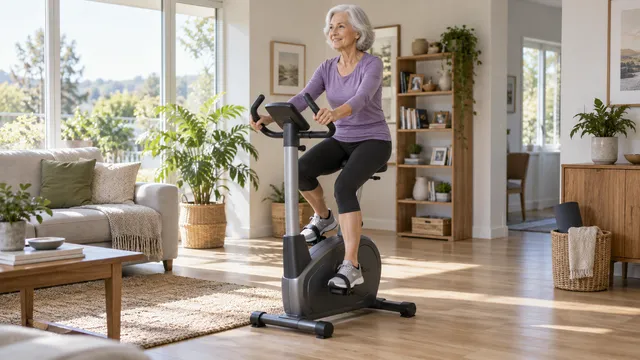
Indoor riders should include every class in their total, not only the session labeled as training. Warm-ups, cooldowns and bonus rides add time. Our indoor cycling guide focuses on class selection and resistance. Riders managing diagnosed arthritis can use the more specific cycling with knee osteoarthritis guide.
Know when the recovery checklist should stop
Severe pain, inability to bear weight, substantial swelling, deformity, locking or a knee that gives way deserves prompt medical advice. A hot red knee with fever or feeling unwell needs urgent attention. Do not wait for a massage, sleeve or easy ride to prove whether those symptoms are serious. Use local urgent or emergency services according to the situation.
Less dramatic but persistent symptoms also matter. If the same problem repeatedly changes your walking, interrupts sleep or limits everyday activity, arrange an assessment. Bring the short notes you have collected, including equipment changes and other exercise. That history is more useful than a list of recovery products you have tried without a clear record of what changed.
Make recovery repeatable rather than elaborate
A workable post-ride routine has a clear order: notice the response, address ordinary needs, use appropriate comfort measures if wanted, and let the next day's function influence the next ride. It does not need to become a second hobby. Keep the habits that are useful, abandon rituals that add discomfort, and remember that feeling soothed for an evening is not the same as resolving the reason a knee repeatedly hurts.
Worked example: the ride felt easy, but the evening did not
Imagine a rider who finishes a familiar route feeling comfortable, then notices knee stiffness after sitting through dinner. The useful record is not simply that cycling caused pain. Note whether the route included more climbing, whether the rider stayed seated longer afterward and whether walking changed. This is an illustrative planning example, not a diagnosis or a report of a real patient's recovery.
If the pattern is mild and familiar and activity remains appropriate, the next comparison could keep the route manageable while avoiding several other changes at once. There is no need to buy new pedals, add a hard stretching routine and test a recovery device on the same evening. Persistent worsening, swelling or reduced function should move the decision toward assessment rather than a more elaborate home experiment.
The next-morning note completes the picture. Being comfortable during a ride but struggling with normal stairs afterward is different from brief muscle fatigue that settles without affecting daily activity. A good recovery plan preserves that distinction and helps you explain it clearly when seeking advice.
Frequently Asked Questions
Is knee soreness after cycling normal?
General muscle tiredness can follow an unfamiliar session, but focal joint pain, swelling, a limp or loss of motion should not automatically be called normal soreness. Timing alone cannot identify the cause.
Should I ride the day after my knees hurt?
Base the decision on symptoms, ordinary walking, swelling and any clinical plan, not the calendar. Worsening symptoms or altered movement is a reason to change the plan and seek advice when appropriate.
Is heat or ice better after cycling?
There is no universal choice. A newly swollen, injured or unusually warm knee is not a routine heat situation. Follow suitable skin-protection instructions and your clinician's advice. Neither option fixes a bike-fit problem or establishes readiness to ride.
Will a knee massager speed up cycling recovery?
A heated vibration device may offer comfort for some suitable users, but it has not been established as a way to repair an injury or restore cycling performance. Evidence about hands-on sports massage does not prove benefits for a different consumer device.
Does an easy recovery ride always help?
No. It still adds pedal revolutions and load. An easy ride may fit one person's plan while another needs reduced cycling or clinical assessment. Do not use a recovery label to excuse aggravating symptoms.
What should I record after a long ride?
Record duration, hills or intervals, when symptoms appeared, any swelling, and walking or stair comfort later and the next morning. A few consistent observations are more useful than constantly checking the knee.