Only a 5K can still be an unfamiliar effort
A Turkey Trot often feels informal: family photos, festive clothing and a short route before lunch. That atmosphere can hide a substantial change from your usual activity. If you rarely run, a continuous 5K or a faster-than-planned run-walk is not the same as your ordinary weekend stroll. The comparison that matters is with your recent activity, not with a marathon runner's idea of a short distance.
Think about the whole outing. Perhaps you hurried from distant parking, stood in a queue, ran the opening mile with a faster relative and then walked home. Those details can help explain why the morning felt harder than the advertised distance suggests. They do not establish a diagnosis, but they give you a better starting point than concluding that your knees cannot tolerate exercise at all.
This article is specifically about symptoms after an occasional Thanksgiving 5K or similar short event. For the much larger demands of a marathon, use our post-marathon knee pain guide. Do not copy an endurance athlete's recovery schedule, supplement routine or return-to-running timetable simply because both events end with a medal.
Reconstruct the event before choosing a remedy
Write a short account while the details are fresh. Did discomfort begin during the run, after standing at the finish or later while sitting at dinner? Was there a stumble, twist or sudden painful moment? Did you change your pace or stride to keep going? A few accurate observations are more useful than repeatedly pressing different parts of the knee and trying to match a photograph online.
Also note what was unfamiliar. New shoes, hills, an unusually quick start or a long gap since your last run can all be relevant to a clinician's history. Avoid deciding that one of these must be the cause. Several changes can occur together, and the same symptom can have different explanations in different people.
If another person saw you fall or start limping, ask what they noticed. Their observations may fill in a detail you missed while concentrating on finishing. You are not collecting evidence to blame the route or your shoes; you are assembling a clear sequence that helps guide the next decision.
Muscle soreness and knee symptoms need different questions
Broad soreness across the thighs after an unfamiliar effort can be different from a sharply localized knee symptom. Difficulty lowering into a chair might involve tired muscles, but it can also coexist with a knee problem. The fact that both started after the event does not make them the same thing. Look at the pattern rather than choosing a label from timing alone.
| Pattern | What to note | What not to assume |
|---|---|---|
| Broad muscle soreness | Unfamiliar running, hills and overall effort | Every painful area is an injured joint |
| One focal knee spot | Location, onset and ordinary tasks affected | A delayed start proves harmless soreness |
| Visible swelling | When it appeared and whether movement changed | A recovery device is the first priority |
| Locking, giving way or changed walking | Any twist, fall or sudden event | Finishing the route rules out injury |
Ordinary function is useful information. Can you walk normally around the house? Can you straighten the knee comfortably within your usual range? Is the overall response settling or getting worse? Do not force a movement to answer the question. If the knee cannot manage necessary activity, you do not need a special challenge to prove that the plan should change.
The first afternoon: reduce the avoidable extras
Thanksgiving can turn a short morning event into a long day on your feet. Cooking, serving, clearing plates and standing in conversation can add hours of activity. If the knee is uncomfortable, review those tasks early. Share the workload, bring a chair to a suitable preparation task and avoid unnecessary trips up and down stairs carrying heavy items.
This is not a recommendation to remain completely still all day. It is a reminder to stop adding activities that clearly aggravate symptoms while you decide what care is appropriate. Comfortable position changes may be preferable to staying in one awkward posture, but a knee that is unstable or cannot bear weight needs help rather than repeated walking experiments.
Let the people around you know what you need. A simple request to take over standing tasks is more useful than quietly pushing through until the evening becomes difficult. The morning's effort is already complete. You do not have to demonstrate that it was easy by maintaining every other commitment unchanged.
When symptoms deserve prompt assessment
A severely painful, markedly swollen or misshapen knee, inability to bear weight, locking or instability warrants prompt medical advice. Fever or feeling unwell with a hot, red knee also needs urgent attention. Do not let a holiday timetable delay care for a worrying change. Use local urgent or emergency services according to the symptoms and circumstances.
Other symptoms may be less dramatic but still important. Pain that repeatedly wakes you, stays sharply localized or fails to improve deserves a clinical discussion. A fall or twist should be mentioned even if you completed the event afterward. Finishing a community run is not evidence that all the structures around the knee are unharmed.
Bring your event notes and explain any previous knee condition or recent treatment. If you normally take medication or have been given activity restrictions, include those details. A clear history is more valuable than arriving with a confident diagnosis based on a social-media comment. You can describe what happened accurately without knowing its medical name.
Cold, warmth and support: keep expectations modest
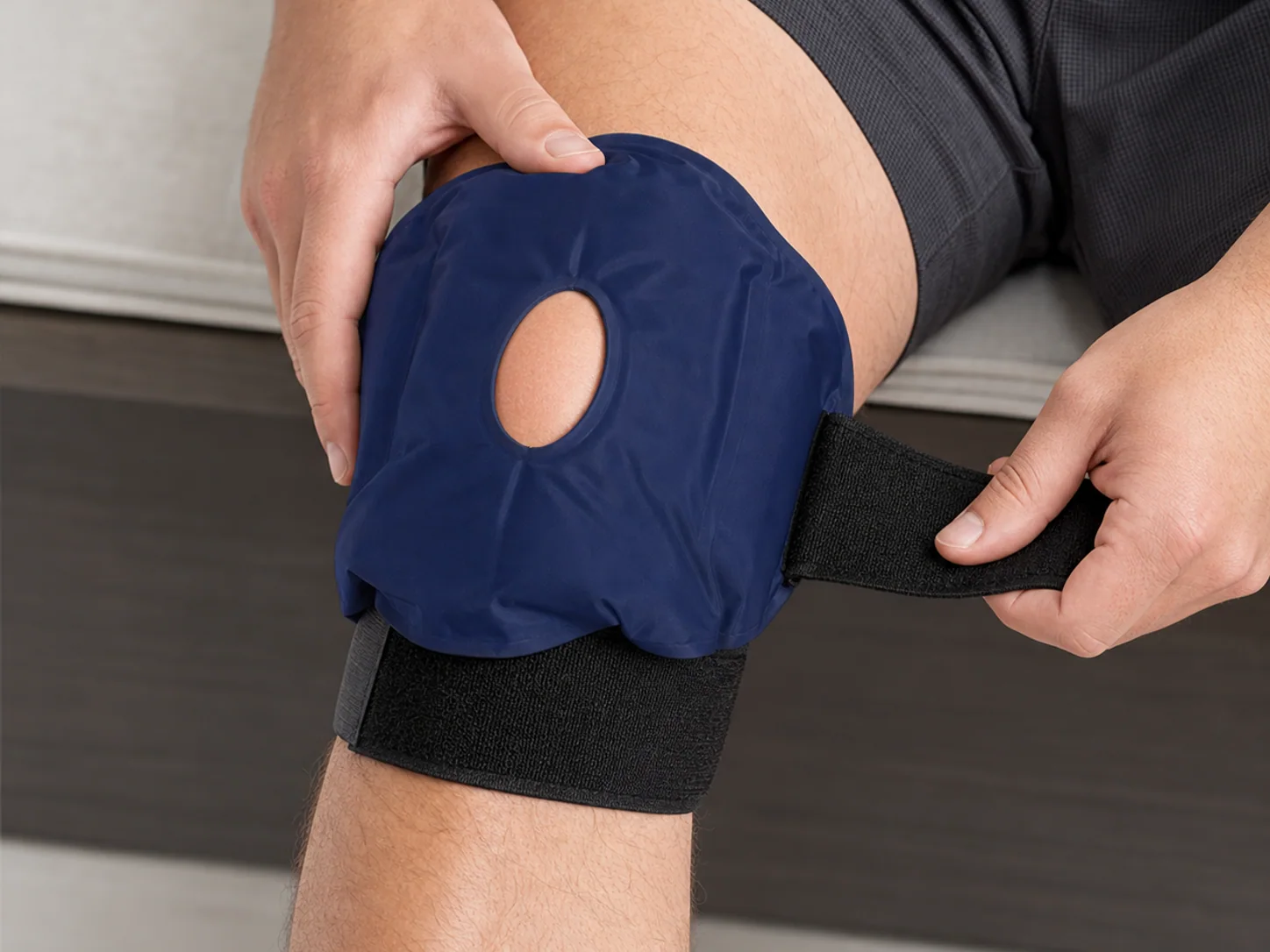
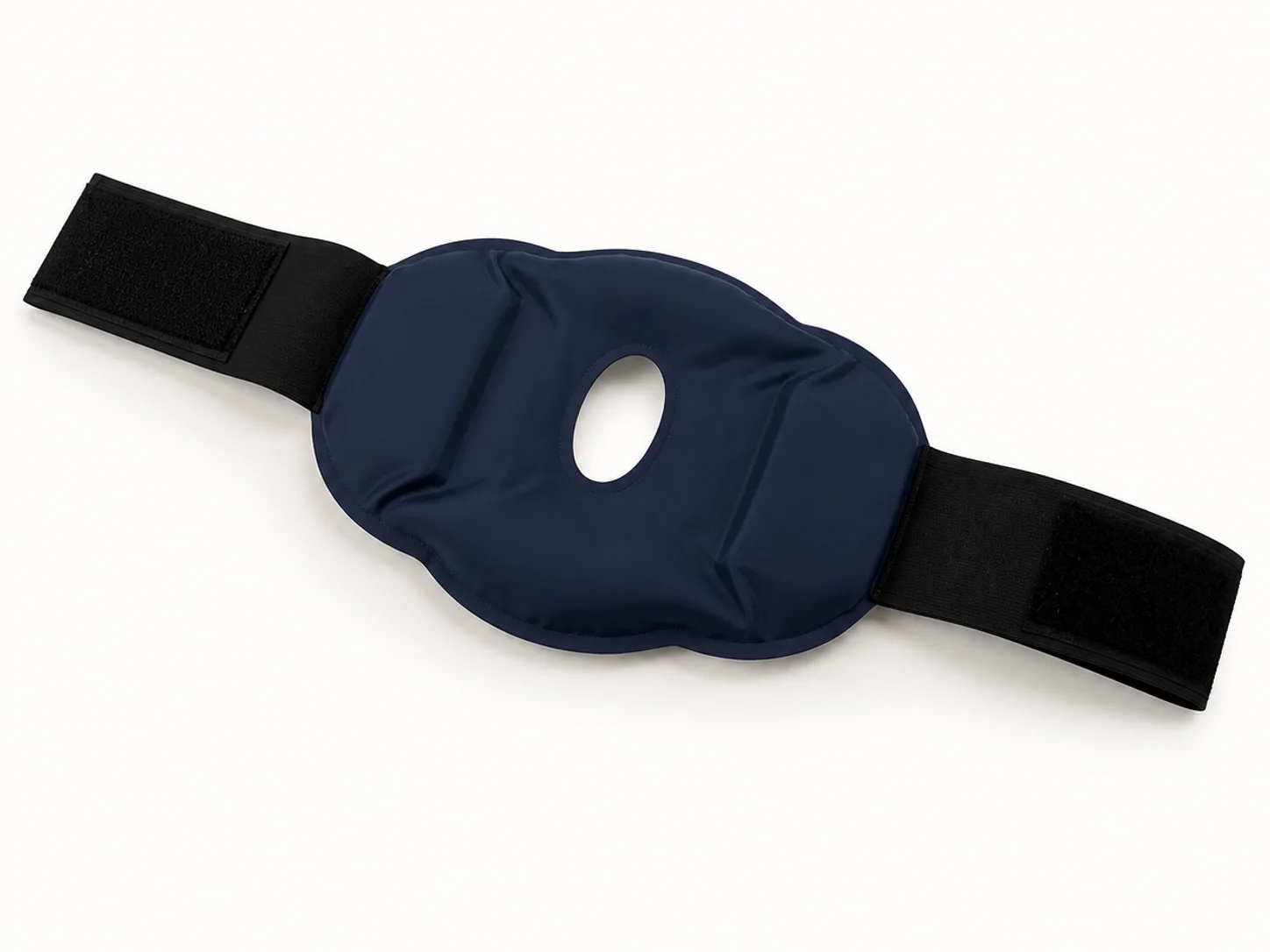
Some people find an appropriate cold application soothing after activity. Use skin protection, suitable timing and the product's instructions rather than putting ice directly on the skin or leaving it in place indefinitely. If you have reduced sensation, circulation concerns or another relevant condition, seek advice before using temperature-based products. Comfort is not worth a skin injury.
Do not apply heat automatically to a newly swollen or unusually warm knee. A familiar stiffness routine is a different situation from an acute injury or a new inflammatory change. The separate heat versus ice guide explains the distinction. Neither choice can establish the cause of symptoms or replace assessment when warning signs are present.
A sleeve can also create a reassuring sensation without answering the important question. If it causes numbness, color change, irritation or an uncomfortable pressure point, remove it and seek advice as appropriate. Avoid layering several tight products over a painful knee. More equipment does not necessarily mean more useful support.
Do not make medication a way to preserve the original plan
If you need advice about pain relief, ask a pharmacist or clinician who can consider your health, other medicines and the situation. A generic article cannot determine the right medicine for every participant. Avoid taking something simply so you can complete an additional run, a long shopping trip or an evening of standing despite worsening symptoms.
Also avoid mixing several unfamiliar recovery ideas at once. A new supplement, aggressive massage, intense stretching and another workout can make it difficult to interpret what happens next. Keep the immediate approach straightforward while you decide whether professional advice is needed. There is no requirement to purchase a recovery package because the event was organized.
Friends may offer confident explanations based on their own experience. Their story can be well intentioned without applying to your knee. Different activity histories, injuries and health conditions change the context. Thank them for the suggestion, but do not use an anecdote to dismiss a symptom that is clearly affecting your normal function.
The next morning: compare with your baseline
A useful next-day check is brief and based on necessary activity, not a formal fitness test. Notice how you get out of bed, walk to breakfast and use any unavoidable stairs. Is the knee less troublesome, unchanged or worse? Has swelling appeared? Compare with how you usually move rather than with how another participant reports feeling.
If the response is worsening, do not add a run to see whether it loosens up. Adjust the plan and seek advice when appropriate. If things are settling, continue making sensible choices rather than immediately using the improvement to schedule another unfamiliar effort. One good hour does not require a major increase in activity.
For a recurring pattern beyond this event, our knee pain after exercise guide covers broader training questions. The goal is not to turn every subsequent outing into an anxious symptom survey. It is to identify a clear problem, respond proportionately and obtain help when the pattern is not resolving.
Keep Black Friday and travel plans flexible
The day after a Turkey Trot may include shopping queues, airport walking or a long car journey. Those plans deserve the same review as a workout. Consider shorter trips, a place to sit and help carrying bags. A store itinerary that looked ordinary before the event may feel quite different if necessary walking is already uncomfortable.
For travel, organize a comfortable position and appropriate breaks where feasible. If driving, do not continue if pain or restricted movement interferes with controlling the vehicle safely. Our guide to knee pain after car rides addresses that separate setting. Do not treat every symptom after travel as the same problem that began at the event.
Unexpected one-sided calf swelling, chest pain or breathlessness calls for urgent medical attention rather than a massage or compression experiment. The fact that a holiday run happened recently does not explain every later symptom. Keep the account of events clear, but remain open to the possibility that a clinician needs to investigate something else.
Use the experience to improve the next event
| Question | Useful next step |
|---|---|
| Was the effort unfamiliar? | Build an appropriate regular activity habit before another event |
| Did I follow someone else's pace? | Agree on separate pace plans and a finish meeting point |
| Did hills or distance surprise me? | Read the route and choose a suitable event |
| Did the rest of the day add a lot of standing? | Share tasks and leave room for recovery |
| Does the pain keep returning? | Seek assessment instead of repeating the same annual experiment |
Once the immediate situation is settled, review without blaming yourself. The point is not that you should never participate again. It may be that the distance, pace or preparation needs to change, or that an underlying problem needs an individualized plan. Our Turkey Trot run-walk preparation guide helps separate a sustainable buildup from a last-minute challenge.
Imagine someone who walks regularly but runs the entire event to stay with family. Later, stairs become uncomfortable, and the original plan includes hours of cooking. A sensible response is to reduce the extra standing, observe the knee and obtain advice for concerning or persistent symptoms. Next time, the planning change might be agreed walking breaks and an independent pace, not a more expensive brace.
The event can still be a positive experience even if it exposes a limit you had not expected. Use that information to make future activity more suitable. A community tradition is worth keeping when it fits your life and health, but it should never require ignoring symptoms to preserve the appearance of an easy morning.
Write down the event details before they blur
If symptoms continue and you arrange an appointment, a short account of the day can help. Note whether discomfort began during a particular step, gradually during the course or only later. Record the distance you actually covered, the amount of running compared with walking, and whether this was different from your usual activity. Include a fall or twist even if you initially finished the event.
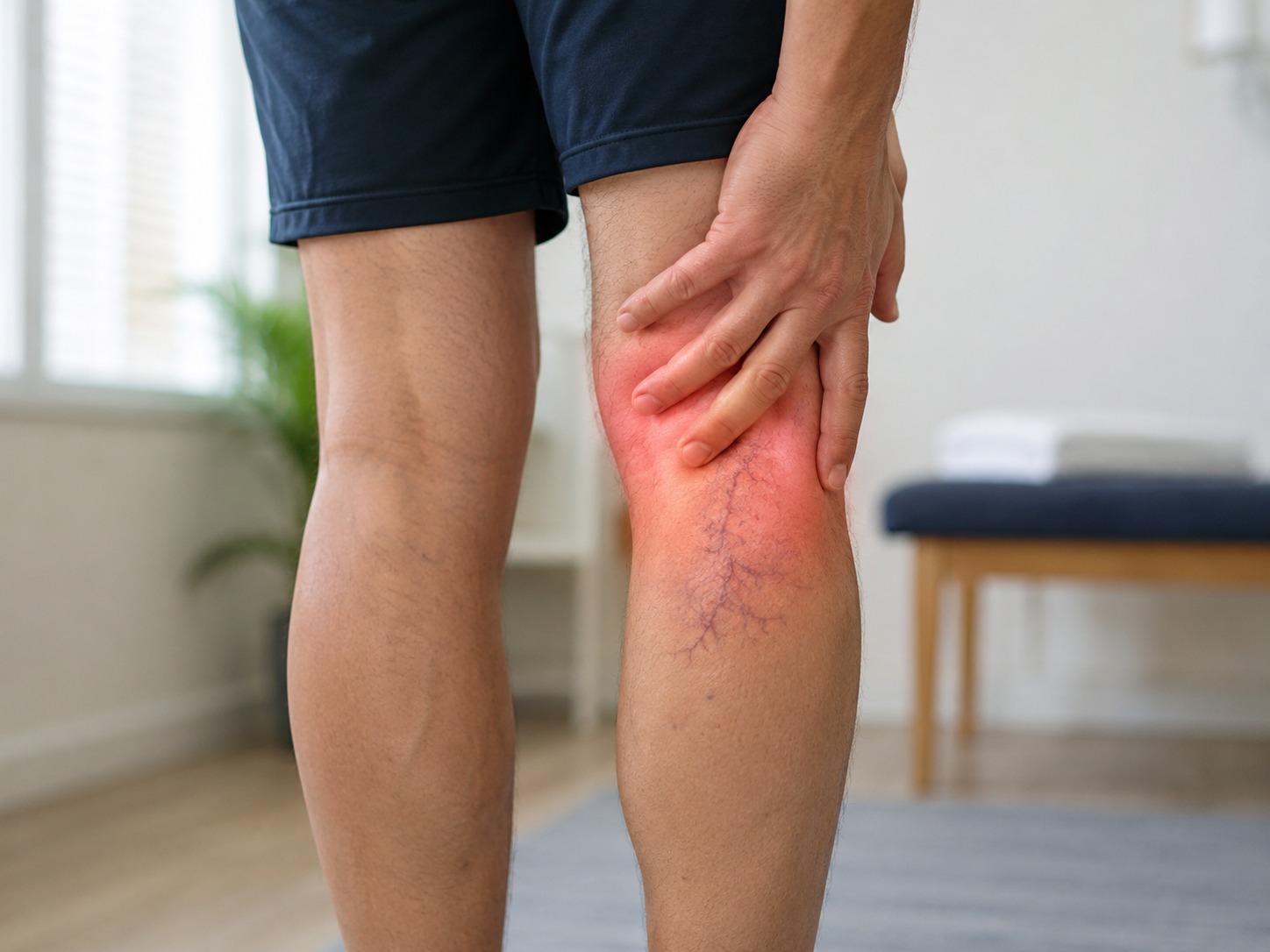
Also note changes in swelling, walking and everyday tasks afterward. A photograph of visible swelling may help you describe a change, but it does not establish the diagnosis. Avoid repeatedly provoking the knee just to reproduce the symptom for your notes. Clear observations are useful; self-testing through pain is not required.
Bring the event context to the conversation without assuming that the holiday run explains every symptom. A clinician can assess whether that explanation fits the pattern and whether something else needs attention.
Frequently Asked Questions
Can a short Turkey Trot cause significant soreness?
An unfamiliar effort can feel demanding even when the distance is short compared with other races. Speed, hills, walking to the start and your recent activity all matter. The event distance alone cannot tell you whether knee symptoms are harmless.
Is knee pain the next day normal after a first 5K?
General muscle soreness can follow unfamiliar exercise, but focal joint pain, swelling or altered walking needs separate consideration. Do not diagnose the cause from the delay alone.
Should I run again to loosen my knees?
Not as a test of a painful knee. Review ordinary walking and the overall symptom trend first. Worsening symptoms, a limp or instability are reasons to change the plan and seek advice.
Can I use a cold wrap after the event?
Cold may be a suitable short-term comfort option for some people, with skin protection and the product's instructions. It is not a diagnosis or a treatment for every cause. Seek advice if safe use is uncertain or symptoms are concerning.
Should I take painkillers so I can stand and cook?
Do not use medication simply to override a demanding plan. Ask a pharmacist or clinician about appropriate medicines for your health and other medication, and share or reduce tasks that aggravate symptoms.
How do I avoid repeating this next year?
Review preparation, pacing, route demands and the rest of the day. Build a consistent suitable activity habit rather than relying on a once-yearly effort. Persistent or recurrent knee pain deserves assessment.