Start with what happened on the mountain
The most important distinction is whether the knee became uncomfortable gradually or after a recognizable event. A long day on unfamiliar terrain creates a different starting point from a twisting fall, collision, or awkward landing. Both can hurt, but the second situation raises a more immediate question about injury rather than simply how to recover overnight.
Recall the details without trying to recreate the movement. Did a ski catch? Did your body rotate while the foot stayed fixed? Was there a pop, sudden loss of support, or swelling soon afterward? Tell ski patrol or a clinician what you remember. You do not need to identify the damaged structure before asking for help.
This guide concerns downhill skiing and the decisions surrounding a painful ski day. It is separate from our downhill running guide, where footwear, braking steps, and training exposure differ. A ski, boot, binding, slope, and moving surface create a distinct situation that deserves its own precautions.
Soreness, fatigue, and injury are not interchangeable
Muscle fatigue may feel broad across the thighs after holding positions and controlling turns. Delayed soreness can appear after unfamiliar exercise. A swollen joint, a knee that gives way, or pain concentrated after a fall is a different signal. The fact that your friends are also sore does not make your symptoms equivalent to theirs.
Pay attention to ordinary movement once the boots are off. Can you walk normally, bend and straighten comfortably, and get into a chair without a new limitation? These observations do not rule out an injury, but they help describe the problem. Do not perform deep squats or hopping tests to prove the knee is fine.
Symptoms can change after leaving the slope. Adrenaline, cold conditions, and the focus required to get down the mountain may affect what you notice. If swelling or instability develops later, update your plan. Finishing a run is not evidence that the knee is ready for another day of skiing.
How turns and terrain change knee demands
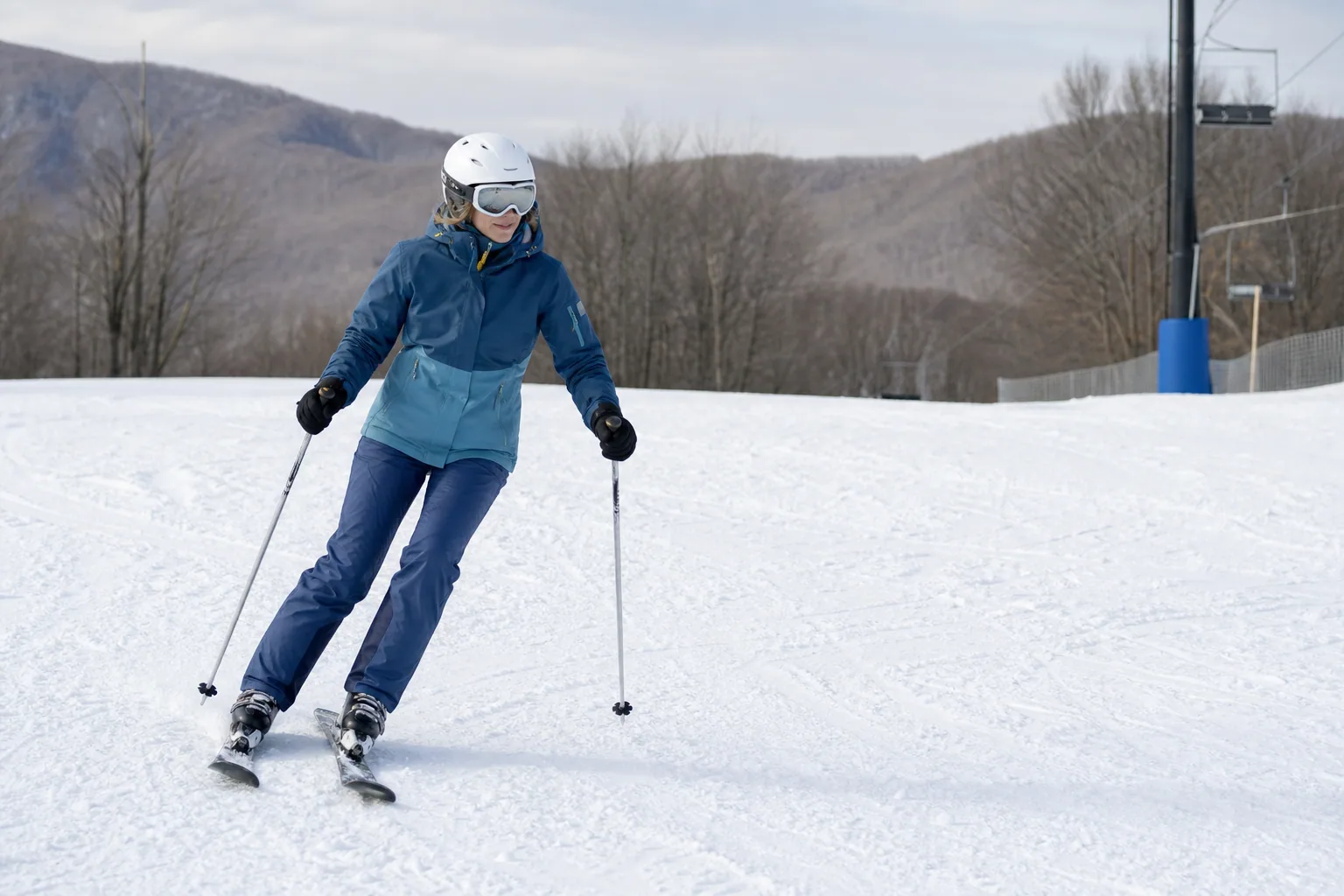
Skiing combines repeated changes in direction, variable snow, and sustained lower-body effort. A groomed beginner slope and a late-day run through chopped-up snow can feel like different sports. The knee responds to the actual demands, not just the distance recorded on an app or the color assigned to the trail.
Steeper terrain, faster turns, bumps, and unexpected edges can require adjustments that exceed your current skill or conditioning. Fatigue may make those adjustments less controlled. Choose a route that fits today's ability rather than the best run you completed on a previous holiday. Conditions and confidence can change within the same afternoon.
An instructor can help with movement patterns, pacing, and terrain selection. This is more useful than trying to apply a single online knee-angle cue to every turn. If a technique change causes pain, say so promptly. A lesson should adapt to your condition rather than becoming a reason to continue through worsening symptoms.
Inner, front, and back-of-knee pain after skiing
| Pattern you notice | Useful detail to report | What not to assume |
|---|---|---|
| Inner-knee pain after a twist | Whether a ski caught, the knee bent inward, or swelling developed. | Every inner-knee pain is an MCL tear. |
| Front-knee ache after many runs | Duration, sustained positions, and whether stairs also hurt. | All front pain is harmless muscle soreness. |
| Pain behind the knee | Any backward-bending event, swelling, or calf symptoms. | Stretching harder will identify or fix the cause. |
| Pop followed by instability | Timing, ability to continue, and swelling. | Walking afterward rules out ligament injury. |
| Locked or markedly restricted knee | Whether it physically cannot move normally. | Forcing the joint will safely release it. |
The medial collateral ligament and anterior cruciate ligament are among the structures clinicians consider after relevant ski injuries. Menisci and other tissues may also be involved. A location chart can orient a conversation, but examination determines which possibilities need investigation. Avoid choosing a brace or rehabilitation routine solely from the side that hurts.
Back-of-knee pain after a backward-bending event needs its own assessment. Our hyperextended knee injury guide explains why the mechanism and circulation or nerve symptoms matter. New calf swelling or breathing symptoms should not be treated as ordinary post-ski tightness.
Boots and bindings: get a qualified equipment check
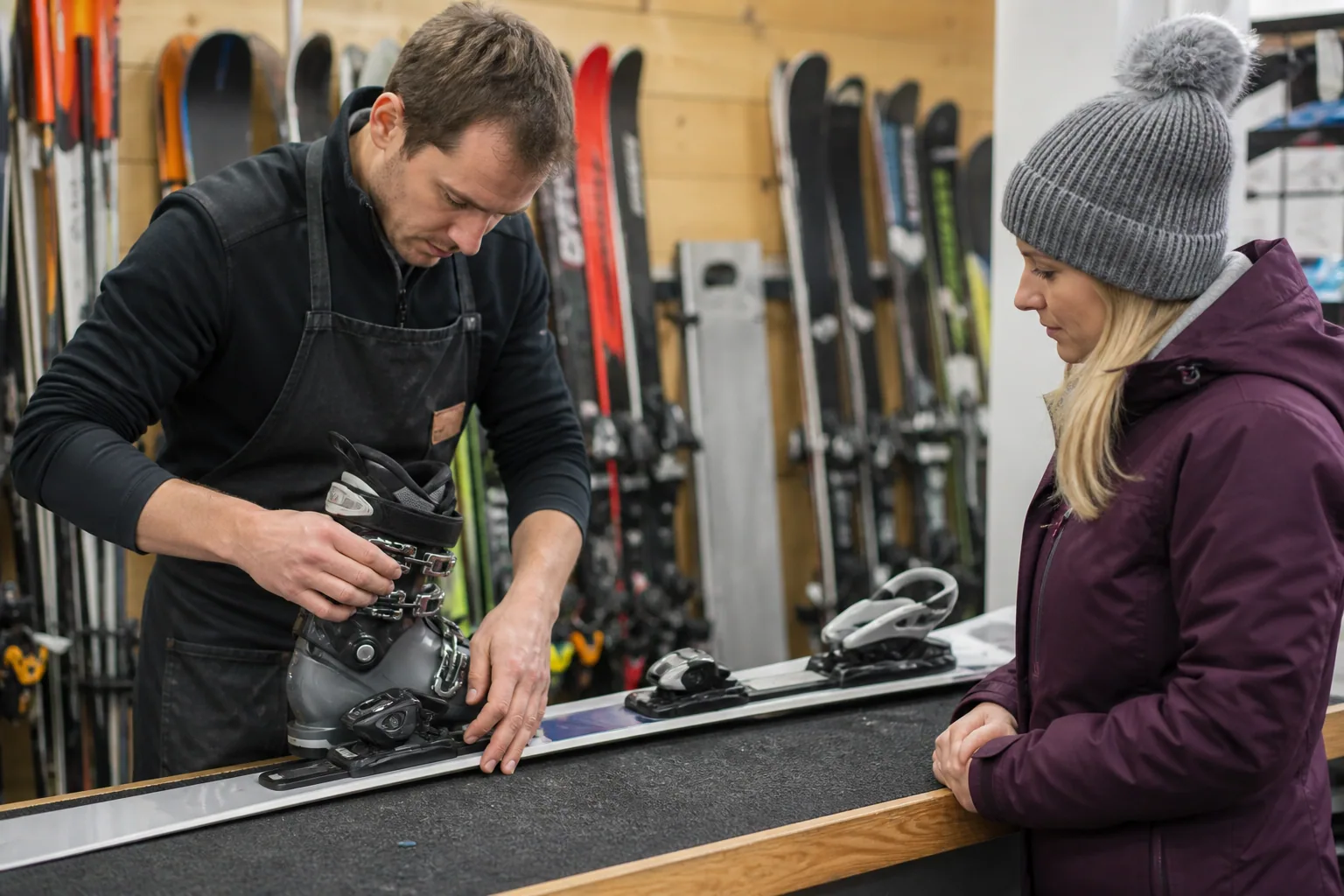
Boot fit affects how you interact with the ski, but knee pain is not proof that the boot is the cause. Discuss pressure points, movement inside the boot, and difficulties controlling the ski with a qualified fitter or technician. Bring the actual equipment and explain when the problem occurs rather than requesting a random adjustment.
Bindings should be set and maintained by an appropriately qualified ski technician using the relevant information and equipment guidance. Do not turn release settings up or down yourself to see whether the knee feels safer. A binding that releases unexpectedly or fails to release as intended can create different hazards.
Rental equipment deserves the same attention. Report your experience accurately and ask how to operate the binding and recognize a problem. Check for snow or debris where the technician instructs, and stop using damaged equipment. A rushed fitting because friends are waiting at the lift is not a useful saving of time.
Fatigue is a reason to change the plan early
The final run often carries an emotional argument: you have paid for the pass, the group is still going, or the weather may change tomorrow. None of those facts improves knee control. Finish while you can still manage the descent deliberately rather than waiting until every turn feels like an effort to get home.
Breaks should happen before technique deteriorates. Eat, drink, and rest appropriately for the day, and consider altitude and travel fatigue as part of the overall demand. These measures do not prevent every injury, but they support better decisions than treating exhaustion as an unavoidable part of a successful holiday.
If you ski only occasionally, allow a gentler first day. Familiarity may return faster than physical capacity. A run that feels technically manageable can still be a large dose of repeated loading after months away. Build the trip around sustainable days, not an opening session that leaves you unable to walk comfortably afterward.
What to do when pain starts during a run
Stop in a safe, visible position when possible and assess whether you can continue safely. If the knee feels unstable, a significant injury occurred, or you cannot manage the descent, contact ski patrol. Do not let embarrassment or concern about delaying others turn an injury into a risky attempt to ski down unaided.
Keep warm while waiting and follow the patrol team's instructions. Avoid having an untrained companion twist or straighten the knee to check it. Moving an injured person and managing ski equipment on a slope require judgment that a written article cannot supply. Local mountain assistance is the appropriate resource.
Even if you reach the lodge independently, seek assessment when the pattern suggests injury. A short walk in rigid ski boots may not reveal the same limitation as walking later in ordinary shoes. Explain whether you used support, limped, or avoided loading one leg rather than simply saying that you managed to get down.
After a mild sore day, review the whole response
For familiar mild symptoms without an injury event or warning signs, reduce the next demand and monitor the knee. Avoid turning the evening into another workout to test recovery. Comfortable ordinary movement and a quieter schedule may tell you more than repeated squats, aggressive stretching, or pressing the painful area.
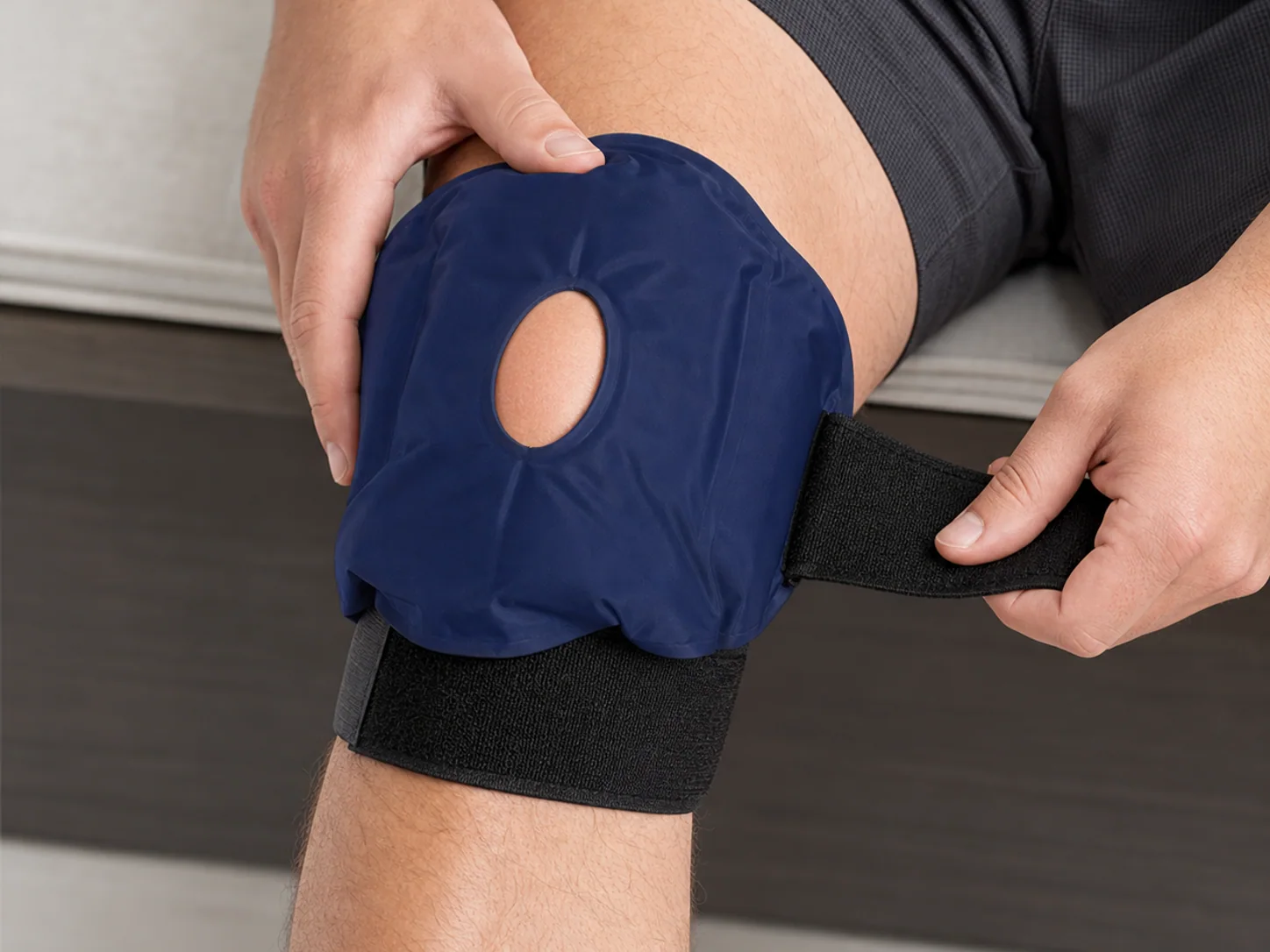
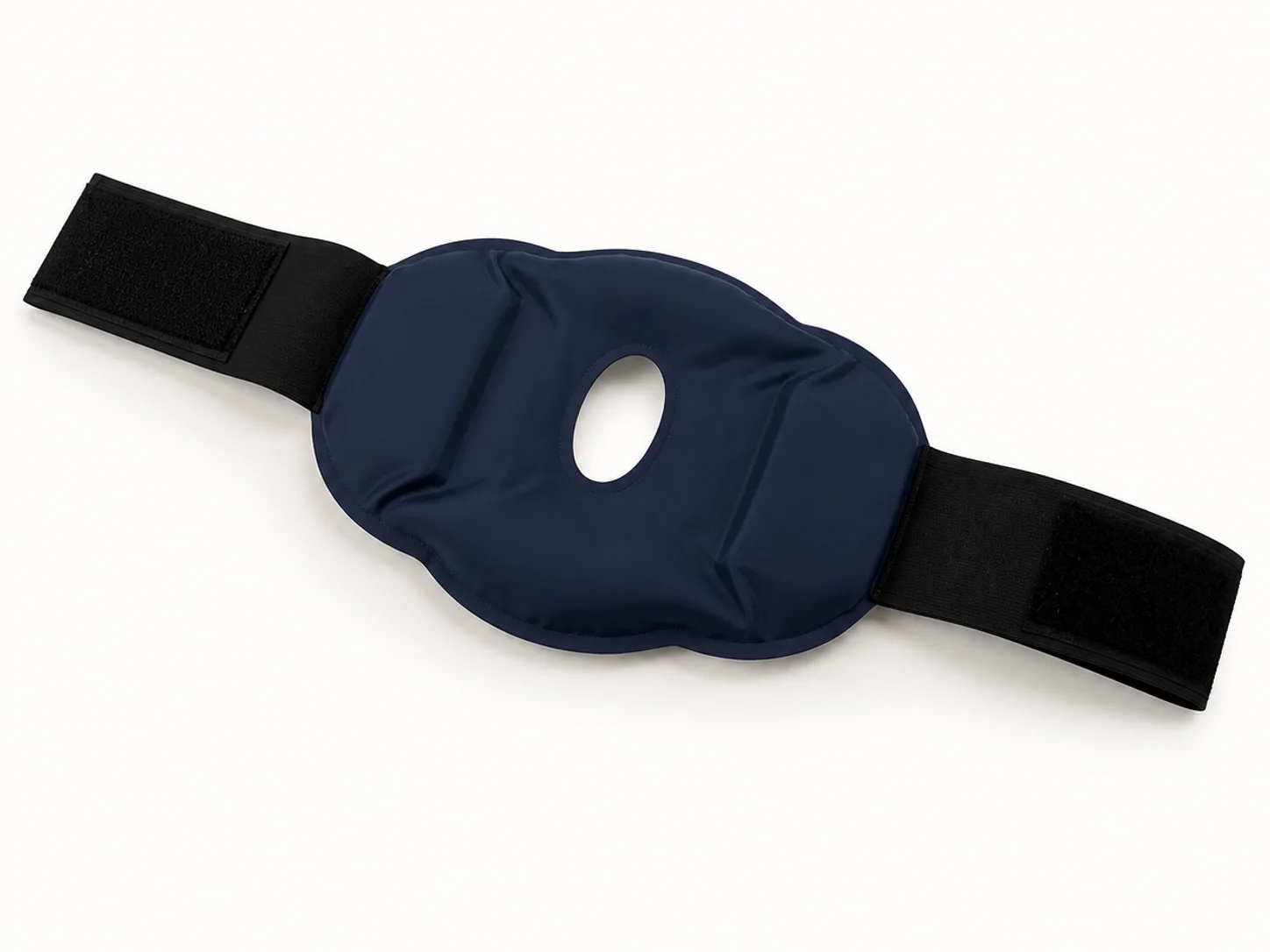
If cold is appropriate for comfort, protect the skin and follow the product instructions. Do not apply frozen material directly or use reduced sensation as permission for prolonged exposure. A newly hot or swollen knee is not a situation for a heated massager. Comfort measures should not postpone assessment when the symptoms change.
Consider the practicalities of the next day: stairs, walking to lifts, carrying equipment, and the return journey all add load. A knee that tolerates sitting at breakfast may still struggle with those tasks. Plan from the complete day, not only the few minutes you hope to spend on an easy slope.
Returning to skiing after pain or injury
| Situation | Next decision | Avoid |
|---|---|---|
| Mild familiar soreness, improving function | Choose less demanding terrain and shorter exposure if appropriate. | Repeating the hardest day immediately. |
| Pain still changes walking or stairs | Get advice and postpone demanding skiing. | Using a brace to conceal the limitation. |
| Swelling, giving way, or locking | Clinical assessment before return. | Testing the knee with jumps or sharp turns. |
| Diagnosed ligament or meniscus injury | Follow a rehabilitation and return-to-sport plan. | Copying a professional athlete's recovery timeline. |
| Recent surgery | Obtain clearance specific to skiing and your recovery. | Assuming comfortable cycling means slope readiness. |
Return-to-sport decisions are broader than pain at rest. Strength, motion, balance, confidence, and the ability to respond to unexpected movement may all matter. Your clinician can decide which checks are appropriate. A calendar date or a nonrefundable booking is not a substitute for that assessment.
When return is appropriate, keep the first session predictable. An easy route in favorable conditions is a better starting point than proving you can handle bumps, speed, or deep snow. Arrange a clear way to stop early. It is easier to make a sensible decision when the group already knows the plan.
Prepare between trips without trying to imitate a mountain indoors
General strength, balance, and aerobic activity can support preparation, but a list of ski exercises is not an individualized rehabilitation programme. Choose training you can perform consistently and progress appropriately. If a previous injury still limits you, address that before adding demanding jump drills or prolonged squat holds.
Discuss the likely terrain, number of ski days, and your experience with a coach or therapist. A beginner holiday and an aggressive off-piste trip have different demands. Preparation should reflect the trip you plan to take, not a generic video designed for the most advanced athlete in the room.
Equipment comfort also deserves attention before departure. Try the intended socks and boots through an appropriate fitting process, and resolve concerns early. Do not introduce several new pieces of equipment on the first demanding day and then struggle to identify what changed. Planning is part of reducing avoidable uncertainty.
Plan the journey home as part of recovery
A painful knee still has to manage the walk to transport, stairs at the accommodation, and perhaps a long trip home. Ask the assessing clinician about those specific demands. If you cannot walk comfortably or need a prescribed aid, arrange practical assistance rather than assuming the problem ends once the skis are returned.
Do not drive when pain, restricted movement, a brace, or medication prevents safe vehicle control. Discuss travel with the clinical team after a significant injury, particularly if mobility is reduced. New calf swelling, chest pain, or breathing difficulty should not be explained away as travel stiffness. These symptoms require appropriate urgent assessment.
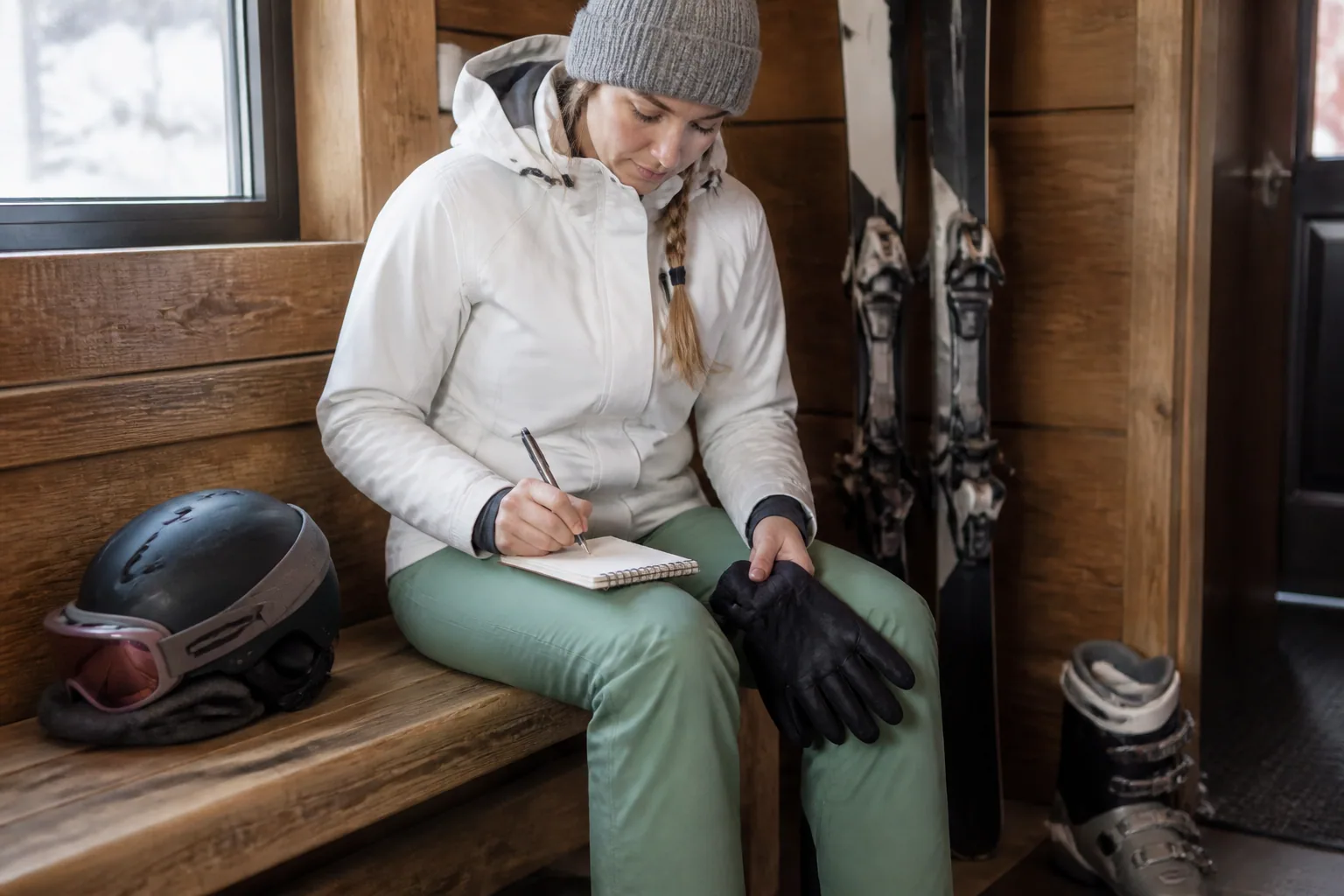
Keep any assessment notes and instructions available for follow-up at home. Knowing the mechanism, initial findings, and advice given helps the next clinician continue care. If symptoms change during the journey, seek help locally rather than waiting simply because you prefer to see your usual provider. A clear handover makes recovery easier to organize.
When to Get Medical Help
Get urgent help for deformity, rapid swelling, inability to bear weight, a locked knee, or new numbness, weakness, or a cold or discolored foot after injury. A hot red knee with fever also needs urgent assessment. New calf swelling with chest pain or breathing difficulty is an emergency. Persistent pain or repeated instability warrants review before returning to the slopes.
The best next run may be the one you postpone
Knee pain after skiing deserves a decision based on the event, symptoms, and function, not only enthusiasm for the trip. Separate workload-related soreness from injury warning signs, use qualified equipment and technique advice, and leave room to stop. A sustainable return is more valuable than finishing one extra run at the cost of a longer setback.
Frequently Asked Questions
Is knee pain after skiing normal?
Leg fatigue can follow an unfamiliar ski day, but focal knee pain, swelling, or instability should not be dismissed as normal soreness.
Why does the inside of my knee hurt after skiing?
A twisting event or repeated loading may affect several structures. Inner-knee location alone cannot distinguish a ligament injury from other causes.
Can I ski tomorrow if my knee hurts?
Do not continue with swelling, giving way, locking, or a suspected injury. For mild familiar soreness, reassess ordinary walking and reduce demands rather than assuming a booked lesson means you are ready.
Does a ski binding prevent all knee injuries?
No. Appropriate fitting and maintenance matter, but bindings cannot eliminate every injury mechanism. Do not adjust release settings yourself to experiment.
Should I wear a brace to keep skiing?
A brace does not clear an injury for sport. Use prescribed bracing as directed and obtain assessment when the knee is unstable or newly injured.
Is a snowplow always easier on knees?
It is a teaching technique, not a guarantee of comfort. Prolonged positions and individual technique can be demanding; ask an instructor for appropriate adaptations.
Should I use heat after a ski injury?
Do not use heat on a newly injured, hot, or swollen knee. Assessment and appropriate early care come first.
How long does recovery take?
The timeline depends on whether the problem is workload-related soreness or a specific injury. Return decisions should use function and clinical advice, not a fixed number of days.