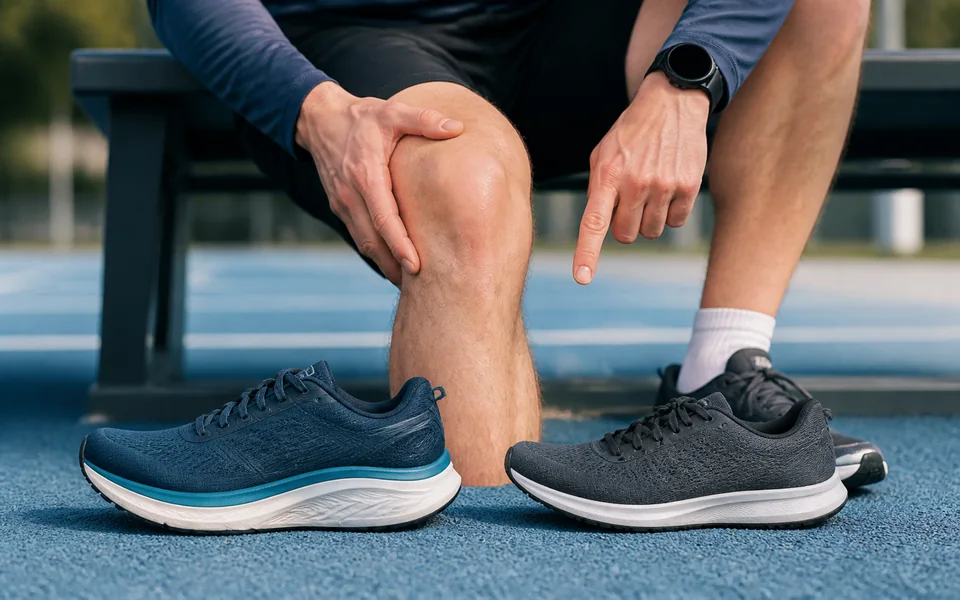
The searches varicose veins behind knee and pain behind knee are closely linked because the back of the knee is a crowded anatomical space. Superficial veins, deeper veins, nerves, tendons, muscles, a fluid-filled bursa, and the knee-joint capsule all pass through or border the popliteal region. A visible vein may be responsible for the pain, may be unrelated, or may draw attention to a different cause.
The first useful step is to separate a venous pattern from a mechanical knee pattern. Our detailed back-of-knee pain guide maps the muscles, tendons, joint capsule, and Baker’s cyst in this area. This article adds the circulation side of the picture and explains why the safety questions matter more than guessing from appearance.
Why Varicose Veins Form Behind the Knee
Leg veins return blood toward the heart against gravity. One-way valves and the calf-muscle pump help keep that blood moving upward. When superficial vein valves stop closing effectively, blood can flow backward and pool. The vein gradually enlarges, twists, and may become visible beneath the skin. This process is called venous reflux or venous incompetence.
Veins commonly appear along the great or small saphenous systems and their tributaries. The small saphenous vein travels up the back of the calf toward the area behind the knee, so reflux or enlarged branches can create a cluster of veins directly in the popliteal crease. Prolonged standing raises venous pressure and often makes the veins more prominent by the end of the day.
Age, family history, pregnancy, previous blood clots, obesity, and occupations involving long periods of standing are associated with varicose veins, although no single factor explains every case. Visible veins become more common with age, but a young active person can also develop them. Exercise does not cause varicose veins; calf movement generally helps venous return.
What Varicose Vein Pain Feels Like
Symptomatic varicose veins are associated with aching, heaviness, pressure, throbbing, burning, itching, swelling, and discomfort. The pain is often diffuse rather than a precise stabbing point. It may feel as if the leg is full, tired, or harder to move after hours upright. Some people notice restless legs or nighttime cramping, although those symptoms are not specific to venous disease.
A classic pattern worsens with prolonged standing or sitting with the feet down and improves with walking, calf-muscle movement, elevation, or overnight rest. The knee itself may still bend normally. By contrast, mechanical knee pain is more likely to reproduce with stairs, squatting, kneeling, twisting, or a specific range of motion.
The patterns are not absolute. Venous swelling can make the knee feel tight when bending, and osteoarthritis can ache after prolonged standing. A person can have both. The guide to knee pain locations helps identify whether symptoms sit in the joint line, kneecap, tendon, calf, or popliteal area.
Varicose Veins vs. Baker’s Cyst vs. Joint Pain vs. DVT
| Pattern | Typical feel or appearance | Common triggers | What may relieve it | Priority |
|---|---|---|---|---|
| Varicose veins / venous reflux | Visible twisted vein, aching, heaviness, itching, pressure, lower-leg swelling | Long standing, heat, later in the day | Walking, elevation, properly fitted compression | Routine vascular assessment when troublesome |
| Baker’s cyst | Soft or firm fluid-filled lump, tightness, reduced bending, ache after walking | Underlying arthritis or knee injury | Treating the joint cause, rest, appropriate pain care | Assessment for an unexplained lump |
| Mechanical joint or tendon pain | Localized ache or sharp pain with bending, stairs, squatting, or loading | Specific movement, workload increase, injury | Load modification, rehabilitation, strength work | Assessment if persistent, unstable, locking, or swollen |
| Superficial vein thrombosis | Hard, tender, red or discolored cord-like vein | Can arise in a varicose vein, sometimes without a clear trigger | Requires diagnosis; treatment depends on extent and location | Prompt medical assessment |
| Deep vein thrombosis | New one-sided swelling, warmth, pain or tenderness, possible discoloration | Surgery, immobility, travel, pregnancy, cancer, previous clot, though it can occur without these | Do not self-massage or wait for home treatment | Urgent assessment |
Can Varicose Veins Cause Knee Swelling?
Venous insufficiency can cause lower-leg and ankle swelling, especially after a long day upright. Swelling can extend toward the knee and create a feeling of tightness around the joint. A visible cluster behind the knee may also feel full when the leg is bent because the skin and superficial tissue are compressed in the crease.
True swelling inside the knee joint is a different process. Joint effusion usually makes the knee look puffy around the kneecap, limits bending, and may follow arthritis, injury, infection, or crystal disease. The guide to knee swelling after exercise explains how activity-related joint swelling differs from general lower-leg edema.
One-sided swelling deserves more caution than symmetrical mild ankle swelling. If a leg becomes suddenly larger, warmer, more painful, or discolored, it should be evaluated rather than attributed to known varicose veins. Having visible varicose veins does not protect someone from DVT, and the presence of an obvious vein can create false reassurance.
Red Flags: When Pain Behind the Knee Is Urgent
Seek urgent medical assessment for new one-sided leg swelling, warmth, redness or darkening, calf or thigh tenderness, rapidly worsening pain, or a swollen leg after surgery, a hospital stay, immobilization, long travel, pregnancy, cancer treatment, or a previous clot. DVT can occur without dramatic redness and sometimes with few symptoms, so risk context matters.
Call emergency services for sudden shortness of breath, chest pain that worsens with breathing, coughing blood, rapid heartbeat, lightheadedness, or collapse. These can be signs of a pulmonary embolism, when a clot travels to the lungs.
A hard, painful superficial vein also needs prompt advice. Superficial thrombophlebitis is not the same as DVT, but the clot can extend, and treatment depends on length, location, symptoms, and risk factors. Do not aggressively rub a painful cord-like vein.
Bleeding from a varicose vein can look dramatic because venous pressure is elevated. Lie down, raise the leg, apply firm direct pressure with a clean pad, and seek urgent medical care. Recurrent bleeding is a reason for vascular treatment rather than repeated home management.
How Varicose Veins Are Diagnosed
A clinician begins with symptom history, examination while standing, skin assessment, pulses, and questions about previous clots, pregnancy, surgery, family history, and prior vein treatment. The visible vein pattern is useful but cannot show exactly where reflux begins or whether deeper veins are involved.
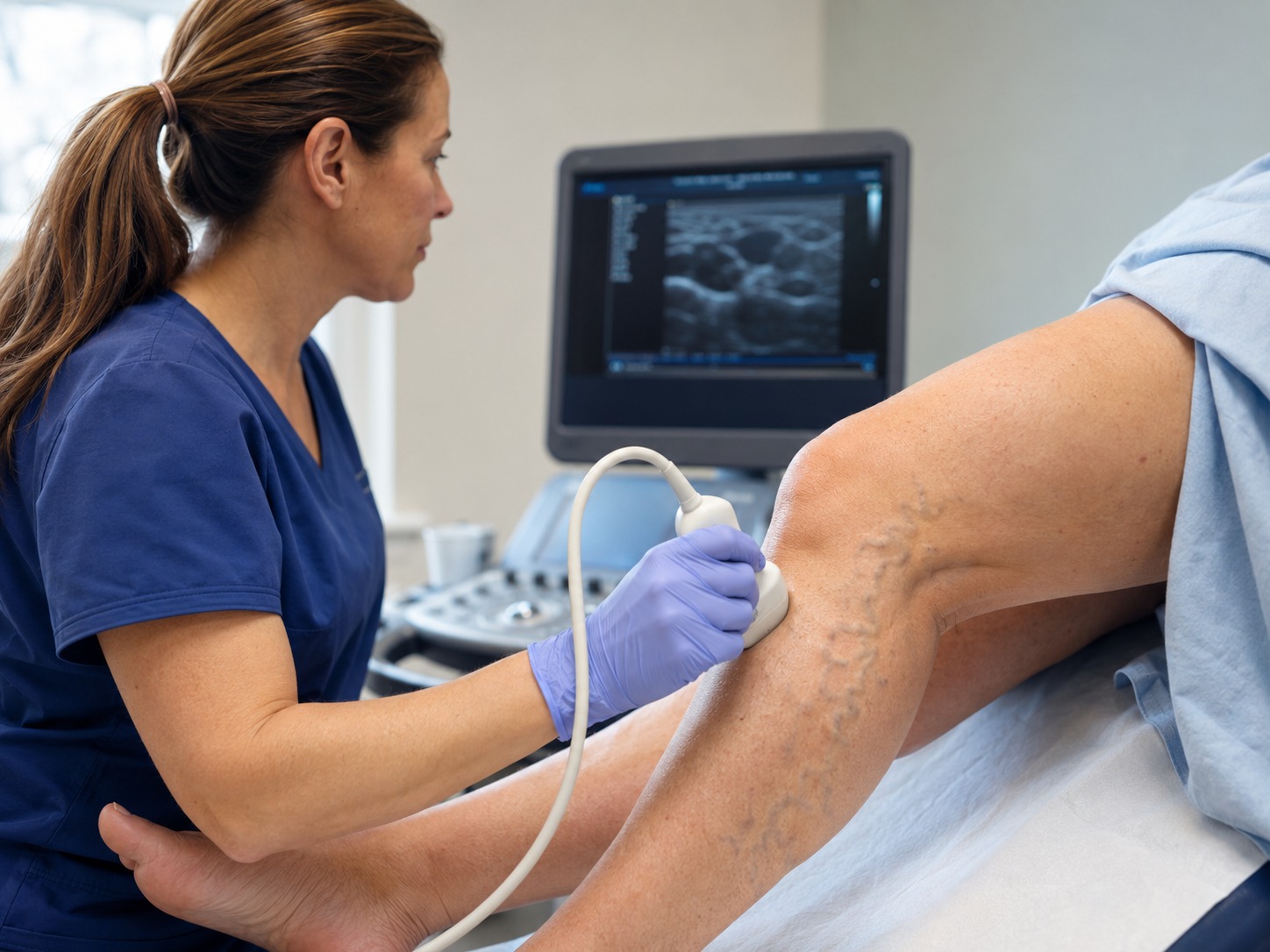
Duplex ultrasound combines standard ultrasound with Doppler flow assessment. It confirms venous reflux, maps the superficial and deep systems, identifies obstruction or thrombosis, and guides treatment planning. NICE and vascular-society guidelines recommend duplex ultrasound for people being evaluated for intervention or when diagnosis and anatomy need clarification.
Knee imaging answers different questions. Ultrasound or MRI may be used when a Baker’s cyst or soft-tissue structure is suspected. X-rays can show osteoarthritis but do not diagnose venous reflux. Blood tests do not diagnose ordinary varicose veins.
What Can Be Done at Home for Stable Varicose Vein Symptoms?
Regular walking activates the calf-muscle pump and is usually more helpful than standing still. Short movement breaks during desk work or travel reduce long periods of venous pooling. If walking itself provokes knee pain, the comparison of walking, cycling, and swimming can help preserve activity without repeatedly irritating the joint.
Elevating the legs above heart level for short periods can reduce dependent swelling. Weight management may reduce symptoms and procedural risk. Skin care matters when chronic venous insufficiency causes dryness, eczema, or discoloration, because damaged skin is more vulnerable to ulceration.
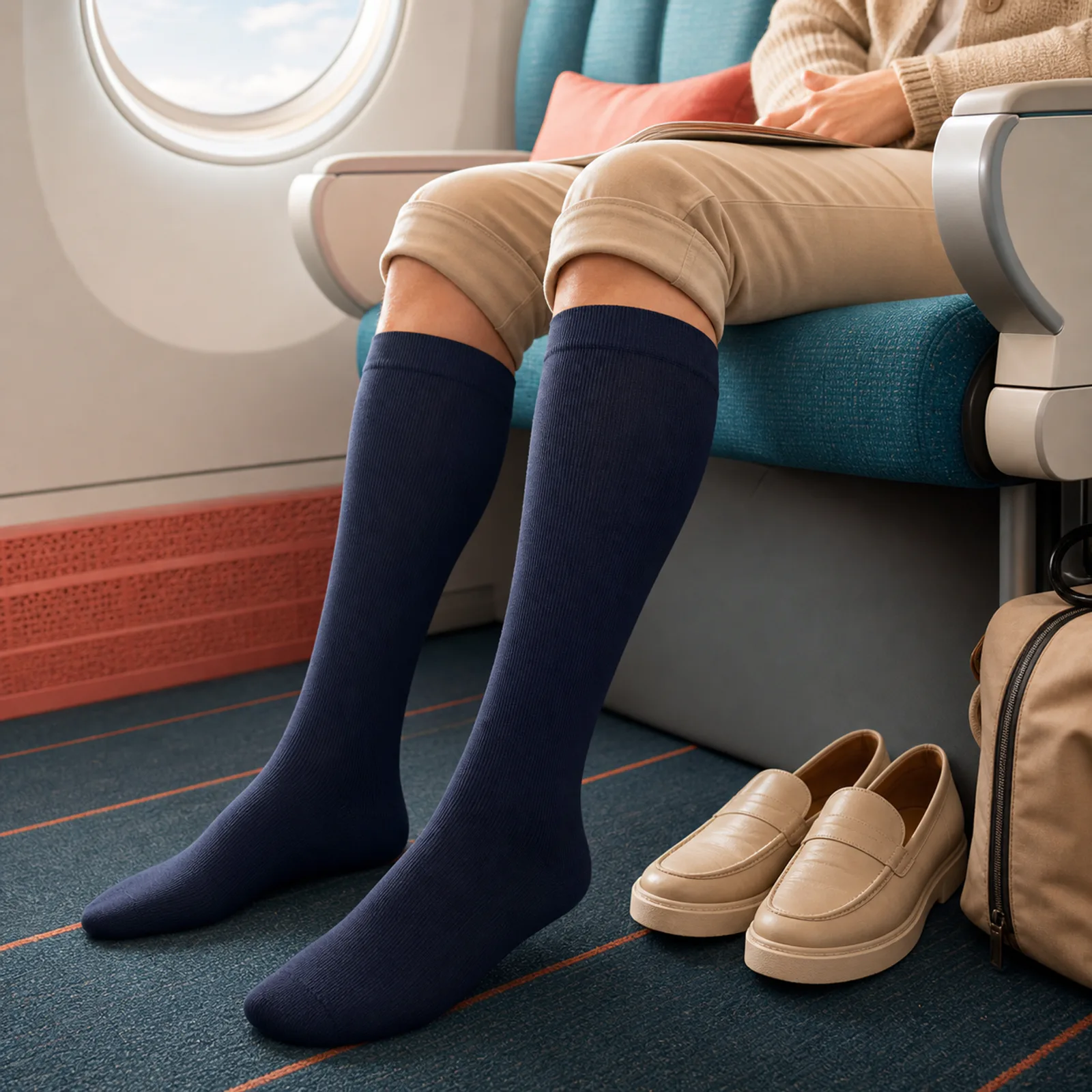
Avoid long uninterrupted periods of either sitting or standing. Simple ankle pumps and brief walks help during travel. The guide to knee pain after flights includes movement strategies, while the separate CDC guidance in the sources below covers blood-clot risk during long travel.
Home care can reduce symptoms but does not repair failed valves. Persistent aching, swelling, skin changes, a hard painful vein, bleeding, or an ulcer is a reason to seek vascular assessment.
Compression Stockings: Helpful, but Not a Universal Answer
Graduated compression stockings apply the greatest pressure near the ankle and less pressure higher up the leg. They can reduce swelling and aching for some people, particularly when intervention is not appropriate, during pregnancy, or for specific clinical indications. Correct measurement and pressure class are essential.
A stocking that ends or bunches in the crease behind the knee can create a tight band, skin irritation, or focal pressure over a symptomatic vein. Knee-high stockings should finish below the crease without rolling. Thigh-high garments require careful fit. Ordinary athletic knee sleeves are not substitutes for graduated medical compression.
Compression can be unsafe or poorly tolerated in some people with significant peripheral arterial disease, severe neuropathy, fragile skin, uncontrolled heart failure, or an uncertain acute diagnosis. Pulses and arterial circulation may need assessment before strong compression. Never use a tight garment to self-treat a leg that may have an acute clot.
This distinction is also important when comparing knee products. The guide to knee braces versus compression sleeves discusses joint support, not venous treatment. A knee sleeve may feel supportive during movement, but it does not deliver the pressure gradient or vascular assessment required for chronic venous disease.
Choosing Compression Socks for Everyday Wear
People searching for compression socks for varicose veins often see medical stockings and sports socks presented as if they are interchangeable. They are not. Check the published pressure level, whether the pressure is graduated, the sizing method, and the garment length. If a clinician prescribed a specific compression class, follow that prescription rather than substituting a consumer sock.
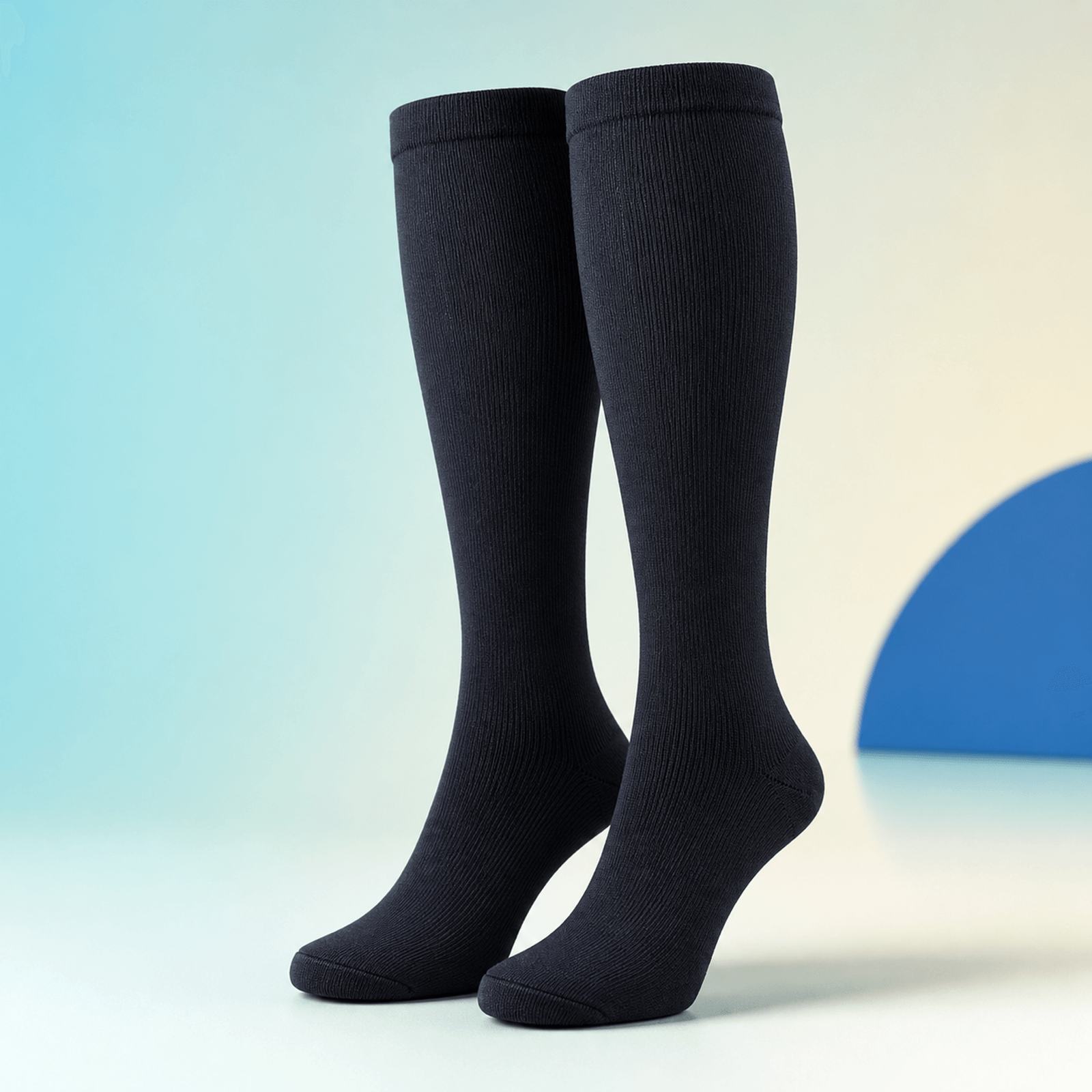
If everyday compression has been confirmed as appropriate, FlexiKnee Everyday Compression Socks provide a knee-high option for standing, travel, walking, and sport. Choose the size from the calf-first chart, keep the top band flat below the knee crease, and remove the sock if pain, numbness, discoloration, or swelling increases. The product has no published mmHg rating, is not presented as medical-grade compression, and does not diagnose or treat DVT or replace prescribed medical compression.
Medical and Procedural Treatment Options
| Treatment | What it does | Often used for | Key limitation or question |
|---|---|---|---|
| Endothermal ablation | Closes a refluxing trunk vein with laser or radiofrequency energy | Confirmed truncal reflux in suitable anatomy | Requires ultrasound mapping and a trained vascular service |
| Nonthermal ablation | Uses adhesive or mechanochemical techniques to close the vein | Selected veins and patient preferences | Availability, anatomy, allergy, and long-term evidence vary |
| Ultrasound-guided foam sclerotherapy | Injects a sclerosant foam to close targeted veins | Tributaries or reflux patterns unsuitable for first-line thermal treatment | Recurrence and complication profiles depend on anatomy and technique |
| Phlebectomy | Removes surface tributary veins through tiny incisions | Bulging local veins, often combined with truncal treatment | Does not replace assessment of the underlying reflux source |
| Compression and conservative care | Controls symptoms without eliminating reflux | Pregnancy, people unsuitable for procedures, or preference | Symptoms may return whenever compression is removed |
NICE recommends offering endothermal ablation for confirmed varicose veins with truncal reflux when appropriate, followed by foam sclerotherapy if endothermal treatment is unsuitable and surgery when other interventions are unsuitable. Modern vascular guidelines similarly emphasize duplex-guided treatment and shared decision-making rather than a one-size-fits-all procedure.
The visible vein behind the knee may be a tributary rather than the original source of reflux. Treating only the surface bulge without mapping the system can leave the underlying problem. That is why a cosmetic consultation and a full vascular evaluation are not always equivalent.
Could the Pain Still Be Coming From the Knee?
Yes. Osteoarthritis can coexist with varicose veins and may create stiffness after rest, pain with stairs, crepitus, and activity-related swelling. The article on knees that hurt after resting describes the first-movement pattern typical of joint stiffness.
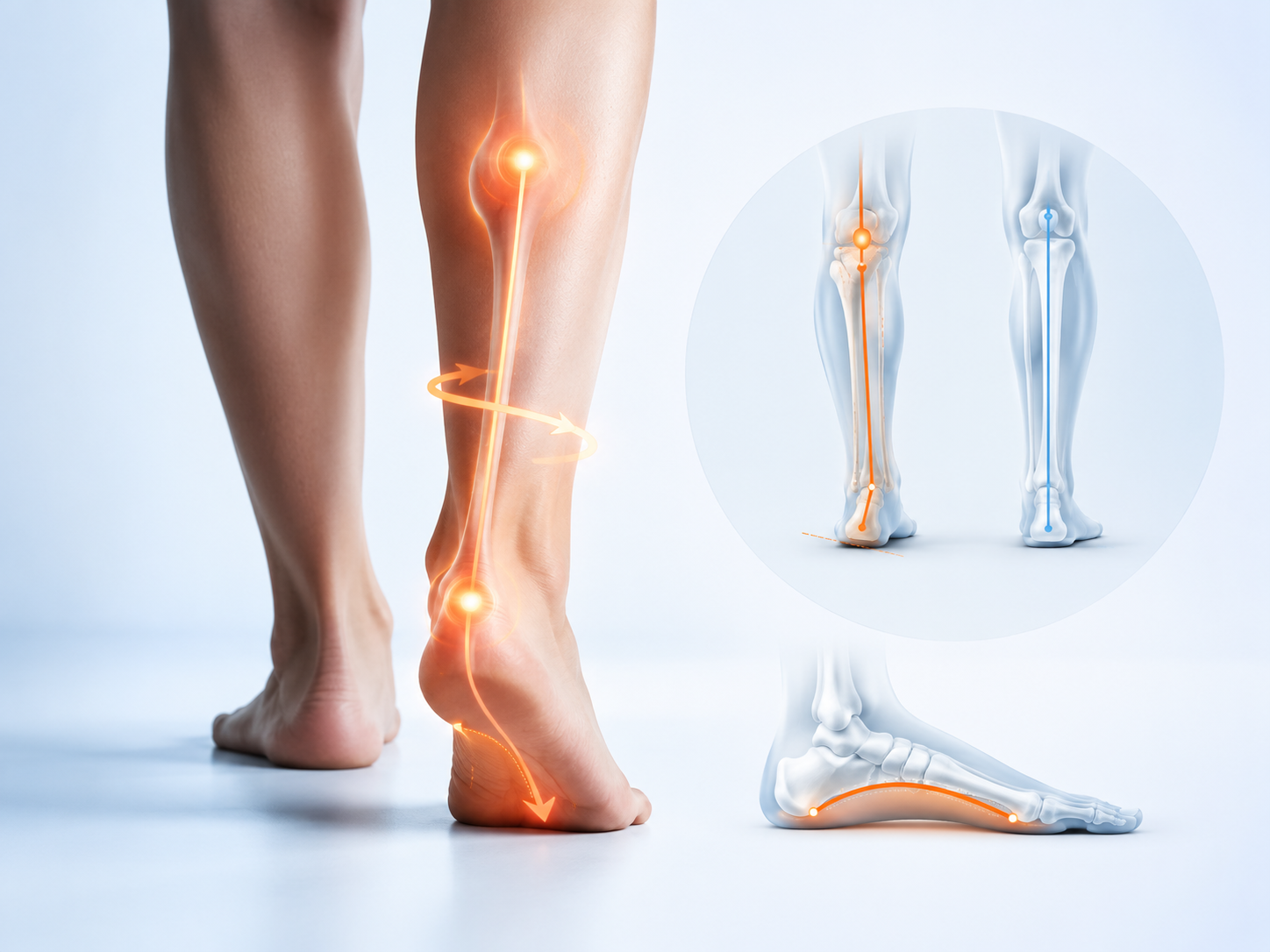
Tight calf muscles can pull directly on the back of the knee and limit ankle motion, altering gait. The calf–ankle–knee connection is especially relevant when there is no visible swelling or vein tenderness and symptoms reproduce during stretching or walking.
A Baker’s cyst is commonly associated with osteoarthritis, rheumatoid arthritis, gout, or knee injury. It may form a soft lump that becomes more visible while standing, creates tightness during bending, and worsens after walking. A ruptured cyst can cause calf swelling and mimic DVT, which is why sudden worsening should be assessed rather than diagnosed at home.
If pain sits at the inner or outer joint line rather than the vein itself, read the side-knee pain guide. A careful symptom map often reveals that the visible vein and the painful structure are in different places.
Heat, Massage, and Recovery Devices: Important Boundaries
Do not use deep massage, percussion, intense vibration, or strong heat over a newly painful, hard, red, or swollen vein. Do not use those approaches on a leg with possible DVT. They do not diagnose or treat a clot and may delay urgent care.
For stable diagnosed varicose veins, individual advice is still necessary because skin changes, sensation, arterial circulation, medications, and prior procedures alter what is safe. A device designed for muscle recovery is not a varicose-vein treatment. The same applies to heated knee wraps: the heat-versus-ice guide addresses joint and soft-tissue comfort, not vascular disease.
If a clinician confirms that the pain is mechanical knee stiffness rather than a vascular symptom, a separate comfort routine may be reasonable. Keep that distinction explicit so temporary warmth does not mask a worsening circulation problem.
A Practical Decision Path
- Look at timing: Does the ache build after standing and ease with elevation, or reproduce with bending and stairs?
- Check the whole leg: Compare swelling, temperature, skin color, tenderness, and circumference with the other side.
- Identify urgent features: New one-sided swelling, warmth, a hard painful vein, breathing symptoms, or strong clot risk requires prompt care.
- Map the structure: A visible vein, soft lump, joint-line pain, and calf-tendon pain suggest different evaluations.
- Use the right test: Duplex ultrasound evaluates veins; joint imaging evaluates a different problem.
- Treat the diagnosis: Walking, elevation, and fitted compression can manage stable venous symptoms, while confirmed reflux may benefit from vascular intervention.
The Bottom Line
Varicose veins behind the knee can cause genuine pain, heaviness, pressure, itching, and swelling. The most characteristic pattern worsens after prolonged standing and improves with movement or elevation. But the back of the knee is too anatomically complex to diagnose from a blue vein alone. Baker’s cyst, osteoarthritis, tendon problems, superficial thrombosis, and DVT can overlap.
Stable symptoms deserve a proper vascular assessment when they are troublesome, and duplex ultrasound guides treatment. Sudden one-sided swelling, warmth, redness or discoloration, a hard tender vein, or chest symptoms requires urgent care. Keep knee-comfort tools and vein treatment separate: first identify whether the problem is vascular, joint-related, or both, then use the strategy designed for that diagnosis.
Frequently Asked Questions
Can varicose veins cause pain behind the knee?
Yes. Superficial veins run behind and around the knee, and enlarged veins can cause aching, heaviness, burning, itching, tenderness, or pressure in that area. The discomfort often builds after prolonged standing and improves with walking, elevation, or rest. However, joint disease, a Baker's cyst, tendon problems, and blood clots can create similar symptoms.
What do varicose veins behind the knee look like?
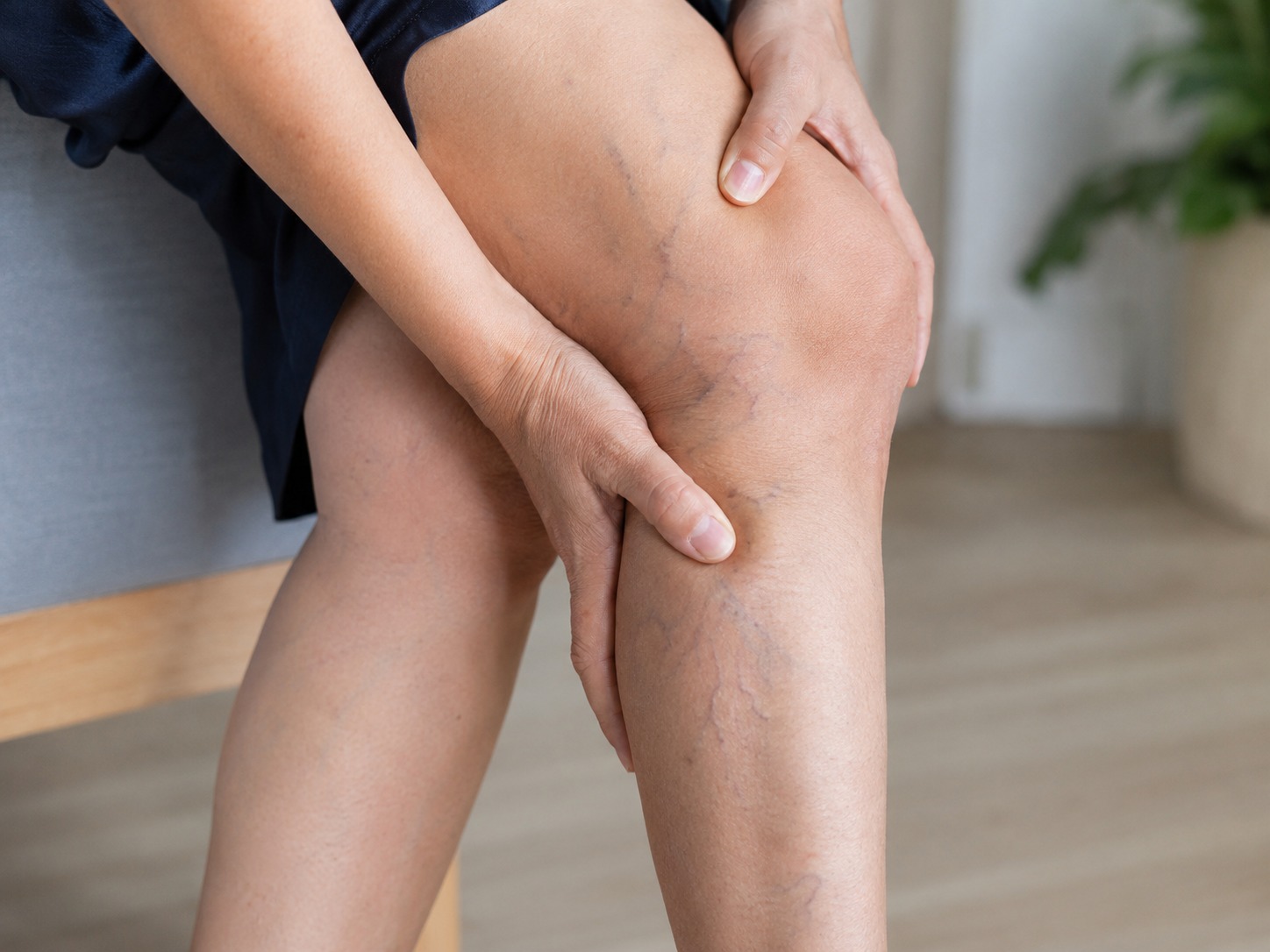
They may look blue, purple, greenish, twisted, raised, or rope-like. Smaller spider veins can form a web without bulging. Some symptomatic veins are not obvious at the surface, so appearance alone cannot confirm or exclude venous reflux. Duplex ultrasound is the standard test when treatment is being planned or the diagnosis is uncertain.
How can I tell varicose vein pain from knee-joint pain?
Venous pain more often feels like diffuse aching, heaviness, burning, or pressure that worsens later in the day or after standing. Joint pain is more likely to be triggered by bending, stairs, twisting, squatting, or weight bearing. The patterns can overlap, and both conditions can exist together.
When is pain behind the knee a possible blood clot?
Seek urgent medical assessment for new one-sided swelling, warmth, redness or discoloration, calf or thigh tenderness, rapidly increasing pain, or symptoms after surgery, immobilization, long travel, pregnancy, cancer treatment, or a previous clot. Chest pain, sudden shortness of breath, coughing blood, or collapse is an emergency.
Are compression stockings good for varicose veins behind the knee?
Properly fitted graduated compression can reduce aching and swelling for some people, but it is not appropriate for everyone and does not remove the faulty vein. Fit, pressure level, arterial circulation, skin condition, and the exact diagnosis matter. A stocking that bunches behind the knee can make discomfort worse. Do not assume a consumer sock provides a medical pressure class unless its pressure range and gradient are published.
Can a varicose vein behind the knee burst?
A superficial varicose vein can bleed if the overlying skin is damaged, and a hard painful vein can indicate superficial vein thrombosis. External bleeding should be controlled with firm pressure and elevation, followed by urgent medical advice. Sudden painful swelling within a vein also needs assessment.
What treatment is used for painful varicose veins?
Treatment depends on duplex ultrasound findings and may include endothermal ablation, nonthermal ablation, ultrasound-guided foam sclerotherapy, or phlebectomy. Current guidelines generally favor treating confirmed reflux with an appropriate intervention rather than relying indefinitely on compression alone when a person is a suitable candidate.
Can massage or heat be used over varicose veins?
Do not apply aggressive massage, intense heat, or compression over a newly painful, hard, red, swollen vein or a leg with possible DVT. For stable diagnosed varicose veins, ask a clinician what is appropriate. Knee-comfort devices should not be used as treatment for venous disease.