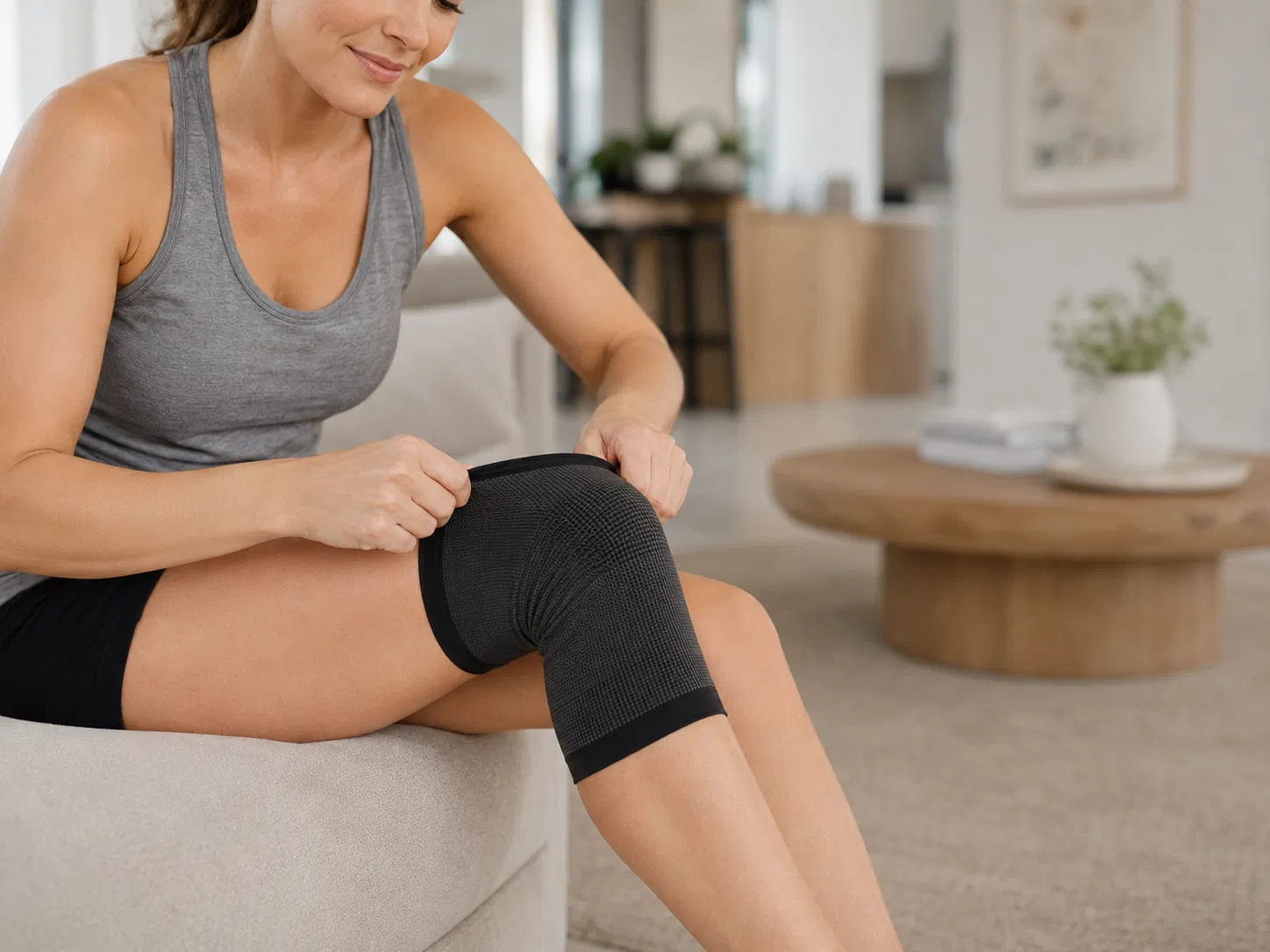
Search interest around best low impact cardio, low knee impact cardio, stationary bikes, recumbent bikes, and low-impact cardio for seniors has been rising because many people want the cardiovascular benefits of exercise without repeatedly provoking their knees. The phrase “low impact” is useful, but it can also be misleading. It describes the absence or reduction of jumping and hard landings. It does not mean that the knee carries no load, bends very little, or can tolerate unlimited duration.
A brisk walk is low impact, yet every step still asks the knee to accept body weight. A stationary bike removes foot strike, but a seat that is too low can compress the front of the knee thousands of times. Swimming unloads the joint, but breaststroke can irritate some medial knees because of the whip kick. The practical question is therefore not “Which activity is safe?” It is “Which activity gives me enough cardiovascular work at a dose my knee can recover from?”
Before comparing the options, it helps to know where your symptoms appear. Use the knee pain location map if you are unsure, and read the guide to knee pain after exercise when discomfort is delayed rather than immediate. Location, timing, swelling, and next-day response are more useful than the label attached to a workout.
What Does Low-Impact Cardio Actually Mean?
Cardio is any sustained activity that raises breathing and heart rate for long enough to challenge the cardiovascular system. “Low impact” usually means at least one foot remains supported or the body is partly unloaded, so there is less landing force than running, jumping, or court sports. Walking, cycling, swimming, water aerobics, elliptical training, rowing, and some dance formats can all fit the category.
Low impact is different from low intensity. A relaxed five-minute walk is low impact and low intensity. A hard stationary-bike interval can be low impact but high intensity. For sore or unpredictable knees, control the intensity and the mechanical dose separately. Resistance, hill grade, cadence, stroke choice, water depth, duration, and weekly frequency can each change how demanding a “knee-friendly” activity becomes.
Public-health guidance for adults generally points toward 150 to 300 minutes of moderate aerobic activity per week plus strengthening on at least two days. People with arthritis or chronic conditions are also advised to move more and sit less, beginning with small amounts when necessary. That target should not pressure a painful beginner into jumping from zero to five 30-minute sessions. Five- or ten-minute bouts count, and a sustainable increase is more valuable than one ambitious week followed by a flare.
Walking vs. Cycling vs. Swimming: Side-by-Side Comparison
| Factor | Walking | Cycling | Swimming / Water Exercise |
|---|---|---|---|
| Weight bearing | Full body weight with every step | Mostly supported by the seat | Strongly reduced by buoyancy |
| Knee motion | Moderate range, repeated steps | Highly repetitive bending | Varies by stroke or water exercise |
| Best advantage | Builds real-world walking capacity | Easy to control pace and resistance | Greatest unloading and whole-body work |
| Common setup problem | Too much distance, hills, or speed too soon | Seat too low or resistance too heavy | Poor stroke choice or limited pool access |
| Often suits | People who tolerate weight bearing and want convenience | People with impact sensitivity or controlled indoor training needs | Painful, deconditioned, heavier, or balance-limited exercisers |
| Main limitation | Can aggravate weight-bearing pain | Does not train normal walking mechanics | Access, changing, technique, and time |
Walking: Best for Accessibility and Everyday Function
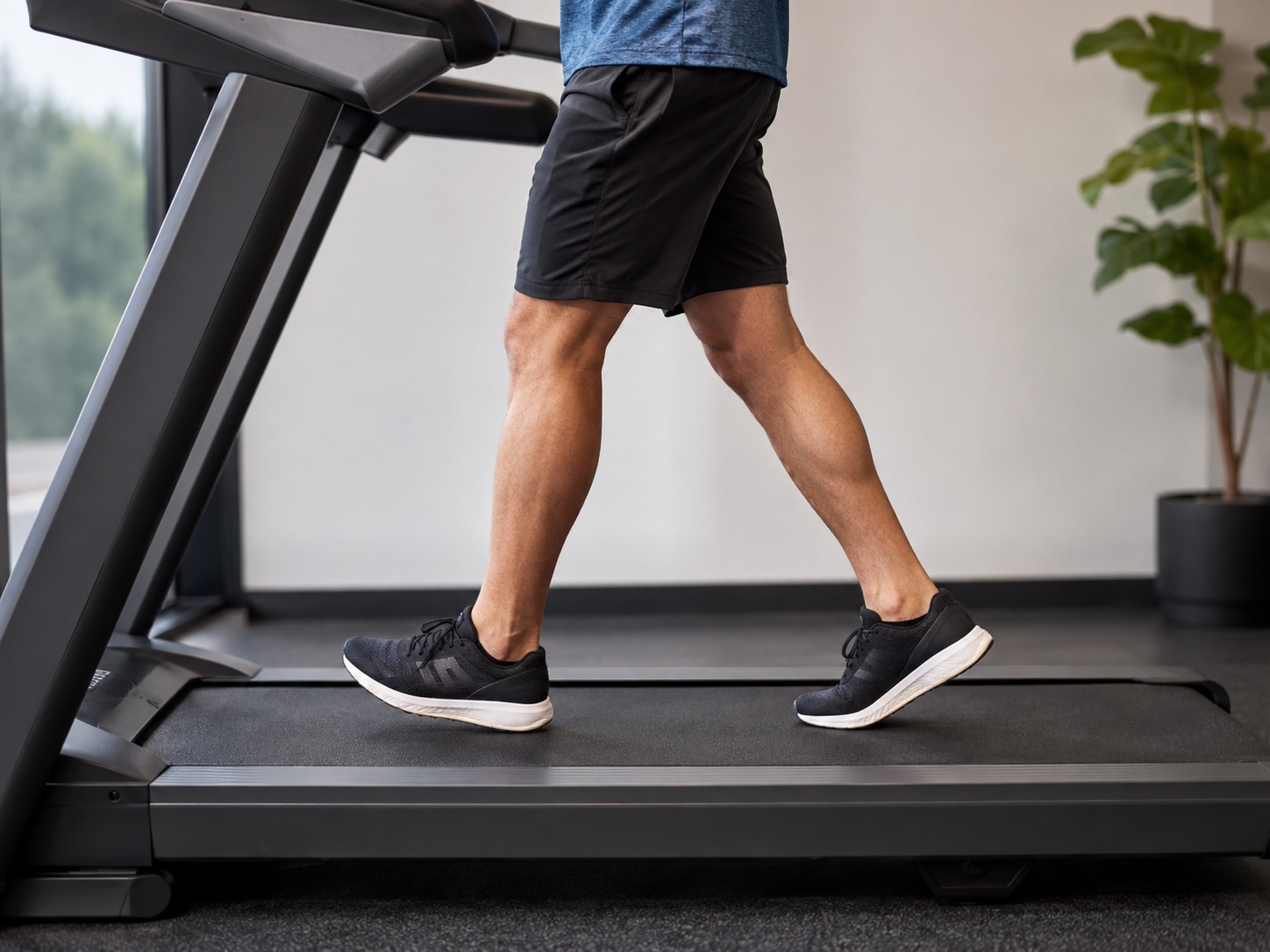
Walking deserves to be the default starting point when it is tolerable because it is free, familiar, and directly improves the task most adults need every day. It trains the calves, quadriceps, hips, balance system, and confidence in weight bearing. It also requires no machine and can be divided into very short sessions. The CDC lists brisk walking among joint-friendly activities for adults with arthritis.
The drawback is that walking is still a fully weight-bearing activity. Long uninterrupted walks, hills, uneven trails, fast downhill sections, and sudden mileage increases can exceed the current capacity of a sore knee. People whose symptoms build after distance should read the guide to knee pain after long walks. If the arch collapses or the ankle rolls inward, the flat feet and overpronation guide explains how the foot can alter the line of force reaching the knee.
Start on a flat, predictable surface at a speed that allows relaxed conversation. A useful first dose is five to ten minutes, followed by a check later that evening and the next morning. Increase total time before adding hills or speed. Supportive shoes matter more than marketing labels; worn midsoles and unstable heel counters can turn an easy route into a repeated alignment challenge. Our insole guide for knee pain explains when arch support is worth testing.
Cycling: Best for Controlled Aerobic Volume
Cycling is often the easiest way to accumulate moderate cardio when impact or body-weight loading is the main problem. The seat supports much of the body, cadence is measurable, and resistance can be changed in seconds. A stationary bike also removes traffic, weather, balance, and route uncertainty. Research in knee osteoarthritis suggests stationary cycling can reduce pain compared with no exercise, although not every measured improvement exceeds a clinically important threshold.
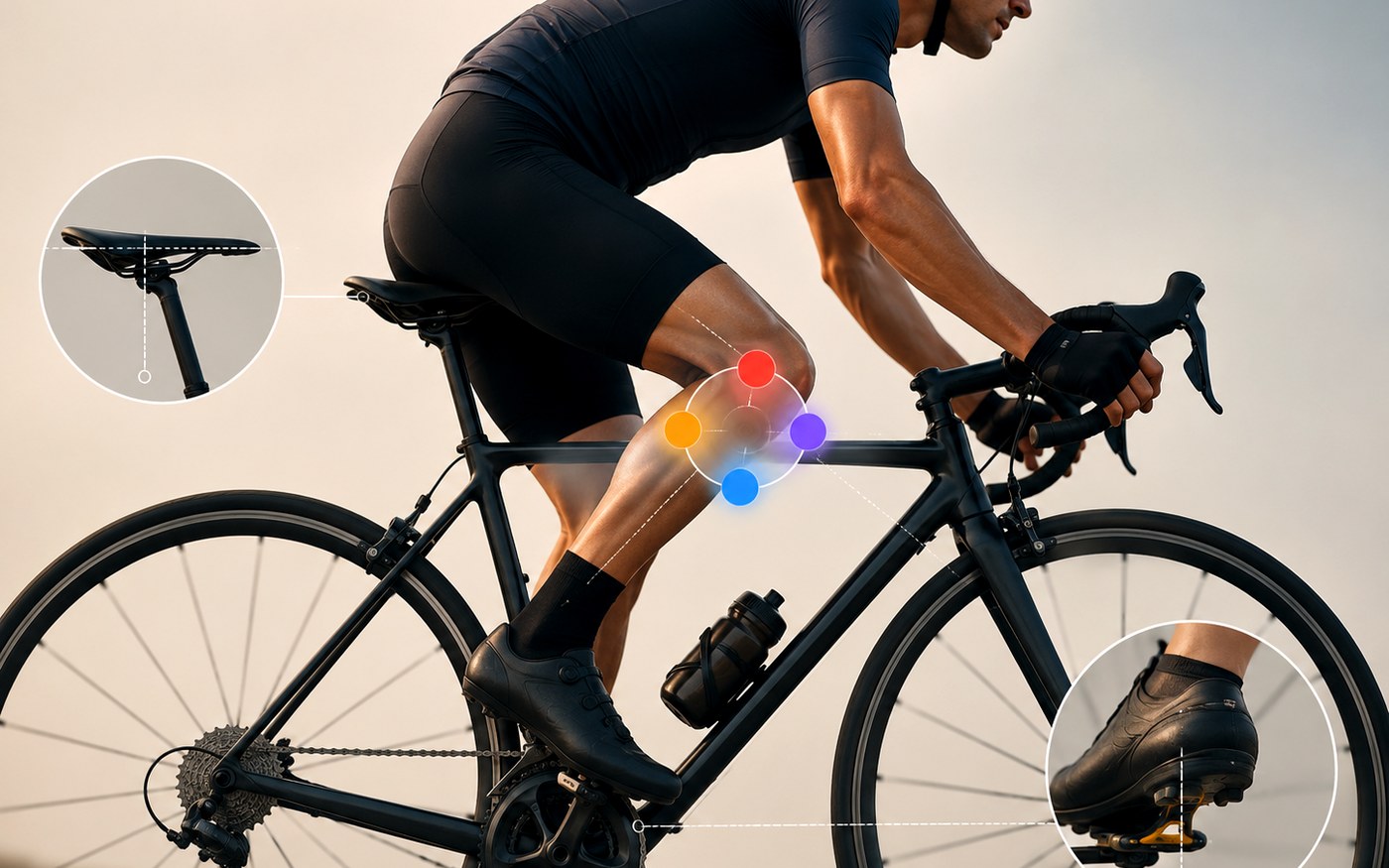
Fit determines whether cycling feels smooth or compressive. When the saddle is too low, the knee remains deeply bent at the top of every pedal stroke. When it is too high, the rider reaches at the bottom and may feel pulling behind the knee. Begin with a seat height that leaves a small bend when the pedal is at its lowest point, keep resistance light, and use a smooth cadence rather than grinding a heavy gear. The dedicated cycling knee pain and bike-fit guide breaks down front, back, inner, and outer knee symptoms.
Upright bikes generally feel more like outdoor cycling. Recumbent bikes provide a larger seat and back support and can feel safer for people with balance, back, or confidence limitations. Neither is automatically superior. Choose the version that allows a neutral position, smooth pedal circle, and repeatable sessions without sharp pain. Two or three minutes of easy pedaling can also work as a warm-up before strength exercises.
Swimming and Water Exercise: Best for Maximum Unloading
Water changes the equation because buoyancy reduces the effective body weight carried by the knees. That makes pool exercise valuable when land walking is too painful, when body weight makes repeated loading difficult, or when balance confidence is low. Water resistance also provides a whole-body muscular challenge in every direction. Systematic reviews in knee osteoarthritis have reported short-term improvements in pain, stiffness, and physical function compared with no exercise, with outcomes broadly similar to land-based exercise in several analyses.
“Swimming” does not have to mean continuous laps. Water walking, gentle aqua aerobics, flutter kicking while holding the wall, and short intervals can all raise heart rate. Freestyle and backstroke usually keep the legs moving in a straighter pattern. Breaststroke uses a wider whip kick that may irritate the inner knee in some people. A person who cannot swim confidently can still gain aerobic benefit from chest-deep water walking.
The limitation is logistical rather than physiological: pool access, travel, changing, water temperature, and confidence can reduce adherence. The best exercise on paper loses its advantage if it happens once every three weeks. If a pool is convenient and enjoyable, it can be the primary cardio session. If not, it may work better as one weekly recovery-oriented option alongside short walks or bike sessions.
Which Option Fits Your Knee Pattern?
If weight bearing hurts immediately
Begin with cycling or water exercise because both reduce the demand of supporting full body weight. Use light resistance or easy water movement and reassess after several sessions. Immediate sharp pain, swelling, or inability to bear weight still requires clinical assessment rather than simply switching machines.
If the knee feels stiff but improves after a few minutes
Walking or easy cycling can both work well. Begin slowly and allow a gradual warm-up. A short routine from the daily knee care guide can prepare the joint before the main session. Warmth may feel useful before activity when stiffness is the main issue, while the heat versus ice guide helps separate that pattern from recent swelling.
If pain appears only the next day
The activity may be acceptable but the dose is too large. Reduce time by roughly a quarter to a third, keep intensity conversational, and avoid changing duration, resistance, and frequency in the same week. Delayed symptoms are feedback about capacity, not proof that all cardio is harmful.
If arthritis and deconditioning are both present
Choose the mode that creates the least fear and the most consistency. Water exercise and recumbent cycling often provide the easiest entry, while short walks maintain real-world function. The knee arthritis guide explains why aerobic movement and strength work are usually combined rather than treated as competing strategies.
What About the Elliptical, Rowing Machine, and Pilates?
Search data around the elliptical, rowing machine, Pilates, and “no impact cardio” often appears beside questions about bad knees. These can be useful, but they do not belong in the same category mechanically. An elliptical removes foot strike and keeps the feet supported, yet the user still bears body weight and repeats a fixed arc of knee flexion. Some people love that smooth path. Others feel more front-of-knee pressure than they do on a bicycle because the knee is loaded while bent. Begin with low resistance and a short stride rather than assuming the machine is automatically safer.
Rowing is seated and low impact, but every stroke combines deep knee bending with a powerful leg drive. It can work well for a knee that tolerates flexion and dislikes impact, but it is a poor first choice when deep bending, squatting, or the front of the knee is the main trigger. Shorten the slide so the shins do not travel far past vertical, keep resistance moderate, and learn the sequence before chasing speed.
Pilates can improve trunk control, hip strength, mobility, and muscular endurance, but most Pilates sessions are not sustained aerobic training. It can complement a cardio plan rather than replace it. The same is true of low-impact strength circuits. A circuit may raise heart rate, but its primary value is often strength and movement capacity. Use the label that matches the goal: cardio for sustained aerobic work, strength for progressive muscle challenge, and mobility for range and control.
How Hard Should Knee-Friendly Cardio Feel?
The talk test is more useful than a calorie display. At moderate intensity, breathing is clearly faster, the body feels warm, and conversation is possible in short sentences. A machine's calorie estimate can be wrong by a wide margin and should not drive resistance beyond what the knee tolerates. Heart-rate targets can also be distorted by medication, stress, heat, dehydration, and fitness level.
For weight loss, consistency and total weekly energy balance matter more than choosing the machine advertised as the “best cardio for weight loss.” A tolerable 25-minute bike ride performed four times each week usually contributes more than a painful high-output session that causes three days of inactivity. Build duration first, then add modest intensity once the knee has demonstrated a stable response over several weeks.
A Four-Week Low-Impact Cardio Starter Plan
| Week | Main goal | Example dose | Progress only when |
|---|---|---|---|
| 1 | Find the best-tolerated mode | 5–10 minutes, 3 sessions | Symptoms return to baseline by next day |
| 2 | Build consistency | 10–12 minutes, 3–4 sessions | No progressive swelling or sharp pain |
| 3 | Add total weekly time | 12–18 minutes, 4 sessions | Technique and effort remain controlled |
| 4 | Mix modes or extend one session | 15–25 minutes, 4 sessions | The knee feels stable during daily tasks |
This is not a rehabilitation prescription. It is a conservative framework for an adult whose symptoms are stable and who has no acute injury signs. Use the talk test: moderate effort means breathing is faster but a sentence is still possible. Add minutes before resistance, speed, hills, or intervals. If one mode irritates the knee, substitute another rather than losing the entire week.
Cardio Alone Is Not a Complete Knee Plan
Aerobic exercise improves endurance and helps people tolerate more daily activity, but it does not replace targeted strength. The quadriceps control the knee during sitting, standing, stairs, and deceleration. The hips help keep the thigh aligned. The calves manage push-off and influence ankle motion. Two weekly sessions drawn from the knee strengthening guide can make walking, cycling, and pool work feel more stable.
Cardio variety is useful because it distributes stress. A person might walk twice, cycle twice, and use the pool once instead of repeating the same movement every day. That does not mean constant novelty. Keep enough consistency to see how each activity affects the knee, then adjust one variable at a time.
When Low-Impact Cardio Needs Professional Guidance
Seek assessment for a knee that locks, repeatedly gives way, becomes visibly swollen, feels hot and red, cannot accept weight, or develops sudden severe pain. Calf swelling, shortness of breath, fever, a new traumatic injury, or rapidly worsening symptoms also deserve prompt attention. Exercise should not be used to test a potentially serious problem.
For stable but persistent pain, a physical therapist can help identify whether the limiting factor is strength, range of motion, footwear, bike setup, balance, or exercise dose. The goal is not to find a perfect activity that never creates sensation. It is to build enough capacity that normal training and daily life become more predictable.
The Bottom Line
Walking wins for access and real-world function. Cycling wins for controllable indoor aerobic volume. Swimming and water exercise win for unloading. None wins for every knee. Start with the mode that feels safest, use a small repeatable dose, and let the next-day response guide progression. The most effective low-impact cardio is not the one with the best reputation. It is the one you can perform consistently while your knee remains calm enough to keep building.
For more specific activity choices, compare StairMaster and incline treadmill workouts for sensitive knees, learn how deep-water pool running removes foot strike, or review reformer Pilates knee modifications when controlled strength is the main goal rather than sustained cardio.
If one machine is the problem, use the focused setup checks for elliptical stride and resistance or rowing-machine catch depth and foot position. A low-impact label does not mean that every machine or session length will suit your knee.
Frequently Asked Questions
What is the best low-impact cardio for knee pain?
There is no universal winner. Walking is the most accessible and best for real-world walking capacity, cycling is easiest to dose and usually reduces weight-bearing load, and swimming or water exercise is often the gentlest choice during painful or deconditioned periods. The best option is the one that stays tolerable during the session and returns to baseline by the next day.
Is walking or cycling better for bad knees?
Cycling often feels easier when weight-bearing itself is painful because the seat supports body weight and the movement is controlled. Walking has the advantage of training the exact task used in daily life. Many people do best with cycling for aerobic volume and short walking sessions for functional confidence.
Is swimming good cardio for knee pain?
Yes. Water buoyancy reduces the amount of body weight passing through the knees while water resistance still challenges the heart and muscles. Swimming and water exercise are especially useful when walking is limited, although pool access and swimming technique can affect consistency.
Can a stationary bike make knee pain worse?
It can if the seat is too low, resistance is too heavy, cadence is very slow, or session length increases too quickly. A slightly higher seat, light resistance, smooth cadence and short initial sessions usually improve tolerance. Sharp pain, swelling or worsening symptoms after each ride should not be ignored.
How much low-impact cardio should I start with?
Start with 5 to 10 minutes at a comfortable conversational effort three or four times per week. Add two to five minutes to one or two sessions only after the knee returns to its usual baseline by the following day. The long-term public-health target is commonly 150 minutes of moderate activity per week, but that is a destination rather than a starting requirement.
Is an elliptical low impact on the knees?
An elliptical removes impact and keeps the feet supported, but it still requires repeated knee bending and weight bearing. It can be a useful fourth option for people who tolerate the fixed path, though it is not automatically easier than cycling or water exercise.
Should I stop cardio if my knee aches afterward?
A mild, diffuse ache that settles and returns to baseline by the next day may simply mean the dose was near your current limit. Reduce duration or intensity rather than abandoning movement. Stop and seek assessment for sharp pain, large swelling, locking, giving way, inability to bear weight, or symptoms that keep escalating.
Does low-impact cardio replace knee strengthening?
No. Cardio improves endurance, circulation and confidence, while strength training builds the quadriceps, hips and calves that control load. Most knees benefit from both, with at least two weekly strengthening sessions adapted to the person's ability.