Pool running, deep-water running, water jogging, and aqua jogging are often used for the same basic idea. You imitate a running rhythm while buoyancy supports the body. Search language varies, but the equipment term should stay specific: an aqua jogging belt, deep-water running belt, or water jogging belt. Searching only for a water running belt can bring up waist packs made for carrying bottles on land.
This article is about deep-water running, where the feet do not contact the bottom. Shallow-water running is different because each step still presses against the pool floor. Both can be useful, but they represent different loading and should not be treated as interchangeable when a knee is sensitive.
What "Without Impact" Really Means
In deep water there is no landing against the ground, so the repeated foot-strike impact of ordinary running is absent. That does not mean the knee experiences zero force. Muscles still pull on the joint as the hip and knee move, and the water creates drag against the limbs. Faster movement or added resistance can increase muscular demand even while buoyancy reduces weight bearing.
Direct measurements from people with instrumented hip or knee implants found that aquatic exercise generally reduced joint contact forces compared with similar land activities, but the amount varied widely by task. Faster limb movement and resistive fins could increase joint forces. That small older-adult sample does not provide a personal loading number for a runner. It does show why "water is always effortless" is the wrong assumption.
Aquatic exercise is included among exercise options in osteoarthritis guidelines, and reviews report possible short-term improvements in pain and function. Those findings concern structured aquatic programs, not aqua jogging as a cure. Deep-water running research also includes healthy athletes and varied clinical groups, so its conditioning results should not be converted into a treatment promise for an unexplained knee problem.
Deep-Water Running Versus Other Pool Exercise
| Pool activity | Foot contact | Main training feature | Knee-related caution |
|---|---|---|---|
| Deep-water aqua jogging | No pool-floor contact | Running-style aerobic work with buoyancy | Drag and fast motion still create muscle and joint forces |
| Shallow-water running | Each step contacts the bottom | Partial weight bearing plus water resistance | Depth, speed, and push-off change the load |
| Lap swimming | No standing contact during the stroke | Stroke-specific whole-body conditioning | Some kicks may provoke a particular knee pattern |
| Aquatic therapy | Varies with depth and exercise | Clinician-selected mobility, strength, or gait work | Should follow diagnosis and postoperative restrictions |
Set Up the Belt and Body Position
Choose a secure flotation belt
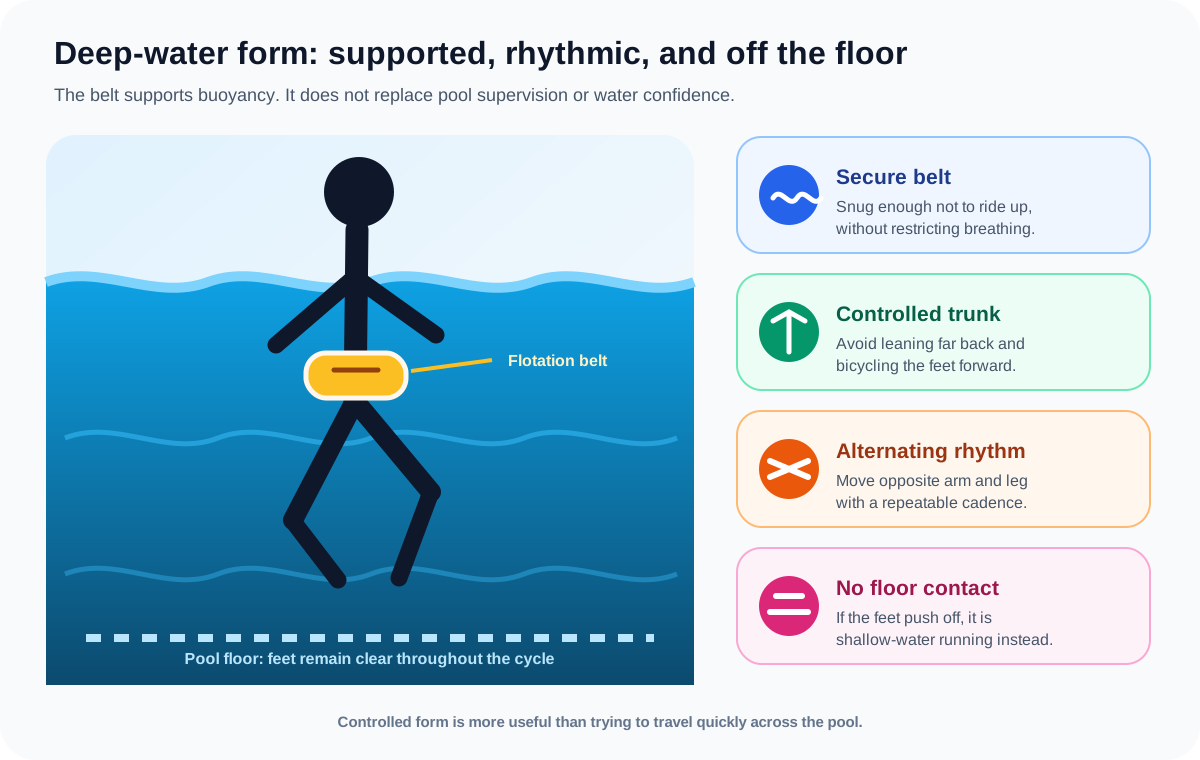
Place the belt around the waist according to its instructions and tighten it enough that it does not slide toward the ribs. It should not limit breathing or pinch the skin. A belt is not cheating. For a beginner, it supports a stable position and reduces the urge to use frantic arm movements merely to keep the face above water.
Use water that is genuinely deep
The feet should remain clear of the bottom throughout the cycle. If they touch, the session has become shallow-water running and adds push-off forces. Use a supervised pool area, know the depth and exit points, and stay where a lifeguard can see you. A tether can keep an experienced user in one place, but it should attach only as the manufacturer directs and must not create an entanglement hazard.
Plan the entry and exit as carefully as the workout. A vertical ladder can demand a deeper knee bend and more single-leg force than the session itself. Use steps, a ramp, or staff assistance when those are more comfortable and permitted. Test the route before fatigue sets in, and keep footwear or a towel where local pool rules allow.
Keep the motion organized
Aim for a controlled trunk with alternating arm and leg action. Avoid leaning far back and bicycling the feet in front of the body. Also avoid reaching so aggressively downward that the toes strike the floor. Deep-water running has its own kinematics, and two commonly described styles use either a cross-country action or a higher-knee action. Neither needs to look exactly like a land-running video to provide an aerobic stimulus.
A Beginner Aqua Jogging Workout
The following session is a general starting example for someone who is comfortable in deep water and has no restriction against pool exercise. It is not a rehabilitation prescription for a recent fracture, surgery, ligament injury, or unexplained swollen knee.
- Easy preparation, 5 minutes: settle the belt, practice relaxed arm-leg rhythm, and confirm that the knee remains comfortable.
- Steady work, 6 minutes: use an effort where full sentences remain possible.
- Controlled intervals, 6 rounds: alternate 45 seconds at a purposeful effort with 45 seconds very easy.
- Steady finish, 5 minutes: return to a conversational rhythm without chasing distance across the pool.
- Easy exit, 3 minutes: reduce effort, then use the steps or ladder according to pool rules.
This is roughly a 28-minute session, but shorter is appropriate when the skill or knee response is uncertain. The goal of the first workout is to learn the motion and observe the later response. If the knee becomes more painful, the belt rides up continuously, or form becomes frantic, stop and reset rather than finishing every interval.
Use Effort, Not a Land-Running Pace
Pool distance is a poor target because water resistance, body position, belt buoyancy, and technique change travel speed. Heart rate can also differ. Reviews of deep-water running report that maximal heart rate and oxygen consumption are commonly lower than treadmill values, although experienced aqua joggers may show a smaller difference. Submaximal responses can be more similar.
Use a talk test and a simple 1-to-10 rating of perceived exertion. Easy work may feel like 3 or 4, controlled intervals around 6 or 7, and recovery around 2 or 3. These are communication anchors, not medical thresholds. Heat, water temperature, medicines, cardiovascular conditions, and swimming skill can change the response. Do not use another runner's heart-rate zone as your clearance to exercise harder.
Progress the Workout Without Hiding a Flare
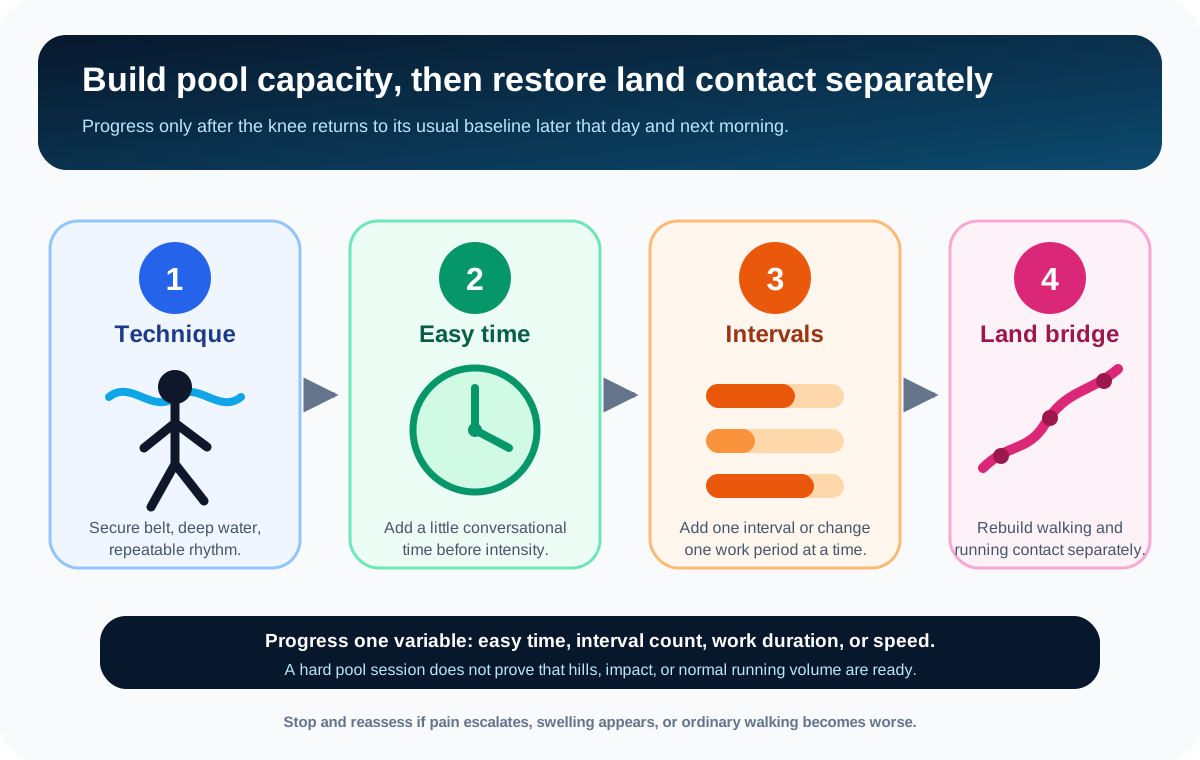
Repeat a manageable session before progressing it. First add a little easy time. Next add one or two intervals or modestly extend the work portion. Faster limb speed increases drag, so it is another load variable, not free intensity. Paddles, fins, ankle devices, and removing the belt all change the exercise and are unnecessary for a basic pool-running plan.
Check the knee during the workout, later that day, and the next morning. Walking, stairs, swelling, range of motion, and the established pain baseline are more informative than how light the body felt in the pool. If symptoms are repeatedly worse the next day, reduce time or intensity. The knee swelling after exercise guide explains when puffiness deserves more attention.
Do Not Confuse Pool Fitness With Land Readiness
Deep-water running can challenge the heart and muscles while omitting ground contact. That is its advantage and its limitation. It does not rebuild tolerance to foot strike, hills, uneven surfaces, braking, or the exact tendon and bone loads of land running. A comfortable hard pool workout therefore does not prove that the knee is ready for a normal run.
When the diagnosis and recovery plan allow, restore land activity in a separate progression. Comfortable walking comes first, followed by short flat run-walk work or easy running, then additional duration, speed, and hills at different stages. The running knee pain guide can help map symptoms, while low-impact cardio options provides alternatives when pool access is inconsistent.
Knee and Pool Safety Checks
Do not enter the pool with an uncovered open wound, including a surgical incision, unless the treating team and facility have cleared it. The CDC advises staying out with an open cut or wound, particularly after surgery or piercing, or completely covering smaller wounds with a waterproof bandage. Follow local pool illness rules, shower guidance, and lifeguard instructions.
Seek individual clearance if you are not water confident, have a condition affected by immersion or exertion, or take medicines that change exercise response. Never rely on the belt as a lifesaving device, and do not aqua jog alone in an unsupervised deep-water setting.
When to Get Medical Help
Arrange an assessment when knee pain repeatedly returns, worsens despite reducing activity, limits ordinary walking or stairs, or produces recurring swelling. Seek prompt care after a fall or twist if the knee rapidly swells, cannot bear weight, is deformed or physically locked, or repeatedly gives way. A hot red swollen knee with fever, new calf swelling, chest pain, or breathing difficulty needs urgent medical guidance rather than a pool workout.
The Bottom Line
Aqua jogging is best described as running-style conditioning without ground contact, not exercise without any knee force. Buoyancy reduces weight bearing while water drag creates resistance. A flotation belt, genuinely deep water, controlled rhythm, and effort-based workout make the session easier to interpret.
Build easy pool time before harder intervals, track the knee's later response, and progress one variable at a time. Use deep-water running to preserve conditioning when it fits the underlying problem, but rebuild land contact separately. The pool is a useful training environment, not proof that an injury has healed or that the next run is automatically safe.
Breaststroke introduces a turning kick that pool running does not require. If swimming rather than aqua jogging provokes inner-knee symptoms, read the breaststroker's knee guide for kick, wall-push, and training-load considerations.
Frequently Asked Questions
Is aqua jogging good for knee pain?
Deep-water running removes foot contact with the pool floor, so it avoids the repeated ground impact of land running. Buoyancy can reduce lower-limb loading, while water resistance still makes the muscles work. It may be a useful conditioning option for some people, but it does not diagnose or treat every cause of knee pain. Swelling, locking, instability, trauma, or postoperative restrictions require an individual plan.
Do I need a flotation belt for aqua jogging?
A belt is helpful for most beginners because it keeps the body buoyant enough to focus on a controlled running motion instead of fighting to keep the mouth above water. It should sit securely without restricting breathing or riding into the ribs. Experienced athletes sometimes train without one, but removing the belt changes the exercise and is not a necessary progression for a knee-friendly workout.
How deep should the pool be for deep-water running?
Use a depth where the feet cannot touch the bottom during the running cycle. Shoulder-level immersion with a flotation device is common, but the exact depth depends on body size, buoyancy, and pool design. Stay in a supervised lane or designated deep-water area, know how to exit safely, and do not begin in deep water if basic water confidence is limited.
How long should an aqua jogging workout be?
There is no exact land-to-water conversion. A beginner can start with a short session that alternates easy running and recovery, then judge the knee later that day and the next morning. Build total easy time before stacking harder intervals. Trained runners may use longer sessions, but the correct dose depends on current fitness, symptoms, water temperature, and the reason land running was reduced.
Why is my heart rate lower when pool running feels hard?
Deep-water running changes buoyancy, hydrostatic pressure, cooling, technique, and muscle recruitment. Reviews report that maximal heart rate and oxygen-consumption values are often lower than on a treadmill, especially in people new to the skill. Use breathing, the talk test, and perceived exertion rather than copying land-running heart-rate zones without adjustment.
Can aqua jogging replace all land running while my knee recovers?
It can help maintain aerobic training, but it does not reproduce foot contact, impact tolerance, surface control, or the exact muscle-tendon demands of land running. When the underlying problem allows it, rebuild walking and land running separately. A clinician should guide the transition after a fracture, surgery, major ligament injury, or another condition with specific loading restrictions.