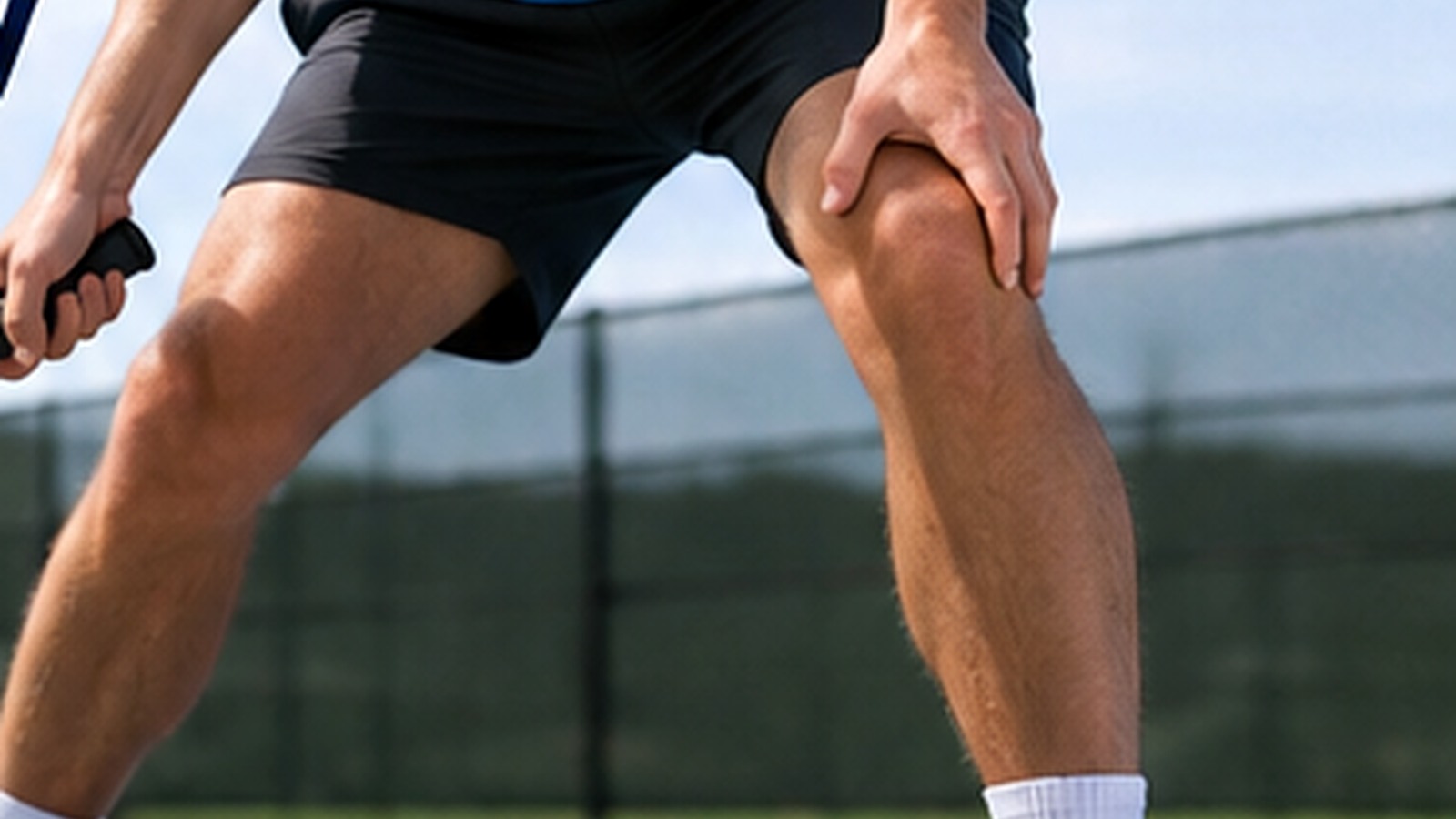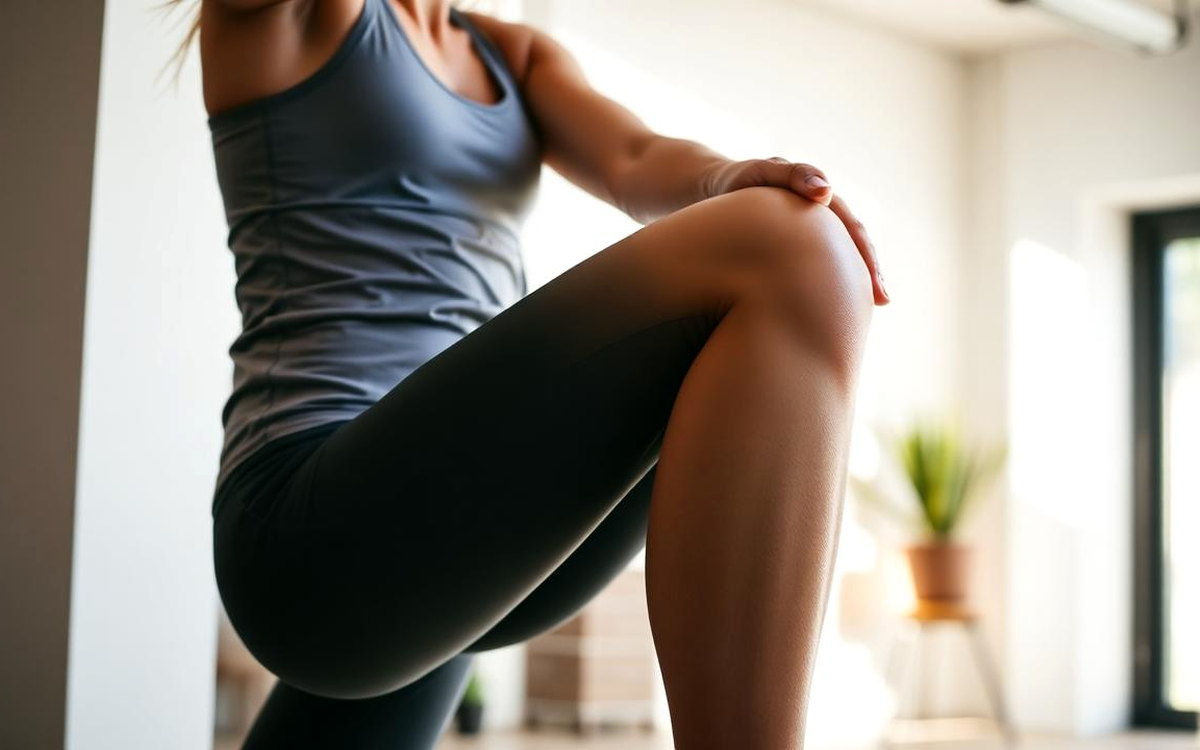
A workout can feel comfortable while you are active, yet your knees hurt after exercise later that day or the following morning. The delay is useful information: it suggests that the total distance, resistance, repetitions, terrain, or recent increase in activity may matter more than one painful movement.
People search for this pattern as knee pain after a workout, sore knees after exercise, aching knees after exercise, or knees that hurt after working out but not during the session. These phrases describe timing, not a diagnosis, so location, swelling, stability, and the next-day response still need to be checked.
This guide explains why pain can appear after exercise but not during it, how to separate a settling post-workout response from warning signs, and how to adjust the next session. Separate guides cover visible swelling after exercise, burning linked to activity, and pain after leg day.
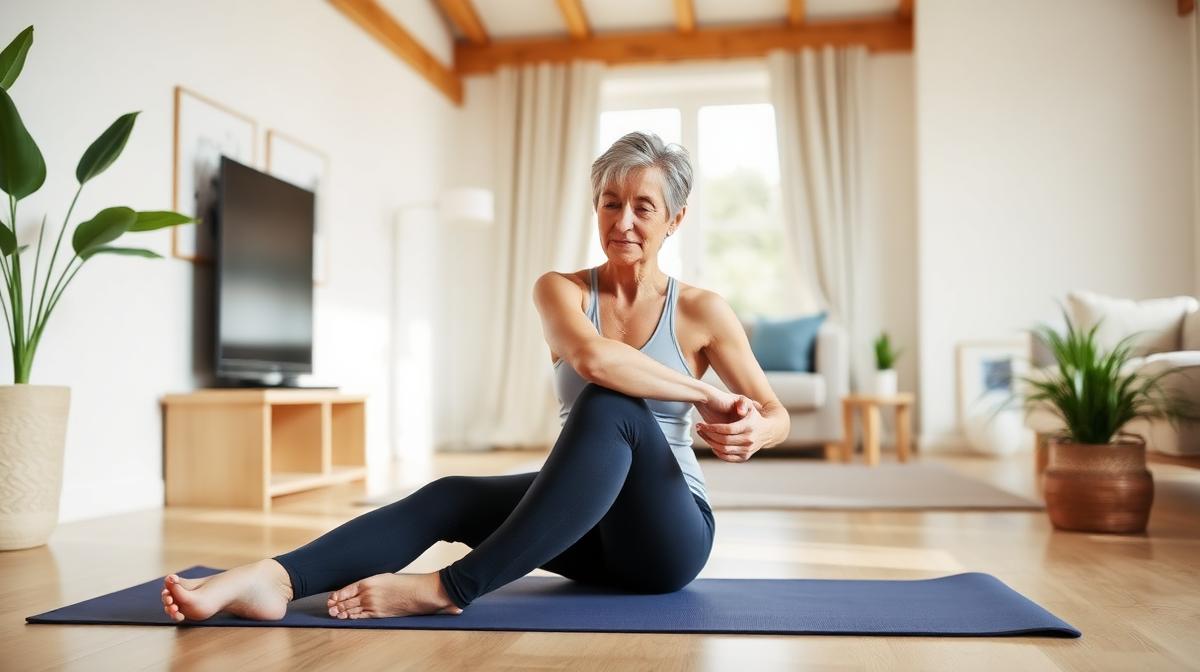
Why Do Knees Hurt After a Workout But Not During?
It seems counterintuitive: if exercise is causing knee stress, why don't you feel it while you are exercising? The answer lies in your body's built-in pain management system.
During physical activity, your body releases a cocktail of natural chemicals, including endorphins, adrenaline, and norepinephrine, that act as powerful natural painkillers. These substances temporarily reduce your sensitivity to discomfort, allowing you to push through your workout without feeling the full impact on your joints.
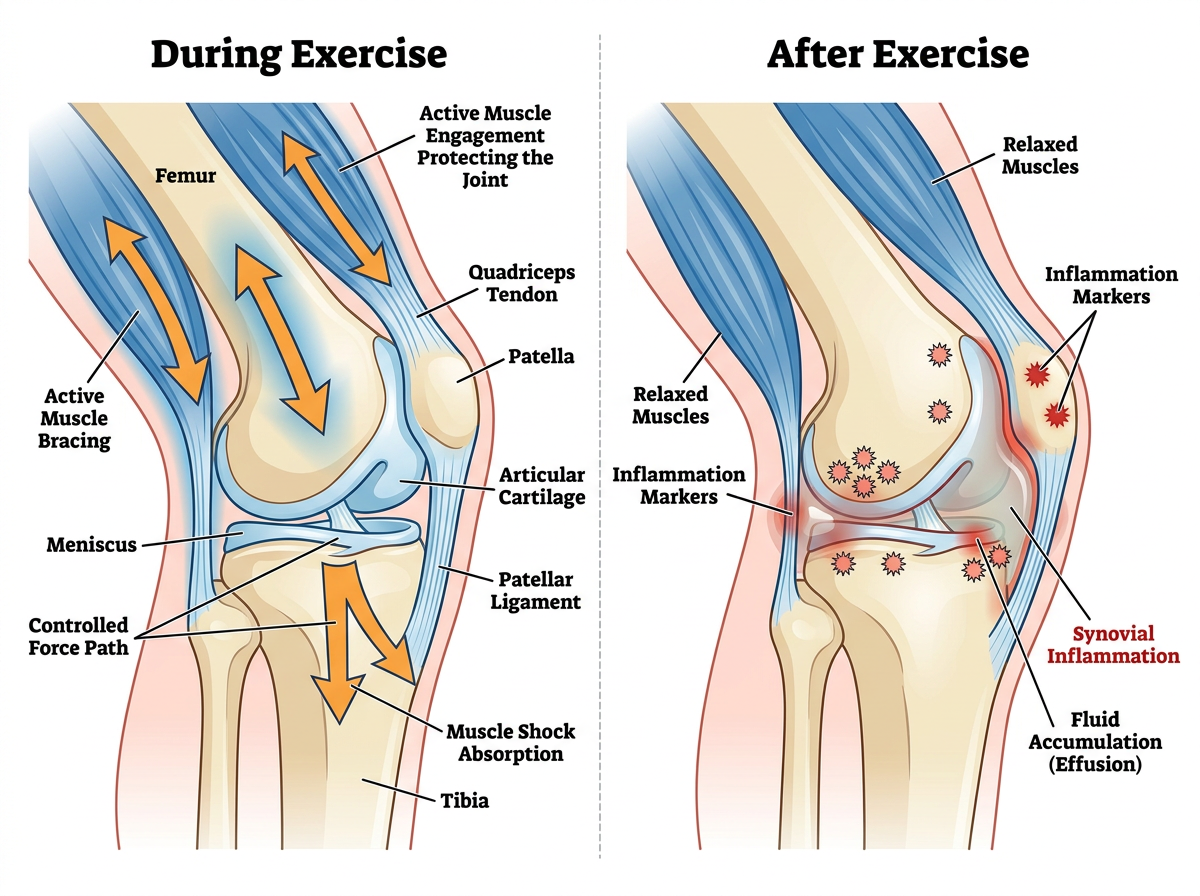
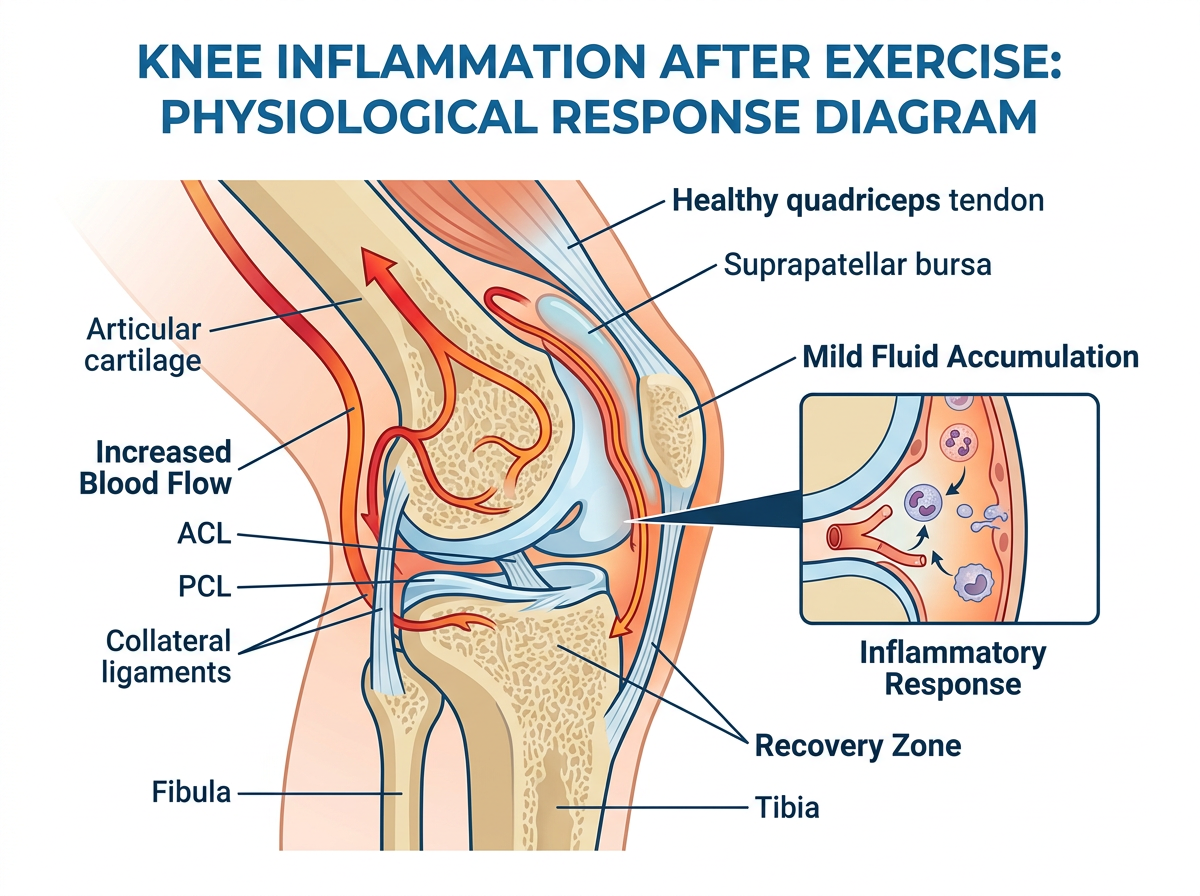
Once you stop exercising, these chemicals gradually decrease. As your body transitions from "activity mode" to "recovery mode," your nervous system becomes more sensitive again. At the same time, your body's natural inflammatory response begins, sending blood, nutrients, and repair cells to the areas that experienced the most stress.
For many people, this means knee pain from workout sessions becomes noticeable 2 to 12 hours after the activity ends, with some experiencing peak discomfort the following morning. This delayed pattern is why so many people wonder, "Why do my knees hurt after exercise when they felt perfectly fine during it?" Some also notice their knees feel weak after workout routines, which is closely related to delayed muscle fatigue.
The Endorphin Window
Exercise-related hypoalgesia can temporarily reduce pain sensitivity during and shortly after activity. As that effect fades and the knee responds to the total session load, soreness may become easier to notice later in the day.
Sore Knees After Exercise vs Sharp Pain: What Is the Difference?
Understanding the difference between general sore knees after exercise and sharp, localized pain is important for knowing how to respond. Normal knee aches after exercise tend to feel diffuse, dull, and spread across the general knee area. This type of soreness usually affects both knees similarly and improves with gentle movement.

Sharp pain, on the other hand, tends to be specific to one spot, may feel sudden or stabbing, and often worsens with particular movements. While knee soreness after exercise is usually a sign that your body is recovering normally, sharp or pinpointed painful knees after exercise may warrant closer attention or professional guidance.
Where Does Knee Pain Appear After Exercise?
Kneecap pain after exercise is one of the most frequently reported locations, often caused by repetitive compression of the patella against the femur during activities like squats, running, or stair climbing. People who experience sore kneecaps after exercise often notice it most when sitting for a period after their workout.

Back of the knee pain after exercise is another common pattern. Pain behind knee after working out is often related to tightness in the hamstrings or calf muscles, or to the way fluid accumulates in the popliteal space behind the joint. This area can feel particularly tight or full after intense activity. For a deeper look at all knee discomfort zones, our knee pain locations visual guide maps out each area and its comfort strategies.
Why Does My Knee Feel Tight Even Without Pain?
Many people notice a stiff knee no pain pattern after workouts. The knee feels tight, restricted, or hard to bend fully, but there is no actual pain involved. This is common and usually related to temporary fluid changes within the joint and muscle tightness from the recovery process. A few minutes of gentle movement typically resolves this sensation. If the sensation feels more like warmth or a burning feeling rather than stiffness, our guide on burning knees after exercise explains what that may indicate.
Common Causes of Delayed Knee Pain After Workouts
Not all post-exercise knee discomfort has the same cause. Understanding why your knees hurt after working out can help you make smarter decisions about your routine. Whether you experience sore knees after workout sessions or a dull ache that lingers, here are the most common factors:
Muscle Fatigue Around the Knee
Your knee joint is supported and stabilized by the muscles around it, primarily the quadriceps, hamstrings, and calves. When these muscles become fatigued during exercise, they cannot absorb shock as efficiently. This means more stress transfers directly to the knee joint itself, leading to knee soreness after activity that you feel later. This muscle fatigue can also explain why knees feel weak after a workout.

Joint Load Accumulation
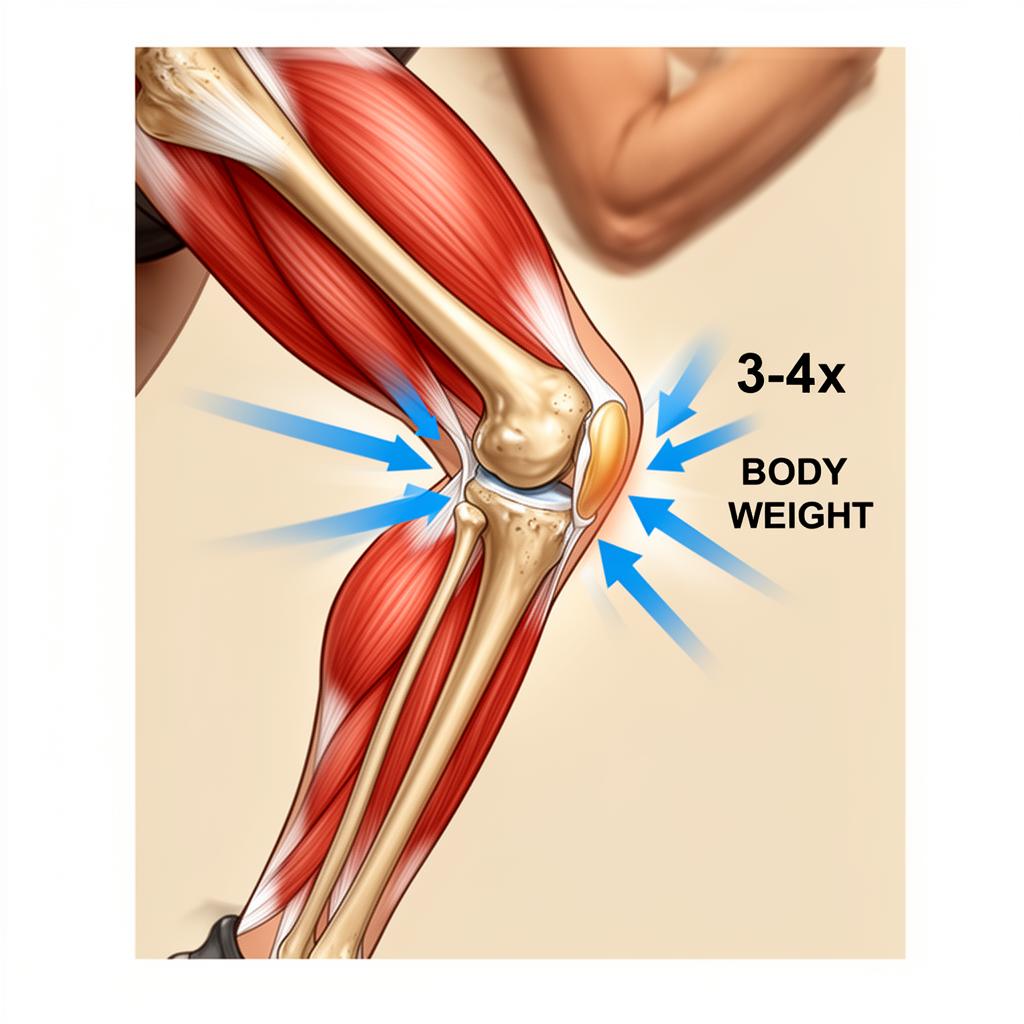
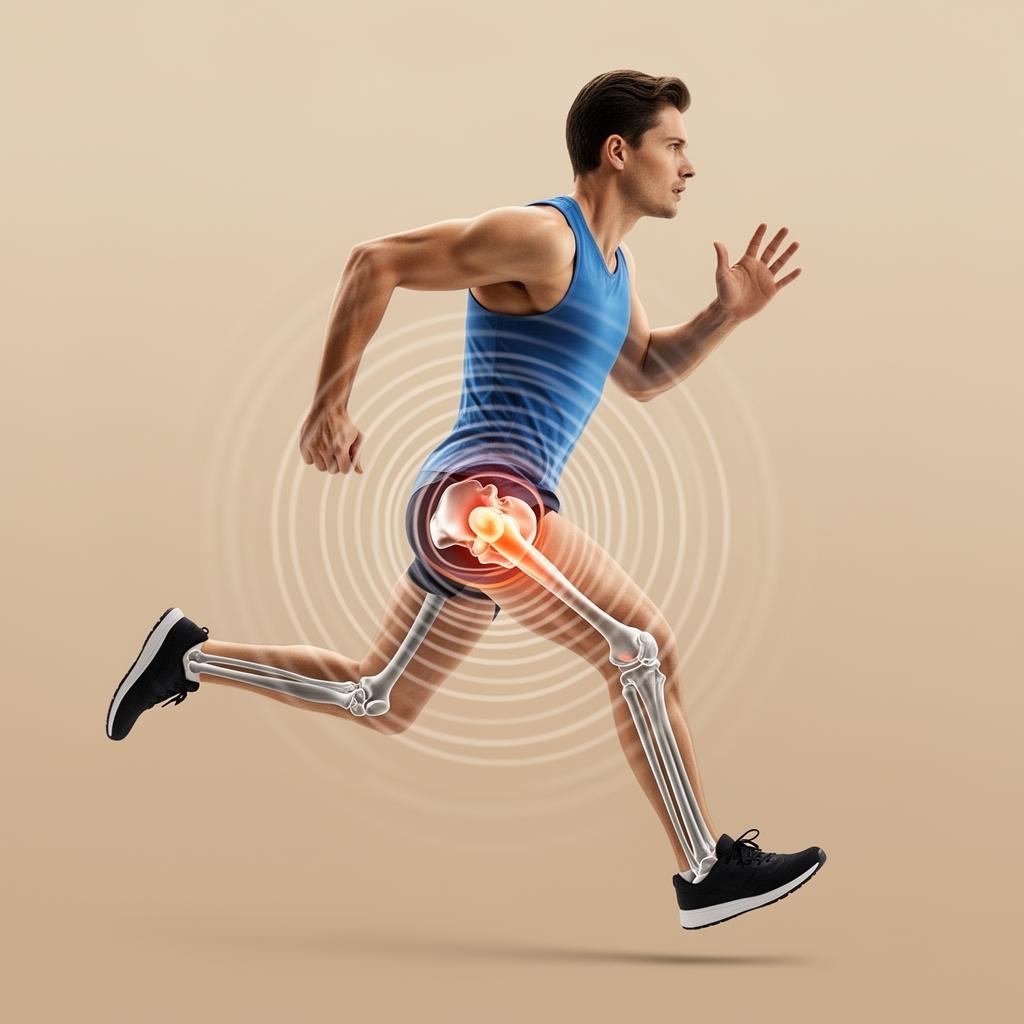
Every step you take during a run puts roughly 3 to 4 times your body weight through your knee joint. Over the course of a 30-minute jog, that adds up to thousands of loading cycles. While each individual step may not cause discomfort, the cumulative effect of all that load can trigger a delayed inflammatory response. This is one of the most common reasons for knee pain after running and knee joint pain after workout sessions.
Natural Inflammatory Response
Exercise creates micro-stress on the tissues around your knee, including cartilage, tendons, ligaments, and the joint capsule itself. Your body responds by sending inflammatory cells and extra fluid to the area to begin repairs. This knee inflammation after exercise is completely normal, but it can cause temporary swelling, stiffness, and aching that peaks 12 to 48 hours after exercise.
Sudden Increase in Activity
One of the biggest predictors of knee pain from workout sessions is doing too much, too fast. If you have recently increased your running distance, added squats to your routine, or returned to exercise after a break, your knee joint has not had time to adapt to the new demands. This "overload without adaptation" pattern is extremely common.
Insufficient Recovery
Your body needs time between workouts to repair and adapt. If you are exercising intensely on consecutive days without adequate recovery, the micro-stress accumulates faster than your body can repair it. Over time, this can turn occasional pain in knees after working out into a persistent pattern of knee pain after gym sessions.
When the Pattern Is Swelling, Burning, or Leg-Day Pain
This page owns the broad delayed-ache pattern. More specific symptoms need their own decision path instead of being treated as synonyms for ordinary soreness.
- Visible puffiness or fluid-like fullness: use the knee swelling after exercise guide, especially when swelling is behind the knee, keeps returning, or limits motion.
- Burning, surface heat, tingling, or a hot sensation: use the burning knees after exercise guide and check for redness, objective heat, numbness, or weakness.
- Symptoms tied to squats, lunges, Bulgarian split squats, or leg press: use the knee pain after leg day guide to compare load, depth, sets, fatigue, and technique.
Why Running, Squats, and Stairs Trigger Next-Day Knee Soreness
Not all exercises are equal when it comes to delayed knee discomfort. Certain activities are more likely to cause knee soreness after running or working out because of how they load the joint:
Running and Jogging
Running repeats a similar loading cycle many times. A rapid change in distance, pace, hills, surface, footwear, or weekly frequency can therefore compound into noticeable post-run knee discomfort.
Hybrid fitness can stack that running volume with loaded knee work in the same session. If symptoms appear as you move between repeated runs, sleds, lunges, and wall balls, use the HYROX knee pain guide to identify the first task that changes your movement.
Squats and Lunges
Deep knee bending exercises put the kneecap (patella) under significant pressure against the thighbone. The deeper you squat, the more compressive force the patellofemoral joint experiences. This is why people often feel front-of-knee soreness the day after a leg day at the gym, even if the squats themselves felt comfortable.
Stairs and Step Exercises
Going up and down stairs, or doing step-up exercises, combines the impact of running with the deep bending of squats. The knee joint handles both compressive forces and shearing forces simultaneously, making stair-based activities particularly demanding on the joint structures.
Strength Training and Leg Day
Strength sessions combine external resistance, repeated sets, deeper knee angles, and fatigue. When symptoms are specifically linked to squats, lunges, Bulgarian split squats, or leg press, the knee pain after leg day guide owns those exercise-specific adjustments.
✓ Quick Tips
- •Start with shorter distances or lighter loads and build up gradually over weeks
- •Maintain proper form with knee alignment over your toes during squats and lunges
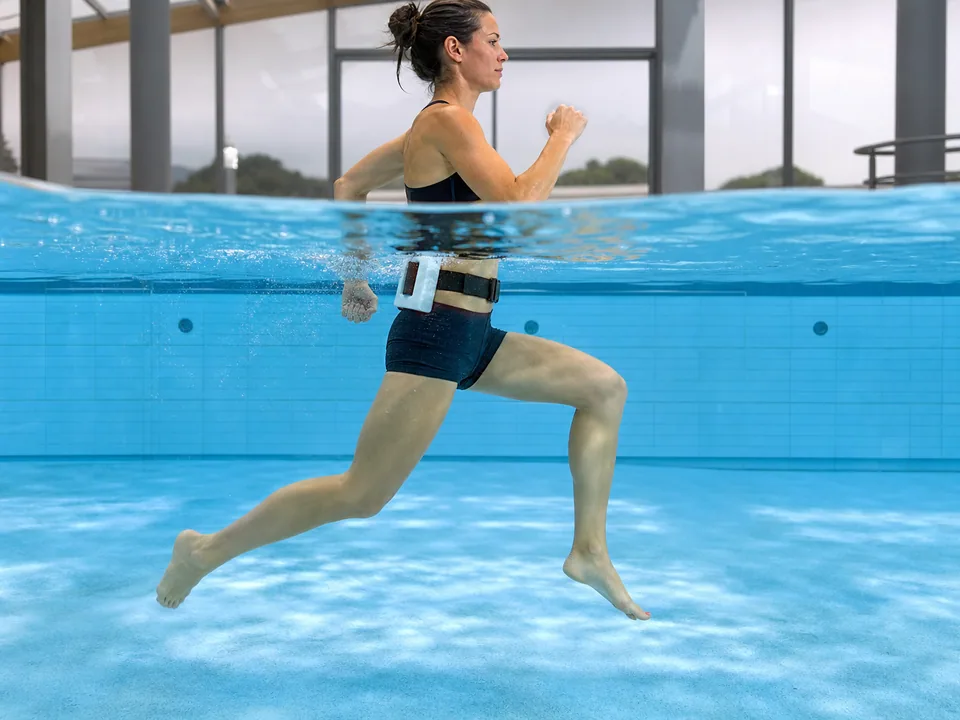
- •Alternate high-impact days with low-impact recovery activities like swimming or cycling
- •Include a proper cool-down period with gentle walking and stretching after each session
When One Knee Hurts After Exercise
Noticing that one knee hurts after exercise while the other feels fine is a common concern. This asymmetry is often related to differences in muscle strength, flexibility, or movement patterns between your two legs. It can also result from favoring one leg during certain exercises or from a previous minor strain. While one-sided soreness is not automatically a warning sign, consistent pain in the same knee after every workout is worth monitoring.
Repetitive endurance activities follow slightly different rules from gym sessions. Cycling in particular can produce delayed knee soreness from setup rather than effort, since a single misplaced millimetre is repeated thousands of times per ride, as our guide to cycling knee pain and bike fit explains.
Normal Soreness vs. Warning Signs After Exercise
One of the most important things to understand about knee pain after exercise is the difference between normal post-exercise soreness and signs that something may need attention. Here is how to tell them apart:

Signs of Normal Post-Exercise Soreness
✓ Quick Tips
- •A general, diffuse ache around both knees (not just one specific spot)
- •Soreness that appears 6 to 24 hours after exercise and gradually improves
- •Discomfort that eases with gentle movement and light stretching
- •Resolution within 48 to 72 hours without getting progressively worse
- •No visible swelling, redness, or warmth to the touch
Warning Signs That Need Attention
When to Seek Professional Advice
Consult a healthcare provider if you experience: sharp, localized pain at a specific point on your knee; visible knee swelling after exercise that does not resolve within 48 hours; a feeling of the knee "giving way" or locking during movement; pain that gets worse with each workout rather than better; inability to fully straighten or bend your knee; or any knee pain accompanied by a popping sensation during exercise.
Post exercise knee soreness also travels up from the calf more often than people expect, particularly after running, hiking or a jump in walking volume. Calf tightness limits ankle motion and quietly shifts load toward the kneecap, which our guide on tight calves and knee pain explains along with a routine that changes it.
Why Some People Feel Knee Weakness After Exercise
Beyond soreness, many people report a distinct sensation of knee weakness after workouts. This feeling, where the knee seems unsteady, less supportive, or slightly "wobbly," is different from pain and can be just as concerning. If you have wondered why do my knees feel weak after workout sessions, the answer usually comes down to muscle exhaustion rather than a structural problem.
Post-exercise knee weakness is usually tied to temporary muscle fatigue rather than joint damage. The quadriceps, which play a critical role in stabilizing the kneecap and controlling knee movement, are often the first to fatigue during leg-intensive workouts. When these muscles are depleted, the knee can feel unstable even though the joint structures themselves are intact.
If you regularly experience knee weakness without pain, it may be worth evaluating your overall leg strength and recovery habits. Weakness that persists well beyond the 24 to 48 hour recovery window, or that appears even after light activity, could indicate an imbalance in the muscles supporting the knee.
The knees burning after workout sensation that some people report is also usually muscular in origin and resolves with adequate rest. Similarly, some people notice a sense of knee tightness without pain after workouts, which often accompanies the weakness sensation. This combination typically improves with consistent strength training, proper warm-ups, and adequate recovery between sessions.
Weakness vs. Pain After Exercise
Knee weakness and knee pain after a workout are related but distinct sensations. Pain signals tissue stress or irritation, while weakness reflects muscle fatigue and reduced joint stabilization. Both are common after exercise, but persistent weakness that does not improve with rest deserves attention from a healthcare professional.
Why Beginners and Returning Exercisers Experience This More
If you are new to exercise or returning after a long break, you are significantly more likely to experience delayed knee pain after exercise. This is not a sign that you are doing something wrong, it is a sign that your body is adapting to new demands.
When you have not been regularly active, the muscles around your knee joint are weaker and less conditioned. They fatigue faster during exercise, which means more stress gets transferred directly to the joint. Additionally, your cartilage, tendons, and ligaments need time to strengthen and adapt to new loads.
The adaptation period varies with training history, activity type, recovery, and the amount of load added. Mild symptoms that settle can be a cue to progress more gradually, while worsening or persistent symptoms deserve closer attention.
People over 40 may notice this adaptation period takes slightly longer, as the age-related changes in joint tissues mean the body needs more recovery time between sessions. This does not mean you should avoid exercise, quite the opposite. It simply means progressing more gradually.
Daily Habits That Reduce Knee Discomfort After Workouts
Many people focus on what they do during exercise to protect their knees, but what you do before and after your workout matters just as much. These daily habits can significantly reduce knee pain after a workout:
Before Exercise
✓ Quick Tips
- •Warm up with 5 to 10 minutes of light walking or gentle cycling before your main activity
- •Include dynamic stretches that take your joints through their full range of motion
- •Wear supportive, well-fitting shoes appropriate for your activity
- •Stay hydrated, as proper hydration helps maintain the viscosity of joint fluid
After Exercise
✓ Quick Tips
- •Cool down gradually rather than stopping abruptly, walk for 5 minutes after running
- •Apply warmth to your knees to support blood flow and comfort in the hours after exercise
- •Elevate your legs when resting to help reduce any post-exercise fluid accumulation
- •Stay gently active on rest days with light walking or swimming rather than complete inactivity
Throughout the Day
Your daily habits outside of exercise also affect how your knees feel after workouts. Maintaining a consistent daily knee care routine can make a noticeable difference. Simple things like avoiding prolonged sitting, keeping your leg muscles gently active throughout the day, and maintaining good posture all contribute to overall knee comfort.
If you are someone who experiences regular knee soreness after activity, paying attention to your footwear choices can also help. Worn-out shoes with poor cushioning do not absorb impact effectively, meaning more force reaches your knee joint during exercise. Consider exploring the best shoes for knee comfort to protect your joints.
Recovery Strategies That Support Knee Comfort
Recovery is not just about resting. It is about giving your body the right conditions to repair and adapt. Here are evidence-informed strategies that support knee comfort after exercise:
Warmth-Based Support
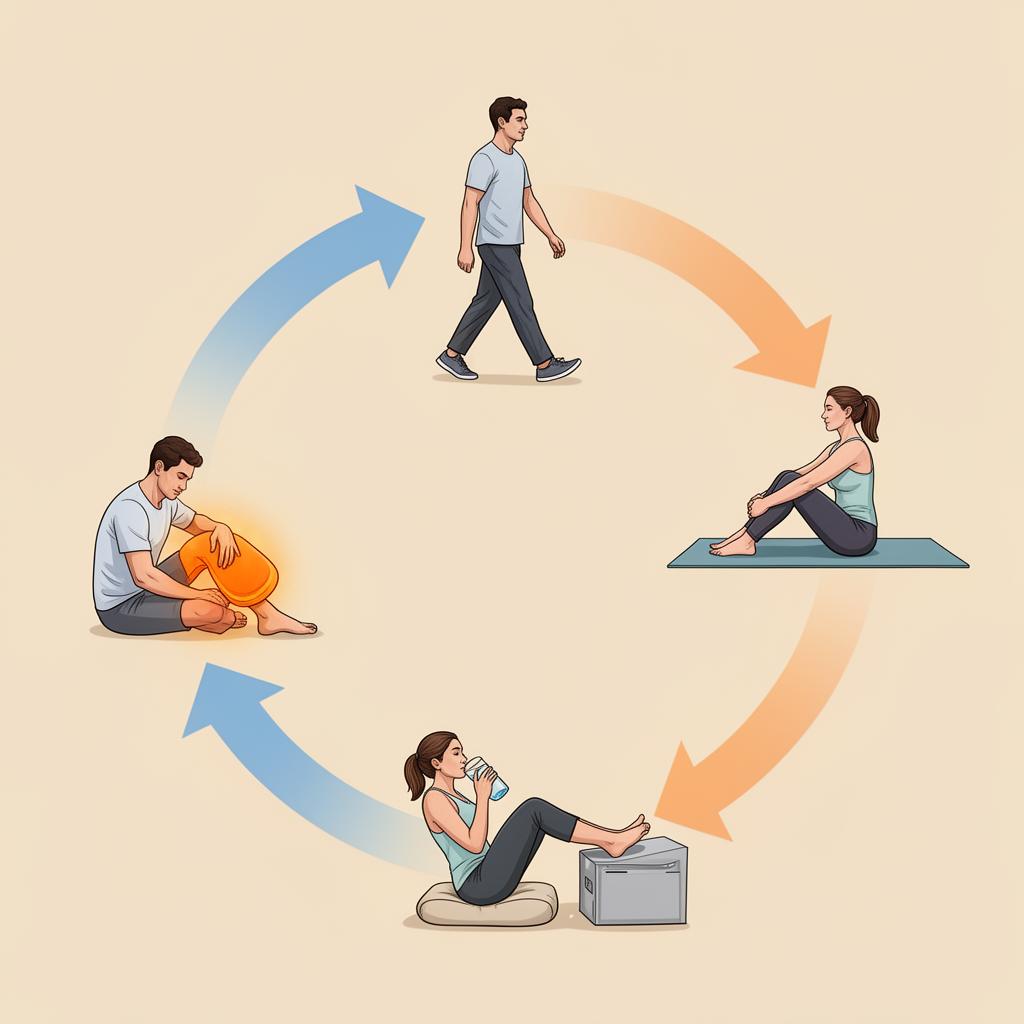
Gentle warmth may feel comfortable when the knee is not swollen and the main problem is stiffness or tight surrounding muscles. If the knee looks puffy, feels unusually warm, or became painful after a specific movement, the decision changes. Use the ice-or-heat guide for post-exercise knee pain before defaulting to warmth after every workout; the separate warmth-based comfort routine is intended for non-swollen stiffness.
Gentle Movement and Stretching
If ordinary walking remains comfortable and the knee is not acutely swollen or unstable, gentle low-impact movement such as a short walk, relaxed cycling, or pool walking may feel better than prolonged stillness. Stop if the activity increases pain, swelling, or loss of motion.
Focus on knee-friendly exercises that build strength without excessive impact. Stretching the quadriceps, hamstrings, calves, and IT band after exercise helps maintain flexibility and reduces the pulling forces on the knee joint.
Progressive Loading
Increase one training variable at a time, such as distance, load, sets, depth, pace, or weekly frequency. A fixed percentage does not suit every person or activity; the more useful check is whether the knee's response is settling and normal movement remains comfortable before progressing again.
Understanding What Causes Your Knee Pain
If post-exercise knee discomfort is a recurring issue, it is worth exploring the underlying causes of your knee discomfort. Factors like muscle imbalances, alignment issues, or previous injuries can all contribute to why some people are more prone to exercise-related knee soreness than others.
For those who experience sudden knee pain episodes during or after exercise, understanding the pattern and triggers can help you modify your routine to stay active while supporting long-term joint comfort.
Progress gradually
There is no universal weekly percentage that suits every activity or every knee. Change one training variable at a time, such as distance, load, depth, or frequency, and use your evening and next-morning response to decide whether the progression was manageable.
Real-World Scenarios: When Post-Exercise Knee Soreness Catches People Off Guard
Understanding delayed knee soreness becomes easier when you see it in everyday contexts. Consider these common scenarios that active adults experience regularly.
The weekend warrior pattern: You spend most of the week at a desk, then play an intense game of basketball or go for a long hike on Saturday. By Sunday morning, both knees feel stiff and achy. This happens because your joints have not been conditioned for the sudden spike in activity. The muscles around your knee fatigue quickly, transferring more load to the joint itself. People who also notice clicking sounds when walking after these weekend sessions are often hearing normal joint mechanics amplified by temporary inflammation.
The gradual buildup: You have been running consistently, but recently increased distance, pace, and weekly frequency at the same time. Your knees felt fine during each run, but by the end of the week a persistent ache settled around both kneecaps. This pattern suggests that cumulative load may have outpaced current recovery capacity; reduce one variable and compare the next-day response.
The post-travel return: After two weeks of vacation with minimal activity, you jump back into your regular gym routine. The next morning, your knees feel significantly sorer than usual. This happens because the adaptation you built before your break partially reversed during inactivity. Your muscles, tendons, and joint tissues need a transition period to rebuild their conditioning. If you experience knee pain going down stairs during this transition, it is typically a sign of temporary kneecap sensitivity from the sudden return to loading.
How Movement Patterns Affect Post-Exercise Knee Discomfort
The way you move during exercise has a direct impact on how your knees feel afterward. Poor movement patterns do not always cause immediate pain, but they create asymmetric loading that compounds over time. Common patterns that contribute to delayed knee soreness include letting the knees collapse inward during squats, overstriding while running, and landing heavily on the heels during step exercises. Each of these habits places additional stress on specific knee structures that becomes noticeable during the recovery period. For a broader perspective on movement-related discomfort, our guide on what causes knee pain explores how daily movement habits influence joint comfort.
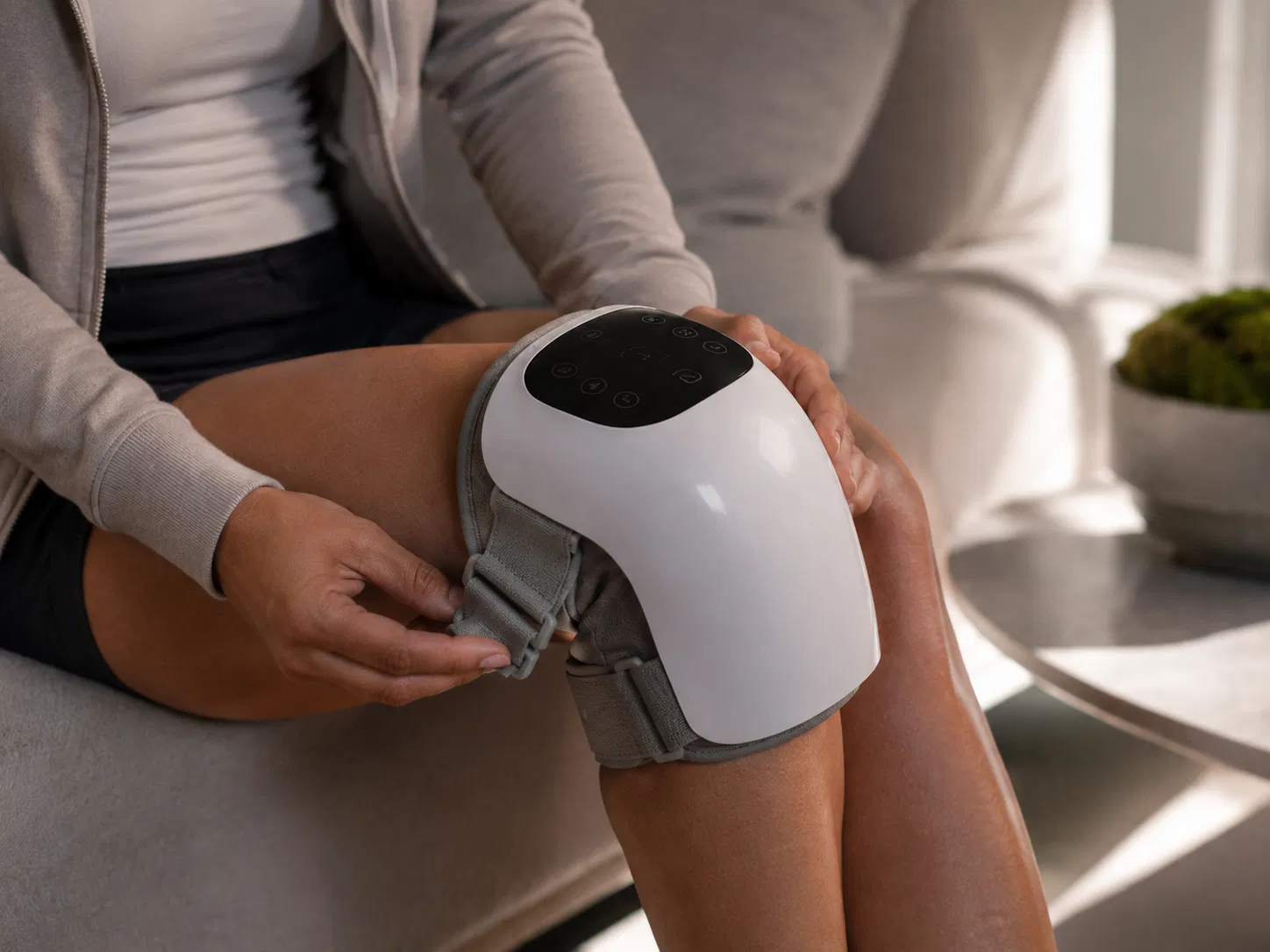
Paying attention to how your feet, knees, and hips align during exercise can significantly reduce post-workout soreness over time. If you notice that one knee consistently hurts more than the other after workouts, it may point to an imbalance in your movement patterns rather than a structural issue with the joint itself. People who use infrared knee massagers as part of their post-workout routine often report that warmth application helps them identify which areas feel tightest and most in need of attention.
Use a 24-Hour Response Check
A pain-free workout does not always mean the session matched your current capacity. Record the activity, duration, surface, footwear, effort, when discomfort began, its location, whether swelling appeared, and how the knee felt the next morning. A repeatable pattern is more useful than one isolated bad day.
If walking and stairs are close to normal and the response settles, a lighter or different session may be reasonable. Reduce the next session and consider professional advice when symptoms are getting stronger each week, affecting everyday movement, or accompanied by swelling, locking, instability, redness, or a specific injury event.
When repeated impact is the main trigger, replacing one weekly workout with a carefully dosed option from our comparison of walking, cycling, and swimming for knee pain can preserve aerobic training while you rebuild tolerance.
For court-specific symptoms, start with knee pain after basketball. It separates a sudden landing incident from repeated-jump discomfort and the next-day response to a harder game.
Frequently Asked Questions
Why do my knees hurt after exercise?
During exercise, your body releases endorphins and adrenaline that can mask discomfort. Once you stop and these chemicals drop, your body's natural inflammatory response kicks in to repair micro-stress on the joint, which is why knee pain often appears hours after your workout rather than during it.
Why do my knees hurt after working out?
Knees hurt after working out because of a combination of muscle fatigue, cumulative joint loading, and the body's delayed inflammatory response. When muscles tire during exercise, they transfer more stress to the knee joint. The repair process that follows creates temporary soreness and stiffness.
Is sore knee after exercise normal?
Mild, diffuse soreness around the knee area after exercise is common, especially if you have increased your distance or intensity. This usually fades within 24 to 48 hours. However, sharp or localized pain that worsens with each session should be evaluated by a healthcare professional.
How long should knee soreness last after exercise?
Normal post-exercise knee soreness typically peaks at 24 to 48 hours and resolves within 3 days. If your knee pain lasts longer than 72 hours, gets progressively worse, or includes swelling, locking, or instability, it is worth consulting a healthcare provider.
Why does my knee hurt the next day after exercise?
The day after a workout, your body is in peak recovery mode. Blood flow to the exercised area increases, bringing inflammatory cells that help repair micro-stress, but this process also creates temporary swelling and sensitivity. Overnight rest means fluid can pool around the joint, making the knee feel stiffer upon waking.
Can exercise cause knee inflammation?
Yes. Activities that involve repetitive impact, deep bending, or sudden direction changes can trigger the body's natural inflammatory response. This knee inflammation after exercise helps repair tissues but can create temporary swelling and discomfort that peaks 12 to 48 hours after the activity.
Why does my knee feel stiff but not painful after exercise?
A stiff knee without pain after workouts is very common and usually related to temporary fluid changes in the joint and muscle tightness from the recovery process. Gentle movement typically resolves this stiffness within minutes. This pattern is generally not a cause for concern.
Can sitting too long after a workout cause knee stiffness?
Yes, sitting for extended periods after exercise can allow the joint to stiffen and muscles to tighten. This makes sore knees after workout sessions feel more noticeable when you stand up. Brief movement breaks during the hours following exercise help maintain comfortable circulation.
What exercises reduce knee pain?
Low-impact activities like swimming, cycling, and walking are generally gentle on the knees. Strengthening exercises for the quadriceps, hamstrings, and glutes help support the knee joint. Stretching the hip flexors, IT band, and calves can also reduce post-exercise knee tension.
When is post-exercise knee pain serious?
Seek professional advice if your knee pain includes visible swelling, inability to bear weight, locking or giving way, sharp pain at a specific point, or if discomfort persists beyond 72 hours. These signs may indicate something beyond normal post-exercise soreness.
Why does my knee click after exercise?
Clicking or popping sounds in the knee after exercise are common and usually related to gas bubbles releasing in the joint fluid, tendon movement over bony surfaces, or temporary changes in kneecap tracking caused by muscle fatigue. If the clicking is painless, it is generally considered harmless.
Can going down stairs make post-exercise knee pain worse?
Yes. Stair descent requires the quadriceps to control your body as the knee bends, so it can make an already sensitive post-workout knee feel worse. Persistent stair pain, swelling, instability, or loss of motion deserves closer assessment.
Should I use an infrared knee massager after exercise?
An infrared knee massager is optional comfort support, not a treatment for the cause of pain. Do not apply heat to a newly injured, visibly swollen, red, or unusually hot knee. Use it only for mild stiffness after warning signs are absent and stop if symptoms worsen.