What Does a Tight Knee Feel Like?
People describe knee tightness as pressure, fullness, pulling, resistance, or a sense that the joint is wrapped too firmly. It may be noticed only at the end of bending, during the first few steps, while squatting, or when comparing one knee with the other.
Tightness is a symptom description, not a diagnosis. It does not automatically mean the muscles are short, the joint needs to be stretched, or the cartilage is damaged. The most helpful details are location, range of motion, swelling, timing, and whether normal activities are changing.
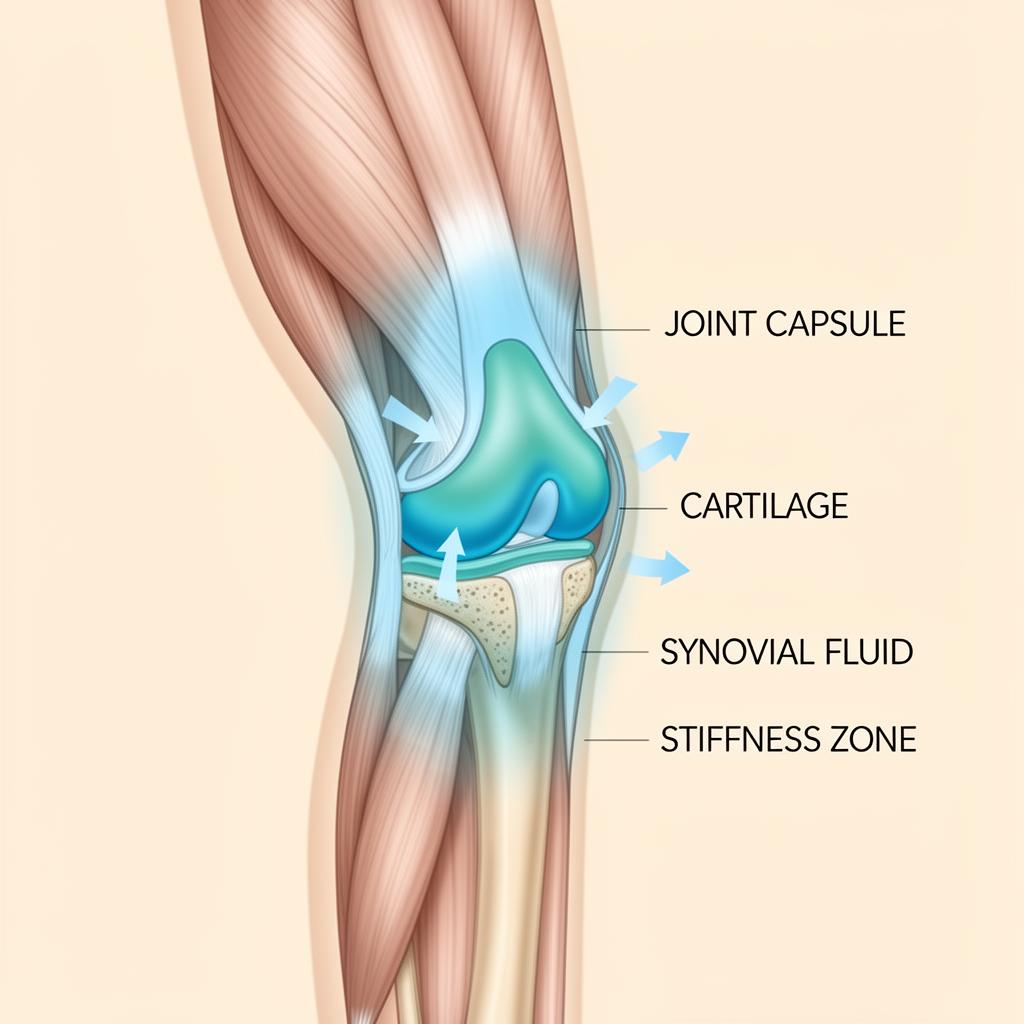
Tightness vs Stiffness vs Loss of Motion
These terms overlap, but they are not identical. Tightness is the sensation of pressure or pulling. Stiffness usually describes movement that feels slow or resistant. Loss of motion means the knee genuinely cannot reach its usual bend or straight position.
A knee may feel tight while still moving normally. That is different from a knee that is blocked, locked, or progressively losing range. A true mechanical block, especially after an injury, should not be forced through with stretching.
| Description | Common wording | What matters next |
|---|---|---|
| Sensation only | Tight, pressured, wrapped, or full | Check location, swelling, and triggers |
| Movement stiffness | Rusty or slow at first | Track whether comfortable movement restores ease |
| Restricted range | Cannot fully bend or straighten | Do not force a blocked or worsening knee |
Common Contributors to Knee Tightness Without Pain
Muscle and Tendon Tension
The quadriceps, hamstrings, calf muscles, and hip muscles all influence knee motion. Fatigue, inactivity, training changes, or limited ankle and hip mobility can produce pulling around the knee without creating pain inside the joint.

Mild Joint Swelling or Fullness
A small amount of swelling may feel like internal pressure before it becomes obviously painful. Compare both knees for puffiness around the kneecap or joint line, and note whether bending is reduced. Recurrent or persistent fullness should be assessed rather than repeatedly stretched.
Patellofemoral Sensitivity
The front of the knee may feel tight during bending, stairs, or squatting when the kneecap area is sensitive. This pattern may overlap with patellofemoral pain even when discomfort is mild. See the patellofemoral pain syndrome guide when the sensation is concentrated around or behind the kneecap.
Osteoarthritis or Previous Injury
Osteoarthritis can produce stiffness and reduced motion, including after inactivity. A previous meniscus, ligament, or joint injury may also leave one knee moving differently. Neither age nor a tight feeling alone confirms arthritis or structural damage.
What the Location of Tightness May Suggest
Front of the Knee
Front-knee tightness may involve the quadriceps tendon, tissues around the kneecap, or patellofemoral loading. Track whether stairs, squats, or prolonged bending reproduce the sensation.
Back of the Knee
Tightness behind the knee may come from the hamstrings or upper calf, but joint swelling and a Baker's cyst can create a similar sense of fullness. Avoid aggressive massage over an unexplained lump. For pain-focused posterior symptoms, use our back-of-knee pain guide.
Popliteus, Hamstring, or Calf Tightness?
Search interest for the popliteus muscle has risen alongside knee-tightness queries, but a tight feeling cannot identify that small muscle by itself. The popliteus sits deep behind the knee and helps control rotation as the knee begins to bend. Hamstring tension is more often felt as a longer pull into the back of the thigh, while upper-calf tension may become clearer with ankle movement or pushing off during walking. Fullness, a lump, or a visibly swollen back of the knee points away from a simple flexibility label and should be assessed.
| Where the pull is felt | What may change it | What this cannot prove |
|---|---|---|
| Deep behind the knee | Rotation, first part of bending, uneven ground | A popliteus injury or diagnosis |
| Into the back of the thigh | Hip position and knee straightening | That the hamstrings simply need harder stretching |
| Into the upper calf | Ankle motion and pushing off | That calf tightness is harmless when swelling is present |
Inner or Outer Side
Inner or outer tightness may reflect local tendons, ligaments, the IT band region, foot and ankle mechanics, or how the hip controls the leg. Location narrows the questions to ask but does not identify a tissue by itself. The visual knee location guide can help map the area more precisely.
Knee Tightness When Bending or Straightening
Note where in the movement the tightness appears. Resistance only at the deepest bend suggests a different pattern from difficulty reaching full extension. Also compare active motion, where you move the leg yourself, with a comfortable supported position.
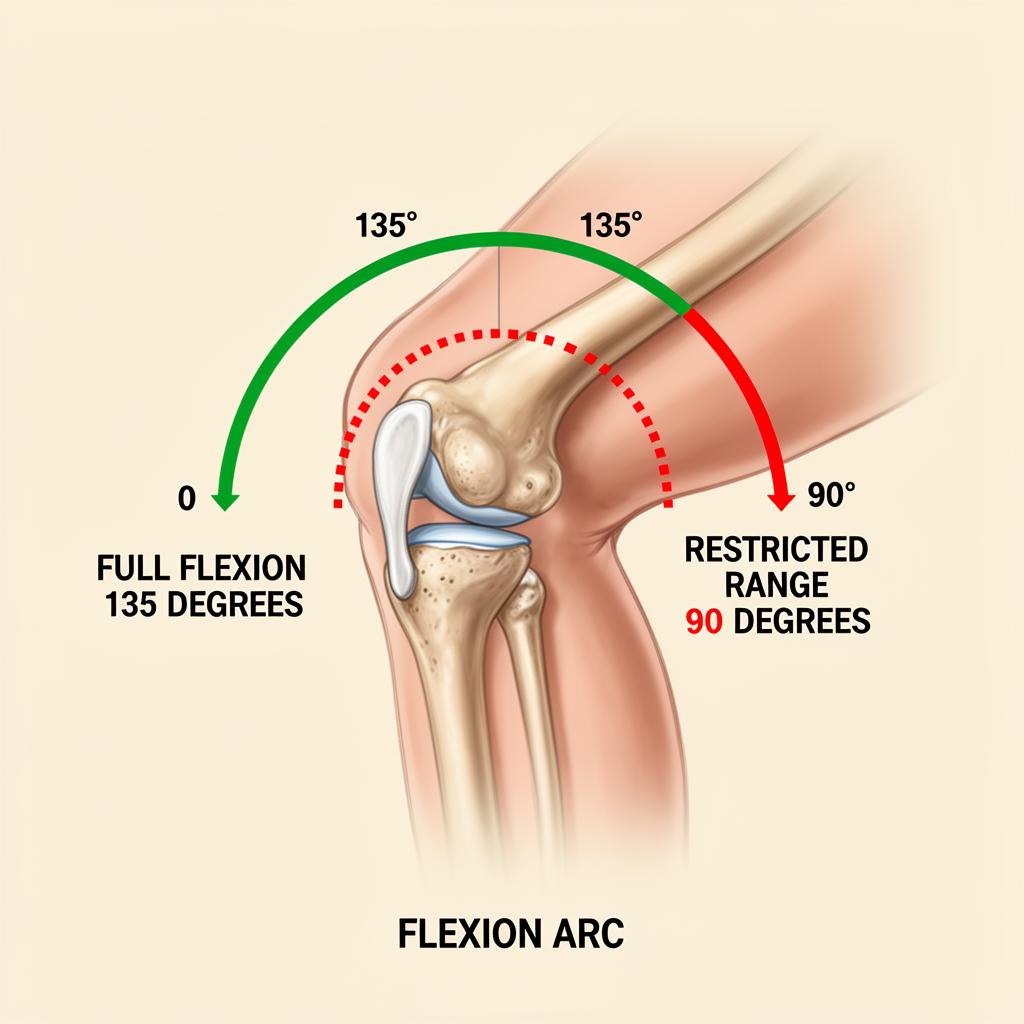
- Tight only near full bend: check quadriceps, kneecap, swelling, and the activity that preceded it.
- Tight near full straightening: check the back of the knee, hamstrings, calf, swelling, and any blocked sensation.
- Tight throughout the range: compare both knees and track visible swelling or a recent activity change.
- Sudden loss of range: stop forcing the movement and arrange an assessment.
One Tight Knee vs Both Knees
A symmetrical pattern may relate to general mobility, activity, or prolonged positioning. One-sided tightness deserves more attention to local history: previous injury, swelling, a change in walking, a new training load, or a visible difference between the knees.
New one-sided tightness with calf swelling, warmth, redness, numbness, or weakness is not a routine flexibility issue. Seek medical advice rather than trying to stretch it away.
A Safe Mobility Check
This is a symptom check, not a diagnostic test. Stop if the knee becomes painful, unstable, swollen, or blocked.

- Compare both knees while seated for visible puffiness and resting position.
- Perform five slow ankle pumps on each side.
- Slide each heel back and forward through a comfortable range.
- Try a few seated knee extensions without forcing the final degrees.
- Walk briefly and record whether the sensation improves, stays the same, or worsens.
Do Not Stretch Through These Signs
Stop and arrange appropriate care if the knee locks, gives way, becomes sharply painful, develops significant swelling, or cannot reach its usual range. A blocked joint is not the same thing as a muscle that needs a harder stretch.
What If the Tightness Appears After Sitting or Resting?
When the main trigger is a chair, sofa, car ride, sleep, or another period of being still, the timing becomes the primary search intent. That pattern is covered in our focused guide to knee pain and stiffness after sitting, including first-step pain, sit-to-stand mechanics, back-of-knee tightness, and pain while resting versus after resting.

Daily Habits That May Help
- Change positions regularly instead of holding one posture for long periods.
- Use comfortable ankle, knee, hip, and calf mobility rather than aggressive stretching.
- Build quadriceps, hip, and calf strength gradually; see our knee-strengthening guide.
- Progress exercise volume one variable at a time and track the next-day response.
- Use warmth only for ordinary stiffness when the knee is not swollen, red, newly injured, or unusually hot; see heat versus ice.
When Knee Tightness Needs Medical Attention
Arrange an assessment when tightness persists, progressively worsens, significantly changes walking, or causes a clear reduction in bending or straightening. Also seek advice for recurrent swelling, a lump behind the knee, locking, giving way, numbness, weakness, or a new one-sided pattern.
Seek urgent help for a badly swollen or deformed knee, inability to bear weight, a hot red joint with fever, or symptoms after a significant injury. Unexplained one-sided calf or leg swelling also needs prompt assessment.
The Bottom Line
Knee tightness without pain is common but nonspecific. It may reflect muscles, tendons, joint motion, mild swelling, kneecap sensitivity, osteoarthritis, or an old injury. Use location, range, symmetry, swelling, and progression to decide what matters. Comfortable movement and gradual strengthening are reasonable when warning signs are absent, but a blocked, swollen, unstable, or progressively restricted knee should not be stretched through.
Frequently Asked Questions
Why does my knee feel tight but not painful?
Possible contributors include muscle or tendon tension, reduced flexibility, a temporary change in joint motion, mild swelling, osteoarthritis, previous injury, or sensitivity around the kneecap. The word tight does not identify one tissue or confirm that the knee is uninjured.
What does pressure in the knee without pain mean?
Pressure or fullness may come from the joint, surrounding soft tissues, or mild swelling that is not yet painful. Compare both knees and note warmth, visible puffiness, loss of motion, or a repeatable activity trigger. Persistent fullness should be assessed rather than self-diagnosed.
Why does my knee feel tight when bending but not hurt?
Bending tightness can reflect limited quadriceps, hamstring, calf, hip, or ankle mobility, kneecap sensitivity, joint swelling, or a mechanical block. Stop forcing the range if the knee catches, locks, or cannot fully bend or straighten.
Why does the back of my knee feel tight without pain?
The hamstrings, upper calf, and other tissues behind the knee can create a pulling sensation. Fullness from joint swelling or a Baker's cyst can feel similar. A persistent lump, one-sided calf swelling, warmth, or a blocked feeling needs medical assessment.
Is knee tightness without swelling less concerning?
The absence of visible swelling is reassuring but does not rule out all causes. Track whether the range of motion is changing, whether the tightness is worsening, and whether locking, instability, numbness, or weakness develops.
Why does only one knee feel tight?
A one-sided pattern may relate to an old injury, different mobility or strength between the legs, local tendon or joint irritation, swelling, or another condition. New, persistent, or progressively worsening one-sided tightness deserves a closer assessment.
How can I loosen a tight knee safely?
Use comfortable ankle pumps, seated knee extensions, heel slides, and a short easy walk rather than aggressive stretching. Stop if the knee becomes painful, swells, catches, locks, gives way, or loses motion. Long-term improvement may require strength and mobility work tailored to the cause.
When should knee tightness without pain be checked?
Arrange an assessment for persistent or worsening restriction, a clear inability to bend or straighten, recurrent swelling, a lump behind the knee, locking, instability, numbness, weakness, or tightness that significantly changes walking and daily activity.