You know the feeling. The alarm goes off, you swing your legs over the side of the bed, and the moment your feet touch the floor, your knees feel like they have aged overnight. Stiff, tight, slow to cooperate. For many adults over 40, morning knee stiffness is one of the most consistent and frustrating daily experiences.
The good news: this pattern is well understood, and there are practical, simple habits that can make a real difference. This guide covers exactly why your knees feel stiff in the morning, what changes happen inside the joint as you age, and a step-by-step approach to reducing that daily tightness over time.
Why Morning Stiffness Can Become More Noticeable After 40
Age can be part of the picture, but it is not a diagnosis. Morning stiffness may be influenced by time spent still, osteoarthritis, previous injury, tendon or muscle symptoms, sleep position, activity from the day before, and general conditioning.
- Time spent still: a knee held in one position for hours may feel stiff during the first few movements.
- Joint health: osteoarthritis and other joint conditions become more common with age, but they are not inevitable and require individual assessment.
- Muscle and tendon factors: fatigue, tension, and reduced flexibility can change how the knee feels when movement begins.
- Sleep position and pressure: a prolonged bend, side-lying contact, or an unsupported leg may affect comfort.
- Daily activity: a more demanding or unusually inactive day can influence the following morning.
These factors can overlap. For a broader look at age-related patterns, see our guide on why knee pain changes with age.
Why the First Movements May Feel Stiff
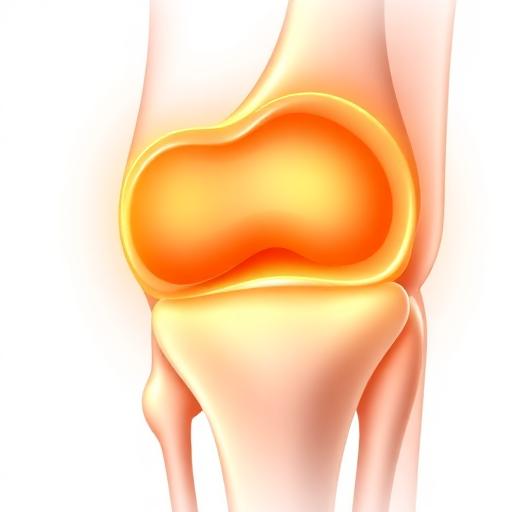
A knee that has been still overnight may feel different when it first returns to weight-bearing. The illustration below shows a practical sequence rather than claiming a single fluid, circulation, or inflammation mechanism.

Start with small, comfortable movements and notice how the knee responds. There is no universal five- or ten-minute rule, and improvement with movement does not identify the cause. Persistent stiffness, marked swelling, locking, instability, fever, or difficulty bearing weight should be assessed.
Why Knees May Feel Stiff After Resting or Sitting
While morning stiffness gets the most attention, the same mechanisms apply whenever your knees are still for extended periods. Many people over 40 notice stiffness after:
- Sitting at a desk for 2+ hours without a break
- Watching a movie or sitting through a long meeting
- Driving for extended periods
- Resting on the couch in the evening
- Sitting with legs crossed or tucked underneath

The same practical approach can be used after sitting: begin with a comfortable knee bend or ankle movement, use a stable support if needed, and stand gradually. This does not replace assessment when the knee is swollen, unstable, locked, or persistently painful. For tips specific to sitting-related stiffness, see our knee pain after sitting guide.
A Simple Morning Stretch Routine for Stiff Knees
One of the most effective ways to combat morning knee stiffness is a gentle stretch and movement routine that you can do before even getting out of bed. This approach gives your joints time to warm up before you put weight on them:

Step 1: Ankle Circles (1 Minute)
While lying in bed, slowly circle your ankles in both directions, 10 circles each way. This activates the muscles in your lower legs and begins encouraging circulation toward your knees without any joint loading.
Step 2: Gentle Knee Bends (2 Minutes)
Slowly slide one heel toward your body, bending the knee as far as feels comfortable, then slide it back out straight. Alternate legs, doing 8 to 10 repetitions per side. This movement directly pumps synovial fluid across the joint surfaces.
Step 3: Quad Sets (1 Minute)
Lying flat, press the back of one knee firmly into the mattress, tightening the front thigh muscle. Hold for 5 seconds, then release. Repeat 8 times per leg. This activates the quadriceps, which are the primary stabilizers of the knee joint.
Step 4: Straight Leg Raises (2 Minutes)
Lying flat with one knee bent and foot flat, keep the other leg straight and slowly raise it about 12 inches off the bed. Hold for 3 seconds, then lower slowly. Repeat 6 to 8 times per side. This strengthens the hip flexors and quadriceps while keeping the knee in a comfortable position.
Step 5: Seated Knee Extensions (1 Minute)
Sit on the edge of the bed with feet on the floor. Slowly straighten one knee, hold for 3 seconds at the top, then lower slowly. Repeat 6 to 8 times per leg. This is your final warm-up before standing, preparing the knee for weight-bearing. For more exercises like these, see our complete knee exercises guide.
How to Reduce Morning Knee Tightness Over Time
While the morning routine above helps with immediate stiffness, there are longer-term strategies that can gradually reduce the severity of your morning knee tightness:
- Apply warmth before bed and upon waking: a 15-minute warmth session before sleep helps the knee stay more comfortable overnight, and a morning warmth session accelerates the warm-up process. Our warmth for daily comfort guide explains this in detail.
- Stay hydrated throughout the day: synovial fluid production depends on adequate hydration. Drinking water consistently throughout the day, including a glass before bed, supports fluid production overnight.
- Strengthen the muscles around your knee: stronger quadriceps, hamstrings, and calf muscles provide better support for the knee joint, reducing the load on cartilage and other structures. Even simple bodyweight exercises 3 to 4 times per week can make a meaningful difference. See our knee strengthening guide for specific routines.
- Maintain a healthy weight: every pound of body weight creates approximately 4 pounds of force on the knee during walking. Even modest weight management can significantly reduce the daily load on aging knee joints.
- Avoid sleeping with knees locked straight or deeply bent: sleeping with a small pillow under or between your knees can keep them in a more neutral, comfortable position that reduces overnight tightening.
- Move frequently throughout the day: regular movement during the day keeps your joints lubricated and your tissues flexible, which translates to less severe stiffness the following morning.
Daily Movement Habits for Ages 40 to 70
The best long-term strategy for reducing morning knee stiffness is building daily movement habits that keep your joints active, lubricated, and supported. Here is a practical framework organized by age range:
In Your 40s: Building the Foundation
- Walk 20 to 30 minutes daily at a comfortable pace
- Do bodyweight squats and lunges 3 times per week (start with wall-assisted versions if needed)
- Stretch your quadriceps, hamstrings, and calves for 5 minutes daily
- Stand up and move for 2 minutes every hour during desk work
- Consider adding cycling or swimming as low-impact conditioning
In Your 50s: Maintaining and Adapting
- Walk 15 to 25 minutes daily, adjusting pace as needed
- Focus on gentle strengthening with resistance bands or light weights
- Add balance exercises (single-leg stands, heel-to-toe walking)
- Increase warmth therapy to twice daily (morning and evening)
- Prioritize consistency over intensity in every activity
In Your 60s and 70s: Protecting and Supporting
- Walk 10 to 20 minutes daily, breaking into shorter sessions if needed
- Focus on chair-based exercises and gentle range-of-motion movements
- Use warmth therapy before and after any physical activity
- Prioritize stretching and flexibility work over strength training
- Listen closely to your body and adjust daily activity based on how you feel
The common thread across all age groups is consistency. Daily gentle movement, even just 10 to 15 minutes, produces better results than occasional intense exercise. For a complete daily framework, see our daily knee comfort routine guide.
Habits That Can Make Morning Stiffness Worse
Just as certain habits help, others can make morning stiffness more pronounced:
- Complete inactivity: spending entire days without movement leads to weaker muscles and stiffer joints, making mornings progressively worse
- Dehydration: not drinking enough water throughout the day directly affects synovial fluid quality and production
- Sleeping on a very soft mattress: unsupportive sleeping surfaces can allow your legs to rest in positions that increase joint strain
- High-impact activities without warm-up: jumping into vigorous exercise without preparation can leave your knees sore and stiff the next morning
- Prolonged sitting in the evening: sitting for 3 to 4 hours without movement before bed sets up your knees for worse morning stiffness
- Ignoring discomfort signals: pushing through significant discomfort during activities can create more stiffness the following day
When to Consider Professional Guidance
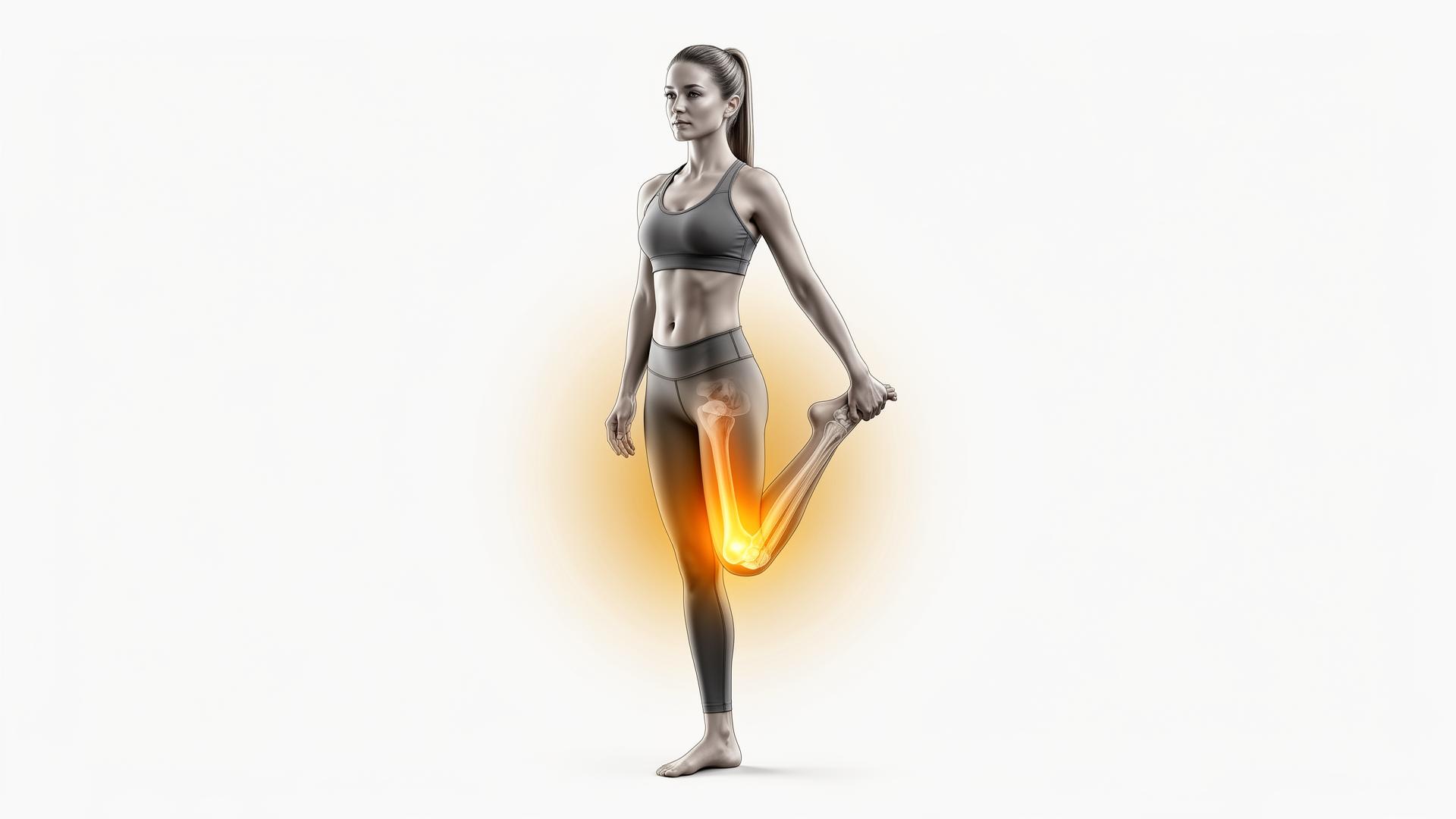
While morning knee stiffness is a common age-related experience, there are situations where professional evaluation is advisable:
- Stiffness that persists for more than 60 minutes despite gentle movement
- Significant swelling, redness, or warmth in the knee upon waking
- Stiffness that is getting noticeably worse week over week
- Morning stiffness accompanied by sharp, stabbing pain
- Inability to fully straighten or bend the knee in the morning
These patterns may indicate something beyond typical age-related stiffness and are worth discussing with a healthcare professional. For more on knee pain patterns by age, see our guide on knee pain after age 40 and 50.
If symptoms begin before morning and repeatedly interrupt sleep, compare osteoarthritis, menopause, position, and warning-sign clues in the knee pain at night after 40 guide.
The Bottom Line
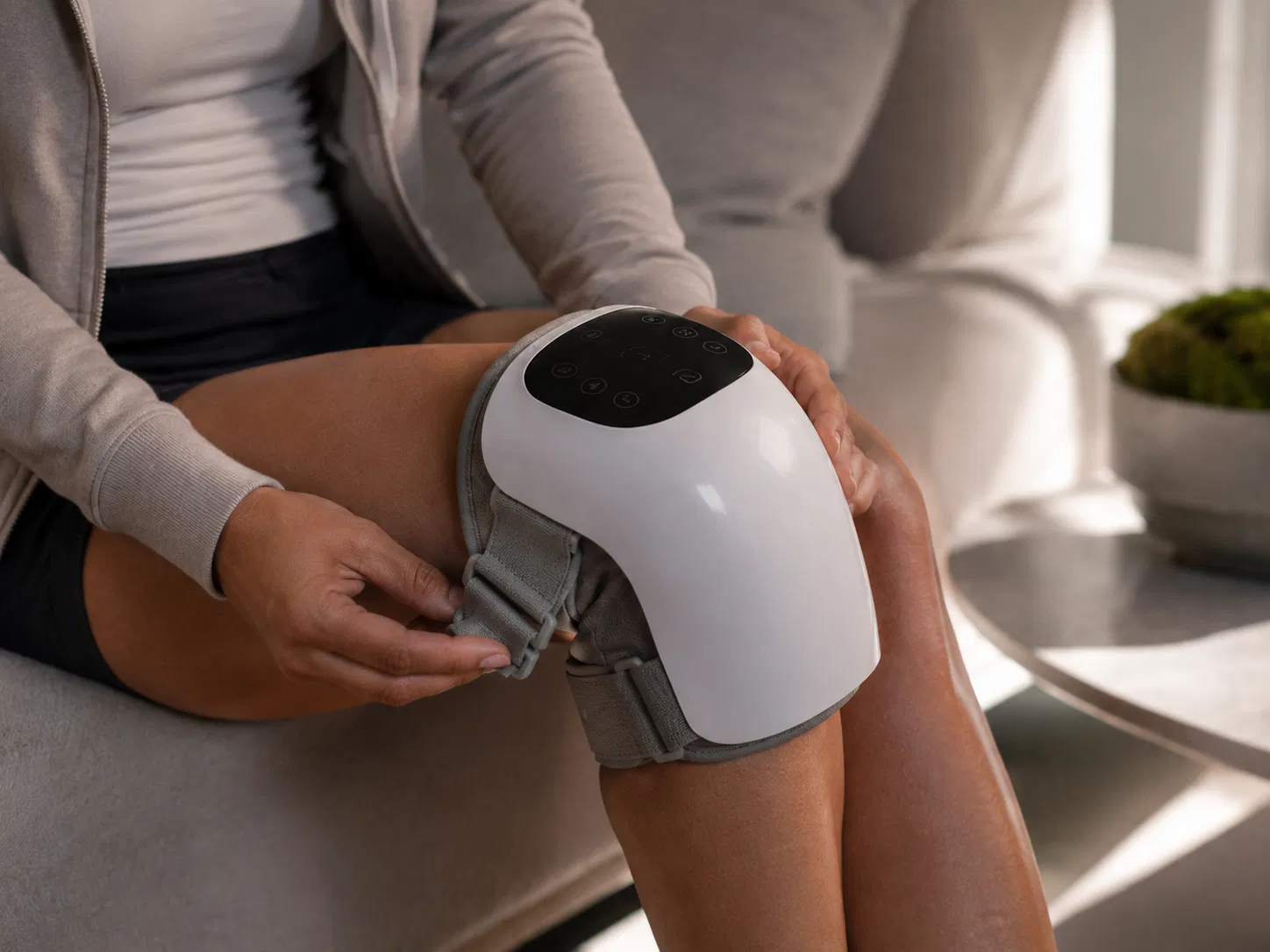
Morning knee stiffness after 40 is a common, well-understood experience driven by natural changes in your joints: reduced fluid production, cartilage thinning, connective tissue changes, and the cumulative effects of overnight stillness. If you exercise regularly and notice that morning stiffness is worse the day after workouts, our guide on knee pain after exercise explains the delayed recovery mechanism. Using an infrared knee massager before bed can help maintain joint warmth overnight and reduce morning stiffness. While you cannot completely stop these age-related changes, you can significantly reduce their daily impact through consistent habits.
A simple in-bed morning routine, regular warmth application, daily movement, and smart hydration can transform your morning experience from stiff and uncomfortable to smooth and manageable. The most important step is starting a consistent routine. Even small daily efforts compound over time into meaningful, lasting comfort improvement. For a broader perspective on joint aging, explore our complete guide to age-related joint changes.
Frequently Asked Questions
Why are my knees stiff every morning after 40?
Morning stiffness can be influenced by time spent still, osteoarthritis, tendon or muscle symptoms, previous injury, sleep position, and activity from the day before. A symptom description cannot determine which factor is responsible.
Is morning knee stiffness normal as you get older?
Morning stiffness is common, but it should not automatically be dismissed as “normal aging.” Note how long it lasts and whether there is swelling, warmth, locking, or worsening pain. Persistent or concerning symptoms deserve professional advice.
How long should morning knee stiffness last?
Some people improve after gentle movement, while others remain stiff longer. Significant swelling, prolonged stiffness, worsening symptoms, or difficulty bearing weight should be discussed with a healthcare professional.
Why do my knees hurt after resting or sitting?
A sustained position and reduced muscle activity can make the first movements feel different. Joint irritation, osteoarthritis, tendon symptoms, and seat or sleep position may also contribute.
How can I loosen stiff knees in the morning?
Before getting out of bed, try gentle ankle circles, slow knee bends, and quad tightening exercises while lying down. Applying warmth to the knee area for 10 to 15 minutes can also help. These simple steps encourage fluid circulation and help the tissues warm up before weight-bearing.
What is the difference between stiffness and pain?
Stiffness is a feeling of tightness or reduced range of motion that typically improves with gentle movement. Pain is a sharper, more persistent sensation that may not improve with movement or may worsen. If your morning experience is primarily stiffness that eases as you move, it is likely age-related tightness.
Is morning knee stiffness always age-related?
While age is the most common factor, morning stiffness can also be influenced by activity levels, weight, sleep position, previous injuries, and overall joint health. Consistent daily habits like gentle morning movement and warmth support can help regardless of the underlying cause.
Does morning knee stiffness improve with daily habits?
Yes, many people report significant improvement when they adopt consistent daily habits like morning stretching, warmth application, staying hydrated, and maintaining gentle daily movement. The key is consistency: daily practice tends to produce better results than occasional effort.