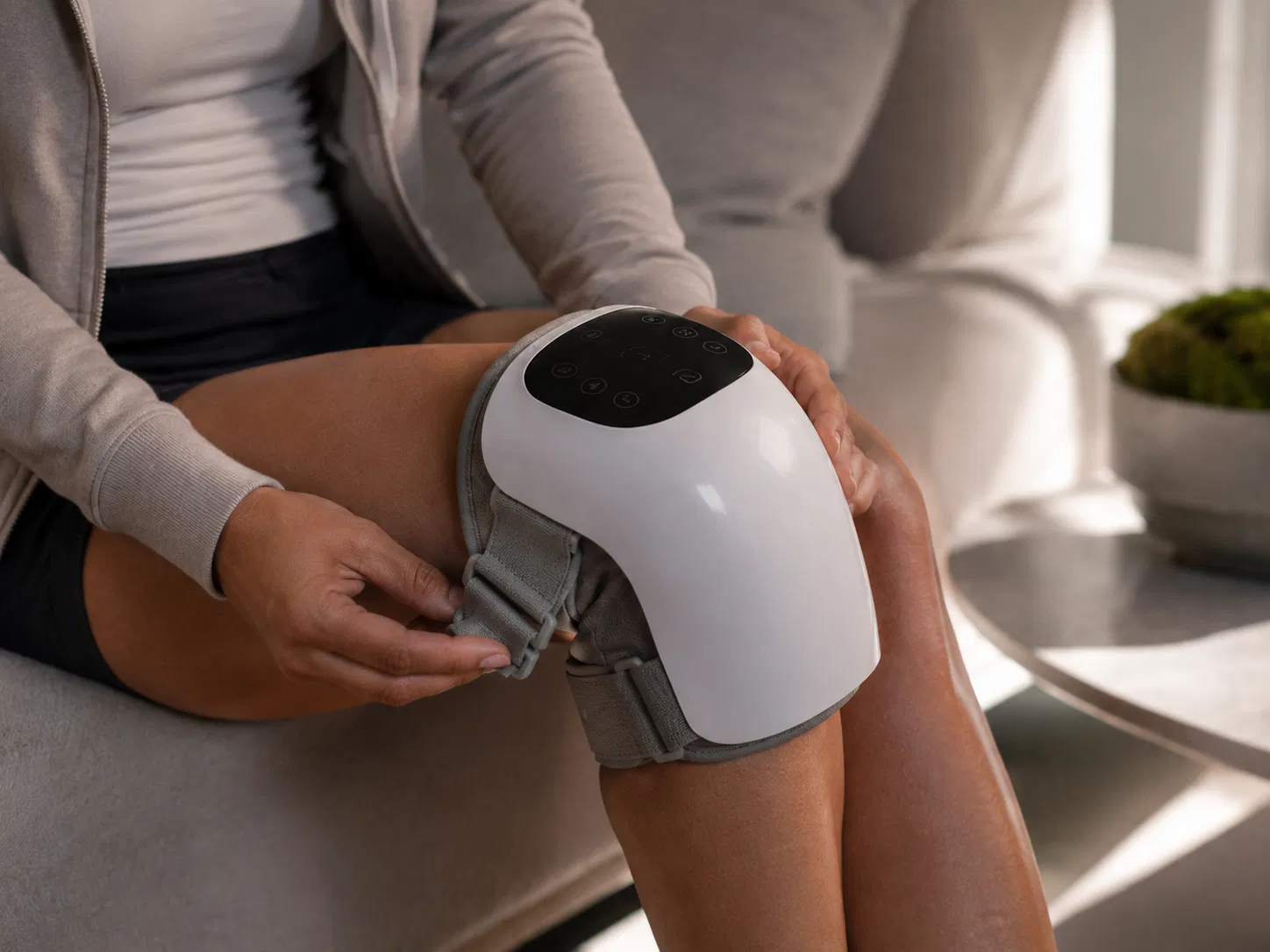
Most adults notice the shift somewhere between their late 30s and mid-40s. The knees that once carried them through sports, long walks, and busy days without complaint begin to protest. Morning stiffness lingers a little longer. Stairs feel different. Standing up after a movie requires a moment of adjustment. This is age-related knee pain in action, and it happens to nearly everyone.
The good news is that understanding why your knees change with age gives you real power to slow the process and manage daily comfort. This guide explains what happens inside your knee joints over the decades and shares practical habits that make a genuine difference.
What Aging Does to the Knee Joint
Your knee is the largest and one of the most complex joints in your body. It consists of bones, cartilage, synovial fluid, ligaments, tendons, and muscles, all working in coordination. Over time, each of these components undergoes gradual changes that collectively alter how your knee feels and functions.
These changes are not sudden. They accumulate over years and decades, which is why knee pain progression over time feels so gradual. You may not notice day-to-day differences, but comparing how your knees feel now to how they felt ten years ago reveals the pattern.
The Gradual Nature of Joint Aging
Joint aging is not a switch that flips at a certain birthday. It is a continuous, gradual process that begins in your 30s and becomes more noticeable in your 40s and 50s. The rate of change depends on genetics, activity level, body weight, and daily habits, all of which you can influence.
How Cartilage Changes With Age
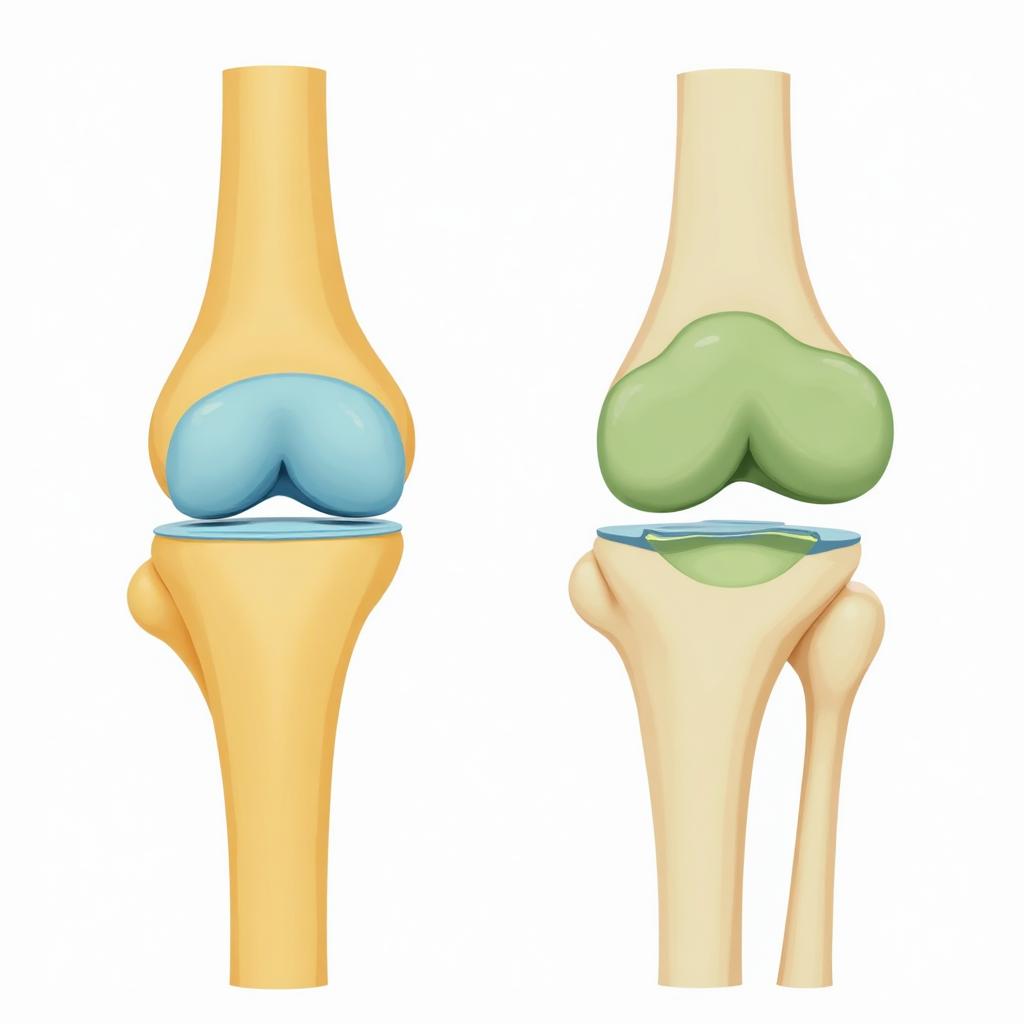
Cartilage is the smooth, rubbery tissue that covers the ends of your bones where they meet at the joint. It acts as a shock absorber and allows your bones to glide against each other with minimal friction. Healthy cartilage in a young adult is thick, springy, and well-hydrated.
As you age, cartilage gradually loses water content. This makes it thinner, stiffer, and less resilient. Cartilage thinning with age is the single most significant factor in age-related knee discomfort. The process is slow but relentless, and because cartilage has very limited blood supply, it repairs itself at a much slower rate than most tissues in your body.
By your 50s, cartilage surfaces that were once mirror-smooth may become rougher and slightly uneven. This roughness creates more friction during movement, contributing to grinding sensations, stiffness, and discomfort, particularly during weight-bearing activities like walking, climbing stairs, or standing up from a seated position.
How Tendons and Ligaments Change
Tendons connect muscles to bones, while ligaments connect bones to each other. Both are made primarily of collagen fibers that provide strength and flexibility. With aging, collagen production slows and existing fibers become less elastic and more rigid.
This reduced elasticity means your tendons and ligaments are less able to absorb sudden forces and adapt to rapid changes in direction. Activities that once felt natural, like quickly pivoting, squatting deeply, or jumping, may start to feel uncomfortable or unstable. The joint relies more heavily on muscle support, which is why muscle health becomes increasingly important as you age.
How Muscle Loss Affects the Knee
Starting in your 30s, adults naturally lose muscle mass at a rate of approximately 3-8% per decade, a process called sarcopenia. The muscles most important for knee support are the quadriceps (front of the thigh), hamstrings (back of the thigh), and calf muscles.
When these muscles weaken, the knee joint loses a critical layer of protection. Strong muscles act as shock absorbers and stabilizers, distributing forces evenly across the joint. Weak muscles allow more stress to transfer directly to the cartilage, ligaments, and bones. This is why aging knees symptoms often accelerate in people who become less active over time.
The relationship between muscle strength and knee comfort is one of the most actionable factors in managing age-related discomfort. Unlike cartilage, muscles respond well to exercise at any age, making targeted strengthening exercises one of the most effective long-term strategies.
Alignment Changes After 40 and 50
Your knee alignment, meaning how your thighbone, kneecap, and shinbone line up during movement, can subtly shift over time. Uneven cartilage wear, muscle imbalances, and changes in ligament tension all contribute to these gradual alignment shifts.
Even small alignment changes can concentrate pressure on specific areas of the joint rather than distributing it evenly. This localized stress accelerates wear in those areas, creating patterns where discomfort appears more on one side of the knee than the other. You might notice this as pain on the inner or outer side of your knee that was not there before.
Women may experience alignment-related changes earlier due to naturally wider hip angles that affect knee tracking. Hormonal changes during perimenopause and menopause can also influence joint flexibility and tissue elasticity, contributing to shifting comfort patterns.
Why Knee Pain Appears Even Without Injury
One of the most confusing aspects of age-related knee pain is that it often develops without any identifiable injury or event. You did not fall, twist, or overexert your knee. It simply started aching one day and never completely went away.
This happens because the cumulative effects of normal daily use, combined with the tissue changes described above, gradually reduce the joint's tolerance for everyday activities. The knee's built-in cushioning, lubrication, and muscle support all decrease simultaneously, creating a threshold effect where the joint's capacity to handle normal stress drops below what your daily life demands.
Understanding this helps explain why knee pain often does not resolve with rest alone. The underlying changes are ongoing and require active management through movement, strengthening, and supportive habits rather than passive rest.
Synovial Fluid and Aging
Synovial fluid is the thick, viscous liquid that lubricates your knee joint and nourishes the cartilage. With age, production decreases and the fluid's consistency changes, becoming thicker and less effective. This knee fluid loss with age contributes significantly to morning stiffness and the "rusty hinge" feeling many people describe when first getting up.
Activity-Specific Triggers: Stairs, Walking, Bending
Certain activities place significantly more stress on the knee joint than others, and these become more challenging as the joint's natural protection diminishes with age.
Stairs
Going up and down stairs generates forces equivalent to 3-4 times your body weight through the knee joint. With reduced cartilage cushioning, this amplified force creates more impact on the joint surfaces. Many people with knee stiffness as you age notice stairs as one of the first activities that becomes uncomfortable.
Prolonged Walking
Walking itself is relatively low-impact, but extended walking sessions can fatigue the supporting muscles, reducing their protective effect. As muscles tire, more stress transfers to the joint structures, which is why knees may feel fine at the start of a walk but increasingly stiff or achy toward the end.
Bending and Squatting
Deep bending compresses the knee joint at its maximum range, concentrating force on the areas where cartilage is thinnest. Getting up from the floor, deep squats, or kneeling can become progressively more challenging as joint aging changes reduce the cartilage buffer in these high-compression positions.
Daily Habits That Speed Up Knee Aging
While some knee aging is inevitable, certain everyday habits can accelerate the process significantly. Being aware of these allows you to make informed choices about your daily routines.
✓ Quick Tips
- •Prolonged sitting without movement breaks reduces joint lubrication and weakens supporting muscles
- •Carrying excess body weight multiplies the force on your knees with every step
- •Wearing unsupportive footwear changes how impact forces travel through your legs
- •Ignoring early stiffness signals and pushing through discomfort can worsen wear patterns
- •Avoiding all exercise out of fear of pain leads to muscle loss and reduced joint protection
- •Poor hydration reduces synovial fluid quality and joint lubrication
Perhaps the most counterintuitive habit on this list is avoiding exercise. Many people who experience knee pain after 40 reduce their activity levels to protect their knees. While avoiding high-impact activities is sensible, becoming sedentary actually accelerates joint deterioration by weakening the muscles that protect the knee.
Daily Habits That Protect Aging Knees
The encouraging reality is that many of the most effective knee protection strategies are simple, free, and can be incorporated into your existing daily routine. Consistency matters far more than intensity.
Stay Consistently Active
Regular low-impact movement, such as walking, swimming, cycling, or gentle yoga, keeps synovial fluid circulating, muscles engaged, and joints mobile. Aim for daily movement rather than occasional intense sessions. Even 15-20 minutes of gentle walking each day provides significant joint support.
Strengthen Your Supporting Muscles
Targeted exercises for your quadriceps, hamstrings, and glutes are among the most effective interventions for age-related knee discomfort. Strong muscles absorb shock, stabilize the joint, and reduce the load on cartilage surfaces. Even simple exercises like wall sits, leg raises, and glute bridges can make a meaningful difference when done consistently.
Apply Warmth to Stiff Joints
Warmth increases blood flow, helps synovial fluid distribute more evenly, and relaxes tight muscles around the joint. Applying warmth before activity can help your knees transition from rest to movement more comfortably. This is especially helpful for people who experience significant stiffness after resting.
Maintain a Healthy Weight
Every pound of body weight creates approximately 4 pounds of force through the knee joint during walking. Even modest weight changes can significantly affect daily knee comfort. A 10-pound reduction translates to 40 pounds less force on your knees with each step.
Choose Supportive Footwear
Your shoes affect how impact forces travel from the ground through your legs to your knees. Supportive shoes with adequate cushioning and proper arch support help distribute these forces more evenly, reducing concentrated stress on the knee joint. Learn more about how footwear choices affect knee comfort.
Take Movement Breaks
If you sit for extended periods, take a brief movement break every 30-45 minutes. Stand up, walk a few steps, gently bend and straighten your knees. This simple habit keeps synovial fluid circulating and prevents the stiffness that builds during prolonged inactivity. People who experience knee discomfort after sitting find this particularly helpful.
Stay Hydrated
Adequate hydration supports synovial fluid production and maintains the water content of your cartilage. While drinking water will not reverse cartilage wear, chronic dehydration can accelerate the loss of elasticity in joint tissues.
Understanding the Long-Term Outlook
Age-related knee changes are natural and universal. They are not a disease or a failure. Every knee on the planet goes through these changes given enough time. What varies enormously between people is how well they manage these changes through daily habits, activity choices, and proactive care.
Many people in their 60s and 70s maintain excellent knee comfort and full mobility because they have built sustainable daily habits that support their joints. The key insight is that knee comfort is not determined by age alone. It is determined by how you support your joints as they age.
Whether you are in your 40s noticing the first signs of change or in your 50s managing daily stiffness, the strategies outlined in this guide can help you maintain comfort and function for decades to come. For a deeper look at age-specific patterns, explore our guide on knee pain after age 40 and 50.
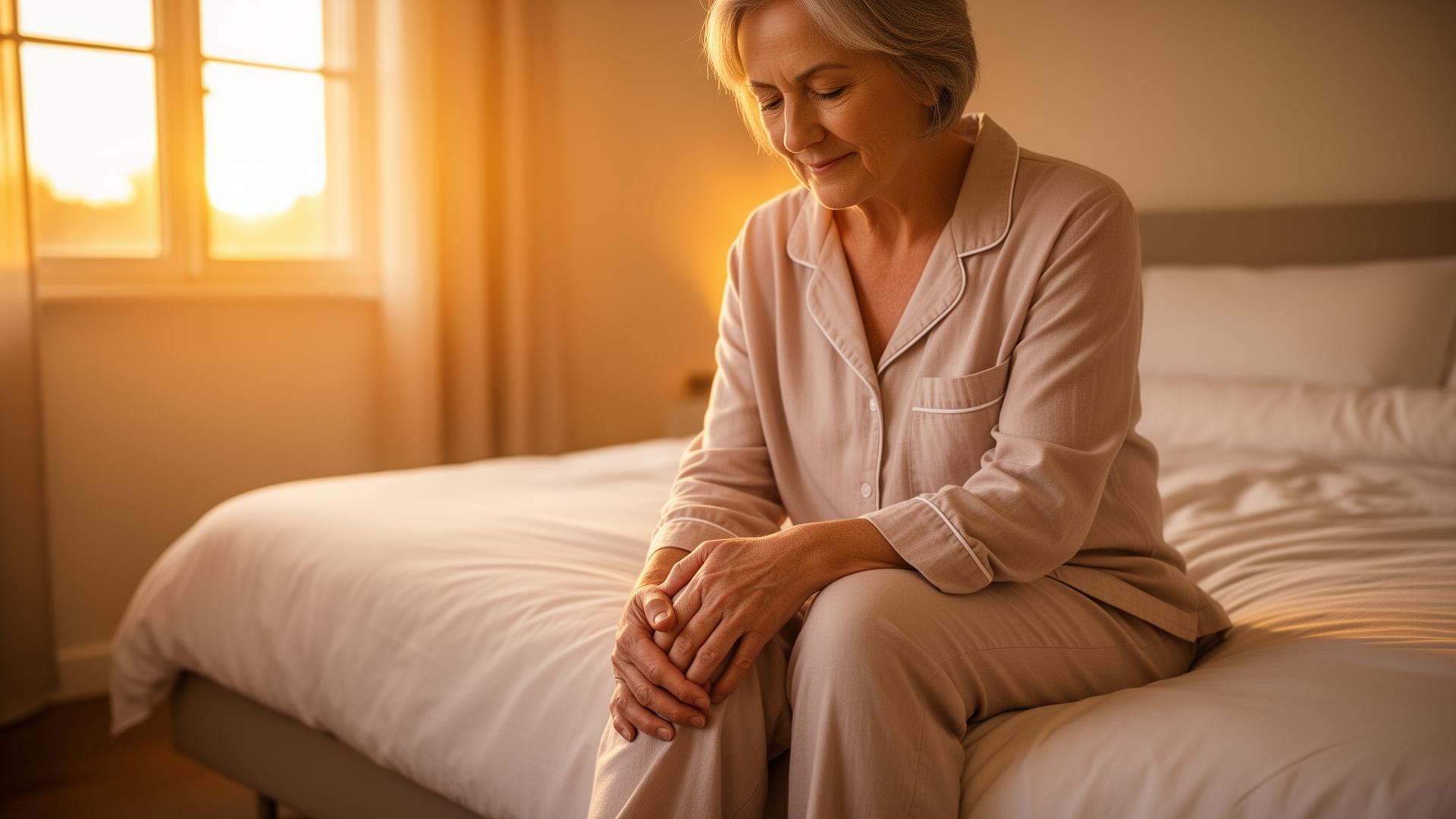
If the main problem is pain that appears after bedtime or wakes you from sleep, use the focused guide to night knee pain after 40, including osteoarthritis and menopause patterns.
Frequently Asked Questions
Why does knee pain get worse over time?
As you age, cartilage gradually thins and loses elasticity, synovial fluid production decreases, and surrounding muscles weaken. These changes reduce the knee joint's natural cushioning and stability, meaning everyday activities place more stress on the joint surfaces than they did when you were younger.
What causes age-related knee stiffness?
Stiffness develops because synovial fluid thickens during inactivity and cartilage becomes less flexible with age. After sitting or sleeping, the fluid needs time to redistribute, which is why your knees may feel tight when you first stand up. Gentle movement and warmth can help ease this transition.
Does aging cause fluid loss in the knee joint?
Yes. The body produces less synovial fluid as it ages, and the fluid's consistency changes, becoming thicker and less effective at lubricating the joint. This reduced lubrication contributes to stiffness, grinding sensations, and general discomfort during movement.
Can you have knee pain without injury as you age?
Absolutely. Most age-related knee discomfort develops gradually without any specific injury. The cumulative effects of decades of normal use, combined with natural tissue changes like cartilage thinning and muscle loss, create discomfort patterns that appear seemingly out of nowhere.
Why do knees pop and crack more with age?
Popping and cracking sounds (called crepitus) increase with age because cartilage surfaces become less smooth, gas bubbles form more easily in the synovial fluid, and tendons may snap over bony prominences as flexibility decreases. These sounds are common and usually not a cause for concern on their own.
Do knee alignment changes happen with aging?
Yes. Over time, uneven cartilage wear, muscle imbalances, and changes in ligament elasticity can subtly shift how your knee tracks during movement. This altered alignment can concentrate pressure on specific areas of the joint, contributing to localized discomfort patterns.
What are the early signs of knee joint aging?
Early signs include occasional morning stiffness that eases with movement, mild achiness after prolonged sitting, slight discomfort on stairs, and occasional creaking or popping sounds. These early indicators typically appear in your late 30s or early 40s and become more consistent over time.
How can I slow down knee aging?
Consistent low-impact movement, targeted muscle strengthening (especially quadriceps and hamstrings), maintaining a healthy weight, wearing supportive footwear, applying warmth to stiff joints, and staying hydrated all contribute to protecting your knee joints as you age. Small daily habits are more effective than occasional intense interventions.