Search interest in knee pain exercises has surged in recent years, and for good reason. As more people seek non-invasive, at-home approaches to knee pain relief, exercise has emerged as one of the most consistently recommended strategies by health professionals worldwide. The right exercises for knee pain can help strengthen the muscles that support your joint, improve mobility, and reduce everyday knee discomfort.
But not all exercises are created equal. Some can actually make knee discomfort worse if done incorrectly or at the wrong time. This guide breaks down the best exercises for knee pain, from quadriceps strengthening exercises and straight leg raises to ankle mobility exercises, so you can build a routine that works for your body and your lifestyle.
Why Knee Pain Exercises Help: The Simple Science
Your knee joint doesn't work in isolation. It relies on a network of muscles, quadriceps, hamstrings, calves, and glutes, to absorb shock, stabilize movement, and distribute load evenly. When these muscles are weak or imbalanced, the knee joint bears more stress than it should, which can contribute to stiffness, instability, and discomfort.
Knee exercises for knee pain work by strengthening these supporting muscles, improving the range of motion around the joint, and promoting better blood flow to the area. Research consistently shows that regular, gentle exercise is one of the most effective approaches for managing everyday knee discomfort, often more effective than rest alone.
This is especially relevant for people with knee arthritis, where strengthening exercises can help maintain joint function and slow the progression of stiffness. Similarly, runners dealing with runner's knee pain benefit significantly from targeted strengthening programs.
Strengthening Exercises for Knee Pain
The foundation of any knee exercises for pain relief program is strengthening the muscles around the joint. Here are the most effective exercises, each with illustrated form guidance.
1. Straight Leg Raises (Quadriceps)
Straight leg raises are one of the most recommended knee strengthening exercises because they work the quadriceps without putting pressure on the knee joint itself. This makes them ideal for people with knee discomfort who can't do squats or lunges comfortably.
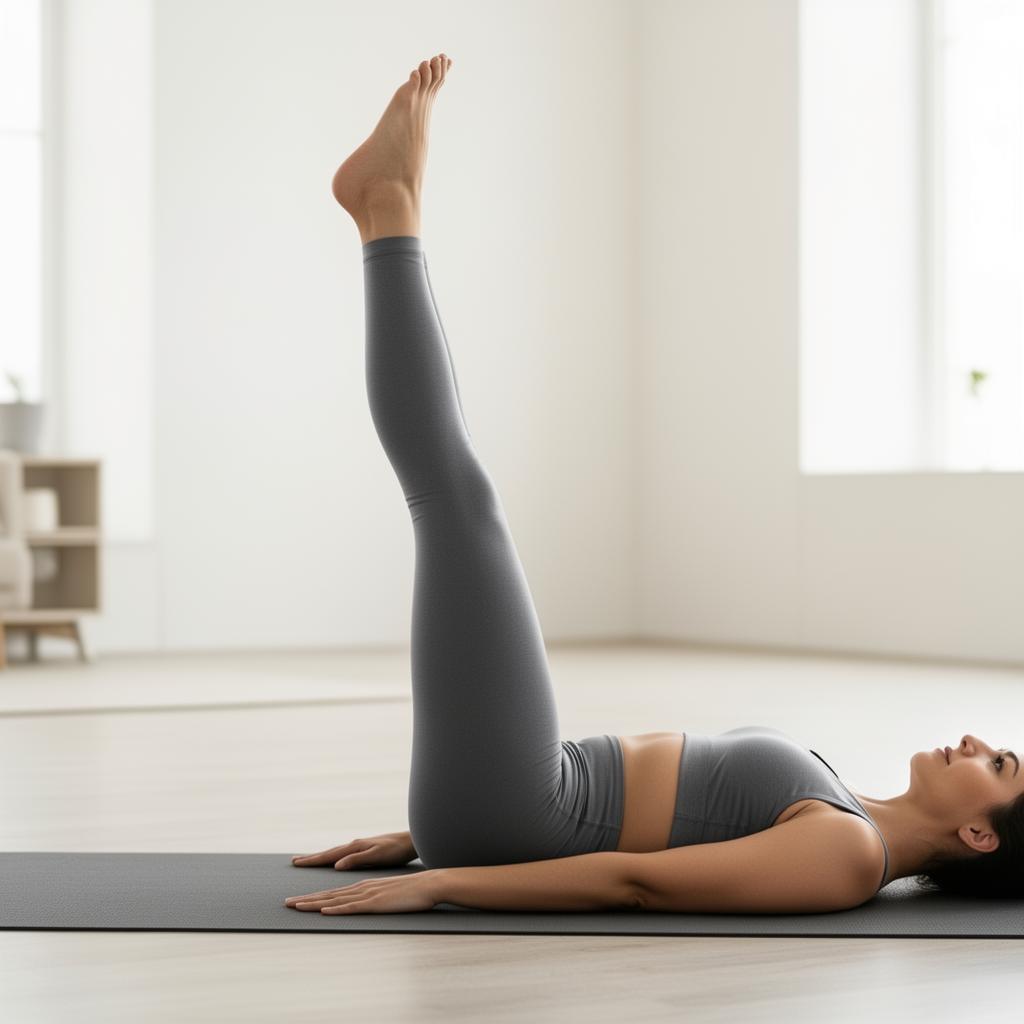
How to do it:
- Lie on your back with one leg bent (foot flat on floor) and the other straight
- Tighten the thigh muscles of the straight leg
- Slowly raise the straight leg about 12 inches off the floor
- Hold for 3–5 seconds, then lower slowly
- Repeat 10–15 times per leg, 2–3 sets
2. Wall Sits (Quadriceps & Glutes)
Wall sits are excellent quadriceps strengthening exercises that also engage the glutes. They build endurance in the muscles that stabilize the knee during standing and walking.
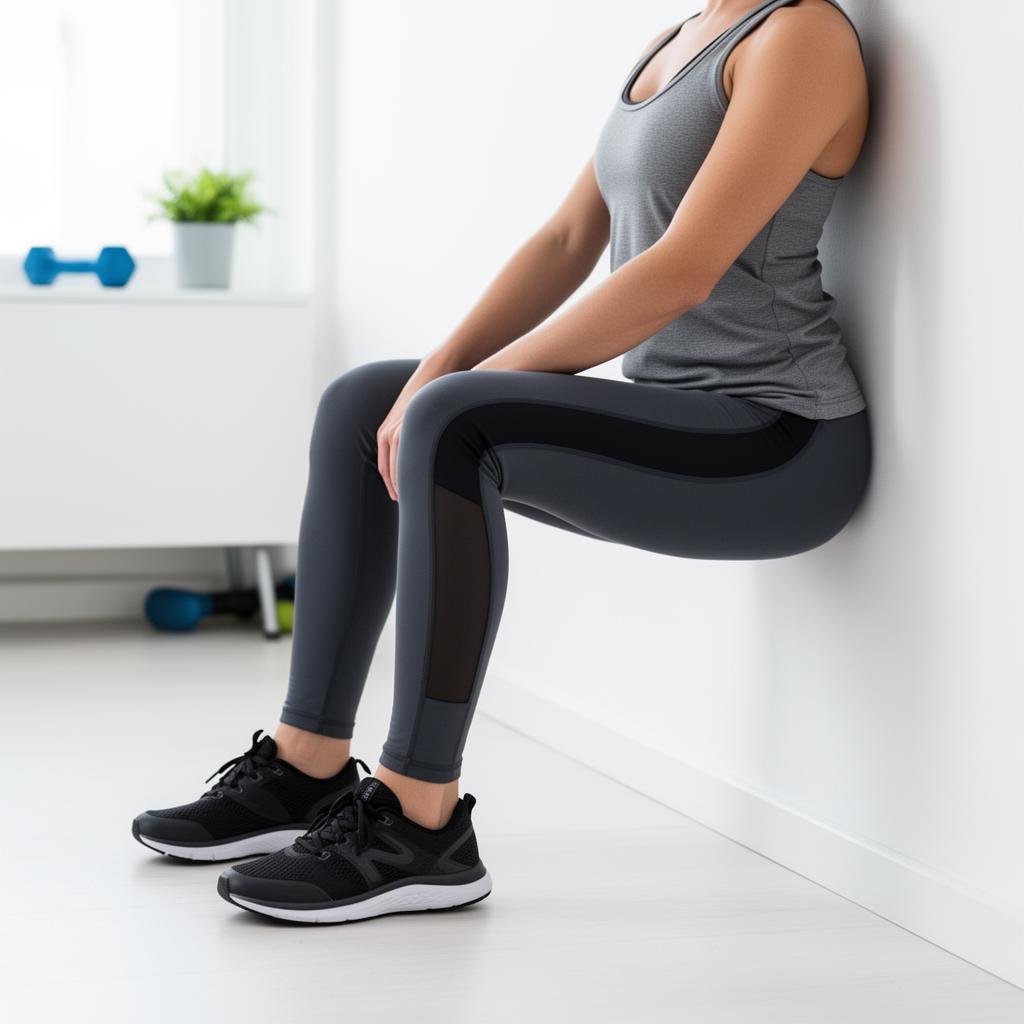
How to do it:
- Stand with your back flat against a wall
- Slide down until your thighs are parallel to the floor (or as far as comfortable)
- Keep your heels planted and use a depth that feels controlled; the knees may travel forward as your ankle mobility and proportions allow
- Hold for 10–30 seconds, building up over time
- Rest and repeat 3–5 times
3. Hamstring Curls (Standing)
Strong hamstrings balance the quadriceps and help protect the back of the knee. Standing hamstring curls are a gentle way to build strength without equipment. For those experiencing back-of-knee discomfort, this exercise is particularly beneficial.

How to do it:
- Stand behind a chair, holding onto it for balance
- Slowly bend one knee, bringing your heel toward your buttock
- Hold for 3–5 seconds at the top
- Lower slowly and repeat 10–15 times per leg
- Perform 2–3 sets
4. Calf Raises (Calves)
Calf strength directly affects ankle stability, which in turn influences knee alignment and comfort. Weak calves can contribute to compensatory movement patterns that stress the knee.

How to do it:
- Stand behind a chair or counter for support
- Rise up slowly onto the balls of your feet
- Hold for 2–3 seconds at the top
- Lower slowly back down
- Repeat 15–20 times, 2–3 sets
5. Glute Bridges (Glutes & Core)
Weak glutes are a common but overlooked contributor to knee discomfort. Glute bridges strengthen the posterior chain and help improve pelvic stability, reducing stress on the knees during walking and stair climbing.
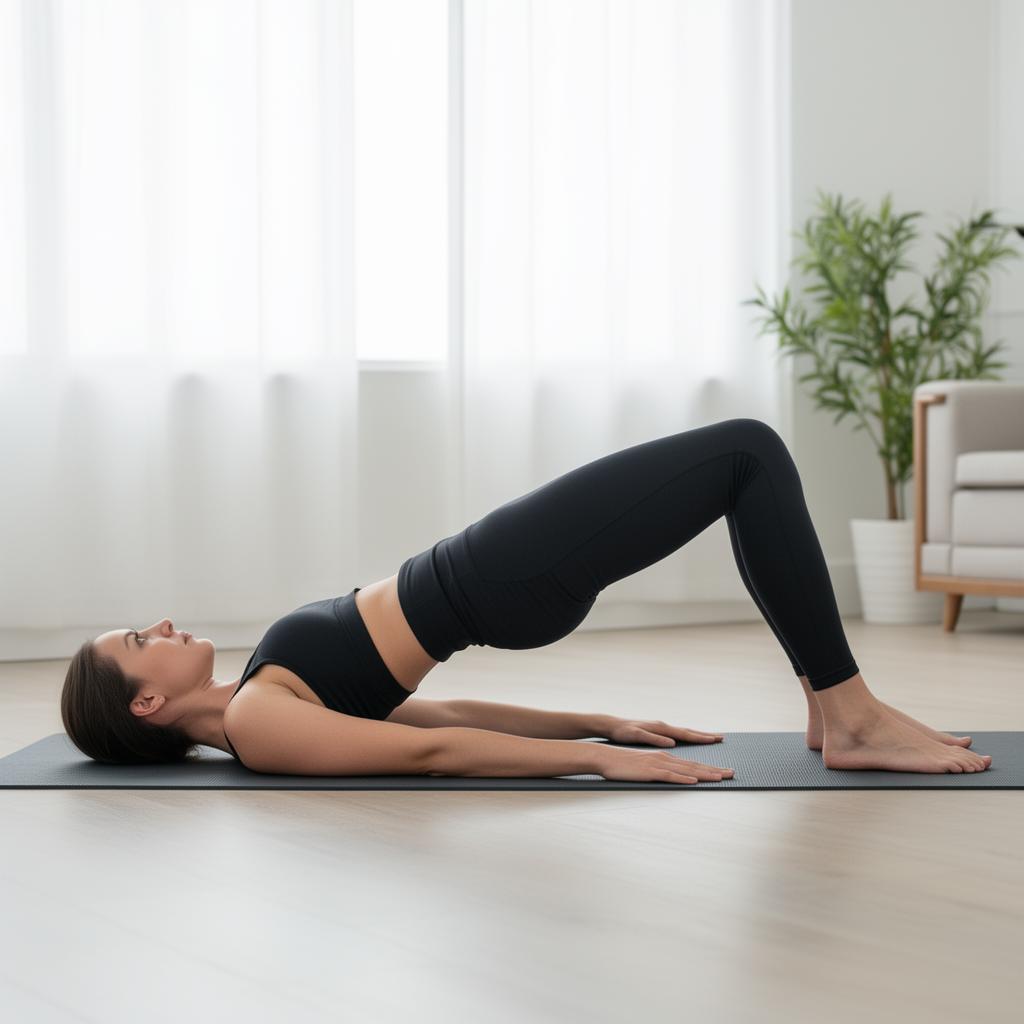
How to do it:
- Lie on your back with knees bent and feet flat on the floor, hip-width apart
- Press through your heels to lift your hips toward the ceiling
- Squeeze your glutes at the top and hold for 3–5 seconds
- Lower slowly and repeat 10–15 times
- Perform 2–3 sets
Mobility Exercises for Knee Pain
Strength alone isn't enough, knee mobility exercises help maintain and improve range of motion, which is essential for comfortable daily movement. These exercises are particularly helpful for people who experience knee stiffness after resting.
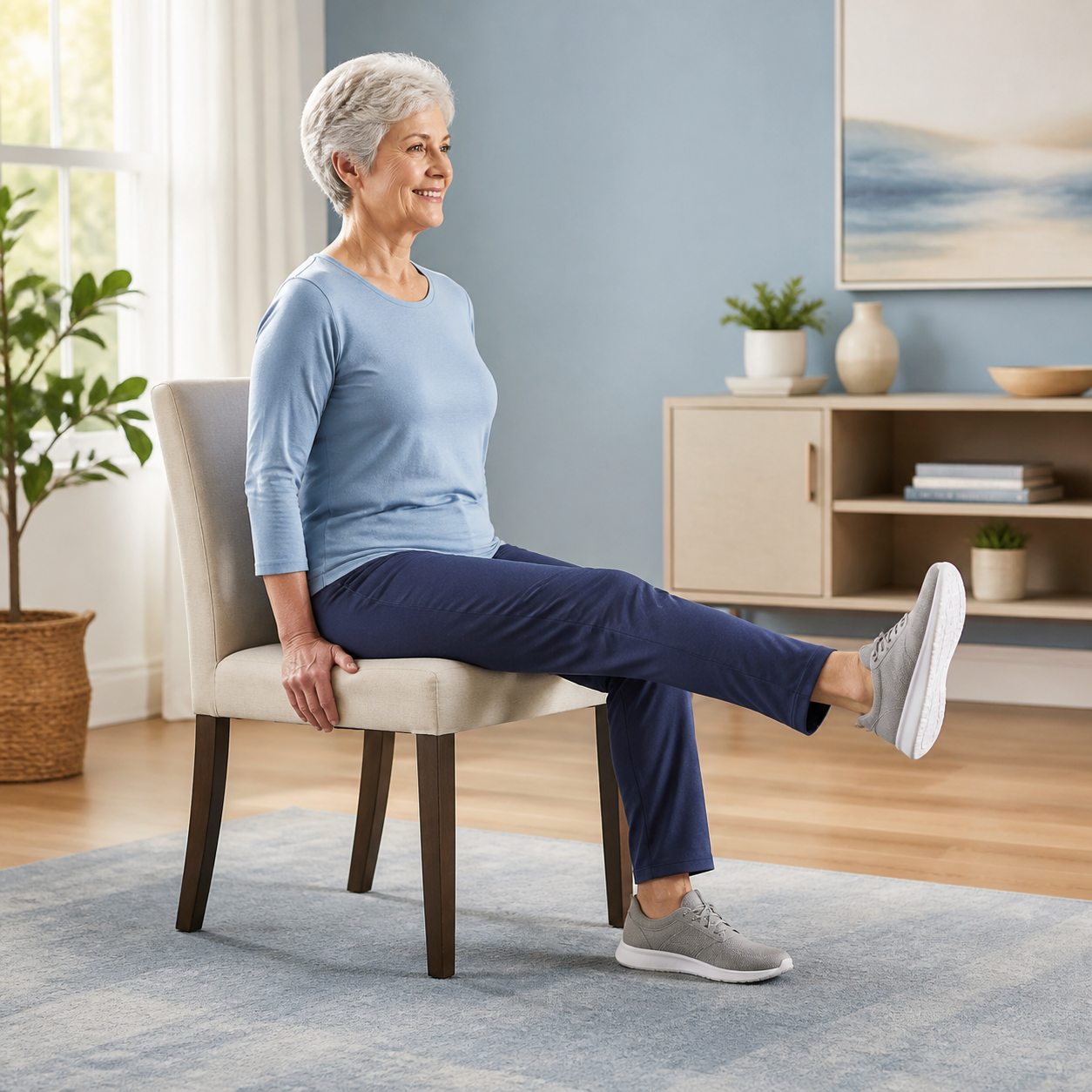
6. Seated Knee Extensions
This gentle exercise improves quadriceps activation and knee range of motion without bearing weight on the joint. It's perfect for warming up stiff knees.
How to do it:
- Sit in a sturdy chair with feet flat on the floor
- Slowly straighten one leg, extending the knee fully
- Hold for 5 seconds, squeezing the quad at the top
- Lower slowly and repeat 10–15 times per leg
- Perform 2–3 sets
7. Ankle Circles (Ankle Mobility)
Ankle mobility exercises are often overlooked in knee care, but ankle stiffness can directly affect knee alignment and comfort. When the ankle can't move through its full range, the knee compensates, often in ways that increase discomfort.
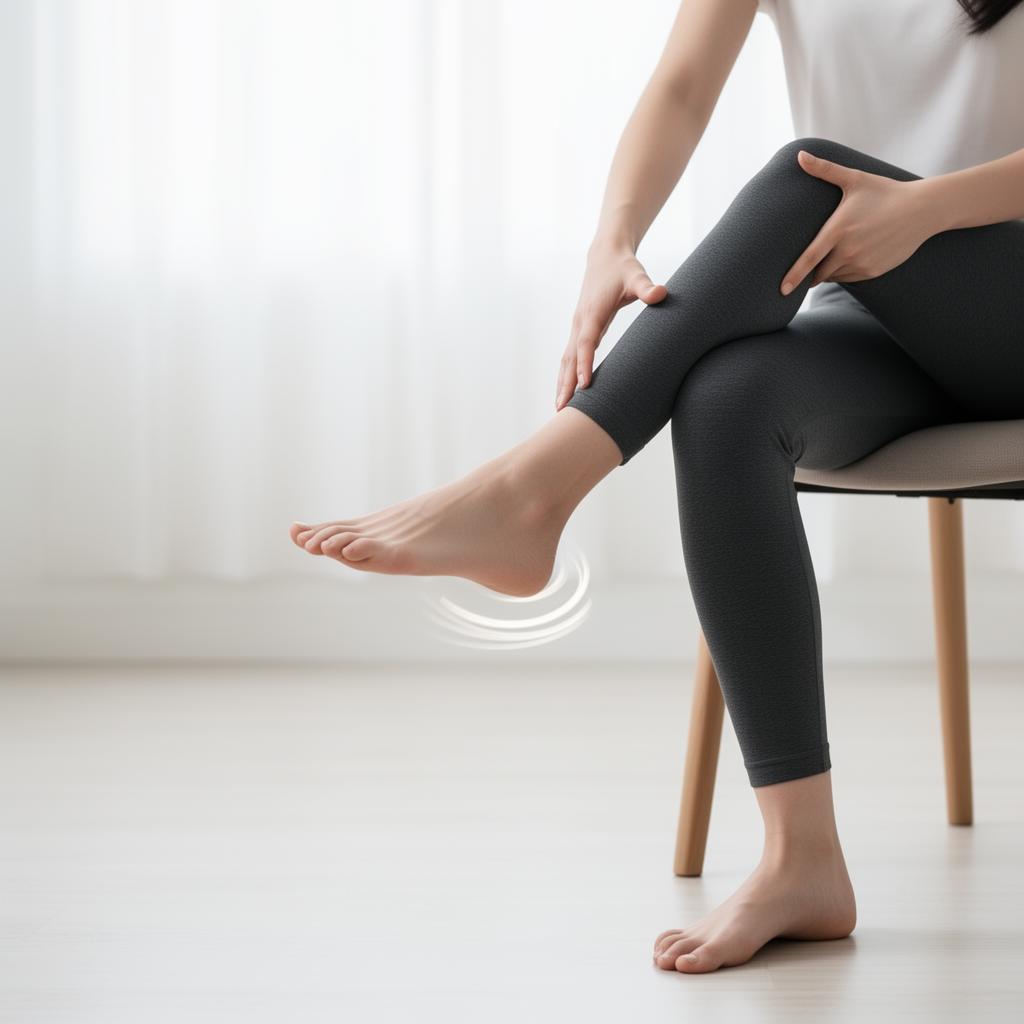
How to do it:
- Sit in a chair and lift one foot slightly off the floor
- Slowly rotate the foot in large circles, 10 clockwise, 10 counter-clockwise
- Switch feet and repeat
- Perform 2 sets per foot
8. Heel Slides
Heel slides gently improve knee flexion range of motion. They're especially useful for people recovering from stiffness or those who find deep bending uncomfortable.
How to do it:
- Lie on your back with both legs extended
- Slowly slide one heel toward your buttock, bending the knee
- Slide as far as comfortable, then hold for 3 seconds
- Slowly slide the heel back out to starting position
- Repeat 10–15 times per leg, 2 sets
Senior-Friendly Knee Exercise Routine
For seniors and older adults, gentle exercises for seniors can make a significant difference in maintaining independence and daily comfort. The key is starting slowly, using support when needed, and focusing on consistency rather than intensity.
Many seniors find that combining exercise with daily warmth application creates a comfortable routine that supports both strength and flexibility.
Recommended Senior Routine (15–20 minutes)
- Seated knee extensions, 10 reps each leg (warm-up)
- Ankle circles, 10 each direction per foot
- Chair-supported standing hamstring curls, 10 reps each leg
- Chair-supported calf raises, 15 reps
- Straight leg raises, 10 reps each leg (lying down or seated)
- Glute bridges, 10 reps (if comfortable on the floor)
Senior Safety Tips
- Always hold onto a sturdy surface for standing exercises
- Stop if you feel sharp or sudden discomfort, mild muscle effort is normal
- Start with fewer repetitions and build up gradually over weeks
- Exercise on a non-slip surface or yoga mat
- Apply warmth to knees before exercising to help with initial stiffness
Your Complete Daily Knee Exercise Routine
Building a sustainable daily routine is the most effective approach for long-term knee pain relief. Here's a complete exercises for knee pain relief routine you can follow every day:
Step 1: Morning Warm-Up (5 minutes)
Before getting out of bed, do 10 gentle heel slides per leg to warm up the knee joint. Follow with 10 ankle circles per foot while sitting on the edge of the bed. If your knees feel stiff, applying warmth for 5–10 minutes before exercising can help.
Step 2: Strengthening Block (10–15 minutes)
Perform 2 sets each of: straight leg raises (10–15 reps per leg), wall sits (10–30 second holds × 3), and glute bridges (10–15 reps). Rest 30–60 seconds between sets. Focus on slow, controlled movement rather than speed.
Step 3: Mobility Block (5 minutes)
Complete 2 sets of: seated knee extensions (10 reps per leg), ankle circles (10 each direction per foot), and standing hamstring curls (10 reps per leg). These exercises keep the joint moving through its full range of motion.
Step 4: Evening Cool-Down (5 minutes)
End the day with gentle calf raises (15 reps) and heel slides (10 per leg). Follow with 10–15 minutes of warmth application to help the muscles and joints relax before sleep. For those who experience nighttime knee discomfort, this evening routine can be particularly helpful.
When Exercises Help vs. When to Pause
Exercises for knee pain are most effective for:
- General stiffness and mild everyday discomfort
- Post-activity soreness from walking, stairs, or standing
- Age-related joint stiffness and reduced mobility
- Supporting recovery alongside professional guidance
- Front knee tightness after activity
Consider pausing and consulting a professional if:
- You experience sharp, sudden discomfort during an exercise
- Swelling increases after exercise rather than decreasing
- You have a recent injury that hasn't been evaluated
- Discomfort consistently worsens over several days despite gentle exercise
- You experience locking, giving way, or significant instability
Combining Exercise with At-Home Comfort Support
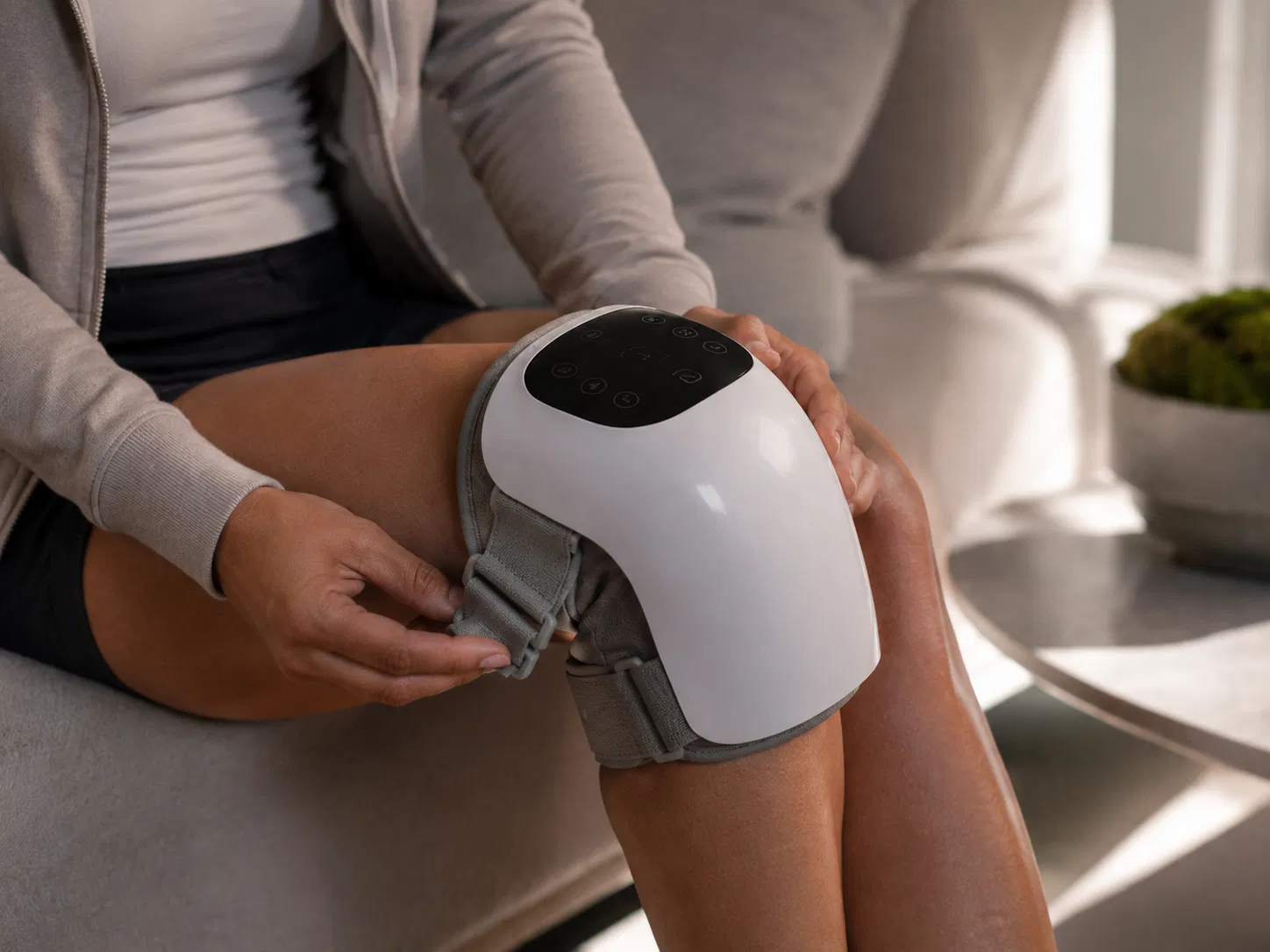
Many people find that pairing their knee exercises for pain routine with complementary comfort approaches produces the best results. Applying warmth before exercise can help loosen stiff joints, while using a knee massager or therapy device after exercise supports recovery.
If you're exploring at-home options, our guide on strengthening knees for daily support covers how exercise and supportive tools work together. For those interested in heat-based approaches, our heat vs. red light therapy comparison provides a balanced overview of both methods.
People looking for a more unusual gait drill can also review the evidence for backward walking for knee pain, including the balance precautions and short progression that should come before any treadmill challenge.
For a single exercise rather than a general routine, use the form and progression guides for tibialis raises, banded terminal knee extensions, or the step-down exercise. Each guide separates setup, load, and the later symptom response instead of treating every painful knee the same way.
Frequently Asked Questions
What are the best exercises for knee pain?
The best exercises for knee pain include straight leg raises, wall sits, glute bridges, standing hamstring curls, calf raises, and ankle circles. These exercises strengthen the muscles around the knee without putting excessive stress on the joint itself.
How do knee strengthening exercises help with knee pain?
Knee strengthening exercises help by building the quadriceps, hamstrings, glutes, and calves, the muscles that support and stabilize the knee joint. Stronger muscles absorb more shock during movement, reducing stress on the joint and improving daily comfort.
Are straight leg raises good for knee pain?
Yes, straight leg raises are one of the most recommended knee pain exercises. They strengthen the quadriceps without bending the knee or putting pressure on the joint, making them suitable for people at all fitness levels, including those with arthritis or post-injury stiffness.
What gentle exercises can seniors do for knee pain?
Seniors can safely perform seated knee extensions, chair-supported calf raises, ankle circles, gentle straight leg raises, and chair-supported hamstring curls. Start with fewer repetitions, always use a sturdy support surface, and stop if any exercise causes sharp discomfort.
How often should I do knee exercises for pain relief?
For best results, aim to do knee exercises daily or at least 4–5 times per week. Consistency matters more than intensity. A 20–30 minute daily routine combining strengthening and mobility exercises typically produces noticeable improvement within 2–4 weeks.
Can ankle mobility exercises help with knee pain?
Yes, ankle mobility exercises like ankle circles can help with knee pain. When the ankle is stiff, the knee compensates during walking and movement, which can increase stress on the knee joint. Improving ankle mobility helps restore proper movement patterns.
Should I exercise if my knees are stiff in the morning?
Gentle exercises like heel slides and ankle circles can actually help reduce morning knee stiffness. Start slowly and consider applying warmth to your knees for 5–10 minutes before exercising. Avoid high-impact activities until stiffness has eased.
What exercises should I avoid with knee pain?
Temporarily reduce or modify any exercise that causes sharp pain, changes your movement, or leaves the knee clearly worse afterward. Depth, speed, resistance, recent training load, and individual capacity matter more than a universal rule about the knees crossing the toes. Start with a comfortable range and seek individual guidance when pain persists or the knee swells, locks, or gives way.