The area behind the knee is one of the most common spots where people notice stiffness, tightness, or general discomfort. Whether it shows up after a long day of walking, during morning stretches, or seemingly out of nowhere, posterior knee discomfort is something millions of people experience regularly. Despite how common it is, most people have never taken the time to understand what is actually happening in this part of the body and what daily habits might be contributing to the way it feels.
Why the Back of the Knee Is So Sensitive
The posterior knee area is a complex anatomical junction where muscles, tendons, and ligaments from both the upper and lower leg converge. The hamstrings attach near this area from above, while the calf muscles (gastrocnemius and soleus) connect from below. Several smaller stabilizing structures, including the popliteal ligament and various connective tissues, also run through this region.
What makes this area particularly sensitive is that it serves as a transition point between two major muscle groups. When either the hamstrings or calves become tight, fatigued, or overworked, the posterior knee often absorbs the resulting tension. This is why people who sit for long periods, walk extensively, or exercise regularly tend to notice discomfort in this specific area.
Additionally, the popliteal fossa (the soft area directly behind the knee) contains important blood vessels and nerves. While this doesn't mean every sensation is cause for concern, it does explain why even minor changes in daily habits, posture, or activity levels can influence how the back of the knee feels from day to day. For an earlier perspective on posterior knee patterns, see our back-of-knee comfort overview. If you are looking for specific habit-based approaches to managing posterior knee comfort, our guide on back of knee pain and daily habits focuses on actionable routines.
Common Daily Patterns People Notice
One of the most helpful things you can do is pay attention to when posterior knee discomfort tends to appear. Understanding your personal patterns can reveal which daily habits are contributing most to the way your knee feels:
After Prolonged Sitting
This is perhaps the single most common trigger. Office workers, commuters, and anyone who spends extended periods in a seated position often notices a distinct tightness or stiffness when they first stand up. The knee may feel like it needs a few moments to "warm up" before walking feels comfortable. This happens because the tissues behind the knee shorten and stiffen when held in a bent position for extended periods.
During or After Walking
Walking, especially on hills, stairs, or uneven surfaces, engages the posterior chain muscles heavily. People who increase their walking distance suddenly (such as during travel or new exercise routines) often notice posterior knee discomfort as the muscles and tendons adapt to increased demand. The discomfort usually appears during the activity or within an hour afterward.
First Thing in the Morning
Overnight inactivity allows tissues to settle into a shortened, less flexible state. Many people describe a feeling of tightness or stiffness behind the knee during their first few steps of the day. This typically improves within 10 to 15 minutes of gentle movement as the tissues warm up and circulation increases. Our morning stiffness guide covers additional strategies for easing into your day.
After Exercise or Physical Activity
Activities that heavily involve the hamstrings, calves, or quadriceps can leave the posterior knee feeling tight or fatigued. Running, cycling, squatting, and even gardening are common triggers. The discomfort usually peaks several hours after the activity or the following morning.
During Weather Changes
While the exact mechanism is debated, many people consistently report increased posterior knee stiffness during cold, damp, or rapidly changing weather conditions. Barometric pressure changes may influence joint fluid behavior and tissue flexibility, though individual experiences vary widely.
Lifestyle Factors That Influence Posterior Knee Comfort
Beyond specific triggers, several ongoing lifestyle factors play a significant role in how comfortable or uncomfortable the back of your knee feels over time:
Sitting Posture and Habits
The way you sit matters more than most people realize. Sitting with your legs bent at sharp angles, crossing your legs frequently, or using chairs that are too high or too low can all put extra pressure on the posterior knee structures. Even the angle of your feet on the floor can influence the tension distribution through the back of the knee.
If you work at a desk, consider adjusting your chair height so your thighs are roughly parallel to the floor and your feet rest flat. A small footrest can help if your chair is too high. Taking movement breaks every 45 to 60 minutes, even just standing and walking for a minute or two, can significantly reduce posterior knee stiffness over the course of a workday.
Footwear and Gait Patterns
Shoes with poor arch support, worn-out cushioning, or inappropriate heel height can alter your natural gait, placing additional strain on the back of the knee with every step. For detailed shoe selection advice, see our running shoes and knee comfort guide.
Choosing supportive footwear, particularly for activities that involve extended walking or standing, is one of the simplest and most impactful ways to support posterior knee comfort. Consider replacing worn-out shoes regularly, as cushioning degrades significantly after 400 to 500 miles of use.
Hydration, Nutrition, and Sleep
Staying well-hydrated supports tissue flexibility and joint fluid quality, while adequate nutrition (particularly foods rich in omega-3 fatty acids and antioxidants) supports overall tissue health. Sleep is when the body performs most of its tissue maintenance and repair, so consistent, quality sleep can directly influence how your joints feel during waking hours.
These factors may seem unrelated to the knee specifically, but they create the foundation upon which daily comfort is built. People who improve their hydration, nutrition, and sleep habits often report gradual improvements in joint comfort throughout the body, including the posterior knee.
Body Weight and Load Distribution
The knee joint handles significant forces during everyday activities. Walking generates forces of roughly 1.5 times body weight through the knee, while stair climbing can reach 3 to 4 times body weight. Even modest changes in body weight can meaningfully affect the daily load experienced by the posterior knee structures, which is why gradual, sustainable weight management is often emphasized as a long-term comfort strategy.

Recommended for this guide
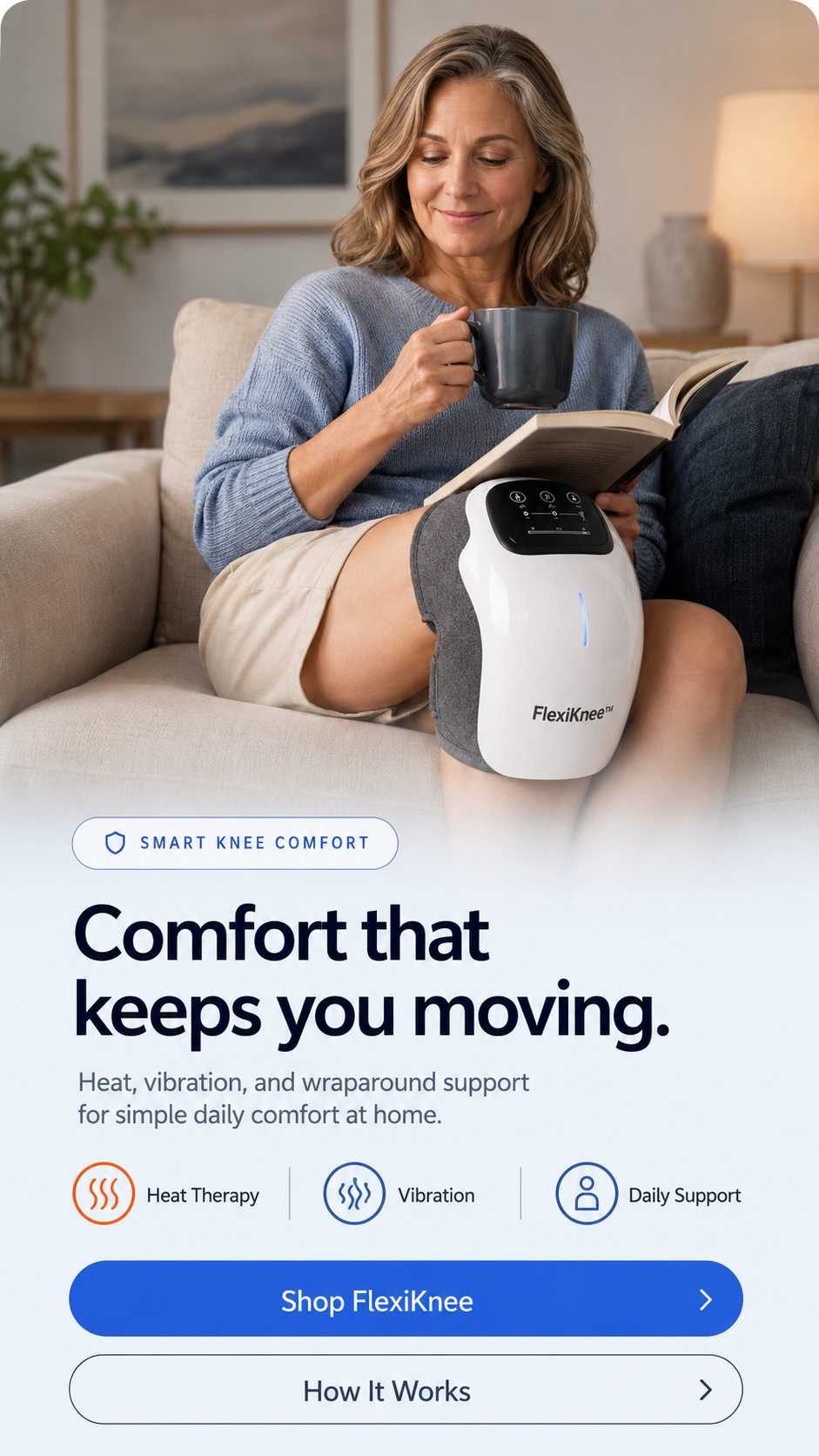
FlexiKnee Smart Heated Knee Massager
Adjustable warmth, red light, and gentle vibration in one wireless wrap for a complete 15-minute daily knee routine.
Who Experiences Posterior Knee Discomfort Most Often?
While anyone can experience discomfort behind the knee, certain groups tend to report it more frequently:
- Adults over 40: natural changes in tissue elasticity and joint fluid composition can make the posterior knee area more prone to stiffness and slower to loosen up after inactivity
- Desk workers and commuters: prolonged sitting with bent knees is one of the most consistent triggers, and many office-based professionals notice it becoming a persistent daily pattern
- Runners and cyclists: repetitive leg movements create cumulative tension in the hamstring-calf-knee junction, particularly when training volume increases quickly
- People who stand for long periods: teachers, retail workers, and healthcare professionals often experience posterior knee fatigue from sustained standing
- People recovering from lower body strain: the posterior knee is often one of the last areas to feel fully comfortable again after hamstring, calf, or general leg discomfort
Building a Supportive Daily Routine for Posterior Knee Comfort
The most effective approach to managing posterior knee comfort is building a few simple, consistent habits into your daily routine. These don't require special equipment or significant time investment:
Morning Routine (5 to 10 Minutes)
- Gentle hamstring stretches: before getting out of bed, gently extend each leg and hold for 20 to 30 seconds to ease overnight stiffness
- Standing calf raises: 10 to 15 repetitions to promote circulation to the posterior knee area
- Warmth application: applying gentle warmth to the back of the knee for 10 to 15 minutes can help tissues loosen up more quickly
Throughout the Day
- Movement breaks every 45 to 60 minutes: stand, walk briefly, and gently bend and straighten each knee several times
- Seated hamstring stretch: extend one leg forward while seated and gently lean toward it for 15 to 20 seconds per side
- Ankle circles: rotating the ankles helps promote circulation through the lower leg and posterior knee area
- Posture check: periodically verify that your feet are flat on the floor and your thighs are roughly parallel to the ground
Evening Wind-Down
- Gentle stretching: 5 to 10 minutes of hamstring, calf, and quad stretches before bed
- Warmth session: a 15 to 20 minute warmth application can help the posterior knee area relax before sleep
- Leg elevation: resting with legs slightly elevated for a few minutes can reduce any accumulated fluid and promote comfort
What Not to Do When the Back of Your Knee Feels Tight
Just as important as knowing what helps is understanding what to avoid:
- Don't force deep stretches: aggressive stretching can irritate posterior knee tissues further. Gentle, sustained stretches are more effective than forceful ones.
- Don't ignore persistent changes: if your posterior knee discomfort pattern changes significantly (becomes more intense, more frequent, or is accompanied by swelling), consult a professional.
- Don't remain completely sedentary: while rest is important when needed, complete inactivity often makes posterior knee stiffness worse over time. Gentle movement is usually preferable to total rest.
- Don't rely on a single approach: combining movement, stretching, warmth, and lifestyle adjustments tends to produce better outcomes than any single strategy alone.
When to Seek Professional Guidance
While posterior knee discomfort is often related to everyday habits and lifestyle factors, certain situations warrant professional attention:
- Sudden onset of significant swelling behind the knee
- A noticeable bulge or lump that wasn't there before
- Discomfort that prevents normal walking or weight-bearing
- Persistent warmth or redness in the area without an obvious cause
- Numbness, tingling, or changes in skin color below the knee
- Discomfort that does not improve with rest and gentle movement over several weeks
A healthcare professional can provide proper evaluation and guidance tailored to your specific situation. Early professional input is especially valuable if the discomfort appeared suddenly or is accompanied by other symptoms.
The Bottom Line
Back-of-knee discomfort is one of the most common joint concerns people experience, and in the vast majority of cases, it is closely connected to daily habits like sitting posture, footwear choices, activity levels, and general lifestyle factors. The posterior knee area is sensitive because it sits at the intersection of multiple muscle groups and stabilizing structures, which means it tends to reflect the cumulative effects of how you move (or don't move) throughout the day. Since knee comfort is often connected to the whole lower body, our guide on knee discomfort and the lower back/hip connection explores this relationship.
By understanding the patterns, recognizing which habits may be contributing, and building a simple daily routine that includes gentle movement, stretching, and warmth support, you can meaningfully improve your posterior knee comfort over time. The key is consistency: small daily habits compound into significant long-term results. For guidance on using warmth effectively, see our heat vs. red light therapy guide.