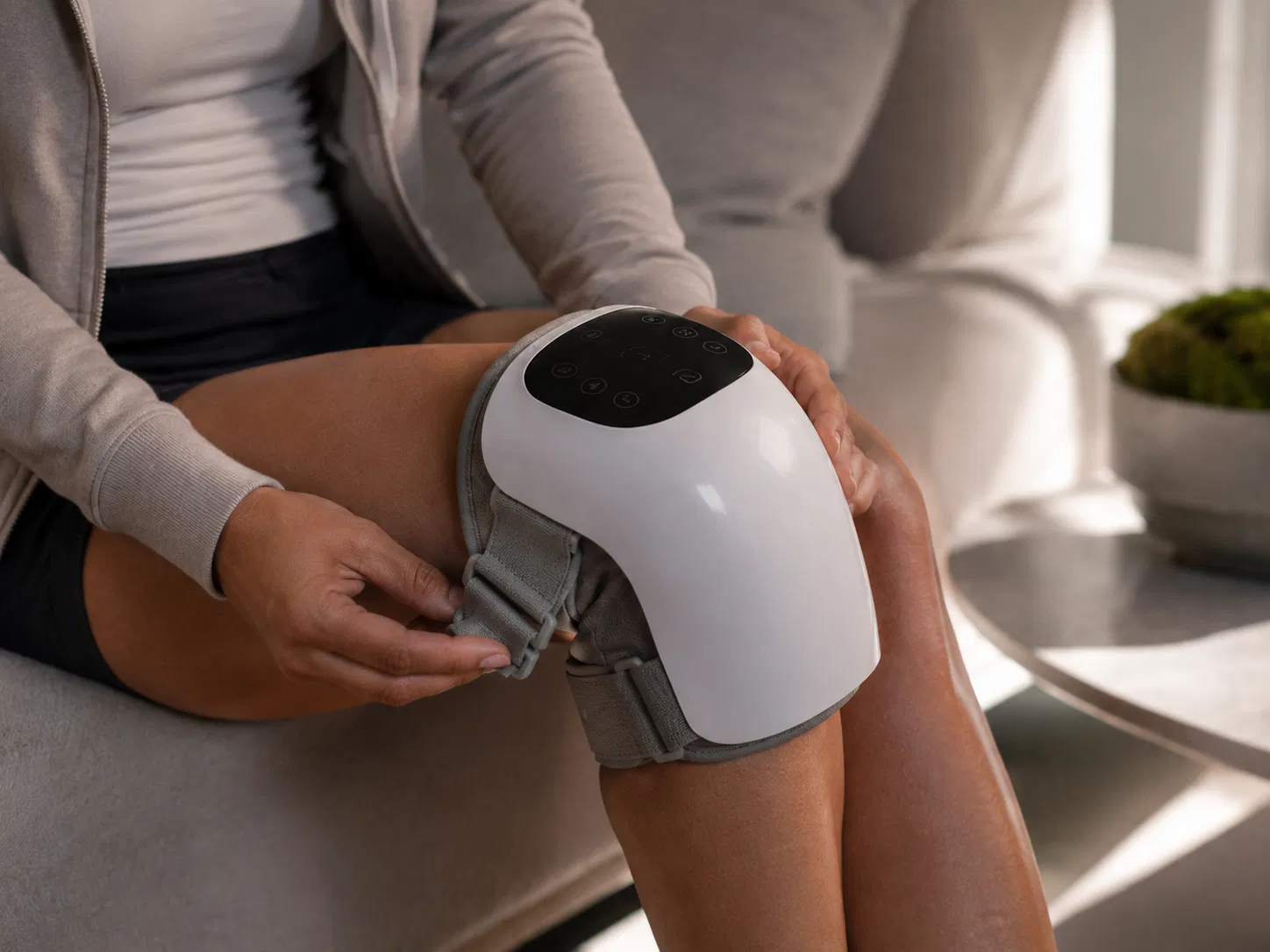
Both heat therapy and red light therapy have become popular options for at-home knee comfort support. Understanding the differences can help you decide which approach might work best for your routine, or whether combining both could be beneficial.
Understanding Heat Therapy
Heat therapy is a familiar comfort approach. Controlled warmth raises local skin and tissue temperature, and many people find that stiff muscles feel more relaxed while the warmth is applied.
The practical benefit is usually temporary soothing and easier movement rather than treatment of the underlying cause. Heat should not be used on a newly injured, markedly swollen, unusually warm, or numb area unless an appropriate healthcare professional advises it.
Common forms of heat therapy include warm compresses, heating pads, heated wraps, and warm baths. Heat is often used before activity to help loosen stiff joints, or after a long day to ease tension.
How Heat Works
Controlled warmth can make the area feel more comfortable and may help surrounding muscles feel less tense for a short period. The response varies, and heat is a comfort tool rather than a treatment for structural injury or disease.

Understanding Red Light Therapy
Red light therapy uses specific wavelengths of light, typically in the red and near-infrared spectrum, that penetrate the skin's surface. Unlike heat therapy, this approach doesn't rely on temperature to produce its effects.
Red and near-infrared light have been studied in photobiomodulation research, but results depend on wavelength, irradiance, dose, treatment area, and the condition being studied. A device displaying red light is not automatically equivalent to a research protocol.
Many people appreciate that red light therapy can be used without the warming sensation that comes with heat. It's typically gentle and non-invasive, making it suitable for regular use as part of a daily routine.
Red Light Wavelengths
Consumer devices commonly use visible red or near-infrared wavelengths. Penetration and delivered dose vary substantially by wavelength, output, distance, contact, and treatment time, so wavelength alone does not establish effectiveness.

Heat Therapy vs Red Light Therapy Comparison
General comparison of therapy characteristics (individual results may vary)
Key Differences to Consider
Sensation: Heat therapy provides an immediate warming sensation that most people find comforting. Red light therapy typically doesn't produce a noticeable temperature change, though some devices generate mild warmth.
Timing of effects: Heat is usually chosen for an immediate warming sensation. Red-light protocols are generally studied over repeated sessions, but a consumer device should not promise a particular timeline or outcome.
Use cases: Heat is commonly used as a short comfort step before gentle movement or during stiffness. Red-light use should follow the device instructions, with realistic expectations and attention to safety guidance.
Preferred Usage Times
When people typically prefer each therapy type
Can You Use Both Together?
Combination devices can be convenient because they place two optional modes in one wrap. Convenience does not prove that the combination is more effective than either mode alone.
Follow the product instructions and do not assume that two modes should always be used together. People with reduced sensation, circulation concerns, recent surgery, photosensitivity, or an implanted device should seek appropriate guidance before use.
✓ Quick Tips
- •Use heat before activities to help loosen stiff joints
- •Follow the device instructions rather than increasing frequency on your own
- •Choose a device with clear wavelength, timing, heat, and safety information
- •Start with shorter sessions and gradually increase duration
- •Track your comfort levels to find what works best for you
Choosing What's Right for You
There's no universal answer to which approach is "better." Some people prefer the immediate soothing feeling of heat, while others are drawn to the light-based approach. Many find that using both together, or alternating based on how they feel, works well.
The most important factor is consistency. Whatever approach you choose, regular use as part of a daily routine tends to be more beneficial than occasional application. Building a sustainable habit matters more than choosing the "perfect" method.
For more on who these devices work best for, see our guide on who benefits most from at-home knee therapy devices. If you're specifically comparing heat and ice, our detailed breakdown on heat or ice for knee pain covers when each is appropriate. You can also explore how infrared compares to traditional heating pads for a deeper look at modern heat-based options. For building these therapies into your daily routine, check out our daily knee comfort routine guide. And if warmth is your preferred approach, learn more about when warmth helps and when it doesn't.
Frequently Asked Questions
Is heat therapy or red light therapy better for knee pain?
Heat mainly provides a temporary warming sensation that some people find soothing. Red-light evidence varies by device specifications, dose, and the condition studied. Neither approach is guaranteed to treat the cause of knee pain, and combining them has not been shown to be universally better.
How often should I use heat therapy on my knees?
Heat therapy can generally be used daily or even multiple times per day. Sessions of 15-20 minutes are typically recommended. Avoid falling asleep with heating devices and never apply heat to acute injuries or inflamed areas.
Does red light therapy actually work for knee pain?
Research findings vary, and results from a study cannot be transferred automatically to every consumer device. Check the wavelength, irradiance, treatment distance or contact condition, and recommended dose, and keep expectations modest.
Can I use heat therapy and red light therapy together?
Some devices include both modes for convenience. Use only the combinations allowed by the instructions, and do not interpret multiple modes as proof of a stronger medical effect.
How long before I see results from red light therapy?
Red light therapy typically requires consistent use over several weeks to see noticeable benefits. Most studies showing positive results involve regular sessions over 2-8 weeks, with continued use for maintenance.