There is something deeply comforting about warmth. Whether it is a warm bath after a long day, a heated blanket on a cold evening, or a warm compress on a stiff joint, our bodies seem to naturally respond well to gentle heat. This instinct is well-founded: warmth has been used for comfort and wellness support across virtually every culture and historical period.
But when it comes to daily knee comfort, understanding when warmth helps most, when it might not be the best choice, and how to use it most effectively can make a real difference in your experience and results. This guide provides a practical, thorough look at how warmth can support your knees throughout the day. If you have noticed your knee feeling warm on its own without applying heat, our guide on warm feeling in the knee explains what that sensation typically means. And if warmth coincides with a burning sensation, see our guide on burning sensation in the knee for a deeper look.
Why Warmth Feels Good on Knees: The Science Behind It
Warmth works through several interconnected mechanisms that, together, create a meaningful comfort response:
- Supports local circulation: gentle heat causes blood vessels near the skin to dilate, encouraging increased blood flow to the area. This brings oxygen and nutrients to surrounding tissues while helping carry away metabolic waste products.
- Relaxes surrounding muscles: the muscles around the knee, including the quadriceps, hamstrings, and calf muscles, tend to soften and release tension when exposed to consistent warmth. This can reduce the feeling of tightness that many people experience.
- Reduces stiffness and improves flexibility: warmth helps connective tissues (tendons, ligaments, and fascia) become more pliable, making joint movement feel smoother and less restricted.
- Activates sensory comfort pathways: the soothing sensation of warmth activates thermal receptors in the skin that can influence how the brain processes discomfort signals from the area. This is why warmth often feels immediately comforting even before any physical changes occur.
- Promotes general relaxation: warmth has a systemic calming effect that can reduce muscle tension throughout the body, not just at the application site.
These combined effects explain why warmth has remained a cornerstone of comfort support for centuries, long before modern technology offered more sophisticated options. The basic principles are sound, and modern devices simply make them more consistent and convenient to apply.
When Warmth Helps Your Knees the Most
Based on general wellness guidance and extensive user experiences, warmth tends to be most helpful in these specific situations:
Morning Stiffness: The Most Impactful Time
If your knees feel tight and stiff when you first wake up, a 15 to 20 minute warmth session can make a significant difference in how the rest of your morning feels. During sleep, your body is still for hours, and the tissues around your knee joints naturally settle into a less flexible state. This is why those first steps of the day can feel particularly uncomfortable.
Warmth applied before or during your first movements helps the tissues warm up faster, increases local circulation, and promotes the production of joint fluid that supports smoother movement. Many consistent warmth users identify their morning session as the single most impactful part of their daily routine.
For best results, consider applying warmth while still in bed or shortly after getting up, before you begin any significant walking or activity. This gives the tissues time to respond before they are asked to perform.
Post-Activity Soreness: Helping Muscles Unwind
After a long walk, a workout, a day of gardening, or any physically demanding activity, the muscles around your knee can feel tight, fatigued, and sore. Warmth helps these muscles unwind by promoting circulation and encouraging the relaxation of muscle fibers that may have contracted during activity.
The timing matters: applying warmth within an hour or two of completing your activity tends to be most effective. Waiting too long allows the post-activity tension to settle more deeply into the tissues, making it harder to address. Think of warmth as the closing chapter of your activity session, a way to signal to your muscles that the work is done and it is time to recover.
General Daily Stiffness: The Steady Companion
For people who experience ongoing, low-level knee stiffness throughout the day, regular warmth sessions can provide consistent comfort support that accumulates over time. This pattern is particularly common in adults over 40, people who sit for extended periods at desk jobs, and anyone whose daily life involves limited lower body movement.
In these cases, warmth serves as a maintenance strategy rather than a reactive one. Rather than waiting for stiffness to become uncomfortable, regular warmth sessions help keep the tissues in a more flexible, comfortable state throughout the day. Many people describe this as "staying ahead of the stiffness" rather than constantly trying to catch up.
Evening Wind-Down: Preparing for Restful Sleep
An evening warmth session can help your knees feel more comfortable before bed, potentially supporting better rest and reducing the overnight stiffening that makes mornings uncomfortable. The calming, relaxing nature of warmth also supports the transition from an active day to restful sleep.
Many users pair their evening warmth session with gentle stretching as part of their nighttime routine. The combination of warmth and gentle movement can leave the knees feeling significantly more relaxed going into sleep, which often translates into a more comfortable morning. This evening-to-morning connection is one of the most consistently reported benefits of a daily warmth routine. If your knees tend to be worse at night, our nighttime comfort guide offers additional strategies.
When Warmth May Not Be the Best Choice
While warmth is generally safe and supportive for daily comfort, there are specific situations where it may not be the ideal first approach. Understanding these exceptions is just as important as knowing when warmth helps:
Active Swelling
If your knee is noticeably swollen, warm to the touch, or visibly puffy, adding more warmth may increase blood flow to an area that is already experiencing excess fluid accumulation. In these situations, cold application is typically recommended as a first approach, as it can help reduce swelling and constrict blood vessels. If swelling persists or is significant, professional guidance is advisable.
Immediately After Acute Injury
In the first 24 to 48 hours after a sudden knee injury (such as a twist, fall, or impact), most wellness guidelines suggest cold rather than warmth. Heat can increase blood flow to an already inflamed area, potentially increasing swelling and discomfort during the acute phase. After the initial inflammatory phase subsides (typically after 48 to 72 hours), warmth can become a supportive part of the comfort routine. For help deciding between heat and ice, see our heat or ice situations guide.
During Active Inflammation
If your knee feels hot, red, and uncomfortable without any warmth application, these signs suggest active inflammation. Adding external heat in this situation may not provide the comfort you are looking for and could make the area feel more uncomfortable. This is a good time to consult with a healthcare professional about the most appropriate approach for your situation. Understanding the warm feeling in the knee can help you distinguish between natural warmth and signs that need attention.
With Certain Skin Sensitivities
People with reduced skin sensitivity (due to conditions like peripheral neuropathy or diabetes) should use warmth cautiously and always at lower temperature settings. Without full sensation, it can be difficult to gauge whether the heat level is too high, which could lead to discomfort. Smart devices with adjustable temperature controls and auto-shutoff timers add an important safety layer for these individuals.
Warmth Methods Compared: Finding the Right Approach
Not all warmth sources are created equal. The best method for you depends on your lifestyle, convenience needs, and how consistently you plan to use warmth as part of your routine:
| Method | Temperature Control | Convenience | Best For |
|---|---|---|---|
| Hot water bottle | Starts hot, cools over 20-30 min | Moderate (requires filling) | Quick, occasional comfort at home |
| Electric heating pad | Steady while plugged in | Limited by cord length | Stationary use at home only |
| Warm towel / compress | Cools rapidly (5-10 min) | Low (requires reheating) | Very occasional, short-term use |
| Microwaveable packs | Starts hot, gradual cooling | Moderate (requires microwave) | Home use, no precise control |
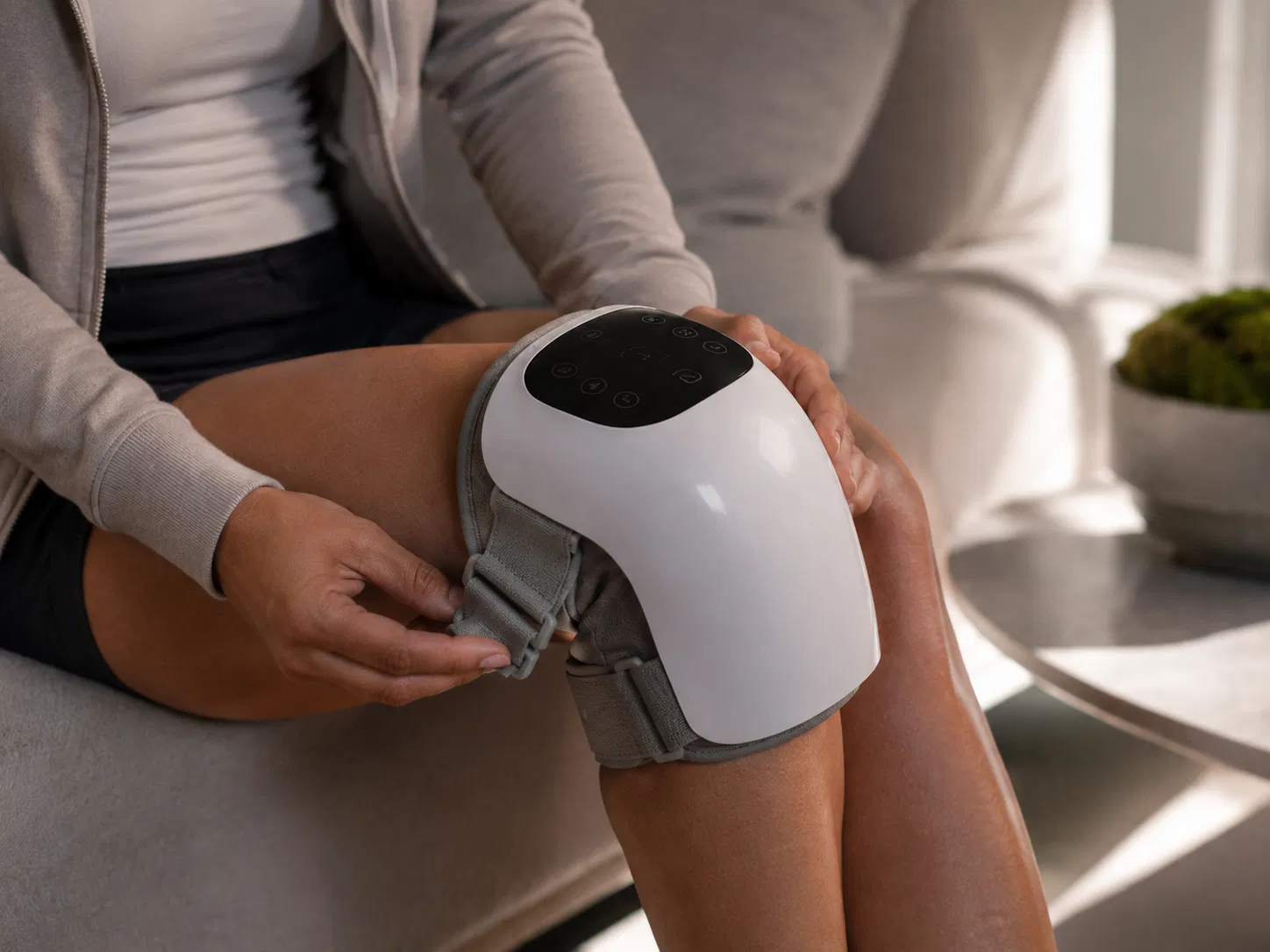
| Smart knee device | Adjustable, consistent throughout | High (wireless, hands-free) | Daily routine use anywhere |
The critical factor for most people is not which method produces the most heat, but which method they will actually use consistently. A method that is convenient, comfortable, and easy to integrate into daily life will always outperform a theoretically superior method that is too cumbersome to use regularly. For a detailed comparison between traditional and infrared options, see our infrared vs. heating pads guide.
Building an Effective Daily Warmth Routine
If you want to incorporate warmth into your daily knee comfort routine, here is a practical framework that many people find effective:
Morning Session (15 to 20 Minutes)
Apply warmth before or during your first movements of the day. This is the most impactful session for most people, as it directly addresses overnight stiffness. If possible, combine with gentle knee bends and ankle circles to amplify the warming effect.
Midday Check-In (10 to 15 Minutes, Optional)
If you sit for long periods during work, a brief warmth session after lunch can help prevent the afternoon stiffness that desk workers commonly experience. This session is particularly valuable on days when you cannot take regular walking breaks.
Post-Activity Session (15 Minutes)
After any particularly active day, add an extra warmth session within an hour or two of completing the activity. This helps muscles transition from "work mode" to "recovery mode" and can reduce the delayed stiffness that sometimes appears the following morning.
Evening Session (15 to 20 Minutes)
Wind down with warmth before bed, optionally combined with gentle stretching. This session supports overnight comfort and can improve how your knees feel the following morning. Many people find this becomes the most enjoyable part of their routine because of its relaxing, calming quality.
Tips for Maximizing Your Warmth Routine
These practical insights can help you get the most from your daily warmth practice:
- Consistency over intensity: using moderate warmth every day is more effective than using high heat sporadically. Daily users consistently report better outcomes than occasional users.
- Combine with gentle movement: light stretching or gentle knee bends during or immediately after warmth application amplifies the benefits because the tissues are in their most pliable state.
- Stay hydrated: warmth increases local circulation, and well-hydrated tissues respond better to heat therapy. Drinking water before and after your warmth session supports the process.
- Listen to your body: if a particular temperature or duration feels uncomfortable, adjust accordingly. More is not always better with warmth application.
- Track your experience: keep brief notes for the first two weeks about when you apply warmth and how your knees feel throughout the day. Patterns often emerge that help you optimize your timing and duration.
The Bottom Line
Warmth is a simple, accessible, and time-tested way to support daily knee comfort for many people. It works best for stiffness, soreness, and general discomfort, particularly when used consistently as part of a structured daily routine rather than as an occasional response to peak discomfort. For more on combining warmth with red light, see our heat vs. red light therapy guide.
Understanding when warmth helps most (morning stiffness, post-activity recovery, evening relaxation) and when other approaches may be more appropriate (acute injury, active swelling, inflammation) allows you to use this natural comfort strategy effectively and safely. The best warmth routine is the one you will actually follow every day, so choose a method that fits naturally into your lifestyle. Our daily knee comfort routine guide can help you structure a complete approach.
Frequently Asked Questions
How long should I apply warmth to my knee?
Most wellness guidelines suggest 15 to 20 minutes per session. Using a device with adjustable temperature and auto-shutoff helps ensure safe, comfortable application.
Is warmth better than cold for knee stiffness?
For general stiffness and everyday discomfort, warmth is typically preferred. Cold is usually better suited for acute swelling or immediately after injury.
Can I use knee warmth every day?
Yes, daily warmth application is generally considered safe and is often recommended for consistent comfort support. Many people use warmth as part of their morning or evening routine.
When should I avoid applying warmth to my knee?
Avoid warmth during active swelling, acute injury, or if the area is already warm and red. In these situations, cold or professional guidance may be more appropriate.
What temperature is ideal for knee warmth therapy?
A comfortable, warm temperature that feels soothing but not hot is ideal. Most smart knee devices offer adjustable settings between 40 to 55 degrees Celsius.