If you've ever draped a heating pad over your knee and wished it would stay in place, you already understand one of the key limitations of traditional warmth options. Infrared knee massagers are designed to address exactly this kind of everyday frustration, but are they genuinely better? Let's look at how both approaches compare. For a more detailed look at how smart devices stack up against one another, our smart knee massager breakdown and best infrared knee massagers guide offer side-by-side comparisons.
How Infrared Therapy Works
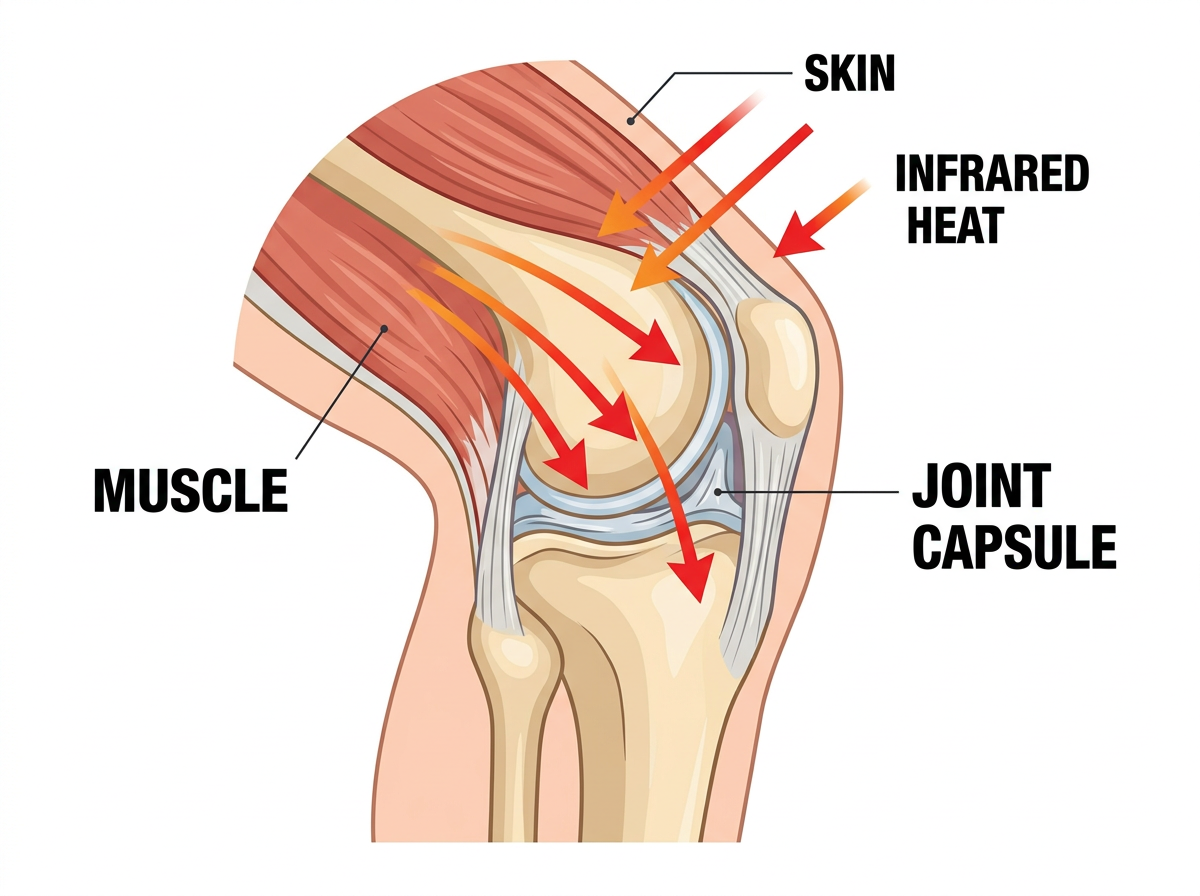
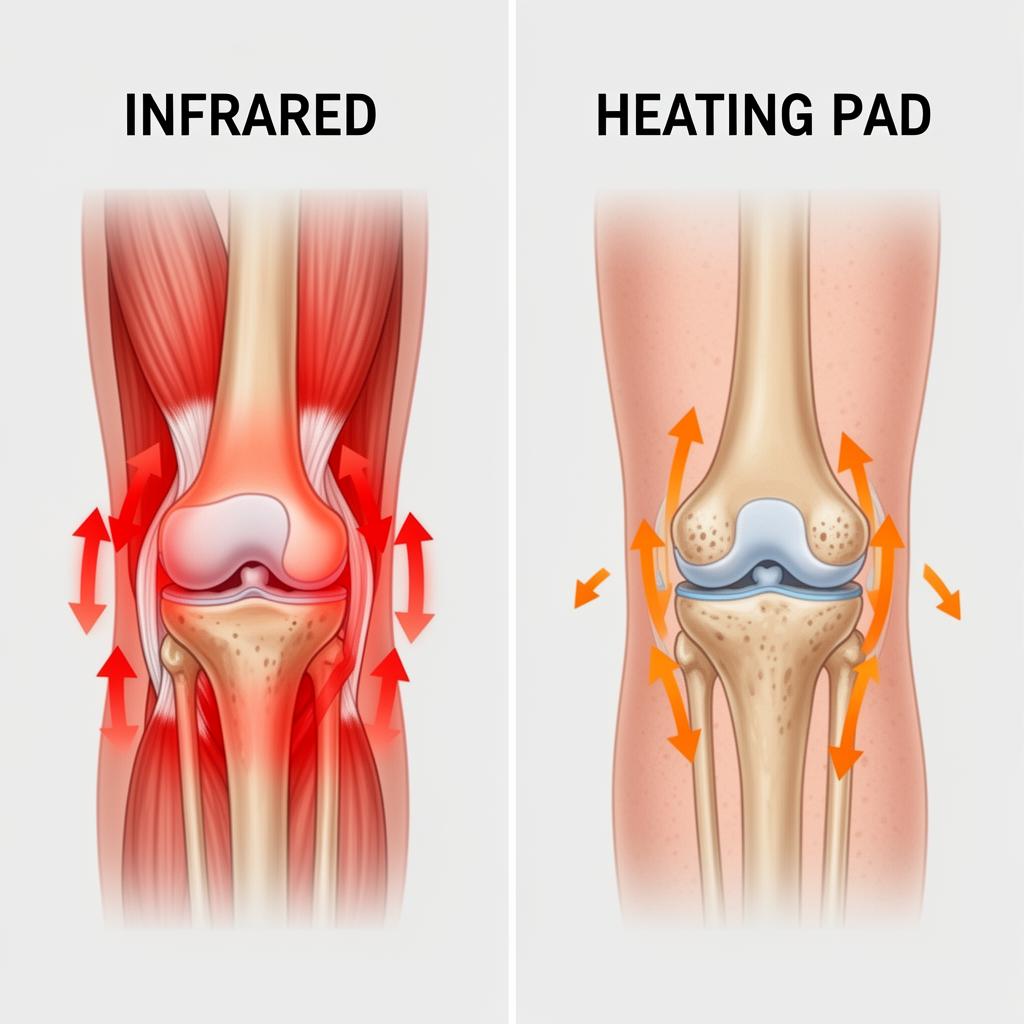
Infrared therapy uses specific wavelengths of light to deliver warmth that goes beyond the surface of the skin. Unlike traditional heat sources that warm the outer layer, infrared wavelengths are absorbed by deeper tissue layers, including muscles and the area surrounding the joint capsule.
This deeper warmth may help support blood circulation in the knee area, which can contribute to a more thorough sense of comfort. Many users describe the experience as a gentle, even warmth that feels like it reaches the inside of the joint rather than just sitting on top of the skin.
How Heating Pads Work
Traditional heating pads generate surface-level warmth through electric coils or gel packs. They're affordable, widely available, and simple to use. For general muscle stiffness in flat body areas like the back or shoulders, they can be quite effective.
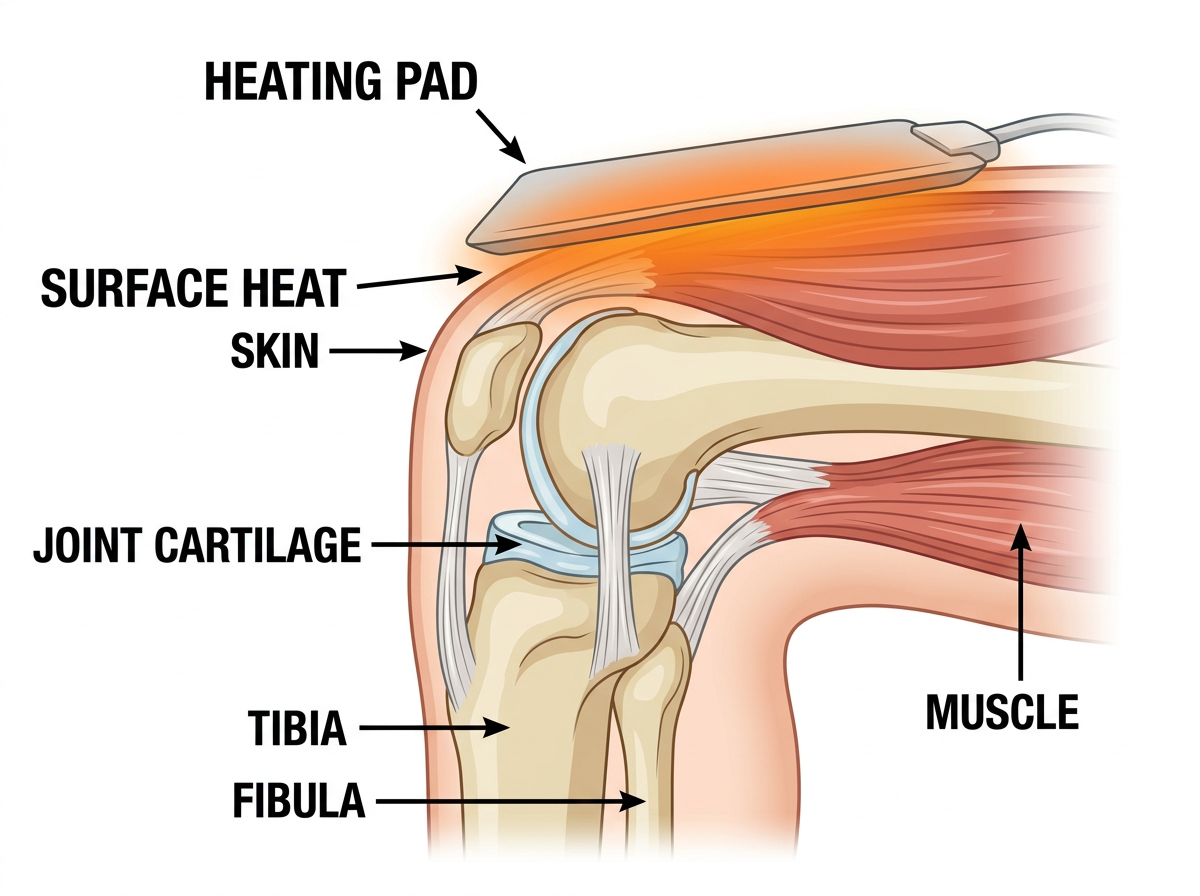
Heating pads work through conductive heat transfer: the pad gets warm, and that warmth gradually spreads to the skin it touches. This approach provides temporary comfort and can help relax tense muscles in the area directly beneath the pad.
However, the knee is not a flat surface. It's a curved, multi-directional joint that moves constantly. A flat heating pad doesn't conform well to the knee's shape, which means warmth distribution can be uneven. You might find yourself constantly readjusting the pad to keep it in the right position.
How Infrared Knee Massagers Work Differently
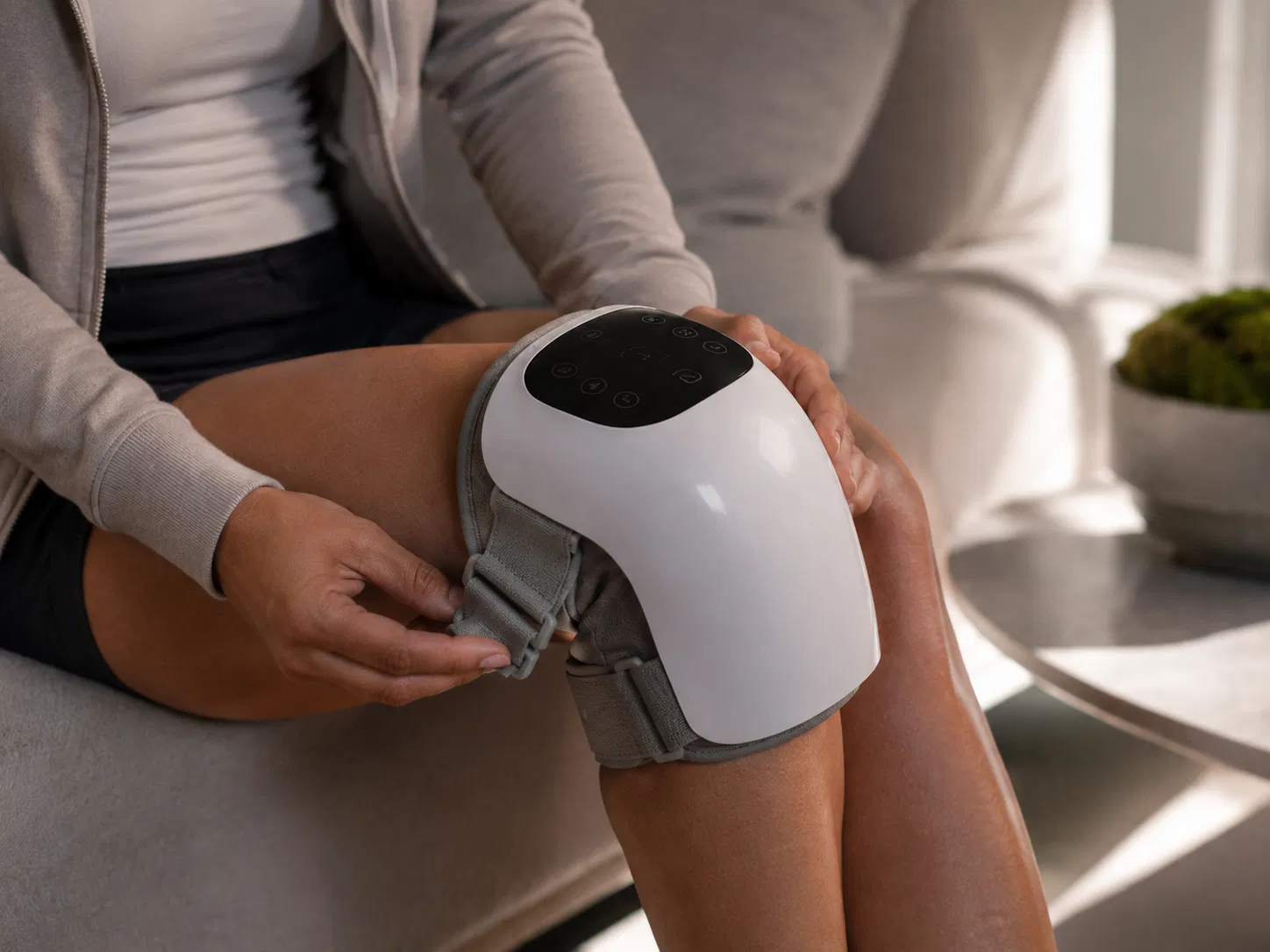
Infrared knee massagers are specifically designed for the knee joint. They typically wrap around the entire knee area, delivering warmth through infrared light wavelengths that penetrate more deeply than surface-level heat alone. Many devices also include vibration massage and red light features.
The key difference is in how the warmth reaches the joint. While a heating pad warms the skin's surface, infrared wavelengths are absorbed deeper into the tissue, which many users find provides a more thorough sense of comfort. The wrap-around design also means the warmth stays consistent without needing constant readjustment. For a detailed look at the science behind infrared technology, see our infrared knee massager guide.
Infrared vs Heating Pads for Knee Pain
When comparing infrared devices and heating pads specifically for knee comfort, several important differences stand out:
- Heat depth: Infrared wavelengths interact with tissue differently from surface heat, while heating pads provide surface-level warmth only.
- Comfort experience: Infrared wraps deliver even warmth around the full joint. Heating pads often leave gaps due to the knee's curved shape.
- Portability: Most infrared knee devices are wireless and rechargeable. Heating pads typically require a wall outlet.
- Additional features: Infrared devices often combine warmth with vibration and red light. Heating pads offer heat alone.
- Fit: Knee wraps are ergonomically shaped for the joint. Heating pads are flat and require manual positioning.
Benefits of Infrared Heat for Joint Comfort
Infrared heat offers several potential comfort-related benefits that make it appealing for daily knee care:
- More even warmth distribution around the entire knee joint
- Deeper tissue warmth that may support relaxation of muscles surrounding the knee
- Improved sense of comfort during and after sessions
- Potential support for circulation in the knee area
- Convenient wireless use during daily activities
Many users who switch from heating pads to infrared devices report that the warmth feels more complete and longer-lasting. This may be because infrared wavelengths reach tissue layers that surface heat simply cannot access. For more on the science behind this, see our red light therapy for knees guide.
Convenience and Daily Usability
One of the biggest practical differences is convenience. Heating pads require a power outlet, which limits where you can use them. Most infrared knee devices are wireless and rechargeable, meaning you can use them on the couch, at your desk, or even while doing light stretching.
Built-in timers and adjustable temperature settings are also common in infrared devices. These features make it easier to build a consistent daily routine without worrying about overheating or forgetting to turn the device off.
Targeted Support vs. General Warmth
Heating pads are general-purpose tools. They work well for broad areas of muscle tension but aren't designed with any specific joint in mind. Infrared knee massagers, on the other hand, are built around the knee's unique shape and needs.
This targeted approach means the warmth reaches the areas that matter most for knee comfort: the sides, the back, and the front of the joint. Some devices also include compression features that gently hug the knee, adding another layer of support during each session.
When Heating Pads May Be Enough
Heating pads remain a practical choice in certain situations. If you only need occasional warmth for general muscle tension in broad, flat body areas like the lower back or shoulders, a simple heating pad can do the job well.
They are also a reasonable option if budget is your primary concern and you don't need knee-specific features. For people who use warmth infrequently or for short periods, the simplicity and low cost of a heating pad may be sufficient.
However, if you find yourself using a heating pad on your knee regularly, you may notice its limitations more over time, particularly the uneven coverage and the need for constant repositioning.
When Infrared Devices May Be More Effective
Infrared knee devices tend to be a better fit for people who use warmth on their knees consistently. If you value hands-free convenience, deeper warmth, and additional features like vibration or red light, an infrared wrap is likely to serve you better than a flat pad.
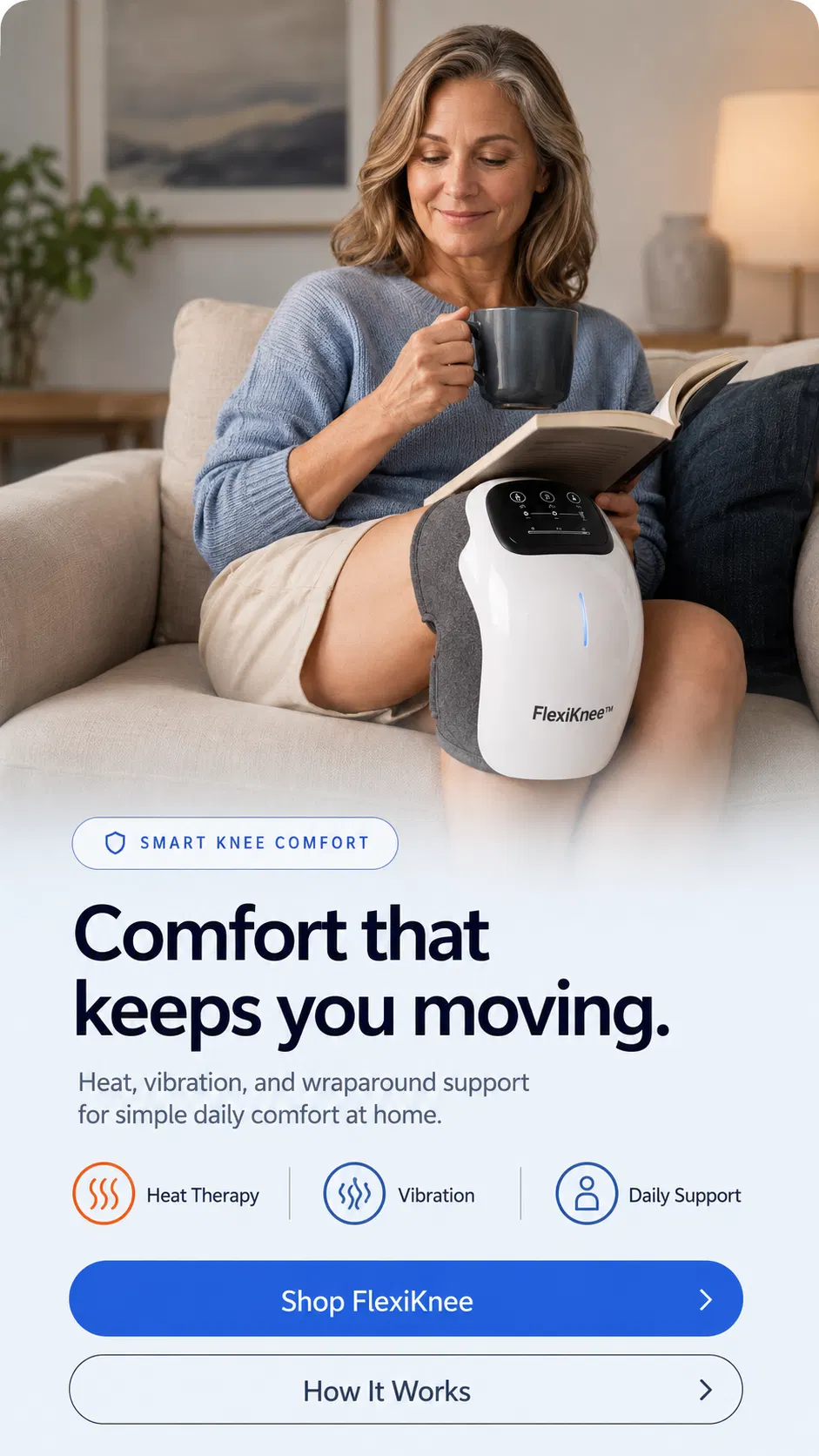
These devices are especially useful for people who want to use warmth during other activities, such as reading, working at a desk, or doing light movement. The wireless design and auto-shutoff timers make it easy to incorporate a warming session into any part of your day.
For those who want to combine warmth with other comfort modalities in a single device, infrared knee massagers provide a level of versatility that traditional heating pads simply cannot match.
Cost Considerations
Heating pads are generally less expensive upfront, ranging from $15 to $40 for a basic model. Infrared knee massagers typically cost more, but they include multiple features (warmth, vibration, red light) that would require separate purchases to replicate with traditional tools.
When you consider the combined value of a knee-specific design, wireless convenience, and multiple comfort modalities in one device, the per-use cost over months of daily use often works out to be very reasonable.
Who Benefits Most From Each Option
Heating pads may be a good fit if:
- You need occasional warmth for general muscle stiffness
- You primarily use warmth on flat body areas like your back
- Budget is your primary concern and you don't need knee-specific features
Infrared knee massagers may be a better fit if:
- You use warmth specifically for your knees on a regular basis
- You want a hands-free, wireless option you can use anywhere
- You'd like vibration and red light support in addition to warmth
- Consistency is important and you want built-in timers and settings
Who Should Use a Heated Knee Brace
Heated knee braces and infrared wraps are commonly chosen by people who experience daily knee stiffness, particularly in the morning or after long periods of sitting. They are also popular among active individuals who want to warm up their knees before exercise or ease tension afterward.
People who spend long hours at a desk, those who walk or hike regularly, and older adults managing everyday joint stiffness often find that a dedicated knee warming device fits naturally into their routine. If you're looking for more options, our guide on whether knee massagers work covers how these devices support daily comfort.
Are Heated Knee Braces Safe
When used as directed, heated knee braces and infrared devices are generally considered safe for daily use. Most quality devices include built-in safety features such as auto-shutoff timers, adjustable temperature settings, and overheat protection.
To use them safely, keep sessions to 15 to 20 minutes at a time and avoid placing the device directly on broken or irritated skin. If you have any circulation concerns or underlying health conditions, it's a good idea to consult a healthcare professional before starting regular use.
Making the Right Choice for Your Routine
Both heating pads and infrared knee massagers have their place. If your knee comfort is something you actively manage on a daily basis, a device that's specifically designed for the knee joint tends to make the routine easier, more consistent, and more enjoyable. For more on how warmth and infrared compare in practice, check our warmth vs. infrared comparison.
The best approach is to think about how you currently use warmth and whether a more targeted, feature-rich option would make your daily comfort routine simpler. For many people, the switch from a general heating pad to a dedicated knee device feels like a meaningful upgrade in their everyday quality of life. Our guide on heat vs. red light therapy explores why adding red light to your warmth routine can deepen the benefits.
If you're still deciding between heat and cold for your needs, our heat or ice situations guide helps you choose the right approach for each scenario.
Frequently Asked Questions
Are infrared knee massagers better than regular heating pads?
It depends on your needs. Infrared devices deliver warmth that penetrates deeper than surface-level heating pads, and many also include vibration and red light features. For targeted knee comfort, they tend to offer more versatility.
Can I use a heating pad on my knee every day?
Most people can use a heating pad daily for 15 to 20 minutes at a time. However, heating pads lack auto-shutoff features and ergonomic knee-specific designs that infrared devices often include.
Do infrared knee massagers get hot?
Most infrared knee devices use adjustable temperature settings, so you can control the warmth level. They typically feel warm rather than hot, and many include timers for safe daily use.
How long should I use an infrared knee massager?
A typical session lasts 15 to 20 minutes. Many devices have built-in timers to help you stay consistent without overdoing it.
Is an infrared knee massager worth the investment?
If you use warmth regularly for knee comfort, a device designed specifically for the knee joint tends to offer better fit, more features, and greater convenience compared to a flat heating pad.
How does infrared heat differ from regular heat?
Infrared heat uses specific light wavelengths that are absorbed deeper into the tissue layers, while regular heating pads warm the skin surface through conductive heat. This difference can affect how thoroughly the warmth reaches the knee joint area.
Can I use an infrared knee device if I have sensitive skin?
Most infrared knee devices include adjustable temperature controls that let you start at a lower setting. If you have sensitive skin, begin with the lowest warmth level and gradually increase as needed.
Are heating pads safe for long-term use on knees?
Heating pads are generally safe for short sessions of 15 to 20 minutes. Prolonged use without breaks can cause skin irritation. Always follow the manufacturer's guidelines and avoid falling asleep with a heating pad on.