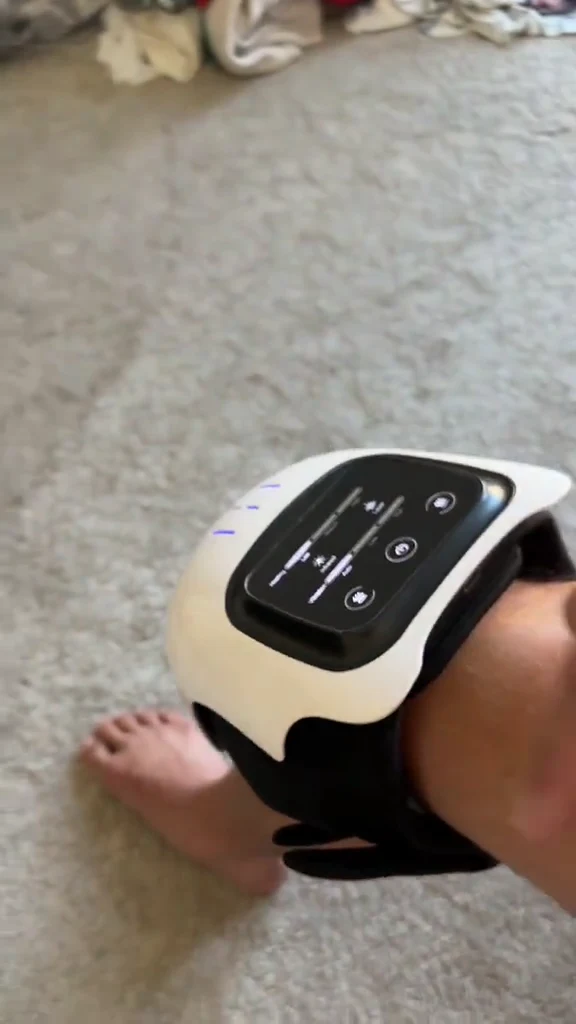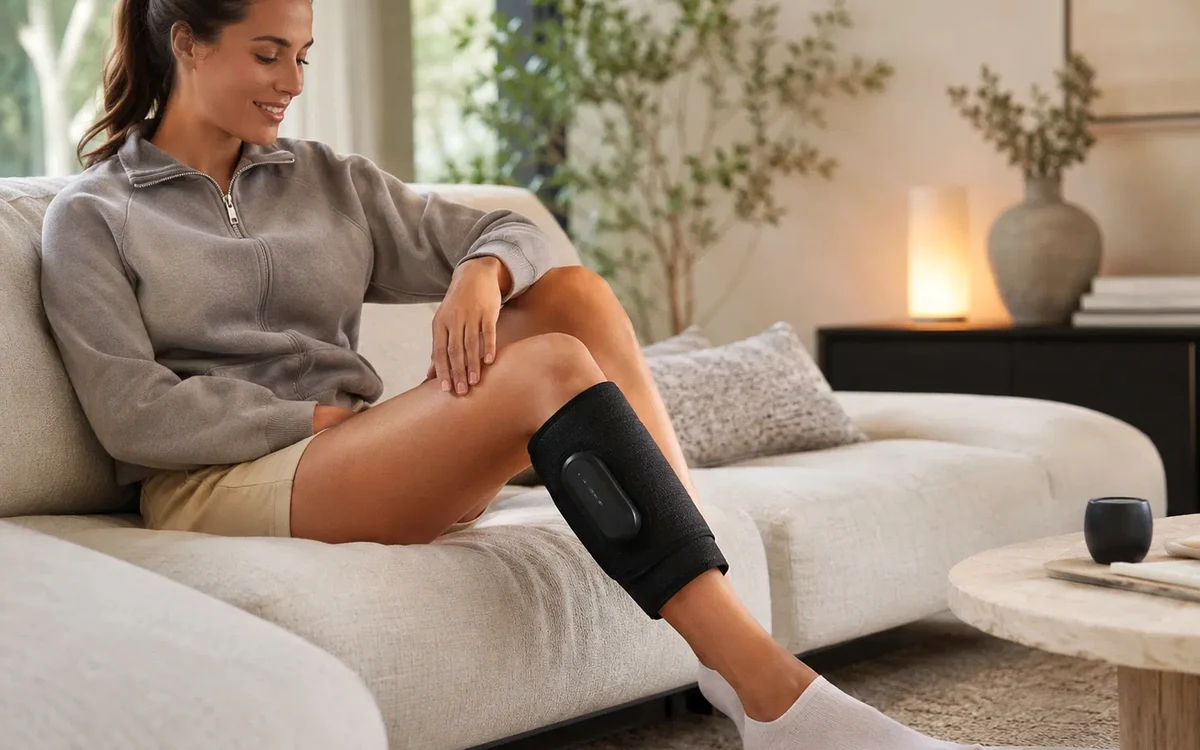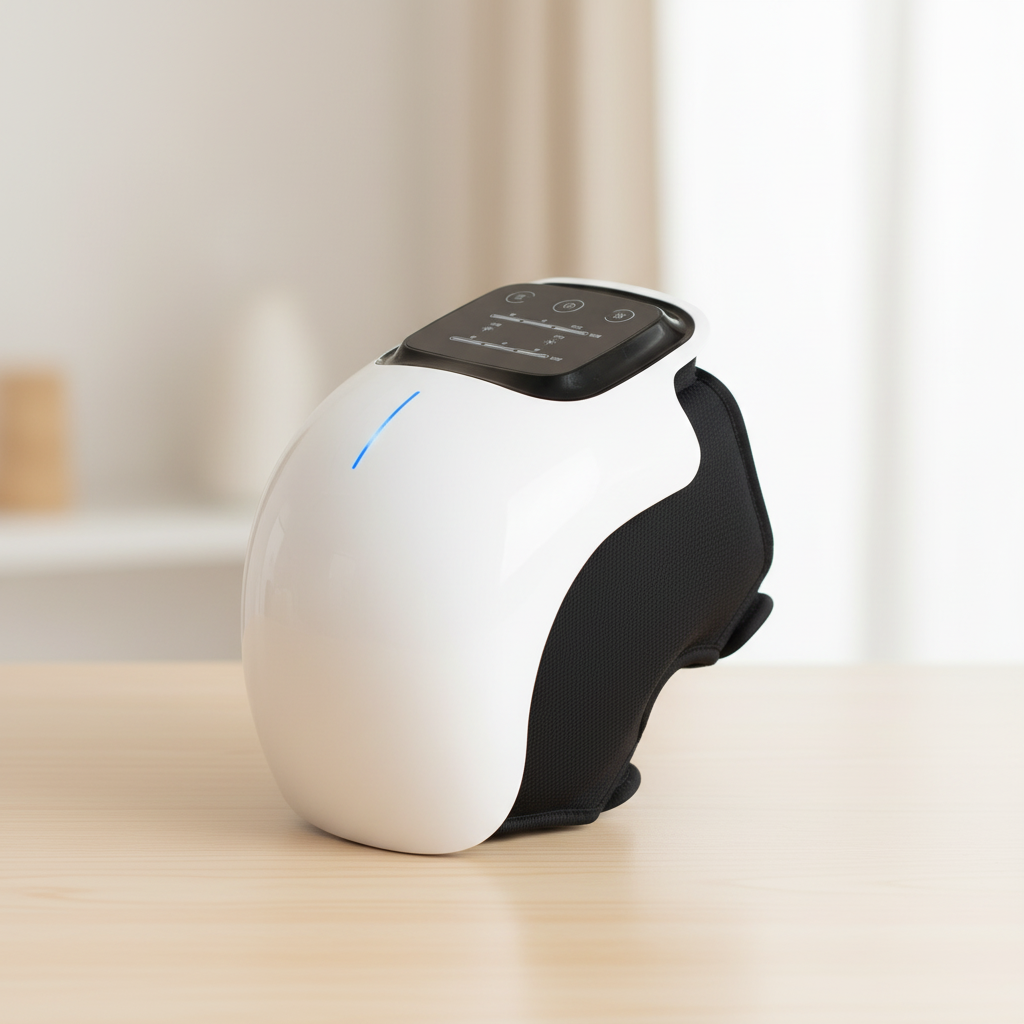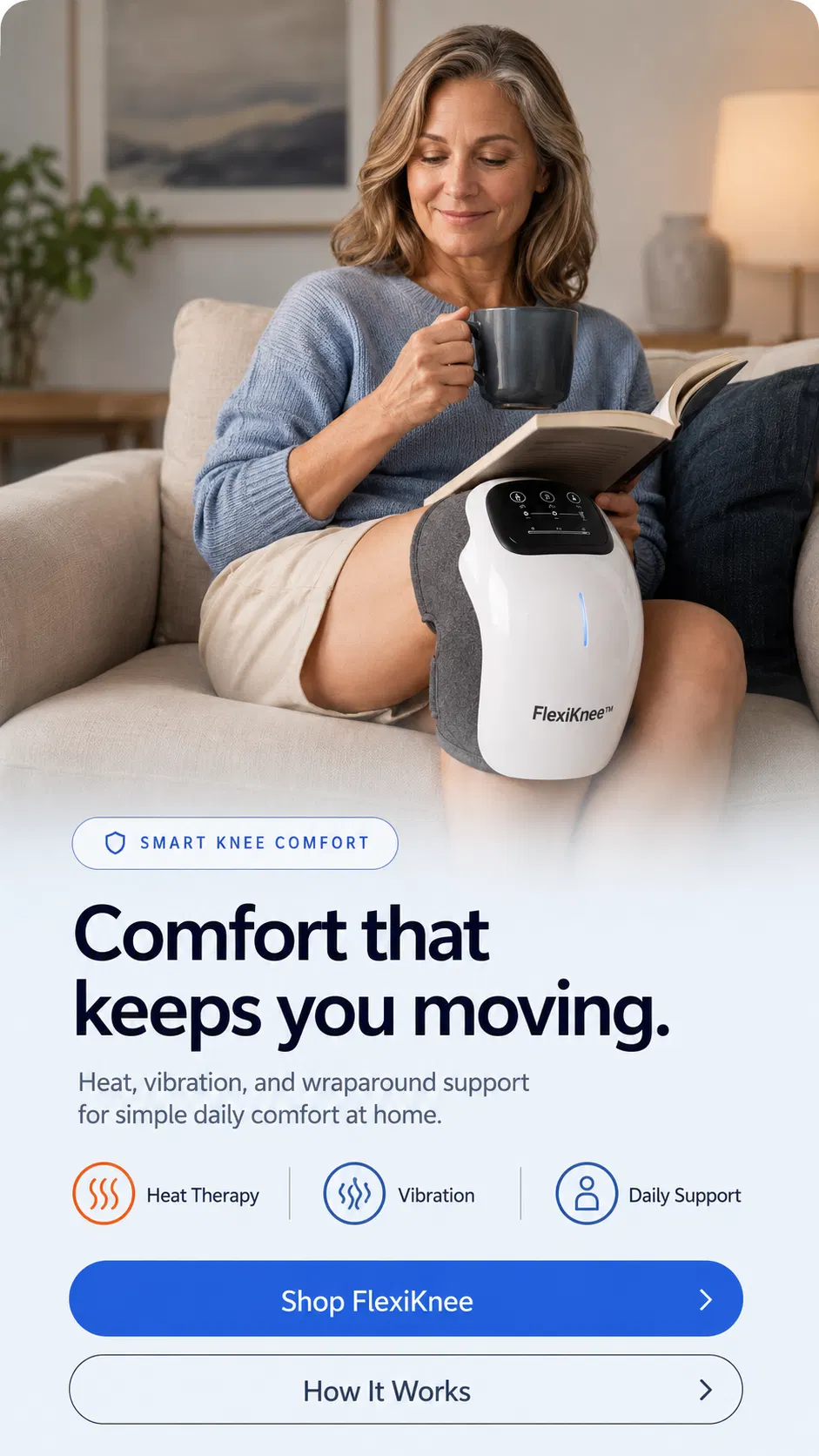
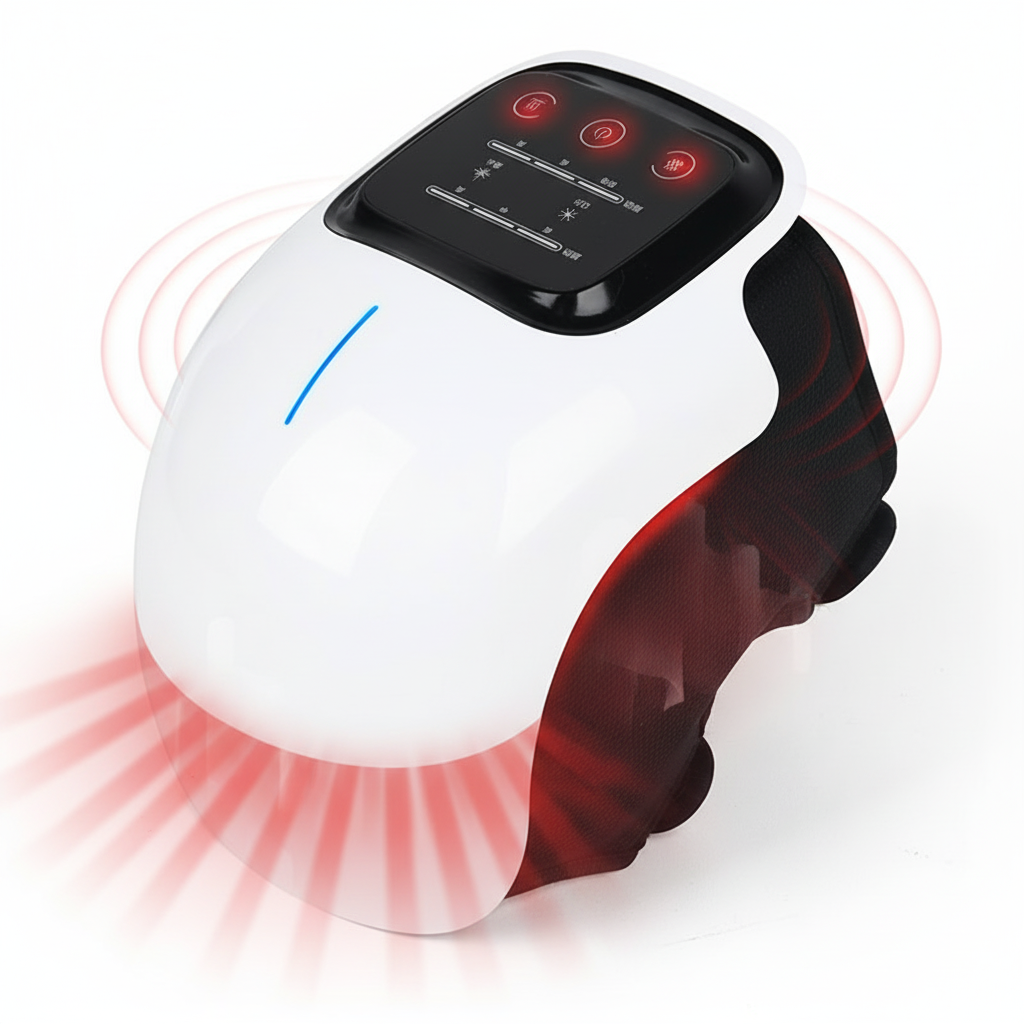
The word knee massager covers products with very different designs. Some provide heat only. Others add vibration, compression, red or near-infrared light, rechargeable power, and preset sessions. Because the category is broad, a useful answer depends on what the device actually does and what you expect from it.
Separate immediate comfort from medical treatment. Feeling warmer or more relaxed after a session may be valuable, but it does not confirm a diagnosis, demonstrate tissue repair, or show that the underlying problem has changed.
Do Knee Massagers Really Work?
They can provide an experience you can judge directly: warmth, vibration, fit, ease of use, and whether a chosen activity feels temporarily more comfortable afterward. They cannot be evaluated honestly with a universal success rate because device specifications, symptoms, and expectations vary.
| Claim or goal | Reasonable expectation | Important limit |
|---|---|---|
| Soothing warmth | A controlled warming sensation during a short session | Avoid heat on a newly hot, red, or swollen knee |
| Massage-style vibration | A relaxing sensation around the knee and surrounding muscles | It does not repair cartilage, a ligament, or a meniscus |
| Temporary change in stiffness | A selected movement may feel easier shortly after use | Short-term response does not identify the cause |
| Long-term recovery | The device may complement an established care plan | It cannot replace appropriate rehabilitation or medical care |
Do Heated Knee Massagers Work?
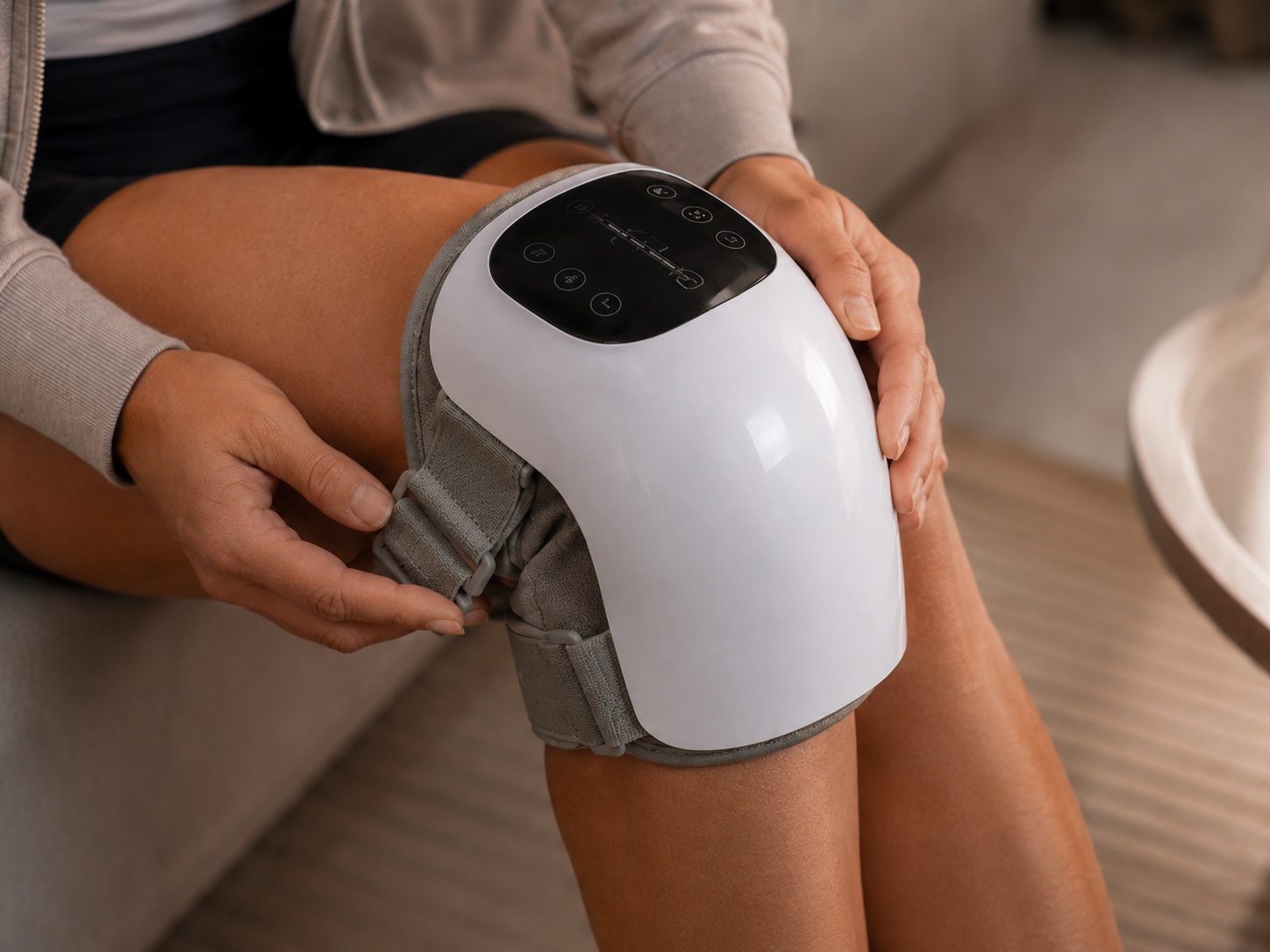
A heated knee massager is primarily a convenient way to apply controlled warmth. Heat may feel soothing when the main pattern is stiffness or surrounding muscle tension and there is no acute swelling. The practical advantages are wraparound contact, adjustable settings, and an automatic timer.
Convenience should not be confused with stronger clinical evidence. A wearable heater is not automatically more effective than another safe heat source, and the highest temperature is not the best setting. Follow the instructions, start low, check the skin, and never sleep with an active heating device.
If you are deciding between temperature options, use our heat or ice guide for knee pain.
What Vibration May Add
Vibration changes the sensation around the knee and may feel relaxing. Studies of local or whole-body vibration use defined equipment and protocols, sometimes as part of an exercise program. Those findings cannot be transferred automatically to a small consumer motor inside a wrap.
What Red and Near-Infrared Light May Add
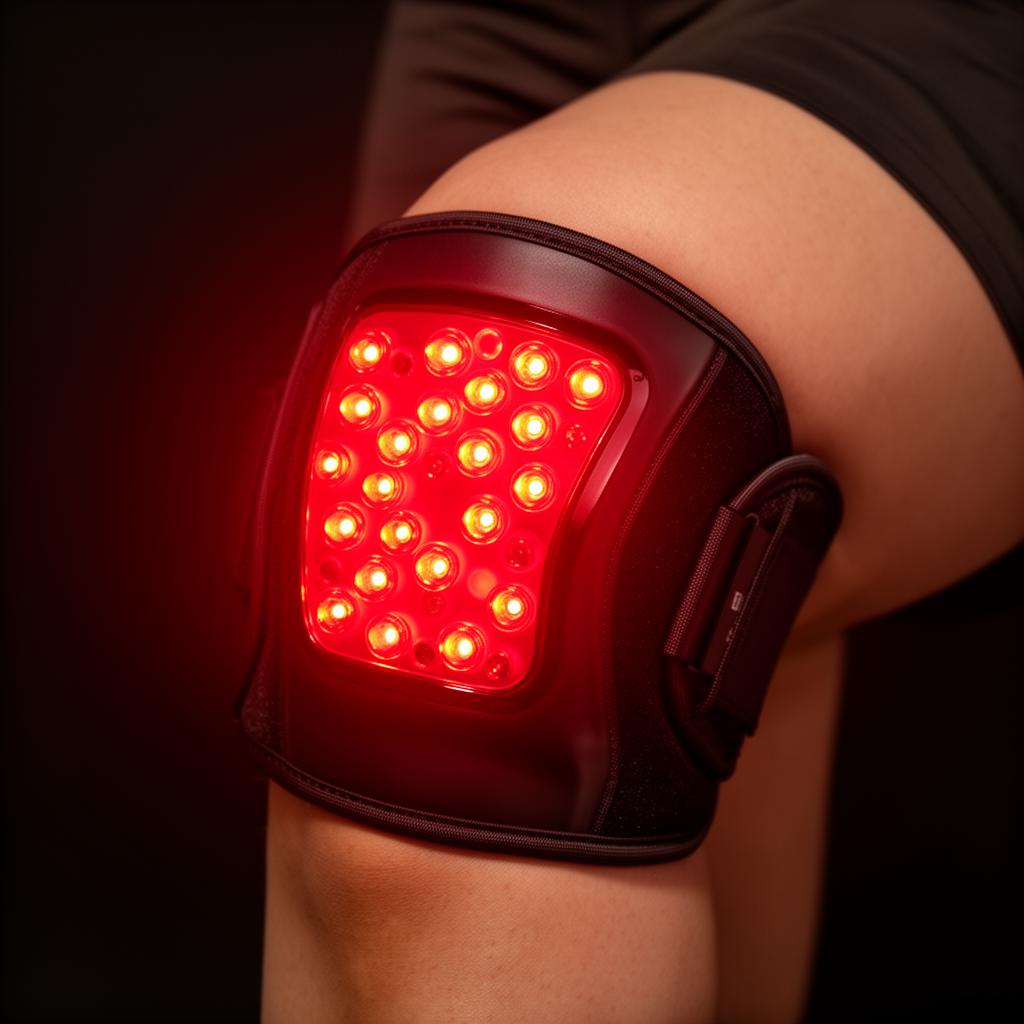
Photobiomodulation research is dose-specific. Wavelength, irradiance, treatment area, contact, session time, and frequency all affect what is delivered. A red glow alone does not show that a consumer device matches a research protocol.
Are Knee Massagers Worth It?
Value depends on the job you want the device to do. A simple heating pad may be enough if warmth is the only useful feature. A wraparound product may be worth the additional cost if you value hands-free fit, rechargeable power, independent controls, and an automatic timer.
| May be worth considering | Probably poor value |
|---|---|
| You already know gentle warmth or vibration feels useful | You expect the device to diagnose or cure the problem |
| The size range and strap design match your leg | The seller does not publish fit, heat, timer, or safety details |
| Features can be controlled independently | Extra modes are bundled but cannot be switched off |
| The return policy lets you assess comfort and usability | The purchase depends on cure, cartilage-regrowth, or guaranteed-relief claims |
Our smart heated knee brace comparison explains how to compare programmable controls, rechargeable power, fit, and timer safety.
How to Test Whether a Knee Massager Helps You
- Choose one goal. For example, compare stiffness when standing from the same chair before and shortly after a session.
- Keep the setting conservative. Follow the manufacturer instructions and begin with the lowest comfortable heat and vibration levels.
- Change one variable. Do not change the device, exercise routine, medicine, and activity level at the same time.
- Record both benefit and irritation. Note skin response, pain, swelling, numbness, fit, and how long any comfort lasts.
- Stop when the response is worse. A device is not worth continuing if it increases symptoms or creates skin irritation.
Safety Checks Before Using Heat, Vibration, or Light
- Read the contraindications, charging instructions, session limit, and automatic shutoff behavior.
- Avoid use over broken, infected, or unusually irritated skin.
- Do not use heat on a newly hot, red, or swollen knee.
- Ask for medical advice when reduced sensation, circulation problems, implanted devices, pregnancy, medicines, or a diagnosed condition creates uncertainty.
- Stop for burning, persistent redness, numbness, unusual swelling, dizziness, or increased pain.
When to Get Medical Help
Arrange an assessment for persistent or worsening pain, repeated swelling, locking, instability, or reduced movement. Seek urgent care after a major injury, when you cannot bear weight, when the knee is badly swollen or deformed, or when it is hot and red with fever. Do not use a massager to delay care for these patterns.
Handheld percussion is a different tool from a wearable knee massager. The massage gun guide explains muscle-area use, places to avoid, and why evidence from a short muscle study does not establish treatment for a knee joint.
Bottom Line
Knee massagers may work for temporary comfort, particularly when controlled warmth or vibration is a sensation you find useful. Heated, vibrating, and red-light models should still be judged by their actual specifications, fit, safety instructions, and return policy.
They are most defensible as optional additions to a broader plan. They are not proof of tissue repair, a substitute for progressive exercise, or a treatment for unexplained swelling, injury, locking, or instability.
A TENS unit is not the same technology as a heated or vibrating knee massager. If electrical stimulation is what you are evaluating, use the separate TENS guide for pad placement, settings, evidence, and safety so the claims and precautions do not get mixed together.
Frequently Asked Questions
Do knee massagers really work?
They may provide temporary warmth, relaxation, or a massage-style sensation. That can make a short comfort routine useful for some people, but it does not show that the device treats the cause of knee pain, repairs tissue, or produces lasting improvement.
Do heated knee massagers work?
Controlled warmth may feel soothing when stiffness or muscle tension is the main pattern and the knee is not hot or swollen. A heated knee massager mainly makes warmth easier to apply. Its convenience does not prove that it works better than another safe heat source.
Are knee massagers worth it?
A knee massager may be worth it if it fits well, has clear controls and safety instructions, and provides a sensation you already know you find useful. It is less likely to be good value if you expect it to diagnose pain, replace rehabilitation, repair cartilage, or treat an unexplained swollen knee.
Can a knee massager reduce pain?
Some people report short-term comfort during or after heat or vibration, but response varies. Track one specific activity before and after use rather than assuming a pleasant sensation has treated the underlying problem.
Can I use a knee massager every day?
Use only the session length, frequency, heat setting, and charging method stated by the manufacturer. Check the skin and stop for burning, unusual redness, numbness, swelling, dizziness, or increased pain. More frequent use is not automatically more effective.
Are knee massagers safe for arthritis?
Some people with a diagnosed chronic condition use warmth for temporary comfort, but not every flare is suitable for heat or pressure. Avoid a hot, red, acutely swollen knee and ask a clinician when circulation, reduced sensation, implanted devices, medicines, or another condition creates uncertainty.
Does vibration therapy work for knee pain?
Research has examined specific local or whole-body vibration protocols, often alongside exercise, but those findings do not automatically apply to every consumer wrap. A product should state its settings and should not claim that vibration repairs the joint or guarantees better circulation.
Does red light in a knee massager work?
Photobiomodulation research uses defined wavelengths, irradiance, dose, placement, and treatment schedules. A consumer device with red LEDs should not be assumed to reproduce a study protocol unless it publishes enough technical information to make that comparison.