Why Your Knees Feel Tight After Resting
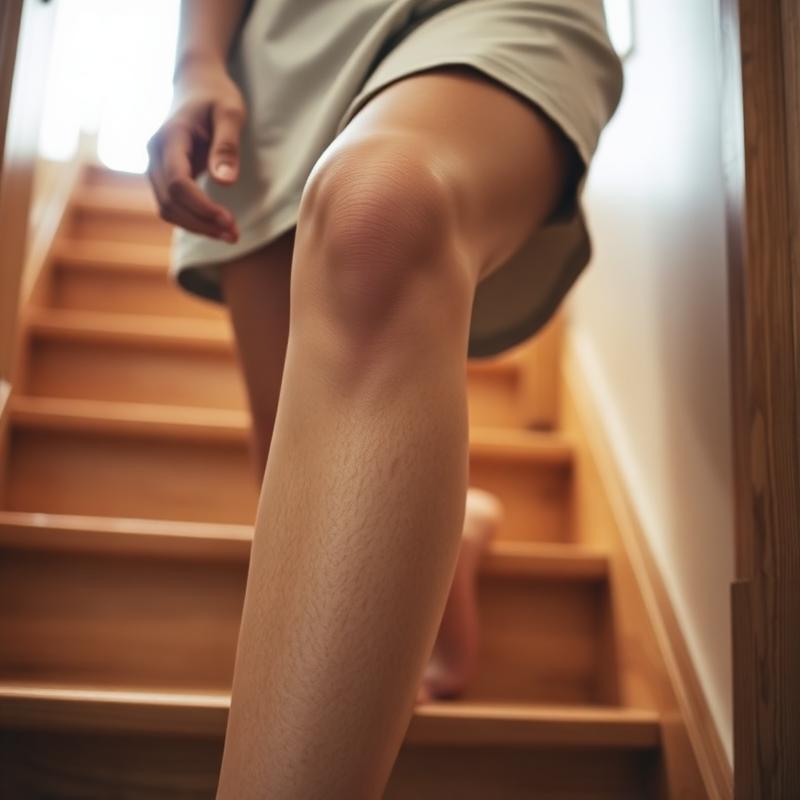
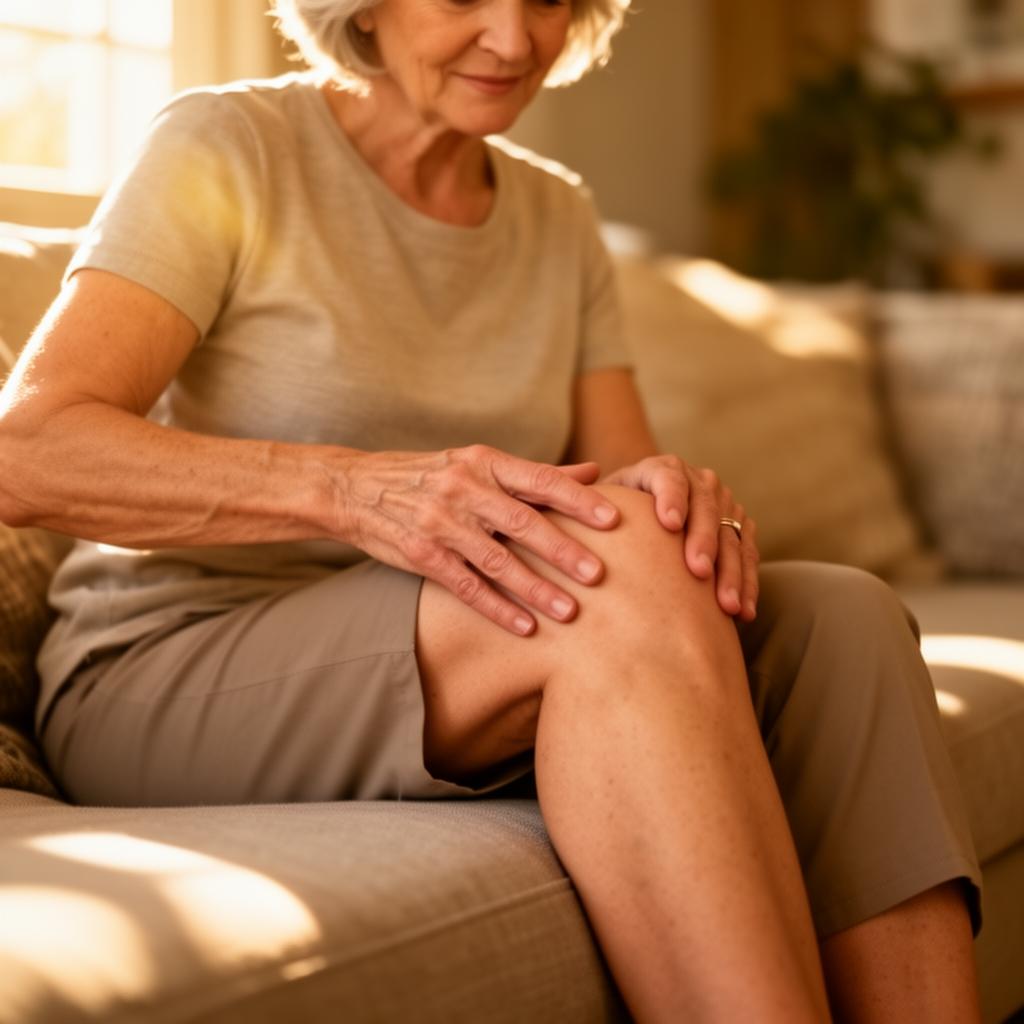
The sensation of knee tightness after a period of rest is one of the most universally reported joint experiences. Whether you have been sitting at a desk for an hour, napping on the couch, or sleeping through an entire night, the result often feels the same: your knee feels tight and stiff, reluctant to bend or straighten, and sometimes even slightly uncomfortable for the first few steps.
The Role of Synovial Fluid
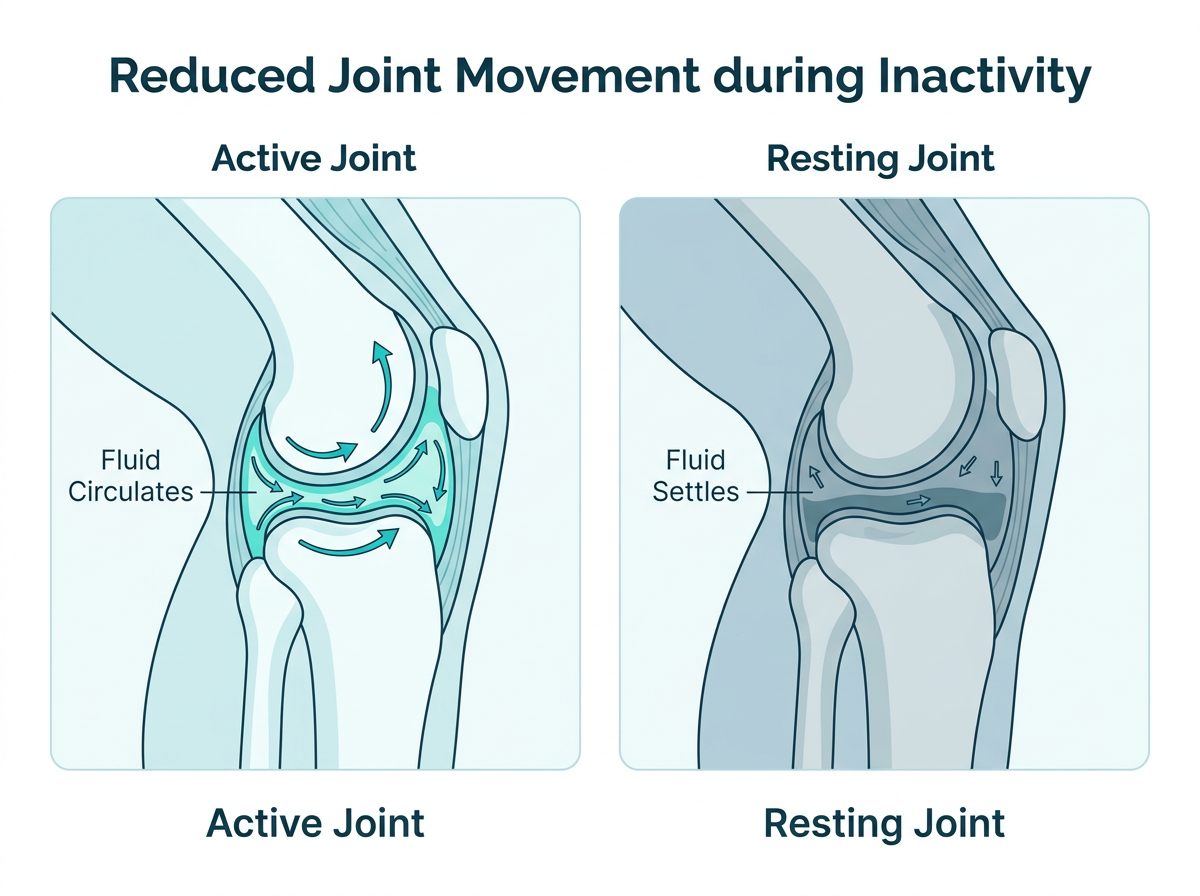
Your knee joints are lubricated by synovial fluid, a viscous liquid that reduces friction between the cartilage surfaces during movement. When you are active, this fluid circulates freely, keeping the joint surfaces smooth and comfortable. During rest, however, the fluid becomes less active. It settles and thickens slightly, which means the first few movements after rest encounter more resistance than usual. This is one of the primary reasons why people experience stiff knees after sitting or sleeping.
Muscle and Tendon Adaptation
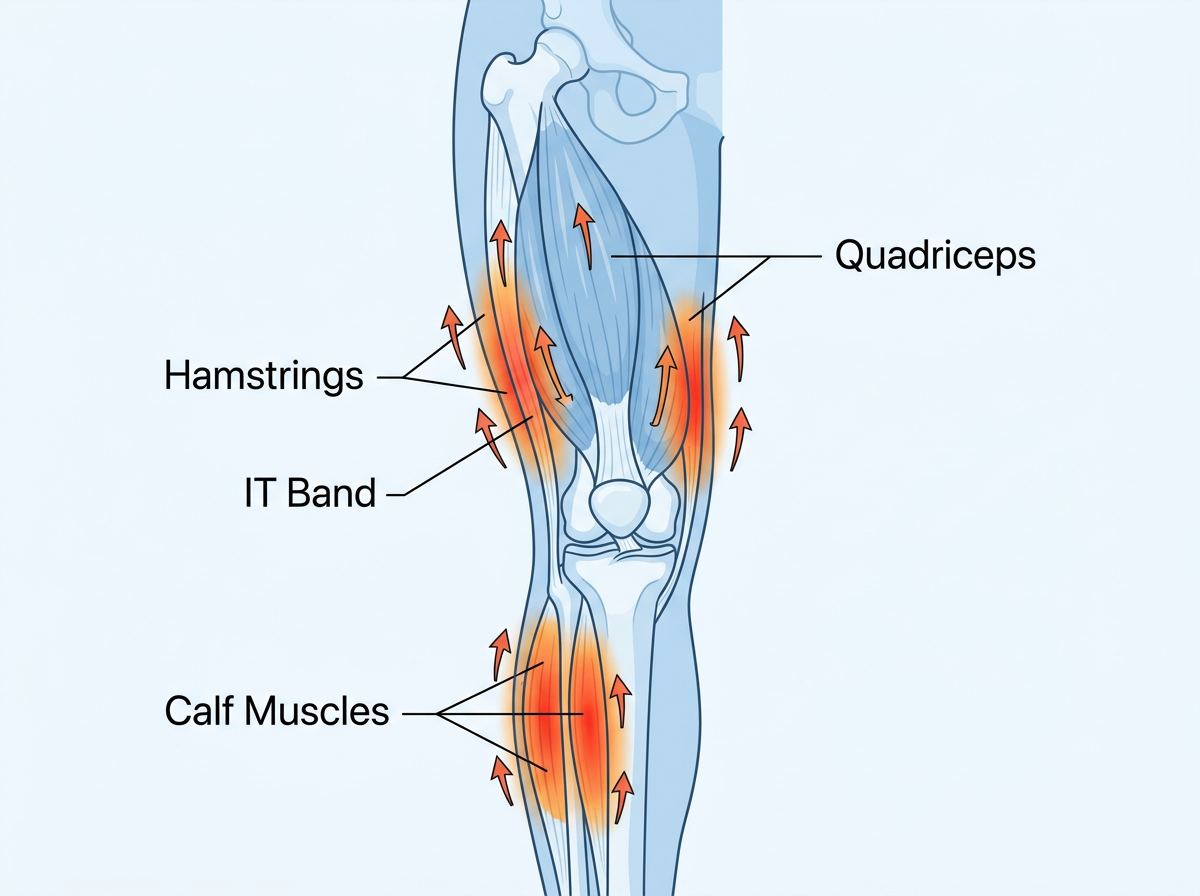
The muscles and tendons surrounding the knee, including the quadriceps, hamstrings, and calf muscles, naturally adapt to whatever position you hold them in. When you sit with bent knees for extended periods, the tight muscles around knee gradually shorten and tighten. Standing up requires them to lengthen again, which creates that characteristic pulling or tight sensation that so many people notice after prolonged sitting.
Reduced Blood Flow During Inactivity
Movement promotes blood circulation to the tissues around the knee joint. When you rest, blood flow to the area decreases, which can allow minor inflammatory byproducts to accumulate rather than being cleared away efficiently. This reduced circulation contributes to the stiff, heavy feeling that many people describe when they first begin to move after resting. People who experience knee discomfort after sitting in specific positions often notice this effect more prominently.
Why Do Knees Get Stiff After Sitting?
If you have ever wondered "why are my knees stiff after sitting?", the answer comes down to a combination of fluid dynamics, muscle behavior, and circulation changes. When your knee gets stiff when sitting for more than 20 to 30 minutes, the synovial fluid inside the joint capsule begins to thicken and settle. At the same time, the muscles and tendons surrounding the knee adapt to the bent position, gradually shortening.
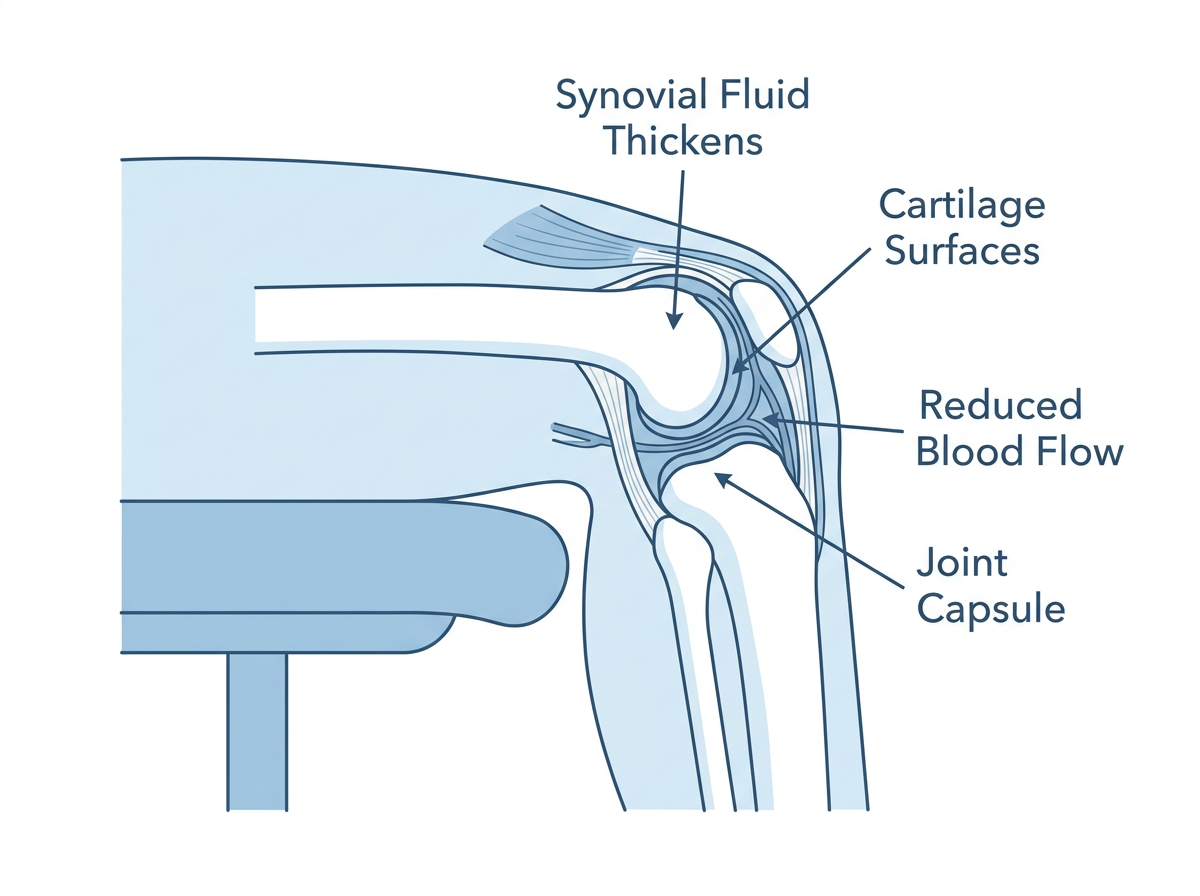
The longer you remain seated, the more pronounced these changes become. Knee stiffness after sitting for 30 minutes is typically mild, but after an hour or more, the stiffness in knee joints can feel quite noticeable. The good news is that this type of stiffness usually resolves within the first few minutes of gentle movement as the fluid redistributes and muscles re-engage.
Key Insight
After sitting for long periods, the knee joint may temporarily feel stiff due to reduced movement and muscle inactivity. This is a normal physiological response, not a sign of damage.
Knee Tightness vs Knee Stiffness: What Is the Difference?
Many people use the words "tightness" and "stiffness" interchangeably when describing how their knees feel after resting, but these sensations have subtle differences worth understanding.
Knee tightness typically refers to a sensation of tension or constriction around the joint. It often feels as though the muscles, tendons, or soft tissues surrounding the knee are pulling or holding the joint in place. Tightness in knee areas is usually more muscular in nature and tends to improve quickly with gentle stretching.
Knee stiffness, on the other hand, refers more to resistance within the joint itself. When your knee feels stiff, the sensation often comes from inside the joint, related to synovial fluid viscosity and cartilage surface interaction. Stiffness in knee joints tends to improve with sustained gentle movement rather than stretching alone.
In practice, most people experience both at the same time. When your knee feels tight and stiff after sitting, you are likely feeling a combination of muscular tightness and joint-level stiffness. Understanding this distinction can help you choose the right comfort approach: stretching for tightness, gentle walking for stiffness, or both together.
What Knee Stiffness Actually Means (Comfort-Based Explanation)
Understanding what is happening inside your knee when it feels stiff can help reduce concern and guide you toward effective daily habits. Knee stiffness is not a diagnosis: it is a sensation that describes how the joint feels when it resists smooth, comfortable movement.
Why "Stiff" Does Not Always Mean "Damaged"
One of the most reassuring things to understand about stiff knees from sitting is that it usually does not indicate structural damage. In most cases, it reflects the natural mechanics of a joint that has been still for a while. The same way a door hinge may feel stiff if it has not been used for days, your knee joint simply needs a few moments of movement to return to its comfortable, fluid state.
The Warm-Up Period
Most people find that knee stiffness after sitting resolves within the first 5 to 15 minutes of gentle activity. This "warm-up period" allows synovial fluid to redistribute, muscles to re-engage, and blood flow to increase. If your stiffness consistently takes longer than 30 minutes to resolve, this may be worth discussing with a healthcare provider. For those who experience front knee tightness after activity, the warm-up concept applies in a similar way.
Quick Check: Is Your Knee Stiffness Normal?
Typically normal: Stiffness that lasts 5 to 15 minutes after waking or standing up, improves with gentle movement, and does not involve significant swelling or redness.
Worth discussing with a provider: Stiffness lasting more than 30 minutes each morning, accompanied by visible swelling, warmth, or redness, or progressively worsening over weeks.
Why Knees Feel Tight in the Morning After Sleep
Knee stiffness in the morning is perhaps the most commonly reported form of post-rest tightness. After 6 to 8 hours of minimal movement, the knee joint has had an extended period without the natural lubrication benefits of activity. Many people find that their knees feel especially tight, heavy, or reluctant to bend when they first get out of bed.
What Happens to Your Knees During Sleep
During sleep, several changes occur in and around the knee joint. Synovial fluid production slows and the existing fluid settles. Muscles cool down and slightly contract in whatever position you sleep in. Blood flow to the extremities decreases as the body focuses its resources on core functions. These factors combine to create the sensation of tight knees after sleeping that is so familiar to many people. Our guide on why knees hurt when sleeping explores nighttime patterns in greater detail.
Sleep Position and Morning Stiffness
How you position your legs during sleep significantly affects morning knee stiffness. Sleeping with your knees deeply bent, such as in a tight fetal position, keeps the muscles in a shortened state for hours. Side sleeping can also create uneven pressure on the knee joints. People who sleep on their backs with a small pillow under their knees often report less morning stiffness, as this position keeps the joints in a more neutral alignment.
The First Steps of the Day
The first 10 to 15 steps after waking are often the stiffest. Many people find it helpful to sit on the edge of the bed and gently flex and extend their knees several times before standing. This simple action helps redistribute synovial fluid and gently activates the muscles, making those first steps more comfortable.

Recommended for this guide
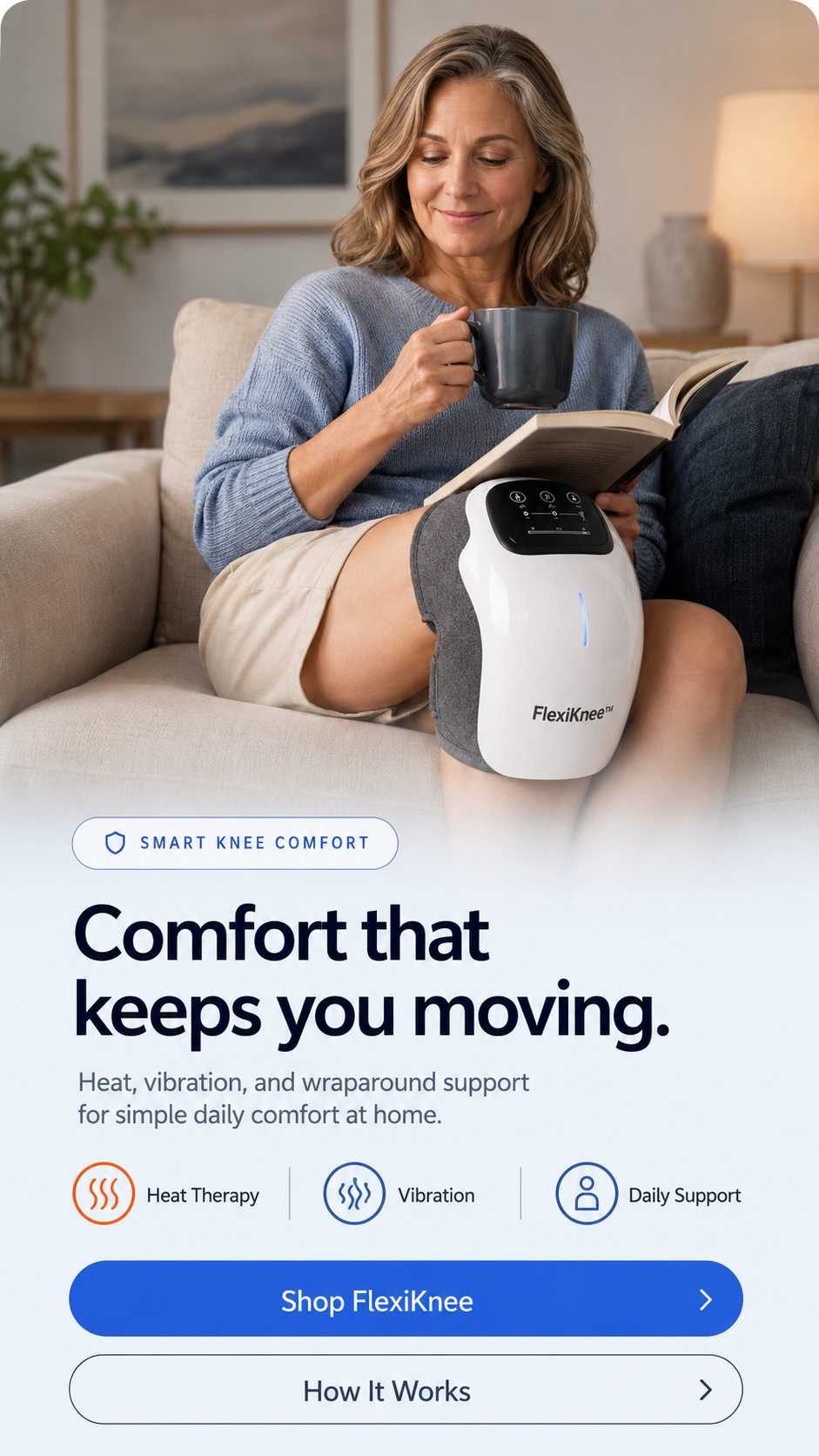
FlexiKnee Smart Heated Knee Massager
Adjustable warmth, red light, and gentle vibration in one wireless wrap for a complete 15-minute daily knee routine.
Knee Stiffness After Sitting: Common Causes
Stiff knees after sitting is a pattern that affects office workers, travelers, moviegoers, and anyone who spends extended time in a seated position. The longer you sit, the more pronounced the knee joint stiffness after sitting tends to become. But why does sitting specifically trigger this sensation?
The 90-Degree Problem
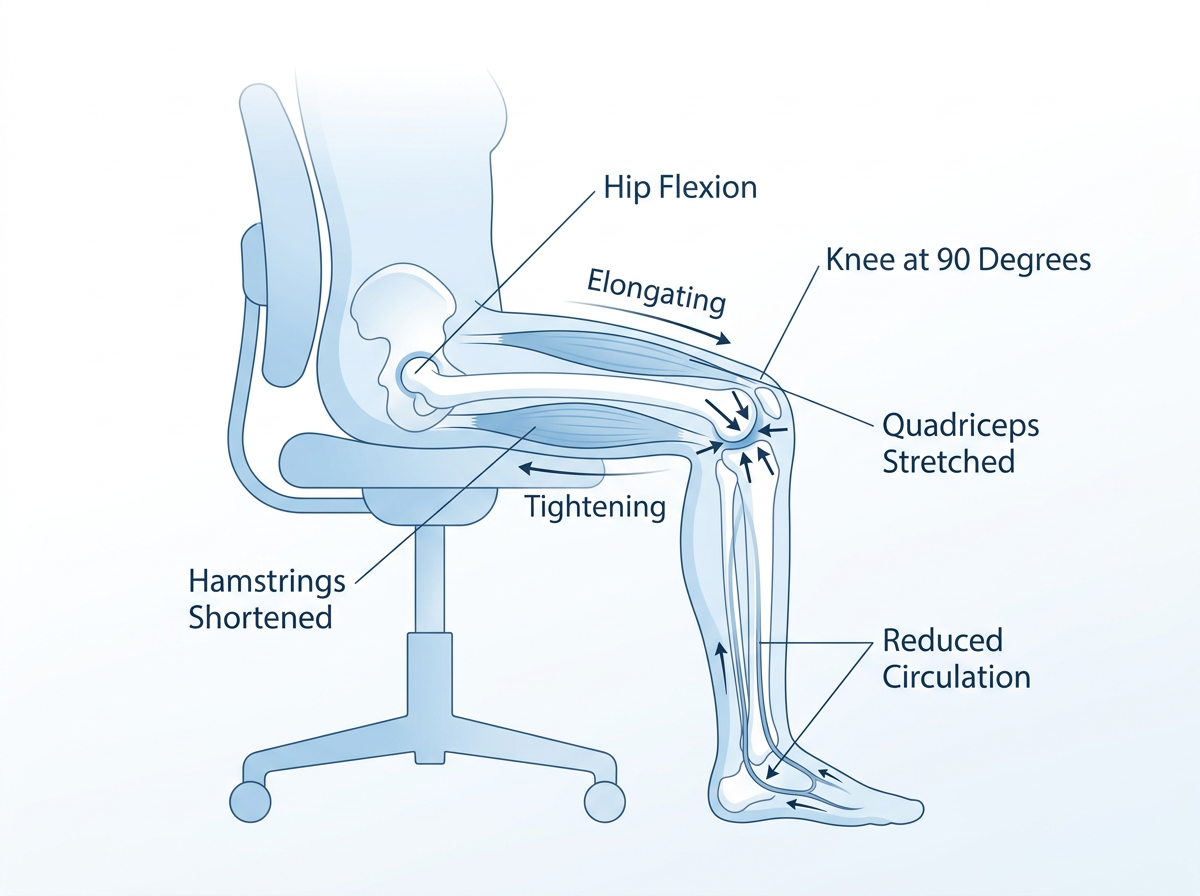
Standard sitting positions place your knees at approximately 90 degrees of flexion. In this position, the quadriceps muscles are in a lengthened state while the hamstrings are shortened. The patellar tendon, which connects the kneecap to the shinbone, is under consistent tension. After 30 to 60 minutes in this position, these structures begin to adapt, making the transition back to standing feel stiff and sometimes uncomfortable.
Desk Workers and "Sitting Disease"
People who work at desks for 6 to 8 hours per day are particularly susceptible to stiff knee after sitting. The combination of prolonged flexion, reduced circulation, and minimal joint movement creates a perfect environment for post-sitting tightness. This has become so common in modern life that health researchers sometimes refer to the cumulative effects as "sitting disease." People who experience painful knees after sitting at their desk may find that the discomfort is directly related to the duration of uninterrupted sitting.
How Long Is Too Long?
Research suggests that sitting for more than 30 minutes without a movement break begins to affect joint fluid dynamics. The general recommendation is to take a brief standing or walking break every 30 to 45 minutes. Even standing up, taking a few steps, and sitting back down can make a meaningful difference in how your knees feel when you eventually stand for a longer period.
✓ Quick Tips
- •Stand up and walk for 1 to 2 minutes every 30 to 45 minutes of sitting
- •Do gentle seated knee extensions while at your desk
- •Keep your feet flat on the floor rather than tucked under your chair
- •Consider a footrest to adjust the angle of your knees while sitting
- •Stand up slowly and allow your knees a moment to adjust before walking
Knee Pain and Stiffness After Sitting: The Connection
While many people experience stiff knee no pain after sitting, others notice that their knee pain and stiffness after sitting go hand in hand. The connection between these two sensations is important to understand.
Stiffness and pain share overlapping mechanisms. When the knee joint has been still for an extended period, the thickened synovial fluid creates more friction during initial movements. If cartilage surfaces are slightly worn or if tendons are particularly tight, this increased friction can produce not just stiffness but also a dull ache or discomfort. People who experience sore stiff knees after sitting are often dealing with this combination of fluid, cartilage, and muscle factors.
The key distinction is timing. If your painful knees after sitting improve within 5 to 10 minutes of gentle walking, the discomfort is likely inactivity-related. If the pain persists or worsens with movement, it may be worth exploring with a healthcare provider.
Weak Knees + Heavy Legs: Why They Are Connected
Many people who experience knee stiffness also notice that their legs feel weak or heavy when they first stand up. This combination of sensations is more common than most people realize, and understanding the connection can help you address both at once.
Why Knees Feel Weak After Rest
When you rest, the muscles that support your knee joint (particularly the quadriceps) temporarily deactivate. These muscles are your knee's primary stabilizers: they control how the kneecap tracks, how smoothly the joint moves, and how much load the joint can handle. After even 20 to 30 minutes of inactivity, these muscles need a moment to "wake up" and re-engage, creating a brief period where the knees feel weak or unstable. Our guide on how to strengthen knees covers daily exercises that support this muscle engagement.
Why Legs Feel Heavy
The sensation of heavy legs after resting is closely related to circulation. When you sit or lie down for extended periods, blood flow to the lower extremities slows. Gravity makes it harder for blood to return from the legs to the heart, which can create a sensation of heaviness, fullness, or sluggishness. This is why many people find that their legs feel heavy even before knee stiffness becomes apparent, particularly after long flights, car rides, or desk sessions. If this heaviness is a recurring pattern for you, our guide on heavy feeling in the knees explores the causes and strategies in more detail.
The Muscle-Joint Feedback Loop
There is an important feedback loop between muscle weakness and joint stiffness. When tight muscles around knee areas are weak, the joint itself has to absorb more stress, which can increase stiffness. Conversely, when the joint is stiff, the muscles have to work harder to produce movement, which can make them feel more fatigued. Breaking this cycle with regular, gentle movement and gradual strengthening is one of the most effective long-term strategies for reducing both sensations.
Back of Knee Tightness After Resting
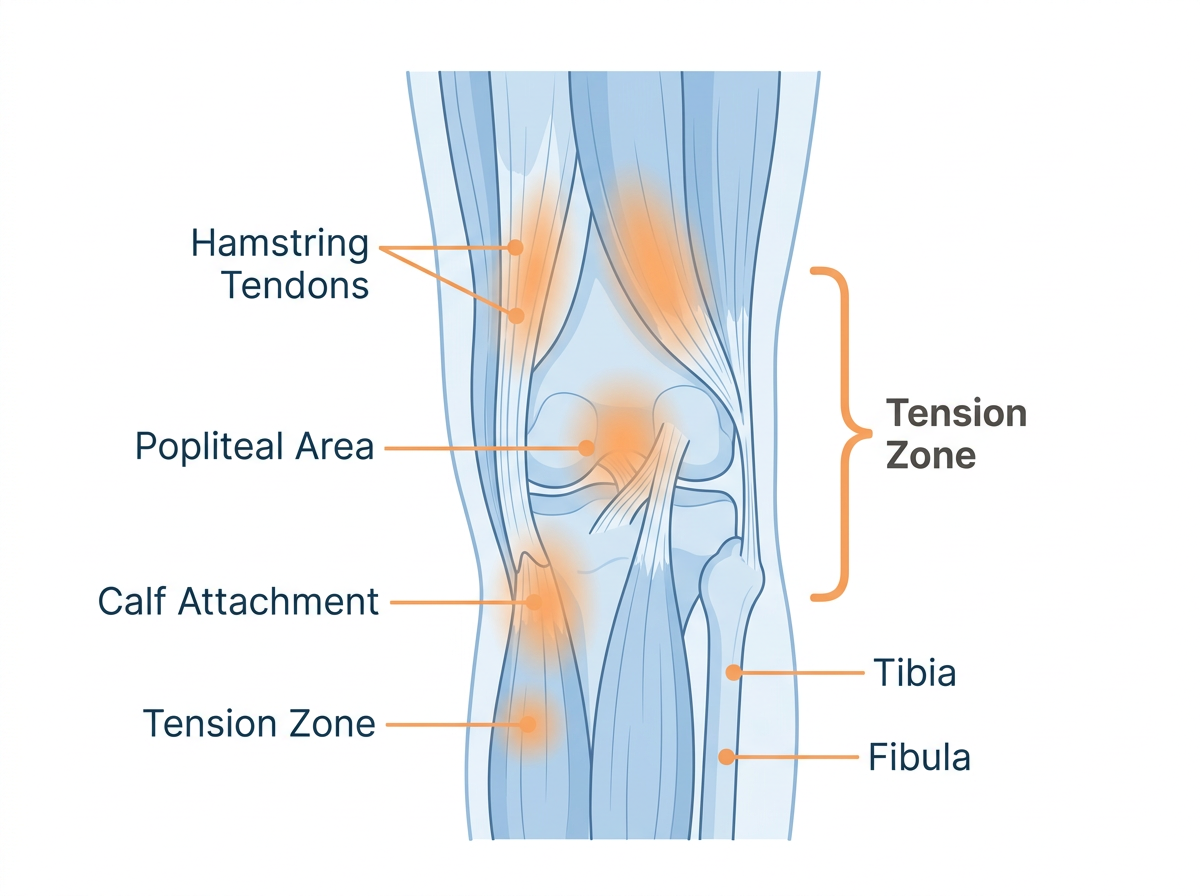
Tightness around knee areas, particularly the back, is a specific pattern that many people notice after resting. The popliteal area behind the knee is particularly susceptible to post-rest stiffness because of the concentration of soft tissue structures located there.
What Is Behind Your Knee
The back of the knee contains the hamstring tendons (where the biceps femoris, semimembranosus, and semitendinosus muscles attach), the popliteal artery and vein, the popliteal nerve, and several smaller structures that can all contribute to sensations of tightness. When you sit with bent knees, these structures are compressed and shortened. Standing up requires them to lengthen and decompress, which creates the tight pulling sensation. For a deeper exploration of this area, see our guide on back-of-knee discomfort patterns.
Why Does the Back of My Knee Feel Tight?
If the back of knee feels tight after sitting or resting, it is most likely due to hamstring shortening and popliteal compression. The hamstrings are among the most commonly tight muscles in sedentary adults. Because they attach both above and below the knee joint, hamstring tightness directly affects how the back of the knee feels. People with chronically tight hamstrings often report more pronounced back of knee stiffness after sitting, as these already-shortened muscles have even further to stretch when transitioning to standing.
When Back of Knee Stiffness Is More Than Muscle
While most back of knee tightness after resting is muscular, persistent or worsening symptoms could occasionally be related to other factors such as Baker's cysts (fluid-filled pouches), deep vein concerns, or referred tension from the lower back. If back of knee stiffness is consistently severe, involves visible swelling, or does not improve with movement, professional evaluation is recommended. Our guide on back of knee pain explained provides additional context.
Why Does My Knee Feel Tight Even Without Pain?
Experiencing a stiff knee no pain sensation is actually very common. Many people notice that their knee feels tight after resting without any accompanying ache or sharp discomfort. This typically means the stiffness is related to fluid viscosity and muscle adaptation rather than any tissue irritation or inflammation. The joint simply needs a few minutes of gentle movement to restore its normal range of motion. If your knee tightness is consistently painless and resolves quickly with walking, it is generally a sign that the joint mechanics are functioning normally and just need regular movement to stay comfortable.
Why Knees Feel Hot or Warm After Sitting
Some people notice that their knees feel warm or even slightly hot after prolonged sitting. This sensation, while sometimes concerning, is usually related to normal physiological processes rather than anything worrying.
Blood Flow Redistribution
When you sit for a long time and then stand up, your body rapidly redirects blood flow to the lower extremities. This sudden increase in circulation can create a temporary warm sensation around the knee area. The warmth typically resolves within a few minutes as blood flow normalizes.
Mild Inflammatory Response
Extended sitting can create a mild inflammatory response in tissues that have been compressed or held in one position. This low-grade inflammation is the body's natural way of responding to sustained pressure and typically manifests as warmth, slight fullness, or a feeling of puffiness around the joint. This is different from the significant heat and swelling associated with acute injury or infection.
When Knee Warmth Deserves Attention
Occasional warmth after sitting is generally not concerning. However, if your knees consistently feel hot, appear visibly red, are significantly swollen, or the warmth is accompanied by pain, these could be signs that warrant professional evaluation. Persistent joint heat can sometimes indicate inflammatory conditions that benefit from early attention.
Recommended for this guide
FlexiKnee Smart Heated Knee Massager
Adjustable warmth, red light, and gentle vibration in one wireless wrap for a complete 15-minute daily knee routine.
Why Are My Knees Stiff After Sitting?
Stiff knees after sitting happens because your knee joints rely on continuous movement to maintain comfortable function. When you sit for 30 minutes or longer, three key changes occur: synovial fluid thickens and settles, muscles and tendons shorten to match the seated position, and blood flow to the joint area decreases. The combination of these factors creates the resistance and tightness you feel during those first few steps after standing up.
Why Does My Knee Feel Tight After Resting?
Your knee feels tight after resting because the soft tissues around the joint, including muscles, tendons, and the joint capsule itself, adapt to the resting position. Synovial fluid that normally keeps the joint gliding smoothly thickens during inactivity. When you begin to move, the joint needs a brief warm-up period to redistribute fluid, re-engage muscles, and restore normal blood flow. This process typically takes 2 to 10 minutes of gentle walking.
Is Knee Stiffness After Sitting Normal?
Yes, knee stiffness after sitting is a normal physiological response to inactivity. Most adults experience some degree of joint stiffness after sitting for 30 minutes or more. It becomes more common after age 40 due to natural changes in cartilage, fluid quality, and muscle mass. If your stiffness resolves within 5 to 15 minutes of gentle movement and does not involve swelling or redness, it is typically within the range of normal joint behavior.
Why Does My Knee Feel Tight Even Without Pain?
A stiff knee no pain experience is one of the most common joint sensations. Tightness without pain usually indicates that the stiffness in knee joints is mechanical rather than inflammatory. The synovial fluid has thickened, and the surrounding muscles have shortened during rest. Because there is no tissue irritation involved, you feel resistance and tension but not discomfort. This pattern is generally reassuring and responds well to gentle movement and daily stretching.
Is Arthritis or Osteoarthritis Related to Stiff Knees?
One of the most common questions people ask when they experience regular knee stiffness is whether it could be related to arthritis. It is a reasonable question, and one that deserves a thoughtful, balanced answer.
What Does Arthritis Feel Like in the Knees?
People with arthritis-related knee stiffness often describe sensations that include: morning stiffness that takes more than 20 to 30 minutes to ease, a deep ache that may fluctuate with weather changes or activity levels, occasional crepitus (grinding or crackling sensations during movement), and intermittent swelling that comes and goes. It is important to note that many of these sensations can also occur in people without arthritis, which is why professional assessment is valuable for anyone with persistent concerns. For a broader look at arthritis and the knee, see our knee arthritis comfort guide.
Osteoarthritis and Post-Rest Stiffness
Osteoarthritis, the most common form of arthritis, involves gradual changes to the cartilage surfaces within the joint. One of its hallmark patterns is "start-up stiffness," which means the joint feels worst when you first begin to move after resting and gradually improves with continued activity. If this pattern sounds familiar and is consistent, it may be worth exploring with a healthcare provider. However, start-up stiffness alone is not diagnostic of osteoarthritis and can occur for many other reasons.
Stiffness Without Arthritis
It is essential to emphasize that stiff knees from sitting is extraordinarily common and does not automatically indicate arthritis or any other joint condition. Factors such as age, activity level, body weight, hydration, and even ambient temperature can all influence how stiff your knees feel after rest. Many healthy, active people experience daily post-rest stiffness that is entirely normal and manageable with simple comfort strategies.
Tight Knees After Exercise vs Tight Knees After Rest
Understanding the difference between knee tightness after exercise and knee tightness after rest can help you choose the right comfort approaches for each situation.
Post-Exercise Tightness
Knee tightness after exercise typically involves muscle fatigue, micro-stress on tendons and ligaments, and increased fluid within the joint from physical activity. This type of tightness is usually accompanied by muscle soreness and may be more pronounced after new or intensified activities. It reflects the body's normal response to physical demand.
Post-Rest Tightness
Knee tightness after rest, by contrast, is driven by inactivity: settled synovial fluid, shortened muscles, and reduced circulation. It does not involve the muscle fatigue component and typically resolves faster than post-exercise tightness. The key difference is that post-rest tightness improves with movement, while post-exercise tightness may initially worsen with additional activity.
Matching Comfort Strategies to the Type
For post-rest tightness, gentle movement, light stretching, and warmth application are typically the most helpful approaches. For post-exercise tightness, rest, ice application in the short term, elevation, and recovery time tend to be more appropriate. Knowing which type of tightness in knee you are experiencing helps you choose the right strategy for the moment.
How to Reduce Knee Tightness Safely (Comfort Methods Only)
There are several practical, everyday approaches you can use to minimize knee stiffness after sitting or resting. These are comfort-focused methods that support joint mobility and muscle flexibility without requiring special equipment or professional intervention.
Step 1: Gentle Warm-Up Movements Before Standing
Before getting up from a seated or lying position, spend 30 to 60 seconds doing gentle knee flexion and extension movements. While seated, slowly straighten your leg, hold for 2 to 3 seconds, then bend it back. Repeat 5 to 10 times on each side. This simple action helps redistribute synovial fluid and gently activates the muscles around the knee.
Step 2: Apply Warmth to the Knee Area
Warmth increases blood flow, relaxes muscles, and helps the synovial fluid become more fluid. Applying a warm compress, heating pad, or warmth device to your knees for 10 to 15 minutes before or after rest periods can significantly reduce the initial stiffness. Many people find that warmth before bed and again in the morning creates the most noticeable improvement. For a deeper comparison of heat approaches, explore our guide on heat vs ice for knee discomfort.
Step 3: Regular Movement Breaks During Prolonged Sitting
Setting a timer to remind yourself to stand up and move every 30 to 45 minutes is one of the most effective strategies for preventing stiff knees from sitting. Even a brief 1 to 2 minute walk around your workspace can make a significant difference. The goal is to prevent the synovial fluid from settling and the muscles from adapting to the seated position.
Step 4: Gentle Stretching Routine
A short daily stretching routine targeting the quadriceps, hamstrings, and calf muscles can help maintain flexibility and reduce the severity of post-rest stiffness. Hold each stretch for 15 to 30 seconds without bouncing, and aim for a gentle pull rather than intense discomfort. Consistency matters more than intensity: even 5 minutes of daily stretching can produce noticeable improvements over time.
Step 5: Stay Hydrated Throughout the Day
Hydration plays a surprisingly important role in joint comfort. Synovial fluid is primarily water-based, and even mild dehydration can affect its viscosity and volume. Drinking adequate water throughout the day helps maintain the quality of this natural lubricant and supports overall joint function.
✓ Quick Tips
- •Do gentle knee bends before standing after prolonged sitting
- •Apply warmth to your knees for 10 to 15 minutes before bed or upon waking
- •Take a 1 to 2 minute movement break every 30 to 45 minutes
- •Stretch your quadriceps, hamstrings, and calves for 5 minutes daily
- •Drink at least 6 to 8 glasses of water throughout the day
- •Sleep with a small pillow under or between your knees for better alignment
- •Avoid sitting with your legs crossed for extended periods
When to Seek Professional Support
While most knee stiffness after sitting is normal and manageable with daily comfort strategies, there are situations where professional guidance is valuable. Knowing when to seek help ensures that any underlying concerns are addressed appropriately.
Signs That Warrant Professional Evaluation
- Duration: Morning stiffness that consistently lasts longer than 30 minutes before improving
- Swelling: Visible swelling around the knee that appears regularly after rest
- Heat and redness: Persistent warmth and redness around the joint that does not resolve with movement
- Progressive worsening: Stiffness that has been getting noticeably worse over weeks or months
- Functional limitation: Stiffness severe enough to interfere with daily activities like walking, climbing stairs, or getting dressed
- Instability: A feeling that the knee may "give way" or buckle, especially during weight-bearing activities
What a Professional Assessment Typically Involves
If you do seek professional evaluation for knee stiffness, the assessment typically includes a physical examination of the joint, questions about your symptoms and daily patterns, and possibly imaging if warranted. The goal is to rule out or identify specific conditions that may benefit from targeted approaches beyond daily comfort strategies.
Stiffness Is Not a Diagnosis
Remember that knee stiffness is a symptom, not a condition. It describes how your knee feels, not what is causing it. A healthcare provider can help determine whether your stiffness is simply the result of normal joint mechanics, lifestyle factors, or whether it may be connected to a specific condition that benefits from professional support.
"Post-rest joint stiffness is one of the most commonly reported musculoskeletal symptoms in adults over 40. In the majority of cases, it reflects normal joint physiology rather than pathology, and responds well to consistent daily movement and warmth-based comfort strategies."
Frequently Asked Questions
Why do my knees get stiff when I sit?
When you sit for extended periods, the synovial fluid in your knee joint thickens and circulates less. Muscles and tendons around the knee shorten in the seated position. Together, these changes create the stiff feeling you notice when you first stand up and begin to move.
Is it normal for knees to feel tight after sitting?
Yes, knee tightness after sitting is very common, especially in adults over 40. Reduced fluid circulation, muscle shortening, and decreased blood flow during inactivity all contribute. If the tightness resolves within 5 to 15 minutes of gentle movement, it is typically a normal joint response.
Why does my knee feel tight when I stand up?
When you transition from sitting to standing, your knee must shift from a resting state to full weight bearing. The quadriceps engage forcefully, the kneecap slides through its groove under load, and joint surfaces move past fluid that has settled during rest, creating temporary tightness.
Can sitting too long cause knee stiffness?
Yes. Sitting for more than 30 minutes without movement allows synovial fluid to thicken, muscles to shorten, and blood flow to decrease around the knee. The longer you sit, the more pronounced the knee joint stiffness after sitting tends to become.
Why does my knee feel stiff but not painful?
A stiff knee no pain sensation is very common. Stiffness refers to resistance or reduced range of motion, while pain involves active discomfort. Many people experience knee tightness after rest that involves only a feeling of resistance without any sharp or aching sensation.
Why does the back of my knee feel tight?
The back of knee feels tight because the hamstring tendons, popliteal area, and several soft tissue structures compress and shorten during sitting. When you stand, these structures need time to lengthen again, creating the tight pulling sensation behind the knee.
What causes knee stiffness after sitting for a long time?
Prolonged sitting holds the knee at roughly 90 degrees, which shortens the hamstrings and stretches the quadriceps tendon. Synovial fluid settles, blood flow decreases, and surrounding tissues adapt to the seated position. The transition to standing then creates noticeable stiffness.
How can I reduce knee stiffness after sitting?
Effective strategies include gentle knee bends before standing, applying warmth for 10 to 15 minutes, regular stretching of the quadriceps, hamstrings, and calves, staying well hydrated, and taking movement breaks every 30 to 45 minutes during prolonged sitting.
Support Your Daily Knee Comfort Journey
Knee stiffness after sitting is a shared experience that connects millions of people. Whether you notice it after a long day at your desk, first thing in the morning, or after a relaxing evening on the couch, understanding why it happens and what you can do about it puts you in a much better position to manage your daily comfort.
Explore more guides to continue building your understanding of everyday knee comfort: