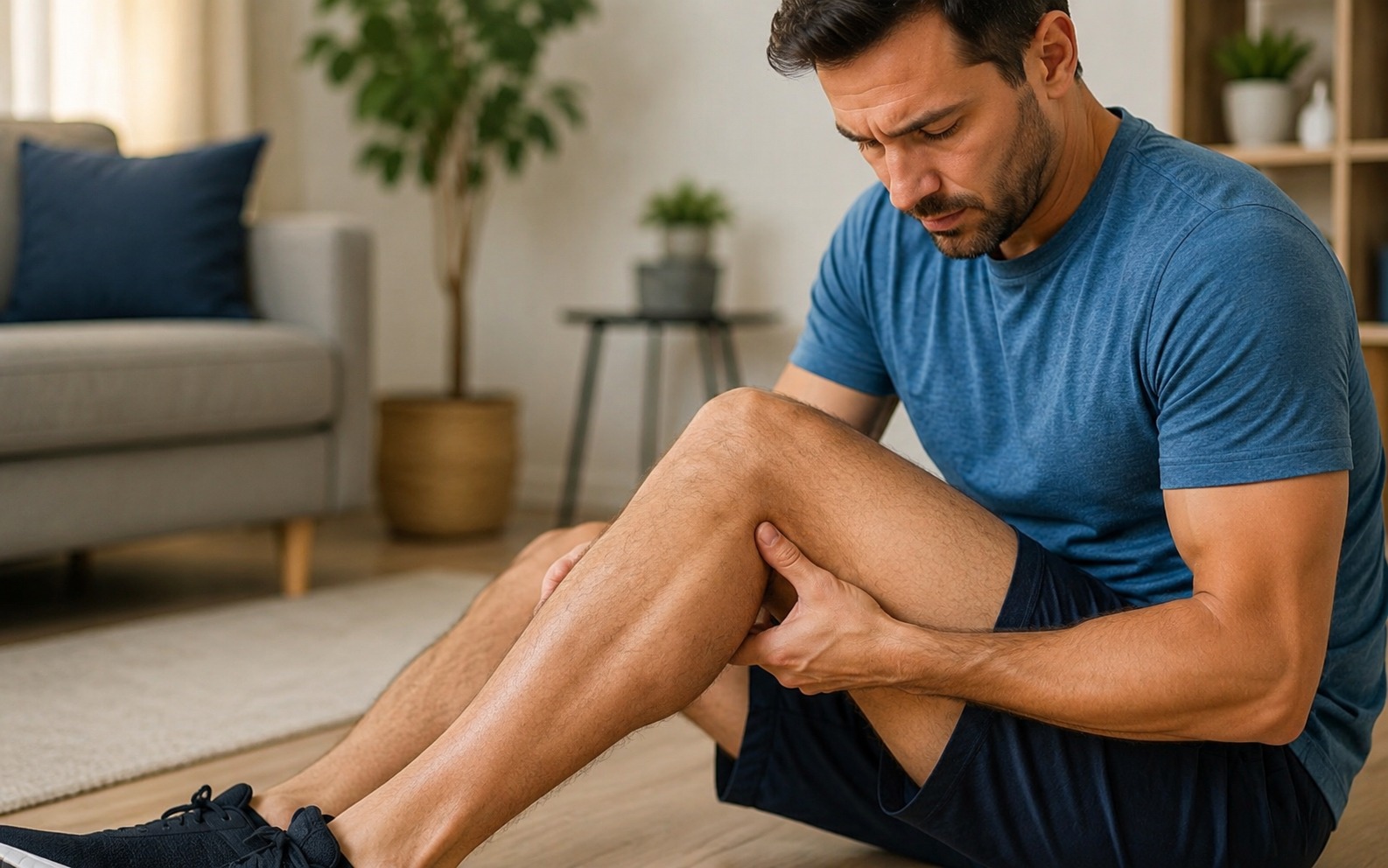
Knee clicking during everyday movement is common and often misunderstood. A sound does not confirm that something is damaged, but it also cannot identify one harmless mechanism with certainty. If your knee clicks without pain or loss of function, our guide on clicking knee without pain explains how to monitor the pattern.
Whether you notice a clicking sound in knee when walking, a pop when you bend down, or a snap on the stairs, these sounds usually come from normal joint mechanics. This guide focuses specifically on knee clicking that happens during movement: walking, bending, squatting, climbing stairs, and standing up. If you're looking for a broader overview of cracking and popping, our complete guide to knee cracking and crepitus covers the general topic in depth.
Why Do Knees Click During Movement?
Your knee is one of the most complex joints in the body. It involves three bones (femur, tibia, and patella), layers of cartilage, synovial fluid, ligaments, tendons, and muscles, all working together every time you take a step or bend your leg.
When you move, several things happen simultaneously that can create sounds:
- Changes in joint-fluid pressure: Cavitation is one possible explanation for an isolated pop, although a sound alone cannot prove the exact source.
- Tendon or ligament movement: Tendons and ligaments can shift slightly over bony surfaces as your knee bends and straightens, producing a quiet snap or click.
- Cartilage surface contact: As your kneecap (patella) tracks over the front of your knee joint, slight variations in the cartilage surface can create subtle clicking sensations.
- Muscle tightness: Tight quadriceps, hamstrings, or IT band can pull on the kneecap slightly off-center, increasing the likelihood of clicking during movement.
Key Insight
Knee clicking during movement is usually a mechanical event, not a sign of damage. The sounds come from normal interactions between bones, cartilage, tendons, and fluid as your joint goes through its range of motion.
Knee Clicking When Walking: What Does It Mean?
Walking is a repetitive, rhythmic movement that puts your knee through a consistent range of motion. If you notice a quiet click with each step, or only at certain points in your stride, here's what's likely happening:
- Heel-strike phase: As your heel lands and weight transfers, the knee absorbs impact. Gas bubbles in the joint fluid may release, creating a subtle pop.
- Mid-stance phase: Your kneecap tracks over the femoral groove. If the tracking isn't perfectly centered (which is common), a quiet click may occur.
- Push-off phase: As you push forward, tendons around the knee can glide over bony prominences, producing a snapping sensation.
When it's normal: The clicking is painless, doesn't limit your walking ability, and doesn't come with swelling or instability. If your knees click when walking but everything else feels fine, it's very likely just normal joint mechanics at work.
When to pay attention: If knee clicking when I walk is accompanied by a catching or locking sensation, pain on the inside or outside of the knee, or a feeling that the knee might "give way," it's worth monitoring more closely.
For those who notice walking-related knee discomfort, our guide on knee pain after long walks explores how daily walking distance affects comfort.
Knee Clicking When Squatting: With Pain vs Without Pain
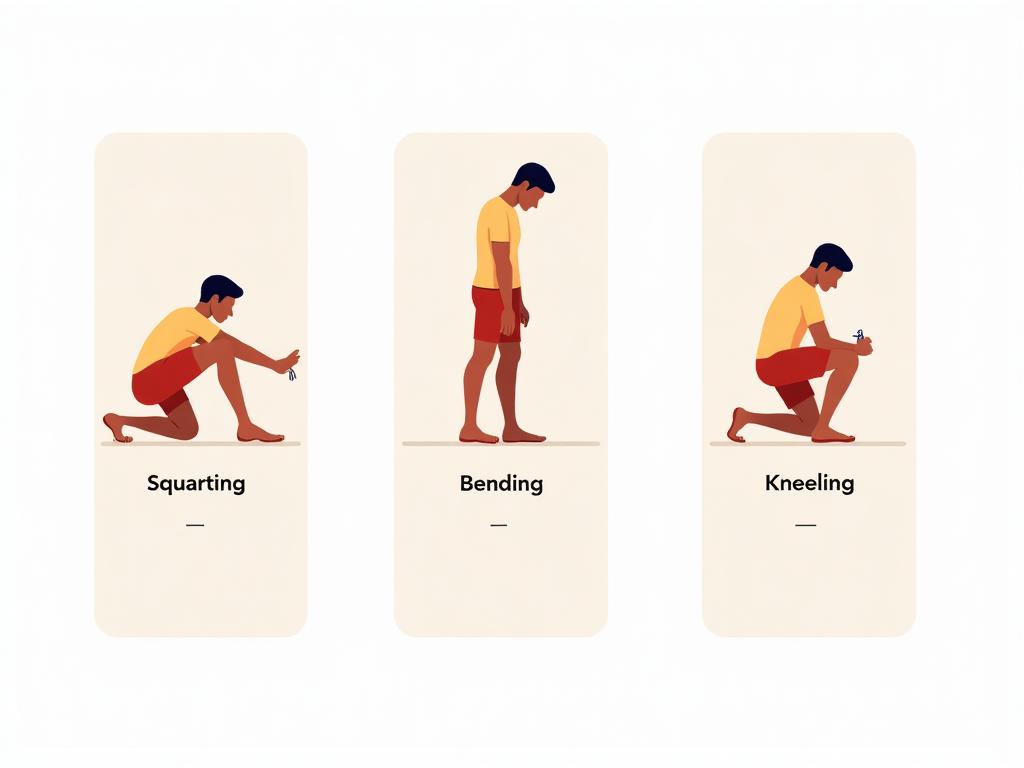
Squatting takes the knee through a deeper loaded range than ordinary walking, so a click that is barely noticeable during a step may become obvious near the bottom of a squat. The sound alone is a weak clue. The more useful question is whether the knee clicks without pain or whether the click arrives with pain, swelling, catching, locking, or instability.
Clicking Without Pain
A painless click, pop, or crackle that occurs at a repeatable depth and does not change strength, control, or next-day comfort is often part of normal joint movement. Gas cavitation, a tendon changing position, and contact between the kneecap and its groove can all become easier to hear as the knee bends. Sound does not automatically mean cartilage is being damaged.
Watch the whole response rather than trying to silence the knee. If you can squat through a comfortable range, rise without hesitation, and continue ordinary activity without swelling, a painless sound usually needs observation rather than treatment. A slower warm-up or slightly different stance may change the sound, but it is not necessary to chase a silent squat.
Clicking With Pain
Pain changes the interpretation because it adds information about location, phase, and load tolerance. Pain around or behind the kneecap during the descent or rise can fit a patellofemoral pattern. A sharp joint-line catch during twisting or deep flexion can point toward a different structure, including the meniscus. The meniscus pain location chart explains medial and lateral joint-line clues without treating a click as a diagnosis. A click followed by swelling, loss of motion, or giving way after an injury deserves assessment rather than a technique experiment.
The click still cannot diagnose the cause. Describe whether pain is at the front, inner side, outer side, back, or tendon below the kneecap; whether it occurs going down, at the bottom, or rising; and whether symptoms persist later that day. Our knee pain when squatting guide uses those details to separate load, depth, mobility, and warning-sign patterns.
| Squat pattern | What matters most | Reasonable next step |
|---|---|---|
| Painless, repeatable click | No swelling, catching, weakness, or loss of range | Continue a comfortable, controlled range |
| Front knee pain and crackle | Depth, load, stairs, sitting, and kneecap-area symptoms | Reduce the provoking dose and assess the pattern |
| Sharp joint-line catch | Twisting, true locking, swelling, or blocked movement | Stop forcing depth and arrange assessment |
| Pop after injury | Rapid swelling, giving way, inability to bear weight | Seek prompt medical guidance |
Why Squat Depth and Phase Matter
A click early in the descent is not the same pattern as a painful catch only at the deepest point. Deeper flexion changes kneecap contact and compresses the back of the joint more than a shallow bend. Rising adds quadriceps demand. Record the phase instead of repeating a painful squat to make the noise happen.
- During descent: Check whether speed, control, or front knee load changes the symptom.
- At the bottom: Note whether deep flexion creates pressure, a joint-line catch, or a blocked feeling.
- During ascent: Note whether the click comes with front knee pain, weakness, or a shift to one side.
- After the set: Check for swelling, lingering pain, or a worse response the next morning.
Knees moving beyond the toes can be normal when ankle motion, balance, and load are appropriate. The knees-over-toes guide explains why that visible position is not a diagnosis or an automatic reason for clicking.
Common mechanical contributors during deep bends include:
- Patellofemoral contact: As the knee bends past 90 degrees, the kneecap presses harder against the femur. Slight irregularities in the cartilage surface can create grinding or clicking sensations.
- Meniscus interaction: The meniscus (the C-shaped cartilage between your shin and thigh bones) can shift slightly during deep bending, sometimes producing a click.
- Tight or weak muscles: Weak quadriceps or tight hamstrings can affect how smoothly the kneecap moves, increasing clicking during squats.
If you experience clicking every time you squat but feel no pain, stiffness, or limitation, it may be a normal mechanical event. A painful sharp catch, true locking, new swelling, or a sense that the knee may buckle deserves closer attention. Use our sharp and stabbing knee pain guide to record the pattern and check warning signs rather than assuming the sound identifies one cause.
People who notice stiffness along with clicking after sitting may find our guide on knee pain when getting up after sitting helpful.
Knee Clicking on Stairs: Going Up vs Going Down
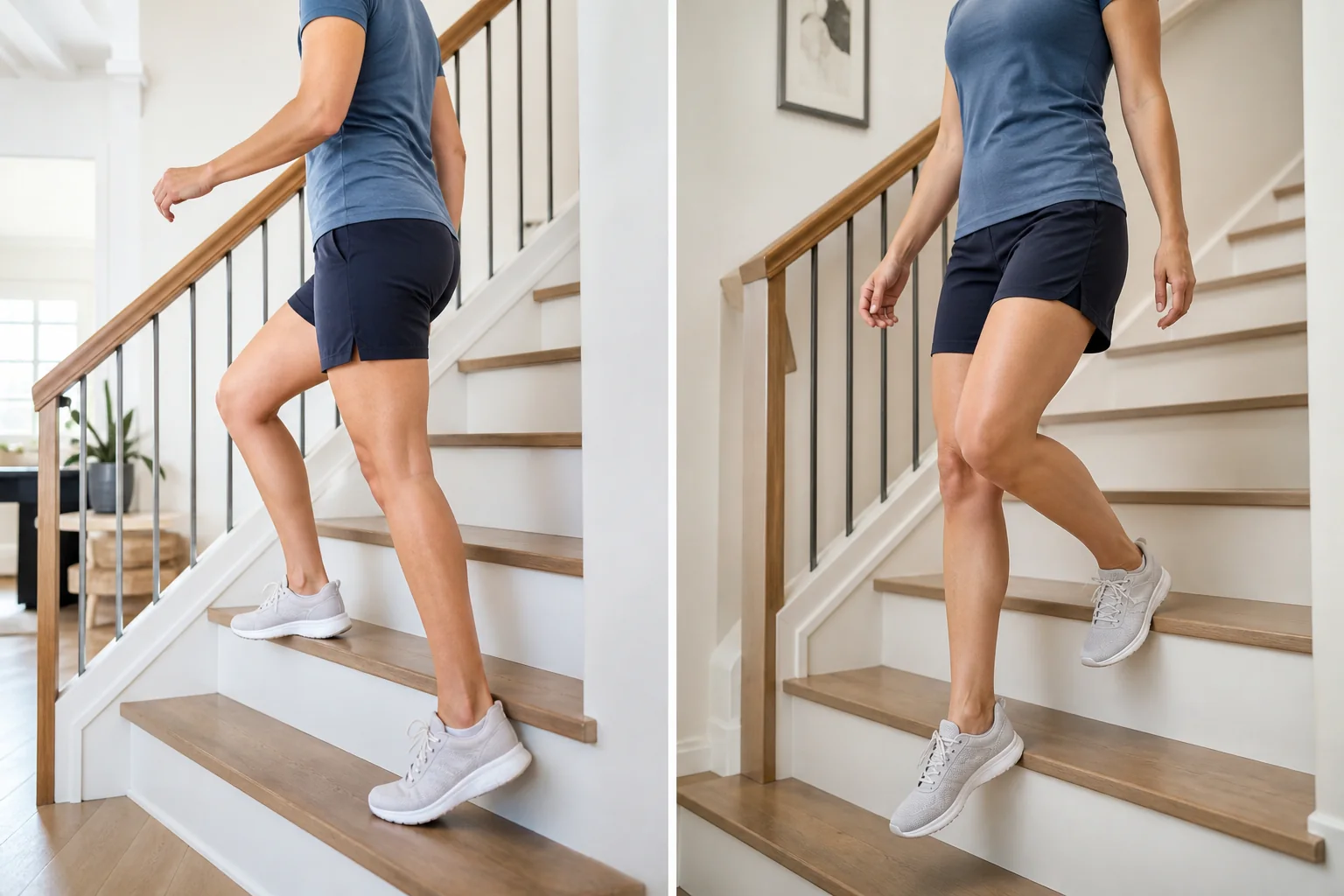
Stairs combine knee bending, body-weight support, and muscle control. That combination can make a quiet click easier to notice than it is on level ground. The direction matters because stepping up and lowering down ask the knee to do different jobs, but neither pattern identifies a diagnosis by sound alone.
Knee Clicking When Going Up Stairs
On the way up, the quadriceps straighten the supporting knee and lift the body onto the next step. The kneecap moves through its groove while the knee changes from a bent position toward a straighter one. A repeatable click may become noticeable at one point in that motion, especially on a taller step or after the knee has been still.
A painless click that does not change your strength, balance, range of motion, or next-day comfort is usually less important than the sound suggests. If the click comes with pain around or behind the kneecap, note whether it begins as you push upward, whether step height changes it, and whether the same discomfort appears during squats or when rising from a chair.
Knee Clicking When Going Down Stairs
On the way down, the supporting leg bends while the quadriceps control the lowering phase. The task also asks for single-leg balance and coordination at the hip, knee, and foot. That is why clicking may appear during descent even when level walking is quiet.
Sound without pain, swelling, catching, or giving way can still be a normal movement finding. Clicking plus front knee pain, hesitation, or reduced control is a different pattern. Record which leg is supporting you when the click occurs and whether the symptom happens as the foot reaches for the next step or as weight settles onto it. Our knee pain going down stairs guide examines that loaded descent in more detail.
| Stair pattern | When the click may appear | Clues worth recording |
|---|---|---|
| Going up | As the supporting knee straightens to lift the body | Step height, front knee pain, weakness, or a recent load increase |
| Going down | As the supporting knee bends to control lowering | Pain location, hesitation, swelling, catching, or giving way |
| Both directions | At the same knee angle on each repetition | Whether the sound is painless and function remains unchanged |
Do not repeatedly climb stairs just to reproduce a painful click. A handrail, a lower step, or a slower pace can help you observe the pattern with less demand. Arrange an assessment when clicking is joined by persistent pain, recurrent swelling, true locking, or instability.
Clicking vs Popping vs Snapping: What's the Difference?
Not all knee sounds are the same. Understanding the differences can help you recognize what's happening:
Clicking
A quiet, repetitive sound that occurs consistently during the same movement. Clicking is usually caused by tendons gliding over bone, gas bubbles in the synovial fluid, or slight kneecap tracking variations. It's the most common knee sound and is rarely a cause for concern on its own.
Popping
A louder, more distinct sound that often happens as a single event rather than continuously. Popping is commonly caused by gas bubble release (cavitation) in the joint fluid. You might notice it when you first stand up after sitting for a long time, or when you fully extend your knee after it's been bent.
Snapping
A sharp, sudden sensation (sometimes more felt than heard) where something seems to "catch and release." Snapping is often caused by a tendon or ligament moving over a bony prominence. The IT band snapping over the outer knee is a common example, especially in active people.
For a deeper look at how IT band movement creates outer knee sounds, see our IT band syndrome guide.
Knee Clicking When Bending
When you bend your knee, the joint compresses and the kneecap presses more firmly into the groove on the thigh bone. This compression, combined with shifting tendons and changing fluid pressure, is the most common reason people notice knee clicking when bending.
Think about simple daily movements: picking something up from the floor, sitting down on a low chair, or crouching to tie your shoes. Each of these actions takes the knee through a significant range of motion. As the angle increases, the contact pressure between the kneecap and the femur rises, and even minor surface irregularities on the cartilage can produce an audible click.
If my knee pops when I bend it is something you've noticed, you're in good company. This is one of the most frequently reported joint sounds. As long as there's no pain, catching, or swelling, knee pops when bending is typically a harmless part of how the joint functions under load.
Knee Clicking When Straightening the Leg
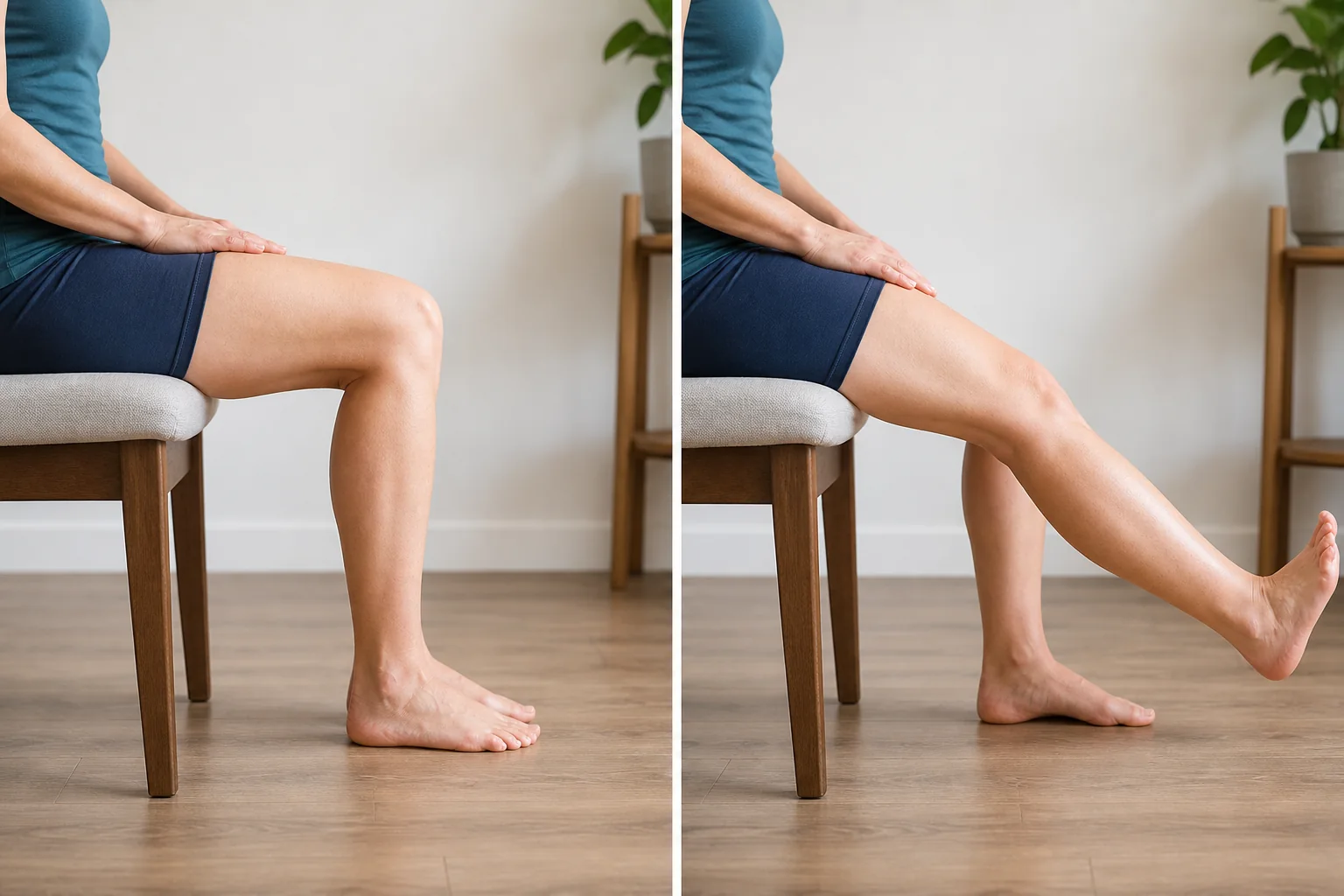
Straightening the leg moves the knee from flexion toward extension. The quadriceps contract, the patellar tendon transmits that force, and the kneecap changes position within its groove. A click may be heard or felt at one angle during this sequence, but the sound cannot show which tissue produced it.
A Single Click After Sitting
Some people notice one click when they first straighten the knee after a car ride, desk session, or period on the sofa. Changes in joint pressure or soft-tissue position may contribute, but it is not possible to confirm the source from the noise. If the knee then moves normally and there is no pain, swelling, catching, or loss of function, the isolated click is usually monitored rather than treated.
Clicking at the Same Angle on Every Extension
A repeatable click provides useful timing information. Notice whether it occurs early in the movement, near the final few degrees, or only when the leg straightens against resistance. Also record whether the sensation is at the front, joint line, outer side, or back of the knee. These details are more useful than trying to judge the sound as loud or quiet.
- Painless and unrestricted: Monitor the pattern if strength, motion, and everyday function remain unchanged.
- Front knee pain: Note whether stairs, squats, or prolonged sitting reproduce the same kneecap-area discomfort.
- Sharp catch or blocked movement: Stop forcing the final range and arrange an assessment, especially after a twist or injury.
- Swelling or giving way: Treat these accompanying symptoms as more important than the click itself.
If the first few movements after rest are stiff or painful, compare the pattern with our guide to knee pain when getting up after sitting. A new click after injury, rapid swelling, or inability to fully straighten the knee needs clinical guidance rather than repeated self-testing.
Knee Popping When Walking
Walking involves thousands of repetitive knee cycles every day. With each step, your knee flexes slightly during the swing phase and then extends as your foot strikes the ground. This constant back-and-forth creates many small opportunities for sounds to occur.
Knee popping when walking often happens at the same point in the stride, usually as weight transfers to the leg or as the knee straightens during push-off. This consistency can feel concerning, but it usually just means a specific tendon or tracking pattern produces a sound at that particular angle.
If you have wondered why does my knee pop when I walk, note where in the stride it occurs and whether it is painful. Repetition makes a sound easier to notice, but the sound cannot confirm whether it comes from joint-fluid pressure, a tendon, the kneecap, or another structure.
A helpful test: if the popping disappears after a few minutes of walking (as the joint warms up and fluid distributes), it's very likely a normal warm-up phenomenon. If it persists but remains painless, it's still generally considered harmless.
Why Does My Knee Pop When I Bend It?
This is one of the most commonly searched questions about knee sounds, and the answer is straightforward. When you bend your knee, the joint goes through a series of mechanical changes: the kneecap slides downward, pressure inside the joint capsule shifts, tendons adjust their position, and the cartilage surfaces come into closer contact.
Any one of these changes can produce an audible pop or click. The most common causes are:
- Gas bubble collapse: Dissolved gases in the synovial fluid form tiny bubbles that pop as joint pressure changes during bending.
- Tendon snapping: The quadriceps or hamstring tendons may glide over a bony ridge as the knee flexes.
- Kneecap movement: The patella shifts within its groove, and even small tracking variations can create a click.
Why does my knee pop when I bend it without pain? Because these are normal mechanical events that happen in healthy joints. Pain-free popping during bending is one of the most common joint experiences reported by adults of all ages.
If the popping is accompanied by discomfort, you may want to explore our guide on knee discomfort when squatting for more targeted information.
Knee Clicking Without Pain: Normal Reasons
If your knee clicks but you feel absolutely no pain, stiffness, swelling, or instability, you're very likely experiencing one of these harmless causes:
✓ Quick Tips
- •Gas bubble release (cavitation) in synovial fluid, the most common cause
- •Tendons gliding over bony surfaces during movement
- •Slight variations in kneecap tracking that create friction-free clicks
- •Normal age-related changes in cartilage texture (especially after 40)
- •Temporary muscle tightness after exercise or prolonged sitting
Important to Know
Painless knee clicking is so common that most joint health professionals consider it a normal variation of joint movement. It does not mean your cartilage is wearing out or that arthritis is developing. As long as there's no pain, swelling, or functional limitation, painless clicking typically requires no action.
That said, adults over 40 may notice their knees clicking more often than they used to. This is usually related to natural changes in cartilage smoothness and synovial fluid composition, not damage. Our guide on knee discomfort after 40 explains how aging affects joints.
Knee Clicking With Stiffness or Mild Discomfort
When clicking is accompanied by stiffness (especially in the morning or after sitting), the picture shifts slightly. This combination often indicates:
- Reduced synovial fluid distribution: After rest, the joint fluid settles. Your first few movements redistribute it, causing clicks that fade as you "warm up."
- Early cartilage surface changes: Rough patches on the cartilage surface (mild chondromalacia) can create both clicking and a sensation of stiffness during initial movement.
- Muscle imbalance: Tight IT band or weak vastus medialis (the inner thigh muscle) can pull the kneecap off-track, causing both clicking and a sense of tightness.
The key distinction is the direction of change. Clicking with mild start-up stiffness that returns toward baseline is different from stiffness that persists, worsens with activity, or is joined by swelling and reduced movement.
Our guide on knee stiffness after resting covers warm-up patterns and what they mean.
Sudden Loud Pop (No Injury) vs Repetitive Quiet Clicking
There's an important difference between a single, loud pop and ongoing quiet clicking:
Single Loud Pop Without Injury
A sudden loud pop without a clear injury may occur without lasting symptoms, but the sound alone cannot prove that it was only cavitation. Check whether pain, swelling, instability, loss of movement, or difficulty bearing weight appears afterward.
After the pop, you may notice the knee feels slightly looser or more mobile for a few minutes before the gas reforms in the joint fluid. This is normal and not a sign of instability.
Repetitive Quiet Clicking
Ongoing, rhythmic clicking that happens with every repetition of a movement (every step, every stair, every squat) is more likely related to mechanical tracking: the kneecap gliding, tendons shifting, or cartilage surfaces interacting. This type of clicking is usually harmless but tends to concern people more because of its consistency.
For more on sudden knee events, our sudden knee pain guide explains how to distinguish normal events from those needing attention.
What to Do About Knee Clicking During Movement
Painless clicking does not need to be silenced. If clicking comes with stiffness or discomfort, focus on the movement and symptoms rather than promising to eliminate the sound.
1. Begin With Comfortable Movement
Start a walk, workout, or squat session gradually and notice whether the movement becomes more comfortable. A warm-up is useful preparation, but it cannot guarantee that clicking will stop.
2. Build Leg Capacity Gradually
Knee-targeted and hip-targeted exercise may help when pain or limited capacity is part of the pattern. Choose a tolerable starting level and progress one variable at a time. Our knee exercise guide provides general examples.
3. Change Sustained Positions
If the knee feels stiff after sitting, change position and take a comfortable movement break. Use an interval that fits your day instead of relying on a rigid timer or claiming that movement lubricates away every sound.
4. Review Footwear Only When Walking Is the Trigger
A worn or uncomfortable shoe can change how walking feels, but no shoe can guarantee that a knee stops clicking. If symptoms occur mainly during walking or running, compare fit, comfort, surface, and shoe wear using our running shoes and knee pain guide.
Knee Clicking When Bending and Straightening
Some people notice clicking in both directions: when bending the knee and when straightening it. A painless sound may occur at different points in the range of motion, but the noise alone cannot identify its source.
Knee clicking when bending and straightening can happen because the mechanisms are slightly different in each direction. During bending, the kneecap slides downward and compression increases. During straightening, the kneecap moves upward and the quadriceps tendon tightens. Each direction creates its own set of pressure changes, tendon adjustments, and cartilage contact patterns.
If clicking occurs in both directions without pain, it simply reflects the complex mechanics of a joint that moves through a wide range of motion thousands of times per day.
Everyday Situations Where Knee Clicking Is Most Noticeable
Understanding when and where knee clicking tends to happen can help you feel more confident about these sounds. Many people first notice their knees clicking during specific daily activities rather than during exercise.
Getting out of a car: The transition from a seated position with bent knees to standing involves a full range of motion that often produces a pop or click. After sitting in a fixed position, the joint fluid has settled and the first extension redistributes everything. This is one of the most common moments people notice knee sounds, especially after long drives. If car rides consistently leave your knees feeling stiff, our guide on knee discomfort after car rides explores this pattern.
First steps in the morning: Overnight rest means several hours without knee movement. Synovial fluid thickens slightly, muscles cool down, and joint surfaces are in prolonged contact. The first few steps of the day often produce more clicking than any other time, which typically fades within a few minutes as the joint warms up. People over 40 may notice this pattern becoming more consistent over time, as described in our guide on morning knee stiffness after 40.
During exercise transitions: Switching between exercises, such as moving from a seated leg press to standing lunges, can produce noticeable clicking as the knee adjusts to a different range of motion and loading pattern. This is common and typically resolves within the first few repetitions. If you also notice soreness developing hours after your workout, our guide on knee pain after exercise explains the delayed response mechanism.
When to Get Medical Help
Arrange an assessment when clicking comes with persistent pain, swelling, catching, true locking, giving way, reduced movement, or begins after an injury. Seek urgent care when you cannot bear weight, the knee is badly swollen or deformed, or a hot red knee is accompanied by fever or feeling unwell.
A sound is different from a knee that physically cannot complete its movement. Compare knee locking, catching, and clicking for the difference between brief sensations and a persistent movement block that needs prompt assessment.
Frequently Asked Questions
Why does my knee click when I walk?
Knee clicking during walking is usually caused by gas bubbles releasing in the joint fluid, tendons gliding over bony surfaces, or slight kneecap tracking variations. If there's no pain or swelling, it's generally considered a normal mechanical event.
Why does my knee keep popping when I bend it?
When you bend your knee, the kneecap slides downward, pressure inside the joint changes, and tendons shift position. Any of these normal mechanical events can produce a pop or click. If there's no pain or catching sensation, it's typically harmless.
Is knee clicking normal?
Knee clicking and crepitus are common in both pain-free people and people with knee conditions. The sound should be interpreted with symptoms and function. Clicking without pain, swelling, locking, or instability often needs no treatment.
When should I be concerned about knee clicking?
Knee clicking becomes worth monitoring if it's accompanied by pain, swelling, a catching or locking sensation, a feeling of the knee giving way, or if it starts suddenly after an injury. Painless clicking on its own is rarely a concern.
Why does my knee click when walking up stairs?
Stepping up combines a bent knee with a strong quadriceps contraction as the supporting leg lifts your body. That can make a repeatable click easier to notice than it is on level ground. A painless click with normal function is usually less concerning than clicking accompanied by pain, swelling, catching, or weakness.
Why does my knee click when going down stairs?
Going down stairs asks the supporting knee to bend while the quadriceps control your lowering speed. Clicking may become noticeable during that loaded descent even when level walking is quiet. Note pain location, hesitation, swelling, catching, or giving way rather than using the sound alone to identify a cause.
Why does my knee click when I straighten my leg?
As the leg straightens, the quadriceps contract and the kneecap changes position within its groove. Joint-pressure changes or soft-tissue movement may produce a click, but the noise cannot identify the exact source. A painless click without swelling, locking, or lost motion can usually be monitored.
Why does my knee pop when I straighten it after sitting?
One pop on the first extension after sitting may reflect a change in joint pressure or soft-tissue position. Check what happens next. If movement is comfortable and normal, observation may be enough; pain, swelling, a blocked range, or repeated catching deserves assessment.
Why does my knee click when I squat?
Squatting bends the knee deeply under load, which changes kneecap contact and can make gas release or tendon movement easier to hear. A painless, repeatable click without swelling, catching, instability, or lost motion is commonly a mechanical sound. Pain, true locking, rapid swelling, or giving way makes the pattern more important.
Why does my knee click when squatting but not hurt?
A painless click can come from gas cavitation, a tendon shifting position, or the kneecap moving through its groove as joint pressure changes. If squat control, range, daily function, and next-day comfort remain normal, the sound alone usually does not indicate damage or require treatment.
Why does my knee click and hurt when I squat?
The cause cannot be identified from the click alone. Front knee pain may fit a patellofemoral load pattern, focal tendon pain below the kneecap may fit a patellar tendon pattern, and a sharp joint-line catch can suggest a different structure. Note pain location, squat phase, swelling, locking, and injury history, then seek assessment if symptoms persist or function changes.
Does squat depth make knee clicking worse?
It can make a click or crackle more noticeable because deeper bending changes kneecap contact and loads the joint differently. Depth is not automatically harmful, but do not force through a painful catch, blocked feeling, swelling, or instability. Use the deepest range that remains controlled and tolerable.
Is knee clicking when bending down something to worry about?
In most cases, no. Clicking during bending or squatting is common because the kneecap presses harder against the femur during deep bends. It becomes more relevant if accompanied by pain, catching, or locking sensations.
Why do my knees pop when going up stairs?
Stair climbing generates significantly more force through the kneecap joint than flat walking. This increased load can amplify normal clicking sounds. If there's no pain, it's usually related to kneecap tracking or gas bubble release.
Is it normal for knees to click without pain?
Yes, painless knee clicking is very common and is considered a normal variation of joint movement. It can happen at any age and doesn't indicate cartilage damage or developing arthritis.
What's the difference between knee clicking and popping?
Clicking is typically quiet, repetitive, and rhythmic, happening with each movement. Popping is usually louder, occurs as a single event, and is often caused by gas bubble release (cavitation) in the joint fluid.
I heard a sudden loud pop in my knee but wasn't injured. Is that serious?
A loud pop can occur without lasting symptoms, but the sound alone cannot confirm the source. Check what follows. Pain, swelling, instability, loss of movement, or difficulty bearing weight deserves prompt assessment.
Does knee clicking mean cartilage damage?
Not necessarily. While cartilage surface changes can contribute to clicking, the sound itself doesn't confirm damage. Most knee clicking is caused by harmless mechanisms like gas bubbles, tendon movement, or slight tracking variations.
How can I reduce knee clicking during everyday movement?
Painless clicking does not need treatment. If stiffness or discomfort accompanies it, start activity gradually, change sustained sitting positions, and build knee and hip capacity at a tolerable level. These steps may improve comfort even if the sound remains.
Can knee clicking happen more after exercise?
Yes. After exercise, temporary muscle fatigue can change how the kneecap tracks, and increased fluid in the joint can alter pressure dynamics. Both factors can make clicking more noticeable in the hours following a workout.
Does cold weather make knee clicking worse?
Cold temperatures can thicken synovial fluid and tighten muscles around the knee, both of which can increase clicking frequency. Warming up before activity and keeping the knee area warm during cold weather can help reduce this effect.
Should I use a knee massager for clicking knees?
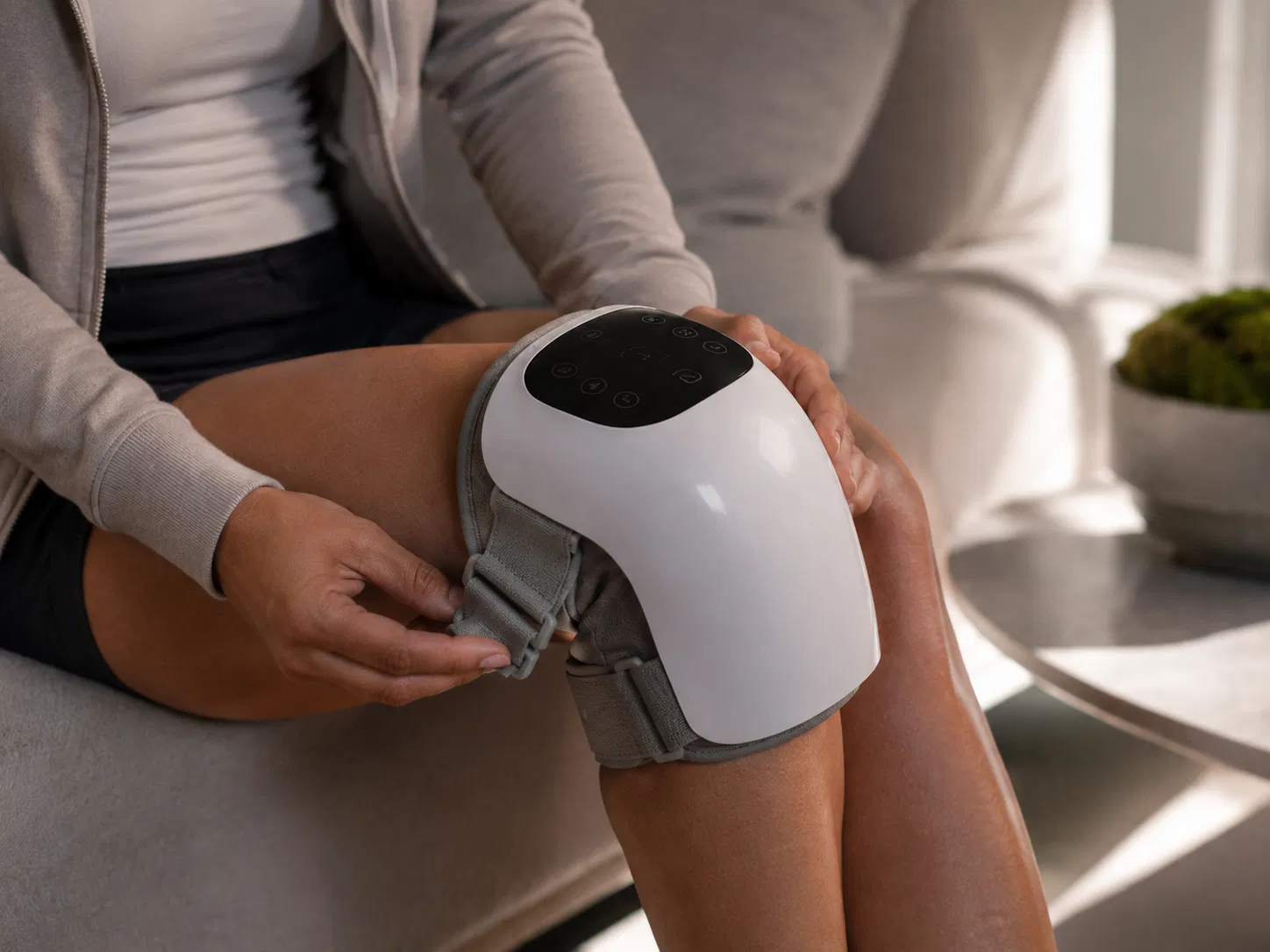
Clicking itself does not require a massager. Gentle warmth or vibration may feel soothing when stiffness is present and the knee is not hot or swollen, but a device has not proven that it can correct tracking or make joint sounds disappear.