Knee Pain After Sitting Is a Pattern, Not a Diagnosis
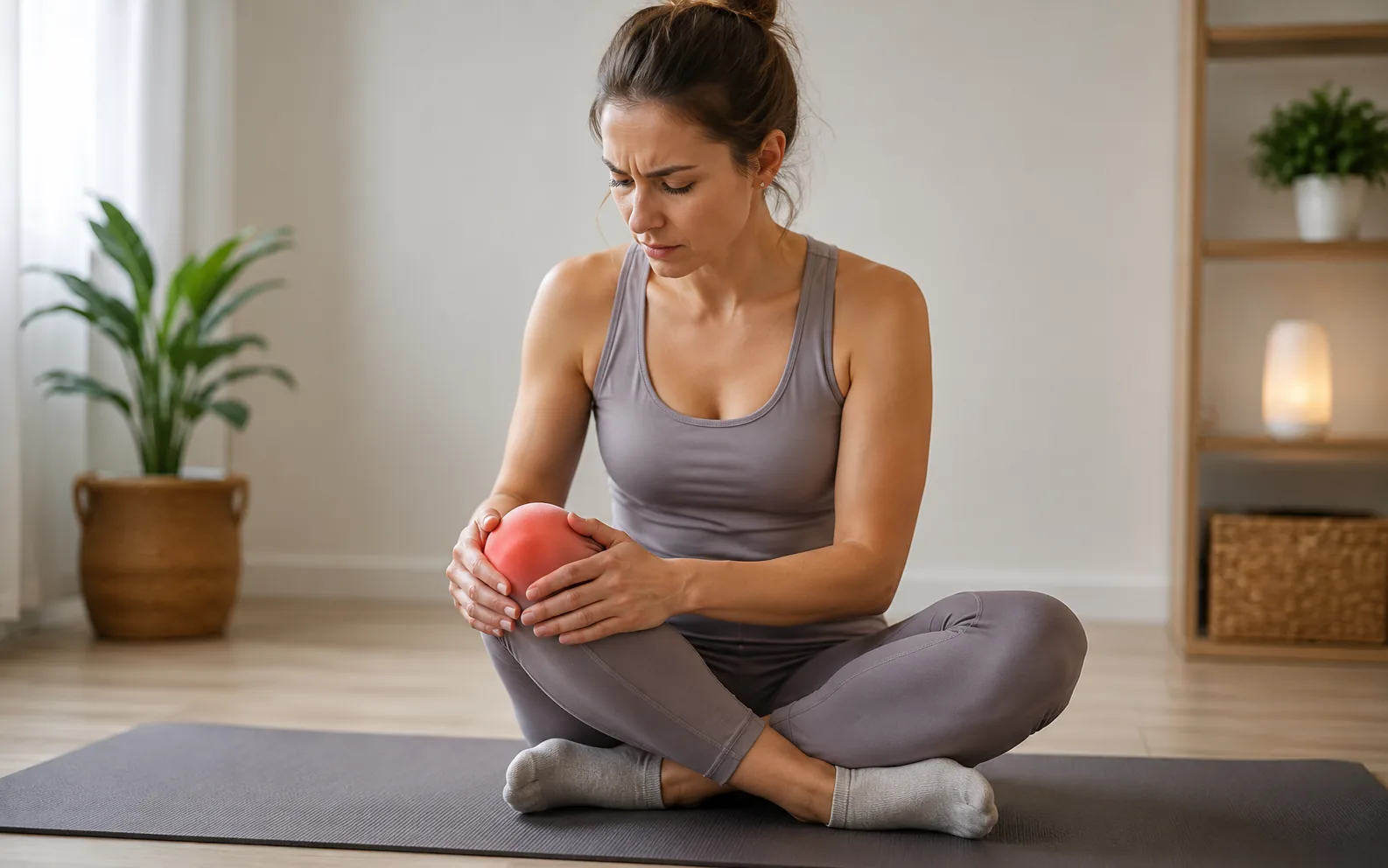
People use several phrases for the same transition: knee pain after sitting, stiff knees from sitting, first-step pain, start-up pain, or knees that hurt after being still. These descriptions tell you when the symptom appears, but not which structure is responsible.
The most useful questions are practical. Does the knee hurt while you are still seated, or only as you stand? Does the discomfort sit behind the kneecap, along a joint line, or behind the knee? Does it improve after a few easy steps, or continue through normal walking? Is one knee affected or both? Is there swelling, warmth, locking, or instability?
Why Standing Up Can Hurt After Sitting
The Knee Has Been Held in a Bent Position
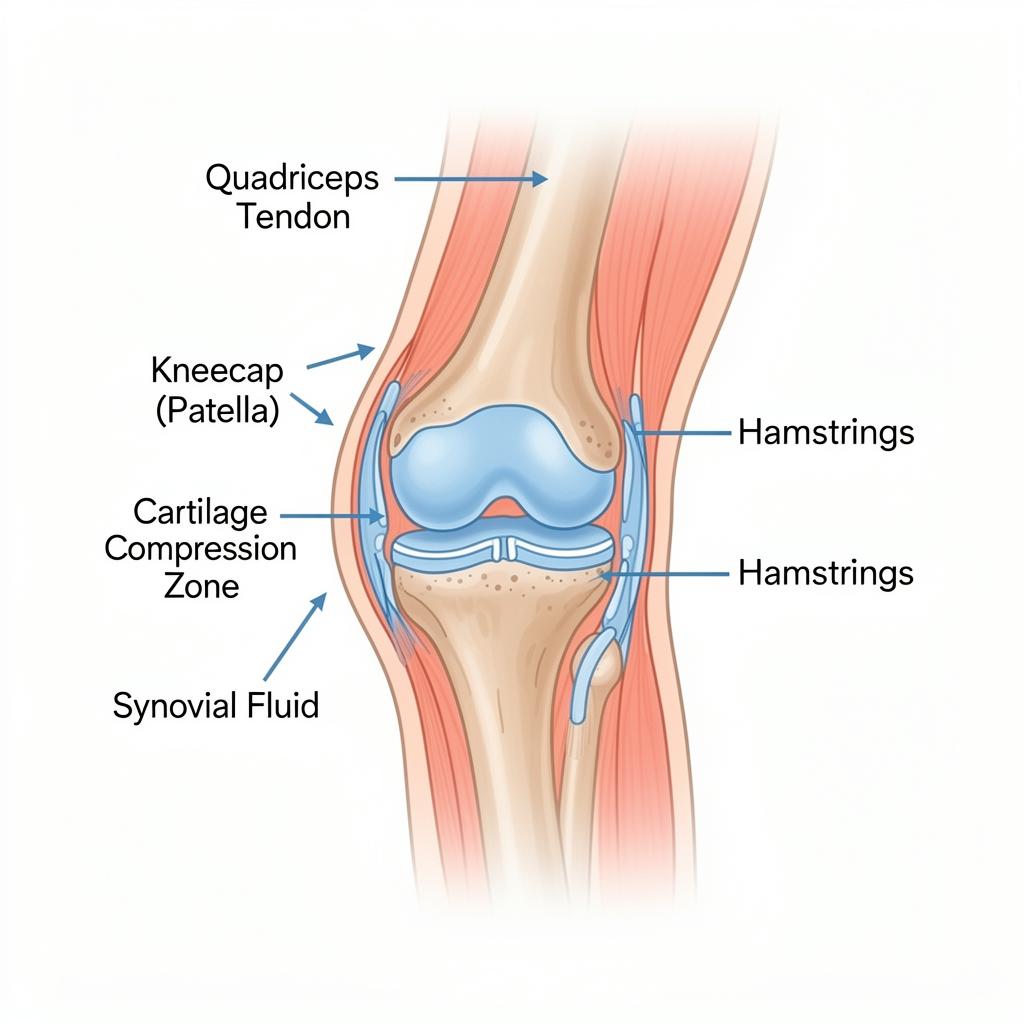
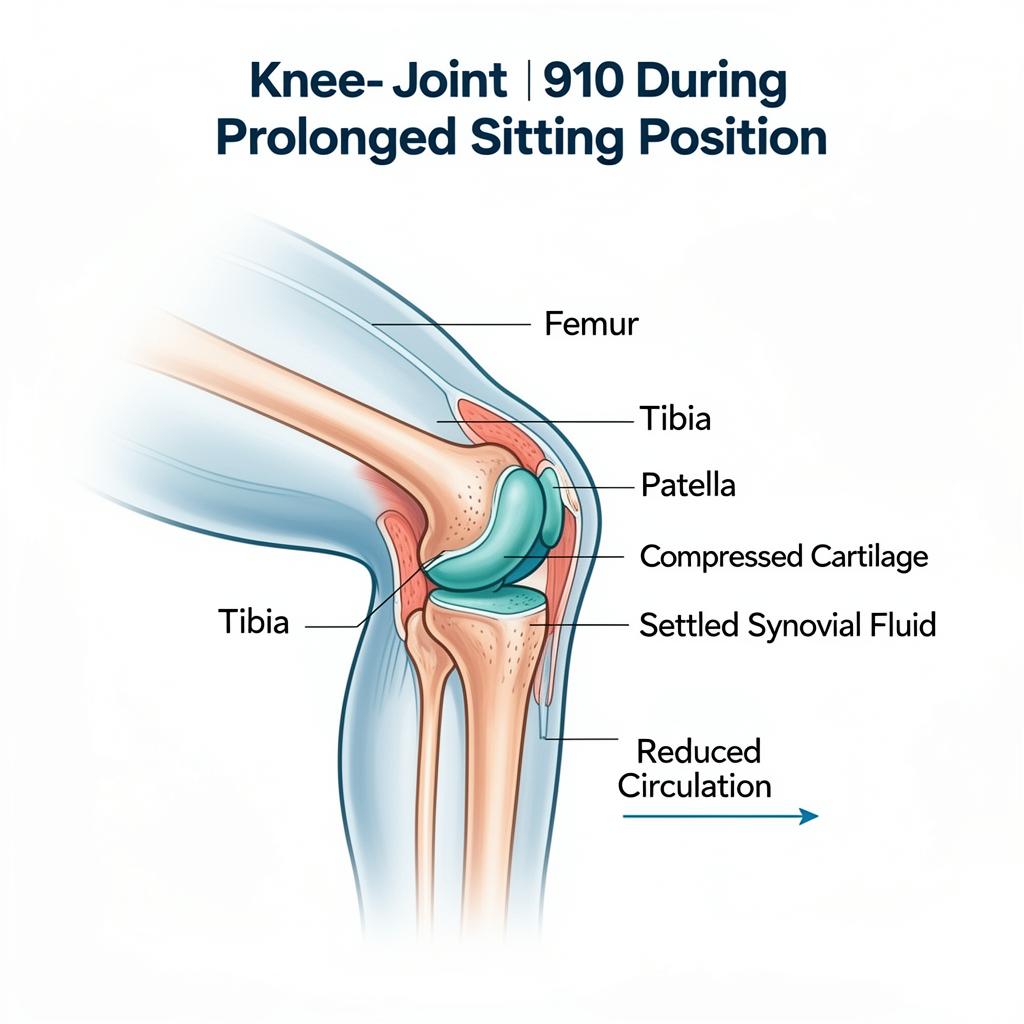
Sitting keeps the knee flexed for a sustained period. That position may be comfortable while you remain still but can make the first extension feel resistant, especially in a deep sofa, a cramped car seat, or a chair that keeps the knees well above the hips.
The Kneecap Is Loaded Differently
Bent-knee sitting maintains contact between the kneecap and the thigh bone. People with patellofemoral irritation often notice discomfort after cinemas, flights, desk work, or long car rides. The ache is commonly felt at the front of the knee or behind the kneecap. Our patellofemoral pain guide explains that pattern in more depth.
Standing Requires an Immediate Increase in Muscle Work
A sit-to-stand movement asks the quadriceps, glutes, calf muscles, and trunk to coordinate quickly. A low seat, fatigue, reduced strength, or hesitation can shift more effort toward the knees. This is one reason using the armrests or a stable surface may help without implying that the knee is damaged.
Stiffness After Inactivity Can Be Part of Osteoarthritis
Osteoarthritis can cause short-lived stiffness after rest or inactivity, particularly in the knees. It is only one possible explanation. Age alone does not diagnose arthritis, and the same pattern may occur with kneecap irritation, a previous injury, tendon sensitivity, swelling, or reduced mobility elsewhere in the leg.
Why Do Knees Feel Stiff After Sitting?
Stiff knees from sitting are often described as rusty, tight, slow to straighten, or uncomfortable for the first movements. The knee has remained in one position while the surrounding muscles have done little work. A deep seat can hold the joint in more flexion, while a long desk session can make the first change in position feel abrupt.
Stiffness is a symptom pattern, not proof that the joint has worn out or lost lubrication. Track whether both knees behave similarly, whether comfortable movement restores the usual range, and whether the time needed to loosen is becoming longer. Recurrent swelling, a blocked range, or progressive loss of function deserves assessment.
Stiffness After Sitting vs Pain When Standing Up
| Pattern | What it feels like | What to track |
|---|---|---|
| Brief stiffness | Rusty, tight, or slow for the first steps | How quickly comfortable movement returns |
| Sit-to-stand pain | Pain peaks while rising from the chair | Seat height, foot position, and exact pain location |
| First-step pain | The first few steps hurt more than later walking | Whether the pattern is stable, improving, or worsening |
| Pain while resting | Pain is already present before standing | Night pain, swelling, warmth, fever, or systemic symptoms |
Pain When Standing After Sitting but It Goes Away After a Few Steps
Some people feel the strongest pain as they rise, then notice that it settles during the first few steps. This is often called first-step or start-up pain. The sequence matters: the knee moves from a sustained bend to full weight-bearing, the leg muscles re-engage, and walking begins almost immediately.
Count roughly how many steps it takes to feel easier and whether that number is stable. A brief, repeatable pattern is different from pain that continues through walking, starts sooner over time, or comes with swelling, catching, locking, or giving way. Improvement after a few steps is useful context, but it does not identify one cause or rule out osteoarthritis, patellofemoral pain, or another condition.
Pain While Resting vs Pain After Resting
These searches sound similar but describe different experiences. Pain after resting appears when movement restarts. Pain while resting is present during the seated or lying position itself.
Pain during rest may still come from a sustained position, but persistent pain that disrupts sleep, steadily worsens, or occurs without a clear mechanical trigger deserves a closer look. For symptoms that mainly occur in bed at any age, use our guide to knee pain while sleeping. For midlife symptoms, see the focused guide to night knee pain after 40, osteoarthritis, and menopause patterns.
If discomfort builds while you remain on your feet rather than during the first stand, use the separate guide to knee pain after prolonged standing. That page focuses on long work shifts, standing still, hard floors, and symptoms that develop over time.
Why the Back of the Knee May Feel Tight After Sitting
A bent knee shortens the hamstrings, upper calf, and other tissues behind the joint. When you stand, the back of the knee may feel pulled or reluctant to straighten. A mild symmetrical tightness that eases with comfortable movement is different from a persistent lump, a blocked knee, or one-sided swelling.
Do not forcefully stretch an unexplained lump behind the knee. A Baker's cyst, joint swelling, or another condition may create fullness in that area. Unexplained calf swelling, redness, warmth, or one-sided leg enlargement requires prompt medical assessment.
A Gentle First-Movement Sequence
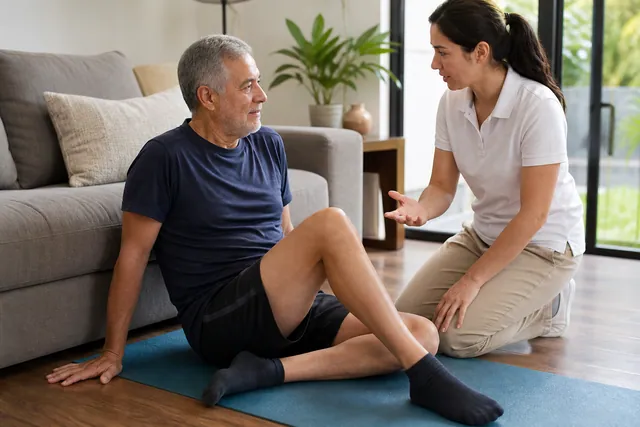
The purpose of this sequence is to make the transition gradual, not to test a painful knee or force it through a blocked range.
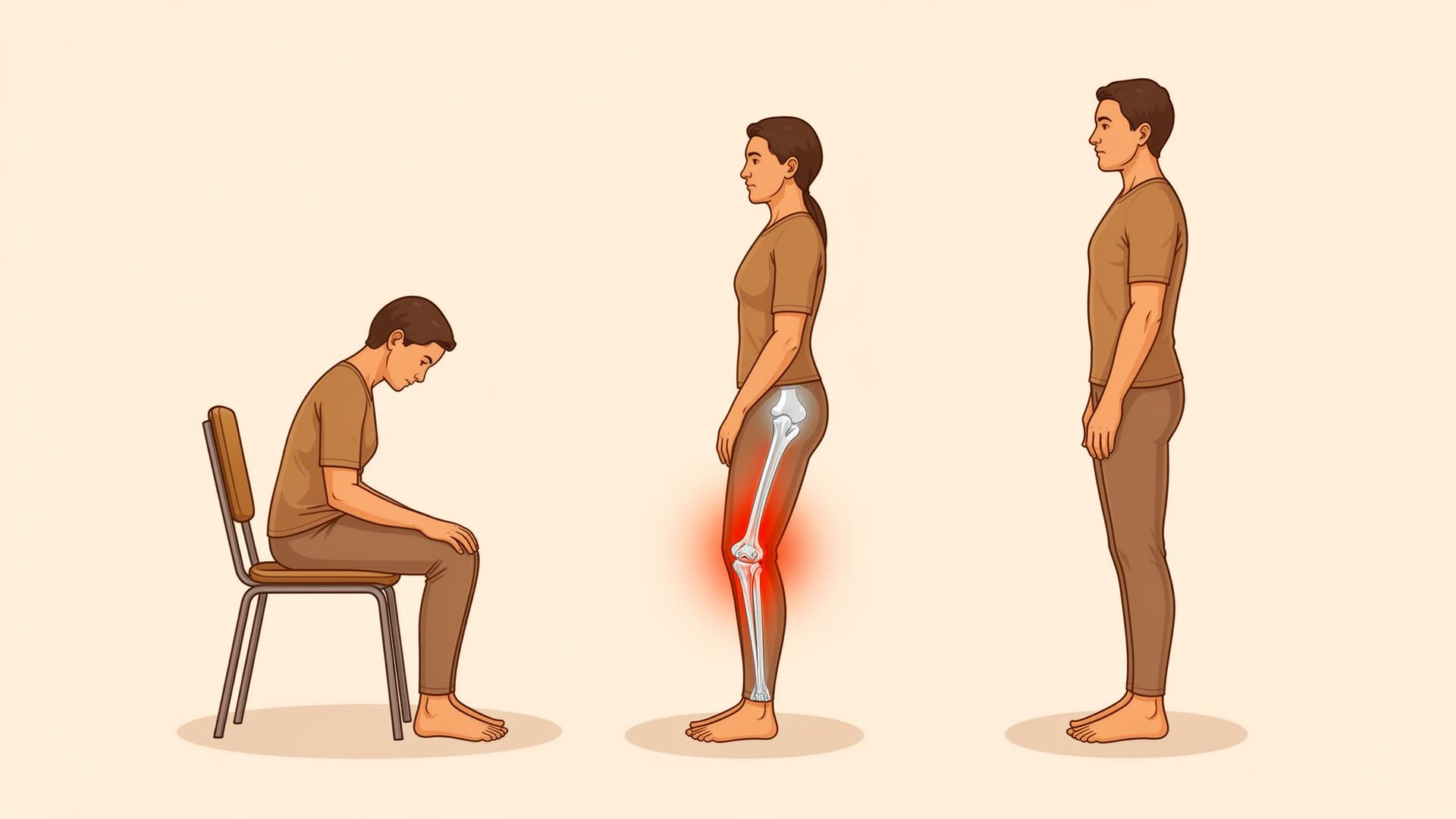
- Check the knee first: do not continue if it is badly swollen, hot, locked, unstable, or sharply painful.
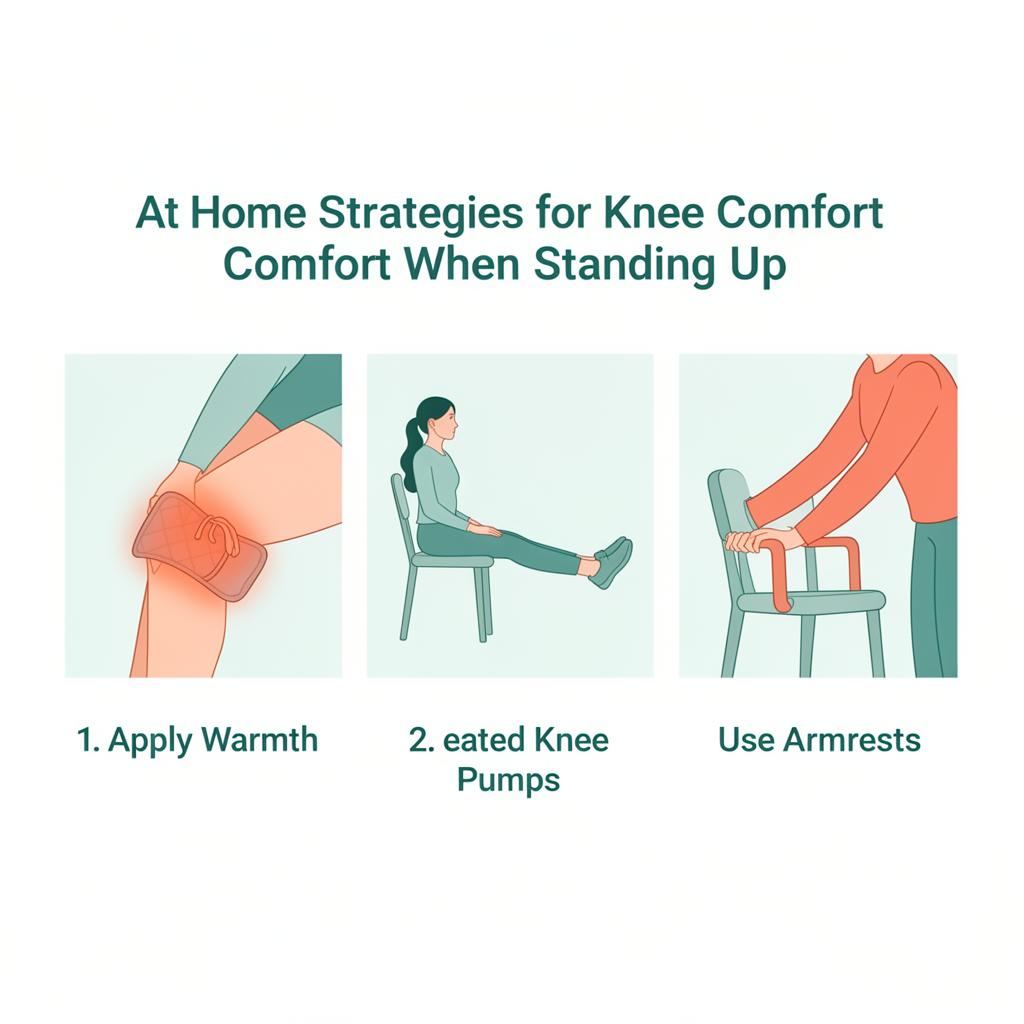
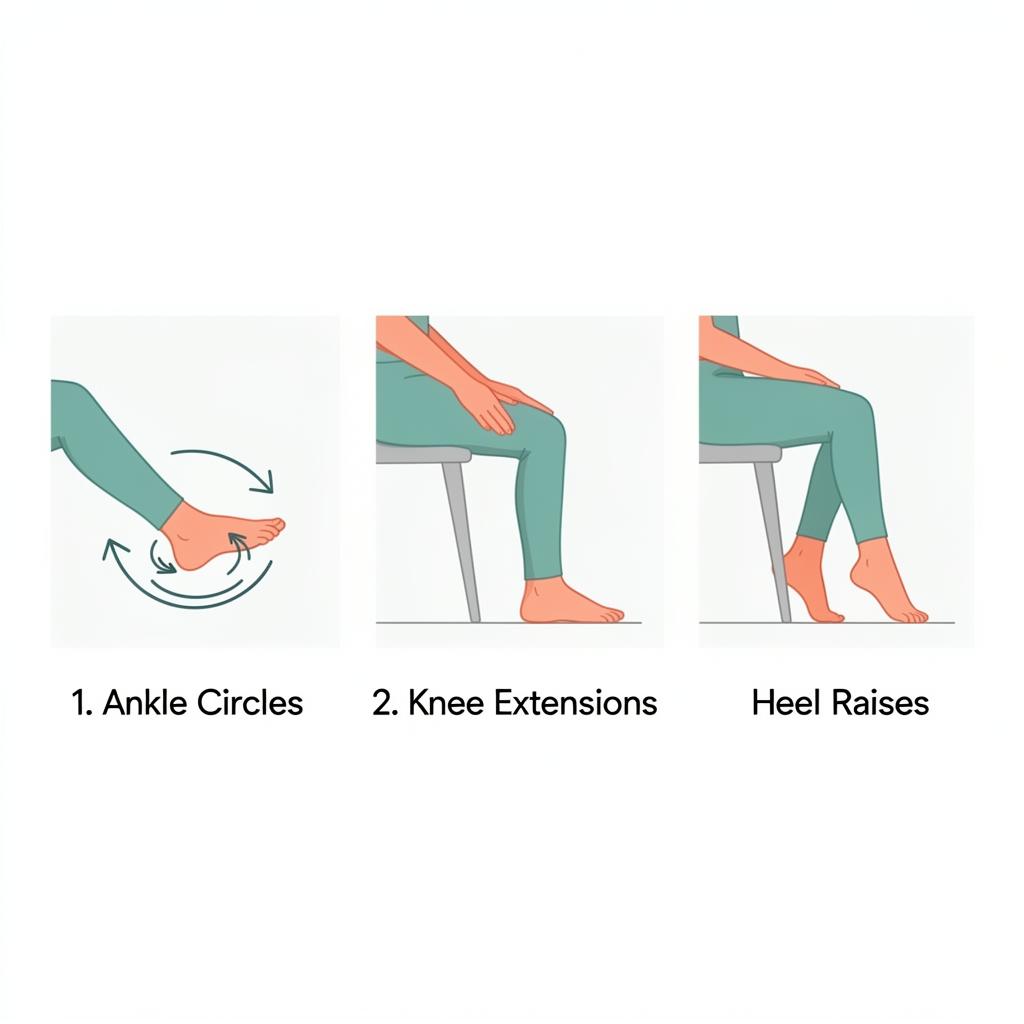
- Move before standing: perform a few comfortable ankle pumps and small knee bends or seated extensions.
- Set both feet: place them flat, roughly hip-width apart, and slightly behind the knees.
- Move to the edge: avoid trying to rise from the deepest part of a soft sofa.
- Lean forward: bring the chest over the feet and use stable arm support when needed.
- Pause after standing: find your balance, then take short, easy steps before returning to normal pace.
The Next-Morning and Next-Sitting Check
A useful adjustment should not make the knee progressively worse. Track whether ordinary walking, stairs, swelling, and the next sit-to-stand transition are better, unchanged, or worse. A worsening pattern is more important than completing a prescribed number of repetitions.
Knee Pain When Getting Up From a Chair, Sofa, or Desk
Low or Soft Seats
Deep sofas and low chairs increase the range and effort needed to stand. A firmer cushion or a higher seat may reduce the demand. Keep both feet supported rather than tucked beneath the chair.
Desk Work
No single posture needs to be held all day. Change position regularly and use brief standing or walking breaks before stiffness becomes pronounced. Frequent comfortable movement is usually more realistic than searching for one perfect chair angle.
Long Car Rides and Flights
Travel combines prolonged sitting with restricted space. Use safe opportunities to walk, change position, and move the ankles. See our guides to knee pain after long car rides and knee stiffness after flights for travel-specific planning.
Movement, Strength, and Warmth
A few comfortable movements can help with the immediate transition. Longer-term improvement often depends on building the capacity of the quadriceps, hips, and calves so standing does not demand the knee's full reserve each time. Our knee-strengthening guide gives a gradual starting point.
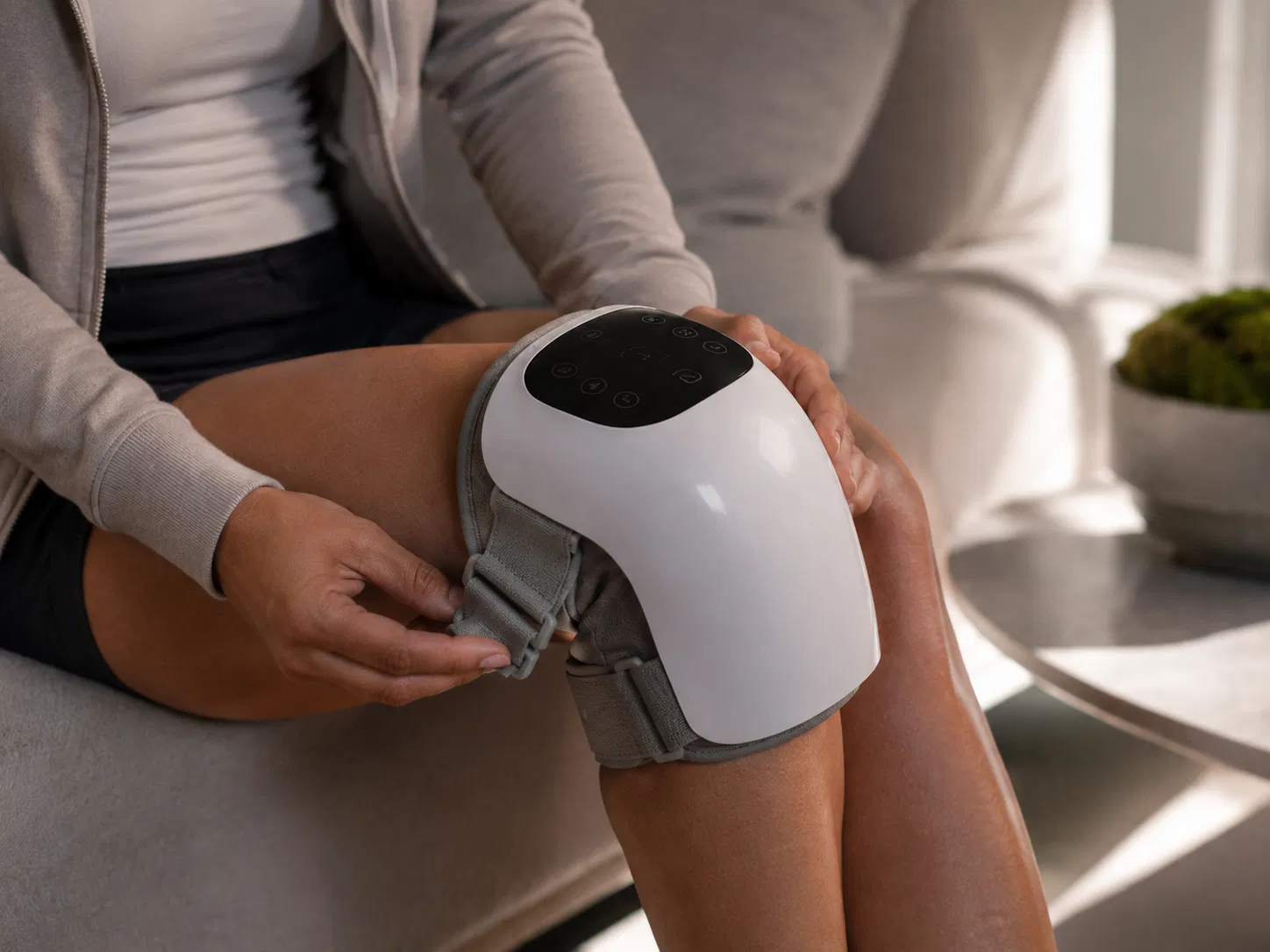
Gentle warmth may feel soothing when stiffness is the main complaint and the knee is not newly injured, swollen, red, or unusually hot. Do not use a comfort device to override warning signs or to test whether a painful activity is safe. The heat versus ice guide explains when each option is more appropriate.
When to Get Medical Help
- Arrange an assessment when the pattern persists, worsens, limits daily activity, or comes with recurrent swelling, locking, or giving way.
- Seek urgent help if you cannot bear weight, the knee is badly swollen or deformed, it is locked, or it is hot and red with fever.
- Get urgent medical help for unexplained one-sided calf or leg swelling, especially with chest pain or breathlessness.
The Bottom Line
Knee pain and stiffness after sitting are best understood as a timing pattern. A sustained bend, kneecap sensitivity, osteoarthritis, muscle demand, seat height, and previous injury can all contribute. Make the transition gradual, improve the seat setup, build leg strength over time, and track whether the pattern is stable or worsening. The goal is not to explain every stiff knee with one fluid or cartilage story; it is to use timing, location, function, and warning signs to choose the right next step.
Frequently Asked Questions
Why do my knees hurt when I stand up after sitting?
Standing changes the knee from a quiet, bent position to a weight-bearing movement in a moment. Sustained bending, sensitivity around the kneecap, stiffness after inactivity, muscle weakness, osteoarthritis, and the height or softness of the seat can all contribute. The symptom alone does not identify one cause.
Why do my knees feel stiff after sitting but improve when I walk?
Brief stiffness after inactivity is common, including in osteoarthritis. Comfortable movement may make the transition feel easier as the muscles re-engage and the joint begins moving through a wider range. Improvement with walking is useful context, but it does not confirm a diagnosis or rule out an underlying condition.
Why does knee pain after sitting go away after a few steps?
The first stand and first steps place a previously bent, inactive knee under load quickly. A brief pattern may ease as the leg muscles re-engage and the knee moves through a wider range. Track how many steps it takes, whether the pattern is changing, and whether swelling, locking, or instability is also present.
Why do my kneecaps hurt when getting up from a desk?
Desk sitting keeps the knees bent and the kneecaps in contact with the thigh bones. Standing then requires a rapid increase in quadriceps effort. Seat height, long sitting periods, kneecap sensitivity, and reduced leg strength may overlap. Pain that persists, worsens, or limits normal activity should be assessed.
Is knee pain after resting the same as pain while resting?
No. Pain after resting appears when you begin standing or walking. Pain while resting is already present while you are seated or lying down and may need a different assessment, especially when it disrupts sleep, is progressively worsening, or occurs with swelling, redness, fever, or unexplained weight loss.
Why does the back of my knee feel tight after sitting?
The hamstrings, upper calf, and other tissues behind the knee remain in a shortened position while the knee is bent. A persistent lump, marked swelling, calf redness, one-sided leg swelling, or a blocked feeling when straightening should be assessed rather than stretched aggressively.
Can a low sofa make knee pain worse when standing?
Yes. A low or soft seat places the hips below the knees and requires more knee and hip effort to stand. Moving toward the front edge, placing the feet underneath you, leaning forward, and using stable arm support can reduce the demand of the transition.
How long should knee stiffness after sitting last?
There is no universal normal duration. A brief pattern that settles with a few comfortable movements is generally less concerning than stiffness that lasts longer, repeatedly limits daily activities, or progressively worsens. Morning stiffness lasting well beyond 30 minutes also deserves assessment for causes other than typical osteoarthritis.
Should I use heat for stiff knees after sitting?
Gentle warmth may feel comfortable when ordinary stiffness is the main symptom and the knee is not newly injured, swollen, red, or unusually hot. Follow product instructions, protect the skin, and avoid heat when sensation or circulation is reduced unless a clinician has advised it is safe.
When should knee pain after sitting be checked urgently?
Seek urgent help if you cannot bear weight, the knee is badly swollen or deformed, it is locked, or it is hot and red with fever. Unexplained one-sided calf or leg swelling, especially with chest pain or breathlessness, also needs urgent medical attention.