If you're over 40 and your knees have started to remind you of their existence, with morning stiffness, achiness after sitting, or discomfort on stairs, you're experiencing one of the most common aspects of aging. Knee pain after age 40 affects millions of adults, and understanding why it happens is the foundation for managing it well.
This guide covers the science behind age-related knee pain, explains the differences between knee discomfort in your 40s versus your 50s, and shares practical daily habits that genuinely help. Whether you're just starting to notice changes or have been managing discomfort for years, you'll find actionable strategies here.
Why Knee Pain Increases After Age 40
Your knee joint is a remarkable piece of engineering, it supports your body weight, absorbs shock, and enables complex movements thousands of times each day. But like any well-used mechanism, it changes over time. After age 40, several gradual shifts begin to affect how your knees feel day to day.
Cartilage Thinning and Wear
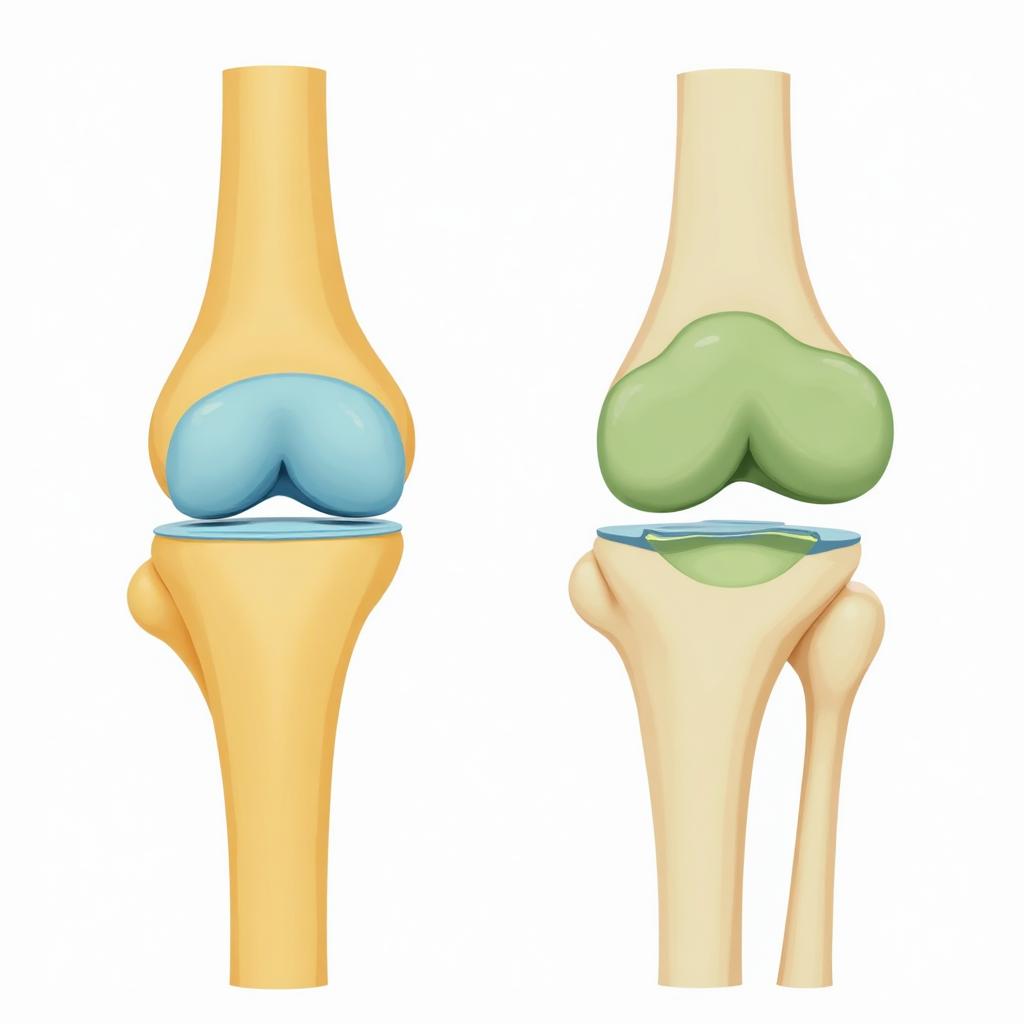
The smooth, rubbery cartilage that cushions the ends of your bones gradually loses water content and elasticity after 40. This means it becomes thinner and less effective at absorbing the daily impact of walking, climbing stairs, and bending. Cartilage wear over time is the single most significant factor in age-related knee discomfort, and it's completely natural.
Unlike muscles, cartilage has very limited blood supply, which means it repairs itself slowly. Years of normal use can gradually reduce the cushioning available, leading to sensations of stiffness, grinding, or achiness, especially during weight-bearing activities.
Synovial Fluid Changes
Your knee joint contains synovial fluid, a thick, viscous liquid that lubricates the joint and reduces friction between moving surfaces. After 40, the body produces less of this fluid, and its consistency may change. This is one reason why morning knee stiffness becomes more noticeable with age, the fluid thickens during rest and takes time to distribute evenly once you start moving.
Muscle Imbalances and Strength Loss
Starting around age 30, adults naturally lose muscle mass at a rate of 3-8% per decade, a process called sarcopenia. The quadriceps, hamstrings, and calf muscles all play crucial roles in supporting and stabilizing the knee joint. As these muscles weaken, more stress transfers directly to the joint itself, contributing to knee stiffness after 40 and increased vulnerability to discomfort.
The Gradual Nature of Joint Aging
Joint aging doesn't happen overnight. Most people don't notice significant changes until their late 30s or early 40s, when cumulative wear reaches a tipping point. The good news? Understanding these changes early means you can take proactive steps to support your knees well into your 60s, 70s, and beyond.
Knee Pain in Your 40s vs. Your 50s: Key Differences
While the underlying process is the same, gradual joint aging changes, the experience of knee discomfort often differs between your 40s and 50s. Understanding these patterns can help you set realistic expectations and choose appropriate support strategies.
In Your 40s: The Early Signals
- Activity-specific discomfort, knee discomfort tends to appear during or after specific activities (long walks, hiking, gym workouts) rather than constantly
- Brief morning stiffness, stiffness upon waking usually resolves within 10-15 minutes of moving around
- Quick recovery, after a day of heavy use, knees typically feel normal again within 24-48 hours
- Occasional clicking or popping, joints may make more noise than before, but usually without accompanying discomfort
- Weather sensitivity, some people start noticing knee stiffness changes with weather or temperature shifts
In Your 50s: More Consistent Patterns
- Daily baseline stiffness, a low level of stiffness may be present most days, with periodic flare-ups
- Longer morning adjustment, morning knee stiffness may take 20-30+ minutes to fully ease
- Stair and squatting difficulty, activities requiring deep knee bending become noticeably more challenging
- Post-sitting stiffness, getting up after 30+ minutes of sitting consistently triggers knee pain when getting up
- Reduced impact tolerance, high-impact activities like running may require modifications or alternatives
Important note: These patterns are general tendencies, not diagnoses. Individual experiences vary widely based on genetics, activity history, weight, and overall health. Many 50-year-olds have more comfortable knees than some 35-year-olds.
Why Knees Hurt After Sitting or Resting
One of the most frustrating aspects of knee pain over 40 is the paradox of rest: you'd expect sitting down to help your knees, but getting up after a period of rest often feels worse. This is sometimes called the "theater sign", because it's especially noticeable after sitting through a long movie or event.
The reason is straightforward: when your knee is bent and stationary, several things happen simultaneously. Blood flow to the joint decreases, synovial fluid settles and thickens, the joint capsule stiffens slightly, and muscles around the knee cool down and tighten. When you stand up, your knee hasn't had the benefit of continuous lubrication from movement.
✓ Tips for Reducing Post-Sitting Knee Stiffness
- •Set a timer to stand and move every 30-45 minutes during seated activities
- •Do gentle ankle circles and knee extensions while seated to keep fluid moving
- •When standing up, rise slowly and take a few moments before walking quickly
- •Keep your feet flat on the floor while sitting, avoid crossing legs for extended periods
- •Apply warmth to your knees before standing after long sitting periods
For a deeper exploration of this topic, see our guide on knee pain after sitting and why knees feel tight after resting.
Morning Stiffness Patterns After 40
Morning knee stiffness is perhaps the most universally recognized sign of aging knees. If you wake up feeling like your knees need a "warm-up period" before they work smoothly, you're in good company.
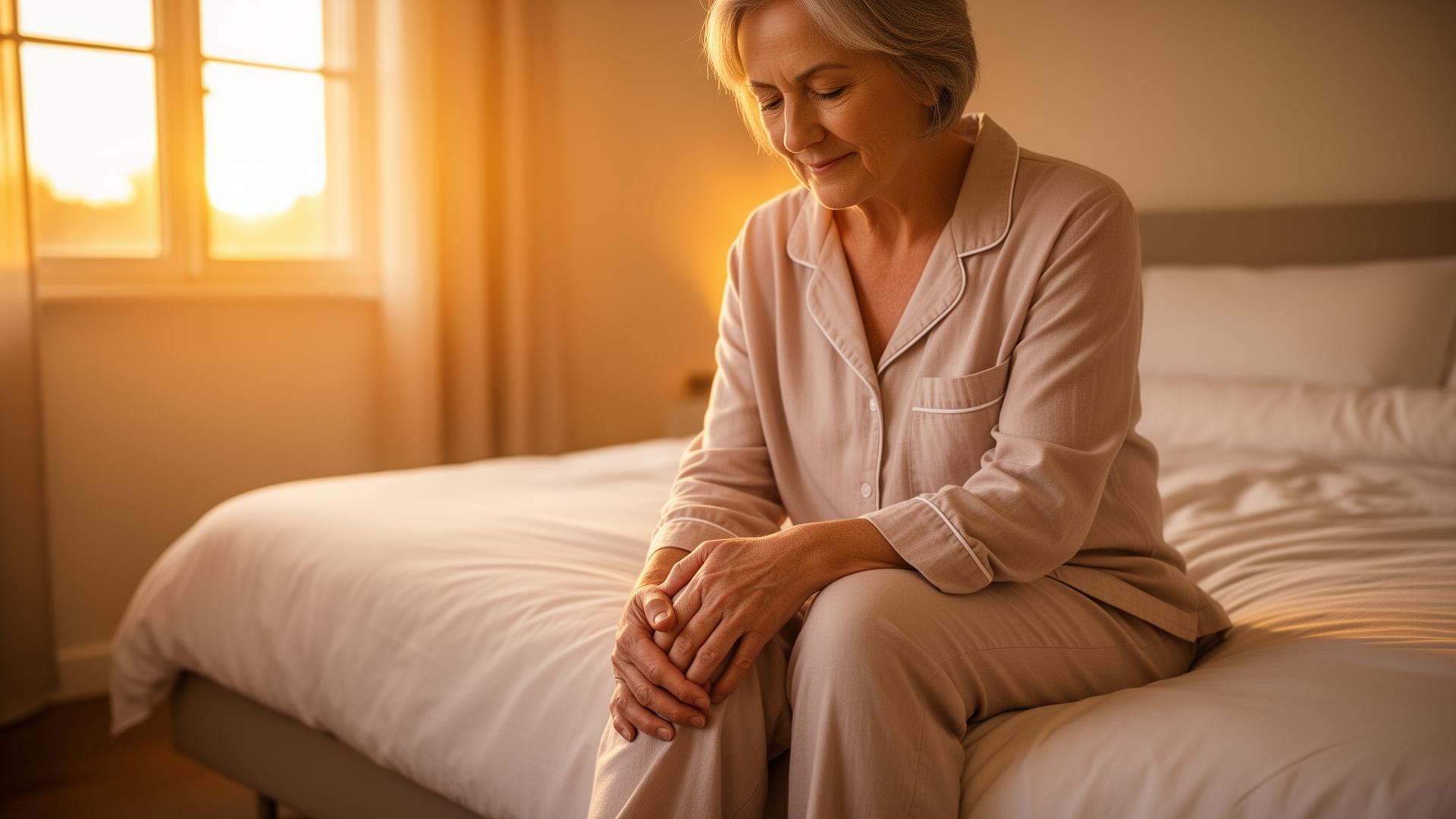
During sleep, your body enters a state of reduced circulation. The synovial fluid that keeps your joints lubricated becomes thicker and less evenly distributed. Additionally, inflammatory compounds can accumulate around the joint overnight. When you first move in the morning, the joint is essentially "cold starting."
The duration and intensity of morning stiffness can indicate how your knees are doing overall:
- 5-10 minutes, typical for mild age-related changes; generally manageable with a brief morning routine
- 15-30 minutes, suggests more significant joint changes; a dedicated morning warm-up routine is beneficial
- 30+ minutes, may indicate more advanced changes; worth discussing with a healthcare professional while maintaining daily comfort habits
Morning Routine Tip
Before getting out of bed, spend 2-3 minutes doing gentle knee bends, ankle circles, and leg extensions under the covers. This pre-loads the joint with movement and helps distribute synovial fluid before you put weight on your knees. Many people find this simple habit dramatically reduces their morning stiffness.
Age-Related Difficulty: Stairs, Squatting, and Long Walks
After 40, certain activities become notably more challenging for the knees. Understanding why each one is affected can help you approach them more thoughtfully.
Stairs
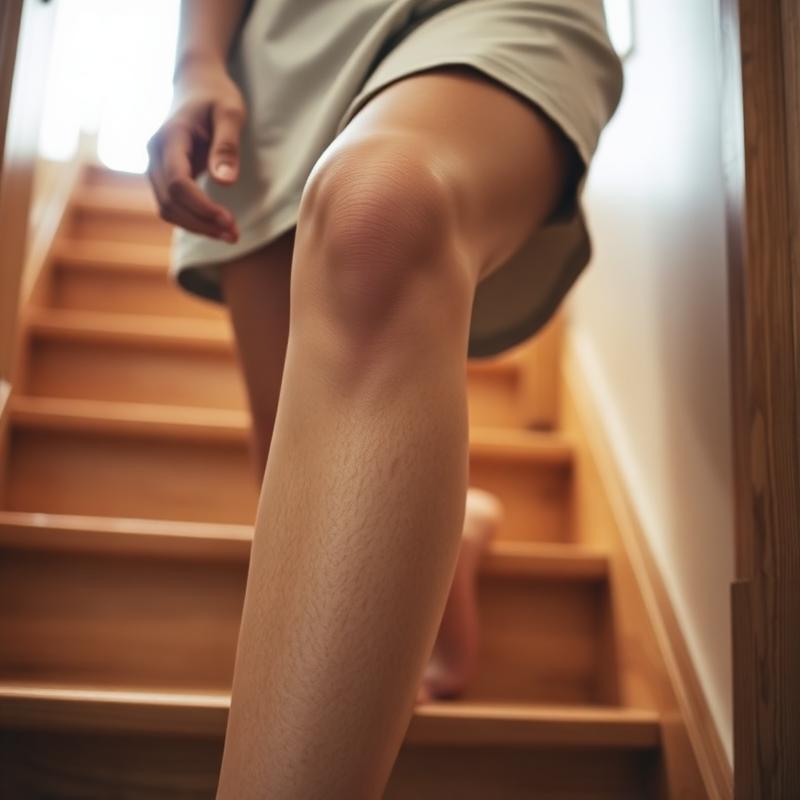
Going up and down stairs places 3-4 times your body weight through the knee joint, significantly more than flat walking. The combination of impact, deep bending, and weight-bearing makes stairs one of the first activities where knee pain over 50 becomes noticeable. Going downhill or downstairs is typically harder than going up because the quadriceps must eccentrically control your descent.
Squatting and Kneeling
Deep knee bending compresses the back of the kneecap (patella) against the thighbone with significant force. As cartilage behind the patella thins with age, this contact becomes less cushioned. Many people over 40 notice that squatting to pick something up or kneeling in the garden causes more discomfort than it used to.
Extended Walking
While walking is generally one of the best activities for knee health, extended walks (over 30-60 minutes) can be challenging for aging knees. The cumulative impact, especially on hard surfaces, can trigger achiness or swelling. Proper footwear and pacing strategies make a significant difference, see our guide on choosing knee-friendly shoes. Many people in this age group also notice that knee pain after exercise takes longer to resolve than it did in their younger years, and knee clicking during walking may become more noticeable as cartilage surfaces change.
Daily Habits That Worsen Age-Related Knee Pain
Some everyday habits accelerate age-related knee pain without people realizing it. Identifying and adjusting these patterns can make a meaningful difference in how your knees feel day to day.
- Prolonged sitting without breaks, sitting for hours without movement allows joint stiffness to set in and muscles to tighten; this is one of the biggest contributors to knee pain after sitting
- Wearing unsupportive footwear, flat shoes, worn-out sneakers, or high heels all change how force travels through your knees
- Skipping warm-ups, jumping into physical activity without warming up puts cold, stiff joints under sudden stress
- Ignoring weight management, every extra pound adds approximately 4 pounds of stress to the knee joint during walking
- Avoiding all exercise, complete inactivity weakens the muscles that protect the knee, creating a cycle of decline
- Dehydration, adequate water intake supports synovial fluid production and cartilage health
- Overtraining without recovery, pushing through discomfort repeatedly without allowing adequate rest can accelerate wear
Daily Habits and Lifestyle Changes That Help
The most effective approach to knee pain over 40 isn't a single dramatic intervention, it's a collection of small, sustainable habits practiced consistently. Here's what research and user experience suggest works best:
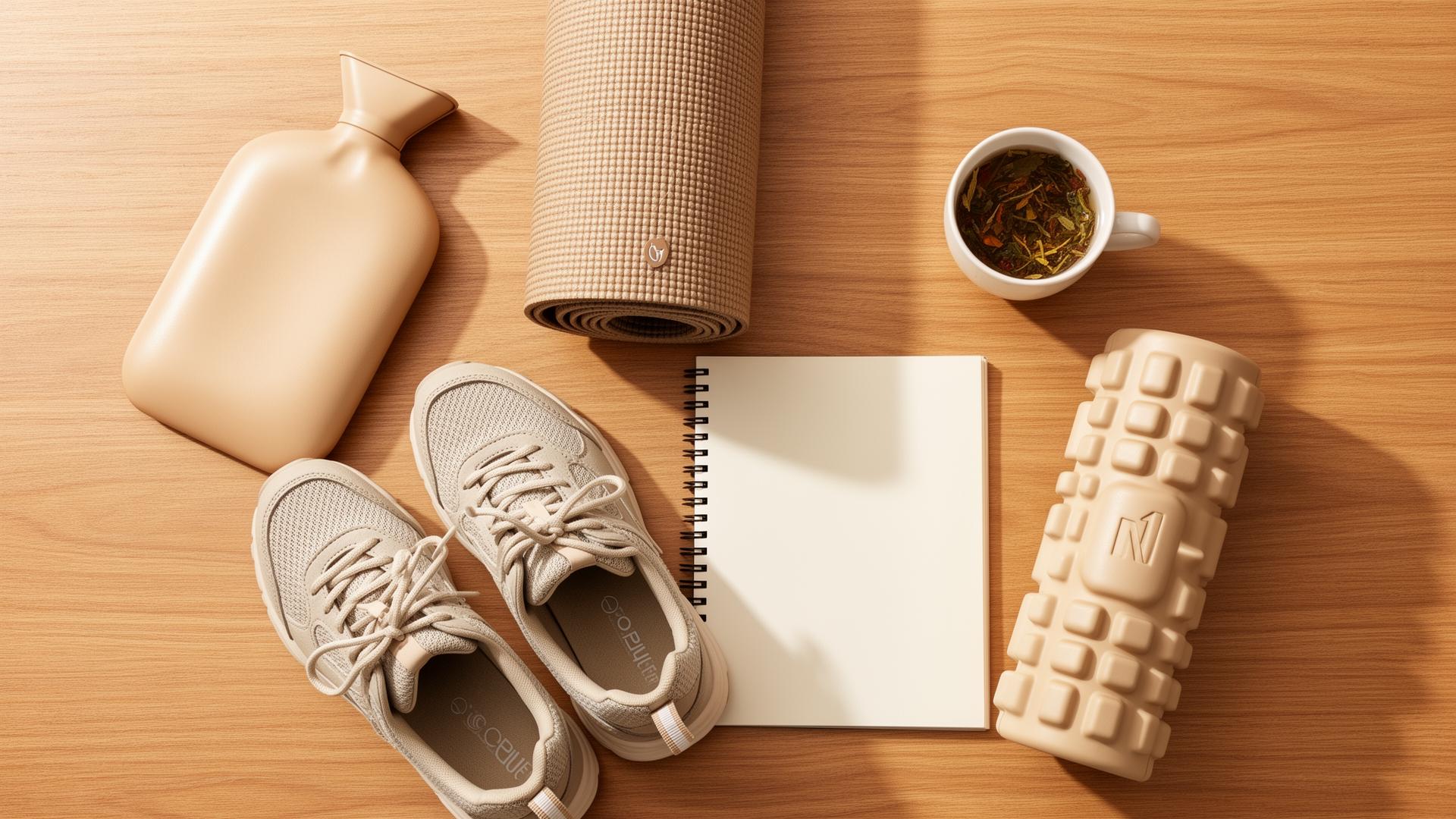
Movement and Exercise
- Walk daily, aim for 20-30 minutes of comfortable walking; this is the single most beneficial activity for aging knees
- Strengthen key muscles, focus on quadriceps, hamstrings, glutes, and calves with gentle exercises (see our knee exercises guide)
- Stretch regularly, gentle stretching of the hamstrings, quadriceps, and calves helps maintain flexibility around the joint
- Try low-impact alternatives, swimming, cycling, and water aerobics provide excellent knee-friendly cardiovascular exercise
Warmth and Comfort Support
- Apply warmth before activity, warming the knee joint before exercise or daily activities helps increase blood flow and flexibility
- Use warmth for evening wind-down, applying gentle warmth in the evening can help the joint relax before sleep (learn more about heat vs ice for knees)
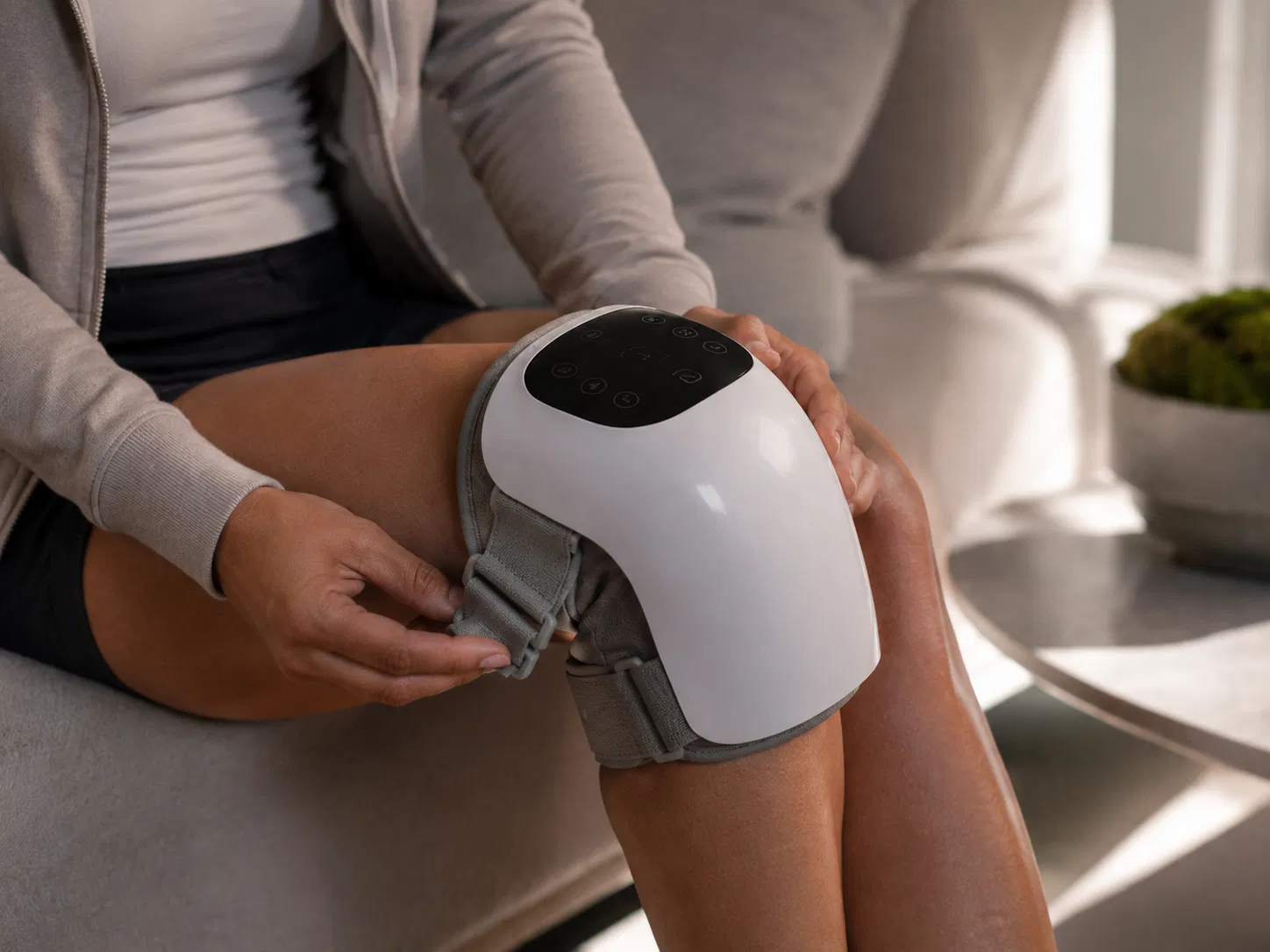
- Consider at-home therapy devices, devices combining warmth with other modalities can simplify daily comfort routines (explore our daily knee care routine guide)
Lifestyle Adjustments
- Maintain a healthy weight, even modest weight loss (5-10 pounds) can significantly reduce knee stress
- Choose supportive footwear, invest in shoes with good arch support and cushioning for daily wear
- Stay hydrated, aim for 6-8 glasses of water daily to support joint fluid production
- Optimize your workspace, ensure your chair height allows your feet flat on the floor with knees at roughly 90 degrees
- Use movement breaks, stand and move for 2-3 minutes every 30-45 minutes during seated work
✓ The 5-Minute Morning Knee Routine
- •While still in bed: 10 gentle knee bends (straighten and bend each leg slowly)
- •Seated on bed edge: 10 ankle circles in each direction per foot
- •Standing (holding bedpost): 5 gentle mini squats to half depth
- •Apply warmth to both knees for 3-5 minutes while having your morning beverage
- •Walk around your home for 2-3 minutes before heading out or starting your day
For more detailed routines, see our comprehensive knee strengthening guide and daily knee comfort routine.
When to Seek Professional Guidance
While most age-related knee discomfort can be managed with daily habits and lifestyle adjustments, certain signs warrant a conversation with a healthcare professional:
- Sudden, significant swelling that doesn't improve within 48 hours
- Knee that locks, catches, or gives way during normal activities
- Discomfort that consistently disrupts sleep despite comfort measures
- Morning stiffness lasting more than 45 minutes daily
- Noticeable change in knee shape or alignment
- Discomfort that doesn't respond to any of the comfort strategies described above
These aren't necessarily signs of something serious, but a professional evaluation can provide personalized guidance and rule out conditions that benefit from specific approaches. Learn more about knee arthritis patterns and common knee injuries.
Building Your Long-Term Knee Comfort Strategy
The most important thing to understand about knee pain after age 40 is that it's manageable. Joint aging is natural, but discomfort doesn't have to define your daily experience. The people who maintain the most comfortable knees into their 60s, 70s, and beyond tend to share a few common traits:
- They move consistently, not excessively, but regularly
- They maintain muscle strength around the knee joint
- They address stiffness proactively rather than waiting for it to become severe
- They build daily comfort habits and stick with them
- They choose footwear and activities that support rather than stress their joints
Your knees have carried you through decades of living. With the right daily habits, a little warmth, and consistent movement, they can continue to support you comfortably for decades more.
Frequently Asked Questions
Why does knee pain start after age 40?
After 40, cartilage naturally becomes thinner and less elastic, synovial fluid production decreases, and surrounding muscles may weaken from reduced activity. These gradual changes mean the knee joint absorbs daily stress less efficiently, leading to stiffness, achiness, or discomfort during everyday movements.
Is knee pain after 50 different from knee pain after 40?
Yes, there are differences. In your 40s, knee discomfort often appears during specific activities and responds well to rest. By your 50s, cartilage wear is typically more advanced, morning stiffness lasts longer, and discomfort may become more consistent throughout the day rather than activity-specific.
Why do my knees feel stiff every morning after 40?
Morning knee stiffness after 40 is common because synovial fluid thickens during sleep and doesn't circulate as freely. As you move and warm up, the fluid distributes more evenly, gradually easing stiffness. Gentle morning movement and warmth application can help shorten this adjustment period.
Why do my knees hurt after sitting for a long time?
Prolonged sitting reduces blood flow to the knee joint and allows synovial fluid to settle. When you stand up, the joint hasn't had adequate lubrication from movement, causing temporary stiffness or discomfort. Taking movement breaks every 30-45 minutes can help prevent this pattern.
Can knee pain actually improve after age 40?
Absolutely. While cartilage wear is natural, many people significantly improve their daily knee comfort through consistent movement, strengthening exercises, proper footwear, healthy weight management, and daily warmth routines. The key is building sustainable habits rather than expecting overnight changes.
Why do my knees hurt more with age?
As we age, cartilage loses water content and becomes less resilient, muscles naturally lose mass if not actively maintained, and the joint's natural shock absorption decreases. These changes are gradual and natural, but they mean the knee joint needs more active support through movement, strengthening, and daily comfort habits.
What daily habits help with age-related knee stiffness?
Effective daily habits include gentle morning stretching before getting out of bed, regular movement breaks throughout the day, low-impact exercises like walking or swimming, applying warmth to stiff knees, wearing supportive footwear, staying hydrated, and maintaining a healthy weight to reduce joint load.
Is there a difference in knee comfort needs for women vs men after 40?
Women may experience more knee discomfort after 40 due to wider hip alignment affecting knee tracking, hormonal changes during perimenopause and menopause that influence joint flexibility, and naturally smaller joint surfaces. Both benefit from the same comfort strategies, but women may need to start earlier.