Stairs are a useful clue, but they are not a diagnosis. The same task can provoke symptoms from different structures, and scans do not always explain pain by themselves. Start with the pattern: where the pain is, whether it began suddenly, whether the knee swells, and whether it still moves and supports your weight normally.
If climbing rather than descending is the main problem, see our guide to knee pain when climbing stairs. If symptoms appeared after a workout, our post-exercise knee pain guide helps separate load response from warning signs.
Knee Pain Walking Downstairs: Common Causes
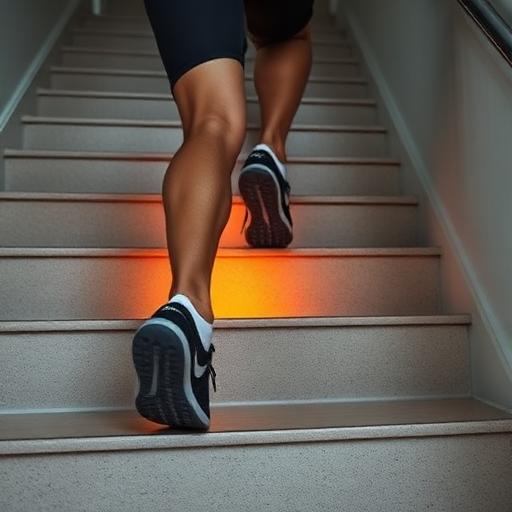
During descent, the supporting leg controls your downward movement. The quadriceps produce an eccentric contraction, meaning they generate force while lengthening. At the same time, the knee bends and the kneecap remains in contact with the groove at the end of the thigh bone.
This is a demanding combination when the front of the knee is already sensitive or when the movement exceeds your current capacity. Research confirms that stair negotiation changes patellofemoral contact mechanics, but published load estimates vary with the model, stair height, speed, knee angle, and population. A universal claim that every step equals a fixed multiple of body weight is therefore not a reliable way to explain an individual person's pain.
Knee Pain Going Down Stairs but Not Upstairs
Going downstairs asks the supporting leg to brake and lower the body while the knee bends. Going upstairs also loads the knee, but the movement goal and muscle action are different. A knee may therefore hurt during descent even when ascent feels manageable.
This pattern often points attention toward front-of-knee sensitivity or limited control during lowering, but it does not diagnose one condition. Location, swelling, recent injury, catching, instability, and the later response still matter. Tell a clinician that descent hurts but ascent does not, because that task-specific detail is more useful than saying only that stairs hurt.
Use Pain Location and Symptoms as Clues
| Pattern | What it may fit | What changes the decision |
|---|---|---|
| Dull ache around or behind the kneecap | A common patellofemoral pain pattern | Often also sensitive with squats, running, or prolonged sitting |
| Gradual stiffness and aching with daily activity | Can occur with osteoarthritis or another load-sensitive condition | Age, prior injury, morning stiffness, swelling, and examination findings matter |
| Pain along the inner or outer joint line | May involve the meniscus or another joint structure | A twist, swelling, catching, or true locking increases concern |
| Pain just below the kneecap | May fit patellar tendon irritation | Often linked with jumping, running, or a recent increase in training load |
| Sudden pain after a fall or twist | An acute injury needs a more cautious approach | Inability to bear weight, rapid swelling, deformity, or instability needs prompt care |
These patterns overlap. Use our knee pain location guide to describe the area more clearly, but do not use location alone to label a condition.
The Most Common Front-of-Knee Pattern
Patellofemoral pain describes pain around or behind the kneecap. The American Academy of Orthopaedic Surgeons lists activities that repeatedly bend the knee, including stairs, running, jumping, and squatting, among common triggers. Long periods of sitting with the knee bent may also be uncomfortable.
Patellofemoral pain is not simply proof that cartilage is "wearing away," and it is not caused by one universal alignment fault. Activity changes, current physical capacity, movement strategy, sleep, recovery, and sensitivity can all influence symptoms. A useful plan is therefore based on what you can currently tolerate and how the knee responds over time. The main guide to pain behind the kneecap and patellofemoral pain explains this pattern in more detail.
How to Go Down Stairs With Less Irritation
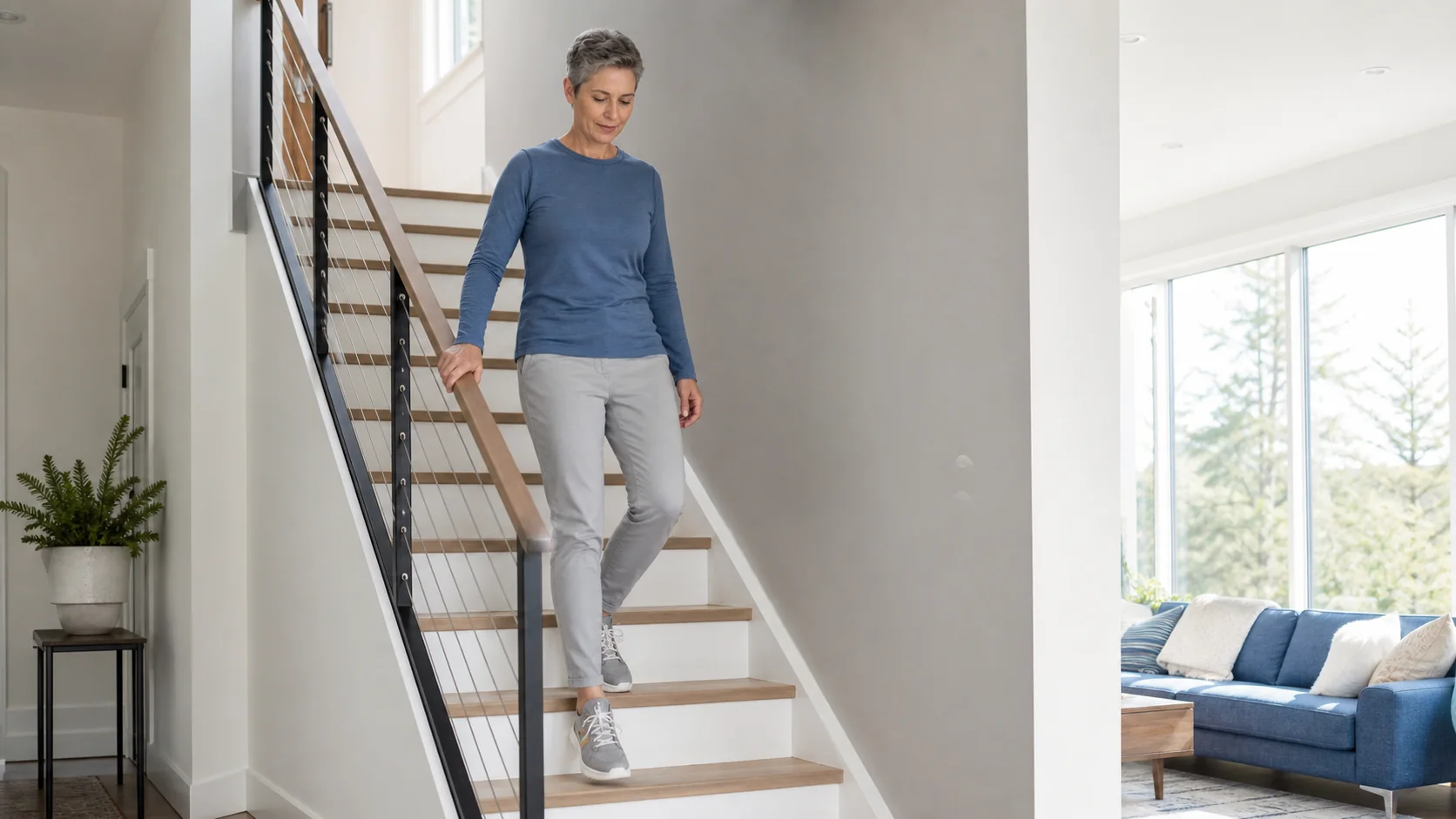
- Use the handrail. It improves confidence and allows the arms to share some of the task.
- Slow the descent. Place the whole foot securely and avoid rushing onto the next step.
- Keep the knee tracking in the same general direction as the foot. Do not force a rigid position, but avoid a sudden uncontrolled inward collapse.
- Use a step-to pattern during a flare. Put both feet on each step if alternating legs is too painful.
- Reduce extra load temporarily. Avoid carrying heavy or awkward items until the knee is more settled.
- Choose stable footwear and good lighting. Feeling secure can reduce rushed or guarded steps.
These are short-term ways to make the task manageable. They are not a requirement to move perfectly, and they do not replace rehabilitation when symptoms keep returning.
What to Notice During the Next 24 Hours
The response after the stairs can be as useful as the pain during them. Note whether the discomfort settles within a few minutes, lingers for the rest of the day, or is followed by swelling the next morning. A brief, mild symptom that returns to baseline is different from pain that causes a limp, progressively increases with every trip, or leaves the knee visibly swollen. This timeline gives a clinician more useful information than a pain score alone.
Also record the exact point in the task where symptoms appear. Pain when the supporting knee first bends may fit a different load pattern from pain as the trailing foot leaves the upper step. If only one knee hurts going down stairs, compare recent changes on that side: a new training routine, a long walk, a minor twist, different footwear, or a previous injury. One-sided symptoms do not automatically mean structural damage, but persistent asymmetry deserves more attention than a short-lived ache after an unusually active day.
Avoid repeatedly testing the painful step just to see whether it still hurts. Use the information from normal daily movement, reduce unnecessary repetitions for a short period, and watch the overall direction. Improvement means ordinary tasks are becoming easier and the knee returns to baseline more quickly. Worsening means pain arrives earlier, lasts longer, or is joined by swelling, locking, instability, or reduced movement.
A Practical Return-to-Stairs Progression
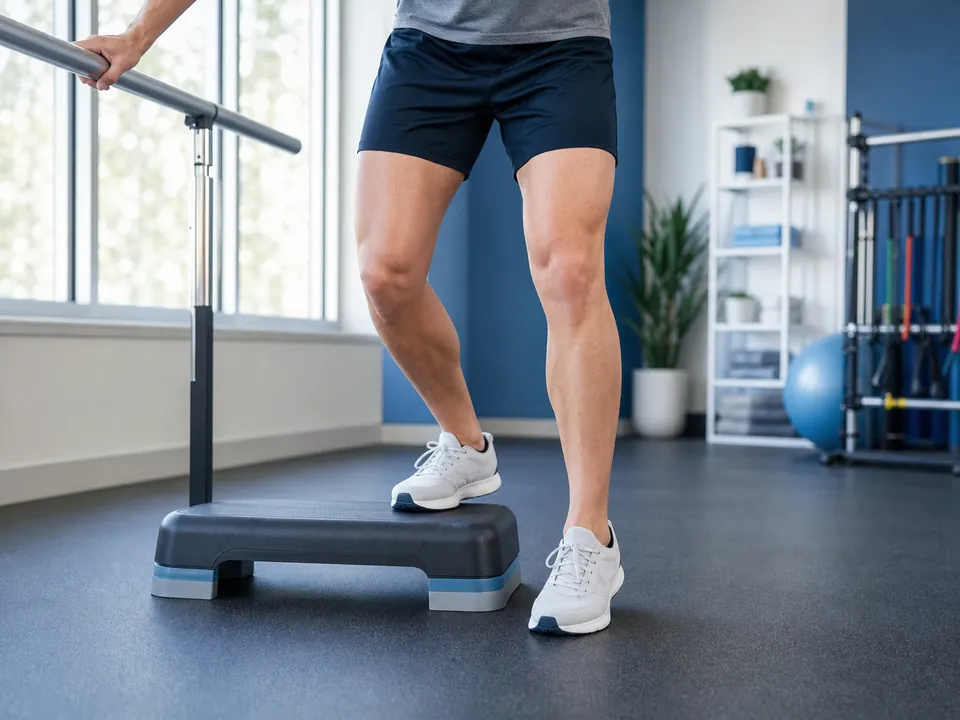
When symptoms are settling and there are no warning signs, rebuild the task in stages instead of jumping from avoidance to repeated flights. Begin with a low step or the bottom stair while holding a stable rail. Practice a small, slow lowering movement within a tolerable range, keeping the foot secure and the knee generally aligned with the toes. The goal is control, not depth or speed.
Next, add a few ordinary steps with a step-to pattern, placing both feet on each stair. If that is comfortable during the task and later the same day, return to alternating feet for a short flight. Increase only one variable at a time: the number of steps, the speed, or the load you carry. Carrying bags, rushing, and turning while descending all make the task more complex, so add those last.
There is no universal acceptable pain number for every person. A useful rule is that the exercise should remain controlled, should not produce sharp or escalating pain, and should not cause a meaningful flare that persists into the following day. If even a shallow supported step is difficult, or if the knee repeatedly gives way, a physiotherapist can assess strength, movement strategy, and an appropriate starting level. This graded approach supports capacity without pretending that one technique treats every cause of knee pain going down stairs.
What Helps Over the Longer Term
A 2024 best-practice guide for patellofemoral pain recommends education plus knee-targeted exercise, often combined with hip-targeted exercise, as the primary intervention. Additional options such as taping, movement retraining, or prefabricated foot orthoses may help selected people after an individual assessment.
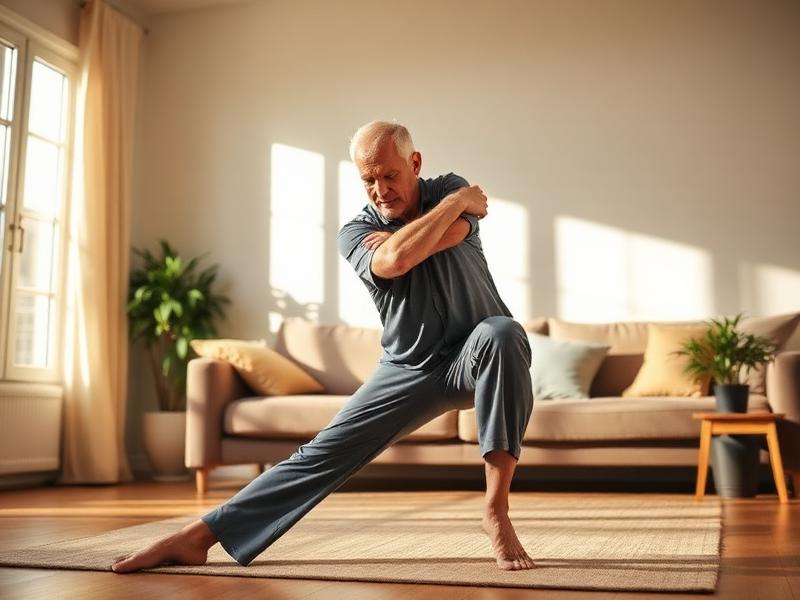
Common starting movements include a controlled sit-to-stand, a shallow supported squat, a low step exercise, and hip-strengthening work. The exact exercise matters less than choosing a level you can perform with good control and then progressing gradually. Sharp pain, increasing swelling, or a clear deterioration later that day or the next morning is a reason to reduce the range or resistance and seek guidance if the pattern continues.
Our knee exercise guide provides general examples. If ordinary daily tasks are already difficult, a physiotherapist can choose a safer starting level and check whether another diagnosis needs consideration.
Heat, Ice, and Short-Term Comfort
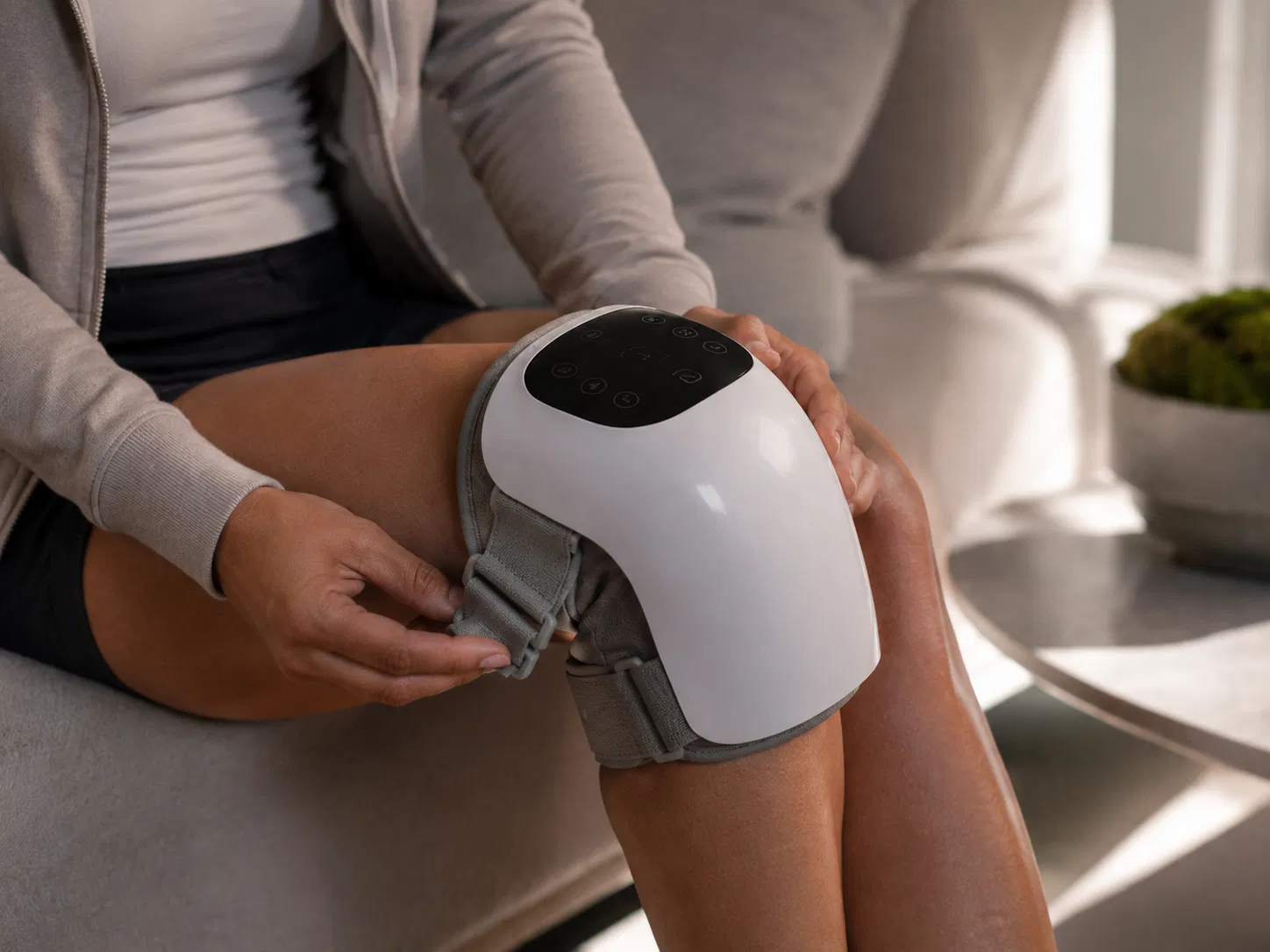
Temperature is optional symptom relief, not a correction for stair mechanics. A wrapped cold pack may be considered when the knee is newly swollen or unusually warm. Gentle heat may feel more comfortable when the main problem is stiffness or muscle tightness and the knee is not swollen. Use a barrier and follow the product's time and temperature instructions.
See the full heat versus ice decision guide before using either method. Do not use temporary numbness or warmth as permission to push through instability or sharp pain.
When to Get Medical Help
Arrange an assessment when pain persists, worsens, repeatedly limits stairs, or comes with swelling, catching, locking, giving way, or loss of movement. Seek urgent care after a major injury, when you cannot bear weight, when the knee is badly swollen or deformed, or when it is hot and red with fever.
Stair descent and downhill running both require controlled lowering, but running adds speed and repeated landing. The separate downhill running knee pain guide explains braking load without turning this everyday stair page into a running plan.
When the goal is to practice that lowering skill in a controlled gym setting, the lateral and forward step-down exercise guide shows how step height, support, range, tempo, and added load change the task. It is an exercise progression, not a diagnosis for pain on household stairs.
Frequently Asked Questions
Why does my knee hurt when going down stairs?
Stair descent combines knee bending with controlled lowering. The quadriceps work while lengthening to slow you down, and the kneecap joint carries load through that movement. Pain around the front of the knee is commonly associated with patellofemoral pain, but arthritis, tendon irritation, injury, and other conditions can produce similar symptoms.
Why can going down hurt more than going up?
Descending requires braking control as one leg accepts and lowers body weight. The task may expose pain when the kneecap is sensitive or when the hip and knee muscles cannot comfortably control the movement. It is not accurate to diagnose the cause from this pattern alone.
What exercises may help knee pain on stairs?
Evidence-based guidance for patellofemoral pain places education and progressive knee-targeted, often combined with hip-targeted, exercise at the center of care. The right starting level depends on symptoms and function. A physiotherapist can adjust range, resistance, and progression when ordinary exercises provoke pain.
Does clicking on stairs mean the knee is damaged?
Not necessarily. Clicking or crackling without pain, swelling, catching, or loss of function can occur in otherwise healthy knees. Clicking that is painful or paired with locking, giving way, or swelling deserves assessment.
Should I use heat or ice after stairs?
Cold may be considered when the knee is newly swollen or unusually warm. Gentle heat may feel better when the main problem is stiffness or muscle tightness and there is no swelling. Use a cloth barrier, keep sessions brief, and follow the product instructions.
When should stair-related knee pain be checked?
Arrange an assessment when pain persists, worsens, repeatedly limits normal activity, or comes with swelling, locking, instability, or reduced movement. Seek urgent care after major injury, with deformity, inability to bear weight, a very swollen knee, or a hot red knee with fever.
Why does one knee hurt going down stairs?
One-sided pain may reflect a recent load change, a previous injury, a local tendon or joint problem, or pain-related compensation. Persistent asymmetry, swelling, catching, instability, or a reduced range of motion should be assessed.
Why does my knee hurt going down stairs but not up?
Descent requires the supporting leg to brake and lower the body while the knee bends. That demand can provoke a sensitive kneecap joint or expose limited control even when stair ascent feels manageable. The pattern is useful information but is not a diagnosis by itself.