Why Going Upstairs Can Hurt When Walking Does Not
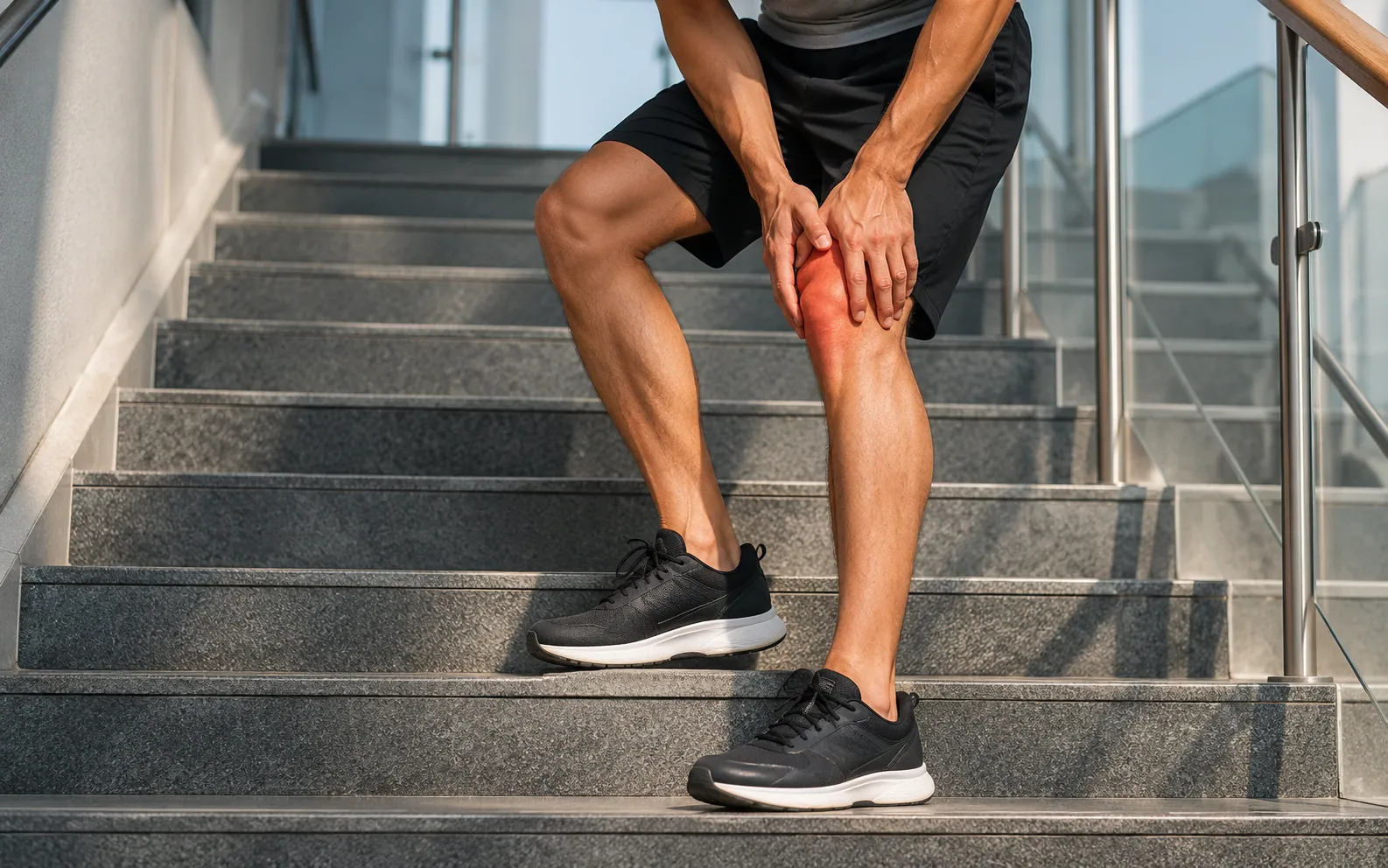
Level walking and stair ascent are not the same task. On a stair, the supporting knee usually bends more, the body must be raised against gravity, and the quadriceps produce a larger knee-extension effort. The hip and calf also contribute to lifting and stabilizing the body. This makes a stair step a useful capacity test for the whole leg rather than a simple test of the knee alone.
Biomechanical studies estimate greater patellofemoral joint force during stair ascent than during level walking, but the exact value varies with step height, speed, knee angle, body proportions, and the model used. A fixed number cannot diagnose why one person's knee hurts. More useful clues are the location of the symptom, the phase of the step that provokes it, and whether the knee returns to baseline afterward.
If the problem occurs mainly while lowering yourself, use the separate guide to knee pain going down stairs. Descent relies more heavily on controlled braking and deserves its own plan.
Use Pain Location as the First Clue
| Where it hurts | A pattern it may fit | Details that matter |
|---|---|---|
| Around or behind the kneecap | A common patellofemoral pain pattern | Often also sensitive with squats, running, prolonged sitting, or stair descent |
| Just below the kneecap | Patellar tendon irritation may be considered | Jumping, running, heavy leg training, and a recent increase in load may be relevant |
| Above the kneecap | Quadriceps tendon or nearby tissue sensitivity | Look for recent hill work, step-ups, squats, or repeated stair use |
| Inner or outer joint line | Meniscus or another joint structure may be involved | A twist, swelling, catching, or true locking increases concern |
| Back of the knee | Soft-tissue tension, swelling, or another posterior-knee problem | A lump, calf swelling, or inability to straighten the knee needs assessment |
Location narrows the possibilities but does not confirm a diagnosis. The knee pain location map can help you describe the area more precisely. For a symptom centered under or behind the patella, see the main guide to pain behind the kneecap and patellofemoral pain.
Notice When the Pain Appears During the Step
As you place the foot on the next stair
Pain before the leg begins to push may be influenced by the initial knee bend, confidence in loading the leg, or a sensitive range of motion. A higher step demands more knee and hip flexion. Compare ordinary stairs with a lower step rather than repeatedly forcing the painful range.
As you push your body upward
Pain during the lifting phase may be more sensitive to step height, speed, fatigue, and current strength capacity. It does not automatically mean the quadriceps are weak. Pain can temporarily reduce force production, and people often change their movement strategy to protect the knee.
As the trailing foot leaves the lower step
The calf and hip contribute to the final part of ascent. Limited ankle motion, calf discomfort, or reduced confidence on one side may shift more demand toward the leading knee. If ankle restriction seems relevant, the guide to tight calves and knee pain explains a simple mobility check.
Only after several flights
A symptom that appears with accumulated repetitions may fit a capacity or workload problem more than an immediate injury. Note how many steps you can manage before pain begins, whether it settles after a short break, and whether the threshold changes from week to week.
Common Patterns Behind Stair-Ascent Pain
Patellofemoral pain
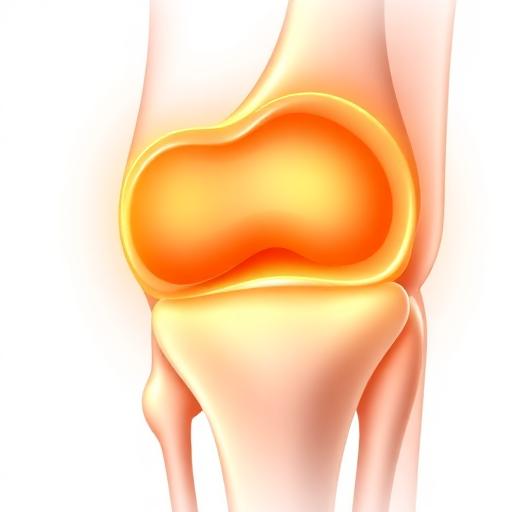
Patellofemoral pain is usually felt around or behind the kneecap and is commonly provoked by loaded knee bending. Stairs, squats, running, and prolonged sitting may all be relevant. It is a clinical pattern rather than proof of a single tracking fault or damaged cartilage.
A recent jump in activity
A new workout, more hill walking, repeated step-ups, moving house, travel, or an unusually stair-heavy week can exceed current capacity. The useful response is not necessarily complete rest. Reduce the provoking dose, maintain comfortable movement, and rebuild gradually as symptoms settle.
Tendon sensitivity
Pain above or below the kneecap may follow repeated jumping, heavy squats, running, or rapid changes in training. Tendon symptoms often respond to a structured loading plan, but a clinician should confirm the pattern when the pain is persistent or highly localized.
Osteoarthritis or another joint condition
Gradual aching, stiffness, reduced movement, and symptoms across several daily tasks can occur with osteoarthritis or another load-sensitive knee condition. Age alone does not determine the cause, and imaging findings do not always match symptom severity. A history and examination are more useful than guessing from stairs alone.
An acute injury
Pain that began after a fall, twist, impact, or sudden pop needs a more cautious approach. Rapid swelling, inability to bear weight, instability, or a blocked knee should not be managed as ordinary stair sensitivity.
How to Climb Stairs With Less Irritation
- Use the handrail. Let the arms share some of the task and improve balance.
- Lead with the less painful leg. During a short flare, the stronger or more comfortable side can do more of the lifting.
- Use a step-to pattern. Place both feet on each step instead of alternating if a normal pattern is too painful.
- Place the whole foot securely. A stable contact can reduce rushing and improve confidence.
- Slow the pace. Avoid jumping, skipping steps, or turning while the knee is sensitive.
- Reduce extra load temporarily. Carrying bags or a child increases task difficulty.
These are temporary ways to keep the task manageable. They are not a permanent rule and do not mean the painful leg should never be used. As symptoms settle, gradually return to alternating steps.
A Gradual Return-to-Stairs Progression
Start below the level that repeatedly triggers symptoms. A supported sit-to-stand, shallow squat, or low step-up may provide a manageable entry point. Use a stable rail or counter and choose a range that remains controlled.
- Establish a baseline. Record the number of comfortable repetitions and the response later that day.
- Practice a low step. Use a lower platform or the bottom stair with support.
- Add repetitions before height. Increase only one variable at a time.
- Return to a short flight. Use ordinary stairs at a steady pace without carrying extra load.
- Add speed, height, or load last. Do not increase all three together.
A tolerable session should not produce sharp or escalating pain, a limp, meaningful swelling, or a next-day flare that clearly exceeds baseline. If even a low supported step remains difficult, a physiotherapist can assess strength, movement strategy, and an appropriate starting level. General strengthening options are covered in the knee-strengthening guide.
Heat, Ice, and Short-Term Comfort
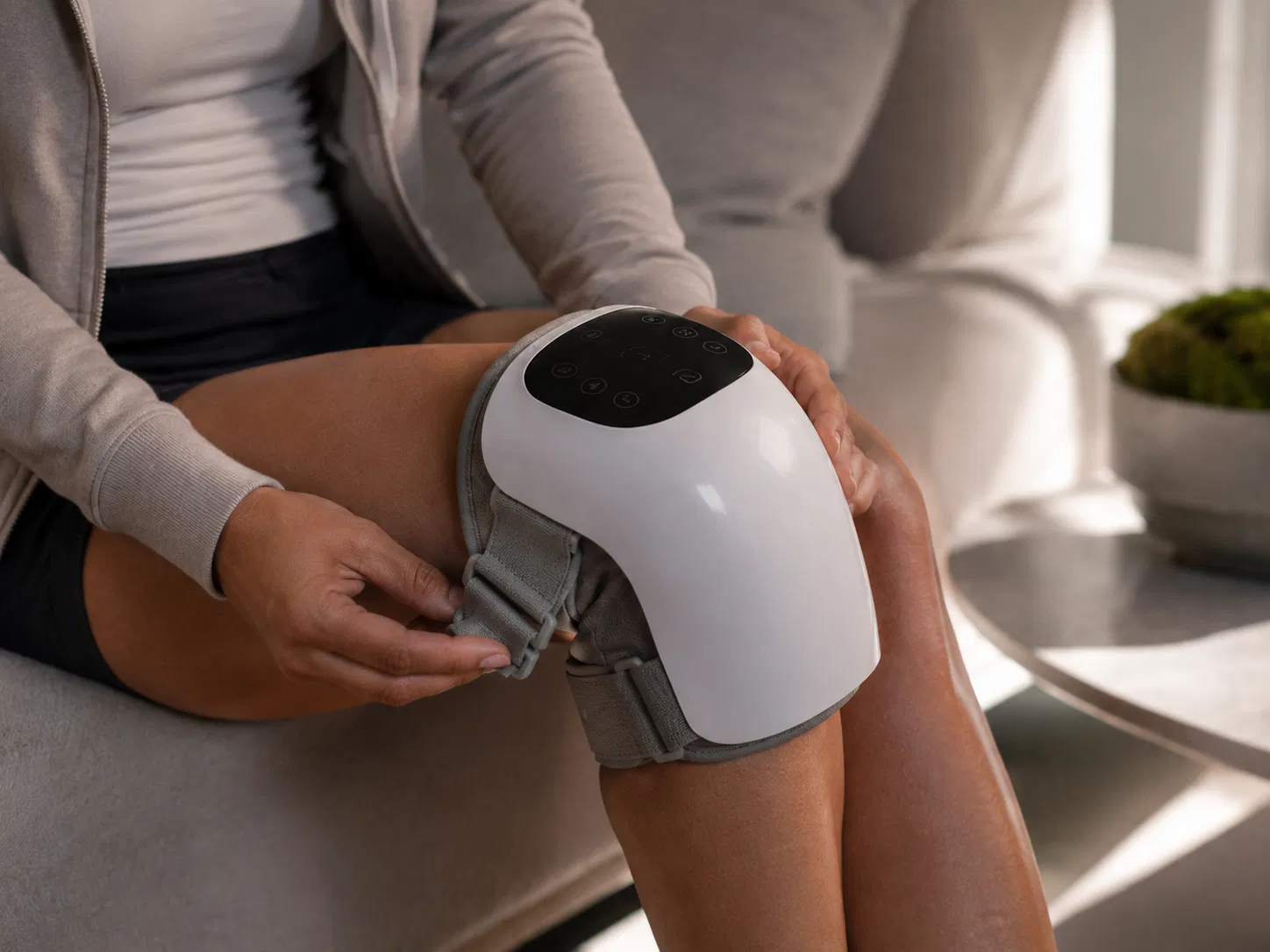
Temperature is optional symptom relief. A wrapped cold pack may be considered when the knee is newly swollen or unusually warm. Gentle heat may feel more comfortable when stiffness or muscle tightness is the main problem and there is no swelling. Use a barrier, follow product instructions, and do not use temporary relief as permission to force a painful stair pattern.
The heat versus ice guide explains when each option may be more appropriate.
When to Arrange an Assessment
Arrange a non-urgent assessment when:
- pain persists, worsens, or repeatedly limits stairs and ordinary walking
- the knee swells, catches, truly locks, or repeatedly gives way
- you cannot regain normal bending or straightening
- one-sided symptoms keep returning without a clear load change
Seek urgent care when:
- you cannot bear weight after an injury
- the knee is badly swollen, deformed, or changed shape
- the knee is hot and red and you also feel feverish or unwell
Gym users who tolerate daily stairs differently from cardio equipment can compare repeated stepping with adjustable hill walking in StairMaster versus incline treadmill for bad knees.
Frequently Asked Questions
Why does my knee hurt when climbing stairs but not walking?
Going upstairs requires a deeper knee bend and a stronger push from the quadriceps, hip, and calf than level walking. That combination can expose a load-sensitive kneecap joint, tendon, arthritic joint, or recently irritated tissue even when ordinary walking remains comfortable.
Why does my kneecap hurt when I go upstairs?
Pain around or behind the kneecap during stair ascent commonly fits a patellofemoral pain pattern. The knee bends under body weight while the quadriceps help lift you to the next step. The symptom does not prove one diagnosis, so swelling, injury history, pain location, and mechanical symptoms still matter.
Why does only one knee hurt going up stairs?
One-sided symptoms may reflect a recent training change, an old injury, a difference in strength or movement strategy, a tendon problem, or another local knee condition. Persistent asymmetry, swelling, instability, or loss of movement deserves assessment rather than repeated self-testing.
Can weak leg muscles contribute to stair pain?
Reduced strength or confidence can make stair ascent more demanding, but weakness is not the only explanation. Pain itself can also reduce how much force a person produces. A gradual strengthening plan is more useful than assuming the knee hurts because one muscle is weak.
Should I avoid stairs if my knee hurts?
Complete avoidance is not always necessary. During a flare, reduce unnecessary trips, use the handrail, take one step at a time, and lead with the less painful leg. Rebuild normal stair use gradually if symptoms return to baseline and there are no warning signs.
What exercises can help with knee pain going upstairs?
Common starting options include supported sit-to-stands, shallow squats, low step-ups, calf raises, and hip-strengthening work. The best starting range depends on what you can control without sharp or escalating pain and how the knee responds later that day and the next morning.
Why does the first stair hurt more than the rest?
The first step may combine a sudden transition from rest to a demanding loaded bend. It may also reveal stiffness, hesitation, or a pain-sensitive movement strategy. Note whether the discomfort quickly settles or becomes worse with every step, because those are different patterns.
When should stair-climbing knee pain be checked?
Arrange an assessment when pain is persistent, worsening, repeatedly limits daily activity, or occurs with swelling, locking, giving way, or reduced movement. Seek urgent care after a major injury, if you cannot bear weight, or if the knee is badly swollen, deformed, hot, and red with fever.