Why do my knees hurt? It is one of the most commonly searched health questions online, and for good reason. Knee discomfort affects people of all ages, from teenagers dealing with growth-related changes to adults managing the effects of daily wear on their joints. But for many people, the frustration is not just that their knees hurt: it is that the discomfort seems to get significantly worse at night.
If you have noticed that your knees ache, throb, or feel stiff specifically when you lie down or try to sleep, you are experiencing a pattern that millions share. Knee pain at night is remarkably common, and understanding why it happens is the first step toward improving your comfort and getting better rest.
This guide covers the full spectrum of nighttime knee discomfort: why it happens, what causes it, how sleeping position plays a role, what knee cracking and warmth sensations mean, and practical strategies you can use to support your comfort every night. Whether you are dealing with knee stiffness in the morning, night knee throbbing, or wondering why the back of your knees hurt after lying down, you will find clear, practical answers below.
Why Knee Pain Happens at Night
Understanding why knees hurt more at night requires looking at several factors that converge once you stop moving and settle into bed. During the day, regular movement keeps synovial fluid circulating through the knee joint, providing natural lubrication and cushioning. Walking, standing, shifting positions: all of these activities help maintain joint flexibility and distribute fluid evenly throughout the joint space.
Reduced Movement and Fluid Pooling
When you lie down for the night, this natural circulation slows dramatically. Fluid can begin to pool around the joint, creating a sensation of pressure, fullness, or stiffness that was not noticeable during the day. The longer you remain still, the more pronounced this effect becomes, which is why many people find their knees feel worst in the first few hours of lying down and again when they first wake up.
Heightened Pain Awareness at Night
During daytime hours, your brain processes an enormous amount of sensory input: visual, auditory, social, and physical stimuli all compete for attention. This natural distraction effect means that mild to moderate knee sensations often go unnoticed or feel manageable. At night, with external stimulation reduced to near zero, your brain has far fewer competing signals. Sensations that were background noise during the day can suddenly feel intense and unavoidable.
Research suggests that the body's pain perception pathways actually shift during the evening hours. Cortisol levels, which help manage the body's response to discomfort, naturally decrease as bedtime approaches. This hormonal shift can make the same level of knee discomfort feel noticeably stronger at night compared to what you experienced during the afternoon.
Inflammatory Processes During Rest
The body uses sleep as its primary recovery period. During rest, inflammatory responses that were modulated during activity can become more active as the body focuses resources on tissue maintenance and repair. For people whose knees are dealing with accumulated daily stress, this nighttime repair activity can produce warmth, throbbing, or aching sensations that are most noticeable when everything else is quiet.
"Nocturnal pain intensity in patients with knee osteoarthritis was significantly associated with reduced sleep quality, with cortisol diurnal rhythm alterations playing a mediating role in the perception of musculoskeletal discomfort during rest."
Most Common Causes of Night Knee Pain
While the mechanisms above explain why knee discomfort feels worse at night, the underlying causes of that discomfort vary widely. Here are the most common factors, ranked by how frequently people report them:
Most Common Causes of Night Knee Pain
Based on common patterns reported by people with nighttime knee discomfort
1. Joint Stiffness from Daily Wear
This is by far the most common cause of nighttime knee discomfort in adults over 35. Years of walking, climbing stairs, exercising, and simply bearing body weight create cumulative effects on the cartilage, tendons, and ligaments within the knee joint. By the end of the day, these structures are at their most fatigued, and lying down does not immediately relieve the tension they have accumulated. For a broader perspective on everyday knee discomfort patterns, our guide on common causes of knee pain explores these daily factors in detail.
2. Muscle Tension and Imbalance
The muscles surrounding the knee, including the quadriceps, hamstrings, calves, and IT band, play a critical role in joint stability. When these muscles are tight, weak, or imbalanced, they can pull on the knee structures unevenly, creating discomfort that becomes most apparent when you stop moving and the muscles settle into their shortened positions during sleep.
3. Activity-Related Strain
If you exercise, play sports, or have a physically demanding job, the effects of that activity often do not peak until hours later. Many people notice that their knees feel fine during a workout but begin to ache significantly in the evening or after going to bed. This delayed response is the body's natural reaction to accumulated physical stress.
4. Cartilage Changes
Over time, the cartilage that cushions the knee joint can thin or change in texture. These changes reduce the joint's shock-absorbing capacity, meaning that even normal daily activities create more direct contact between bony surfaces. This effect is particularly noticeable at night when the joint is no longer being actively cushioned by movement.
5. Meniscus and Soft Tissue Considerations
The meniscus, a C-shaped piece of cartilage that acts as a shock absorber between the shinbone and thighbone, is a common source of knee discomfort. Meniscus changes, whether from gradual wear or specific incidents, often produce symptoms that are most noticeable during position changes and at night when the knee is held in one position for extended periods.
6. Knee Tendinitis Patterns
Knee tendinitis involves the tendons around the knee becoming irritated from repetitive use. Common types include patellar tendinitis (affecting the tendon below the kneecap) and quadriceps tendinitis (above the kneecap). People with tendon-related discomfort often report that their knees feel particularly stiff and uncomfortable after periods of inactivity, making nighttime a common trigger for increased awareness. If you experience discomfort specifically in the front knee area, our front knee tightness guide provides more detail.

Why Do My Knees Hurt When I Sleep on My Side?
Side sleeping is the most popular sleeping position, but it is also one of the most problematic for knee comfort. Understanding the mechanics helps explain why so many side sleepers struggle with nighttime knee discomfort.
The Mechanics of Side Sleeping and Knee Pressure
When you sleep on your side, your legs naturally stack or overlap. This creates two distinct pressure points on your knees:
- Lower knee compression: the lower knee bears the weight of the upper leg, pressing the outer knee structures against the mattress surface
- Upper knee rotation: the upper knee tends to rotate inward and downward, twisting the inner knee structures and creating tension in the IT band and outer knee area
- Hip alignment effects: if the hips are not properly supported, the entire leg rotates, placing additional rotational stress on the knee joint
- Contact point friction: the bony surfaces of both knees pressing against each other can create localized discomfort at the inner knee
The Pillow Between Knees Solution
The single most effective adjustment for side sleepers is placing a firm pillow between the knees. This accomplishes several things simultaneously: it prevents the knees from pressing against each other, maintains proper hip width alignment, prevents the upper knee from rotating inward, and distributes weight more evenly across both legs. A pillow that is thick enough to keep the knees at roughly hip width apart provides the best results.
Why Do the Back of My Knees Hurt at Night?
Posterior knee discomfort (behind the knee) at night is a specific pattern that many people report. The area behind the knee is a complex junction where hamstring tendons, calf muscles, and several stabilizing structures converge. Our detailed guide on back-of-knee discomfort patterns explores this anatomy more thoroughly.
Why the Back of the Knee Is Vulnerable at Night
During sleep, the hamstrings naturally contract slightly, pulling on the structures behind the knee. If you sleep with your knees bent, this contraction is more pronounced and can create a persistent tightness or aching sensation. People who sit for long hours during the day often have chronically shortened hamstrings, which compounds this nighttime effect.
The popliteal area (the soft space directly behind the knee) also contains blood vessels that respond to changes in body position. When lying down, blood flow redistribution can create warmth, pulsing, or a sensation of fullness behind the knee that some people describe as throbbing.
Tips for Reducing Behind-the-Knee Discomfort at Night
- Gently stretch your hamstrings and calves before bed (hold each stretch 20 to 30 seconds)
- When sleeping on your back, place a small rolled towel or thin pillow directly under the knees to support a slight bend
- Avoid tucking your legs tightly when sleeping in the fetal position
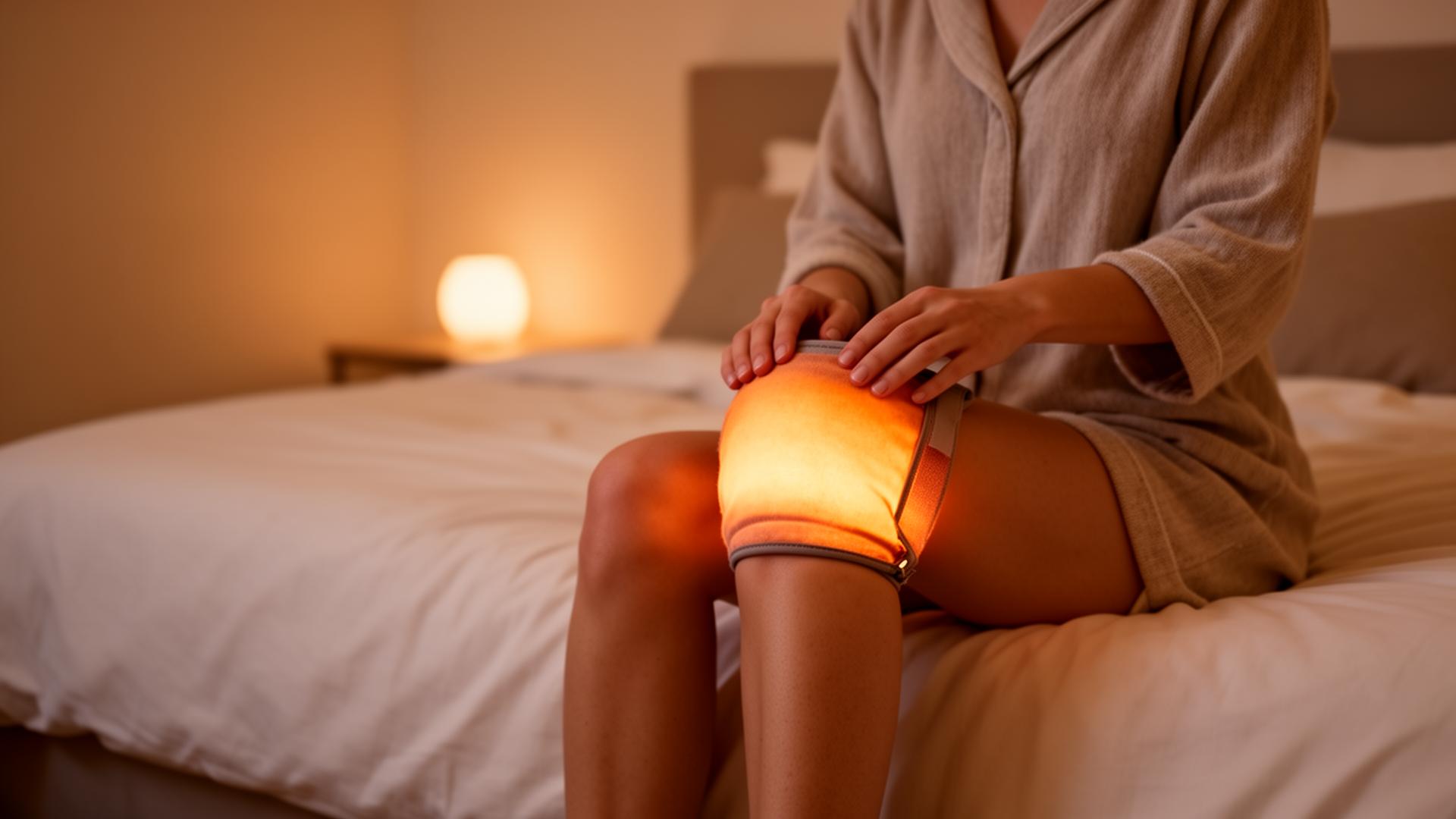
- Apply gentle warmth to the back of the knee for 15 to 20 minutes before lying down
"Prolonged static joint positioning during sleep significantly increases intra-articular pressure and reduces synovial fluid viscosity, contributing to post-sleep stiffness and pain perception in weight-bearing joints."

Looking for soothing nighttime knee comfort support?
FlexiKnee provides gentle warmth and vibration before bed, helping your knees feel more relaxed and comfortable through the night.
View Full Product DetailsWhy Knees Hurt When Squatting and Why It Worsens at Night
"Why do my knees hurt when I squat?" is one of the most frequently asked questions about knee comfort. Squatting places the knee joint under significant compressive force, and the effects of that compression often linger well into the evening.
The Squat-Night Pain Connection
When you squat, the knee joint experiences forces of 6 to 8 times your body weight. This compressive load is absorbed by the cartilage, meniscus, and surrounding soft tissues. For people with any degree of cartilage thinning or soft tissue sensitivity, these forces create micro-stresses that accumulate throughout the day. By nighttime, the cumulative effect of these stresses manifests as aching, stiffness, or a feeling of pressure within the joint.
Squatting Tips for People with Nighttime Knee Discomfort
- Limit deep squats if you notice a consistent connection between squatting and nighttime discomfort
- Focus on proper form: keep knees aligned with toes and avoid letting knees collapse inward
- Strengthen the muscles around the knee (quadriceps, hamstrings, glutes) to improve load distribution
- Consider partial squats or wall sits as lower-stress alternatives
- Apply warmth to your knees in the evening after days that involve heavy squatting
For a deeper look at how to build stronger, more resilient knees, our knee strengthening guide provides practical daily exercises and habits.
Knee Clicking, Cracking, or Popping at Night
"Why do my knees crack?" is another extremely common question, and many people notice these sounds are more frequent or more noticeable at night.
What Causes Knee Cracking (Crepitus)?
The sounds your knee makes, often described as clicking, cracking, popping, or grinding, are collectively known as crepitus. Several mechanisms can produce these sounds:
- Gas bubble release: the most common cause. Synovial fluid contains dissolved gases that can form bubbles. When these bubbles pop, they produce an audible crack. This is similar to the mechanism behind knuckle cracking and is generally considered harmless.
- Tendon or ligament shifting: tendons and ligaments can slip over bony prominences as the knee moves, creating a snapping or popping sound. This is more common after periods of immobility, such as sleeping.
- Surface changes in cartilage: rough or uneven cartilage surfaces can produce a grinding sensation (often described as "crunchy") when the knee bends or straightens. This is more common in people over 40 and tends to be more noticeable in quiet environments like the bedroom.
Why Do My Knees Crack When I Squat?
Squatting involves moving the knee through its full range of motion under load, which maximizes the opportunity for all three types of crepitus. Gas bubbles that accumulated during sleep are released as the joint moves, tendons shift across bony surfaces, and any cartilage surface irregularities produce friction. The combination of these factors explains why squatting after sleep often produces the most dramatic cracking sounds.
In most cases, knee cracking that is not accompanied by pain, swelling, or reduced range of motion is not a cause for concern. However, if cracking is consistently accompanied by discomfort or if the sounds have changed significantly in frequency or intensity, professional evaluation is worthwhile.
Knee Warmth, Burning, or Throbbing After Lying Down
A warm knee sensation or throbbing feeling after lying down is a specific nighttime pattern that many people find concerning. Understanding what causes these sensations can help alleviate worry and guide your comfort approach.
Why Your Knee May Feel Warm at Night
Warmth in the knee area at night can result from several factors:
- Increased blood flow during rest: when the body transitions to rest mode, blood flow patterns shift. The knee joint may receive increased circulation as the body prioritizes tissue maintenance and repair, creating a noticeable warmth.
- Inflammation from daily activity: if the knee structures were stressed during the day, the body's natural repair response can produce localized warmth. This is a normal part of the body's maintenance cycle.
- Position-related circulation changes: lying down changes the hydrostatic pressure in your legs. Blood that gravity kept flowing downward during standing is now distributed more evenly, which can increase warmth in the knee area.
- Blanket and mattress heat retention: the combination of blankets, mattress material, and body heat can create a warm microenvironment around the knee that amplifies any existing warmth sensation.
Managing Nighttime Warmth and Throbbing
For gentle nighttime warmth sensations that are not accompanied by visible redness or significant swelling, many people find the following strategies helpful:
- Keep the knee uncovered or use a light sheet instead of a heavy blanket
- Elevate the leg slightly to promote fluid drainage
- Apply a cool cloth briefly before bed if warmth is particularly noticeable
- Use breathable bedding materials that do not trap heat
To understand when warmth might be beneficial versus when cooling is more appropriate, our guide on heat or ice for different knee situations provides detailed guidance.

Knee Stiffness in the Morning and How It Connects to Night Pain
Morning knee stiffness and nighttime knee pain are closely related. In fact, they are often two sides of the same coin: the stiffness you feel in the morning is frequently the result of the same factors that caused your nighttime discomfort.
The Overnight Stiffness Cycle
During 6 to 8 hours of sleep, the knee joint remains relatively immobile. Synovial fluid, which normally circulates with movement, becomes more viscous and less evenly distributed. The muscles, tendons, and ligaments around the knee settle into shortened positions. By morning, these combined effects produce the characteristic stiffness that many people experience during their first steps of the day.
This stiffness typically improves within 15 to 30 minutes of gentle movement as fluid circulation resumes and tissues warm up. The duration and intensity of morning stiffness often correlate with how much nighttime discomfort you experienced: more nighttime pain usually means more pronounced morning stiffness.
Breaking the Night Pain to Morning Stiffness Cycle
- Perform gentle ankle pumps and knee bends before getting out of bed
- Apply warmth to your knees for 10 minutes before standing
- Start your morning with a slow, gentle walk rather than immediately tackling stairs
- Consider a brief evening stretching routine to reduce overnight tissue shortening
- Stay hydrated throughout the day to support synovial fluid quality
For a complete morning and evening routine designed around knee comfort, see our daily knee care routine guide.
Sleeping Position & Knee Comfort
Relative comfort and stress levels for common sleeping positions
Best Sleeping Positions for Knee Comfort
Your sleeping position has a direct and significant impact on how your knees feel during the night and the following morning. Here are the most common positions, ranked from most to least knee-friendly:
Back Sleeping (Most Recommended)
Sleeping on your back distributes your body weight most evenly and places the least amount of rotational stress on the knee joints. To optimize this position for knee comfort:
- Place a small pillow or rolled towel under both knees to support a slight 10 to 15 degree bend
- Avoid pillows that are too thick, as this can overextend the hamstrings
- Keep your legs roughly hip-width apart rather than pressed together
- Use a thin pillow under the calves if you experience posterior knee tightness
Side Sleeping (Common but Requires Adjustment)
Since most people naturally sleep on their side, optimizing this position is important:
- Place a firm, full-length pillow between your knees and extend it to between your ankles
- Keep both knees slightly bent at a comfortable angle (roughly 20 to 30 degrees)
- Use a supportive mattress that prevents your hips from sinking too deeply, which would misalign the knees
- Avoid pulling the upper knee up significantly higher than the lower knee (the "fetal position trap")
Stomach Sleeping (Least Recommended)
Stomach sleeping tends to hyperextend the knee joints and rotate the lower legs in ways that stress the knee structures:
- If you must sleep on your stomach, place a thin pillow under your ankles to prevent full knee extension
- Try transitioning to a "quarter stomach" position (partially on your side, partially on your stomach) to reduce knee strain
- Be aware that stomach sleeping also tends to increase lower back stress, which can contribute to referred discomfort in the knee area. Our guide on knee and lower body connections explains this relationship.
Night Knee Pain in Teenagers
"As a teenager, why do my knees hurt so much?" is a question that parents and young people frequently search for. Nighttime knee discomfort in teenagers has some unique contributing factors:
Growth-Related Changes
During growth spurts, bones grow faster than the surrounding muscles and tendons can adapt. This creates temporary tension imbalances around the knee joint that are most noticeable at night when the body enters its growth and repair cycle. The area below the kneecap is particularly common for this type of discomfort in active teenagers.
Sports and Activity Load
Teenagers who are active in sports may experience nighttime knee discomfort from the cumulative effects of training. Young athletes are especially susceptible because their bodies are still developing, and the same training loads that an adult might tolerate can place proportionally greater stress on growing joints. For a closer look at below-knee discomfort in younger people, see our below-knee discomfort guide for teens and adults.

"Thermal therapy applied prior to sleep onset demonstrated a 28% reduction in self-reported nocturnal joint stiffness and a significant improvement in sleep continuity among adults with chronic knee discomfort."

Support your knees with soothing warmth before bed
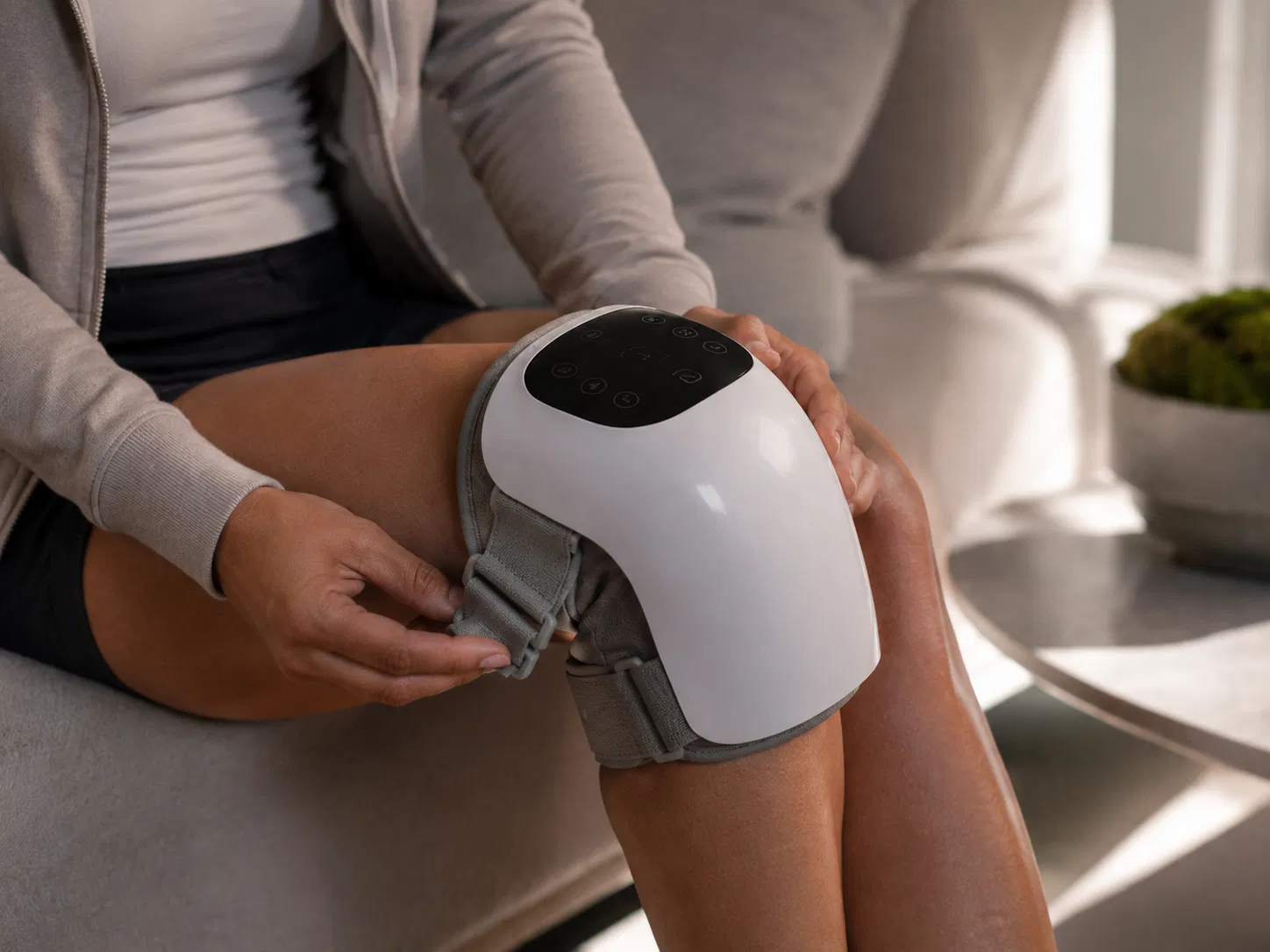
FlexiKnee combines gentle heat, red light, and vibration in one wireless knee wrap, designed to help your nighttime comfort routine feel effortless.
View Full Product DetailsWhen to See a Professional
While nighttime knee discomfort is very common and often connected to everyday habits and lifestyle factors, certain situations warrant professional evaluation. Seek guidance from a healthcare provider if you experience any of the following:
Signs That Warrant Professional Attention
- Nighttime knee pain that consistently prevents you from falling asleep or wakes you from sleep
- Significant swelling that appears or worsens overnight
- Knee warmth accompanied by visible redness that was not present earlier
- Inability to fully straighten or bend the knee in the morning
- Pain that is sharp, sudden, and localized to a specific point within the joint
- Nighttime discomfort that has been gradually worsening over several weeks
- Any knee discomfort accompanied by fever or feeling generally unwell
- A noticeable change in the shape or alignment of your knee
What to Tell Your Healthcare Provider
When discussing nighttime knee discomfort with a professional, helpful details include: which specific part of the knee is most affected, whether the discomfort started gradually or suddenly, which sleeping positions make it better or worse, what your daily activity level looks like, and whether the discomfort has changed over time. Keeping a brief journal of your nighttime patterns for a week before your appointment can provide valuable information.
Building a Nighttime Knee Comfort Routine
The most effective approach to managing nighttime knee discomfort is building a consistent evening routine that prepares your knees for rest. Here is a practical framework that many people find helpful:
60 to 90 Minutes Before Bed
- Apply gentle warmth to both knees for 15 to 20 minutes
- Perform gentle hamstring, calf, and quadriceps stretches (hold each for 20 to 30 seconds)
- Take a slow, short walk to promote fluid circulation through the joint
At Bedtime
- Position your knee pillow (under knees for back sleeping, between knees for side sleeping)
- Ensure your bedroom temperature is cool enough that blankets do not trap excessive heat around the knees
- Perform gentle ankle pumps and knee circles while lying down to distribute synovial fluid
Upon Waking
- Before standing, perform 10 to 15 gentle ankle pumps and 5 to 10 slow knee bends in bed
- Apply warmth for 5 to 10 minutes if morning stiffness is significant
- Stand slowly and take your first few steps gently, allowing time for the joints to warm up
For guidance on choosing the right warmth approach, our knee warmth daily comfort guide explains when and how warmth supports knee comfort most effectively.
The Bottom Line
Nighttime knee discomfort is one of the most common joint-related sleep concerns, and it affects people across all age groups. The core reasons it feels worse at night are well understood: reduced movement, fluid pooling, heightened awareness, and the body's natural shift toward repair and recovery processes. From meniscus-related changes to simple muscle tightness, from the effects of squatting during the day to the position of your knees while you sleep, each factor contributes to the overall experience.
The good news is that small, consistent adjustments to your sleeping position, evening routine, and daily habits can make a meaningful difference in how your knees feel at night. Placing a pillow between or under your knees, incorporating a brief warmth and stretching routine before bed, and paying attention to your daytime activity patterns are simple steps that compound into significant improvements over time.
Looking for more guidance? Explore our knee comfort guides to better understand your symptoms and discover simple, effective ways to support knee health. Start with our nighttime knee discomfort guide, learn about sharp knee pain comfort strategies, or explore our visual guide to knee pain locations to identify which area of your knee may need the most attention.
SEO Tags: knee pain at night, why do my knees hurt, knee throbbing, warm knee sensation, knee cracking, knee squatting pain, knee stiffness morning, side sleeping knee pain, night knee discomfort, meniscus knee pain, knee tendinitis, teenager knee pain, back of knee pain night, sleeping positions knees