Interactive Knee Pain Map: Choose Where It Hurts
Select the closest zone for a quick visual comparison. Start with the place you can point to most precisely. If the sensation covers the entire joint or changes position, choose Whole knee and use timing, swelling, and movement as your stronger clues.

Front: Around or behind the kneecap
Front-of-knee discomfort is often noticed with stairs, squats, running, or sitting with the knee bent. Record whether the sensation sits on, around, or behind the kneecap.
Read the full location guideKnee Pain Location Chart: Front, Sides, and Back
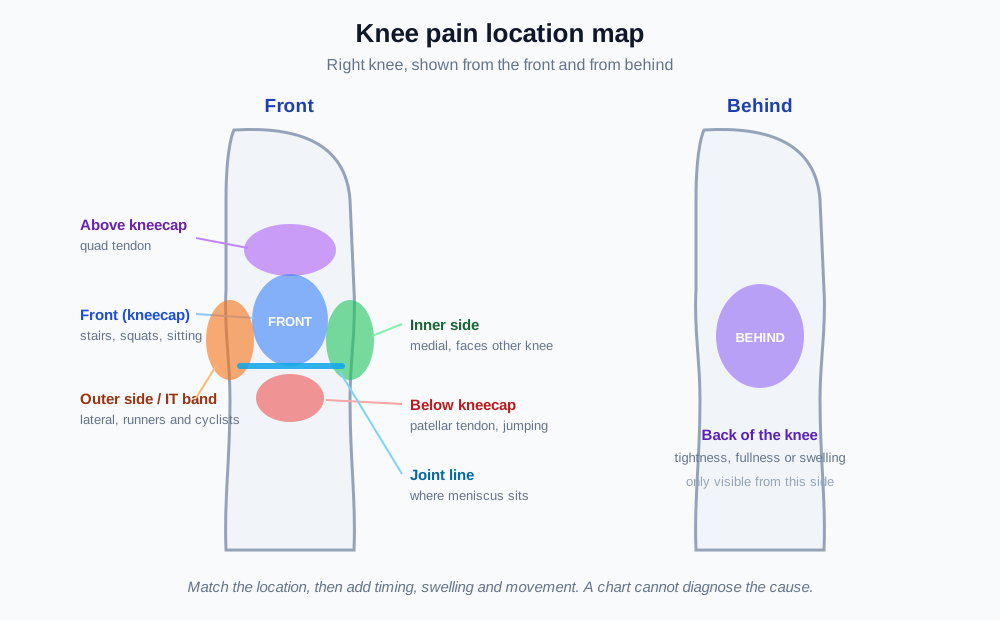
A useful knee pain diagram separates the knee into zones without pretending that each color equals one condition. Several tissues overlap in a small space. That is why two people pointing to the same spot can have different histories. That is why a clinician asks more than “where does it hurt?”
| Location | How to mark it | Useful context to record | Detailed section |
|---|---|---|---|
| Front / kneecap | On, around, or behind the patella | Stairs, squats, running, long sitting | Front knee |
| Inner / medial | Side facing the other knee | Twisting, tenderness, swelling, joint line | Inner knee |
| Outer / lateral | Outside edge or line extending up the thigh | Running, cycling, terrain, repetitive bending | Outer knee |
| Back / posterior | Central hollow or either back corner | Fullness, swelling, bending, calf symptoms | Back of knee |
| Above / below kneecap | Tendon area immediately above or below | Training changes, jumping, stairs, age | Tendon areas |
| Whole knee | Diffuse, shifting, or hard to pinpoint | Warmth, stiffness, swelling, illness, injury | Whole knee |
What a Knee Pain Chart Can and Cannot Tell You
Location is one part of a knee assessment. Age, how the symptoms began, duration, recent changes in activity, swelling, trauma, mechanical symptoms, and the ability to bear weight all change what a location may mean. Use the chart to create a clearer description, then add these four questions:
- Onset: Was it sudden after an event or gradual over days or weeks?
- Trigger: Which movement, position, or activity reproduces it?
- Function: Can you walk, bend, straighten, and use stairs normally?
- Associated signs: Is there swelling, warmth, redness, locking, catching, or giving way?
For a narrow joint-line pattern, compare the medial and lateral meniscus location chart. When discomfort seems to travel from the groin, hip, thigh, or lower back toward the knee, use the hip-to-knee referred pain chart. Both add movement clues that this general map deliberately keeps broad.
Front Knee Pain Location: Around or Behind the Kneecap
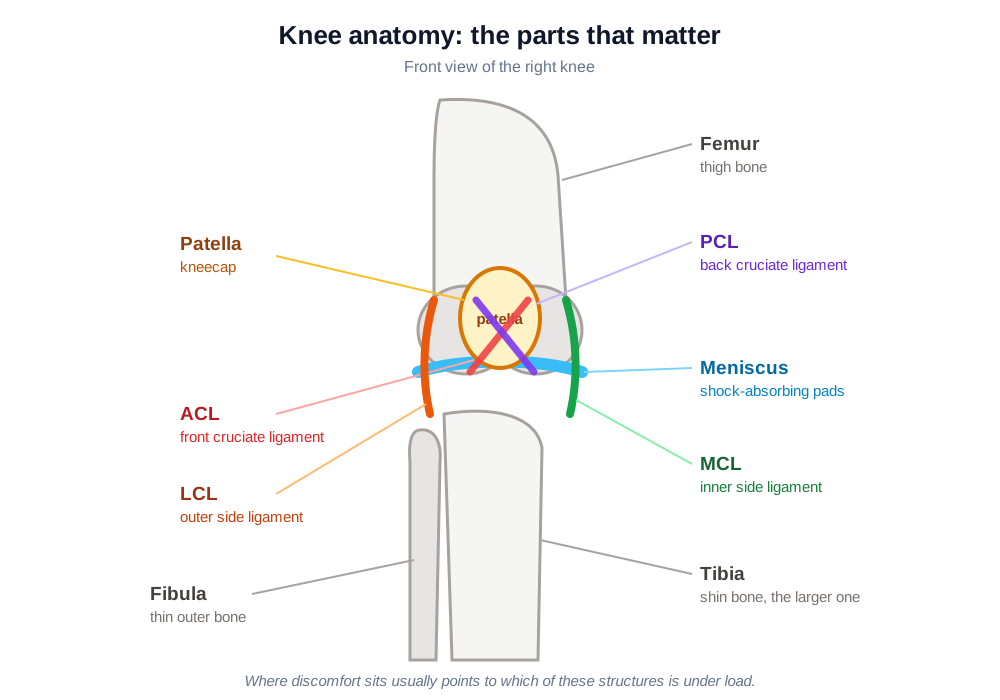
Front-of-knee pain is often described around or behind the patella. It may become more noticeable with stairs, squatting, running, kneeling, or sitting with the knee bent for a long time. Those patterns can occur with patellofemoral pain, but the same location does not prove one diagnosis.
Describe the front zone more precisely
- On the surface: tenderness directly over the kneecap
- Around the rim: sensation along one or both patellar edges
- Behind the kneecap: a deeper ache during loaded bending
- With swelling: puffiness around or above the kneecap
If the discomfort feels distinctly behind the patella, compare the pattern with our pain behind the kneecap guide.
Inner Knee Pain Location Chart: Medial Side

The inner knee is the side facing your other leg. Rather than labeling every medial sensation as one condition, record whether it sits exactly on the joint line, above it, or a few centimeters below it. A twisting event, tenderness, swelling, or a sense of instability changes the clinical context.
Clues worth recording
- Did the discomfort follow a twist, pivot, fall, or change of direction?
- Is the most tender point at the joint crease or below it?
- Does the knee catch, lock, buckle, or feel unstable?
- Is swelling immediate, delayed, or absent?
Compare the two sides in our inner vs. outer knee pain guide.
Outer Knee Pain Location: Lateral Side and IT Band

Outer-knee pain may be sharply localized near the lateral joint line or feel connected to a longer path up the outside of the thigh. Repetitive running, cycling, hills, cambered roads, and a rapid change in training load are useful details, but location alone cannot distinguish the structures involved. If the main feature is a stab, jolt, or shooting sensation, compare the timing and warning signs in our sharp knee pain guide.

For the running-related outer-thigh pattern, use the focused IT band pain location diagram.
Back of Knee Pain Location: Tightness, Fullness, or Pain

The area behind the knee contains tendons, muscles, blood vessels, nerves, and the back of the joint capsule. Describe whether you feel a central fullness, one-sided pull, visible swelling, or pain that extends into the calf or hamstring. New or marked swelling is more important than matching a label on a diagram.
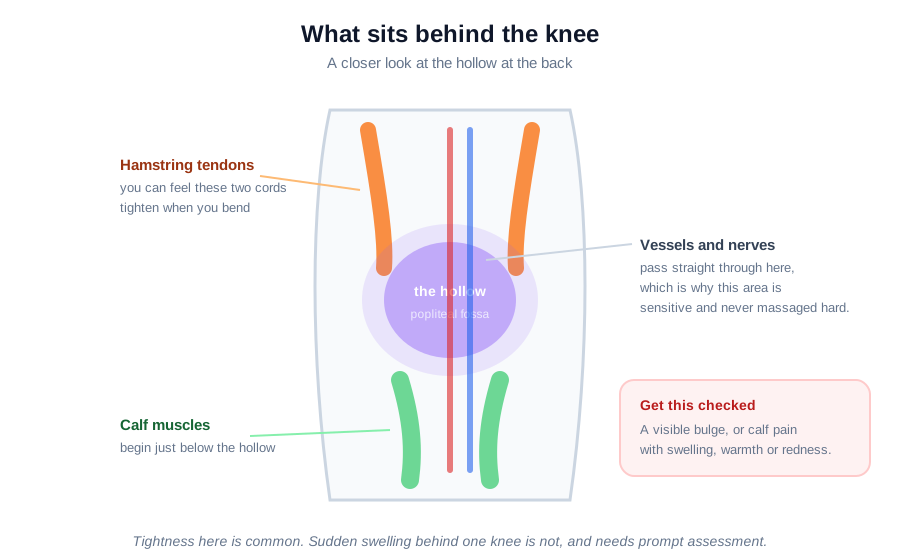
See the back-of-knee pain guide for a deeper comparison of common patterns and warning signs.
Pain Above the Kneecap: Quadriceps Tendon Area

Pain immediately above the kneecap may be described in the quadriceps tendon region. Note whether it followed a sudden jump in running, jumping, stairs, or loaded squats, and whether the knee can straighten normally. A sudden injury with weakness or loss of normal extension needs assessment.
Pain Below the Kneecap: Patellar Tendon and Shin-Bump Area

Below-kneecap pain can sit in the patellar tendon or over the bony attachment on the upper shin. Age matters here: rapidly growing teenagers and active adults can report similar locations for different reasons. Record jumping, sprinting, kneeling, growth, and recent training changes.
Our below-knee guide for teens and adults compares those age-dependent patterns.
Knee Joint-Line Pain: Inner or Outer Crease

The joint line is the narrow crease between the femur and tibia on either side. Pain there may become more noticeable with twisting or deep bending. Catching, locking, swelling, or loss of motion should be described clearly; none of those findings should be self-diagnosed from a chart.
Whole-Knee or Shifting Pain: When One Spot Is Not Enough
Some symptoms are diffuse, move between zones, or feel like a general ache, stiffness, warmth, or pressure. In that case, a single location has less value. Track whether symptoms are in one or both knees, how long morning stiffness lasts, whether the joint is visibly swollen, and whether there was a recent illness, injury, or activity increase.
How to Identify Knee Pain by Location
- Point with one finger. Mark the most precise point before describing the wider area with your hand.
- Name the zone. Use front, inner, outer, back, above or below the kneecap, joint line, or whole knee.
- Add depth. Does it feel superficial, deep behind the kneecap, or inside the joint?
- Add time and trigger. Record onset, duration, activity, rest, stairs, sitting, twisting, or impact.
- Add visible and mechanical signs. Note swelling, warmth, redness, bruising, locking, catching, or giving way.
- Use the map to communicate. Bring the description to a qualified professional if symptoms are severe, persistent, worsening, or limiting normal activity.
Sensory symptoms need a different map from pain alone. Use the knee numbness guide for patches around, above, or below the knee. Outer-knee numbness that continues toward the foot is covered in the peroneal nerve compression guide, while inner-knee burning or scar sensitivity is covered in the saphenous nerve guide. A hard focal bump below the kneecap may fit adult Osgood-Schlatter symptoms. Deep pain with repeated swelling or locking after injury may require evaluation for an osteochondral lesion.
When to Get Medical Help
If the pain began suddenly without an obvious explanation, our sudden knee pain guide can help you organize the history and warning signs before seeking care.
Frequently Asked Questions
Can a knee pain location chart diagnose the cause?
No. A chart can help you name and describe the area, but nearby tissues can create similar sensations and pain can be referred or spread. A clinician combines location with onset, injury history, swelling, movement limits, instability, locking, age, and examination findings.
What is the most common knee pain location?
The front of the knee and the area around or behind the kneecap are common complaint areas. However, frequency does not identify your cause. The activity that brings symptoms on and any swelling or mechanical symptoms matter too.
What does inner knee pain at the joint line mean?
It describes a location, not a diagnosis. The medial joint line contains and borders several structures. Note whether the pain followed a twist, whether the area is swollen or tender, and whether the knee catches, locks, or gives way.
Why does the back of my knee feel tight or swollen?
Several joint, muscle, tendon, and fluid-related patterns can create tightness or fullness behind the knee. Sudden or marked swelling, redness, warmth, calf pain, breathlessness, or difficulty bearing weight needs prompt medical guidance.
Why can knee pain move from one location to another?
Pain can feel diffuse, spread from nearby tissues, or change as you alter your movement to protect one area. A shifting location is a reason to track the whole pattern: timing, activity, swelling, and function. Do not match one spot to one condition.
How do I identify knee pain by location accurately?
Point with one finger to the most specific spot, then mark the wider area with your hand. Record whether it is front, inner, outer, back, above or below the kneecap, or at the joint line. Add what happened before it started and which movement reproduces it.
When should knee pain be assessed urgently?
Seek urgent guidance after a major injury if the knee looks deformed, cannot bear weight, swells suddenly, or feels unstable. Fever with a red, hot, swollen knee, or concerning calf or breathing symptoms also needs urgent assessment.