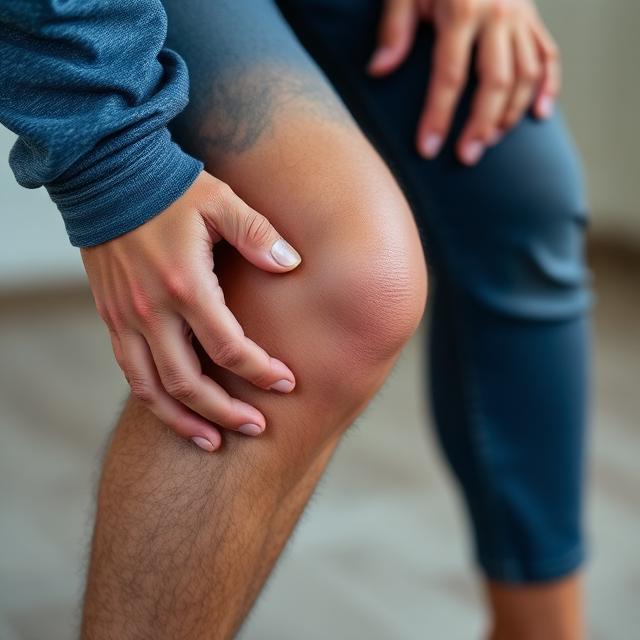
Why Does the Location of Knee Discomfort Matter?
The knee joint connects the thigh bone to the shin bone through an intricate network of muscles, tendons, ligaments, and cartilage. Because so many structures converge in this area, the knee pain location you experience often reflects which structures are under the most daily demand. Thinking of your knee as a map with distinct zones can help you understand your patterns more clearly.
- Front-of-knee sensations tend to relate to bending and straightening activities
- Side discomfort often connects to lateral stability demands
- Back-of-knee tightness frequently links to hamstring and calf tension
- Above or below the kneecap often involves the tendons connecting your quadriceps to your shin
By paying attention to where your knee feels most noticeable throughout the day, you can begin to identify which habits or postures may be contributing, and build more effective comfort routines. A simple knee pain diagram approach can make this process much easier.
Different knee pain locations often point to different types of stress, movement patterns, or joint sensitivity. Understanding your specific zone is the first step toward building a targeted comfort routine.
Knee Pain Location Chart Explained
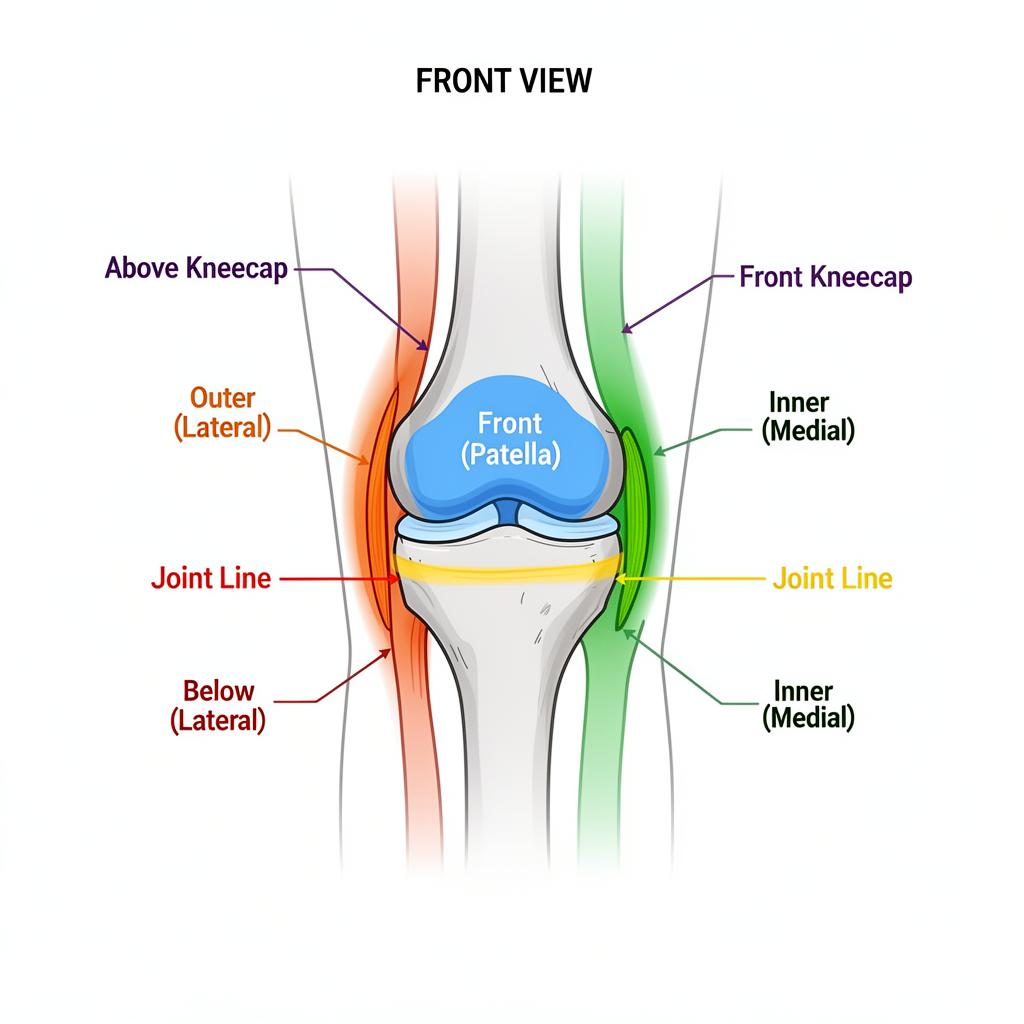
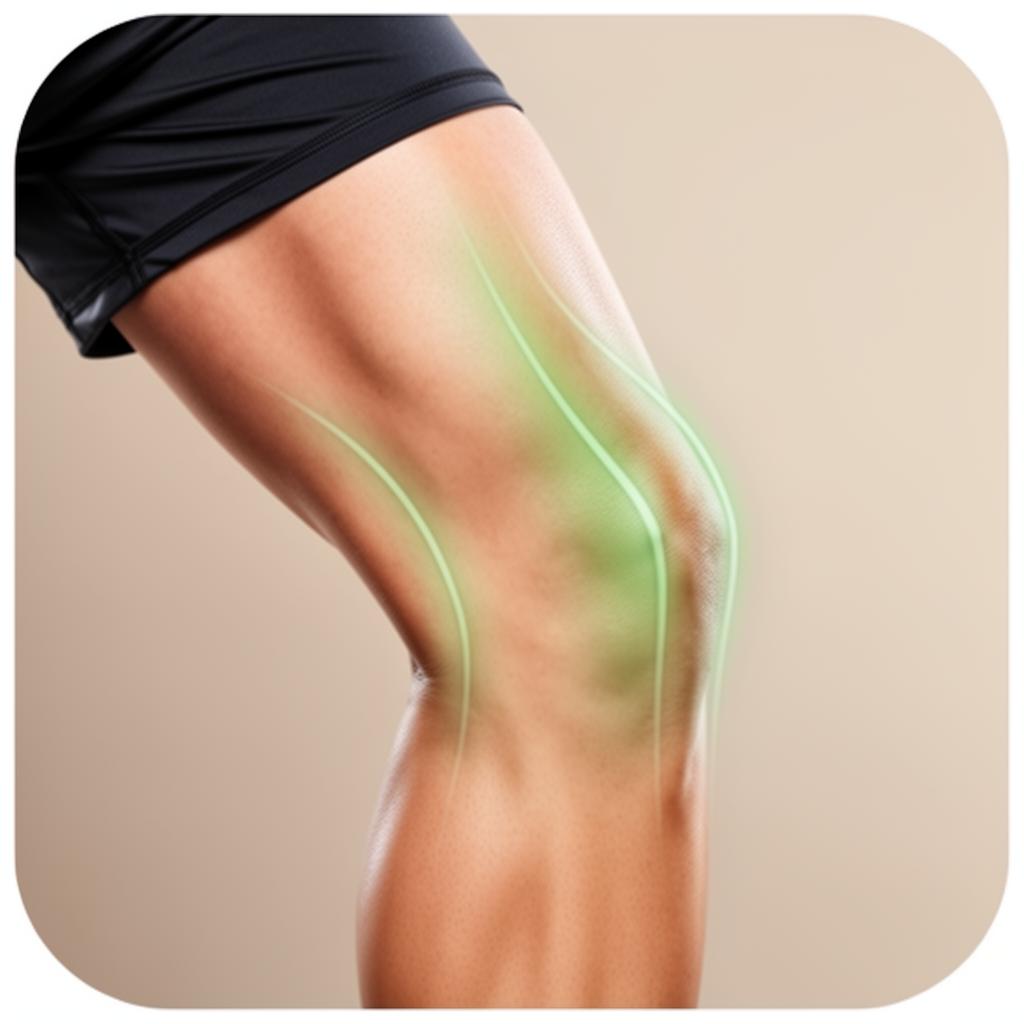
A knee pain location chart divides the knee into distinct zones, each associated with different structures and daily stress patterns. Think of it as a knee map that helps you pinpoint where your discomfort appears so you can take more targeted action. The chart above highlights the main areas: front (patella), inner (medial), outer (lateral), above and below the kneecap, and the joint line.
Each zone on this knee pain diagram corresponds to specific muscles, tendons, or ligaments. When you can identify your zone on the chart, you can better understand what everyday habits, postures, or activities might be contributing to your discomfort.
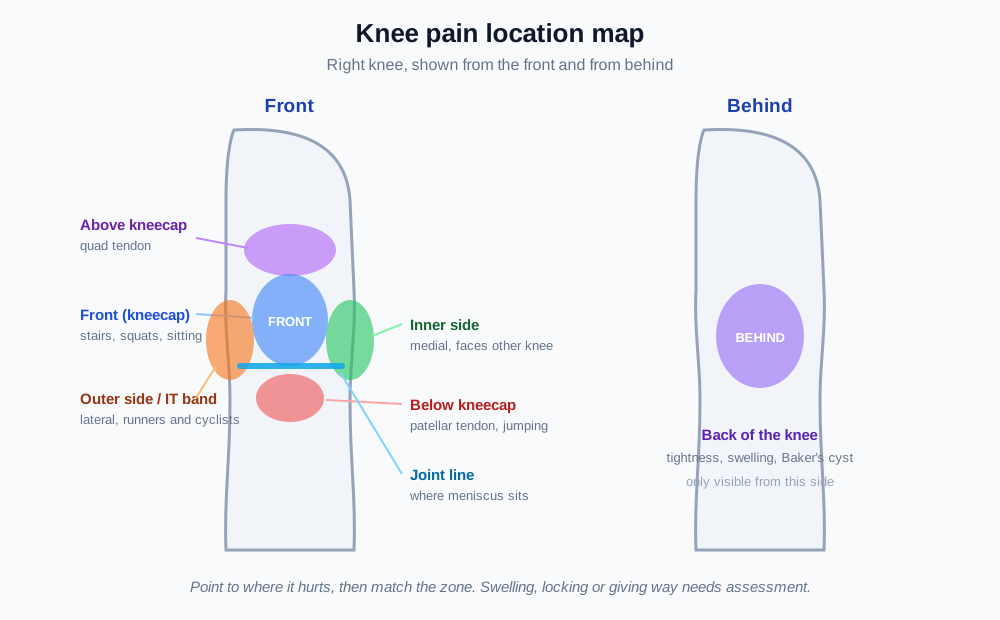
How to Read a Knee Pain Diagram
Reading a diagram of the knee pain zones is straightforward. Each colored area represents a specific anatomical region where discomfort commonly appears. Start by identifying which area on the diagram matches where you feel the most sensation. Then compare it with the detailed zone descriptions below to learn about typical triggers and comfort approaches.
Understanding knee pain anatomy does not require medical expertise. The key is matching your personal experience to the right zone on the chart, then applying the appropriate daily habits for that area.
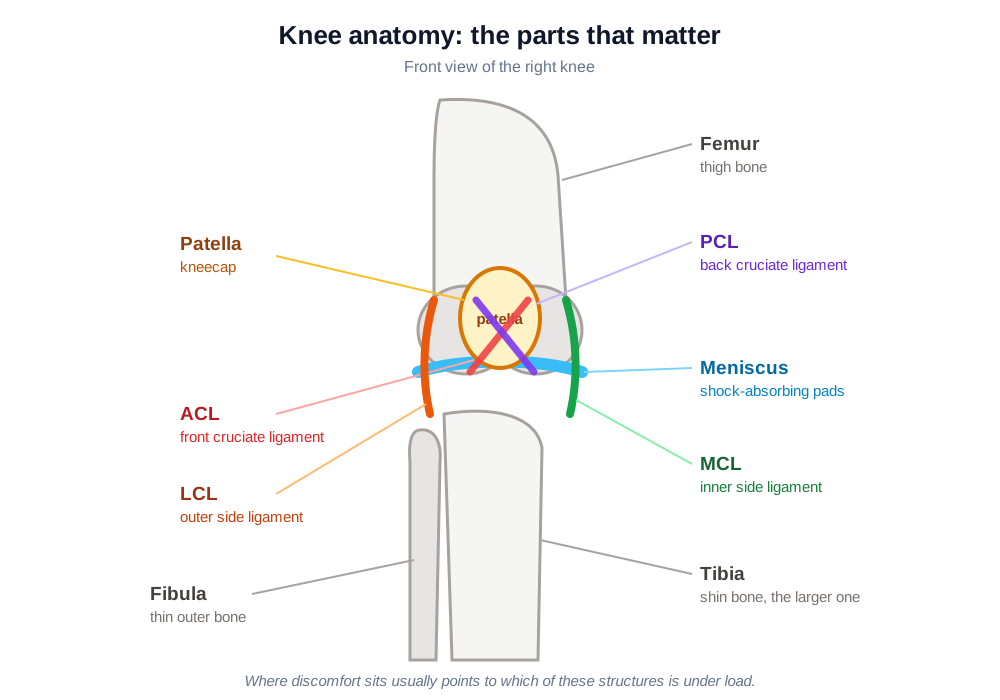
Front of Knee (Patellar Region)

Location Overview
The front of the knee, centered around the kneecap (patella), is one of the most commonly reported knee pain locations. On any knee pain location chart, this area sits right at the center. The kneecap glides within a groove on the thigh bone during movement, and any changes in alignment, muscle balance, or activity level can influence how this zone of the knee map feels.
What It Feels Like
- A dull ache around or behind the kneecap
- Stiffness after prolonged sitting with bent knees
- Increased awareness when climbing stairs or squatting
What Causes Discomfort Here
- Prolonged sitting with bent knees (desk work, long drives)
- Stair climbing, squatting, or kneeling
- Quadriceps tightness or weakness
- Changes in footwear or walking surfaces
Everyday Comfort Approaches
- Take movement breaks every 45 to 60 minutes when sitting
- Gentle quadriceps stretches after prolonged sitting
- Avoid deep squatting positions when possible
- Apply gentle warmth for 10 to 15 minutes to support circulation
Inner Knee (Medial Side)

Location Overview
The inner (medial) side of the knee is a key knee pain location that houses the medial collateral ligament and portions of the meniscus. On a knee pain diagram, this area appears along the inside edge of the joint. It often responds to twisting, pivoting, or sudden directional changes. For a deeper look at inner and outer knee patterns, see our inner vs. outer knee discomfort guide.
What It Feels Like
- Tenderness along the inner edge of the knee
- A pulling or tight sensation during walking
- Increased awareness during twisting movements
What Causes Discomfort Here
- Activities involving twisting or pivoting
- Footwear causing overpronation (feet rolling inward)
- Extended standing on hard surfaces
- Changes in exercise intensity or type
Everyday Comfort Approaches
- Choose supportive footwear with proper arch support
- Gentle inner thigh stretches to reduce medial tension
- Consider cushioned insoles for hard-surface standing
- Evening warmth application to support tissue relaxation
Outer Knee (Lateral Side)

Location Overview
The outer (lateral) side is influenced by the iliotibial (IT) band, running from the hip down the outside of the thigh. On this part of the knee map, you will find structures commonly affected in runners, cyclists, and long-distance walkers. This knee location of pain is especially common when training volume increases. For more on side-of-knee patterns, visit our side-of-knee comfort guide.
What It Feels Like
- A sharp or burning feeling along the outer knee edge
- Tightness that increases with repetitive movement
- Discomfort that may radiate up the outer thigh
What Causes Discomfort Here
- Running or cycling, especially increased mileage
- Walking on banked or uneven surfaces
- IT band tightness from prolonged sitting
- Hip muscle weakness affecting lateral stability
Everyday Comfort Approaches
- Foam rolling the outer thigh to support IT band flexibility
- Hip-strengthening exercises (side-lying leg raises, clamshells)
- Gradual increases in activity distance or duration
- Gentle warmth along the outer knee after activity
Back of Knee (Popliteal Region)

Location Overview
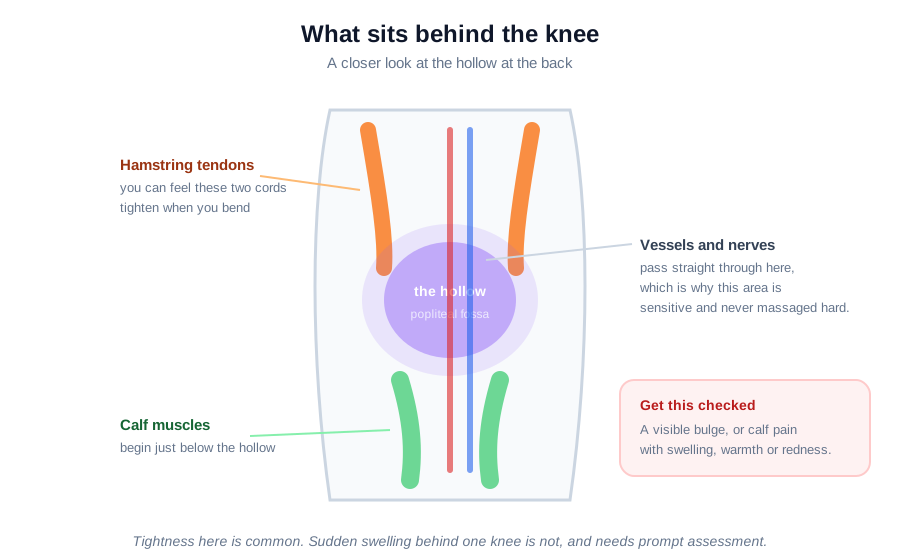
The back of the knee (popliteal area) is where the hamstrings and calf muscles connect. On a knee pain diagram, this zone sits behind the joint and is a commonly overlooked knee pain location. It is particularly sensitive to sitting habits and activity changes. For a detailed look at behind-the-knee patterns, explore our back-of-knee discomfort guide.
What It Feels Like
- Tightness or stiffness behind the knee
- A pulling sensation when straightening the leg
- Morning stiffness that eases with gentle movement
What Causes Discomfort Here
- Prolonged sitting with bent knees
- Hamstring or calf tightness
- Sudden increases in walking or exercise
- Overnight inactivity leading to morning stiffness
Everyday Comfort Approaches
- Gentle hamstring stretches throughout the day
- Standing calf raises to promote circulation
- Warmth application for 15 to 20 minutes, especially in the morning
- Leg elevation in the evening to reduce accumulated tension

Recommended for this guide
FlexiKnee Smart Heated Knee Massager
Adjustable warmth, red light, and gentle vibration in one wireless wrap for a complete 15-minute daily knee routine.
Below the Kneecap (Infrapatellar Region)

Location Overview
Just below the kneecap is where the patellar tendon connects the kneecap to the shin bone. This knee location of pain is commonly noticed by physically active people, especially those who jump, run, or make quick stops. On a knee pain location chart, this area sits just beneath the center of the knee. For related patterns in teens and active adults, see our below-knee discomfort guide.
What It Feels Like
- Tenderness just below the kneecap
- Noticeable awareness during jumping or landing
- Increased sensation after intense activity
What Causes Discomfort Here
- Jumping and landing activities (basketball, volleyball)
- Running on hard surfaces
- Growth-related changes in teenagers
- Sudden increases in physical activity intensity
Everyday Comfort Approaches
- Proper warm-up before physical activity
- Gradual progression in exercise intensity
- Adequate rest between demanding activity sessions
- Gentle warmth after activity to support recovery
Above the Kneecap (Suprapatellar Region)

Location Overview
The area above the kneecap is primarily influenced by the quadriceps muscle group and its tendon attachment. On this part of the knee pain location chart, you will find a zone that responds to stair climbing, cycling, and squatting. People who engage in these activities frequently often notice sensations in this upper area of the knee map. For more, see our front knee tightness guide.
What It Feels Like
- A heavy or pulling sensation above the kneecap
- Tightness after climbing stairs or cycling
- Fatigue-like awareness in the quadriceps tendon area
What Causes Discomfort Here
- Stair climbing and descending
- Heavy lifting or squatting activities
- Cycling with high resistance
- Quadriceps tightness from prolonged sitting
Everyday Comfort Approaches
- Regular quadriceps stretching (standing quad stretch, prone position)
- Gentle massage above the kneecap area
- Gradual strengthening exercises for balanced muscle support
- Warmth application after demanding leg activities
IT Band Area (Lateral Thigh to Knee)

Location Overview
The iliotibial (IT) band is a thick band of connective tissue running from the hip along the outer thigh to just below the knee. When tight, it creates noticeable sensations along the outer knee and sometimes higher up the thigh. This is a knee pain location especially common in runners and cyclists who increase training volume. On the knee pain diagram, the IT band zone extends from the hip area down to the outer side of the joint.
What It Feels Like
- A snapping or rubbing sensation on the outer knee
- Discomfort that builds gradually during repetitive activity
- Tightness along the entire outer thigh
What Causes Discomfort Here
- Repetitive leg movements (running, cycling, hiking)
- Weak hip abductor muscles
- Running on cambered roads or always turning one direction
- Sitting cross-legged for extended periods
Everyday Comfort Approaches
- Consistent foam rolling along the outer thigh
- Hip-strengthening exercises to reduce IT band load
- Varying running routes and surfaces
- Post-activity stretching targeting the hip and outer thigh
Joint Line Area (Medial and Lateral)

Location Overview
The joint line is the seam where the thigh bone and shin bone meet, cushioned by the meniscus. On the knee pain location chart, this area runs horizontally across the middle of the knee. Sensations here are common during deep bending, squatting, or twisting. People often describe pressure, clicking, or general awareness along this knee location of pain.
What It Feels Like
- A clicking or catching sensation during bending
- Pressure along the horizontal line of the knee
- Awareness that increases with deep squatting
What Causes Discomfort Here
- Deep bending or squatting activities
- Twisting movements during sports or daily tasks
- Prolonged kneeling on hard surfaces
- Age-related changes in cartilage cushioning
Everyday Comfort Approaches
- Avoid prolonged deep squatting positions
- Use knee padding when kneeling is necessary
- Maintain a healthy activity level with gentle movement
- Apply warmth before activities that involve deep bending
Where Is Knee Pain Usually Located?
Knee pain is most commonly located around the front of the knee, near the kneecap (patella). However, many people also report discomfort on the inner or outer sides, behind the knee, or just above or below the kneecap. The specific knee pain location depends on factors like activity level, posture habits, footwear, and which structures in the knee are under the most daily stress.
What Do Different Knee Pain Locations Mean?
Different knee pain locations typically correspond to different structures and daily stress patterns. Front knee discomfort often relates to quadriceps tension and bending activities. Inner knee sensations may connect to foot mechanics, while outer knee tightness frequently involves IT band tension. Back-of-knee stiffness usually links to hamstring or calf tightness. A knee pain location chart can help you match your experience to the right zone.
How Do I Identify My Knee Pain Location?
To identify your knee pain location, start by noticing exactly where the sensation appears during or after daily activities. Compare that area to a knee pain diagram to match it with a specific zone. Track your patterns for a week, noting when discomfort appears, what you were doing, and whether it improves with rest or warmth. This simple approach often reveals your primary discomfort zone on the knee map.
How to Identify Your Primary Discomfort Zone
Understanding which zone on the knee pain location chart is most relevant to you helps tailor your daily habits. Here are a few practical steps:
- Notice timing: Is it after sitting, during activity, in the morning, or at night?
- Pay attention to activities: Which movements make the sensation more noticeable?
- Track patterns for a week: A simple note of when and where you notice your knee often reveals clear patterns.
- Consider your footwear: Different shoes can shift stress between knee zones on your personal knee map.
- Compare with the diagram: Match your experience to the knee pain diagram zones above to narrow down your primary area.
Building a Zone-Aware Comfort Routine
Once you know which zones on the knee pain location chart matter most to you, a simple daily routine can make a real difference:
Morning (5 to 10 minutes)
- Gentle stretches targeting your primary zone
- Warmth application to the most noticeable area for 10 to 15 minutes
- Light walking to promote circulation
Throughout the Day
- Movement breaks every 45 to 60 minutes
- Posture awareness, especially foot position and chair height
- Brief stretches targeting your primary discomfort zone
Evening Wind-Down
- Gentle stretching session focusing on the most noticeable areas
- Warmth session for 15 to 20 minutes to support overnight comfort
- Leg elevation for a few minutes to reduce tension
When to Seek Professional Guidance
Most knee discomfort responds well to consistent daily habits, but certain situations warrant professional evaluation:
- Sudden onset of significant discomfort in any zone
- Swelling, warmth, or redness without an obvious cause
- Instability or a feeling that the knee might give way
- Locking or catching sensations during movement
- Discomfort that does not improve with rest over several weeks
The Bottom Line
Knee discomfort can appear in many different knee pain locations, and each zone tends to reflect different daily patterns and lifestyle habits. By using a knee pain location chart approach and paying attention to your personal patterns, you can build more targeted and effective daily comfort routines. Understanding your knee pain anatomy does not require expertise. Small, zone-aware habits practiced daily tend to produce the most meaningful improvements in overall knee comfort.