Whether you notice stiffness in the morning, discomfort after sitting for long periods, or general soreness during daily activities, you are not alone. Millions of adults experience some form of knee discomfort, and many find that exercises to relieve knee pain at home can make a meaningful difference in how their knees feel day to day.
The exercises in this guide are designed to be simple, accessible, and suitable for most adults. They require no special equipment and can be done in your living room, bedroom, or any comfortable space. As with any new exercise routine, start slowly and listen to your body.
Why Movement Helps Reduce Knee Discomfort
It may seem counterintuitive, but gentle movement is one of the most effective ways to support knee comfort. When you move the knee joint, several important things happen:
- Muscle strength increases: The muscles surrounding the knee, including the quadriceps, hamstrings, and calves, act as shock absorbers and stabilizers. Stronger muscles distribute force more evenly across the joint, reducing the load on cartilage and other structures.
- Joint mobility improves: Regular movement helps maintain the knee's natural range of motion. Without consistent use, the joint can become stiff and tight, making everyday activities like walking and climbing stairs more uncomfortable.
- Circulation increases: Movement promotes blood flow to the muscles and tissues around the knee. It also helps circulate synovial fluid, the natural lubricant inside the joint that keeps surfaces gliding smoothly.
For many adults, a consistent routine of knee exercises to relieve pain at home is more effective than complete rest, which can sometimes make stiffness and discomfort worse over time.
Safety Guidelines Before Starting Knee Exercises
Before beginning any new exercise routine, it is important to keep a few safety principles in mind:
- Start slowly: Begin with fewer repetitions and shorter hold times. You can always increase as your comfort improves over the following days and weeks.
- Avoid sharp pain: A gentle stretching sensation or mild muscle effort is normal. If you feel sharp or sudden pain during any exercise, stop that movement and try a gentler alternative.
- Use controlled movement: Move slowly and deliberately through each exercise. Avoid jerky or bouncing movements, which can place unnecessary stress on the joint.
- Warm up first: Walk around gently for 2 to 3 minutes or do slow ankle circles before starting your exercises. A brief warm up helps prepare the joint and surrounding muscles for movement.
- Stay consistent: The benefits of home exercises for knee pain come from regular practice over time, not from a single intense session.
Best Exercises to Relieve Knee Pain at Home
The following exercises target the key muscle groups that support the knee joint. Each exercise includes a step by step description so you can follow along at your own pace. Aim to include at least 4 to 5 of these movements in your daily routine.
1. Straight Leg Raises
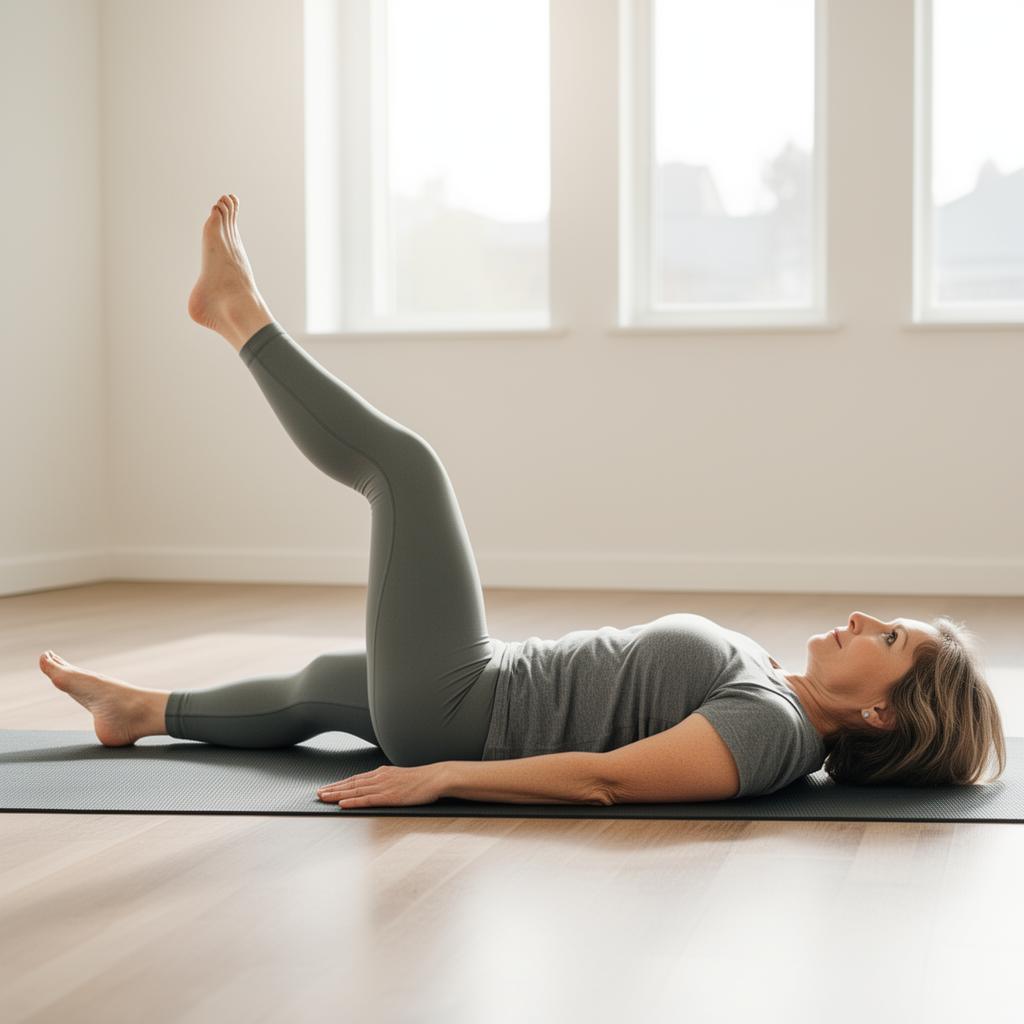
Straight leg raises are one of the most effective knee strengthening exercises because they target the quadriceps without bending the knee joint. This makes them ideal for people who experience discomfort during bending movements.
How to do it:
- Lie on your back on a mat or firm surface with one leg bent and the other straight.
- Tighten the quadriceps (front thigh muscle) of your straight leg.
- Slowly lift the straight leg about 12 inches off the floor.
- Hold for 3 to 5 seconds, then slowly lower back down.
- Repeat 10 to 15 times per leg.
What it does: Builds quadriceps strength, which helps stabilize the kneecap and reduce pressure on the joint during walking and stair climbing. Learn more about knee exercises for strength and mobility.
2. Seated Knee Extensions
This exercise can be done while sitting in a sturdy chair, making it one of the most accessible exercises for knee pain at home for people of all fitness levels.

How to do it:
- Sit in a chair with your feet flat on the floor and your back supported.
- Slowly straighten one leg out in front of you until it is fully extended.
- Hold the extended position for 3 to 5 seconds, focusing on tightening the quadriceps.
- Slowly lower the leg back to the starting position.
- Repeat 10 to 15 times per leg.
What it does: Strengthens the quadriceps through a controlled range of motion, improving the knee's ability to support everyday movements like standing up from a seated position.
If standing or walking is currently limited, use the full seated knee exercise routine for a stable-chair setup, smaller starting doses, and a step-by-step progression that remains entirely chair based.
3. Hamstring Stretch
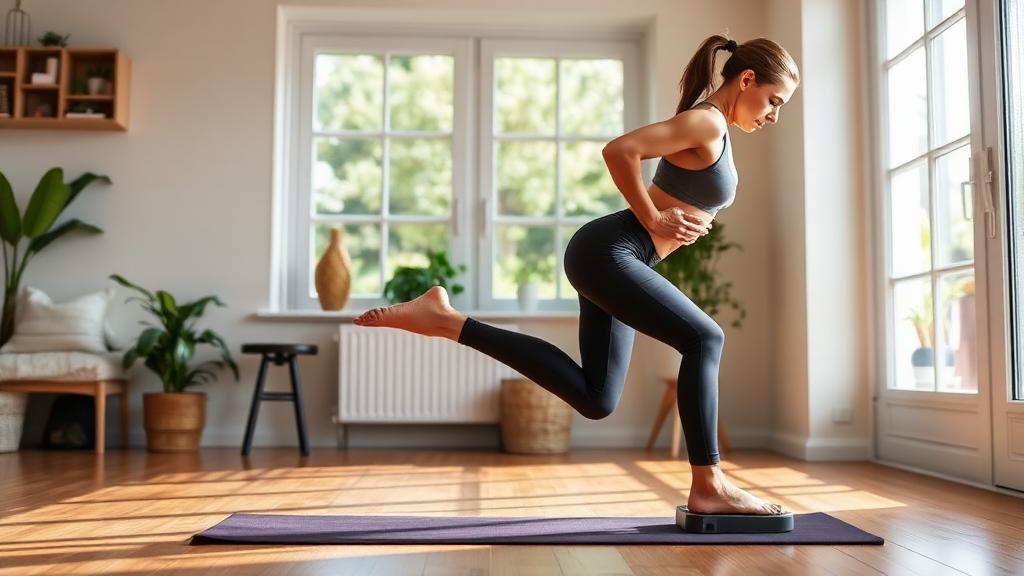
Tight hamstrings can contribute to knee discomfort by altering the way forces are distributed across the joint. Regular stretching helps maintain balanced muscle tension around the knee.
How to do it:
- Stand in front of a low step, sturdy box, or chair.
- Place one heel on the elevated surface with your leg straight.
- Keeping your back straight, lean forward gently at the hips until you feel a stretch in the back of your thigh.
- Hold for 20 to 30 seconds.
- Repeat 2 to 3 times per leg.
What it does: Reduces tightness in the hamstrings, which can improve knee alignment and reduce pulling forces on the back of the joint. Read more about how exercise affects knee comfort.
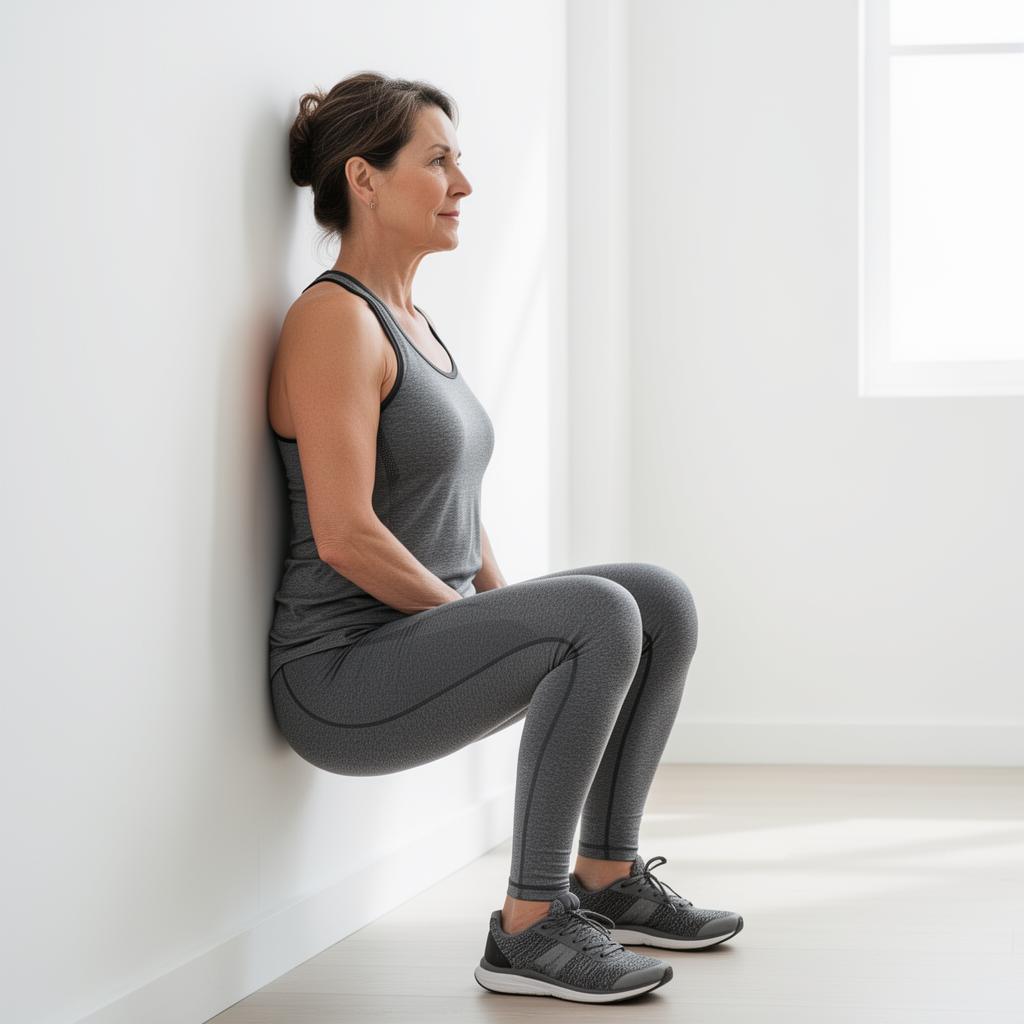
4. Wall Supported Mini Squats
Wall supported squats are a safe way to strengthen the quadriceps, glutes, and hamstrings while controlling the depth of the movement. The wall provides stability and limits how far you bend.
How to do it:
- Stand with your back flat against a smooth wall, feet shoulder width apart and about 12 to 18 inches from the wall.
- Slowly slide down the wall, bending your knees to a comfortable angle (aim for about 30 to 45 degrees initially).
- Hold the position for 5 to 10 seconds.
- Slowly slide back up to standing.
- Repeat 8 to 12 times.
What it does: Builds overall leg strength in a controlled, supported position. This exercise helps strengthen the muscles that support the knee during squatting movements.
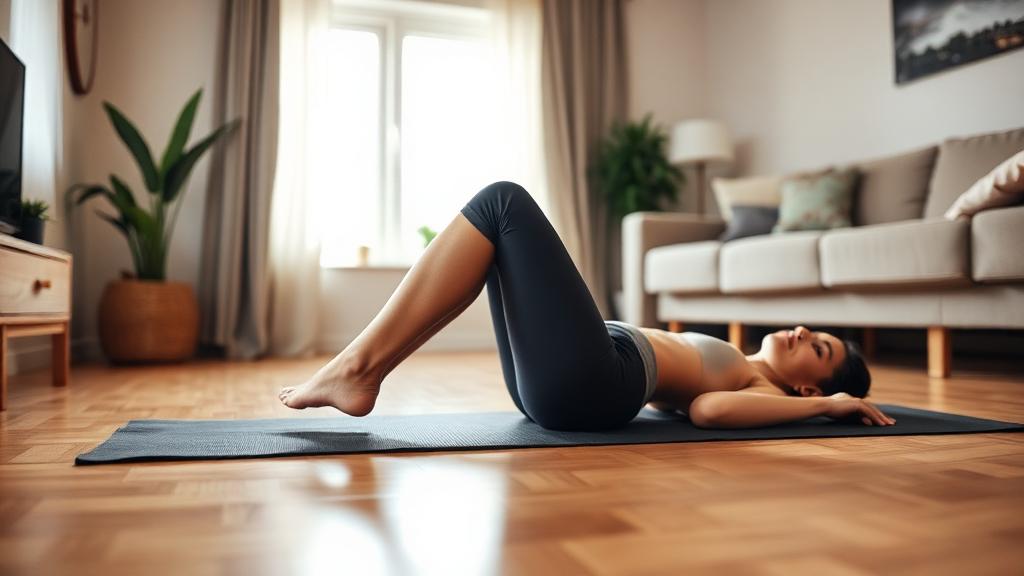
5. Heel Slides
Heel slides are a gentle knee mobility exercise that helps improve the knee's range of motion without placing weight on the joint. They are especially helpful for people who feel stiff after sitting or resting.
How to do it:
- Lie on your back with both legs straight.
- Slowly slide one heel along the floor toward your buttock, bending the knee.
- Slide the heel as far as is comfortable, then slowly straighten the leg back out.
- Repeat 10 to 15 times per leg.
What it does: Gently increases knee range of motion and helps circulate synovial fluid within the joint. This is particularly useful for people who experience stiffness related to age.
6. Calf Raises
The calf muscles play an important role in stabilizing the lower leg and supporting comfortable walking. Strengthening them helps distribute force more evenly through the knee during movement.

How to do it:
- Stand near a counter, chair back, or wall for balance support.
- Slowly rise up onto your toes, lifting your heels off the ground.
- Hold the raised position for 2 to 3 seconds.
- Slowly lower your heels back to the floor.
- Repeat 15 to 20 times.
What it does: Strengthens the calf muscles that support the ankle and knee during walking, stair climbing, and standing activities.
7. Quad Activation Exercise
This simple isometric exercise helps activate and strengthen the quadriceps without any knee movement at all. It is ideal for people who find bending uncomfortable.
How to do it:
- Sit on the floor or in bed with your legs extended straight in front of you.
- Place a small rolled towel under one knee.
- Press the back of your knee down into the towel, tightening your quadriceps muscle.
- Hold for 5 to 10 seconds.
- Relax and repeat 10 to 15 times per leg.
What it does: Activates the quadriceps muscle without joint movement, helping maintain muscle engagement and connection even when other exercises feel uncomfortable.
Daily Knee Exercise Tip
Small daily exercise routines can support knee strength and stability over time. Even 10 to 15 minutes of gentle strengthening and mobility work, done consistently, can make a noticeable difference in how your knees feel during everyday activities. If your knees tend to be sore after more intense exercise sessions, our guide on knee pain after exercise explains the delayed soreness mechanism and how to manage it. For those who find stairs particularly challenging, our stair descent guide covers specific strengthening exercises for comfortable stair use.
How Often to Do Knee Exercises at Home
Consistency is more important than intensity when it comes to how to relieve knee pain with exercise. Here are some practical guidelines:
- Frequency: Aim for 3 to 5 sessions per week. Daily gentle movement is ideal, but even 3 sessions per week can produce noticeable results over time.
- Duration: Start with 10 to 15 minute sessions and gradually work up to 20 to 30 minutes as your comfort improves.
- Repetitions: Begin with 8 to 10 repetitions per exercise and increase to 12 to 15 as your strength builds. For stretches, hold each position for 20 to 30 seconds.
- Progression: Increase intensity gradually. Add 1 to 2 extra repetitions per week or extend your hold times by a few seconds. Avoid jumping to more demanding exercises before your body feels ready.
Many people notice improvement in knee comfort within 2 to 4 weeks of consistent practice. The key is to build a routine that fits naturally into your daily schedule.
Common Mistakes People Make with Knee Exercises
Even with the best intentions, certain mistakes can reduce the effectiveness of your home knee workout or even increase discomfort. Here are the most common ones to avoid:
- Doing too much too quickly: Starting with high repetitions or advanced exercises before building a foundation can overload the joint. Progress gradually over weeks, not days.
- Poor alignment: During exercises like wall squats and calf raises, make sure your knees track over your toes rather than collapsing inward. Proper alignment distributes forces evenly across the joint.
- Skipping warm up: Jumping straight into exercises without a brief warm up can make the joint feel stiffer and increase the risk of discomfort. Take 2 to 3 minutes to walk or do ankle circles first.
- Ignoring recovery: Rest days are important. Your muscles need time to adapt and grow stronger between sessions. Alternate between strengthening days and gentle stretching or walking days.
- Pushing through sharp pain: Mild muscle effort and gentle stretching sensations are normal. Sharp, sudden, or worsening pain is a signal to stop and reassess.
Daily Habits That Support Stronger Knees
Beyond specific exercises, several daily habits can contribute to better knee comfort over time:
- Walking regularly: Even short daily walks of 15 to 20 minutes help maintain knee mobility, promote circulation, and keep the muscles around the joint active. Walking is one of the most accessible low impact knee exercises available. If you notice discomfort during longer walks, adjusting your pace and footwear can help.
- Gentle stretching throughout the day: Brief stretching breaks, especially after long periods of sitting, help prevent stiffness from building up. Focus on the quadriceps, hamstrings, and calves.
- Good posture habits: How you sit and stand affects knee loading. Avoid crossing your legs for extended periods and try to keep your weight evenly distributed when standing. Learn about how posture affects the kneecap.
- Balanced leg strength: Make sure your exercise routine addresses all the major muscle groups around the knee, not just the quadriceps. The hamstrings, calves, and hip muscles all play important roles in knee stability.
- Gradual activity progression: Whether you are returning to exercise after a break or trying a new activity, increase your activity level gradually. Sudden increases in training volume are one of the most common triggers for knee discomfort.
When Knee Discomfort Should Be Evaluated
While gentle knee support exercises are beneficial for most people, certain signs suggest that your knee discomfort may need professional evaluation:
- Persistent swelling: Swelling that does not improve with rest and gentle movement over several days may indicate something more than routine stiffness.
- Sharp or worsening pain: If pain becomes sharper, more intense, or spreads to other areas during or after exercise, it is worth seeking guidance.
- Joint instability: A feeling that your knee is giving way, buckling, or locking during movement should be evaluated.
- Reduced range of motion: If you are unable to fully bend or straighten your knee, or if the range of motion is decreasing over time, professional evaluation is recommended.
- Pain lasting more than two weeks: Discomfort that persists for more than two weeks despite rest and gentle exercise may benefit from professional guidance.
This guide is intended to provide general educational information. It is not a substitute for professional evaluation or individualized advice. If you have specific concerns about your knees, consult with a qualified professional.
Frequently Asked Questions
What exercises help relieve knee pain?
Gentle exercises like straight leg raises, seated knee extensions, heel slides, wall supported mini squats, calf raises, hamstring stretches, and quad activation exercises can all support knee comfort. These movements strengthen the muscles around the knee joint and improve mobility without placing excessive stress on the joint.
Can knee pain improve with exercise?
Yes, for many people, consistent gentle exercise can support knee comfort over time. Strengthening the muscles around the knee helps distribute load more evenly across the joint, while mobility exercises keep the joint flexible and well lubricated through natural synovial fluid circulation.
What is the best exercise for knee pain at home?
Straight leg raises are often considered one of the best starting exercises for knee comfort because they strengthen the quadriceps without placing direct stress on the knee joint. They can be done lying on any flat surface and require no equipment.
How often should I do knee exercises?
Most adults benefit from doing gentle knee exercises 3 to 5 times per week. Start with shorter sessions of 10 to 15 minutes and gradually increase as your comfort improves. Consistency over time is more important than intensity in any single session.
Are squats good for knee pain?
Wall supported mini squats, where you slide your back down a wall to a comfortable depth, can be beneficial for knee comfort when done with proper form. They strengthen the quadriceps and glutes while the wall provides support and limits the range of motion to a comfortable level.
Can strengthening exercises support knee stability?
Yes, strengthening the quadriceps, hamstrings, calves, and hip muscles provides better support for the knee joint during everyday activities. Stronger muscles absorb more of the load during walking, climbing stairs, and standing, reducing the stress placed directly on the joint.
Why does movement sometimes help knee pain?
Movement helps circulate synovial fluid within the knee joint, which acts as a natural lubricant. It also increases blood flow to the surrounding muscles and tissues, promotes flexibility, and prevents the stiffness that often develops during prolonged inactivity.
When should knee pain be evaluated?
Knee discomfort should be evaluated by a professional if it is accompanied by significant swelling, sharp or worsening pain during exercise, a feeling of instability or giving way, difficulty bending or straightening the knee, or if the discomfort persists for more than two weeks despite rest and gentle movement.