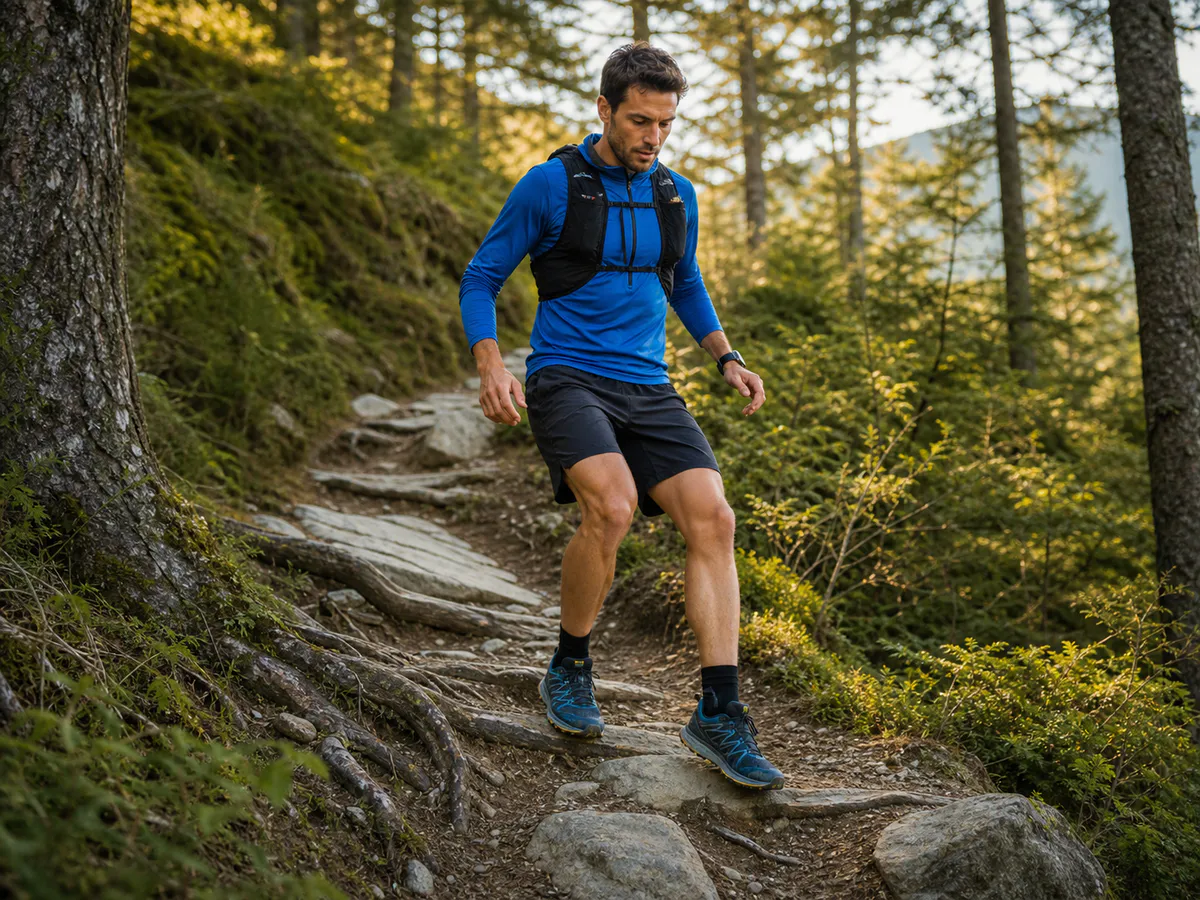
Searching for knee pain downhill can lead to advice for running, hiking, and stairs on the same page. Those activities share some knee-flexion and braking demands, but they are not interchangeable. This guide is about running descents on roads, park paths, treadmills, and smoother trail sections. If roots, rocks, camber, and rapid foot-placement decisions are the main problem, use the trail running knee pain guide. The broader running knee pain guide is the better starting point when pain is not tied specifically to a descent.
Why Downhill Running Feels Different at the Knee
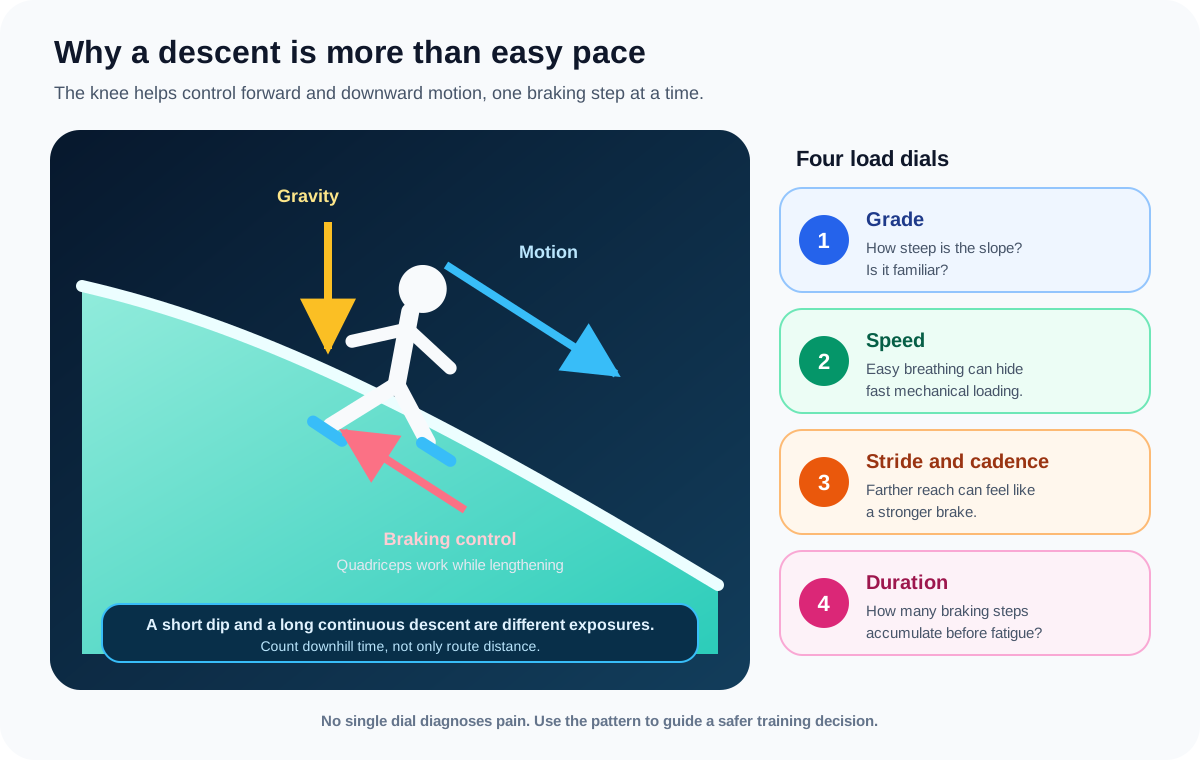
Gravity helps accelerate the body down the slope. The runner still has to control that forward and downward motion at every landing. The quadriceps contribute while lengthening under tension, called eccentric muscle action, as the knee bends and the body passes over the foot. This is useful work, not evidence that tissue is being damaged with every step.
Small laboratory studies show why the task can feel demanding. Downhill conditions have produced larger braking and impact-force peaks than level running, while a 2024 modeling study estimated greater cumulative patellofemoral demand downhill relative to level and uphill conditions. These findings describe groups under controlled conditions. They do not predict which runner will develop pain or prove that one painful knee has a particular injury.
The exposure also accumulates. A short dip and a twenty-minute continuous descent may share the same average grade but not the same number of braking steps. A runner may feel fine at the top, lose quadriceps control gradually, and notice that the stride reaches farther ahead near the bottom. That is why total downhill time can matter more than total route distance.
The Four Downhill Load Dials
| Dial | What changes | Question for the training log |
|---|---|---|
| Grade | The direction and amount of braking, joint motion, and muscle work shift as the slope changes. | Was this descent steeper than the hills I have recently trained? |
| Speed | A runnable decline can quietly turn an easy effort into fast mechanical loading. | Did pace rise because breathing felt easy, even though control declined? |
| Stride and cadence | A longer reach can increase the sensation of braking. A slightly quicker rhythm often shortens the step. | Did my foot begin landing farther ahead as I tired? |
| Duration and repetition | Continuous descent and repeated hill laps create more braking cycles than one short slope. | How many downhill minutes and hard descents did the week contain? |
Change in one dial may be manageable. Stacking a steeper route, faster pace, longer descent, and new shoes makes the cause of a flare harder to read. There is no universal safe grade or weekly percentage. Compare the session with the downhill work your knee and quadriceps have handled recently.
Where the Pain Appears Still Matters
Front or around-the-kneecap pain is the pattern most directly connected with patellofemoral demand. It may also appear on stairs, squats, or after sitting. The pain behind the kneecap guide explains that pattern without assuming every downhill ache is runner's knee.
Outer or lateral knee pain can appear at a repeatable downhill distance and may fit an iliotibial band pattern. Other lateral structures can hurt too. A distinct twist, joint-line swelling, catching, or giving way should not be filed under ordinary downhill soreness. Use the IT band location guide to describe the area, not to self-confirm a diagnosis.
Back-of-knee pain has an even wider range of possibilities, including muscle, tendon, joint, and fluid-related patterns. If it appears mainly while hiking downhill rather than running, pack weight, poles, and walking technique deserve their own review in the downhill hiking knee pain guide. Pain when going down stairs is another related but separate daily-activity intent covered by the downstairs knee pain guide.
Form Changes That May Reduce Braking
Start with speed, not a complete gait rebuild
Slowing before the steepest part is the simplest way to regain control. Avoid waiting until the foot is already reaching and then trying to stop suddenly. On a predictable slope, aim for quiet, controlled contacts and a rhythm you can maintain. On technical ground, safety and line choice take priority over any form cue.
Use cadence as a small experiment
Systematic-review evidence shows that increasing step rate often reduces step length, knee flexion, knee extensor moment, and some braking measures. Evidence that it prevents injury or helps every painful runner is much less certain. Rather than forcing 180 steps per minute, try a modest change from your own normal rhythm. If it feels rushed, raises effort sharply, or moves pain to the calf or foot, it is not a useful cue in that form.
Do not force a foot strike or exaggerated lean
A shorter stride and a forced forefoot strike are not the same intervention. Changing landing style can transfer work toward the ankle and calf. Likewise, leaning dramatically forward or backward can disturb balance. Stay organized over the feet, keep vision ahead, and practice any adjustment on a gentle hill before relying on it at speed.
What to Do When Pain Starts on a Descent
Stop using the hill as a repeated test. If the pain is mild, the knee is stable, and walking is normal, reduce speed or walk to a safe, flatter exit. End the run if pain changes your gait, makes foot placement uncertain, or continues to build. A remote trail requires a more conservative decision than a treadmill or neighborhood hill.
Later, record the exact grade, continuous downhill time, pace, and point where symptoms began. Check swelling, ordinary walking, stairs, and knee motion that evening and the following morning. Delayed bilateral quadriceps soreness after unfamiliar descending can reflect eccentric muscle work. Focal joint pain, recurrent swelling, or mechanical symptoms should not be dismissed as normal soreness. For pain that begins only after the run, see the post-exercise knee pain guide.
Joint Pain, Quadriceps Soreness, and Recovery
Unfamiliar downhill running can leave the front of both thighs tender or weak because the quadriceps completed many lengthening contractions. Research often describes this response as exercise-induced muscle damage, but the phrase does not mean that ordinary soreness is a medical injury. Muscle soreness is commonly broader than one precise knee spot and may be clearer after the session than during it. The amount varies with grade, speed, duration, and previous downhill experience.
A focal ache around the kneecap, a sharp joint-line symptom, swelling inside the knee, catching, locking, or instability deserves a different interpretation. Quadriceps fatigue and knee pain can occur together, so the presence of sore thighs does not explain away a swollen or mechanically restricted joint. Compare both legs, note the exact painful location, and check whether ordinary walking changes.
Recovery is not only what happens in the hour after the run. Avoid stacking another hard descent before normal movement and muscle control return. Comfortable walking, sleep, food, and light movement may support recovery, while passive tools cannot restore downhill capacity by themselves. A prior tolerable exposure often makes the next downhill session easier to handle, which is why gradual practice is more useful than avoiding every descent and then confronting one large race-day hill. The post-workout recovery guide provides a gentle routine for ordinary soreness when warning signs are absent.
A Downhill Return Progression
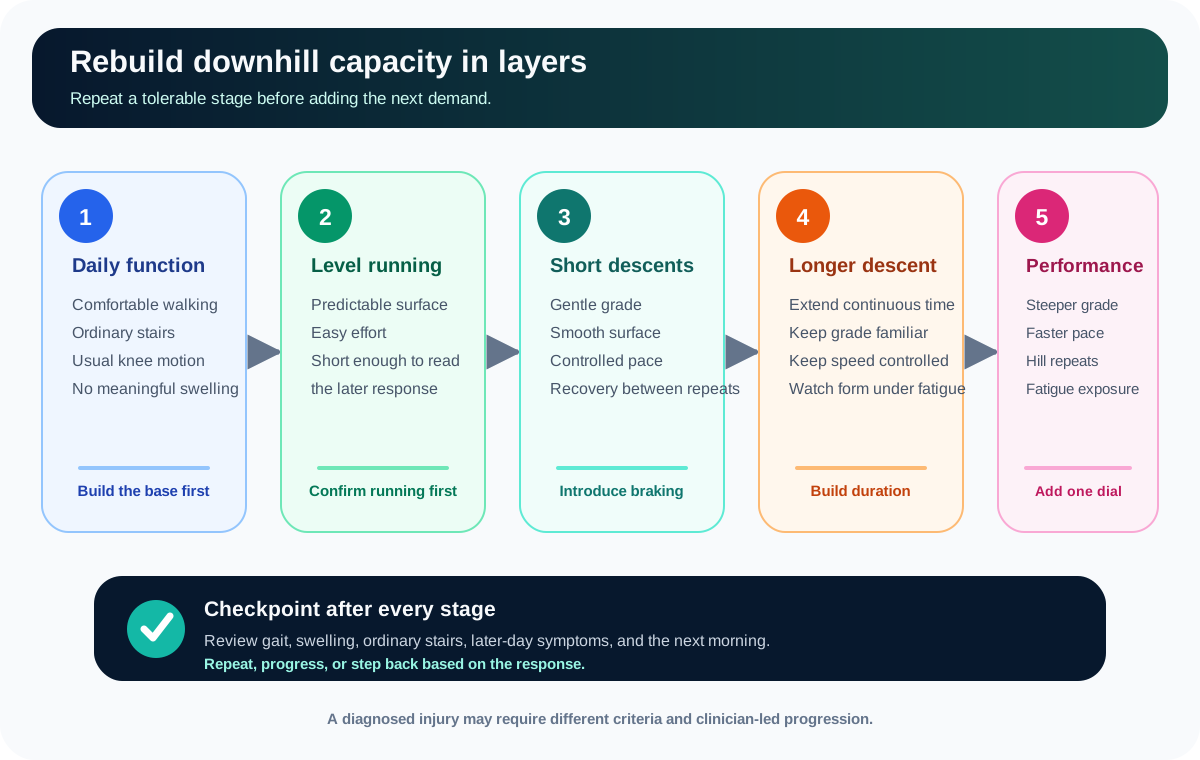
This framework suits a mild, improving load-related pattern after urgent and diagnosis-specific concerns have been excluded. Bone, ligament, meniscus, tendon, surgical, and inflammatory conditions may need different criteria.
- Daily function first: regain comfortable walking, ordinary stairs, usual motion, and no meaningful swelling.
- Level running: use a short, predictable run or run-walk session to confirm that running itself is tolerated.
- Gentle short descents: add brief, smooth downhill sections with easy recovery between them. Keep speed controlled.
- Extend downhill time: lengthen continuous descent before making it much steeper or faster.
- Add performance demands: introduce greater grade, faster descending, repeated hill laps, or fatigue one variable at a time.
Prior downhill exposure can reduce subsequent muscle soreness and strength loss, but acclimatization is not immunity. Repeat a tolerable stage before progressing, particularly after a long break. Step back if symptoms begin earlier, gait changes, swelling appears, or the next-morning response is clearly worse.
Strength and Recovery Support the Descent
Slow step-downs, split squats, sit-to-stands, calf raises, and hip-focused strength can build options for absorbing and directing load. Exercise selection should match current symptoms and ability. For patellofemoral pain, current best-practice guidance supports education plus knee-targeted, with or without hip-targeted, exercise as the foundation, while running retraining is selected for the individual rather than prescribed to everyone.
Sleep, food, and spacing hard sessions help the muscles recover, but no recovery tool cancels an excessive descent dose. Cold may feel useful for a newly swollen or unusually warm knee. Warmth may suit stiffness without swelling. Use the heat versus ice guide instead of applying the same routine to every post-run symptom.
When to Get Medical Help
Arrange an assessment when downhill pain keeps returning, begins earlier, limits daily activity, or causes recurring swelling. Seek prompt care after a fall or twist if you cannot bear weight, the knee is deformed or locked, swelling is rapid, or it repeatedly gives way. A hot red swollen knee with fever, new calf swelling, a cold or discolored foot, chest pain, or breathing difficulty needs urgent medical guidance.
The Bottom Line
Downhill running is a trainable exposure, not a verdict on whether running is safe. Separate grade, speed, stride, and continuous descent time, then identify which dial changed before symptoms appeared. A calmer pace, less reaching, and a small cadence experiment may reduce braking for some runners. The durable answer is a gradual return that rebuilds the exact descent demand without ignoring swelling, instability, trauma, or altered gait.
Frequently Asked Questions
Why do my knees hurt when running downhill?
A descent requires repeated braking and eccentric quadriceps work to control forward and downward motion. Grade, speed, stride, fatigue, and how much downhill running you have done recently all affect that demand. Pain location and associated symptoms still matter because downhill exposure can reveal several different knee problems rather than one diagnosis.
Is downhill running bad for your knees?
Not universally. Downhill running changes how forces and muscular work are distributed, but a trained runner may tolerate it well. Problems are more likely when the descent is unfamiliar, steep, fast, prolonged, or added alongside other training changes. Pain, swelling, and loss of function should guide the response rather than the idea that every hill causes damage.
Why is the pain around my kneecap worse downhill?
The quadriceps help control knee flexion during landing and braking. That can increase demand at the patellofemoral joint, especially when speed, grade, or stride length rises. Pain around the kneecap can fit a patellofemoral pattern, but swelling, trauma, locking, or persistent symptoms need an assessment rather than an online label.
Can a higher cadence reduce downhill knee pain?
A modest increase from a runner's usual step rate often shortens the stride and can reduce several modeled knee-loading measures. It is not a guaranteed treatment, and there is no universal 180-step target. Test small changes on a gentle, predictable slope and abandon any cue that feels forced or shifts symptoms elsewhere.
Should I lean forward when running downhill?
Avoid forcing a dramatic lean in either direction. A balanced position that does not leave the foot landing far ahead of the body may reduce the feeling of braking. The safe posture changes with grade, speed, surface, and experience, so practice on a mild slope before using a technique cue on a steep or technical descent.
How should I return to downhill running after knee pain?
Begin when walking, ordinary stairs, and easy level running are comfortable and meaningful swelling is absent. Add short gentle descents, review the later-day and next-morning response, then extend downhill time. Add steeper grade or speed later, preferably one at a time. A diagnosed injury may require a different clinician-led progression.