This guide covers hiking at a walking pace. Use trail running knee pain when running speed and descent technique are central, rucking knee pain when progressive pack load is the training goal, and the hiking-pole buyer guide when pole length, grip, and product choice are the main questions.
Start With the Part of the Hike That Hurts
| Trail pattern | Common exposure | First variable to reduce |
|---|---|---|
| Pain hiking uphill | Large step height, steep grade, forceful push, fatigue | Step height or total elevation gain |
| Pain hiking downhill | Braking, long stride, front-of-knee load, pack momentum | Descent grade, stride length, or pack weight |
| Pain on uneven ground | Rotation, side-to-side corrections, slips, limited ankle motion | Technical terrain or pace |
| Pain only after hiking | Total distance, cumulative descent, duration, insufficient recovery | One workload measure on the next route |
Why Downhill Hiking Is a Common Trigger
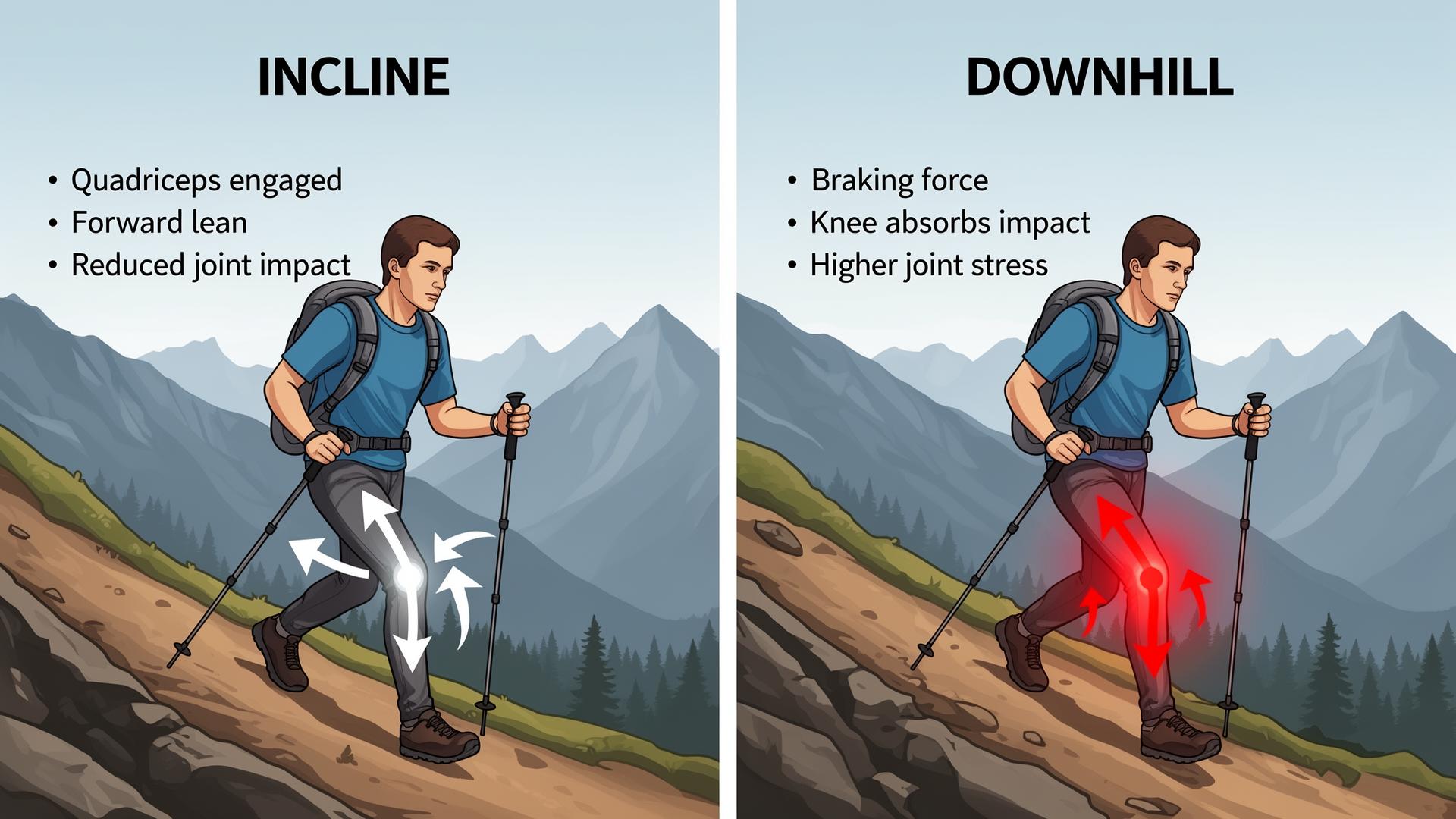
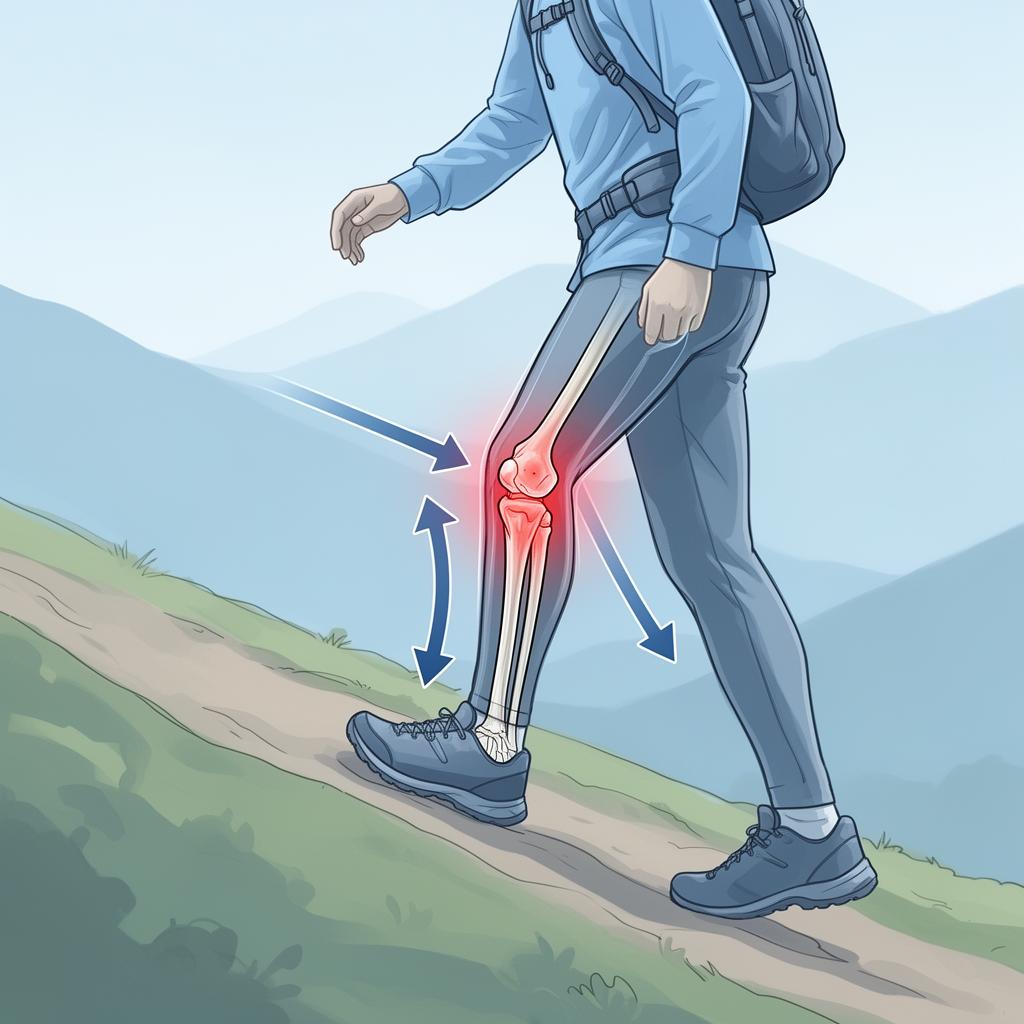
During a descent, the lead leg lands in front of the body and the quadriceps control how quickly the knee bends. This eccentric work acts like a brake. A steeper grade, longer stride, faster pace, fatigue, and backpack momentum can make each braking step more demanding. Front-of-knee symptoms may overlap with a patellofemoral pattern, especially when stairs also hurt.
Use knee pain going downstairs for the daily stair pattern. It shares some mechanics with descent, but it does not include loose terrain, long duration, poles, or a pack.
Why Uphill Hiking Can Hurt Differently
Climbing asks the quadriceps and glutes to raise the body against gravity. High rocks and steep steps create deeper knee bends and greater force demands. A person may tolerate a gradual slope but react to repeated high step-ups, or may hurt only when fatigue changes how the hip and knee share the work.
Reduce step height before removing all hills. Use switchbacks when the trail permits, slow the pace, and compare a lower-elevation route. Pain at the patellar tendon, joint line, or back of the knee should be recorded separately because each location changes the questions to ask.
Location Changes the Hiking-Pain Question
- Front or behind the kneecap: compare descents, stairs, deep steps, and prolonged bending.
- Inner or outer joint line: note a twist, uneven landing, swelling, catching, or true locking.
- Outer knee after distance: compare trail camber, downhill volume, hip fatigue, and the IT band pain location pattern.
- Back of knee: distinguish muscle pulling from fullness, swelling, or calf symptoms using the back-of-knee guide.
Does Hiking Pain Mean a Meniscus Tear?
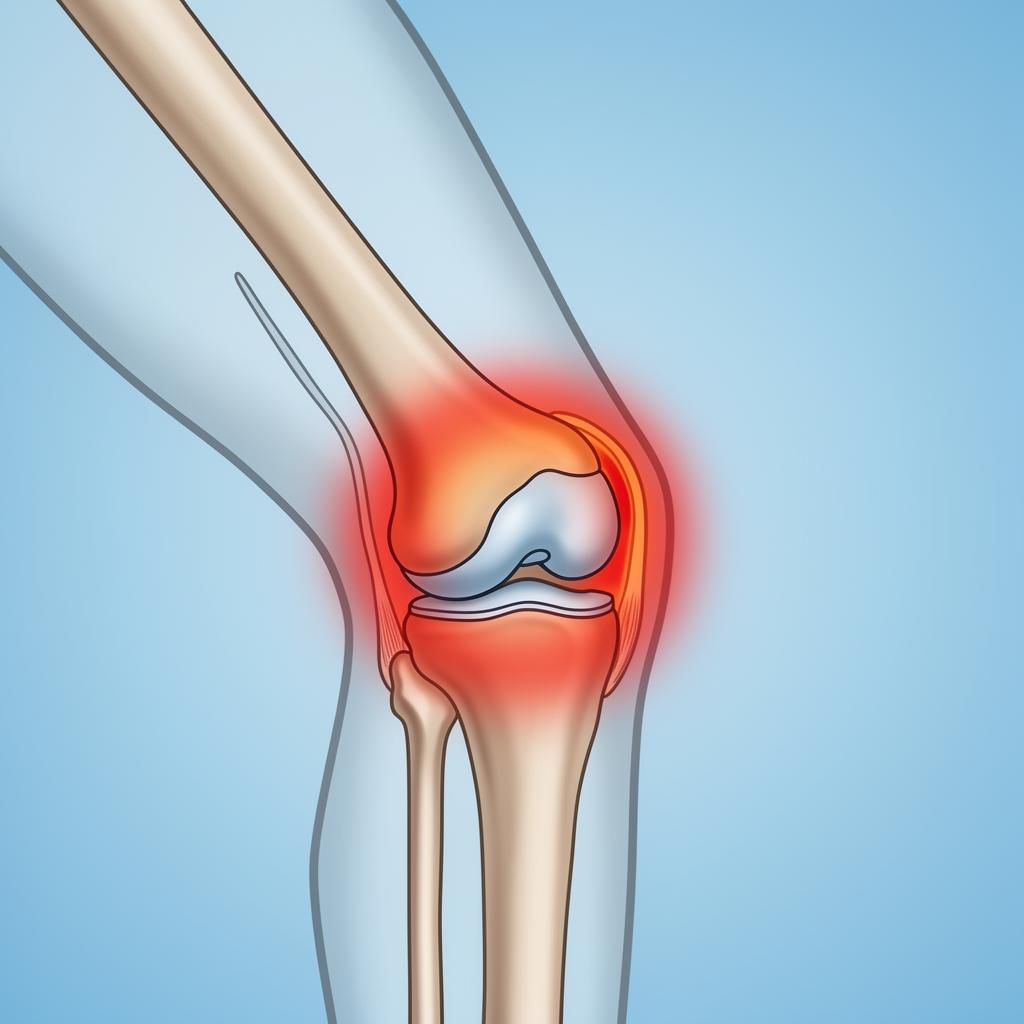
Searches connecting hiking pain with a meniscus tear are rising, but most trail pain cannot be diagnosed from the activity name. A forceful twist, joint-line pain, recurrent swelling, catching, or true locking raises a different concern from a diffuse ache that appears late in a long descent. Stop forcing the knee if it locks or loses motion and arrange an assessment.
Pack Weight: Reduce Load Without Using a False Universal Limit
A heavier pack adds demand to climbs, descents, and balance corrections. There is no single body-weight percentage that guarantees knee safety because terrain, trip length, water needs, experience, conditioning, and equipment all matter. Keep the safety equipment the route requires, remove avoidable weight, and compare the same type of route with a lighter pack.
If carrying weight is the workout itself, use the rucking guide rather than applying hiking advice to a progressive weighted program.
Do Trekking Poles Help Bad Knees?
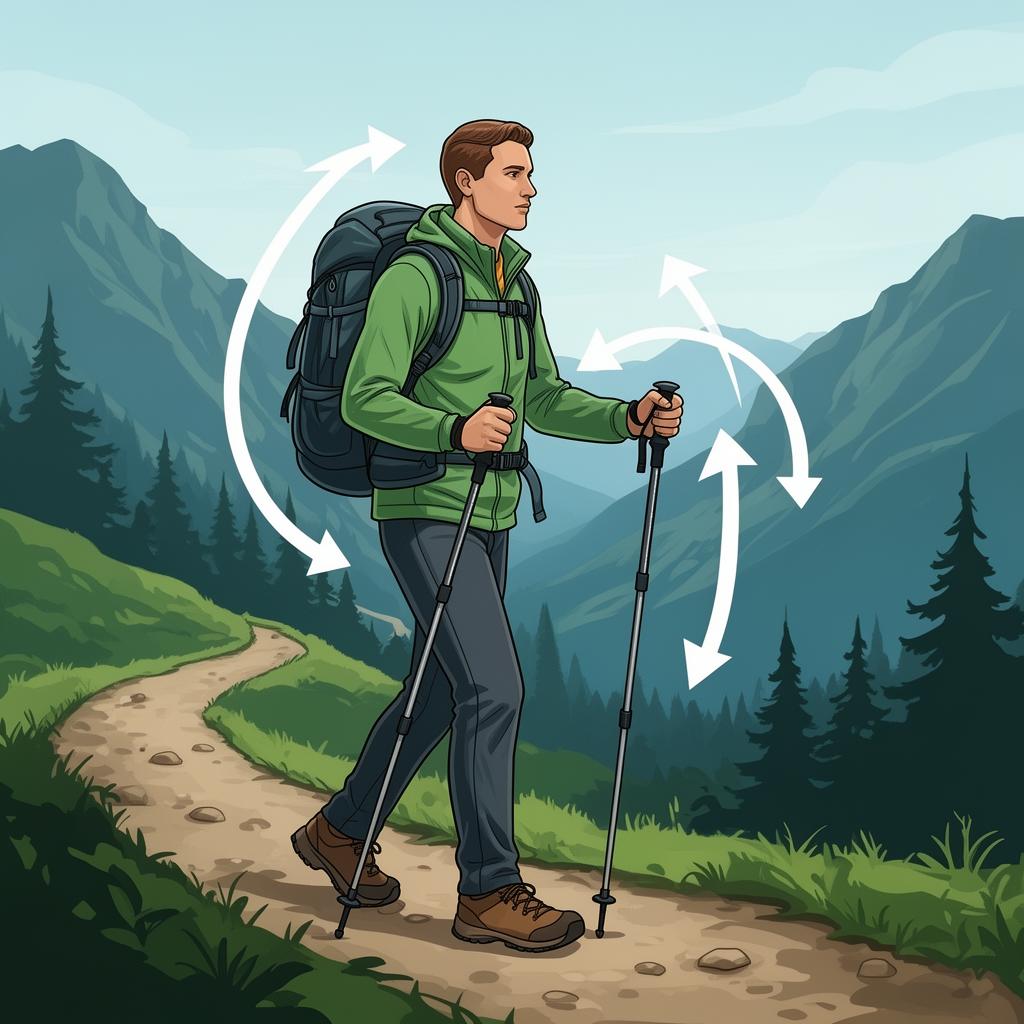
Small biomechanics studies have reported changes in lower-limb forces or moments when poles are used during downhill walking. These studies involved small groups and controlled conditions, so a percentage reduction should not be promised to every hiker. In practice, poles may help by adding contact points, improving balance, and allowing some force to pass through the upper body when technique and pole length are appropriate.
Trail Adjustments to Test One at a Time
- Shorten downhill steps. Keep the landing closer to the body and control speed.
- Lower route difficulty. Reduce descent grade, elevation gain, or technical terrain.
- Lighten the pack. Remove nonessential items without compromising safety.
- Use poles deliberately. Practice on easy terrain before relying on them on a steep descent.
- Build specific capacity. Step-downs, calf raises, hip strength, and controlled step-ups can prepare the demands gradually.
- Check footwear function. Prioritize fit and reliable traction; cushioning or ankle height alone cannot prevent knee pain.
What to Do When Pain Appears After Hiking
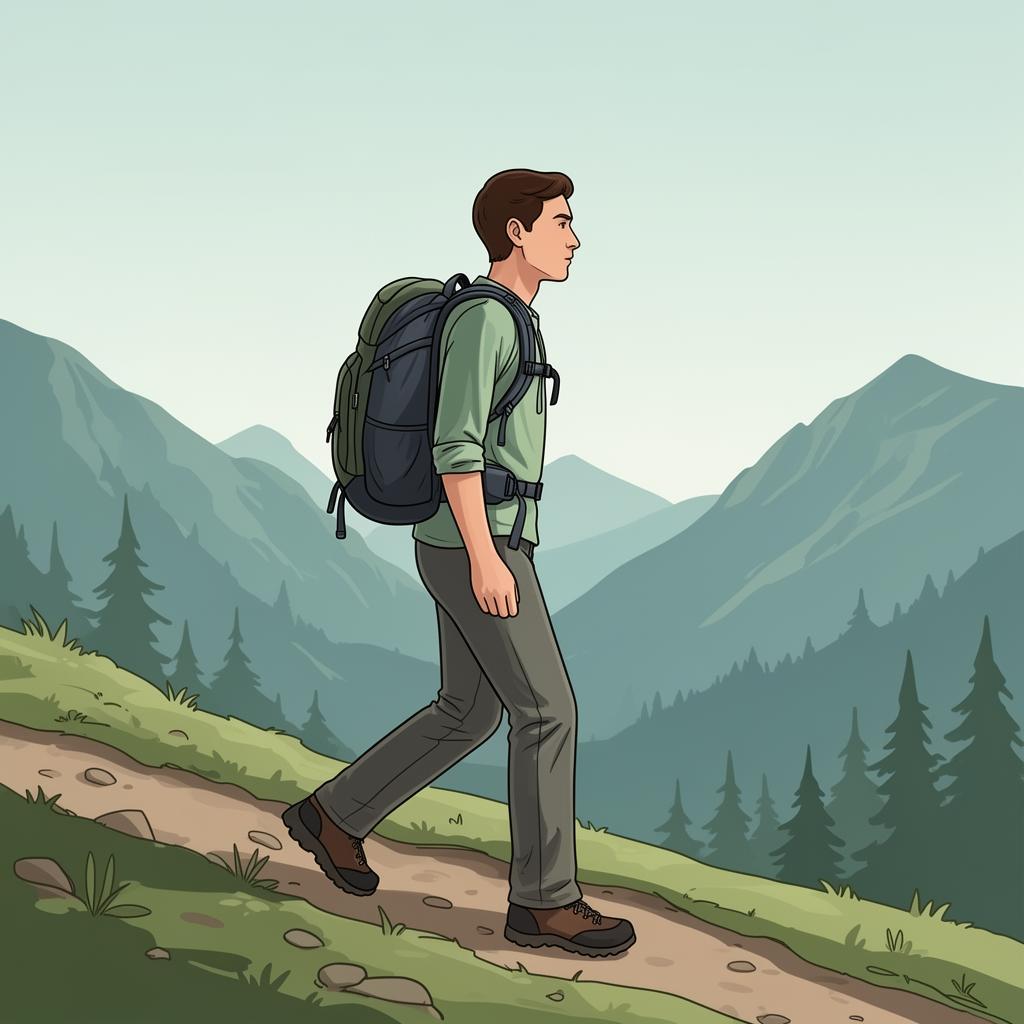
Record the route distance, total descent, steepest section, pack, footwear, point at which pain began, and next-morning response. Avoid testing the same demanding route while the knee is still more painful or swollen. Comfortable everyday movement is reasonable when it does not worsen symptoms, but persistent pain should not be hidden with a device so the same load can be repeated.
For a general delayed exercise response that is not trail-specific, continue with knee pain after exercise. That page owns the broader workout cluster.
When to Stop the Hike or Get Medical Help
Turn back or use the safest available exit when the knee gives way, locks, rapidly swells, cannot bear weight, or follows a significant twist or fall. Seek urgent guidance for a hot red swollen knee with fever, a deformed knee, or new calf swelling with chest pain or breathing difficulty. Arrange an assessment when pain keeps returning on easier routes, swelling recurs, or normal walking remains limited.
The Bottom Line
Knee pain when hiking is not one exposure. Uphill force, downhill braking, uneven terrain, total duration, and pack weight can each dominate. Find the section of the route that reproduces the problem, change one variable, and use poles as a load-management tool rather than a guarantee. This keeps the hiking page distinct from trail running, rucking, and shopping-focused pole content.
If the climb itself is the main trigger, compare grade and duration in the incline walking knee pain guide. If symptoms appear during the return down, the downhill braking guide explains the related descent mechanics while keeping hiking and running progressions separate.
For gear selection and technique, use the focused guide to choosing and sizing hiking poles for bad knees. It explains grip, locks, shaft material, downhill setup, and why proper pole placement matters more than an anti-shock label.
Frequently Asked Questions
Why do my knees hurt when hiking?
Hiking combines uneven footing, repeated climbs and descents, longer duration, and sometimes a backpack. Front-of-knee pain often becomes clearer on descents, while uphill pain may be linked to greater knee bend and force. Location and whether pain occurs uphill, downhill, or only after the hike are more useful than the word hiking alone.
Why does my knee hurt more hiking downhill?
The lead leg repeatedly brakes the body during a descent while the quadriceps work to control knee bend. Steeper terrain, long strides, fatigue, and pack weight can increase that demand. Shorter controlled steps and a less demanding route are useful first adjustments.
Why does my knee hurt hiking uphill?
Uphill steps require repeated knee and hip extension, often from a deeper bend. Large step-ups, steep grades, fatigue, and a rapid increase in elevation gain can expose a front-of-knee, tendon, or muscle-capacity pattern.
Do hiking poles reduce knee pain?
Small laboratory studies suggest poles can change lower-limb loading during downhill walking, but the effect varies with technique, terrain, speed, and pack weight. Poles can also improve balance and confidence. They are a tool, not proof that a painful knee is safe to keep loading.
Can a meniscus tear cause pain when hiking?
A meniscus problem is one possible cause, but pain on a trail does not diagnose a tear. A twist, joint-line pain, recurrent swelling, catching, or true locking deserves assessment. Many hiking-related aches arise without a meniscus injury.
What helps knee pain after hiking?
End the demanding exposure, check for swelling and loss of motion, and use comfortable walking or rest according to the response. Reduce the next route's distance, descent, pack weight, or pace. Persistent next-day pain, recurrent swelling, or worsening function needs assessment.
How heavy should my hiking backpack be if my knees hurt?
There is no universal safe percentage. Start with the equipment genuinely required for safety, remove unnecessary weight, and test distance and elevation with a lighter load. Technical terrain, experience, conditioning, and the individual knee matter as much as body-weight percentage.