A search for HYROX knee pain often leads to a list of stretches or a claim that one station is always responsible. That is too simple. The current Singles format alternates one kilometer of running with eight workout stations. The event therefore exposes the knee to repeated transitions: running into pushing, pushing back into running, then later lunging and squatting when fatigue is higher. The same person might complete a fresh set of lunges comfortably on Tuesday yet feel pain during race simulation on Saturday.
This guide does not diagnose the cause from a screen. It helps you map symptoms to the demands that surround them, preserve the training you still tolerate, and know when self-management is no longer the right experiment. If your main issue occurs during ordinary running rather than hybrid sessions, start with the broader running knee pain guide.
What HYROX Actually Asks of the Knee
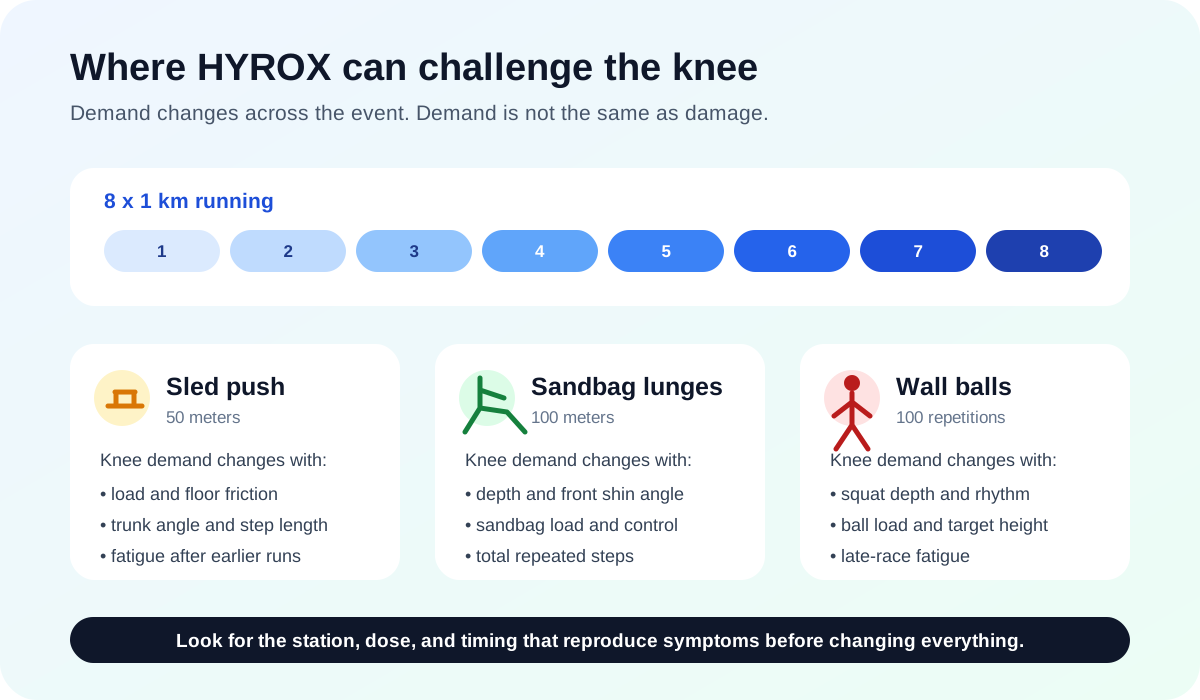
The official Singles sequence uses eight one-kilometer runs, each followed by a workout station: SkiErg, sled push, sled pull, burpee broad jumps, rowing, farmer carry, sandbag lunges, and wall balls. The exact prescribed loads vary by division and the rules can change between seasons, so the current rulebook should be checked before a race. The important knee lesson is more stable: there are eight kilometers of running, plus repeated loaded or deep knee-flexion tasks.
A small 2025 study followed 11 recreational HYROX athletes during a simulated competition. Running occupied more total time than the workout stations, while heart rate, blood lactate, and perceived effort reached their highest values during the final wall-ball station. That study describes physiological demand, not injury rates, and the sample is far too small to predict who will develop knee pain. It does support a practical observation: the final squats occur after a large amount of earlier work.
Start With the Pattern, Not a Diagnosis
Location and timing can narrow the conversation, but they cannot confirm a diagnosis by themselves. Pain around or behind the kneecap is often aggravated by running, squatting, stairs, and prolonged sitting. Those are also common features of patellofemoral pain, but tendons, joint surfaces, irritated soft tissue, and referred pain can create overlapping patterns. Use the visual knee pain location guide as a map, not a home MRI.
| Pattern you notice | Useful training clue | First variable to review |
|---|---|---|
| Ache around or behind the kneecap during runs, lunges, or wall balls | Symptoms rise with repeated knee flexion under load | Total running, lunge depth, wall-ball set size, and recovery between hard days |
| Pain below the kneecap during forceful push-off or deep squats | Fast or heavy loading may be more provocative than easy movement | Sled load, running speed, jumping volume, and wall-ball rhythm |
| Outer knee pain that appears after several run segments | Cumulative running exposure may matter more than a single station | Weekly run volume, surface, pace, shoes, and hip capacity |
| Swelling, catching, locking, or giving way | This is not a routine training signal to push through | Stop the provoking session and arrange an assessment |
Running: The Largest Repeated Exposure
Running is easy to underestimate because each HYROX segment is only one kilometer. Across a Singles event, however, those segments total eight kilometers. Training may add intervals, easy mileage, compromised running after stations, and separate strength sessions in the same week. A knee can therefore react to the total number of running steps even when no individual kilometer feels dramatic.
If pain begins earlier with every repeated run, review the previous two to four weeks. Did you add another HYROX class, start faster intervals, change shoes, increase long runs, or combine a heavy leg day with compromised running? There is no universal percentage that guarantees safety. The broader sports-load literature supports progressive preparation, but exact workload rules have important limitations. Your own response is more useful than forcing every week to follow an arbitrary number.
A practical adjustment is to preserve easy running while temporarily reducing the hardest exposure. For example, replace a six-round run-and-station circuit with three controlled rounds, or keep the distance but reduce pace. Do not change distance, speed, shoes, and technique together. If the knee settles, rebuild one dial. If your symptoms are specifically worse after leg day, the guide to knee ache after leg workouts can help separate strength volume from running volume.
Sled Push Knee Pain: Load Is Only Part of the Story
A sled push looks like a strength station, yet the demand is shaped by more than plates on the sled. Floor friction, shoe grip, body angle, step length, lane condition, and accumulated fatigue all change the task. A weight that moves smoothly on one turf may feel almost fixed on another. That is why copying a race load in a different gym does not guarantee an equivalent session.
Knee irritation can develop when an athlete takes long grinding steps, lets the pelvis and trunk lose position, or keeps adding load after speed has collapsed. The correction is not a single perfect sled posture. Try a lighter load, shorter work intervals, longer recovery, and a surface that allows controlled motion. Film one set from the side if possible. Look for a repeatable step rather than chasing a dramatic forward lean.
Distinguish the sled push from the sled pull. During the pull, repeated backward steps and rope handling create a different rhythm. If symptoms appear only while walking backward under tension, test that station separately. Use race-specific practice sparingly enough that you can still train general leg strength without pain dominating the week.
Sandbag Lunge Knee Pain: Depth, Distance, and Fatigue
HYROX requires 100 meters of alternating sandbag lunges, with the trailing knee touching the ground and the athlete standing tall between repetitions under the current rules. That standard creates a large number of repeated steps through a substantial range. Laboratory research shows that patellofemoral loading during a forward lunge changes with knee flexion, step length, and step height. The study does not give one magic stride that protects every knee.
In training, separate capacity from standards practice. You can build leg strength with split squats or lunges through a comfortable range, then introduce short blocks that match race depth and sandbag position. If only the full 100-meter set triggers pain, your issue may be endurance at that depth rather than inability to lunge at all. Break the distance into clean sections before trying to prove toughness in one continuous effort.
Watch whether the front foot stays stable and the knee follows the direction of the toes. A small amount of knee movement is normal, so do not freeze the joint or force it outward. The goal is controlled motion without collapsing under fatigue. Reduce the sandbag load or repetition count if technique becomes hurried. If ordinary squats also provoke the same area, compare the more detailed knee pain when squatting guide.
Wall-Ball Knee Pain: The Final 100 Repetitions
Wall balls combine a squat with an overhead throw. Under current HYROX standards, the hips must descend below the knees before the athlete rises and sends the ball to the target. One hundred repetitions at the end of the event can expose limitations that do not appear during a fresh set of ten. Squat biomechanics research shows that knee joint forces generally change as flexion increases and external load is added, but force is a normal part of movement and is not proof of damage.
Common training errors include opening with sets that are too large, rushing the descent, standing too far from the wall, and turning every missed target into an extra uncontrolled repetition. Practice sustainable set sizes before race day. If sets of 20 break your movement but sets of 8 stay clean, the smaller set may produce a faster and kinder overall station after brief planned breaths.
You can also reduce the ball load or squat range temporarily while rebuilding tolerance, then restore the competition standard progressively. This is a training modification, not a claim that a partial squat counts in the race. The goal is to earn the required range before the event rather than repeatedly irritating the knee while rehearsing it.
Why Knee Pain Can Appear After HYROX but Not During
Some athletes finish the workout feeling fine and notice an ache that evening or the next morning. That delay does not automatically mean a serious injury, and it should not be ignored simply because the race itself was tolerable. Warm tissues, adrenaline, attention, and the gradual accumulation of load can all influence when symptoms are noticed. Swelling can also take time to become obvious.
Use a three-point check: normal walking later that day, stairs that evening, and the first few minutes after getting up the next morning. A mild response that returns to your usual baseline may support repeating the same dose before progressing. A response that lasts longer, increases each session, changes your gait, or includes swelling suggests the current dose is too high or the problem needs assessment. The main knee pain after exercise guide explains this delayed pattern in more depth.
A Four-Step HYROX Knee Pain Adjustment
- Find the first change. Record the first station or run where pain rises, stride changes, squat depth becomes guarded, or confidence falls. The worst pain at the end is not always the first driver.
- Test the task fresh. On another day, perform a short, easier version after a warm-up. If it is comfortable fresh but painful late in a circuit, cumulative load and fatigue deserve attention.
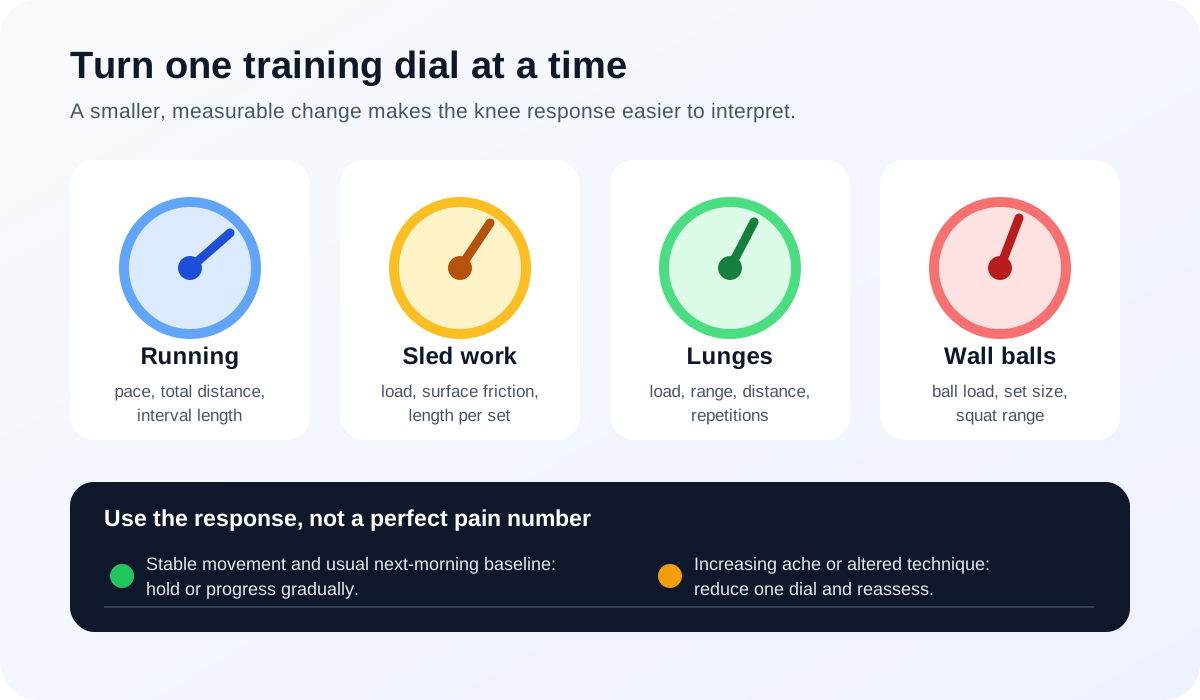
- Turn one dial down. Reduce running pace or distance, sled load or work interval, lunge load or total steps, or wall-ball load or set size. Keep other variables stable for a fair comparison.
- Use function to decide the next dose. Review walking, stairs, swelling, and the next-morning response. Repeat the same dose until it is predictable before adding more.
Pain scales can help, but they are not universal traffic lights. A low number with limping or swelling is not reassuring. A brief mild ache that settles and leaves normal movement may be acceptable in some rehabilitation plans. If you already have a diagnosis or a clinician's restrictions, their plan takes priority over a general article.
How to Keep Training Without Hiding the Problem
Complete rest can reduce fitness without identifying the specific trigger. Pushing through every station can keep the knee irritable. The middle path is selective training. Keep upper-body work, SkiErg, controlled rowing, carries, and any comfortable lower-body exercise while reducing the provoking dose. Even those stations require safe transitions and stable foot placement, so stop if the knee changes your movement.
Strength work should support race preparation rather than duplicate fatigue. Best-practice guidance for patellofemoral pain places education plus knee-targeted and hip-targeted exercise at the center of care, with additional treatments individualized. That does not mean every HYROX athlete has patellofemoral pain. It means a progressive strength base is more defensible than relying only on sleeves, massage, or endless stretching.
Choose two or three movements you can progress cleanly, such as a squat variation, split squat, step-up, hip hinge, calf raise, or knee-extension variation. The correct selection depends on symptoms, equipment, and experience. The knee strengthening guide provides a broader framework, while post-workout knee recovery exercises offers low-load options for easier days.
Plan the Week So Hard Days Do Not Collide
Many problems blamed on wall balls begin with calendar design. A heavy squat session, fast run intervals, and a full HYROX simulation within 48 hours can create three hard knee exposures even though each has a different name. Count the demand, not just the sessions. Easy aerobic work and technique practice should feel meaningfully easier than race simulation.
A sample structure could place a quality run on one day, a strength session after adequate recovery, and one hybrid session later in the week. It is only an example, not a prescription. Beginners may need fewer hard sessions. Experienced athletes may tolerate more, but should still watch for a trend in morning stiffness, swelling, declining pace, or altered mechanics.
Avoid making up for a missed week by cramming the sessions into the next one. Race readiness comes from repeated recoverable exposure. If a holiday, illness, or flare interrupts training, return below the previous peak and rebuild. The IOC consensus on sports load emphasizes the relationship between load management and injury risk, while also recognizing that athletes need adequate training to become robust.
Do Shoes or Knee Sleeves Fix HYROX Knee Pain?
HYROX shoes
Shoes must handle running and provide enough grip for sled work. There is no single shoe that prevents knee pain for everyone. Comfort, fit, stable contact, familiarity, and traction on the event surface matter more than a marketing label. A highly cushioned model may feel good while running but less secure during a heavy sled push. A firm shoe may feel stable on stations but unfamiliar over eight kilometers.
Test the same pair during compromised running and sled practice, not only on a treadmill. Do not switch models in the final week unless the old pair is unsafe. For a more detailed discussion of comfort, support, and individual fit, see running shoes for knee pain.
Knee sleeves
A compression sleeve can provide warmth, light compression, or a sense of support. It cannot compensate for a rapid training spike, restore lost strength, or stabilize a knee that repeatedly gives way. Current Singles rules state that knee sleeves may be used if they are worn or carried from start to finish. Rules can change, so verify the current document for your division and event.
Train with the exact sleeve before racing. Check for bunching behind the knee during lunges, slipping during runs, and uncomfortable pressure during deep wall balls. The comparison of knee braces and compression sleeves explains when a more structured support is a different category entirely.
Race-Week and Race-Day Choices
Race week is not the time to prove that the knee can survive one last maximal simulation. Reduce fatigue, keep familiar movement, sleep, and prepare equipment you have already tested. If symptoms are worsening as the event approaches, obtain an assessment rather than using anti-inflammatory medicine, tape, or a sleeve solely to hide a warning signal.
On race day, warm up enough to check the knee without creating another workout. Begin the running segments at a pace that leaves room for later stations. Use planned wall-ball breaks before technique collapses. Keep lunge steps deliberate and respect the movement standard. A few seconds spent resetting position can be more valuable than rushing into repeated no-reps.
The rulebook says athletes with an injury should obtain clearance from a qualified health professional before competing. If symptoms worsen on race day, follow event medical personnel and stop rather than forcing the finish.
When to Get Medical Help
Arrange an assessment if pain keeps worsening, repeatedly changes your running or squat, regularly wakes you, or returns with swelling, catching, locking, or giving way. Seek urgent medical guidance for a very painful or deformed knee, inability to bear weight, rapid swelling, a hot red knee with fever, new calf swelling with chest pain or breathing difficulty, or a cold or discolored foot.
A clinician may examine strength, range, swelling, joint stability, and the movement that reproduces symptoms. Imaging is not automatically required for every ache. The decision depends on the history, examination, injury mechanism, and whether the result would change management.
The Bottom Line
HYROX combines repeated running with stations that ask the knee to push, lunge, and squat under increasing fatigue. That makes the sport trainable, not automatically dangerous. Identify the earliest provoking task, adjust one variable, keep tolerable fitness around it, and progress only when ordinary walking and the next-morning response stay predictable. Shoes and sleeves may improve comfort, but preparation is built through recoverable exposure and strength. Treat swelling, locking, instability, inability to bear weight, and traumatic pain as reasons to step out of the circuit and get the knee properly assessed.
Frequently Asked Questions
Is HYROX bad for your knees?
HYROX is not automatically bad for healthy knees, but it combines repeated running with loaded pushing, lunging, and squatting. Knee symptoms are more likely when total training demand rises faster than your current capacity, technique changes under fatigue, or an existing problem is already irritable. Build volume progressively and investigate persistent swelling, locking, or instability.
Why do my knees hurt after HYROX but not during?
Race intensity, warm tissues, and attention on the event can make symptoms less noticeable during exercise. Irritation may become clearer later as the knee cools or the cumulative response develops. Review the station that first changed your movement, then compare the evening and next-morning response instead of judging the session only at the finish line.
Can I train for HYROX with knee pain?
Sometimes, if symptoms are mild, stable, and do not alter your stride or technique. Reduce one provoking variable and keep tolerable training around it. Stop and seek assessment for a new injury, rapid swelling, inability to bear weight, locking, repeated giving way, or symptoms that keep worsening despite a reduced load.
Should I wear knee sleeves for HYROX?
A sleeve may provide warmth, light compression, or confidence, but it does not correct poor load management or make an unstable knee safe. Current HYROX rules allow knee sleeves when they are worn or carried from the start, so confirm the latest event rulebook and test the exact sleeve in training.
When should knee pain stop me from racing?
Do not race on a knee that is rapidly swollen, locked, deformed, unable to accept normal walking weight, repeatedly giving way, or painful after a clear injury. Fever with a hot red swollen knee, new calf swelling with chest pain or breathing difficulty, or a cold discolored foot needs urgent medical guidance.