Low impact does not mean the knee is unloaded
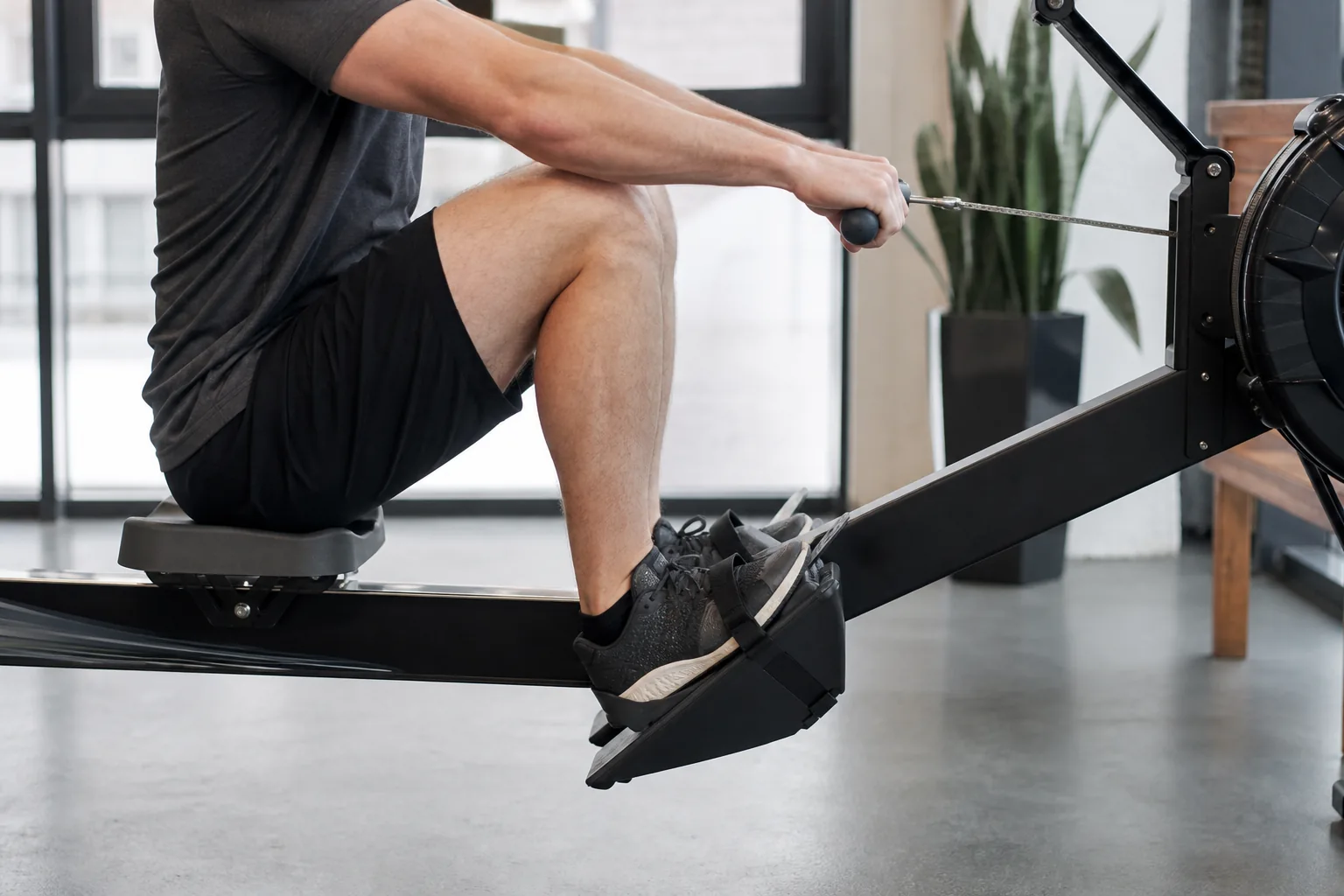
On a rowing machine, your feet remain supported and there is no landing with each stroke. That can make rowing an appealing alternative to impact exercise. However, the knees still bend repeatedly and the legs push against resistance. A long or forceful session can be demanding even when the movement feels smooth and quiet.
Knee pain may relate to how far you slide into the catch, how the feet are positioned, how you start the drive, or how quickly the rowing dose increased. It may also reflect a knee problem that is not specific to rowing. The task is to identify an adjustable pattern without assuming that one posture explains every symptom.
Begin with the timing: pain at the deepest bend, on the first push, near straightening, late in the workout, or afterward. Also ask whether walking, stairs, or sitting with bent knees reproduces it. A symptom that appears across daily activities needs a broader view than changing the rower's settings alone.
Learn the four parts of the stroke before chasing pace
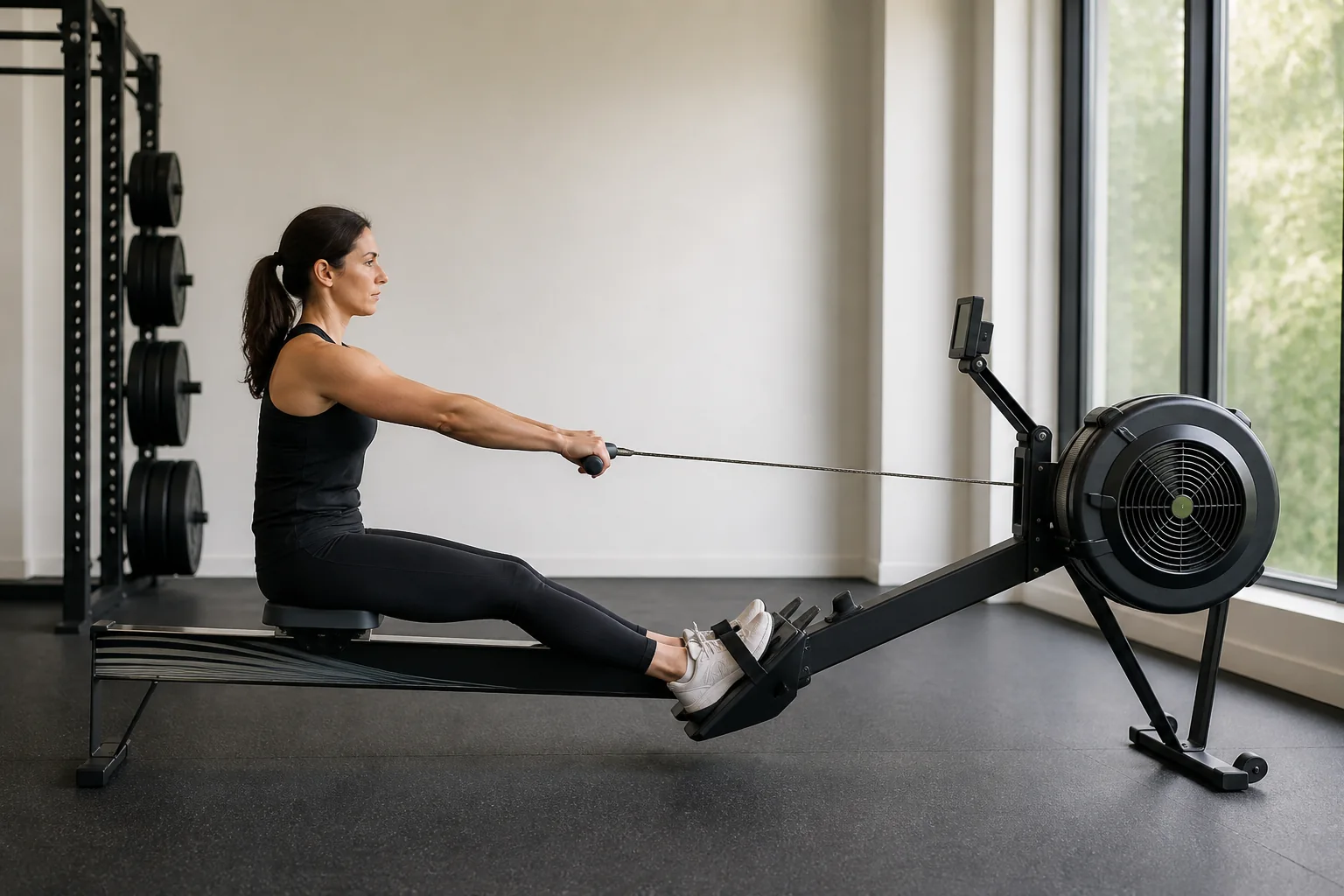
The catch is the forward position before the drive. The drive moves the seat and handle away from the flywheel as the legs press, the body swings, and the arms finish the pull. The finish is the back position. Recovery returns you toward the catch in a controlled sequence.
Concept2's technique guidance describes straight arms and a comfortable forward hip hinge at the catch, with shins near vertical rather than pushed beyond it. The drive starts with the legs, then the body and arms contribute. During recovery, the hands move away before the knees rise. These are useful teaching cues, not an invitation to force your body into a shape that hurts.
If the stroke feels unfamiliar, practice at easy effort before looking at a target split or distance. Trying to learn several new cues while rowing hard makes it difficult to notice which change helps. A coach can often identify a clear sequencing issue more efficiently than repeated trial-and-error changes to the machine.
Check catch depth before pushing the knees farther forward
At the catch, more compression does not automatically create a better stroke. Sliding until the seat is almost against your heels can crowd the knees and leave you in an awkward position to push. Concept2 identifies overcompression as a technique error. Aim for a comfortable catch with the shins roughly vertical or as close as comfortably available.
If the front of the knee hurts at the deepest part of the slide, try stopping slightly earlier during an easy practice stroke rather than forcing the same depth. Keep the movement smooth and avoid bouncing into the catch. A temporary shorter slide is a way to explore tolerance, not proof that you have corrected a diagnosed condition.
Body proportions, hip motion, ankle motion, and abdominal space can affect how the catch looks. Do not judge it solely by whether your knees touch your chest or whether your heels stay completely flat. Heels may lift as needed in normal rowing technique. Forcing the heels down while still chasing a deep catch can produce a different compensation.
| Stroke phase | What to observe | First question |
|---|---|---|
| Catch | Pain at the deepest bend or seat crowded toward heels | Would a comfortable shorter slide help? |
| Early drive | Pain during a forceful initial push | Is effort too high or the catch cramped? |
| Finish | Pain with a snapped endpoint | Can you finish smoothly without hyperextension? |
| Recovery | Knees rise before the handle passes | Can hands and body prepare before sliding? |
Set the footplates for secure contact and a comfortable stroke
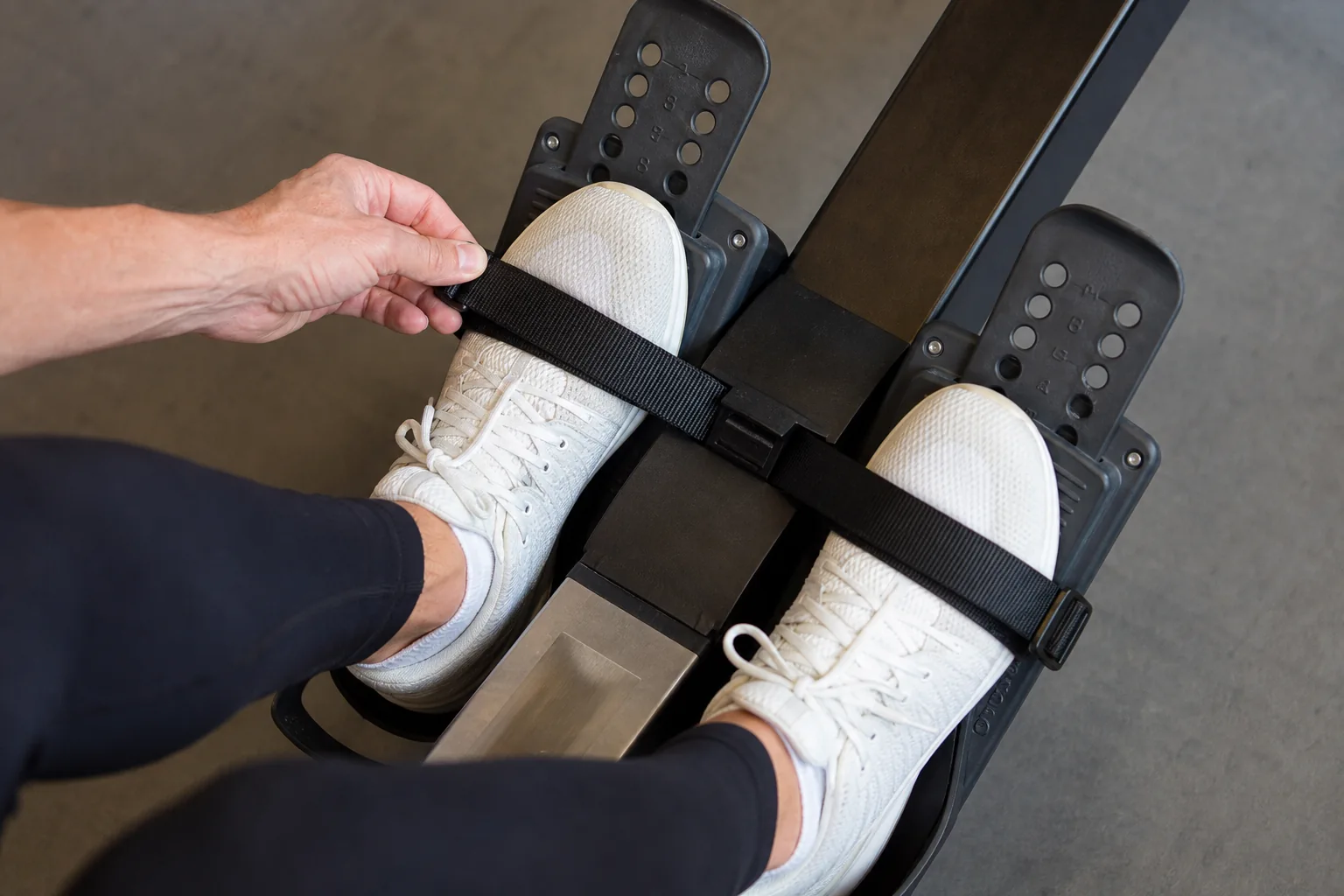
Follow the rower's instructions for heel-cup or footplate adjustment. On a Concept2 RowErg, a common starting point places the strap across the ball of the foot. The numbered setting is a practical reference, not a knee-treatment setting. Foot length, shoe shape, and the machine design all affect where the foot sits.
Check both feet before the session. The heel cups should support the shoes as intended, and the straps should be secure without causing numbness or forcing the foot into an awkward position. A foot that slips or rotates during the drive can distract you from the stroke and make the comparison between settings unreliable.
If you change foot height, make a small permitted adjustment and try it gently. Notice catch comfort, heel contact, and whether the knees have room to move without an exaggerated splay or squeeze. There is no universal rule that every painful knee needs the feet as low as possible. An adjustment that helps one body may make another person's stroke less comfortable.
Shoes and foot straps can change the feel
A very bulky shoe heel may sit poorly in a small heel cup. A high or rigid collar can also feel uncomfortable as the ankle position changes through the stroke. Concept2's comfort guidance specifically discusses shoe shape and heel contact. Choose a secure arrangement that fits the machine rather than assuming your softest running shoe is automatically best.
Avoid tightening the straps to the point of pressure or numbness. They help keep the feet positioned, but they should not become handles that you pull against aggressively to rush the seat forward. If you are relying heavily on the straps at the finish, review your body position and recovery control with a coach.
Some experienced rowers use feet-out drills, but removing straps is not a necessary first step when you are troubleshooting pain or still learning balance on the seat. Start with the manufacturer's normal secured setup. Keep footwear and strap tension consistent while testing another variable, otherwise several changes happen at once.
Start the drive with a smooth leg push
At the start of the drive, press through the footplates without jerking the handle or kicking suddenly from a cramped catch. The seat and handle should begin moving in a coordinated way. If the seat shoots backward while the handle barely moves, you may be losing the connection between the leg push and the rest of the stroke.
Keep the arms relatively long early in the drive, then allow the body swing and arm pull to contribute in sequence. Do not hold a rigid body position so forcefully that you create pain elsewhere. The cue is smooth coordination, not an exact percentage of effort assigned to each body part.
If knee pain appears during a hard first push, reduce effort and check the catch position before trying another forceful stroke. You can lower the workout demand without abandoning the entire session, provided an easy comfortable version is available. If even a gentle push hurts, stop the exercise rather than repeatedly testing whether a harder push will feel different.
Let the hands clear the knees on recovery
After the finish, send the hands away and begin the comfortable forward body hinge before allowing the knees to rise. If the knees come up too soon, the handle has to travel around them. Concept2 describes this as a common technique error. It can make the return feel rushed and disrupt the next catch.
Practice a few easy strokes with attention on this sequence rather than on speed. You should not need to lift the handle over a large knee obstacle on every recovery. Avoid yanking yourself forward with the straps or slamming into the front of the slide. The recovery is an opportunity to reset the next stroke, not a race to the flywheel.
At the finish, the legs can be extended without snapping the knees backward. A small supported body lean is different from an exaggerated layback that forces you to pull hard against the feet. If pain occurs near straightening, review the endpoint and effort rather than insisting on a forceful lockout.
Damper, resistance, and stroke rate are different variables
On an air rower, the damper changes how air moves through the flywheel housing and affects the feel of the stroke. It is not a direct difficulty score and does not replace your own effort. You can row hard at a lower damper setting or gently at a higher one, although the sensation and force pattern differ.
Concept2 distinguishes the damper lever from drag factor, which reflects how quickly the flywheel slows. Machines can feel different at the same lever number because condition and environment vary. Follow manufacturer guidance and choose a manageable feel rather than assuming the maximum setting is required for a useful workout.
Magnetic and water rowers use different systems, so do not copy an air-rower setting into another machine as if the scales were equivalent. Stroke rate is another separate measure: fewer strokes do not guarantee gentle rowing if each push is maximal. Likewise, a fast rate may encourage rushing even when the display shows a moderate pace.
| Variable | What it describes | Common mistake |
|---|---|---|
| Damper setting | Airflow and stroke feel on an air rower | Treating the highest number as the best workout |
| Drag factor | Measured flywheel deceleration on supported machines | Assuming equal lever numbers feel identical |
| Stroke rate | How often you complete a stroke | Assuming a slow rate means low force |
| Session duration | Total time repeating the movement | Ignoring long easy sessions as a source of dose |
Reduce the dose that actually provokes symptoms
Rowing dose includes session duration, number of sessions, force per stroke, stroke rate, and how much other leg activity surrounds it. A beginner may increase several of these at once after discovering that rowing feels easier on the lungs than running. The knee may still react to the repeated bending and pushing.
Use short easy bouts while learning or returning after irritation. End before technique deteriorates or the familiar pain escalates, then check the later and next-morning response. You do not need a universal pain score cutoff or a fixed weekly percentage increase to make that decision. Function, swelling, and whether you are changing the stroke to avoid pain also matter.
If a short row is comfortable but symptoms appear late in longer sessions, review total duration and fatigue before changing footplates repeatedly. If the first few strokes hurt at the same point regardless of duration, setup, range, or the knee itself may need more attention. The timing helps choose the next question.
A structured troubleshooting row
Start when daily movement is reasonably comfortable and no warning signs are present. Check the seat, rail, footplates, straps, and handle connection. Do not use a machine with an unstable seat or a mechanism that catches. Warm up at an easy effort and choose one clear variable to examine, such as catch depth.
Keep the test brief enough that fatigue does not obscure the result. If a shallower comfortable catch helps, repeat it before changing foot height or resistance. If foot contact is the obvious issue, correct that first and leave the other settings steady. Record what changed rather than relying on a vague memory that one session felt better.
| Test | Keep unchanged | Review afterward |
|---|---|---|
| Slightly shorter comfortable catch | Easy effort, same foot setting and shoes | Knee response during bending and next morning |
| Corrected foot contact | Same short session and manageable effort | Slipping, pressure, and catch comfort |
| Calmer recovery sequence | Same catch depth and resistance setting | Whether rushing and handle obstruction improve |
| Reduced overall session dose | Same comfortable setup | Later pain, swelling, and ordinary stairs |
Review the knee after getting off the machine and the following morning. A comfortable row that is followed by swelling or difficulty on stairs has not passed the whole test. If symptoms keep returning despite an easy controlled version, stop experimenting and get an assessment. Our guide to swelling after exercise explains why that sign deserves attention.
What pain location can and cannot tell you
Front-knee discomfort during repeated bending can occur in a patellofemoral pain pattern, but rowing pain is not automatically “runner's knee.” Symptoms at the inner, outer, or back of the knee also have multiple possible explanations. A rower setup video cannot rule out an injury or a joint problem.
Describe where the symptom occurs, which phase triggers it, and whether there is swelling, catching, instability, or a recent injury. Our guide to pain behind the kneecap and knee pain location guide can help organize that description. They do not identify a diagnosis from the stroke phase.
After surgery, including knee replacement or ligament reconstruction, ask the treating team about permitted bending, resistance, and return to rowing. The absence of impact does not override an individual restriction. If you have limited balance or difficulty getting on and off the seat, machine access is another issue to discuss before training alone.
If rowing is not comfortable right now
Choose another tolerable activity while the cause is clarified. Stationary cycling may feel different because the movement and setup differ, but it also needs an appropriate fit. Our cycling knee-pain and bike-fit guide covers that option. Do not transfer the entire rowing workout into a new machine on the first day.
A broader strengthening plan may help build capacity when selected for your situation. See how to strengthen your knees for a general framework. A compression sleeve may provide comfort for some users, but it cannot correct an overcompressed catch or turn persistent pain into a safe training signal.
When to Get Medical Help
Seek prompt care for significant injury, major swelling, locking, giving way, inability to bear weight, or a hot red knee with fever. Arrange assessment if pain persists with easy rowing, affects daily walking or stairs, or keeps returning despite sensible changes. Follow individualized advice after surgery rather than using this guide as clearance.
The bottom line
A comfortable rowing stroke begins with a manageable catch, secure feet, a smooth drive, and an unhurried recovery. Adjust one relevant variable at a time and judge the response beyond the workout itself. The goal is repeatable, comfortable training, not the deepest slide, highest damper, or fastest split you can force through a sore knee.
Frequently Asked Questions
Can a rowing machine cause knee pain?
It can aggravate symptoms through repeated bending and pushing, an uncomfortable setup, or a rapid increase in training. Low impact does not mean the knee is unloaded. Review the phase that hurts and the overall dose.
Is rowing good for bad knees?
Some people tolerate rowing well, while others find the bending or leg drive uncomfortable. Suitability depends on the knee problem and setup. It is not automatically appropriate after injury or surgery without individualized advice.
Why do my knees hurt at the catch?
The catch may be too compressed for your current comfort, or a knee problem may be sensitive to bending. Try a gentle shorter slide rather than forcing depth. Persistent pain or a painful block needs assessment.
Should my shins be vertical when rowing?
Concept2 teaches shins near vertical or as close as comfortably possible, without forcing them beyond that position. Body proportions and mobility vary. Do not chase an exact shape through pain.
Should my heels stay down on a rowing machine?
Heels may lift as needed at the catch. Forcing them down while pursuing extra compression is not necessary. Follow your machine's technique guidance and aim for secure, comfortable foot contact.
Where should rowing-machine foot straps sit?
On a Concept2 RowErg, the strap commonly crosses the ball of the foot. Use the instructions for your actual rower, check heel-cup fit, and avoid pressure or numbness from overtightening.
Does lowering the damper protect my knees?
A lower damper may change the stroke feel, but it does not guarantee a lower effort or pain-free knee. Your push intensity, rate, technique, and duration still matter. Do not use the lever as the only adjustment.
Why do my knees hurt after rowing rather than during it?
A delayed reaction may reflect total training demand or another knee problem. Check the response later and the next morning, especially swelling or difficulty on stairs. Reduce the dose and seek review if it recurs.
Can I row after a knee replacement?
Ask your treating team about bending range, resistance, machine access, and progression. The answer depends on your recovery and individual restrictions. Low impact alone is not clearance.