Gym comparisons often reduce this decision to a slogan: the treadmill is gentler, or the StairMaster burns more. Neither statement is reliable without the settings and the person. A slow walk at a modest incline is different from a fast walk at 15 percent. A brief, low-level stair session is different from 30 minutes of fast stepping while leaning on the console.
This guide uses StairMaster as the familiar search term for a rotating stair-style machine. Independent-pedal steppers feel different and should be tested separately. The goal is to compare repeated climbing with uphill walking, not to label one brand universally knee-friendly. If ordinary walking is the main trigger, begin with knee pain after long walks before adding either machine.
StairMaster vs Incline Treadmill: The Main Difference
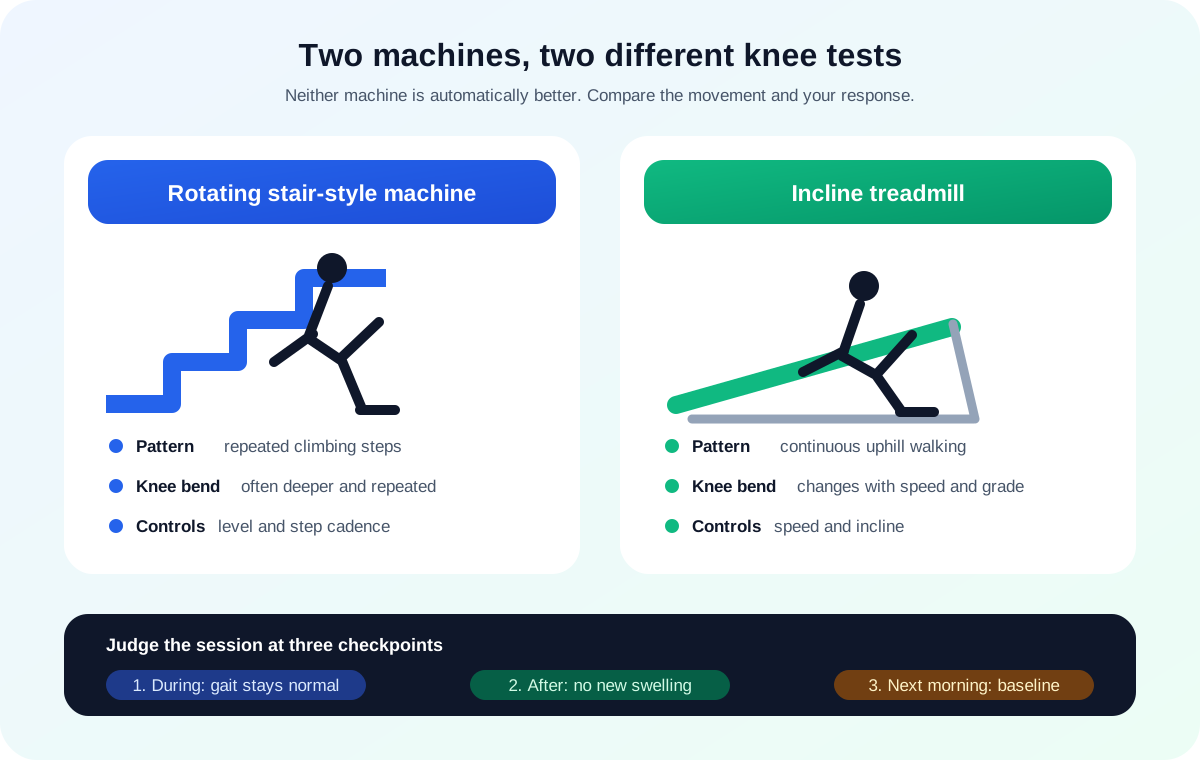
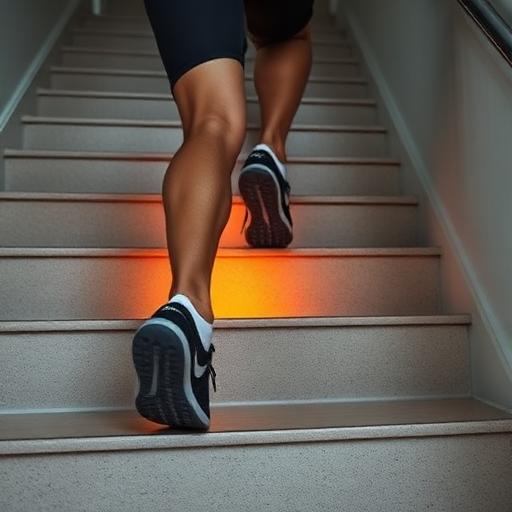
A stair-style machine asks you to lift the body from one step to the next, repeatedly. The knee bends, the quadriceps control the body, and the working leg accepts a large share of your weight. There is no downhill phase on a rotating stepmill, so research on real stair descent should not be transferred directly. Research on stair ascent is still a useful biomechanical clue.
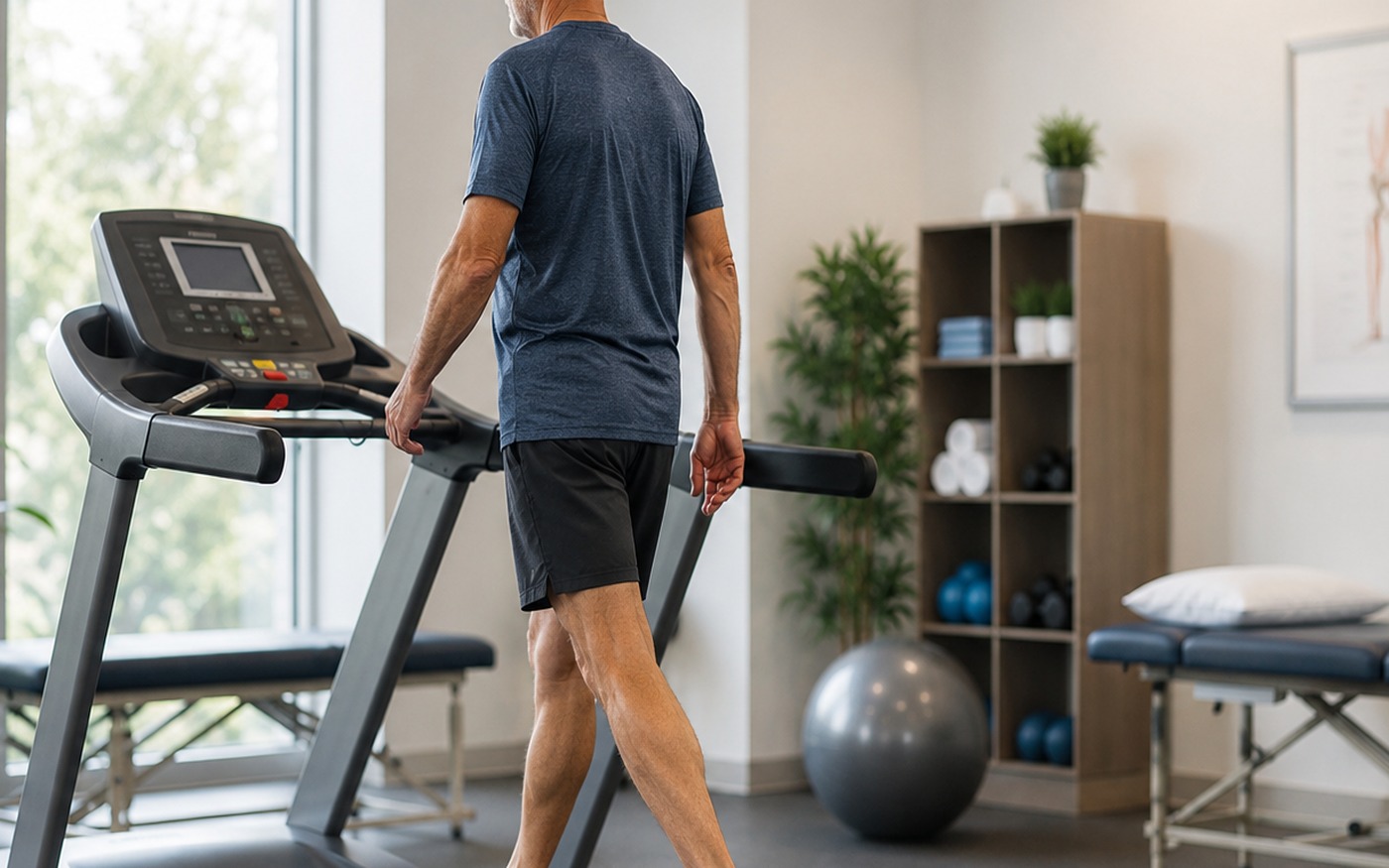
An incline treadmill keeps the walking pattern while letting you adjust grade and speed separately. Uphill walking can raise cardio demand at a slower pace, but greater grade also changes joint angles and muscle work. The full incline walking with knee pain guide covers grade progression, hills, and 12-3-30 modifications.
| Question | Rotating stair-style machine | Incline treadmill |
|---|---|---|
| Movement pattern | Repeated step-up and climbing pattern | Continuous uphill walking |
| Main controls | Step level or cadence, plus duration | Speed, percent grade, and duration |
| Typical knee demand | More repeated knee bend and quadriceps work | Changes widely with pace and grade |
| Useful first choice when | Stairs are already comfortable and climbing fitness is the goal | You want fine control or stairs currently provoke symptoms |
| Common form problem | Hanging on the rails or allowing the steps to carry the feet down | Using a grade that forces rail pulling, overstriding, or toe-only steps |
What Joint-Loading Research Can and Cannot Tell Us
Direct clinical trials that assign people with knee pain to a commercial StairMaster or incline treadmill are limited. The best comparison therefore combines studies of stairs, uphill walking, and patellofemoral loading. That evidence can explain why a movement feels different, but it cannot predict your pain from a machine name.
A systematic review and meta-analysis of patellofemoral joint reaction force found that stair ascent generally produces greater modeled force at the kneecap joint than level walking. Activities with more knee flexion and quadriceps demand tend to increase this load. A stepmill repeats the ascent task, which helps explain why someone with pain around or behind the kneecap may notice it quickly. It does not prove that the machine damages cartilage or should be avoided forever.
Incline findings depend on the setup. One small healthy-adult study found altered mechanics and lower peak knee-abduction moments at most tested grades. Another found that slow uphill walking reduced several loading measures versus faster level walking at comparable moderate metabolic demand in adults with obesity. Neither measured pain or proves incline is treatment. Speed, grade, and population matter, so use the setting that preserves a controlled stride and repeatable response.
Which Is Better for Different Knee-Pain Patterns?
Pain around or behind the kneecap
Patellofemoral pain commonly becomes noticeable with stairs, squats, and prolonged sitting. If climbing ordinary stairs already hurts, a rotating staircase is usually a poor first test because it closely repeats the provocative task. A level or low-incline treadmill at a comfortable speed may be easier to dose. Review the knee pain while climbing stairs guide and rebuild the missing capacity instead of using cardio as a daily pain test.
Stiffness or osteoarthritis-related symptoms
Movement can support function for many people with knee osteoarthritis, but the diagnosis does not produce one correct machine. Some prefer rhythmic walking; others like a shorter stepping session. Begin below the level that changes your gait, allow a longer warm-up, and avoid making grade, speed, and duration jump together. Swelling or a clear loss of motion after exercise means the dose or the diagnosis needs review.
Tendon or recent training-load pain
Pain below the kneecap or at the quadriceps tendon can be sensitive to repeated knee-extensor work. A stair machine may feel especially demanding, but steep incline walking can also increase muscular demand. Keep the option that produces the calmer response and reduce the newest load elsewhere in training. Delayed discomfort is covered in the post-exercise knee pain guide.
Swelling, locking, or giving way
Neither machine should be used to test an acutely swollen, physically locked, or unstable knee. A moving belt or rotating staircase adds fall risk when weight bearing is unreliable. Stop and seek assessment, especially after a twist, fall, or pop. Our exercise-related knee swelling guide explains why puffiness changes the plan.
Zone 2 Cardio: Either Machine Can Work
Zone 2 describes aerobic intensity, not a StairMaster level or treadmill grade. Individual testing gives the clearest physiological zones. Age-based formulas are population estimates; your actual heart-rate response and how closely it matches a formula can vary with fitness, medication, heat, and illness, while wrist or console sensor accuracy affects the displayed reading.
Without testing, pair a sustainable talk-test effort with perceived exertion: breathing is deeper, yet complete phrases remain possible. A cardiology-focused review supports the talk test when formal testing is unavailable. Heart, lung, balance, or significant medical concerns need individualized advice.
The incline treadmill often makes Zone 2 easier to fine-tune because a small speed or grade change produces a small intensity change. A stair machine can raise effort quickly, especially for beginners. If the heart rate target requires you to pull on the rails, lose rhythm, or tolerate escalating knee pain, the setting is not useful simply because the console says you are in a zone.
StairMaster vs Incline Treadmill for Calories
Incline increases the metabolic cost of walking at the same speed in laboratory studies. Stair stepping also asks large leg muscles to lift the body repeatedly. This means both machines can provide demanding cardio, but it does not create a universal calorie winner.
Body mass, pace, incline, step cadence, step height, duration, fitness, and rail support all affect energy use. Console estimates often rely on limited inputs and should not be treated as measurements. Use them to compare similar sessions on the same machine, if at all. The better calorie strategy for knee-sensitive training is usually the workout you can perform consistently without losing the next session to a flare.
A Controlled First-Test Protocol
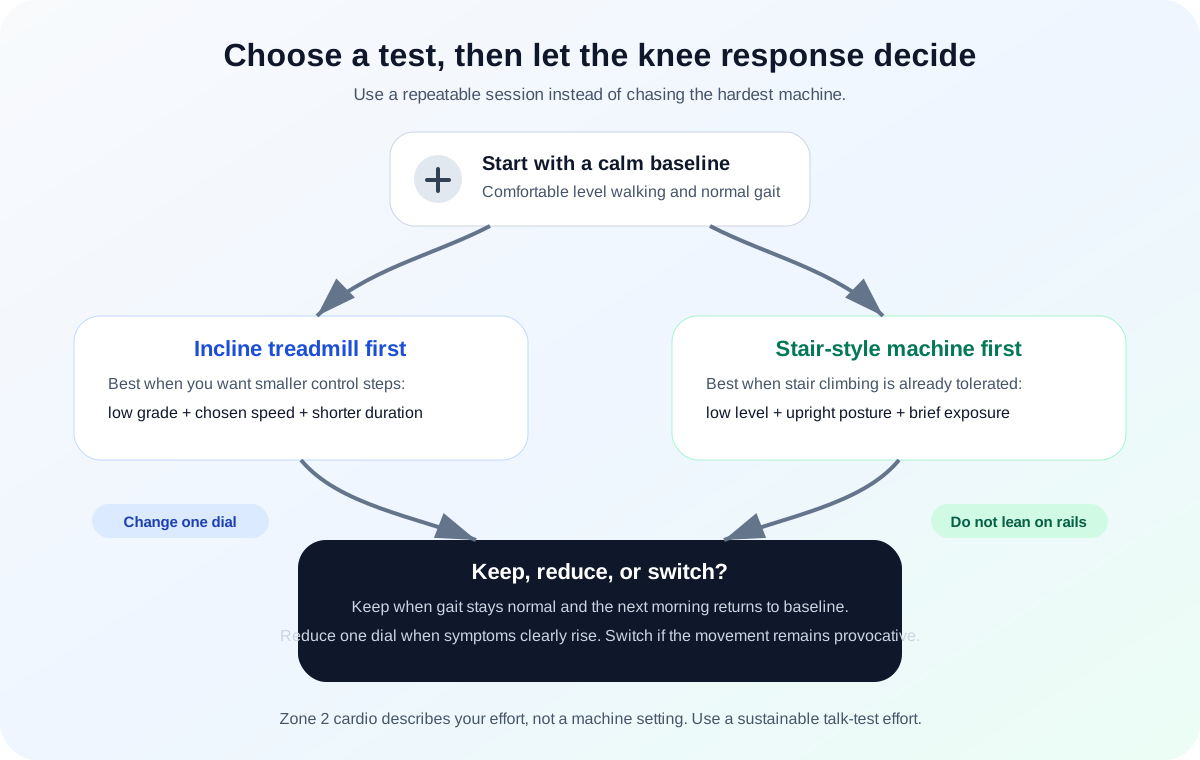
Do not compare the machines by completing a hard workout on each. Compare low, repeatable doses on separate days when the knee is near its normal baseline. Keep other lower-body training similar so the result is easier to interpret.
- Warm up on level ground. Walk easily for five to ten minutes. If ordinary walking is painful or altered, do not progress to a moving staircase.
- Choose one machine. Use a low step level or a low treadmill grade at a comfortable speed. Keep the first test brief rather than trying to complete a popular workout.
- Stay upright. Light fingertip contact may help balance, but do not hang, pull, or support much of your weight through the rails.
- Watch the movement. Stop if pain becomes sharp, the knee buckles, or you begin limping, twisting, or avoiding one side.
- Check later that day. Note swelling, warmth, ordinary walking, and stairs. Temporary muscle fatigue is different from loss of joint motion.
- Check the next morning. A response close to your usual baseline supports repeating the same dose before increasing it. A clear flare means reduce one setting or choose the other machine.
No universal pain score can validate a workout. A mild, stable sensation may fit an individualized rehabilitation plan, while the same score with swelling or altered gait may not. Trend, function, and professional guidance matter.
Technique Changes That Make the Comparison Fair
On the stair-style machine
- Use a step rate that lets you place the whole available foot securely instead of chasing the pedals.
- Keep the trunk tall with a slight natural forward lean from the ankles, not a folded position over the console.
- Let the working leg control the step. Do not rest heavily on straight arms to unload the body.
- Begin with a shorter range and lower level if deeper knee bend is the trigger.
On the incline treadmill
Set a comfortable speed before adding grade, let the stride shorten naturally, and use the safety clip. If the incline forces rail pulling, overstriding, or a toe-only gait, lower the setting. More technique and progression detail belongs in the dedicated incline treadmill guide.
An incline walking pad is a separate option because deck length, fixed grades, rails, and speed limits vary. Its popularity does not make it practical for someone with balance trouble.
How to Progress Without Losing the Benefit
Change one variable at a time. On the treadmill, that means speed, grade, or minutes. On the stair machine, it means level, minutes, or weekly frequency. Repeat a tolerable dose before progressing. This makes it possible to identify which change mattered if symptoms return.
Cardio does not replace strength. A gradual program from the knee-strengthening guide can prepare the quadriceps, hips, and calves for both machines. If squat or step work is provocative, the squat-related knee pain guide separates depth, load, and technique.
What If Both Machines Irritate the Knee?
Two painful tests do not mean cardio is impossible. Both patterns may exceed current capacity, or an unresolved condition may need attention. Return to the easiest movement that keeps gait normal, such as shorter level walks, an appropriately fitted stationary bike, or pool exercise. Do not use another machine to ignore swelling or instability.
Repeat a comparison only after symptoms return near baseline and change one condition. A hard leg day, footwear change, poor sleep, or longer session can affect the result. Record the symptom area with the visual knee pain location guide, but use location as a description rather than a diagnosis. Persistent pain needs assessment.
When to Get Medical Help
Arrange an assessment when machine-related pain keeps returning, begins earlier in each workout, limits ordinary walking or stairs, or produces recurring swelling. Seek urgent guidance if you cannot bear weight, the knee is deformed or physically locked, swelling is rapid, or the joint becomes hot and red with fever. New calf swelling with chest pain or breathing difficulty, or a cold or discolored foot, also needs urgent care.
The Bottom Line
For a knee-sensitive beginner, the incline treadmill is often the more controllable first experiment. A stair-style machine can be a valuable progression when ordinary stairs and deeper repeated knee bend are already comfortable. Neither machine earns a permanent "good" or "bad" label.
Use Zone 2 cardio and calorie displays as secondary goals. First protect movement quality, avoid heavy rail support, and compare the same three checkpoints: during the workout, later that day, and the next morning. The machine that lets you train consistently with a stable response is the better machine for your knees right now.
Frequently Asked Questions
Is the StairMaster bad for your knees?
Not automatically. A rotating stair-style machine repeats a climbing pattern with substantial knee bend and quadriceps work. That may aggravate active front-knee or stair-sensitive symptoms, while a conditioned person may tolerate it well. Begin at a low level, stay upright, avoid hanging from the rails, and check the response the following morning.
Is an incline treadmill better for bad knees than a StairMaster?
It is often the more adjustable starting option because speed, incline, and time can change separately. Slow uphill walking reduced some loading measures versus faster level walking in one small study, but higher grades also increase knee and hip flexion. Prefer the machine that preserves normal gait without meaningful swelling or a next-day flare.
Which burns more calories, StairMaster or incline treadmill?
There is no universal winner. Energy use depends on body size, speed, grade or step rate, duration, fitness, and rail support. A hard stair session may exceed an easy incline walk, while a longer treadmill session may reverse the comparison. Treat console calories as estimates and compare repeatable sessions.
Which machine is better for Zone 2 cardio?
Either can support Zone 2 cardio at a sustainable aerobic effort. Zone 2 is a physiological intensity, not a treadmill grade or StairMaster level. A talk test and perceived effort can help when formal testing is unavailable. Choose the machine that maintains the effort without rail gripping or altered gait.
Can I use the StairMaster with kneecap pain?
Repeated climbing may aggravate a load-sensitive patellofemoral pattern because it combines knee flexion with quadriceps force. That clue is not a diagnosis. If stairs or squats already hurt, rebuild capacity before a brief, low-level stair test. Recurring swelling, locking, giving way, or trauma needs assessment.
Should I hold the rails on an incline treadmill or StairMaster?
Light contact for balance can be sensible, but pulling or leaning heavily changes the exercise and weakens console estimates. If you cannot stay balanced without supporting much of your weight, reduce speed, grade, or step level. Stop if the knee feels unstable.