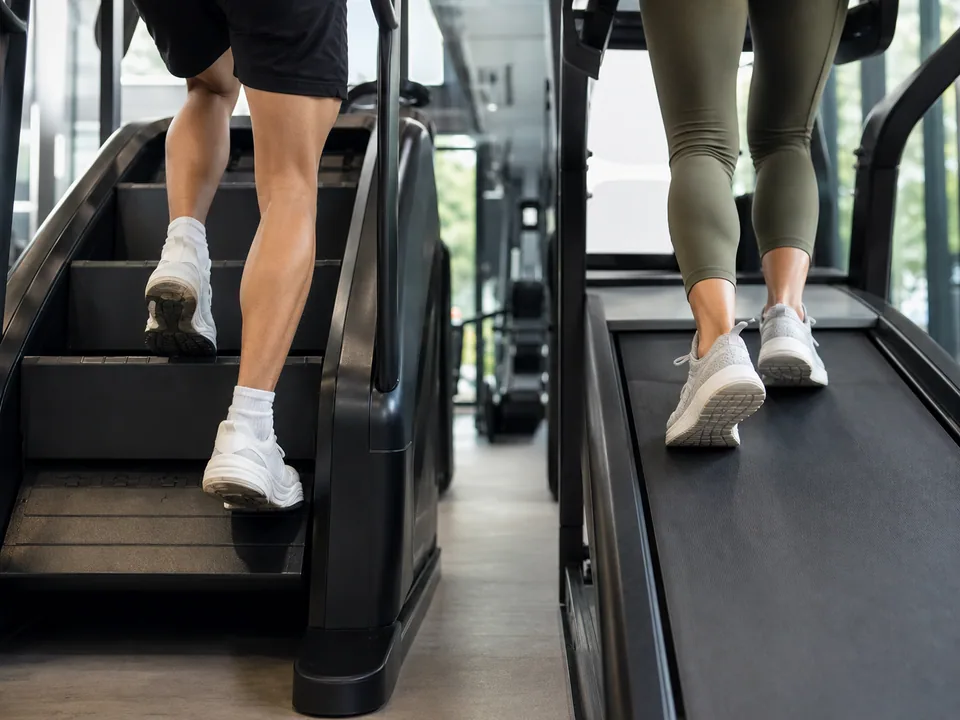
One person adds a modest treadmill grade and raises heart rate without jogging. Another copies a steep social-media workout, grips the rails, and leaves with sore kneecaps. The word "incline" does not describe either dose well enough.
Separate grade, speed, duration, and weekly frequency, plus uphill from downhill. A treadmill keeps climbing; an outdoor hill usually includes a return descent. If total walking time is the trigger, start with knee pain after long walks.
What Incline Walking Changes
Percent grade describes vertical rise relative to horizontal distance, so 12 percent is not 12 degrees. As the belt rises, people often shorten their steps and use more hip, knee, ankle, and calf motion. Energy cost rises versus level walking at the same speed.
Those changes create the training effect, but incline is not simply level walking with a higher heart rate. Tolerating 30 minutes at zero percent does not establish tolerance for the same pace and time on a steep grade.
In 15 healthy men, grades from zero to 20 percent changed mechanics, including greater limb flexion and lower peak knee-abduction moments at most tested inclines. The study did not show pain relief or joint protection, and one laboratory measure cannot represent every knee structure.
When Incline Walking May Help
When slower speed feels better than fast level walking
A modest incline can raise cardio demand at a slower speed. In a small study of adults with obesity, slow uphill walking reduced several loading measures versus faster level walking at similar moderate metabolic demand. The useful idea is the speed-grade combination, not that every hill unloads every knee.
When you need a controlled, repeatable hill
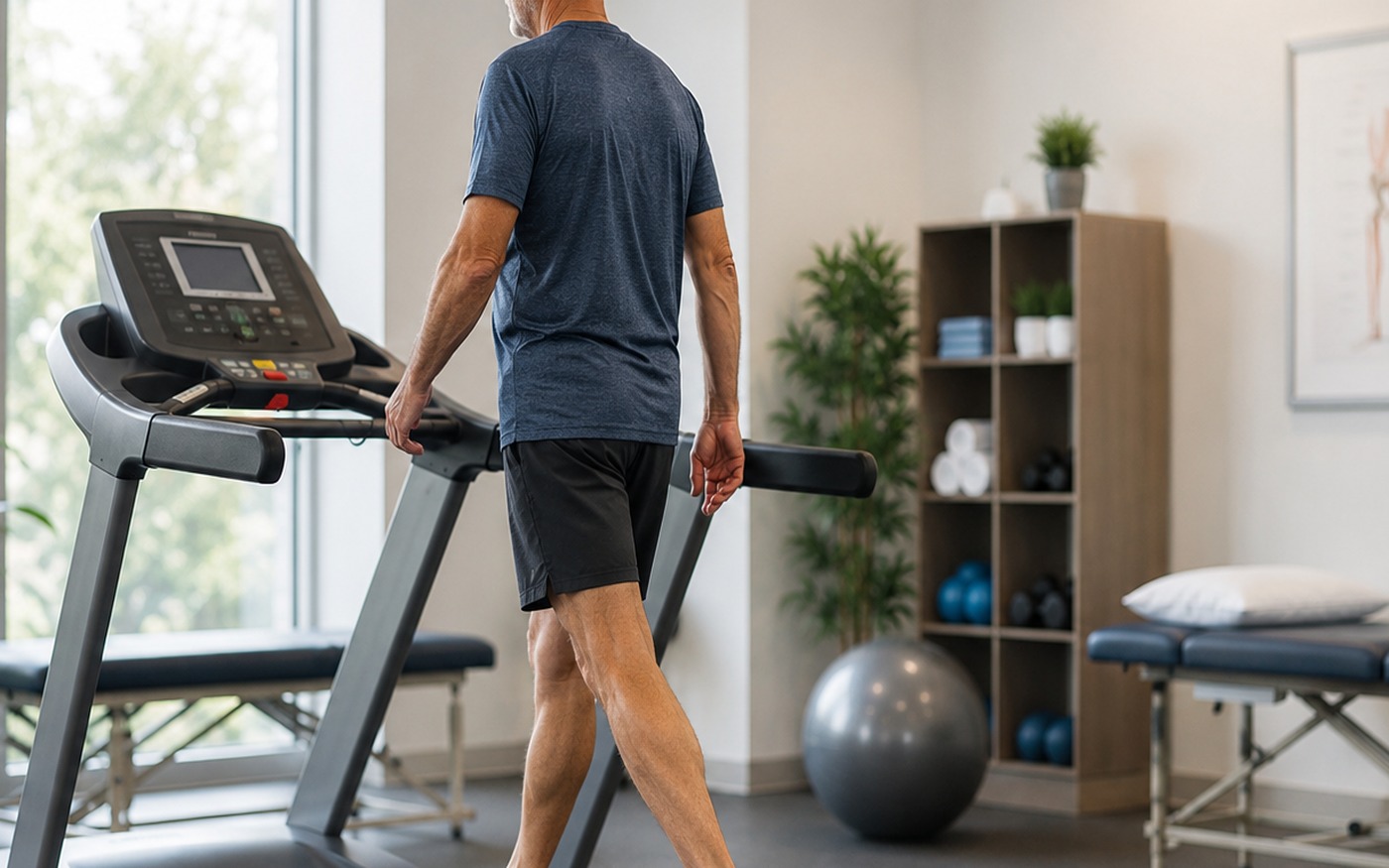
A treadmill removes gravel, camber, weather, and surprise descents. Visible speed and grade make a small dose repeatable when level walking is comfortable and no clinician has restricted the activity.
When running is currently too provocative
Incline walking raises energy demand without a running flight phase, which may help some runners. "Lower impact" does not mean zero joint load. If uphill walking alters gait or produces swelling, choose another option while the cause is assessed. The running knee pain guide covers land return.
When Hills Are More Likely to Hurt
When ordinary stairs and squats already hurt
Pain around the kneecap often reacts to knee bend with quadriceps force. AAOS lists stairs and squatting as common aggravators for patellofemoral pain, and a steep treadmill repeats part of that demand. This is not a diagnosis. Start lower and use the knee pain location map to describe the symptom.
When grade rises faster than capacity
A slower belt does not make a steeper grade automatically more manageable. In older adults after knee replacement, the steepest tested slope produced greater knee-extension demand. This population does not represent every painful knee, but grade remains a real load variable.
When balance or confidence changes
In 28 healthy young adults, uphill treadmill walking changed stability, joint angles, and muscle activation. Pain, weakness, neuropathy, or balance concerns may require supervision. Reduce any grade that forces heavy rail support, and do not test a giving-way knee on a moving belt.
When the full hill workout arrives at once
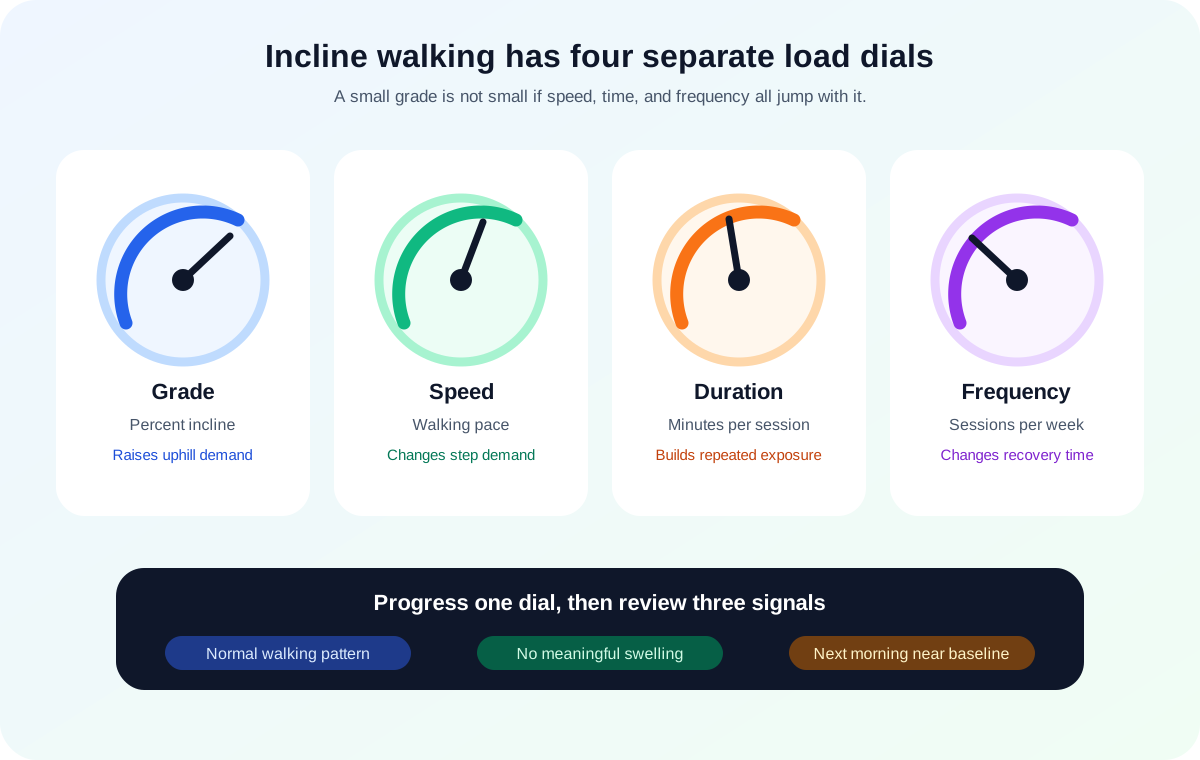
New grade, pace, duration, and frequency are four changes, not one. Symptoms may appear later, so review knee pain after exercise when the trigger is delayed.
When pain location changes the question
Front-knee discomfort that rises with grade suggests a different load pattern from joint-line pain after a twist, tendon pain below the kneecap, or fullness behind the knee. Note the location, when it begins, and whether the knee swells or loses motion. These details help a clinician choose an examination, but they do not identify a diagnosis online. A sudden pop, rapid swelling, locking, giving way, or inability to bear weight should not be managed by experimenting with treadmill settings. Use the visual knee pain map to describe the area consistently.
The Four Incline Walking Load Dials
1. Grade
Grade changes slope and joint positions. Begin with the smallest available increase rather than copying someone else's percentage. A lower setting is enough when it produces the desired effort.
2. Speed
A familiar level speed can become demanding uphill. Reduce pace until steps and trunk stay controlled. Reaching for the rails means the speed-grade combination is too ambitious.
3. Duration
Short incline intervals with level recovery are easier to interpret than one long climb. Add continuous minutes only after a shorter session causes no meaningful later or next-morning change.
4. Frequency
A tolerable session can accumulate beside squats, running, or stairs. Leave recovery time when it is new and record other lower-body training.
A Practical Incline Walking Workout to Test
There is no single best treadmill workout for a painful knee. A useful first session keeps the grade modest, includes level recovery, and finishes before form deteriorates. This example is for someone who already walks comfortably on level ground and has no injury-specific restriction:
- Level warm-up: walk easily for five minutes and confirm that the stride looks normal.
- Incline intervals: alternate two minutes at a modest grade with two minutes level for three rounds.
- Easy finish: return to level walking for three to five minutes rather than ending on the hill.
- Response check: note ordinary walking, stairs, swelling, and next-morning stiffness before repeating it.
The numbers are a learning format, not a prescription. Shorten each stage when the skill or response is uncertain. Repeat the same workout before raising one dial, and keep lower-body training similar so the effect of the incline is easier to interpret.
Can You Do the 12-3-30 Workout With Knee Pain?
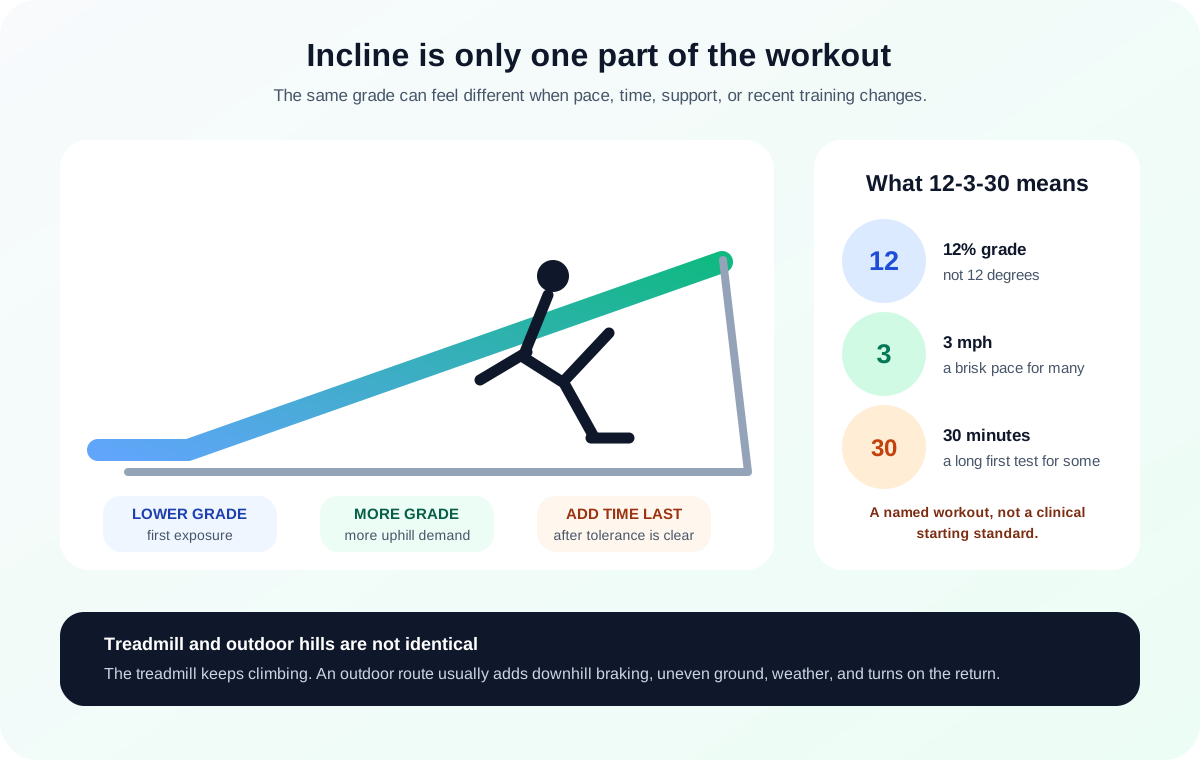
The 12-3-30 workout means 12 percent incline, 3 miles per hour, and 30 minutes. It is memorable, not a clinical protocol or knee-health test. The grade, brisk pace, and continuous time combine into a demanding dose for many beginners.
Preserve the concept without forcing all three numbers. Find a comfortable level speed, add a small grade for intervals, then build time. A much lower incline may provide an effective workout; the branded numbers carry no special knee benefit.
Lower the dose if you pull on the rails, shorten one side, or feel pain rise each interval. Console performance is not worth an altered walk.
A Step-by-Step Incline Walking Progression
This framework suits mild, improving, load-sensitive symptoms. Fracture, ligament or bone-stress injury, acute meniscus problems, recent surgery, or instability needs an individualized plan.
Stage 1: Establish level-walking tolerance
Walk at zero percent with normal stride and no meaningful swelling. Repeat a duration that leaves the next morning near baseline. If level walking is not tolerable, incline is not the next step.
Stage 2: Add short, low-grade intervals
Keep the same or a slower speed and alternate small incline with level recovery. Keep posture and foot placement controlled, and do not stack a hard leg workout because the session felt easy.
Stage 3: Extend time before chasing steepness
After several stable sessions, lengthen total incline time while grade and speed stay fixed. This builds tolerance without hiding the cause of a flare.
Stage 4: Choose the next goal
For fitness, add a little grade or speed. For hiking, add longer climbs and then outdoor terrain. For steeper treadmill work, reduce speed or duration as grade rises. Do not progress every goal together.
A mild response that returns to baseline may support repeating the dose. Pain that rises, starts earlier, changes gait, or produces swelling means the stage is too high or needs assessment. No universal pain score replaces context.
Treadmill Hills vs Outdoor Hills
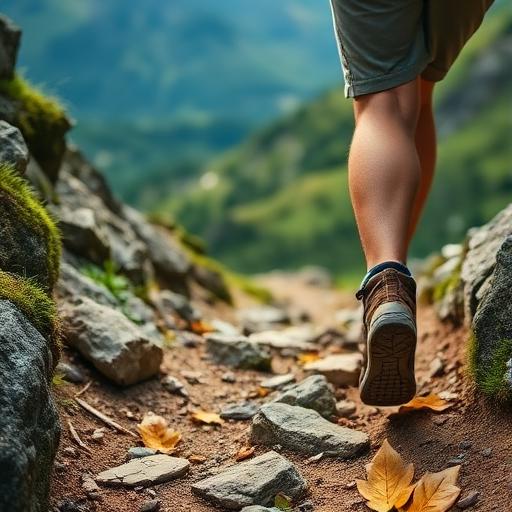
A treadmill offers predictable ascent. Outdoor hills add turns, side slope, weather, uneven ground, and usually a descent. Someone may tolerate the climb but hurt on the return because lowering requires repeated braking.
If downhill is the trigger, choose a gentler return or shorter hill. The knee pain going down stairs guide explains the similar demand. A rail or pole may improve confidence but should not disguise instability.
In a small 2026 study, adults with bilateral knee osteoarthritis used shorter steps, more double-support time, and more variability at incline extremes than controls. It cannot define appropriate outdoor grades, but it supports gradual progression and attention to stability.
Technique for a More Controlled Incline Walk
- Stand tall: use a slight whole-body lean into the hill rather than bending sharply at the waist.
- Shorten the step naturally: avoid reaching far forward or trying to keep a flat-ground stride length.
- Keep the foot quiet: allow heel-to-toe contact when comfortable instead of forcing a toe-only walk.
- Use rails for balance, not body-weight support: heavy pulling changes the workout and may hide a setting that is too hard.
- Look ahead: staring down can encourage a folded posture and reduce awareness of belt position.
- Use the safety clip: slow the belt fully before stepping off, especially when the knee feels uncertain.
Technique should make movement repeatable, not force one perfect shape. Body proportions, machine design, footwear, and diagnosis differ. Recurring pain despite small changes deserves professional help.
What to Do After an Incline-Walking Flare
Reduce the newest variable. Return to level walking, shorten the session, or use lower-load cardio. Do not repeatedly retest the same grade. Check walking, stairs, swelling, and motion rather than only seated comfort.
Cold may suit a newly swollen or unusually warm knee, while warmth may suit stiffness without swelling. Neither rebuilds hill tolerance. See heat or ice; recurring puffiness belongs in the exercise swelling guide and needs review when persistent.
Strength Work That Supports Hill Walking
Incline walking trains endurance but may not provide enough progressive strength by itself. Sit-to-stands, supported split squats, step-ups, calf raises, hip-hinge exercises, and controlled step-downs can prepare the muscles used on hills. Begin with a range and resistance that preserve smooth movement.
Best-practice guidance for patellofemoral pain supports education plus knee-targeted exercise, with hip-targeted work added when appropriate. That does not mean every uphill ache is patellofemoral pain. Use the broader knee-strengthening guide and get individualized assessment when symptoms do not follow a simple load pattern.
When to Get Medical Help
Arrange an assessment when uphill pain keeps returning, worsens despite a lower dose, limits daily walking or stairs, or causes recurring swelling, catching, or giving way. Seek urgent guidance if you cannot bear weight, the knee is deformed or physically locked, swelling is rapid, or the joint becomes hot and red with fever. New calf swelling with chest pain or breathing difficulty, or a cold or discolored foot, also needs urgent care.
The Bottom Line
Incline walking is neither a cure nor a threat by default. A modest grade at a controlled speed may provide useful cardio with less pace than level walking. A steep, fast, or long session may expose a knee that is sensitive to repeated flexion, quadriceps demand, or sudden training changes.
Start from comfortable level walking. Change grade, speed, duration, and frequency separately. Keep the stride normal, use the rails lightly, and check the knee later that day and the next morning. Build the hill your knee can repeat, not the percentage a trend tells you to complete.
A flat under-desk treadmill introduces desk reach, footwear, and long distracted sessions rather than hill grade. Use the separate walking-pad knee pain guide to check those workday factors without treating desk walking as an incline workout.
Frequently Asked Questions
Is incline walking good for knee pain?
It can be useful when a modest incline allows slower, controlled walking without a flare. Small laboratory studies show that speed and grade change loading measures, but they do not prove incline treats knee pain. Start from comfortable level walking and judge gait, swelling, and the next-morning response.
Can treadmill incline make knee pain worse?
Yes. Higher grades usually require more knee and hip flexion and muscular work. A steep or long session may aggravate front-knee, tendon, or stair-sensitive symptoms, especially if speed or frequency also increased. Lower one variable and seek assessment for persistent pain, altered gait, swelling, or instability.
What incline should I use for bad knees?
There is no universally appropriate percentage for every painful knee. Begin at zero percent, then test a small grade briefly once walking is comfortable. Keep speed familiar and change one dial. Use the lowest incline that meets the goal without altered gait, meaningful swelling, or a next-day flare.
Can I do the 12-3-30 workout with knee pain?
It may be too demanding as a first test. The format means 12 percent grade, 3 miles per hour, and 30 minutes. It has not been validated as a knee-rehabilitation prescription. Scale grade, speed, and duration separately rather than forcing all three numbers.
Why do my knees hurt walking uphill but not on flat ground?
Uphill walking changes joint angles and asks the quadriceps, calves, and hips to work harder. A load-sensitive kneecap joint or tendon may become noticeable on a hill first. Location and timing are clues, not a diagnosis. Trauma, recurring swelling, locking, or giving way needs assessment.
Why does the downhill hurt more than walking uphill?
Downhill walking requires repeated braking as the body lowers, which may provoke pain around or behind the kneecap. A treadmill only climbs, while an outdoor hill usually includes a descent. Shorten that exposure and review the knee pain going down stairs guide when lowering is the main trigger.