People often describe the reformer as low impact, which is true in the narrow sense that most sequences do not involve repeated foot strikes. Low impact does not mean no knee load. Supine footwork still asks the legs to move the carriage. A standing lunge still places one leg under body weight while the other controls a sliding platform. The machine offers useful ways to change an exercise, but those choices need interpretation.
This guide focuses on a full studio reformer with an adjustable footbar, carriage, springs, straps, and shoulder blocks. A compact or foldable mini reformer board may look similar online, but it may have different resistance, travel, stability, and adjustment options. Do not transfer a studio spring instruction to a different device by color or number alone.
What the Reformer Changes for the Knee
Hospital for Special Surgery describes reformer springs as providing both resistance and assistance. That distinction matters. During footwork, the springs resist the press out and help return the carriage. During another exercise, the same spring may help keep the carriage from moving too freely. More spring is therefore not always harder in every sense, and less spring is not automatically gentler.
The reformer also changes support and feedback. Lying down removes the balance demand of a squat, while the footbar gives the feet a clear contact point. Standing or kneeling on a moving carriage does the opposite and can add a substantial control challenge. Research on one reformer long-stretch exercise found that instructor cues changed muscle recruitment and pelvic stability. It was a small study in healthy adults, not a knee-pain trial, but it supports a practical point: how an exercise is taught can change how it is performed.
Evidence for Pilates and knee osteoarthritis has grown, including trials and systematic reviews, but the studies vary in program design and quality. Much of that evidence concerns Pilates as a broad exercise method rather than a particular reformer, spring, or footbar setting. Treat the machine as an adjustable training environment, not a proven treatment for every knee diagnosis.
Identify the Provoking Task Before Changing the Springs
Write down where the pain is felt, when it begins, and what the knee does afterward. The same person may tolerate lying footwork but not kneeling pressure, or may feel comfortable during class and sore on stairs that evening. Our knee pain location guide can help describe the area, but location alone cannot diagnose the cause.
| Pattern | Reformer task to note | First modification to discuss | Reason to stop |
|---|---|---|---|
| Around or behind the kneecap | Deeper footwork, scooter, squat, or lunge | Shorter bend, slower tempo, more stable setup | Pain escalates or changes movement |
| Directly on the front of the knee | Knee stretches, quadruped, or box kneeling | Change position instead of adding more padding | Marked tenderness, warmth, or swelling |
| Inner or outer joint line | Turned-out footwork, standing split, or twist | Parallel feet, smaller range, supported version | Locking, catching with loss of motion, giving way |
| General ache after class | New class level, more sessions, or jumpboard work | Reduce the newest volume or intensity variable | Recurring swelling or worsening daily function |
Use Four Adjustment Dials, Not One Magic Setting
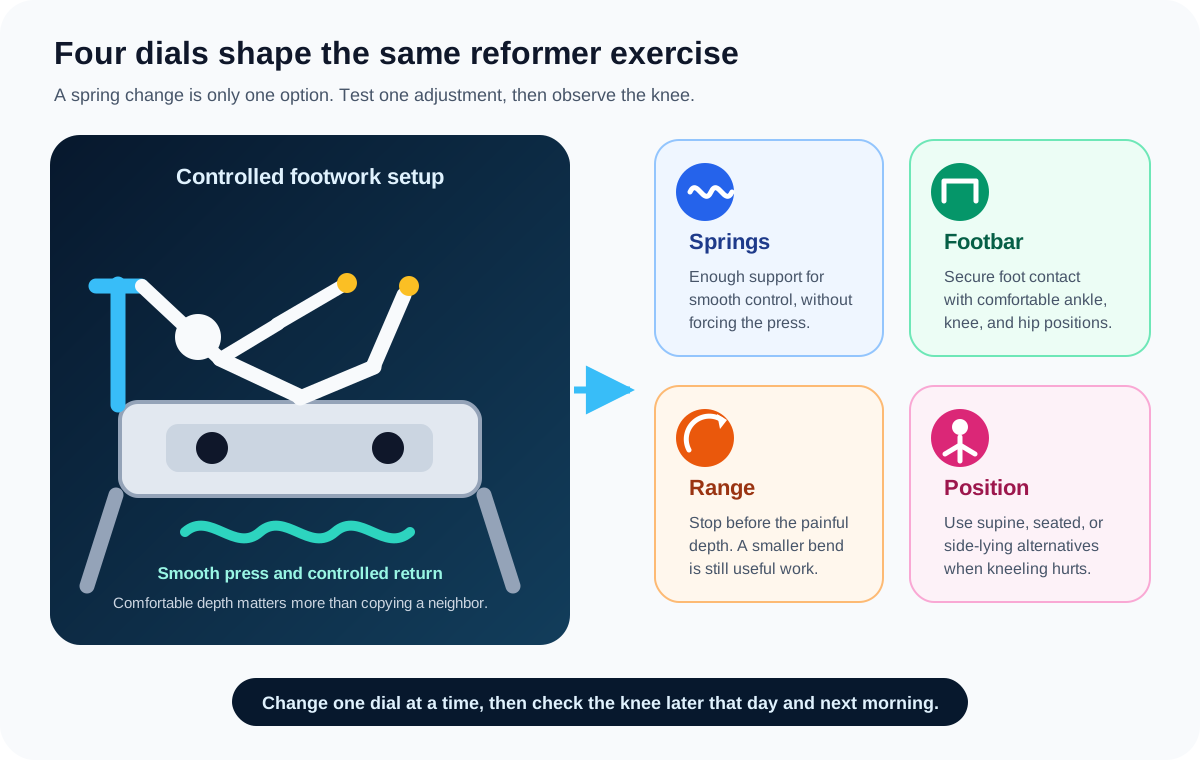
1. Springs: seek control, not a color
Spring colors are not standardized across all machines. Ask what the chosen setup is meant to do in that exercise. In footwork, a heavier setup may make the carriage feel steady yet require a stronger press. A lighter setup may reduce resistance but make stopping and returning the carriage less forgiving. The useful setting lets you move smoothly without gripping, bouncing, or forcing the painful part of the range.
2. Footbar: fit the whole leg
Footbar height and distance influence the starting position of the ankle, knee, and hip. There is no online position that fits every body or reformer. Ask for a setup in which the feet remain secure and the pelvis can stay settled without the knees being pushed into an uncomfortable fold. If the ankles feel blocked or the hips crowd the torso, a footbar change may be more useful than rotating the feet outward.
3. Range: stop before the symptom, then earn depth
A smaller knee bend is a valid exercise. Patellofemoral pain commonly reacts to loaded bending tasks such as squatting and stairs. If deeper footwork recreates that pattern, shorten the carriage return and keep the movement quiet. Do not chase the stopper or copy the neighboring reformer. The knee pain with squatting guide explains why depth can change the experience.
4. Position: replace the task, not the entire session
Supine, side-lying, seated, and strap-based work may train the trunk, hip, or leg without direct kneeling or a deep standing lunge. An alternative should preserve the purpose of the exercise where possible. If the class is training hip extension, for example, a supported bridge or strap variation may be more relevant than simply waiting for the sequence to end.
Practical Modifications for Common Reformer Sequences
Footwork
Start with two legs, a comfortable parallel position, and a range you can repeat. Keep the heel or forefoot contact required by the variation without clawing the toes. Slow the return so the carriage does not pull the knees into an unwanted depth. Progress range, resistance, single-leg demand, and tempo separately rather than adding all four together.
Kneeling and knee-stretch series
If the problem is pressure on the kneecap or a tender bump, a thicker pad may help simple sensitivity. It will not make inflamed, recently operated, or sharply painful tissue ready for loading. Change to a seated, standing, side-lying, or box-supported option. The knee pain when kneeling guide covers pressure-related patterns in more detail.
Scooter, standing splits, and lunges
These exercises combine single-leg support with a moving base. Use hand support, shorten the stance and carriage travel, and keep the front knee within a comfortable bend. A more supportive spring can sometimes steady the carriage, but it can also increase return force. Test it with the instructor rather than assuming heavier or lighter is always safer. Skip deep holds or pulses when the basic version is not controlled.
Jumpboard
Jumpboard work removes a hard floor impact but still involves repeated takeoff and landing against spring resistance. It is not the automatic substitute for every painful squat or run. Begin only when ordinary footwork is comfortable and the instructor can reduce duration, range, and pace. A recent injury, swelling, or inability to land symmetrically belongs in rehabilitation, not a fast group sequence.
Tell the Instructor Before the Carriage Starts Moving
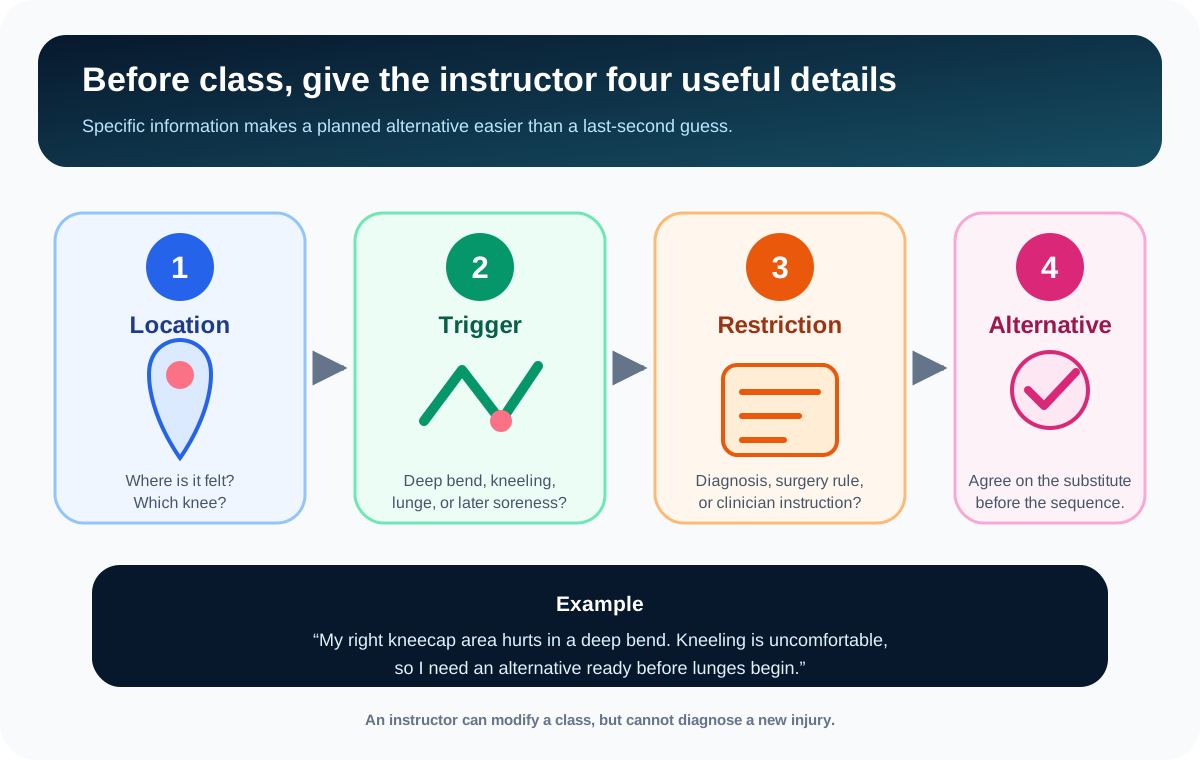
Give the instructor four pieces of information: the pain location, the movement that triggers it, any diagnosis or current restriction, and what happened after the last class. A useful sentence is, "My right kneecap area hurts in a deep bend, kneeling pressure is not comfortable, and I need an alternative before lunges begin." If you are recovering from surgery, bring the clinician's actual restrictions rather than asking the instructor to guess.
Group classes move quickly. Choose a fundamentals class, arrive early, and use a reformer near the instructor when possible. If several exercises require individual clinical decisions, a physical therapist or appropriately qualified one-to-one instructor is a better starting point. Instruction matters, but an instructor cannot diagnose swelling, instability, or a new traumatic injury from across the room.
How to Judge the Knee's Response
During class, discomfort should not become sharp, progressively stronger, or change the way you press, stand, or walk. After class, check swelling, ordinary stairs, walking, and the knee's motion. A small response that settles back to the usual baseline by the next day may support repeating the same dose. A clear next-morning flare means the session supplied more range, resistance, volume, or complexity than the knee currently tolerates.
Keep a simple log of exercise, spring setup, range, symptoms during the movement, and the later response. Change one variable at the next session. This produces better information than changing springs, footbar, stance, and class level at once. If soreness appears only later, compare it with our knee pain after exercise guide.
When to Get Medical Help
Arrange an assessment when knee pain keeps returning despite sensible modifications, limits walking or stairs, or repeatedly causes swelling. Stop class and seek prompt care after a pop or forceful twist, rapid swelling, inability to bear weight, a visibly deformed or physically locked knee, or repeated giving way. A hot red swollen knee with fever, new calf swelling, chest pain, or breathing difficulty needs urgent medical guidance.
The Bottom Line
Reformer Pilates is adjustable, but adjustable does not mean automatically therapeutic. Springs can assist and resist. Footbar position changes the starting geometry. Range alters how much bend the knee manages, and kneeling or standing work adds demands that supine footwork does not.
Start with the exact provoking task, use one modification at a time, and communicate before class. A controlled, tolerable session may help build general movement capacity, but it does not identify the cause of pain or replace diagnosis-specific rehabilitation. The best reformer setup is the one that matches the exercise goal, the machine, and the knee's current response without promising that equipment alone will fix it.
Frequently Asked Questions
Is reformer Pilates good for knee pain?
It can be a useful way to practice controlled strength and movement, but the answer depends on the cause and behavior of the pain. Research on Pilates in knee osteoarthritis is encouraging but limited, and it does not prove that every reformer class or exercise treats knee pain. A suitable session should allow comfortable control, sensible progression, and modifications for the movements that provoke symptoms.
What spring setting is best for bad knees?
There is no universal color or spring count because reformer brands, exercises, body positions, and people differ. More spring can stabilize the carriage in some exercises but also increase the force needed to move it. Less spring can reduce resistance yet demand more balance or carriage control. Use the setting that produces smooth motion through a tolerable range, then change only one variable at a time.
How can I modify reformer footwork for knee pain?
Begin with two-leg footwork, a comfortable foot position, and a smaller bend. Stop before the painful depth rather than pressing into it. Ask the instructor whether a footbar adjustment or different spring setup improves control. Avoid forcing the feet into turnout, and do not lock the knees at the end of the press. Reassess later that day and the next morning.
Can I do reformer Pilates if kneeling hurts?
Direct kneeling is not required for a complete session. Padding may improve pressure comfort, but it should not be used to hide sharp pain, swelling, or marked tenderness. Many kneeling arm, trunk, or hip exercises can be performed seated, side-lying, supine, standing with support, or on a box. Tell the instructor before the transition so the alternative is ready.
Why do reformer lunges bother the front of my knee?
A reformer lunge combines knee bend, single-leg support, balance, and control of a moving carriage. A deep range, long hold, unstable spring choice, or recent increase in class volume may exceed current capacity. Front knee pain has several possible causes, so reduce range and complexity first rather than assuming one muscle or tracking fault is responsible.
Can I use a reformer after knee surgery or a new injury?
Only when the surgeon or rehabilitation clinician has cleared the relevant movements and loading. A group instructor may not know your weight-bearing, range-of-motion, graft, wound, or tissue-healing restrictions. Bring the specific restrictions to class and choose individual clinical instruction when the plan needs close monitoring. Clearance for exercise does not automatically mean clearance for kneeling, deep flexion, jumping, or unilateral work.