Back to GuidesMarch 7, 2026

    Why Knees Pain During Yoga: Common Poses That Stress the Joint

    Understanding knee discomfort in yoga practice

    On This Page

    Yoga is widely considered a gentle, joint-friendly practice, but many practitioners experience unexpected knee discomfort during certain poses. This guide explores why knee pain happens during yoga, which poses place the most stress on the knee joint, and what practical adjustments can support more comfortable practice.


    Yoga is often recommended as one of the gentlest forms of exercise, a practice that builds flexibility, improves balance, and supports joint health. So it can be surprising and frustrating when knee pain yoga practitioners experience appears during poses that are supposed to feel calming and restorative.

    The reality is that several common yoga poses place significant mechanical demands on the knee joint. When flexibility limitations, alignment issues, or insufficient mobility in the hips and ankles are present, the knee often becomes the point where stress accumulates. For anyone exploring yoga for knee pain management, understanding why this happens is the first step toward a more comfortable practice.

    62%
    of yoga practitioners report knee discomfort at some point
    Making it one of the most common yoga-related joint concerns

    Why Yoga Can Sometimes Stress the Knee Joint

    The knee is a hinge joint, primarily designed for flexion (bending) and extension (straightening). Unlike the hip, which is a ball-and-socket joint with multi-directional movement, the knee has very limited rotational capacity. This fundamental design difference is at the heart of why yoga knee pain happens.

    Many yoga poses require the lower body to move into positions that demand significant rotation, deep flexion, or sustained weight-bearing on the knee. When the hip or ankle can't provide enough range of motion, the body compensates by forcing rotation or lateral stress through the knee joint, a structure not designed to handle those forces comfortably.

    Knee Joint Rotation Limitations

    The knee allows approximately 10 to 15 degrees of internal and external rotation when bent, far less than the hip's 40 to 60 degrees. When yoga poses demand more rotation than the hip can provide, the excess force transfers directly to the knee's ligaments and meniscus.

    Key factors that contribute to knee pressure in yoga poses include:

    Quick Tips

    • Deep flexion beyond the knee's comfortable range (past 120 to 140 degrees)
    • Rotational demands that exceed hip mobility
    • Pressure transfer from tight hips and restricted ankles
    • Prolonged kneeling or weight-bearing on the knee cap
    • Misalignment where the knee tracks inward or outward of the foot
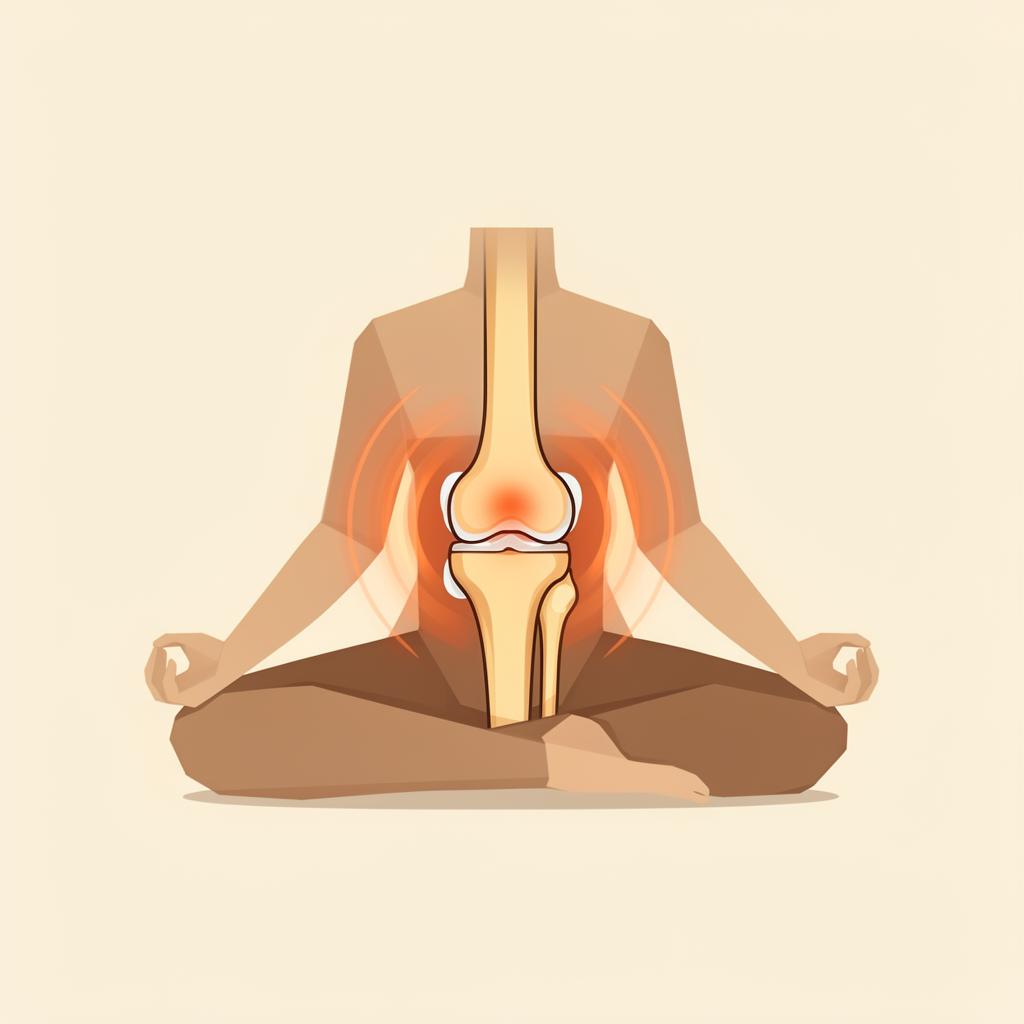
    Illustration showing knee joint pressure during cross-legged yoga position
    The knee joint experiences concentrated pressure during deep cross-legged yoga positions

    Common Yoga Poses That May Trigger Knee Discomfort

    Not every yoga pose stresses the knee equally. Certain positions are significantly more demanding on the knee joint, particularly when practiced without adequate flexibility or proper alignment. Here are the most common culprits behind knee pain in yoga poses:

    Lotus Pose (Padmasana)

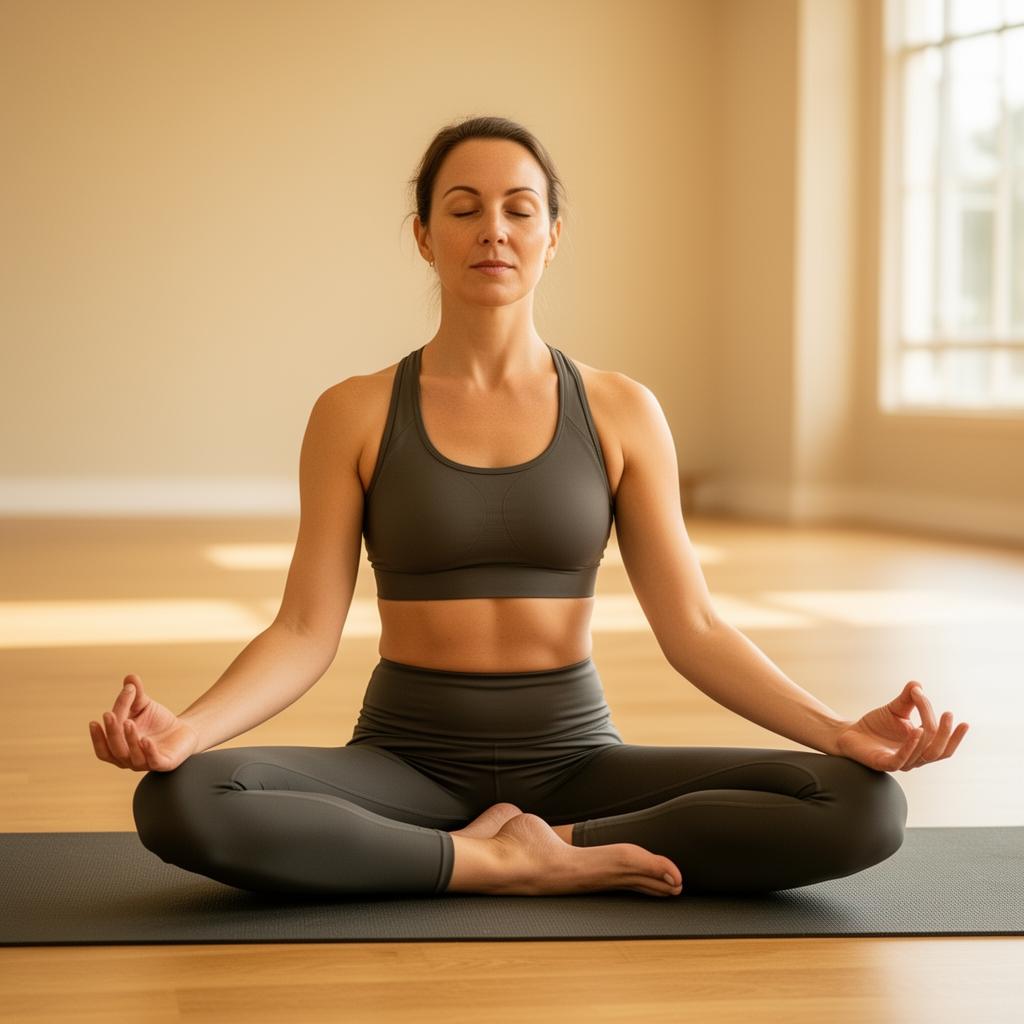
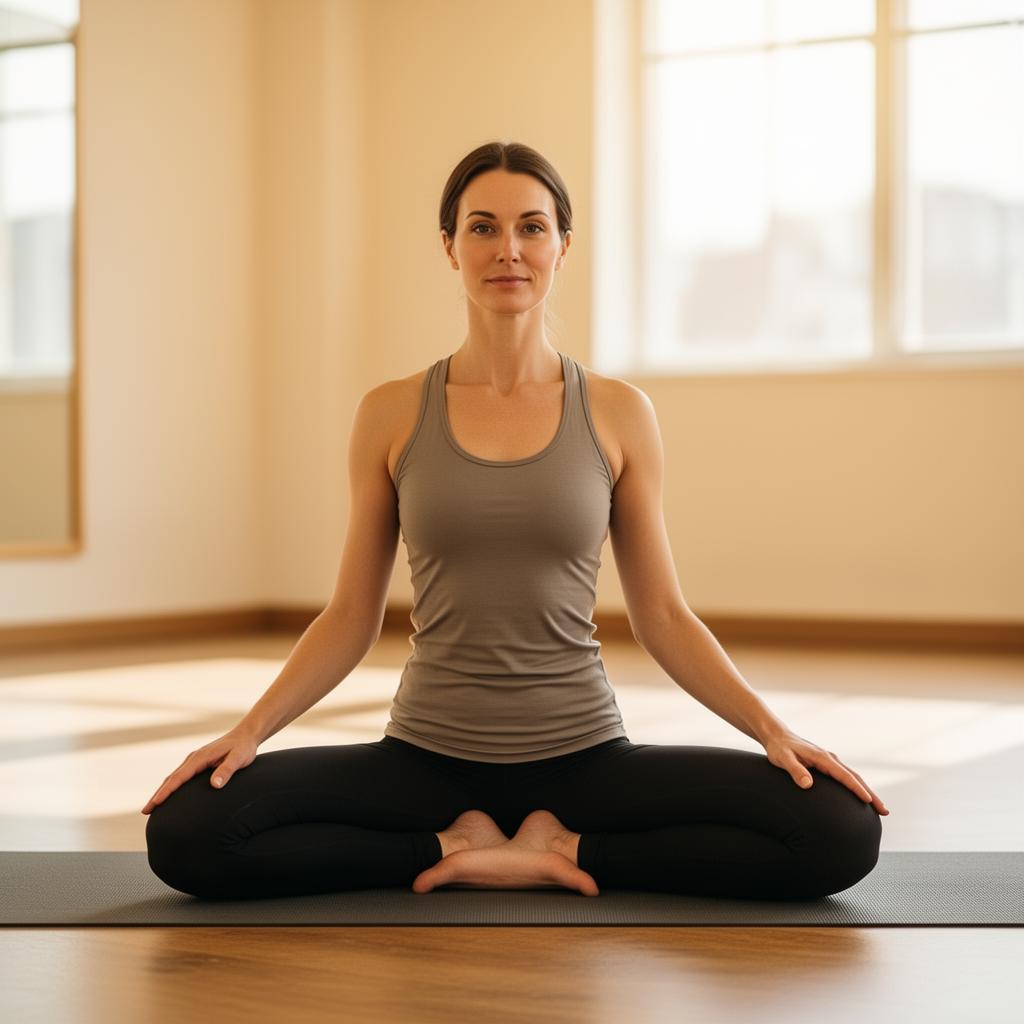
    Lotus pose is perhaps the most well-known cause of lotus pose knee pain. This seated position requires each foot to rest on the opposite thigh, demanding extreme external hip rotation. When hip flexibility is insufficient, which is common especially in Western practitioners who spend most of their time sitting in chairs, the rotational force transfers to the medial (inner) knee, compressing the meniscus and straining the collateral ligaments.

    Many yoga teachers now advise against forcing full lotus and recommend half-lotus or simple cross-legged positions as safer alternatives until adequate hip mobility is developed.

    Woman performing Lotus Pose (Padmasana) on a yoga mat with proper alignment
    Lotus Pose (Padmasana) requires significant external hip rotation

    Hero Pose (Virasana)

    In hero pose, you sit between your heels with the knees fully bent. This position places the knee in maximum flexion, often beyond 150 degrees, while the weight of the body presses down through the joint. For people with tight quadriceps or existing kneecap sensitivity, this pose can create significant anterior (front) knee pressure and compression of the structures behind the kneecap.

    Woman performing Hero Pose (Virasana) with knees together and sitting between heels
    Hero Pose (Virasana) places the knee in deep flexion under body weight

    Child's Pose (Balasana)

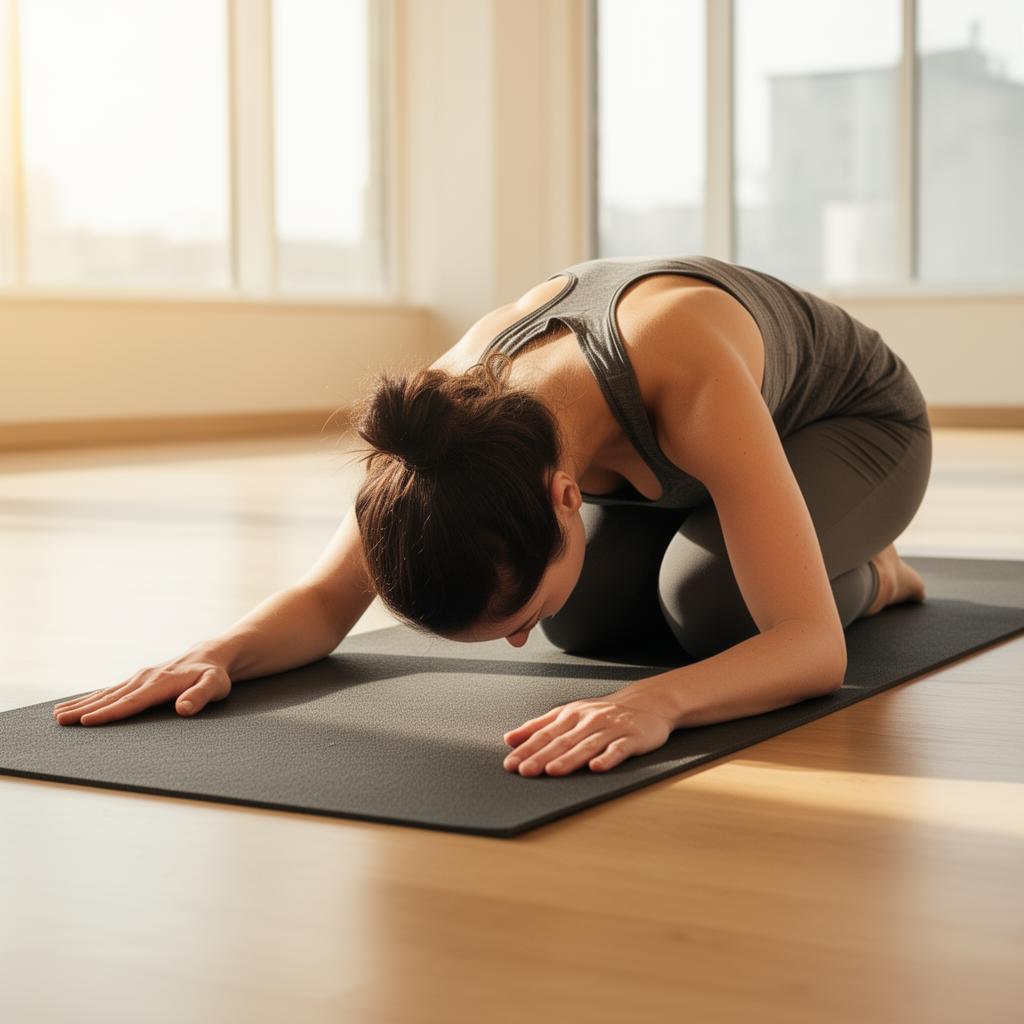
    Often considered a "resting" pose, child's pose knee discomfort can catch practitioners off guard. The deep knee flexion required, combined with the body's weight pressing down, creates substantial compressive force through the knee joint. People with tight calves, limited ankle dorsiflexion, or anterior knee sensitivity often find this pose uncomfortable.

    Woman performing Child's Pose (Balasana) with arms extended forward on yoga mat
    Child's Pose (Balasana) creates compressive force through deep knee flexion

    Pigeon Pose (Eka Pada Rajakapotasana)

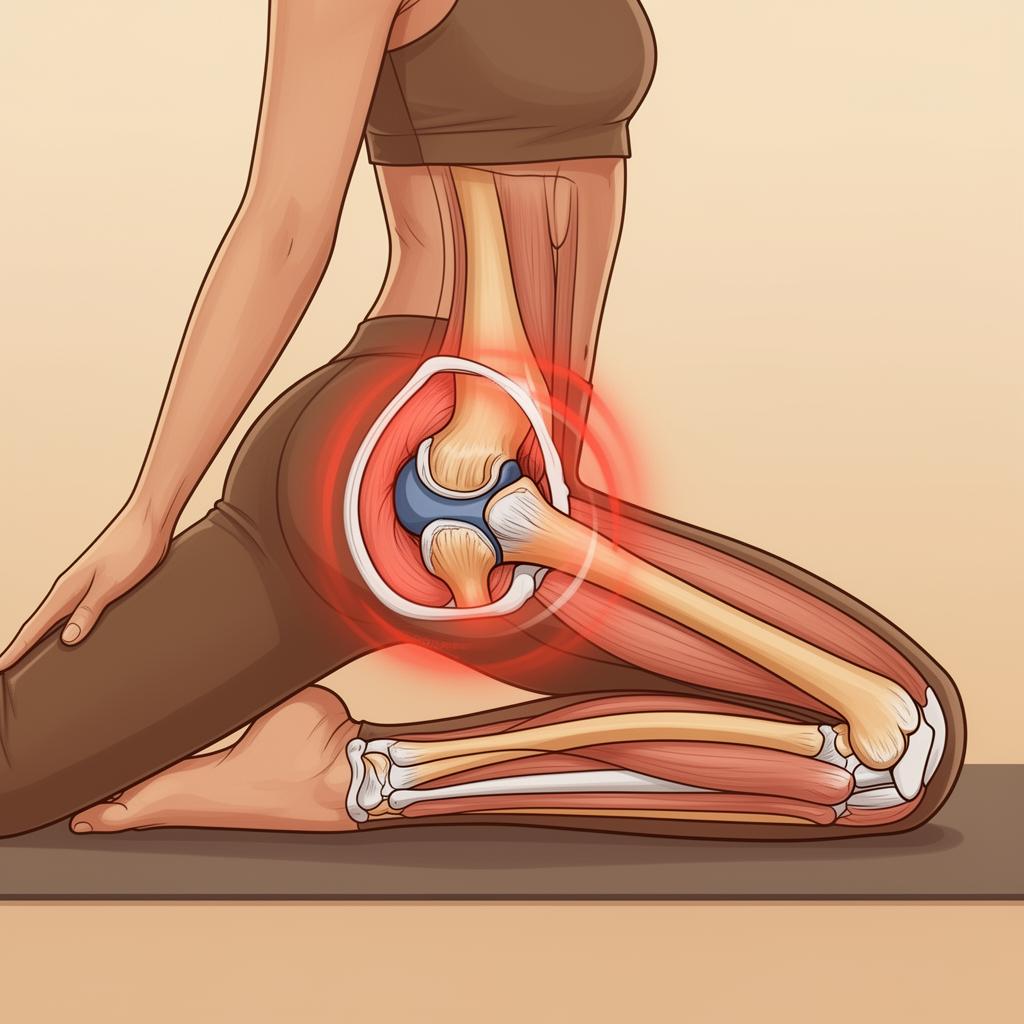
    Pigeon pose is a popular hip opener, but it's also a frequent source of knee discomfort. The front leg is positioned with the knee bent and the shin placed at an angle in front of the body. If hip external rotation is limited, the rotational stress shifts to the front knee, placing pressure on the meniscus and inner knee ligaments.

    Anatomical illustration showing knee stress during pigeon yoga pose
    Pigeon pose can transfer rotational hip demands directly to the front knee

    Deep Kneeling Poses

    Poses that involve direct kneeling, such as low lunges, camel pose, or gate pose, place the body weight directly through the kneecap and surrounding structures. Without adequate cushioning or modification, these poses can irritate the prepatellar bursa and create discomfort in the front of the knee.

    Pose Pressure Hierarchy

    Research and clinical observation suggest that lotus pose creates the highest rotational stress on the knee, followed by pigeon pose. Hero pose generates the most compressive flexion force, while child's pose and kneeling positions create moderate but sustained pressure. Understanding this hierarchy helps you prioritize which poses need the most modification.

    Why Limited Hip Mobility Often Causes Knee Pain in Yoga

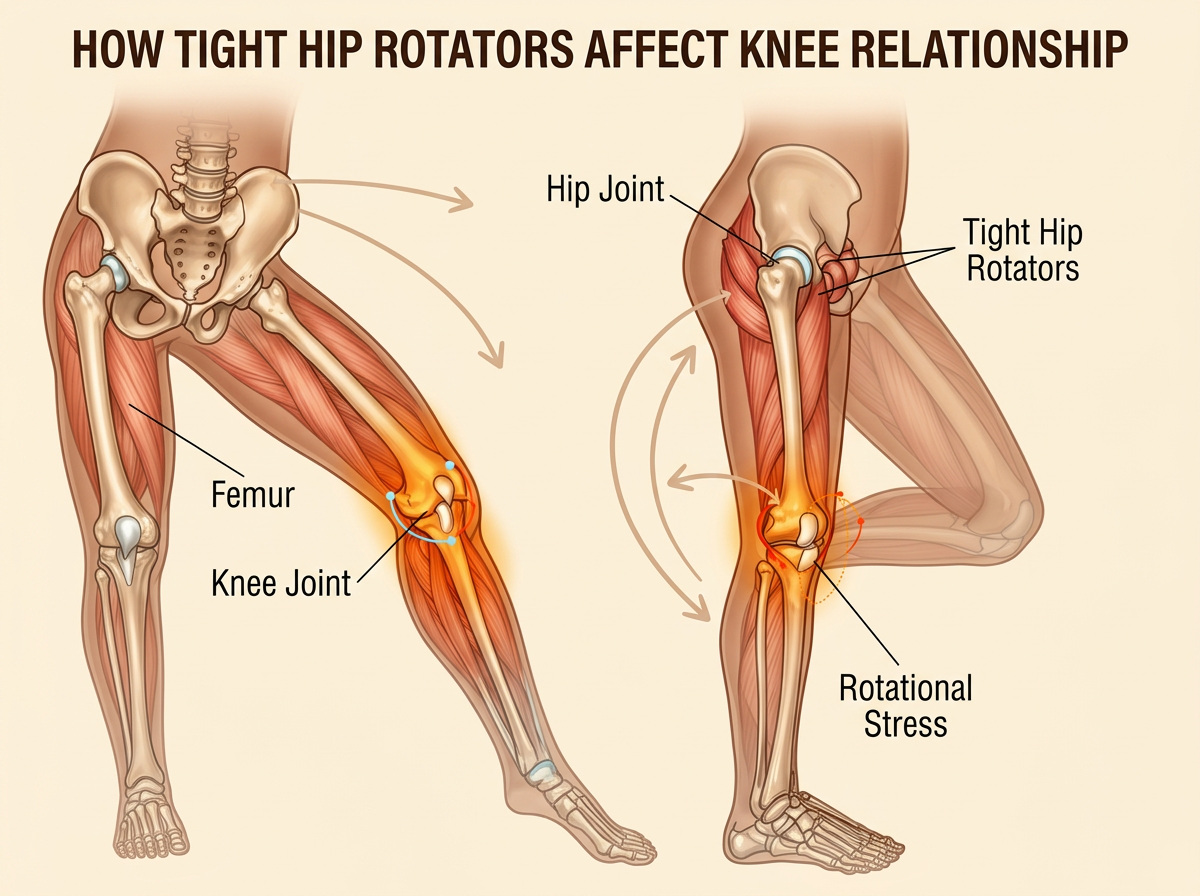
    One of the most important, and frequently overlooked, connections in yoga knee pain causes is the relationship between hip mobility and knee stress. The hip and knee are kinetically linked through the femur (thigh bone), and limitations in one joint directly affect the other.

    When the hip can't provide enough rotation for a pose, the body naturally compensates by rotating through the knee joint instead. This compensation pattern is the primary mechanism behind most yoga-related knee discomfort.

    Anatomical illustration showing hip-knee connection during yoga poses
    The hip-knee relationship: tight hips transfer rotational stress to the knee joint

    The three key mobility limitations that contribute to knees hurt during yoga:

    Quick Tips

    • Tight external hip rotators: forces knee rotation in lotus and pigeon poses
    • Restricted hip flexors: increases anterior knee pressure in kneeling and lunging poses
    • Limited ankle dorsiflexion: shifts body weight forward onto the knee in squatting and warrior poses

    This is why experienced yoga teachers often emphasize that poses like lotus and pigeon are actually hip stretches, not knee stretches. If you feel the stretch primarily in your knee rather than your hip, it's a clear signal that the pose needs modification. The sensation should be felt in the hip and glute area, not around the knee joint. You can learn more about how hip mobility affects knee comfort in our guide on knee pain after sitting cross-legged.

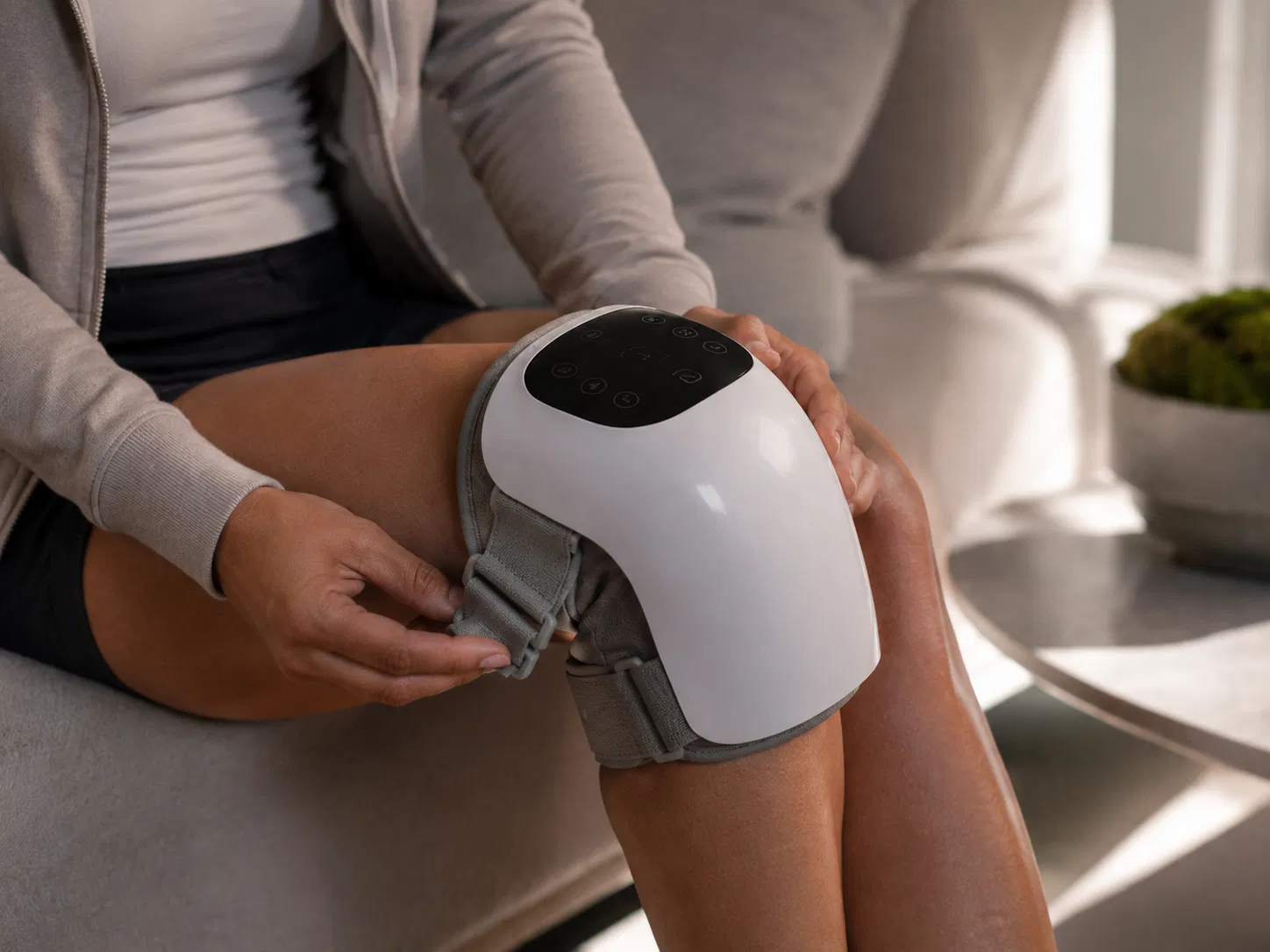
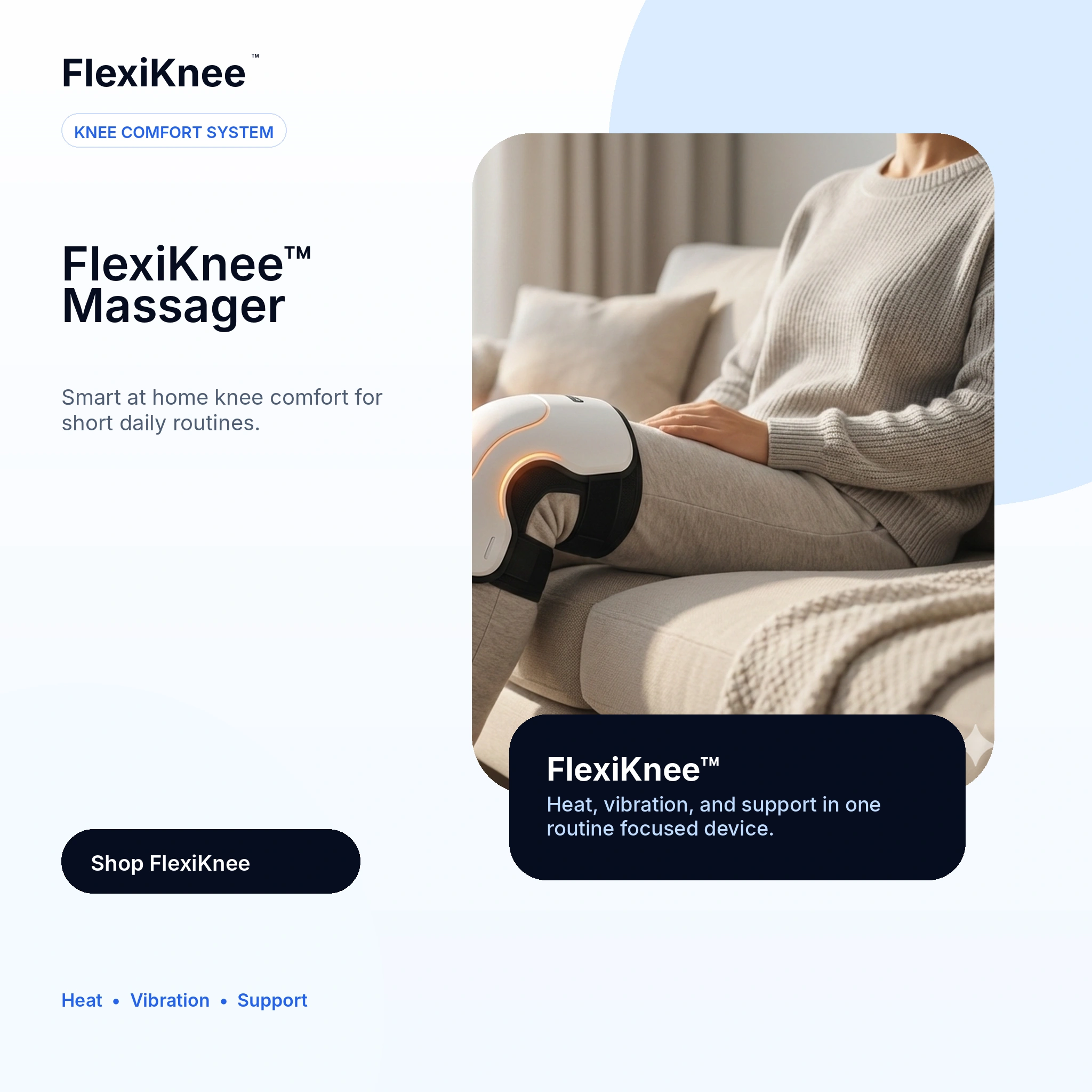
    FlexiKnee Smart Heated Knee Device

    Support your knees during yoga practice

    FlexiKnee combines soothing warmth, red light, and gentle vibration in one wireless device, designed for comfortable pre- and post-yoga knee support.

    View Full Product Details

    Biomechanics Mistakes in Yoga That Increase Knee Stress

    Beyond flexibility limitations, certain movement patterns and alignment errors during yoga practice significantly increase knee strain during stretching and pose work. Awareness of these common mistakes can help protect the knee joint:

    Forcing Deep Poses Too Quickly

    One of the most damaging habits in yoga practice is pushing into deep poses before the body is ready. Flexibility develops gradually over weeks and months, not within a single session. Attempting to match the depth of an instructor or experienced practitioner can place immediate and excessive stress on the knee joint.

    Twisting the Knee Joint

    The knee is designed primarily for flexion and extension, not rotation. When practitioners twist the foot or lower leg while the knee is bearing weight, the rotational force can strain the meniscus, collateral ligaments, and surrounding structures. This is particularly common in transitions between poses.

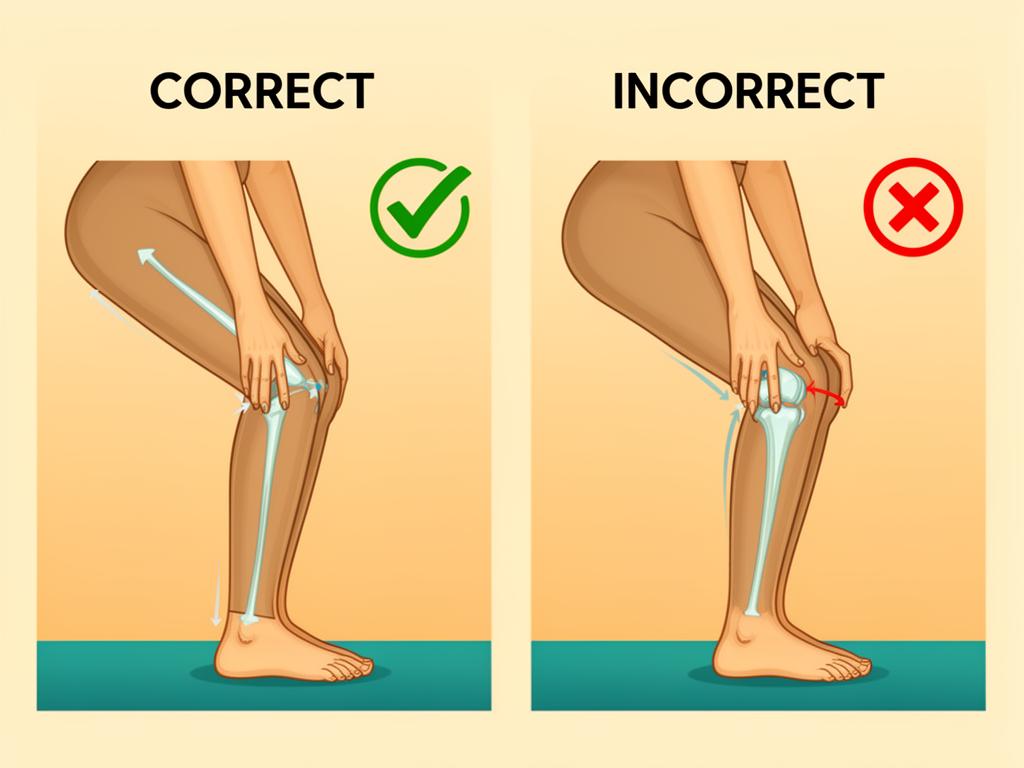
    Collapsing the Knee Inward

    In standing poses like warrior and triangle, allowing the knee to drift inward (valgus collapse) creates uneven pressure distribution across the joint. The medial compartment becomes overloaded while the lateral side loses support. Over time, this pattern can contribute to persistent inner knee joint stress during practice.

    Comparison showing correct versus incorrect knee alignment during yoga
    Correct vs. incorrect knee alignment: maintaining proper tracking reduces joint stress

    Uneven Weight Distribution

    In poses like tree pose, warrior variations, or single-leg balances, placing too much weight on one side of the foot can create imbalanced forces through the knee. The knee functions best when the load is evenly distributed across the entire foot.

    Poor Hip Engagement

    When the glutes and deep hip rotators are not actively engaged during standing poses, the knee absorbs forces that should be managed by the hip musculature. Active hip engagement creates stability that protects the knee from excessive stress. For more on how weak muscles affect knee comfort, see our guide on knee exercises for comfort.

    At-Home Adjustments That May Reduce Knee Discomfort During Yoga

    The good news is that most yoga-related knee discomfort can be significantly reduced with thoughtful modifications and supportive equipment. Here are practical adjustments for managing yoga knee pain at home:

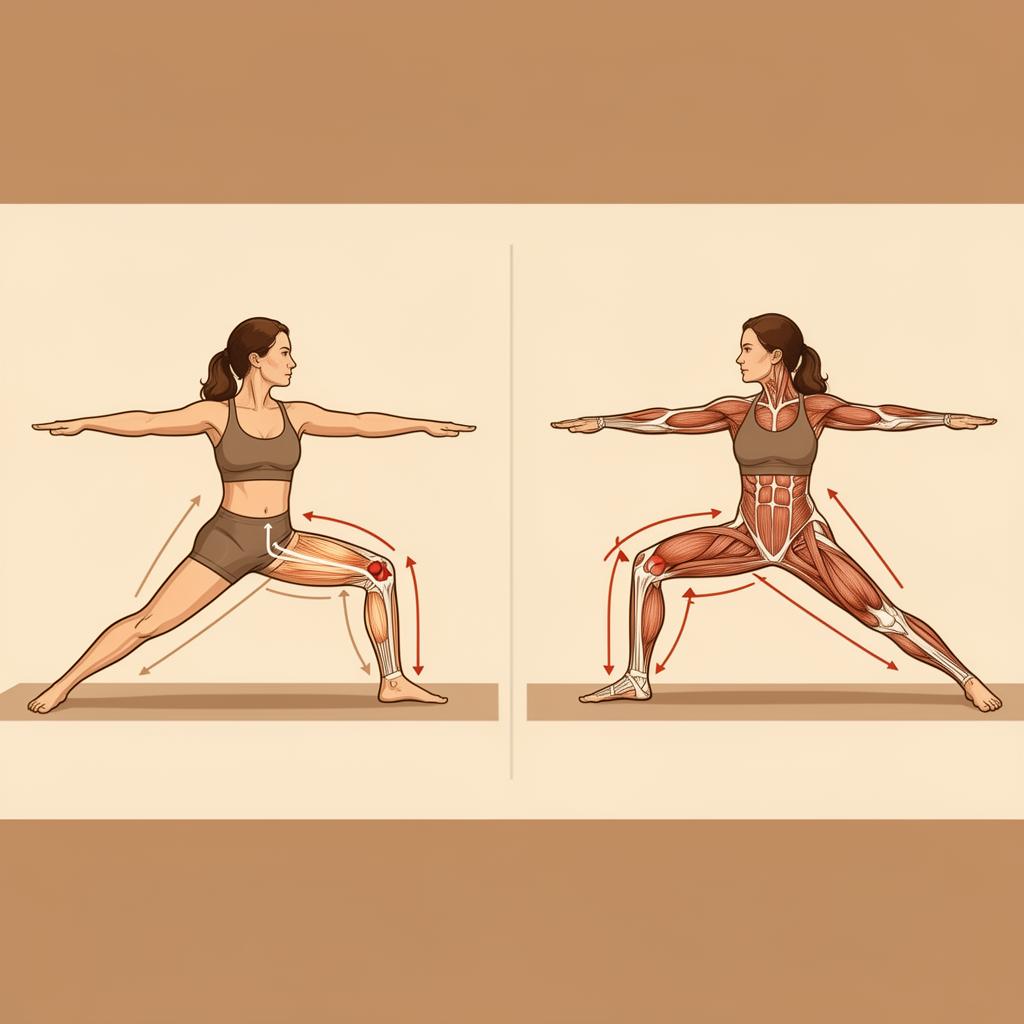
    Yoga knee alignment diagram showing proper form in warrior pose
    Proper knee alignment in standing yoga poses protects the joint from uneven stress

    Use Yoga Blocks and Cushions

    Props are not a sign of weakness. They are tools for joint safety. Place a folded blanket or cushion under the knees during kneeling poses. Use a block under the hips in seated poses to reduce knee flexion angle. In pigeon pose, place a block under the front hip to reduce the rotational demand on the knee.

    Modify Pose Depth

    You don't need to achieve the "full" version of any pose to get its benefits. In hero pose, sit on a block rather than between the heels. In child's pose, widen the knees and use a bolster under the chest. In lotus, practice half-lotus or simple cross-legged position instead. Similar adjustment principles apply to knee pain when squatting.

    Improve Hip Mobility Gradually

    Since hip restriction is the primary driver of yoga knee pain, investing time in dedicated hip mobility work can significantly reduce knee stress over time. Gentle hip circles, supported figure-four stretches, and targeted pirifomis stretches can all improve external hip rotation without placing demands on the knee.

    Adjust Foot and Knee Alignment

    In standing poses, ensure your knee tracks over the center of your foot, not inward or outward. In lunges, keep the front knee directly above the ankle. In seated poses, if you feel pulling in the inner knee, back off the pose depth until the sensation is felt only in the hip.

    Focus on Gradual Flexibility

    Flexibility is a long-term adaptation. Consistent, gentle practice over weeks and months produces far better results, and far less injury risk, than aggressive stretching in a single session. Your knees will thank you for patience. Learn more about gradual approaches in our knee stiffness after resting guide.

    Quick Tips

    • Place a folded blanket under knees during all kneeling poses
    • Sit on a yoga block in hero pose to reduce knee flexion
    • Use a bolster in child's pose to decrease weight through the knees
    • Practice half-lotus instead of full lotus until hips are mobile enough
    • In pigeon pose, place a block under the front hip to reduce knee rotation
    • Keep the knee tracking over the second toe in all standing poses

    Knee Pain and Yoga

    The relationship between knee pain yoga practitioners experience and their practice is often misunderstood. Knee joint pain yoga sessions sometimes trigger is not necessarily a sign that yoga is harmful to the knees. Rather, it usually reflects underlying mobility limitations, alignment habits, or the body's adaptation process to new movement patterns.

    Joint alignment plays a central role in how forces are distributed through the knee during yoga. When the knee, hip, and ankle are properly aligned, the load is shared across multiple structures, including muscles, tendons, and cartilage. However, when alignment drifts, even slightly, the knee joint can absorb disproportionate stress, particularly during weight-bearing or deep flexion poses.

    Research on musculoskeletal health suggests that controlled, mindful movement through yoga can support joint mobility and surrounding muscle strength over time. However, progressing too quickly or ignoring discomfort signals can work against these benefits. This is why many beginners experience knee pain after yoga, their connective tissues and neuromuscular coordination have not yet adapted to the specific demands of yoga poses.

    The key takeaway is that yoga for knee pain management can be beneficial when approached with patience, proper alignment awareness, and appropriate modifications. Listening to your body and distinguishing between healthy stretch sensations and joint pain is an essential skill for every yoga practitioner.

    Why Beginners Experience Knee Discomfort in Yoga More Often

    New yoga practitioners report knee discomfort at higher rates than experienced practitioners, and there are clear biomechanical reasons for this pattern. Knee pain after yoga is particularly common among beginners, and understanding why can help set realistic expectations and prevent unnecessary frustration.

    Flexibility Imbalance

    Beginners often have significant differences in flexibility between muscle groups. The hips may be particularly tight from years of sitting, while other areas may be more mobile. This imbalance means the knee frequently becomes the "weak link" that absorbs compensatory forces during poses. For more on this pattern, see our sudden knee pain guide.

    Joint Adaptation

    Like any physical activity, yoga places new demands on the body that require an adaptation period. The connective tissues around the knee (tendons, ligaments, and the joint capsule) need time to gradually adapt to the ranges of motion required in yoga. This adaptation process takes weeks, not days.

    Overstretching Early in Practice

    Enthusiasm is wonderful, but overstretching in the first weeks of yoga is one of the most common causes of knee discomfort. The body hasn't yet developed the neuromuscular control needed to protect the joint during deep poses, and forcing depth before this control develops leaves the knee vulnerable to excessive stress. This pattern is similar to what happens with knee pain after exercise in general.

    3 to 4×
    higher knee discomfort rates in first-year yoga practitioners
    Compared to those with 3+ years of regular practice

    Daily Habits That Support Knee Comfort During Yoga Practice

    Building knee-friendly habits outside of your yoga practice can significantly reduce discomfort during sessions. These supportive habits create a foundation of joint readiness that makes yoga poses more accessible and comfortable:

    Proper Warm-Up

    Never start with deep poses. Begin every practice with 5 to 10 minutes of gentle movement: cat-cow stretches, gentle hip circles, ankle rotations, and easy standing poses. This warm-up increases synovial fluid production in the knee, improving lubrication and reducing friction during deeper poses.

    Slow Progression

    Follow the 10% rule: increase pose depth or hold time by no more than 10% per week. This gradual approach allows the connective tissues to adapt safely. A posture that feels impossible today may become comfortable in 8 to 12 weeks with consistent, gentle practice.

    Mobility Training

    Dedicate 10 to 15 minutes daily to hip and ankle mobility exercises separate from your yoga practice. This targeted work improves the specific ranges of motion that reduce knee compensation during poses. See our knee mobility guide for specific exercises.

    Recovery Practices

    After yoga sessions, support your knees with gentle recovery: apply warmth to promote circulation, perform light quad and calf stretches, and consider using a daily warmth routine to keep the joint tissues supple between sessions. Cold weather can also affect knee readiness. Learn more in our cold weather knee comfort guide.

    Quick Tips

    • Warm up for 5 to 10 minutes before attempting any deep poses
    • Increase pose depth by only 10% per week
    • Practice hip mobility exercises for 10–15 minutes daily
    • Apply warmth to the knee area before and after yoga sessions
    • Keep a practice journal to track which poses feel comfortable
    • Listen to your body: mild sensation is okay, sharp pain is a stop signal
    • Alternate demanding yoga sessions with gentler practices

    The 90-Day Rule for Yoga Beginners

    Most yoga instructors recommend giving your body at least 90 days of consistent, moderate practice before expecting to perform deep hip-opening or kneeling poses comfortably. During this period, focus on alignment, breath work, and gradual flexibility development rather than achieving advanced pose depth.

    SEO Tags: knee pain during yoga, yoga knee pain, lotus pose knee pain, pigeon pose knee discomfort, yoga knee alignment, knee pressure yoga poses, hip mobility yoga, yoga knee joint stress, knee strain stretching, yoga knee comfort, yoga knee modifications, yoga blocks knee support, child pose knee discomfort, yoga beginners knee protection, knee pain yoga, yoga for knee pain, knee joint pain yoga, knee pain after yoga

    FlexiKnee Smart Heated Knee Device

    Need comfort support for your yoga practice?

    FlexiKnee provides soothing warmth, red light, and gentle vibration to help your knees feel comfortable before and after yoga sessions.

    View Full Product Details

    Share this guide

    Does bending your knee feel uncomfortable or risky?

    Simple warmth support can help ease knee pressure during bending and stretching.

    Explore FlexiKnee