Searches for backward walking benefits, walking backwards benefits, and the backward treadmill have risen sharply. Some videos claim that walking backward “rebuilds knees,” burns dramatically more calories, fixes posture, reverses arthritis, and replaces strength training. The real evidence is more useful precisely because it is more modest. Backward walking changes gait mechanics, asks the quadriceps and lower leg to work differently, and can become a controlled rehabilitation drill for selected people.
It is also a skill with an obvious hazard: you cannot see where you are going. That means the first question is not whether the drill is effective. It is whether it can be performed without creating a fall. A clear surface, stable support, slow speed, short bouts, and supervision matter more than chasing a viral challenge.
The research applies most directly to people with knee osteoarthritis who completed structured programs. If your pain is sharp, traumatic, associated with locking or instability, or located behind the kneecap during ordinary activities, first use the relevant guides on knee arthritis, pain behind the kneecap, or the knee pain location map rather than assuming one unusual exercise matches every diagnosis.
What Is Backward Walking?
Backward walking, retro walking, and reverse walking all describe stepping in the opposite direction while the body continues to face forward. It is not the same as turning around and walking normally. The toes usually contact first, the step is shorter, visual information is limited, and muscle timing changes because the body must control an unfamiliar sequence.
Rehabilitation programs use backward walking overground, on a treadmill, in a pool, or while holding parallel bars. It may appear in neurological rehabilitation, balance training, sports conditioning, and knee osteoarthritis programs. The exact effect depends on the surface, speed, support, footwear, and whether the person is practicing a cautious shuffle or a more confident heel-lifting gait.
What the Evidence Actually Shows
A 2026 systematic review and meta-analysis included 13 randomized controlled trials in knee osteoarthritis. It found that backward walking combined with conventional rehabilitation produced moderate-to-large pooled improvements in pain and disability. The key phrase is “combined with.” Most participants were not assigned backward walking as their only intervention. They also received exercise, physical therapy, or another rehabilitation program.
An earlier six-week randomized trial compared retro walking and forward walking programs in people with knee osteoarthritis and reported improvements in pain, function, quadriceps strength, and performance, with stronger gains in several outcomes for the retro-walking group. Another four-week trial involving 32 participants found that adding backward walking to conventional care improved pain and WOMAC function more than conventional care alone, although not every balance or proprioception measure differed between groups.
A broader systematic review of people with gait impairments found favorable pooled effects for pain, disability, and quadriceps strength in knee osteoarthritis. These findings are encouraging, but the average study quality was not perfect, sample sizes were often small, programs lasted only a few weeks, and long-term adherence or injury data remain limited. The responsible conclusion is that backward walking is evidence-informed enough to consider, but not proven enough to promise a specific result to every person.
Forward vs. Backward Walking: What Changes?
| Feature | Forward Walking | Backward Walking | Why It Matters |
|---|---|---|---|
| Vision | Path is visible | Path is hidden | Backward walking has a greater fall and collision risk |
| Initial contact | Usually heel first | Usually forefoot or toes first | Changes ankle and knee muscle timing |
| Stride | Longer and automatic | Shorter and deliberate | Short steps may make loading easier to control |
| Quadriceps demand | Familiar timing | Different, often greater training challenge | May help explain strength improvements in trials |
| Knee loading | Normal habitual pattern | Different joint moments and impulse | Some medial-OA studies report reduced adduction loading |
| Skill demand | Low for most adults | High at first | Technique and supervision affect safety |
Why Might It Change Knee Symptoms?
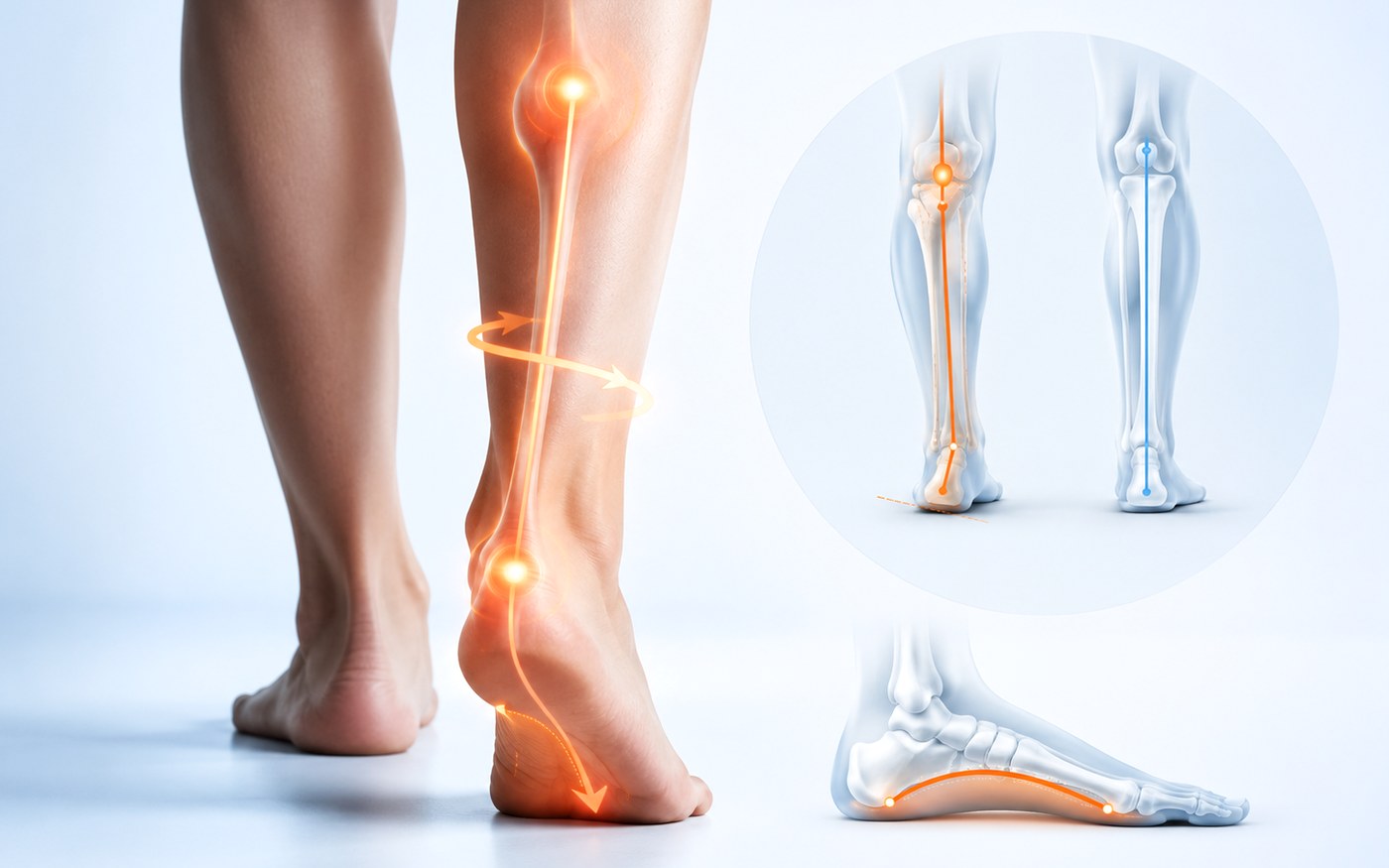
It changes the direction of force
During forward walking, the body has a highly practiced pattern of heel contact, controlled knee flexion, mid-stance support, and push-off. Reverse the direction and the ground-reaction force reaches the foot and leg differently. Recent biomechanical work in medial knee osteoarthritis has examined reductions in the external knee adduction moment and impulse during backward walking. These measures are often used as estimates of medial-compartment loading, although they do not describe every force inside the joint.
It provides a different quadriceps stimulus
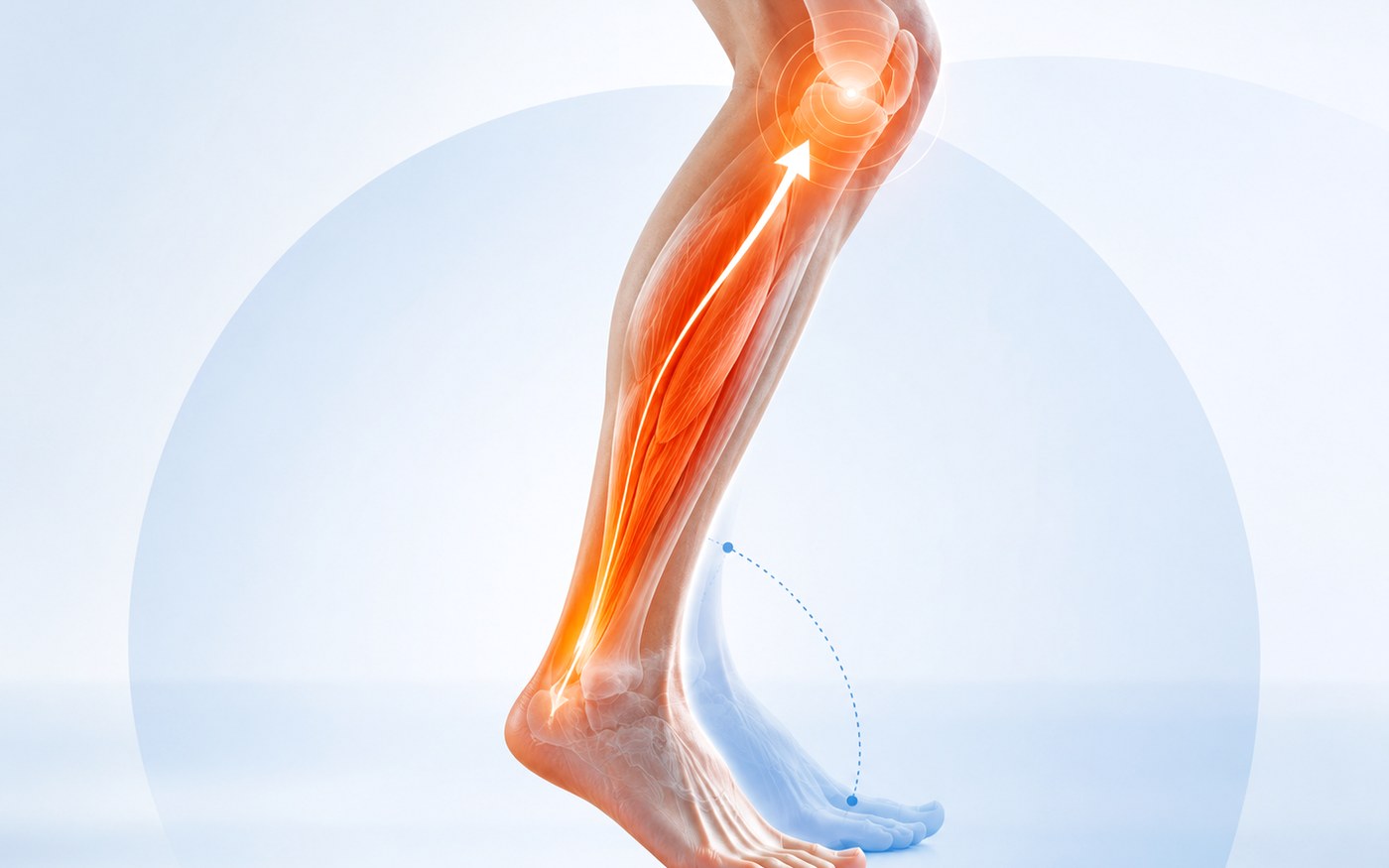
Backward walking asks the quadriceps to control the knee with unfamiliar timing. That can make a slow drill feel surprisingly demanding even when the distance is short. Several clinical studies report quadriceps strength improvements, but the drill is not a substitute for progressive exercises such as sit-to-stands, step work, or resisted knee extension. Use the knee strengthening guide to keep the larger program balanced.
It forces shorter, more attentive steps
People naturally slow down and shorten their stride when they cannot see the path. That can reduce abrupt loading and improve awareness of foot placement. The same attentional demand can become a disadvantage for anyone with poor balance, dizziness, reduced vision, or a distracting environment.
It trains a task the nervous system has not automated
Novel movement requires concentration. That may challenge coordination and balance, but “harder for the brain” does not automatically mean therapeutic. The dose must remain low enough that posture and control stay clean. Fatigued, hurried backward walking is not a better exercise simply because it is unusual.
Who May Benefit Most?
The clearest research group is adults with stable knee osteoarthritis who can walk independently and who are participating in a broader rehabilitation program. A therapist may use backward walking to add variety, train quadriceps control, or change gait loading while monitoring symptoms. It may also interest active adults who tolerate forward walking but want a low-volume coordination drill.
People whose knees ache after exercise should first confirm that the new drill is not simply adding more weekly load. The guide to post-exercise knee pain explains how to use the next-day response. Those with tight calves should remember that backward walking increases attention to the forefoot and ankle; the calf, ankle, and knee connection may matter more than the direction itself.
Who Should Avoid Unsupervised Backward Walking?
- Anyone with recent falls, major balance impairment, dizziness, fainting, or severe visual limitation.
- People with a knee that locks, repeatedly gives way, or cannot reliably accept weight.
- Anyone following post-surgical restrictions or partial-weight-bearing instructions.
- People with acute swelling, new trauma, sudden calf pain, or rapidly worsening symptoms.
- Anyone practicing in traffic, crowded gyms, uneven outdoor areas, or near stairs.
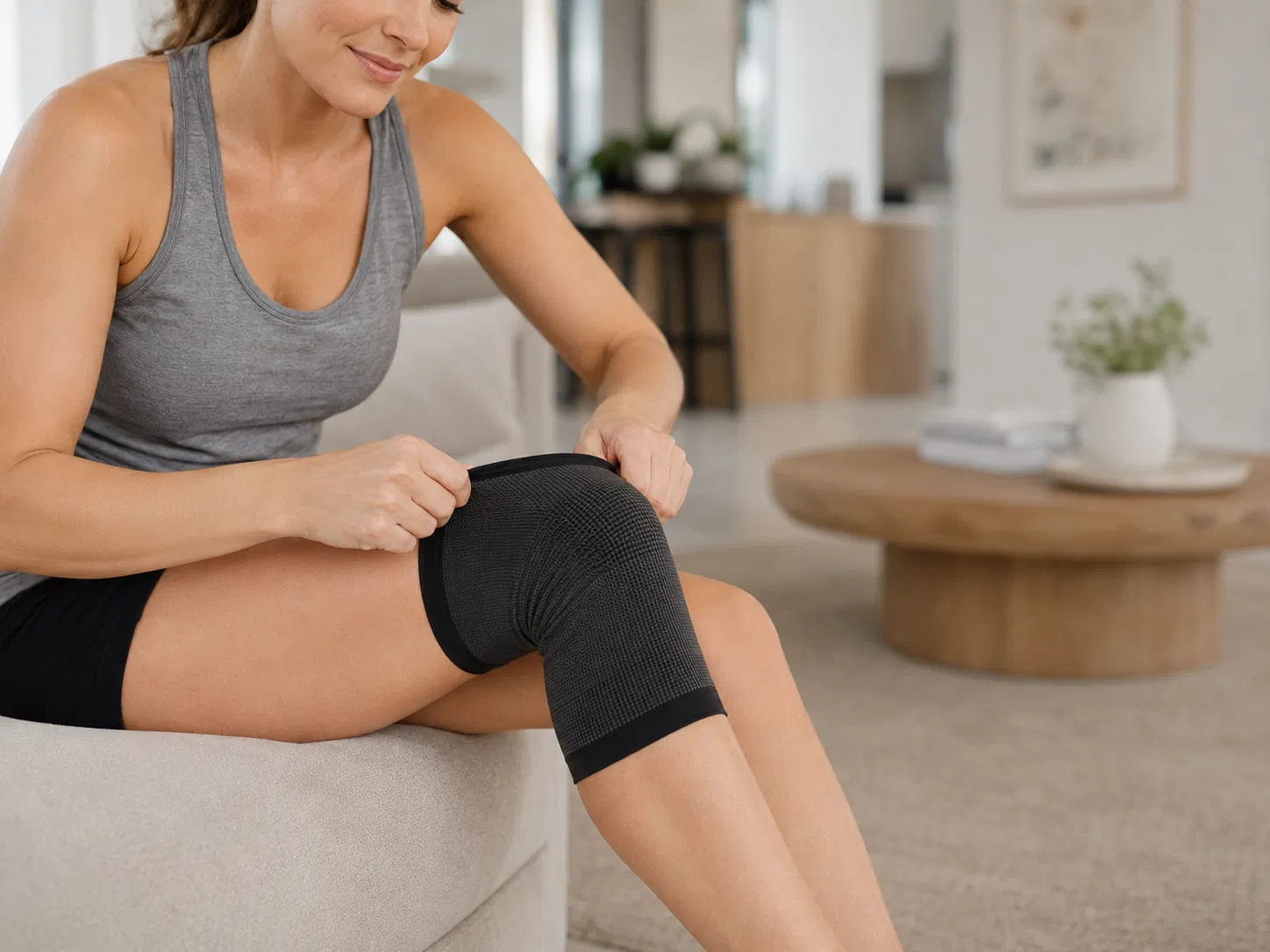
A compression sleeve may improve warmth or body awareness, but it cannot make an unstable knee structurally safe. The guide comparing a knee brace versus a compression sleeve explains why support categories are not interchangeable.
How to Start Backward Walking Safely
- Choose a controlled location. Use a clear hallway beside a stable counter, parallel bars, or a quiet gym lane. Remove rugs, pets, bags, and obstacles.
- Have a spotter. Another person should stand beside you during the first attempts rather than behind the path.
- Use very short steps. Place the toes down softly, then let the heel lower. Keep the trunk upright and avoid reaching backward.
- Begin with 20 to 30 seconds. Rest, turn around normally, and repeat only while control remains easy.
- Stop before fatigue changes technique. The goal is clean practice, not exhaustion.
One to three minutes total is enough for a first session. The backward treadmill may appear efficient because the belt supplies a consistent speed, but it is not automatically safer. Start at the lowest possible speed, attach the emergency safety clip, hold the rails lightly, and use supervision. Do not step onto a moving belt while facing away from the console.
Overground vs. Backward Treadmill Training
Overground practice lets you stop instantly and choose every step, which makes it useful for learning the basic pattern. The problem is environmental uncertainty. Even a clean hallway can contain a threshold, chair leg, child, pet, or open doorway. Mark a short lane, inspect it before every set, and avoid outdoor paths where cyclists, vehicles, curbs, or uneven ground can appear behind you.
A backward treadmill keeps the surface predictable and has rails, which may explain why treadmill subgroups showed larger effects in some pooled analyses. It also introduces a moving belt that continues whether or not the user is ready. The safest setup is not simply “turn around on your normal treadmill.” Use the lowest speed, attach the emergency clip, place both hands on the rails before the belt starts, and have a spotter near the controls. Step off only after the belt has fully stopped.
Water-based backward walking is another option used in rehabilitation settings. Buoyancy reduces weight bearing and the water slows sudden movement, but the pool floor can be slippery and depth changes alter balance. It is best performed in a supervised therapy pool rather than improvised during a busy public swim session.
What the Studies Still Cannot Tell Us
Most backward-walking studies last four to six weeks. That is long enough to detect changes in pain scores, walking tests, or quadriceps strength, but not long enough to establish whether the benefits persist for a year or whether people continue the exercise after supervision ends. Many trials also compare a combined package against conventional treatment alone, so the precise contribution of backward walking is difficult to isolate.
Participants are often adults with diagnosed knee osteoarthritis who meet study eligibility criteria. Results should not be stretched to every person with meniscus injury, ligament instability, inflammatory arthritis, post-surgical restrictions, or unexplained knee pain. Publication bias is also possible: small positive trials are more likely to appear than small neutral trials. The recent meta-analysis reports encouraging pooled effects, but the authors still call for research on standalone efficacy, long-term outcomes, and certainty of evidence.
This uncertainty does not make the drill useless. It changes the promise. A reasonable promise is that backward walking may be worth a supervised, time-limited trial as part of a complete program. An unreasonable promise is that a certain number of backward steps will regenerate cartilage or eliminate the need for strength, weight management, medication, or medical care.
A Four-Week Beginner Progression
| Week | Backward-walking dose | Support | Progress check |
|---|---|---|---|
| 1 | 4–6 × 20 seconds, 2–3 days | Counter or rail plus spotter | No loss of balance; knee at baseline next day |
| 2 | 4–6 × 30–45 seconds, 3 days | Light fingertip support | Steps remain short and quiet |
| 3 | 3–5 × 60 seconds, 3 days | Support available, not constantly held | No new swelling or instability |
| 4 | 5–10 minutes total in intervals | Supervised overground or very slow treadmill | Comfort, balance, and confidence all stable |
This progression is intentionally slower than many research protocols because published trials commonly involve screening and supervision. Do not copy a study's final dose on day one. If the knee feels more painful the following morning, reduce total time. If balance is the limiting factor, continue using support rather than treating hands-free walking as a badge of success.
How Backward Walking Fits With Other Cardio
Backward walking is not the most practical way to accumulate 150 weekly minutes of aerobic activity. It is a drill. Normal walking, cycling, and swimming are better suited to sustained cardiovascular work. The new guide to low-impact cardio for knee pain compares those options and helps you choose the main aerobic base.
A sensible session might include five minutes of easy forward walking or cycling, two to five minutes of backward-walking intervals, then strength work. Another person may use it as a short coordination block twice weekly. It should not replace normal walking exposure, especially if the real-world goal is climbing stairs, shopping, traveling, or returning to work.
Common Mistakes
Going too fast
Speed turns a controlled drill into a balance challenge. Comfortable-speed subgroups performed well in the recent meta-analysis, and there is no prize for making the belt faster. Short quiet steps are the default.
Looking over one shoulder the entire time
Repeated trunk rotation can distort the gait and create neck or back discomfort. Use a clear lane, mirrors, a spotter, and brief checks rather than walking with the torso twisted.
Adding it on top of an already overloaded week
New exercises still count as load. A knee already reacting to long walks, squats, pickleball, or stairs may not need another stimulus. The article on knee pain going down stairs explains why eccentric quadriceps demand can accumulate even without running or jumping.
Assuming unusual means superior
Backward walking may be useful because it changes the task, but the foundations remain ordinary: progressive strength, appropriate cardio, sleep, symptom monitoring, and a workload the knee can recover from. The daily knee care routine is still more important than any single novelty.
When to Stop and Get Assessed
Stop if the knee gives way, locks, swells rapidly, develops sharp focal pain, or becomes harder to bear weight on. Stop for dizziness, near falls, numbness, weakness, or any new neurological symptom. Backward walking is inappropriate as a self-test after a new injury. A clinician can decide whether the issue needs imaging, strength assessment, balance work, or a different exercise entirely.
Painless clicking is often benign, but clicking combined with catching, swelling, or instability deserves more attention. The guide to knee clicking while walking helps separate common sounds from warning patterns.
How to Judge Whether It Is Working
Do not judge the drill by how strange or tiring it feels during the first session. Track three practical outcomes for four weeks: the amount of discomfort during normal forward walking, confidence during stairs and chair rises, and the knee's response the morning after training. A useful drill should make ordinary function more predictable, not merely improve your ability to walk backward. Record total minutes, support used, pain before and after, and any swelling. If backward walking time increases while daily function stays unchanged or worsens, the exercise has not earned a larger role. If ordinary walking becomes easier and the knee remains calm, keep the smallest effective dose rather than progressing indefinitely.
The Bottom Line
Backward walking has more evidence than a gimmick and less evidence than a cure. Short-term trials in knee osteoarthritis suggest that it can improve pain, function, and quadriceps strength when added to a conventional program. The safest interpretation is to use it as a carefully dosed rehabilitation option: clear space, support, supervision, very short steps, and progression based on balance and next-day symptoms. Keep normal cardio and strength work as the foundation, and let backward walking earn its place by producing a useful response rather than by looking impressive online.
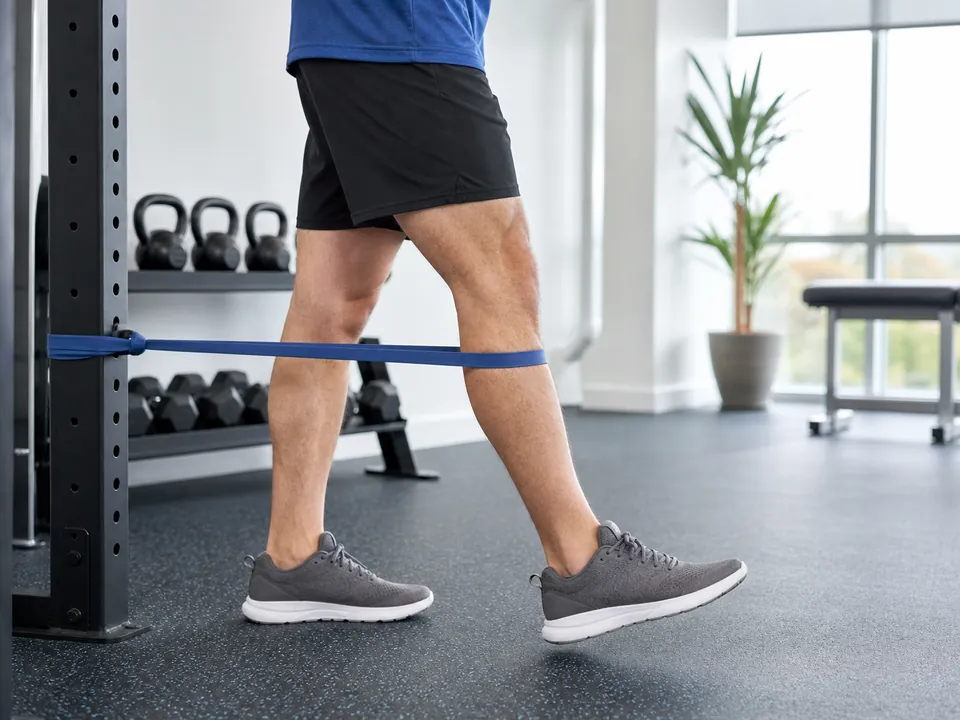
Backward walking is a gait and conditioning drill. If your goal is a smaller, stationary quadriceps exercise that focuses on the final part of straightening the knee, use the banded terminal knee extension guide for anchor height, band tension, form checks, and progression.
Frequently Asked Questions
Does backward walking help knee pain?
Research suggests backward walking can improve pain and function when added to conventional rehabilitation for some people with knee osteoarthritis. Most trials are small and short, so it should be treated as an optional training tool rather than a stand-alone cure.
Why can walking backward feel easier on the knees?
Backward walking changes foot contact, stride length, muscle timing and the way forces pass through the knee. Some studies report lower knee adduction loading and different patellofemoral demands, while the quadriceps work in an unfamiliar pattern. The effect depends on speed, technique and the person's condition.
How long should I walk backward for knee pain?
A beginner should think in minutes, not miles. Start with one to three minutes total, divided into short 20- to 60-second bouts near a rail or with supervision. Research programs often build toward roughly 10 to 15 minutes several times per week, but that is a later target rather than a first-session dose.
Is a backward treadmill safer than walking backward outside?
A treadmill removes obstacles and provides rails, but the moving belt can also surprise beginners. Start only at very slow speed, attach the safety clip, hold the rails lightly and have another person nearby. A clear indoor hallway beside a stable counter may be safer for the first attempts.
Can backward walking strengthen the quadriceps?
Several trials and reviews report improvements in quadriceps strength when backward walking is added to rehabilitation. It should complement, not replace, progressive strength exercises because walking alone does not cover the full range of strength needed for stairs, rising from a chair and sport.
Who should not try backward walking alone?
People with frequent falls, severe balance problems, dizziness, major visual limitations, new neurological symptoms, an unstable knee, recent surgery, or acute injury should not experiment alone. Professional supervision is also appropriate when a clinician has restricted weight bearing.
Does backward walking help patellofemoral pain?
The strongest clinical evidence discussed in this guide concerns knee osteoarthritis, not every type of kneecap pain. Backward walking may alter patellofemoral loading, but people with pain behind or around the kneecap still need an individualized plan that addresses strength, activity load and movement patterns.
Can I do backward walking every day?
Daily practice is not necessary for most beginners. Two to four sessions per week allows skill development while leaving time to judge the knee's response. Very short technique bouts may be tolerated more often, but volume should increase only when balance and next-day symptoms remain stable.