Ask a room full of people whether their calves feel tight and most hands go up. It has become so normal that we treat it as background noise, something that comes with age, with running, with a desk job. What gets missed is that the calf sits directly between the ankle and the knee, and tension there does not stay politely in one place. It travels.
This is a mechanical story rather than a mysterious one, and understanding it changes what you do about it. Most people stretch their calves in exactly one position, hold it for ten seconds, feel nothing much change, and conclude that their calves are simply tight by nature. The anatomy explains why that approach fails, and points to what works instead.
Why the Calf Has Anything to Do With Your Knee
The calf is made of two muscles that behave very differently. The gastrocnemius is the one you can see, the muscle that gives the calf its shape. Critically, it does not start at the shin. It starts higher, on the lower end of the thigh bone, which means it crosses the back of the knee joint before running down to the heel. Any persistent tension in that muscle is being applied, in a small but constant way, to the back of your knee.
Underneath it lies the soleus, a flatter and often stronger muscle that starts below the knee on the shin and calf bones. It does not cross the knee, so it cannot pull on it directly. What it does control is ankle motion, and that turns out to matter just as much.
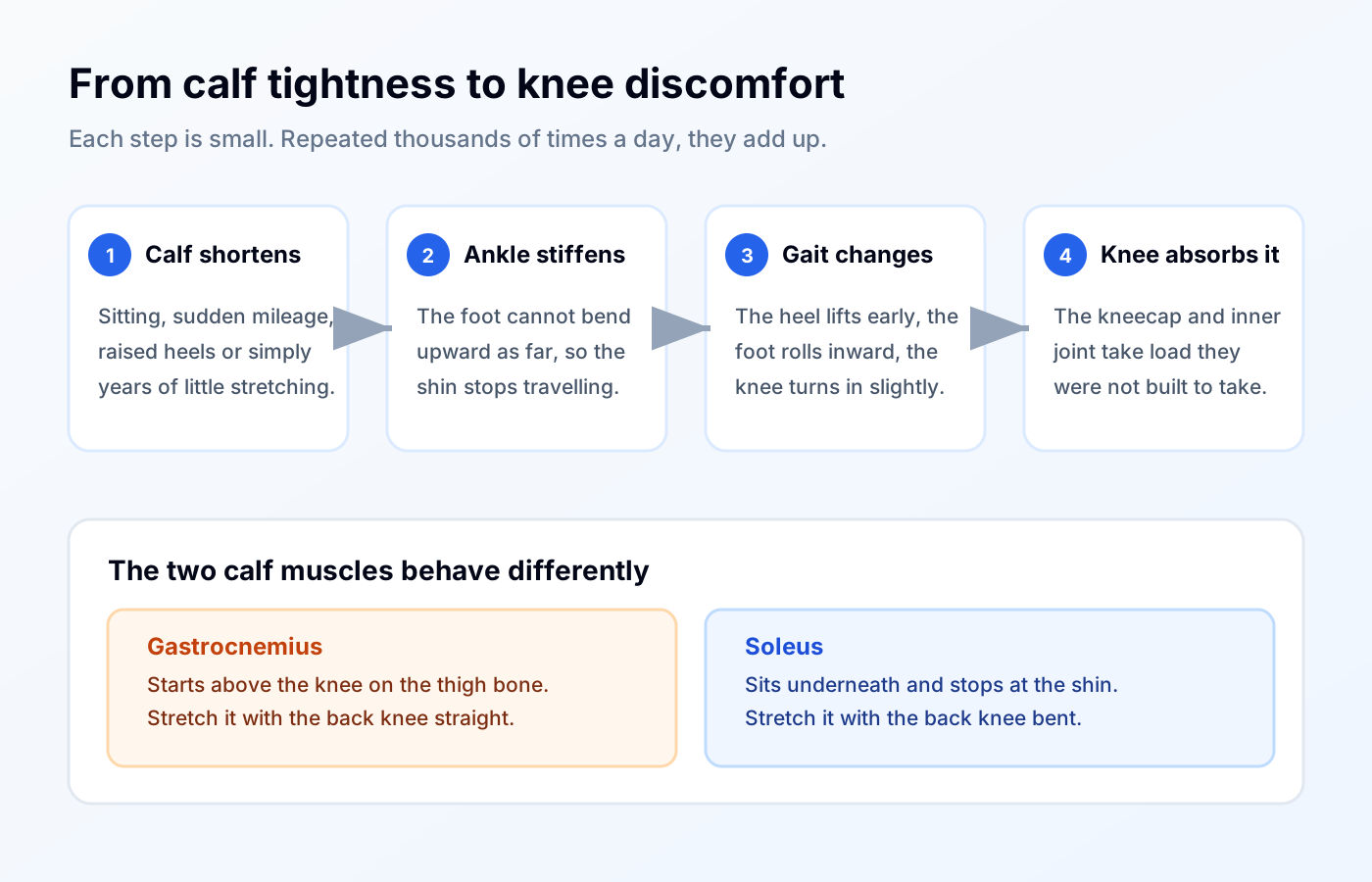
Here is the chain in practice. Walking, squatting and especially walking downstairs all require the shin to travel forward over a planted foot. That movement is called ankle dorsiflexion, and short calves limit it. When the ankle runs out of motion, the body does not simply stop. It borrows the movement from somewhere else. The heel lifts earlier than it should, the foot rolls inward to find extra range, the knee drifts inward with it, and the kneecap is pressed against the thigh bone at an angle it does not favour. Repeat that a few thousand times a day and the knee starts to complain, even though nothing is wrong with the knee itself.
This is also why calf tightness so often appears alongside the specific complaints covered elsewhere on this site: discomfort going down stairs, aching behind the knee, and pain that arrives after activity rather than during it. If any of those sound familiar, the guides on knee pain going down stairs and back of knee pain pair naturally with this one.
Why Are My Calves Tight in the First Place?
Tightness is a symptom, not a diagnosis, and the useful question is what is producing it. A handful of causes account for most cases.
| Pattern you notice | Most likely driver | What tends to help |
|---|---|---|
| Tight first thing in the morning, eases as you move | Tissue stiffness after hours of stillness with the foot pointed | Gentle ankle circles before standing, unhurried first steps, warmth |
| Tight after running or long walks | Load increased faster than the tissue adapted | Hold weekly increases near ten percent, stretch after sessions, not before |
| Tight after a day at a desk | Hours in a shortened position with almost no ankle movement | Stand or walk briefly every 30 to 45 minutes, pump the ankles while seated |
| Tight in dress shoes or boots, better in flats | Raised heel lets the calf sit short for most of the day | Vary heel height across the week rather than switching abruptly |
| Tight with heel pain underneath the foot | Calf and plantar fascia strain travelling together | Calf work plus supportive footwear, assessed if it persists past a few weeks |
| Tight with numbness, tingling or back symptoms | Possible nerve involvement rather than muscle length | Clinical assessment before any aggressive stretching programme |
One cause deserves separate mention because it is so often missed: weakness masquerading as tightness. A calf that cannot produce enough force during walking protects itself by holding a shorter, stiffer position. It genuinely feels tight, and it genuinely resists stretching, but the underlying problem is capacity, not length. That is why a programme built only from stretches so often stops working after two weeks.
The Achilles and Plantar Fascia Connection
The calf muscles converge into the Achilles tendon, which attaches to the heel bone. On the underside of the foot, the plantar fascia runs forward from that same heel bone toward the toes. Tension travels across this junction, which is why calf tightness, Achilles discomfort and plantar heel pain so often turn up together.
The practical implication is helpful rather than alarming. If you have knee discomfort and morning heel pain and tight calves, you are not necessarily dealing with three problems. You may be dealing with one restriction producing three symptoms, and the calf is the most accessible place to intervene. It also means that fixing calf length can improve more than the knee, which makes the effort easier to sustain.
Test Before You Stretch
Most people have no idea whether their ankle motion is actually limited, which makes it impossible to know whether anything is improving. The knee to wall test takes a minute and gives you a number to track.
Stand facing a wall, place one foot forward with the toes a hand span from the wall, keep the heel flat, and try to touch the wall with your knee by bending the ankle. If you can do it comfortably, slide the foot back and try again. The distance from your toes to the wall at the point where either the heel lifts or the knee no longer reaches is your working measurement. Compare left and right, write the numbers down, and repeat the test weekly. A clear side to side difference is often more informative than the absolute figure.
A Routine That Actually Changes Calf Length
The sequence below matters more than any individual exercise in it. Warmth prepares the tissue, the two stretch positions cover both muscles rather than only the visible one, and the loading step is what makes the change persist rather than fading by the next morning.
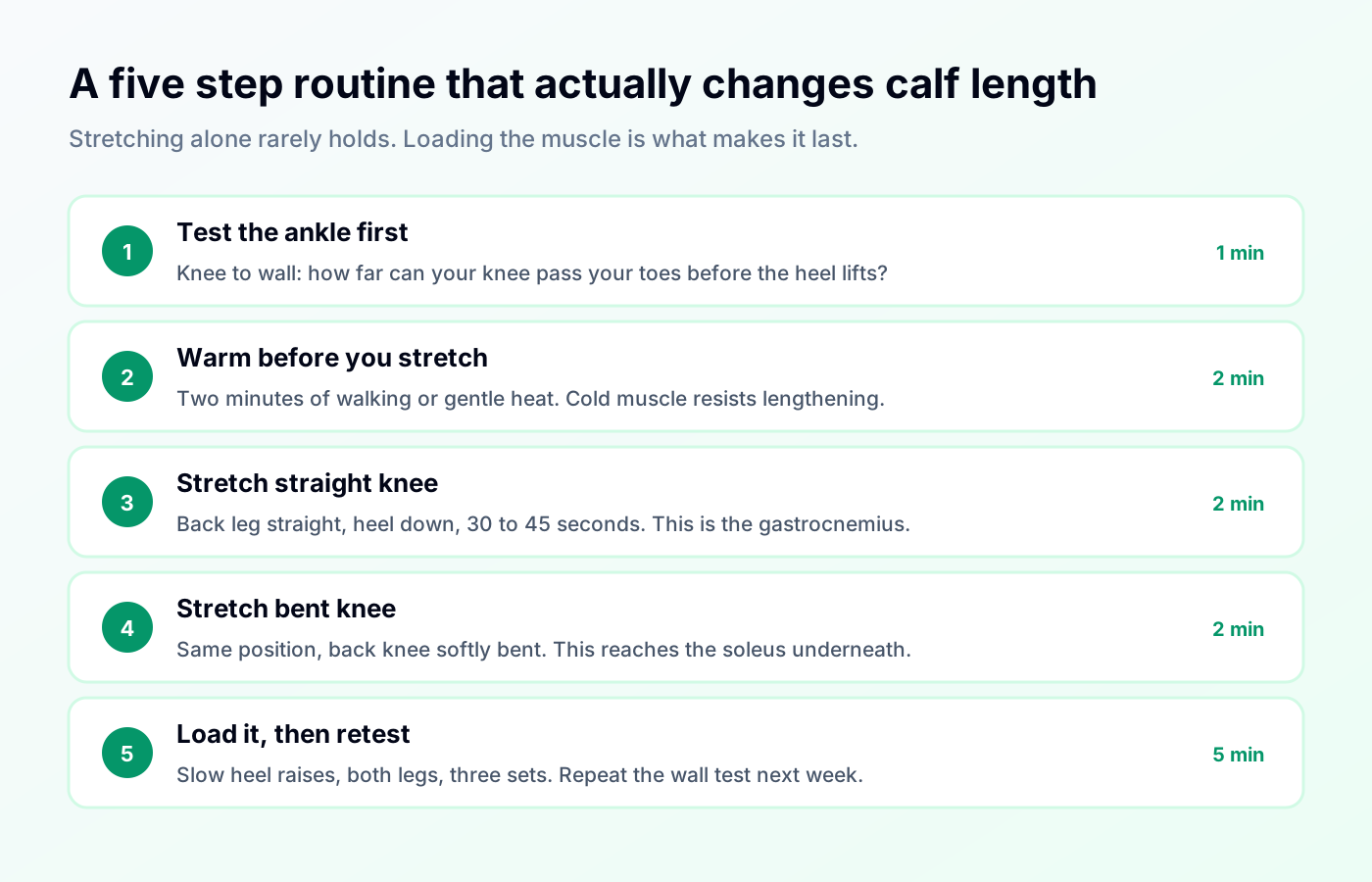
Step one, test. Use the knee to wall measurement above so you have a baseline. Without it you are guessing.
Step two, warm the tissue. Two minutes of easy walking, or warmth applied to the calf, makes the muscle far more willing to lengthen. This is the same principle covered in our guide on heat versus ice: warmth before movement, cold for angry swelling. A warm towel, a shower or a USB heated wrap all do the same job here.
Step three, stretch with the back knee straight. Hands on a wall, one leg back, heel flat on the floor, back knee locked straight. Hold 30 to 45 seconds. This targets the gastrocnemius, the muscle that crosses your knee.
Step four, stretch with the back knee bent. Same stance, same heel position, now let the back knee bend softly. The sensation should drop lower, closer to the ankle. This reaches the soleus, and it is the position almost everybody skips.
Step five, load it. Slow heel raises on both legs, three sets of ten to fifteen, lowering for a count of three each time. Standing on a step and letting the heels drop below the level of the step adds range. When that becomes easy over several weeks, progress to single leg raises. This is the step that converts a temporary stretch into a durable change, and it is the one most routines leave out.
Done most days, expect the wall test number to shift over three to four weeks. Knee symptoms, if the calf was a contributor, usually follow rather than lead, so give the routine a fair trial before judging it. If you want to fold this into a broader habit set, the daily knee care routine shows where it fits alongside everything else.
What Helps, What Is Optional, and What Does Not Work
Foam rolling and massage guns are popular and broadly harmless. They reduce the sensation of tightness for a short window, which makes the stretching and loading that follow more comfortable. Used that way they earn their place. Used instead of the routine, they change very little that lasts.
Heel lifts inside shoes can reduce symptoms quickly by lowering the demand on a short calf, and there are situations where a clinician will suggest them deliberately. As a long term self prescribed fix they carry an obvious drawback: they accommodate the restriction rather than resolving it. Footwear generally matters more than people expect, and our guide on running shoes and knee pain covers how heel to toe drop changes calf demand.
Static stretching immediately before running has repeatedly failed to show performance or injury benefits, so if you enjoy it, keep it for afterwards. Hydration and electrolytes are frequently blamed for tight calves, and while severe dehydration and cramping are genuinely related, everyday tightness in a well hydrated person is rarely solved by drinking more water.
When Tight Calves Are a Medical Warning Sign
The overwhelming majority of calf tightness is mechanical and benign. A small number of presentations are not, and they are worth knowing so you can act quickly rather than stretching through something that needs attention.
Seek urgent medical assessment if one calf becomes swollen, warm, red or tender without a clear injury, particularly after surgery, illness, a long flight or a period of immobility. Those features can indicate a deep vein thrombosis, which needs prompt care. Seek prompt advice for a sudden sharp pain with a popping or tearing sensation during activity, which suggests a muscle tear rather than tightness. Arrange a clinical review if calf pain arrives predictably after a certain walking distance and settles with rest, which can reflect circulation rather than muscle, or if tightness comes with numbness, pins and needles, or weakness, which points toward nerve involvement, often originating in the lower back.
Calves, Hamstrings and the Rest of the Chain
People who have tight calves very often have tight hamstrings too, and it is worth understanding why they travel together rather than treating them as two separate chores. Both sit on the back of the leg, both are shortened by long periods of sitting, and both are loaded during walking and running. The hamstrings cross the back of the knee from above, the gastrocnemius crosses it from below, and the two effectively meet at the joint. Persistent tension in both means the back of the knee is being pulled from opposite directions at once.
The practical consequence is that calf work alone sometimes gives only partial relief. If your knee discomfort sits behind the joint rather than at the front, adding a simple hamstring stretch to the routine, seated with one leg extended and the back kept long, is a reasonable next step. The same logic extends upward: hip stiffness changes how the knee tracks, which is why programmes that address only one joint often stall. You do not need to fix everything at once, but if four weeks of dedicated calf work produces no change at all, the restriction is probably somewhere else in the chain.
Tightness that shows up mainly as shin discomfort during running deserves a separate mention. Shin pain and calf tightness frequently appear together in people who have recently increased their mileage, changed surfaces, or moved into worn out shoes. The calf routine below usually helps, but the more important lever is load: how much you added, how quickly, and on what surface. Our guides on knee pain after exercise and running knee pain cover how to manage that side of it.
How Long Before Anything Changes
Realistic expectations prevent people from abandoning a routine that was working. Ankle range measured by the wall test usually shifts first, and a small improvement is often visible within two to three weeks of near daily work. The sensation of tightness typically eases next. Knee symptoms, if the calf was genuinely contributing to them, tend to improve last, often somewhere between four and eight weeks, because the movement pattern has to change before the joint notices anything.
If nothing has moved at all after four weeks of honest, consistent effort, stop repeating the same routine harder and reconsider the assumption. Either the calf was not the limiting factor, the restriction is coming from the joint rather than the muscle, or something else in the chain is driving it. That is a useful result rather than a failure, and it is a much better conversation to bring to a clinician than a vague complaint of tight legs.
From our range
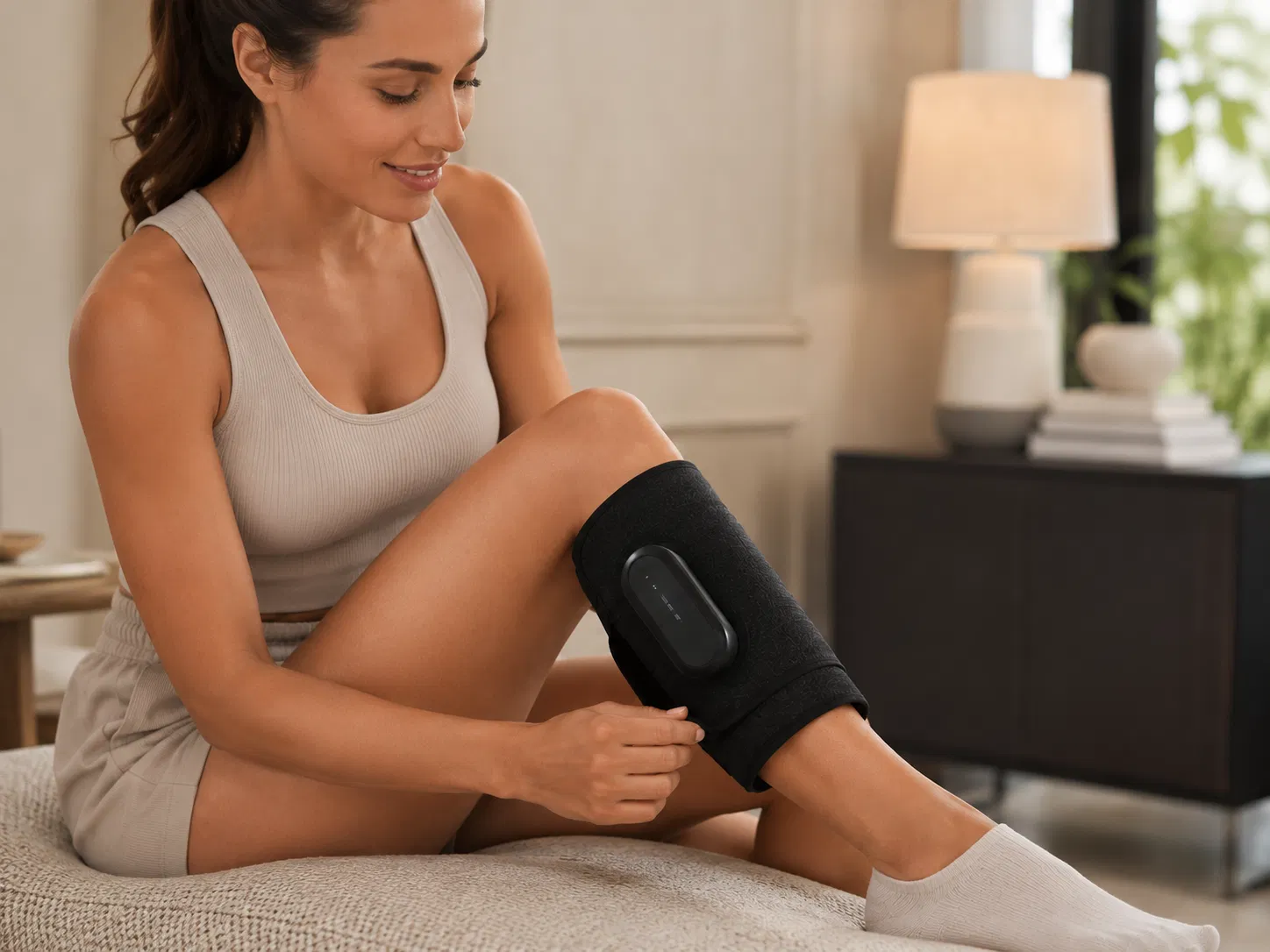
Nothing replaces the stretch and load routine above, and no device lengthens a muscle for you. What some people find useful alongside it is circulation support at the end of a long day, particularly after flights, long drives or hours on their feet, when calves feel heavy as well as tight. Our 360 air compression calf massager runs fifteen minute sessions for exactly that, and the USB heated knee wrap is a simple way to warm the area before you stretch. Treat both as comfort tools that make the routine easier to keep, not as substitutes for it.
The Bottom Line
Tight calves are not a cosmetic complaint or an inevitable feature of getting older. The gastrocnemius crosses your knee, and both calf muscles govern how far your ankle can bend, which means calf restriction reaches the knee by two separate paths. That also makes it one of the more satisfying things to address, because it is accessible, cheap and does not require anyone else.
Measure your ankle motion so you know where you stand. Warm up first, stretch both muscles rather than just the visible one, and then load the calf with slow heel raises through a full range, because loading is what makes the change stay. Give it a month before deciding whether it helped, and pay attention to the small number of warning signs that mean the calf needs assessing rather than stretching. If your knee discomfort has been stubbornly resistant to knee focused exercises, the answer may simply have been sitting a few inches lower down the chain all along.
If knee symptoms started with an ankle sprain, do not assume that calf tightness or a changed walking pattern explains everything. The knee pain after an ankle sprain guide separates recovery-related changes from injuries that need the whole lower leg assessed.
Frequently Asked Questions
Can tight calves really cause knee pain?
They can contribute to it in two ways. The gastrocnemius, the larger of the two calf muscles, starts above the knee on the thigh bone, so persistent tension pulls directly on the back of the knee. Separately, tight calves limit how far the ankle can bend upward, and a stiff ankle changes the way you walk, squat and descend stairs. That altered movement shifts load toward the kneecap and the inner joint line. Calf tightness is rarely the only cause of knee pain, but it is often a factor worth removing.
Why are my calves so tight all the time?
The most common reasons are long hours seated with the knees bent and the feet unloaded, a recent increase in walking or running volume, footwear with a raised heel that lets the calf sit short, and simply years without regular ankle motion. Age related tissue stiffness, dehydration, some medicines including statins, and nerve irritation from the lower back can also play a part. If tightness is constant, one sided, or comes with swelling, it should be assessed rather than stretched.
What is the difference between the gastrocnemius and the soleus?
The gastrocnemius is the visible muscle that forms the calf shape. It starts above the knee, so it is stretched with the back knee straight. The soleus sits underneath it, starts below the knee on the shin bone, and is stretched with the back knee bent. Most people only ever stretch the gastrocnemius, which is why calf work often feels like it does not hold. Both need attention.
Are tight calves linked to plantar fasciitis?
Yes, this is one of the better established links in foot and ankle care. The calf connects to the heel through the Achilles tendon, and limited ankle motion increases strain through the plantar fascia under the foot. Many plantar fasciitis programmes include calf stretching for exactly this reason. If you have both heel pain and knee pain, the calf is a sensible place to start.
How long should I hold a calf stretch?
Around 30 to 45 seconds per position, repeated two or three times, most days. Short bouncy stretches change very little. Warmth first helps, so stretch after walking rather than first thing on a cold muscle. Expect measurable change over three to four weeks rather than in a single session.
Do foam rollers and massage guns help tight calves?
They can make the muscle feel looser for a short period, which makes stretching and loading more comfortable. What they do not appear to do is create lasting length on their own. Treat them as preparation rather than treatment: roll or massage briefly, then stretch, then load the muscle with slow heel raises. The loading step is the part most people skip and the part most likely to hold.
When should tight calves be checked by a doctor?
Seek prompt medical assessment if one calf becomes swollen, warm, red or tender without an obvious injury, because those can be signs of a blood clot. Also seek advice for calf pain that arrives predictably after a set walking distance and eases with rest, for a sudden sharp pain with a popping sensation during activity, or for tightness accompanied by numbness, weakness or pins and needles.
Will calf raises make tightness worse?
Done through a full range, they usually improve it. A muscle that is weak often behaves as though it is tight, because it protects itself by staying short. Slow heel raises with a full lower, letting the heel drop below the step, both strengthen and lengthen the tissue. Rapid partial raises are the version that tends to leave calves feeling tighter.