Yes, an insole can contribute, but timing is only the first clue
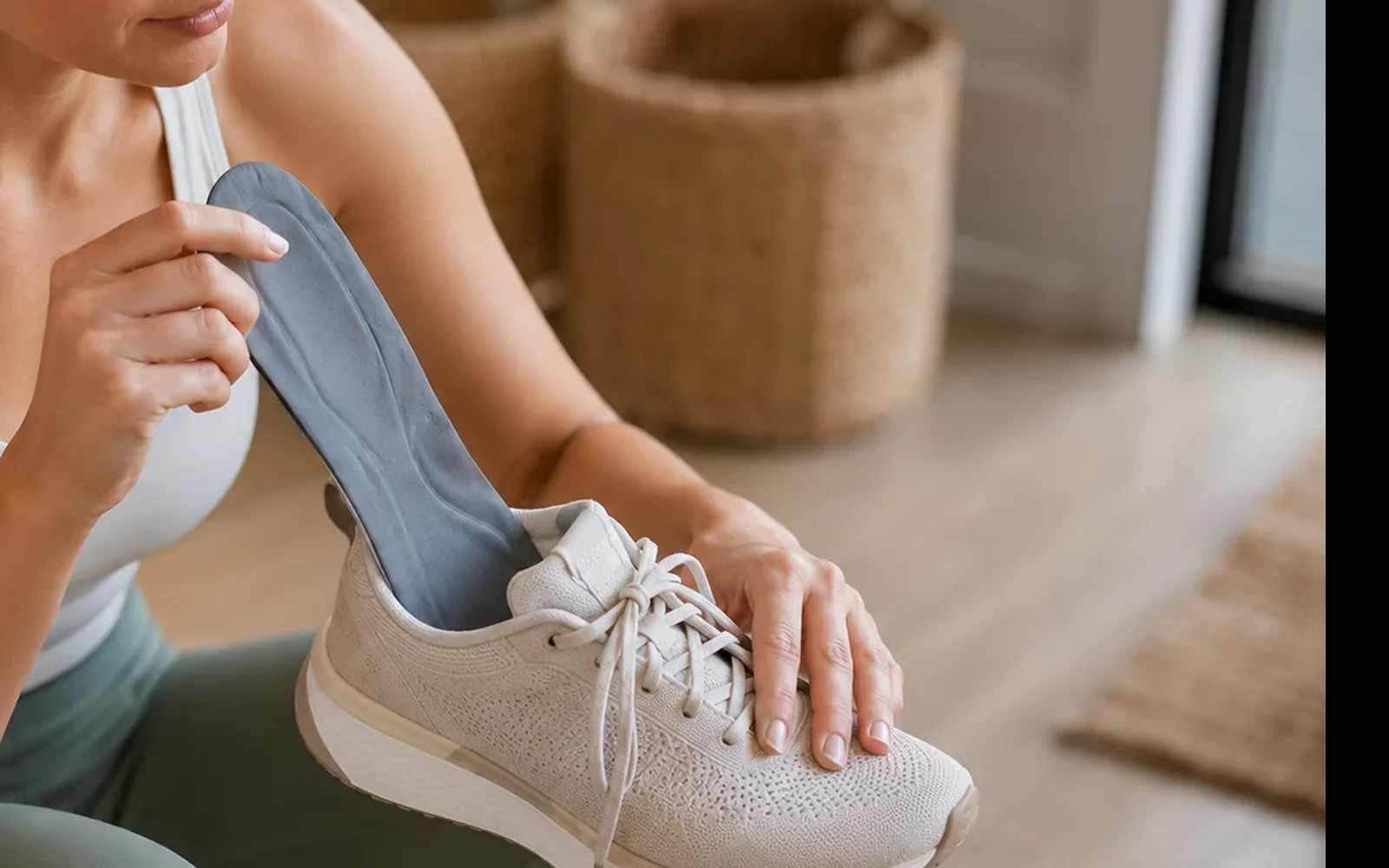
An insole changes the contact between your foot and the shoe. Depending on its shape and thickness, it can change pressure under the arch, how securely your heel sits, and how much room remains around your toes. Some people find that helpful. Others notice new discomfort or a different walking pattern. Neither response can be predicted from the words “orthotic,” “support,” or “custom” on the packaging alone.
The strongest practical clue is a repeatable pattern: the knee was comfortable before a clear insert change, symptoms appear with that combination, and they improve when you return to a previously comfortable setup. Even then, other changes matter. A longer shift, a new exercise routine, a walking holiday, or different shoes can arrive at the same time and confuse the comparison.
This guide is about troubleshooting an insert you already have. It is not a ranking of products and does not assume that every painful knee needs more arch support. If the main change was the running shoe itself, our guide to knee pain after changing running shoes addresses that separate question.
Understand what the insert is supposed to do
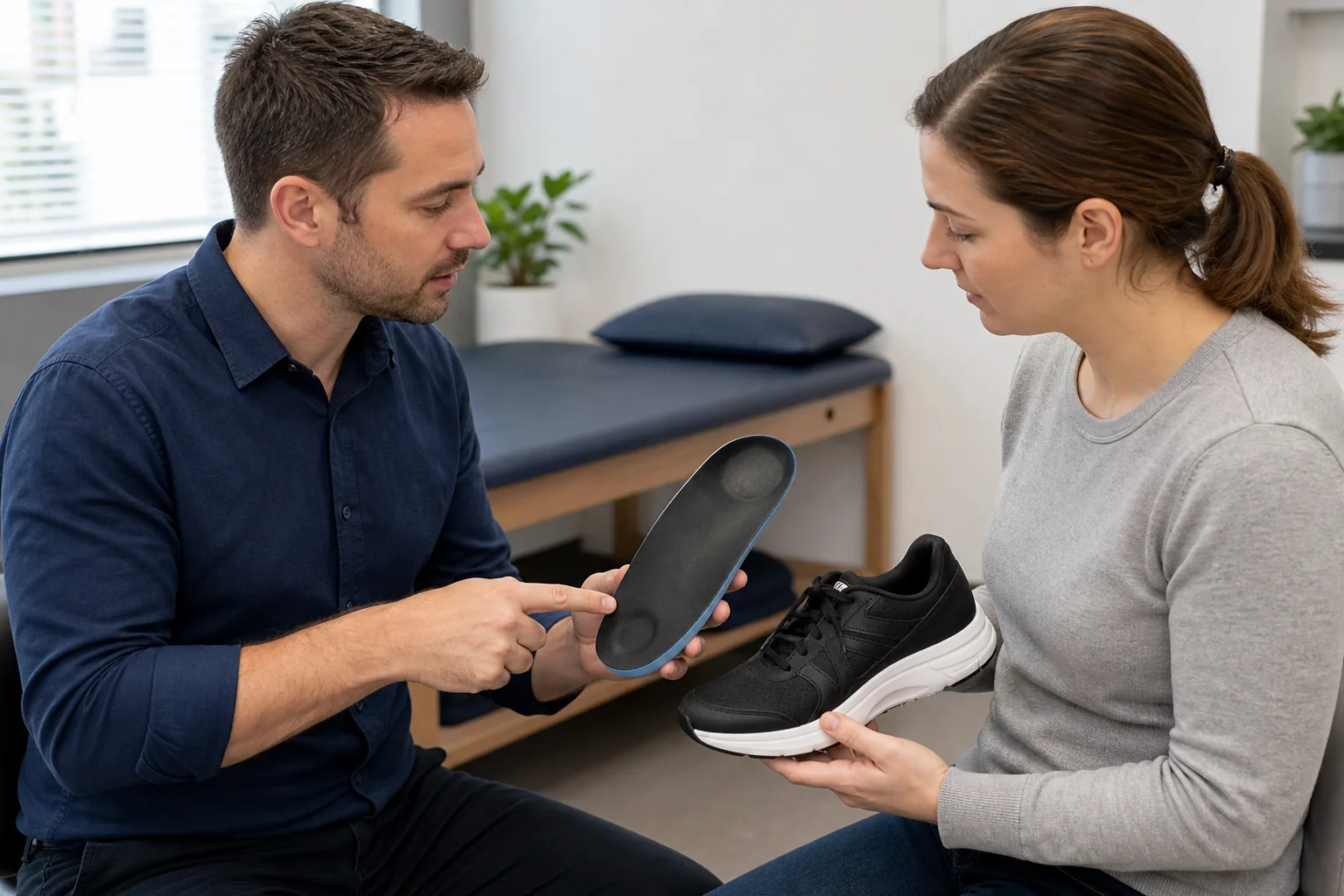
Start by identifying the device. A thin comfort liner, a contoured prefabricated orthosis, a prescribed custom orthosis, and a heel lift are not interchangeable. A liner may mainly change cushioning and space. A prescribed device may have specific posting, cushioning, or offloading features selected for a clinical reason. A heel lift may have been prescribed for a reason that makes casual removal or side-to-side swapping inappropriate.
Write down the original goal: foot comfort, a particular pressure problem, a diagnosed condition, or support during a specific activity. Then ask whether that goal is being met without a new problem elsewhere. An insert that makes your arch feel supported but leaves you limping is not a successful result simply because it feels more substantial.
For prescribed devices, keep the clinician's instructions and contact details. Do not grind, heat, cut a rigid shell, add wedges, or remove a prescribed lift on your own. If an over-the-counter insert is trimmable, follow its instructions and avoid cutting the structural arch or heel section. A device that is too short, curled, or unstable cannot be judged fairly until the fit issue is addressed.
Check shoe volume before blaming your alignment
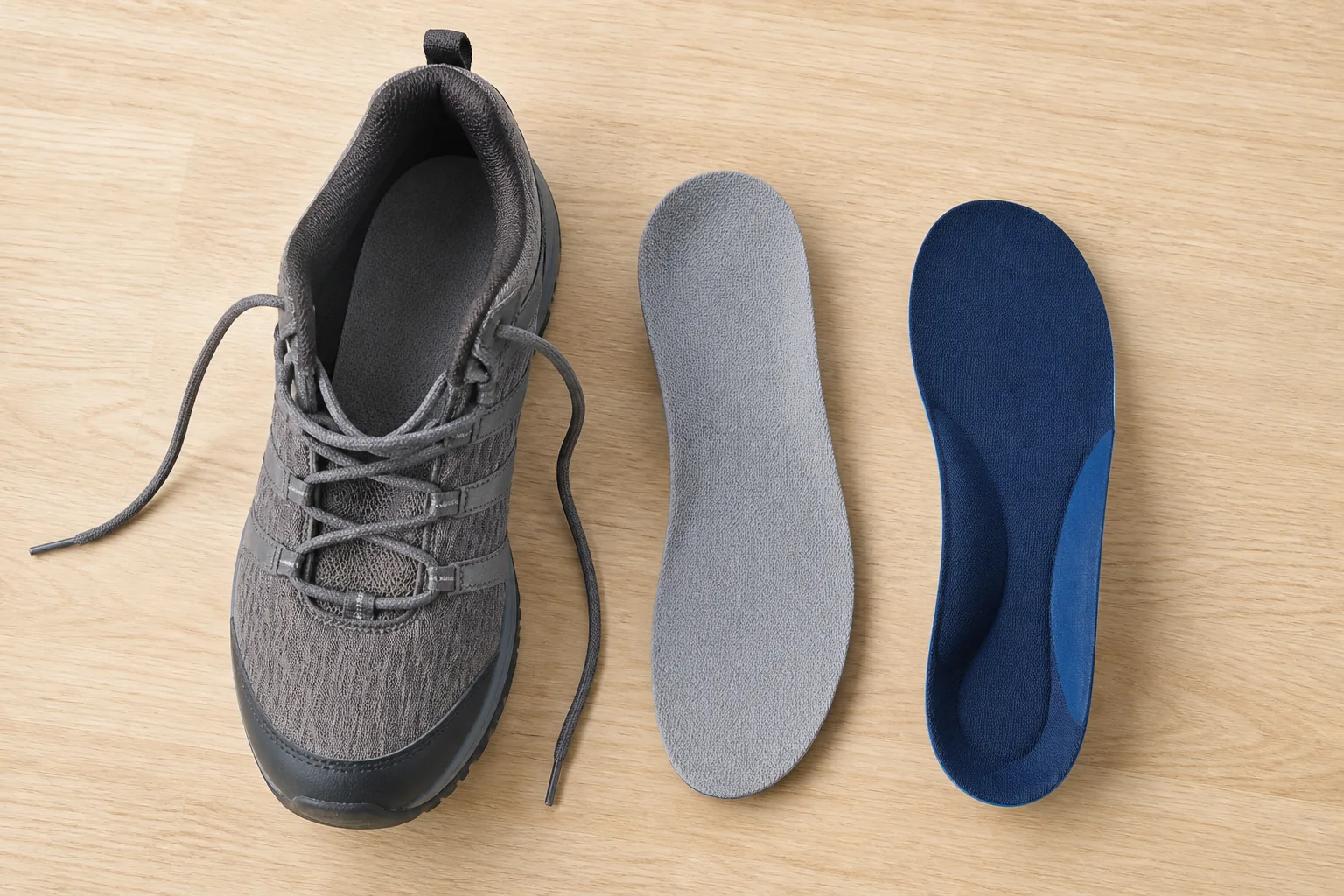
The most ordinary explanation is often that the shoe became too full. Replacing a thin factory liner with a thicker contoured insert can lift the foot toward the upper. Leaving both layers in place may reduce space further. That can alter heel hold, squeeze toes, or make the laces feel tight even when the shoe length has not changed.
Follow the device and shoe instructions about whether the original liner should be removed. Do not assume every insert belongs on top of it, and do not tear out a permanently attached footbed without checking. Look at the full shoe-insole-sock combination while standing and taking a few ordinary steps. A good fit while seated may not represent the fit under load.
Notice heel slipping, toes contacting the upper, pressure across the instep, or a need to loosen the shoe so much that your foot moves around. These are useful fit observations, not proof that your skeleton has been “realigned.” A different compatible shoe volume or a lower-profile device may be worth discussing with the prescriber instead of persevering with a cramped setup.
| Observation | Possible fit issue | What to check |
|---|---|---|
| Heel lifts or slips | The insert raises the foot too high | Heel-cup seating and shoe depth |
| Toes feel crowded | Too much material inside the shoe | Liner instructions, sock thickness, and toe space |
| Arch feels like a hard ridge | Contour or position may not suit the combination | Correct side, placement, and prescriber review |
| Insert moves or curls | Length, width, or shoe interior mismatch | Device instructions and compatible footwear |
Keep both shoes in the assessment. Feet can differ, and a pair that fits well on one side may create pressure on the other. Avoid solving that difference with an unprescribed extra lift or several layers of padding. Document the problem and ask whether the device or footwear needs an individual adjustment.
Make sure the insole is actually seated correctly
Remove the insert and inspect it on a flat surface. Confirm left and right, the intended top surface, and any instructions about placement. In a full-length device, the front should not buckle when the heel is seated. A three-quarter device will not look like a full-length liner, so its shorter length is not itself a fault.
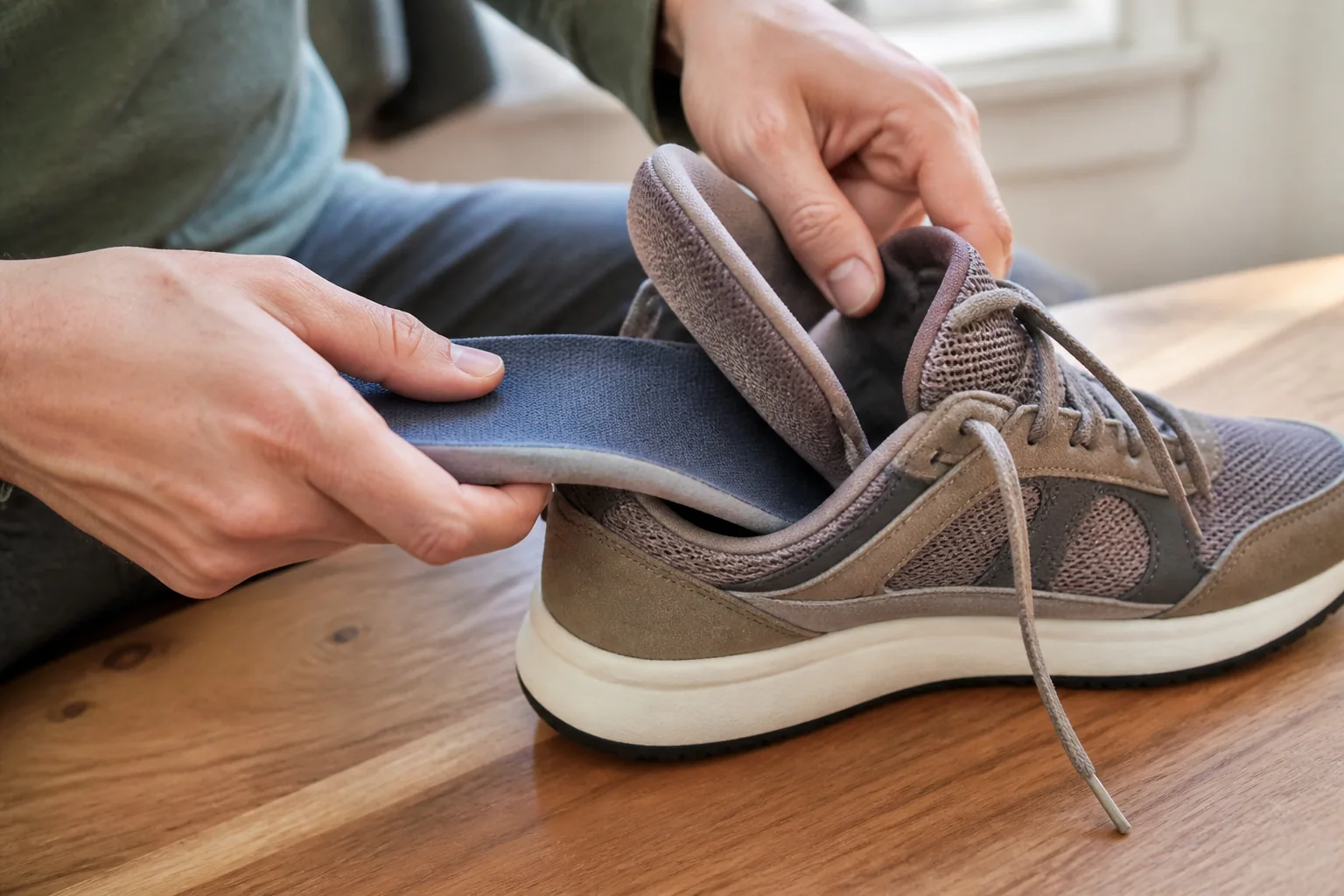
Loosen the shoe enough to place the device without folding it. Set the heel cup into the back of the shoe and check that the insert lies as intended. A curled edge, a device perched on an internal seam, or a heel cup wider than the shoe interior can create a rocking or crowded sensation. Simply pressing harder with your foot may not solve the mismatch.
Then check the shoe closure again. The laces or straps should secure the foot without creating a pressure ridge. If the device repeatedly moves during an easy walk, stop and review compatibility. Tape, glue, and improvised padding can make later adjustment harder, so use only attachment methods recommended by the manufacturer or prescribing service.
Wearing-in discomfort is not a reason to ignore joint pain
Clinical orthotic services commonly advise introducing devices gradually. Their schedules differ, which is one reason a universal internet rule is unhelpful. Follow the instructions supplied with your own device. Mild unfamiliar pressure or a short-lived ache is different from definite knee pain, a worsening limp, numbness, a blister, or skin damage.
Royal Devon's patient guidance specifically advises stopping and contacting the podiatrist when the device causes definite pain in a foot or leg joint or the back. Other NHS leaflets also recommend reducing wear or seeking review when discomfort persists. “Break-in” should describe a monitored introduction, not a deadline by which your body must accept any shape.
Do not make the first trial an entire work shift or a long walk far from home. Choose an ordinary low-demand setting where you can remove the device safely and use your familiar arrangement if appropriate. When an orthosis is part of treatment for ulcer risk, surgery, a substantial deformity, or another complex problem, ask the clinical team how to handle pain rather than improvising a replacement.
| Response | How to interpret it | Next step |
|---|---|---|
| Mild unfamiliar pressure that settles | May occur during introduction | Follow the supplied schedule and keep monitoring |
| Definite knee or other joint pain | Not a reason to force the break-in | Stop and contact the prescribing service |
| Blister, numbness, or skin damage | Pressure needs attention | Remove the device and obtain advice |
| Pain continues without the insert | The explanation may be broader | Arrange assessment rather than repeated testing |
Arch height, firmness, and the myth of overcorrection
A high or firm arch contour may feel intrusive, but sensation alone cannot tell you whether the device is mechanically “overcorrecting” your knee. Foot posture is only one part of walking, and visible pronation is not automatically a problem to eliminate. A person can have a low arch and no knee symptoms, or a normal-looking arch and a painful knee.
A randomized trial of prefabricated foot orthoses for patellofemoral pain found a short-term benefit compared with flat inserts, but it did not establish that orthoses outperform physiotherapy for everyone or that more support produces more benefit. The participants had a defined clinical problem. That evidence cannot be turned into a promise that any arch-support orthotic will fix undiagnosed knee pain.
The practical question is whether the device improves your relevant activity while remaining comfortable and compatible with the shoe. Do not select a taller arch simply because a previous insert failed. Our flat-feet and overpronation guide explains why static foot shape and symptoms need to be considered together rather than reduced to one label.
Use a calm comparison, not a painful challenge
If the device is optional and there are no red flags, begin by letting the irritated knee return toward its usual baseline. Repeatedly switching inserts while already sore makes the result difficult to interpret. Keep the shoe, socks, route, and duration as similar as practical, and avoid using a badly worn shoe as the comparison condition.
Try a short ordinary walk in the previously comfortable arrangement, then assess the response later that day and the next morning. If that is comfortable and the prescriber permits it, compare with a similarly short trial of the questioned device. Do not deliberately keep walking until it hurts. The comparison ends when discomfort increases or your walking changes.
One better walk is suggestive, not conclusive. Weather, sleep, workload, and recent activity can all vary. A repeated mild pattern is more informative than one dramatic experiment. If removing the device does not help, or ordinary walking is painful in both conditions, broaden the assessment rather than buying several more inserts.
| Comparison detail | Keep it consistent | Record |
|---|---|---|
| Footwear | Same sound shoe and normal socks | Heel hold, toe space, arch pressure |
| Activity | Short familiar route or ordinary task | Time before symptoms and any limp |
| Other load | No simultaneous new workout or long shift | Recent changes in walking and exercise |
| Recovery | Check later and the next morning | Whether the knee returns to its usual baseline |
For a prescribed device, send this information to the prescribing service instead of independently cycling through major changes. A short log can make a follow-up more productive: the exact shoe, where the pressure occurs, when knee pain starts, how long it lasts, and what happens without the new combination. Include photographs of fit or wear only if the service requests them.
When only one knee hurts
One-sided symptoms do not prove that one insert is defective. Your feet, shoes, previous injuries, work tasks, and walking habits may differ from side to side. First check obvious errors such as reversed inserts, a folded edge, an unevenly worn shoe, or a loose heel. Then note whether the knee also hurts during stairs, squatting, or walking without the device.
A new swelling, locking sensation, loss of motion, or history of a twist needs its own assessment. Do not diagnose a leg-length difference by looking in a mirror or add a heel lift to the painful side. Small-looking changes under one foot can alter the setup in ways that are difficult to evaluate without the original clinical context.
Location can help describe the complaint. Pain around the kneecap differs from a pressure mark under the arch, and a symptom at the back of the knee may deserve different questions. Our knee pain location guide can help you communicate clearly, but it cannot confirm that the insert caused a specific condition.
Work boots, sports shoes, and switching between pairs
If your next footwear change is a pair for home, compare the fit and fastening options in our slippers for knee pain guide before assuming the same insert will suit them.
An insert that fits a roomy walking shoe may not fit a narrow work boot or a low-volume dress shoe. Changing footwear while keeping the orthosis does not preserve the whole setup: the shoe's interior shape, heel hold, and flexibility change too. Assess each pair rather than assuming a comfortable device will feel identical everywhere.
Required safety footwear adds another constraint. Ask the manufacturer or workplace safety team whether the insert is compatible with the boot's intended protective function. Do not remove protective components, crowd a safety toe, or substitute ordinary shoes in a hazardous area just to continue a comparison. Comfort and required protection must be solved together.
For sport, introduce the device during a lower-demand session approved by your clinician before testing it during speed work, a long hike, or a match. A device that is comfortable while seated is not yet proven comfortable during repeated movement. Keep the activity progression separate from the wearing-in progression so you know what changed.
Custom orthotics, arthritis, and realistic expectations
Custom manufacture does not make follow-up unnecessary. A device may need adjustment because of shoe compatibility, pressure, a change in symptoms, or a mismatch between the intended use and the way it is being worn. Contacting the prescriber is part of the process, not evidence that you have failed to adapt.
For osteoarthritis, NICE does not recommend routinely offering insoles or supports to everyone. Its guidance reserves them for particular circumstances involving instability or abnormal loading when a device is likely to improve movement and function. That is different from assuming knee arthritis always requires a wedge or that an insert can reverse joint changes.
If shopping becomes appropriate after the cause of discomfort is clearer, our insole selection guide covers practical features and limitations. The decision should follow a defined need. Repeatedly buying stronger, softer, or more expensive inserts without identifying the failed feature often produces more variables than answers.
When to Get Medical Help
Seek prompt care for major swelling, inability to bear weight, locking, significant injury, or a hot red knee with fever. Stop the device and seek advice for numbness, skin injury, or worsening joint pain. People with diabetes, reduced sensation, circulation problems, or prescribed offloading should contact their clinical team early rather than relying on a home wearing-in test.
A proposed height correction is different from ordinary arch support. Before adding material under one foot, read the leg-length assessment and shoe-lift guide and clarify the measurement with the prescribing professional.
The bottom line
A useful insole should fit the shoe, fit its purpose, and remain compatible with comfortable movement. Check volume and placement first, follow the supplied introduction plan, and take repeatable knee pain seriously. If the problem persists, the right next step is a review of the device and the knee together, not a promise to wear it longer until it works.
Frequently Asked Questions
Can insoles cause knee pain?
Yes, they can contribute through poor fit, added shoe volume, pressure, or a change in walking that you do not tolerate. Timing alone is not proof. Review the full shoe-insole combination and other recent activity changes.
Is knee pain normal when breaking in orthotics?
Mild unfamiliar pressure can occur during introduction, but definite joint pain is not something to force through. Follow the supplied instructions and contact the prescriber if knee pain appears or worsens.
Can too much arch support hurt my knees?
An intrusive contour or unsuitable shoe combination may be uncomfortable, but the sensation does not establish a diagnosis of overcorrection. Check fit and placement, then seek review if the problem persists.
Should I remove the original shoe insole?
Follow the orthosis and shoe instructions. Many full-length devices replace a removable factory liner, but not every device is designed that way. Stacking inserts can reduce shoe volume and heel security.
Should I stop wearing insoles if my knees hurt?
Stop an optional device that causes definite pain and review the fit. For prescribed devices, contact the prescribing service for a plan, particularly if the device treats ulcer risk, surgery, or another complex problem.
How long should orthotics take to feel comfortable?
There is no universal schedule. Clinical services provide different introduction plans depending on the device and person. Do not use a fixed number of days as a reason to ignore worsening pain or skin injury.
Why does only one knee hurt with my insoles?
Feet, shoes, previous injuries, and tasks can differ between sides. Check for placement errors and uneven wear, but do not add a heel lift or diagnose a leg-length difference yourself.
Can custom orthotics need adjustment?
Yes. Custom devices still need compatible footwear and sometimes follow-up for pressure, fit, or changing symptoms. Bring the orthoses and the shoes you use to the review.
Will a softer insole solve the problem?
Not necessarily. Softer material may change comfort but can still crowd the shoe or fail to address the relevant problem. Identify what failed before replacing the device with another design.