Not every uneven feeling means unequal bone length
Leg length discrepancy is a description that needs a measurement and context. A structural difference involves actual bone length. An apparent or functional difference can reflect how the pelvis, hips, knees, or feet are positioned. Those situations may look similar in a mirror while calling for different questions during assessment.
A knee that remains slightly bent, a change in hip position, or a compensating stance can affect how long a leg appears. That does not mean the observation is imaginary. It means the starting position and underlying movement need to be understood before deciding that adding height under one foot is the right response.
This guide focuses on assessment and shoe-lift decisions. It is separate from our insole-related knee pain guide, which addresses symptoms after an insert change. An ordinary cushioning or arch-support insole is not automatically a treatment for a measured leg-length difference.
What studies suggest about knee osteoarthritis
Observational studies have found associations between measured leg-length inequality and some knee osteoarthritis outcomes. One large cohort reported associations involving the shorter limb; other work has examined progression and later joint replacement. These studies suggest that the relationship deserves attention, but they do not establish a simple rule for every painful knee.
An association is not proof that correcting the length difference will remove pain. People differ in alignment, prior injuries, activity, body size, and other factors. A study that observes a relationship over time is answering a different question from a trial testing a particular shoe-lift treatment.
The side affected is not universal either. Do not decide which leg is shorter by asking which knee hurts, or assume that a finding in one study predicts your future. A clinician should interpret the measurement alongside your symptoms and function rather than treating a small asymmetry as an automatic diagnosis.
Structural, functional, and apparent: useful distinctions
| Term | What it describes | Question to clarify |
|---|---|---|
| Structural or anatomical difference | A difference in bone length. | How was it measured, and is imaging needed? |
| Functional or apparent difference | A difference influenced by posture, joint position, or movement. | Which position or restriction changes the appearance? |
| Perceived unevenness | The person feels uneven while standing or walking. | Does examination identify a consistent measurable difference? |
| Compensation | A movement strategy used to accommodate another limitation. | Is the strategy a cause, a response, or both? |
| Incidental small asymmetry | A finding that may not explain symptoms. | Would treating it improve a meaningful task? |
Terminology varies between clinicians and reports. Ask the person assessing you to explain what they mean rather than assuming the label has settled the matter. The important distinction is whether the plan addresses a measured structural issue, a movement limitation, or an unconfirmed impression.
Why home measurements can mislead
Tape measurements depend on finding consistent landmarks and controlling body position. A slightly rotated pelvis or bent knee can change the result. It is difficult to keep those details consistent while measuring yourself, and a helper without training may not recognize the source of the variation.
Mirror checks, trouser hems, and shoe wear are even less specific. Clothing can hang unevenly for many reasons, and worn soles reflect several aspects of walking and shoe use. They may prompt a question, but they do not provide a reliable prescription for the height or side of a lift.
A photograph can be useful for describing what you noticed, but it should not become a treatment calculator. Camera angle and stance affect appearance. Avoid stacking inserts until the image looks level; you may change foot position and shoe fit without addressing the actual source of knee symptoms.
What a professional assessment may include
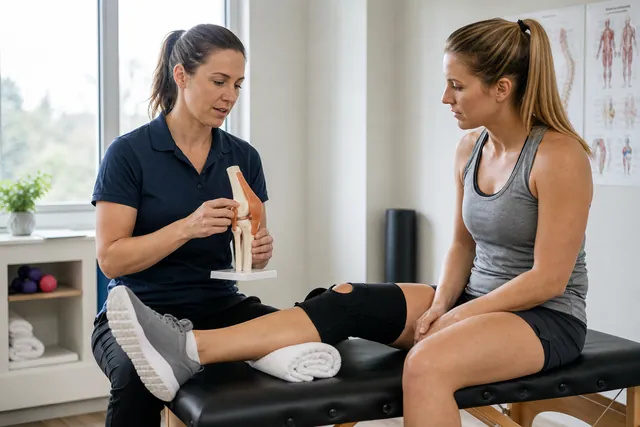
A clinician may review your history, observe standing and walking, examine joint movement, and use standardized measurements. They may ask about fractures, surgery, longstanding asymmetry, or a recent change in how the legs feel. The goal is to understand the whole pattern rather than confirm a theory from the first observation.
A standing block assessment can place measured support under one foot while the clinician observes alignment and response. This is not the same as standing on a high exercise step. The support, posture, and interpretation matter, and the assessment may be combined with other information.
Imaging can be considered when a more precise measurement is needed or the history raises a specific question. Not everyone requires a scan. Ask what the test would add and whether it would change management. Guidance written for growing children also needs careful interpretation before applying its treatment options to an adult.
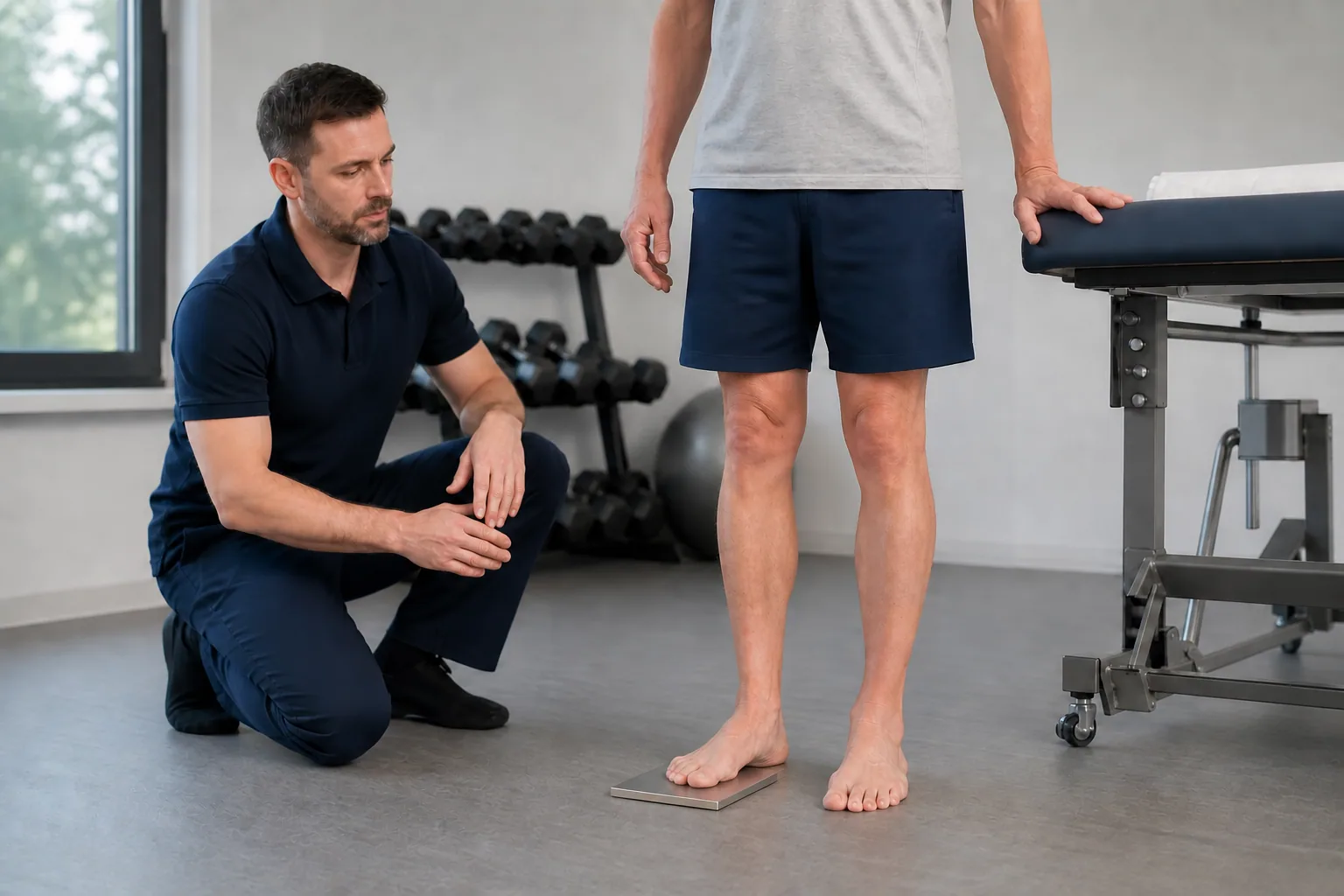
Which everyday details help explain the knee pain?
Describe when symptoms began and whether they followed a change in footwear, training, work, or health. A longstanding difference noticed for the first time is not automatically a new cause. A recent fracture or operation changes the context and deserves discussion with the treating team.
Compare standing, walking, stairs, and sitting rather than reporting only that one knee hurts. Does the knee feel different barefoot and in a particular shoe? Does the problem increase over a long shift or appear immediately? These details help a clinician decide whether footwear, movement, or another knee condition is relevant.
Mention hip, back, ankle, and foot symptoms as well. The point is not to blame a chain of joints automatically, but to avoid assessing the knee in isolation when other limitations affect your stance. A useful plan considers the tasks you actually need to perform.
A heel lift, full-length lift, and insole do different jobs
A heel lift raises the heel within the shoe. A full-length lift changes height under more of the foot, while some adjustments may be made to the shoe itself. These choices affect available space, heel position, and how the foot sits. The correct option is not determined solely by the word discrepancy.
An arch-support or cushioning insole may change comfort without providing the intended height correction. Layering one on top of a lift can crowd the shoe and raise the heel out of its secure position. Do not assume that more material produces better alignment.
Ask the prescribing professional to explain the side, type, amount, and purpose of the proposed lift. Is the aim a trial of symptom response, accommodation of a measured difference, or another goal? A clear purpose makes follow-up more useful than simply checking whether you can tolerate wearing it.
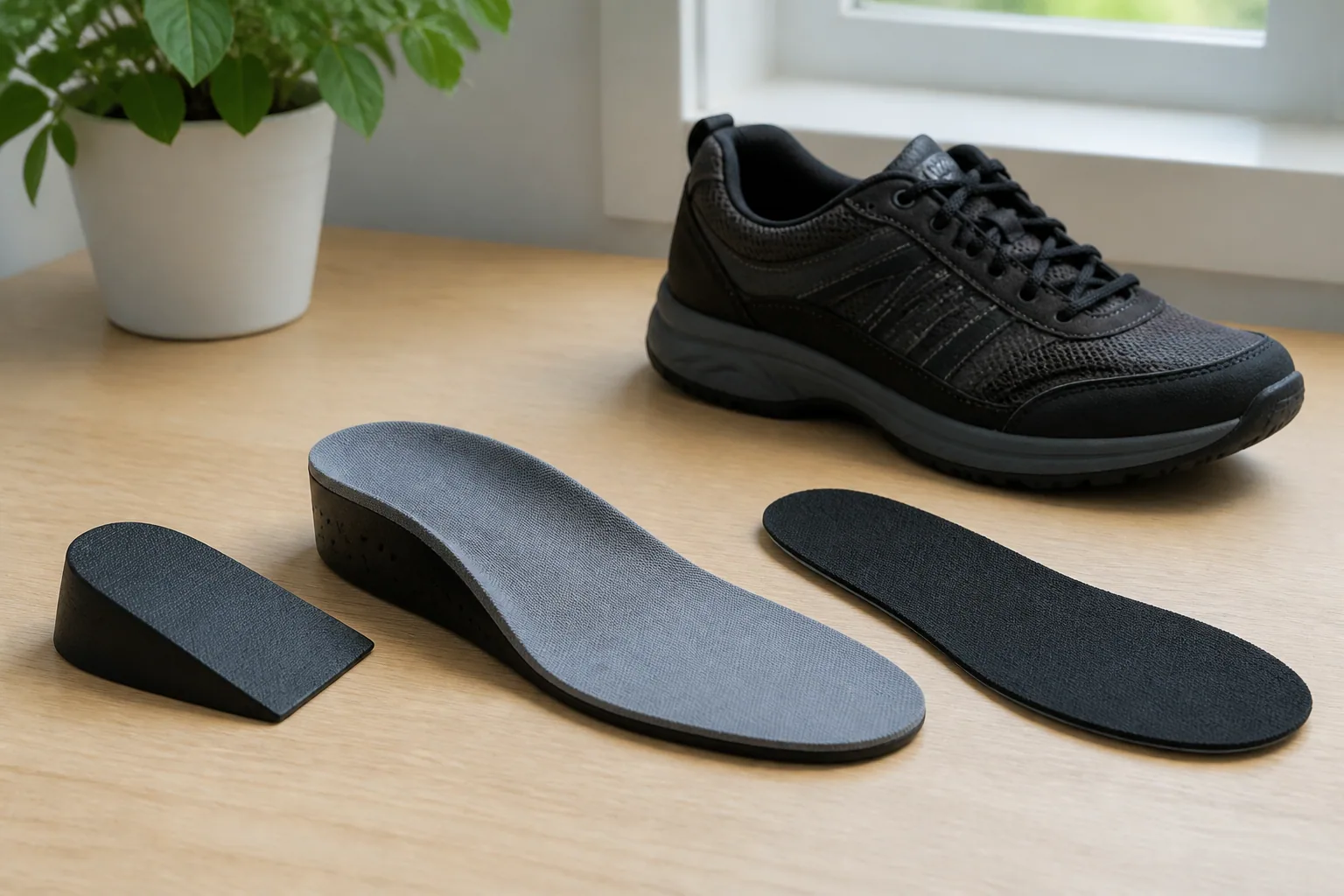
Why full correction is not an automatic starting rule
A measurement does not by itself determine how much adjustment should be introduced. Longstanding adaptations, joint movement, symptoms, and footwear can affect the plan. A clinician may choose a staged or partial approach in some situations rather than immediately matching a number millimeter for millimeter.
Do not increase the height independently because a larger lift feels more symmetrical for a few minutes. A change can influence other parts of walking and may feel different after several hours. The relevant outcome is a sustainable improvement in function and comfort, not only a static sensation while standing.
Evidence for lifts should be interpreted carefully. For example, a study of heel-lift use during military training did not find a clear difference in injury outcomes between groups. That population and setting do not settle every clinical question, but they caution against presenting lifts as guaranteed injury prevention.
How to evaluate a professionally advised trial
| Track | Useful comparison | Reason to contact the clinician |
|---|---|---|
| The same ordinary shoes | Fit, heel security, and toe space. | New rubbing, slipping, or pressure. |
| A familiar short route | Comfort and walking pattern at a comparable dose. | New pain or a worsening limp. |
| Later response | Symptoms after use and the next morning. | Persistent worsening rather than a manageable adjustment. |
| Other joints | Any new hip, back, ankle, or foot symptoms. | A new problem appears after the change. |
| Actual use | Which shoes and how long the lift was worn. | The prescribed setup cannot be used consistently. |
| The original goal | Whether the relevant daily task improves. | No meaningful benefit despite following the agreed plan. |
Follow the wear schedule and review instructions you receive. If no schedule was discussed, ask rather than inventing one from an unrelated product page. Keep the initial evaluation simple: changing a lift, shoes, running route, and training volume together makes the result difficult to interpret.
If symptoms worsen, contact the prescriber. Do not assume discomfort must be endured because the measurement is supposedly correct. Equally, do not discard a prescribed device without discussing a manageable issue that could be resolved by fitting. The point of a trial is to gather useful information and adjust the plan.
Footwear compatibility deserves a real fitting
Try the intended lift in the shoes you actually use, not only in a roomy pair at the appointment. Work shoes, trainers, and dress shoes can have different internal space. A device that fits one pair may be unsuitable in another without modification.
Check that the foot remains secure and that the shoe closes normally. A crowded shoe may create pressure or change how you walk. Avoid trimming, stacking, or gluing components unless the product instructions and prescribing professional support that modification. Small improvised changes can alter the intended setup.
Bring both shoes to a review and explain which pair is associated with symptoms. Photographs of the device may help, but they do not show every aspect of fit under load. A real fitting is often more informative than trying to solve the problem through repeated online purchases.
Exercise and movement assessment still matter
A lift does not replace assessment of strength, joint motion, or activity load. If the apparent difference is influenced by a movement restriction, the plan may address that factor. If a structural difference is present, exercise may still support function without changing bone length.
Avoid promises that a single stretch will lengthen a leg or permanently realign the pelvis. Temporary changes in position are not the same as changing anatomical length. A therapist should explain what an exercise is intended to improve and how that improvement will be measured.
Keep the knee's own symptoms in view. Swelling, locking, giving way, or persistent pain may require investigation independent of the length measurement. A plausible biomechanical explanation should not become a reason to overlook a separate clinical problem.
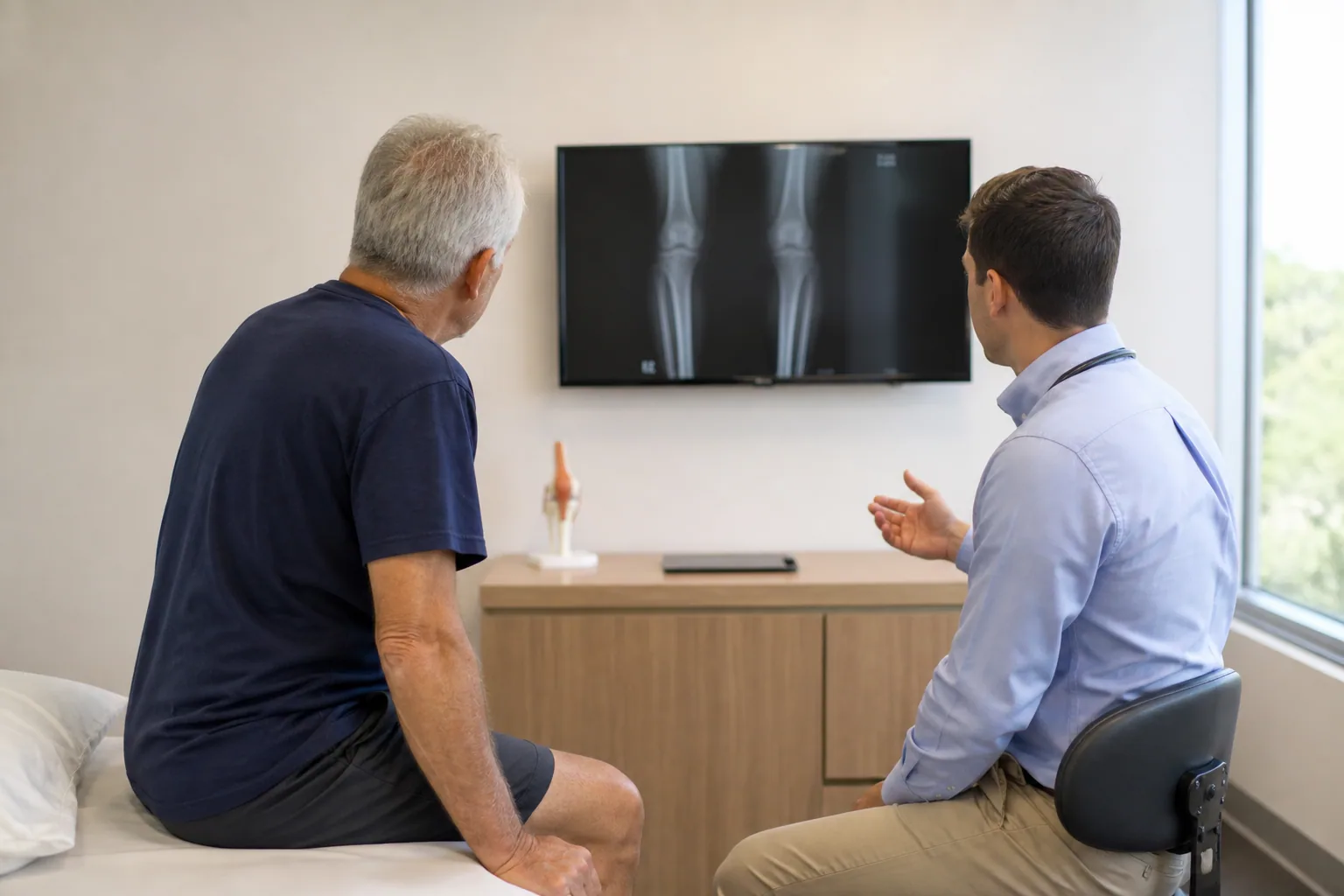
Questions that prevent an expensive guessing cycle
Ask how the difference was measured and whether the finding is structural, functional, or uncertain. Then ask why the proposed correction is expected to help your particular symptom. A useful explanation connects the measurement to the task you want to improve rather than promising that symmetry fixes every joint.
Ask what success and failure would look like during a trial. Will the review consider walking tolerance, pain, shoe fit, or another outcome? Knowing the criteria helps you report accurately and prevents endless adjustments without a clear goal.
Finally, discuss the total equipment plan. If you already wear orthotics or use a brace, the new device should be considered alongside them. A generic comfort insole from a store, including our own range, should not be presented as a prescribed leg-length correction. Use the product for its actual function.
When to Get Medical Help
Seek urgent advice for sudden inability to bear weight, deformity after injury, a hot red swollen knee with fever, or new marked weakness or numbness. Persistent pain, repeated giving way, or a new sense of unevenness after surgery or fracture needs assessment. Do not attempt to correct a rapidly changing problem by adding height inside a shoe.
Measure first, then decide whether correction is useful
Leg-length differences can be relevant, but they are not a universal explanation for knee pain. Clarify what was measured, assess other contributors, and use any lift through a defined fitting and review process. A meaningful improvement in daily function is a better goal than chasing perfect symmetry in a mirror.
Frequently Asked Questions
Can different leg lengths cause knee pain?
A measured difference may contribute in some situations, but an association does not prove the cause of an individual's pain. Other knee and movement factors need assessment.
What is structural leg length discrepancy?
It describes an actual difference in bone length. Apparent or functional differences can arise from posture, joint position, or movement limitations.
Can I measure it with a tape at home?
Home measurements can be misleading because landmarks and positioning are difficult to standardize. Use professional assessment before changing footwear height.
Does the shorter leg always hurt?
No. Studies and individual patterns vary. Pain on one side cannot identify which leg is shorter or prove that length is the cause.
Should I put a heel lift in one shoe?
Only after an appropriate assessment and fitting plan. The amount, type, side, shoe compatibility, and follow-up matter.
Is an arch-support insole the same as a lift?
No. An insole mainly changes support or cushioning; a lift deliberately changes height. Products should not be treated as interchangeable.
Can a lift correct every difference completely?
Not necessarily. The aim and amount of correction are individualized. Do not assume a measured difference should be fully corrected immediately.
What if a prescribed lift makes my knee worse?
Contact the prescribing professional and describe the timing, shoe, and symptoms. Do not keep stacking material or making unplanned adjustments.