Search interest in osteoarthritis of knee, what is knee osteoarthritis, rheumatoid arthritis symptoms, rheumatoid arthritis test, and rheumatoid arthritis vs arthritis reflects a common confusion: “arthritis” is not one diagnosis. It is an umbrella term for joint disease. Osteoarthritis and rheumatoid arthritis are among the best-known types, but gout, psoriatic arthritis, reactive arthritis, septic arthritis, and other conditions can also produce a swollen knee.
The existing knee arthritis guide explains everyday osteoarthritis management. This comparison focuses on diagnosis because the wrong assumption can cause two opposite mistakes: treating mechanical osteoarthritis as a dangerous autoimmune disease, or dismissing active rheumatoid arthritis as ordinary age-related wear.
What Is Knee Osteoarthritis?
Osteoarthritis is often described as “wear and tear,” but that phrase is incomplete. It is a whole-joint disease involving cartilage, subchondral bone, synovium, ligaments, the menisci, and surrounding muscles. Cartilage can thin and become irregular, bone can remodel and form osteophytes, the joint lining can become mildly inflamed, and muscle weakness changes how load is distributed.
Age raises risk, but osteoarthritis is not an inevitable punishment for getting older. Previous injury, joint shape, occupational load, body weight, muscle capacity, genetics, and metabolic factors all influence who develops symptoms. X-ray changes and pain also correlate imperfectly: one person can have significant radiographic osteoarthritis with little pain, while another has substantial pain with only mild imaging changes.
Knee osteoarthritis can affect the medial compartment, lateral compartment, patellofemoral joint behind the kneecap, or more than one area. Patellofemoral osteoarthritis often makes stairs, squatting, and rising from a chair difficult. The guide to pain behind the kneecap explains how that location behaves.
What Is Rheumatoid Arthritis?
Rheumatoid arthritis is a chronic autoimmune disease. The immune system becomes persistently activated against the body’s own tissues, particularly the synovium lining the joints. The inflamed synovium thickens and can damage cartilage and bone. Unlike osteoarthritis, RA is not limited to local mechanics and can affect the lungs, heart lining, blood vessels, eyes, nerves, skin, and blood cells.
RA often begins in the small joints of the hands, wrists, or feet and frequently follows a symmetrical pattern. Knees may become involved early or later. The onset can be gradual, with fatigue and morning stiffness before obvious swelling, or more abrupt. Some people are seronegative, meaning rheumatoid factor and anti-CCP tests are negative despite clinical RA.
The goal of RA treatment is not merely to reduce pain. It is to suppress the disease to remission or near remission and prevent structural and systemic damage. This is why suspected RA should not be managed for months with supplements, massage, or pain relievers alone.
Knee Osteoarthritis vs. Rheumatoid Arthritis: Side-by-Side
| Feature | Knee osteoarthritis | Rheumatoid arthritis | Why it matters |
|---|---|---|---|
| Disease type | Whole-joint degenerative and remodeling process | Systemic autoimmune inflammatory disease | RA needs disease-modifying treatment |
| Typical joint pattern | One knee may be worse; load history matters | Often multiple joints and symmetrical hands, wrists, or feet | Pattern guides urgency but is not absolute |
| Morning stiffness | Often shorter and eases within about 30 minutes | Often lasts longer than 30–60 minutes | Prolonged stiffness suggests inflammation |
| Pain with activity | Commonly worsens with stairs, walking, squatting, or prolonged load | Can hurt at rest and with movement; flares may feel globally worse | Mechanical dose is more central in OA |
| Swelling | May be bony, firm, or an intermittent effusion | Soft, warm synovial swelling is common | A hot swollen joint needs prompt assessment |
| Whole-body symptoms | Usually absent, though chronic pain affects sleep and mood | Fatigue, low-grade fever, appetite loss, anemia, and organ involvement may occur | Systemic symptoms raise suspicion for RA or another illness |
| Blood tests | No confirmatory routine blood test | RF, anti-CCP, ESR, and CRP can support diagnosis | Normal or negative tests do not fully exclude RA |
| Core treatment | Exercise, weight management, topical/oral medication, selected injections or surgery | DMARDs with treat-to-target monitoring, plus rehabilitation and symptom care | Pain relief alone does not control RA damage |

Morning Stiffness: Useful Clue, Not a Diagnosis
Osteoarthritis commonly causes “gelling”: the knee stiffens after inactivity and hurts during the first few steps, then loosens with movement. The guide to knees that hurt after resting covers this pattern. Morning stiffness is often relatively brief, although advanced OA can remain stiff longer.
When symptoms interrupt sleep in midlife, the focused knee pain at night after 40 guide compares osteoarthritis with menopause context, daily load, and position-sensitive symptoms.
RA stiffness is more likely to last beyond 30 minutes and sometimes several hours. It may affect hands, feet, shoulders, and knees together, making dressing, gripping, or walking difficult. Inflammatory stiffness often accompanies soft swelling and warmth rather than only a bony or grinding sensation.
Duration is not a perfect threshold. Some people with OA report long stiffness, and early RA can be subtle. A clinician interprets stiffness alongside joint count, swelling, blood tests, symptom duration, and alternative diagnoses.
How Knee Swelling Differs
Osteoarthritis can produce an effusion, especially after a load increase, and can form a Baker’s cyst behind the knee. Bony enlargement and osteophytes may make the joint look broader or feel hard at the edges. Swelling often tracks with activity but can persist during a flare.
RA produces synovitis: inflamed joint lining that feels soft, warm, and boggy. Several joints may swell simultaneously. Knees can accumulate substantial fluid, and the person may feel unwell or unusually fatigued. Repeated inflammatory swelling can damage cartilage and bone even when pain is partly controlled.
A suddenly hot, very painful, swollen knee is not automatically RA. Septic arthritis and crystal arthritis require urgent consideration. Fever, feeling acutely ill, a recent procedure, immune suppression, or inability to bear weight increases urgency. The general sudden knee pain guide outlines those warning signs.
Rheumatoid Factor, Anti-CCP, ESR, and CRP
Rheumatoid factor is an antibody found in many, but not all, people with RA. It can also appear in infections, other autoimmune conditions, older adults, and some healthy people. A positive result therefore supports a clinical picture but cannot diagnose RA by itself.
Anti-cyclic citrullinated peptide antibodies, usually shortened to anti-CCP or ACPA, are more specific for RA and can be associated with a greater risk of persistent or erosive disease. Yet some people with RA remain anti-CCP negative. Seronegative RA is a clinical reality, not a contradiction.
ESR and CRP reflect inflammation but are nonspecific. They can rise with infection, injury, obesity, and other inflammatory diseases and may be normal in early or treated RA. Complete blood count, liver and kidney tests, and infection screening may be used to assess alternatives and prepare for medication.
The 2010 ACR/EULAR classification criteria use four domains in a person with confirmed synovitis and no better alternative explanation: involved joints, serology, acute-phase reactants, and symptom duration. These are classification criteria designed to identify people at risk of persistent disease; diagnosis still requires professional judgment.
How Osteoarthritis Is Diagnosed
Knee osteoarthritis is often diagnosed from age, symptom pattern, examination, and functional impact. Crepitus, bony enlargement, reduced range, joint-line tenderness, and load-related pain can support the diagnosis. No single scan or blood test defines whether the knee hurts because of OA.
Weight-bearing X-rays can show joint-space narrowing, osteophytes, subchondral sclerosis, and bone-shape changes. Imaging is especially useful when the diagnosis is uncertain, symptoms are severe, surgery is being considered, or another condition must be excluded. MRI is not routinely necessary for typical osteoarthritis and can reveal incidental findings that do not explain pain.
Blood tests may be ordered when the pattern suggests inflammatory disease, gout, or infection. A person with classic load-related OA and no inflammatory features may not need an extensive autoimmune panel.
Early Knee Osteoarthritis vs. Early Rheumatoid Arthritis
Early osteoarthritis may present as intermittent pain after longer walks, stairs, squats, or increased exercise, with short-lived stiffness after sitting. The knee can feel normal between episodes. Early radiographs may be normal or show only mild changes. Symptoms are often more informative than the word “mild” on a report.
Early RA may begin with vague fatigue, prolonged morning stiffness, tender or swollen small joints, or one or two joints that later become a wider symmetrical pattern. Because early disease can be seronegative and imaging may not yet show erosions, waiting for a textbook presentation can delay treatment.
Persistent visible joint swelling for more than a few weeks, particularly with hand or foot symptoms, should prompt assessment. Search interest in “how does rheumatoid arthritis start” is important because the window for preventing damage opens before late deformities appear.

Do Osteoarthritis and Rheumatoid Arthritis Have Stages?
Knee osteoarthritis is sometimes described by radiographic grades, commonly from doubtful or mild changes through severe joint-space loss. Those grades do not map perfectly onto symptoms and should not dictate treatment alone. A person with “grade 4” changes may remain active, while someone with mild imaging can experience significant pain.
Online pages often describe four stages of rheumatoid arthritis: early synovitis, antibody development and inflammation, progressive cartilage and bone damage, and late deformity or loss of function. This can be a useful educational outline, but modern care aims to prevent that sequence. RA is managed by disease activity, response to treatment, imaging, function, and organ involvement rather than waiting for a person to progress through four inevitable stages.
The idea of stages should never become an excuse to delay DMARDs until damage appears. The 2010 classification approach was specifically designed to identify high-risk inflammatory arthritis earlier than older criteria.
Treatment Differences
| Treatment area | Knee osteoarthritis | Rheumatoid arthritis |
|---|---|---|
| Exercise | Central treatment: strength, aerobic conditioning, and activity progression | Important for function and cardiovascular health, adapted during active flares |
| Weight management | Can reduce joint load and improve symptoms when relevant | Supports health but does not suppress autoimmune disease |
| Topical medication | Topical NSAIDs are strongly recommended for many people with knee OA | May relieve local pain but does not prevent RA damage |
| Oral pain medicines | Selected according to kidney, stomach, cardiovascular, and medication risks | May be adjuncts while disease control is optimized |
| Disease-modifying drugs | No conventional DMARD is used to control ordinary OA | Core therapy: methotrexate and other conventional, biologic, or targeted synthetic DMARDs |
| Injections | Steroid injections may help short term; other injections have mixed or conditional guidance | Joint steroid injection can help a local flare but does not replace systemic control |
| Surgery | Knee replacement for severe symptoms and functional loss after appropriate nonsurgical care | May repair damaged joints, but medical control remains necessary |
Knee Osteoarthritis Treatment in More Detail
Exercise is a treatment, not a bonus. Quadriceps, hip, calf, and balance work improve function and help distribute load. The guide to strengthening knees provides a gradual approach, while low-impact cardio options help build endurance when walking volume is limited.
Weight management can produce meaningful improvement when excess body weight contributes to load. The relationship is explained in how weight affects knee pain. This is not about blame; it is one modifiable input among many.
Topical NSAIDs are strongly recommended in the ACR/Arthritis Foundation guideline for knee OA and can provide local relief with lower systemic exposure than oral NSAIDs. Oral medication, injections, braces, and surgery require individual risk–benefit decisions. Search trends around hyaluronic acid, PRP, and “new treatments for osteoarthritis of the knee” should be interpreted carefully because guideline recommendations vary and marketing often runs ahead of comparative evidence.
An unloader brace may help selected people with one-compartment disease, but it is different from a general compression sleeve. The brace versus sleeve guide explains when mechanical unloading or stability is the actual goal.
Rheumatoid Arthritis Treatment in More Detail
DMARDs alter the disease process. Conventional synthetic options include methotrexate, hydroxychloroquine, sulfasalazine, and leflunomide. Biologic and targeted synthetic DMARDs act on specific immune pathways. Choice depends on disease activity, previous treatment, pregnancy plans, infections, liver and kidney health, lung disease, cardiovascular risk, cancer history, and patient preferences.
Methotrexate is commonly used as a first-line anchor drug for moderate-to-high disease activity, with monitoring and folic acid as appropriate. Biologics and targeted medicines may be added or substituted when treatment targets are not met. Glucocorticoids can calm inflammation but carry substantial long-term risks and are generally minimized.
Treat-to-target means measuring disease activity and adjusting treatment until remission or low disease activity is reached. A knee that feels better after heat or pain medication can still have active synovitis. Symptom relief is not a substitute for disease-activity monitoring.
Supplements: Different Expectations for OA and RA
Searches for supplements for rheumatoid arthritis are common, but no supplement replaces DMARD therapy. Omega-3 may have a modest adjunctive role for inflammatory symptoms in some people, and vitamin deficiencies should be corrected, but “natural cure” claims can allow irreversible damage to continue.
For osteoarthritis, turmeric, collagen, glucosamine, and chondroitin are frequently discussed. The evidence is variable and the expected benefit is small. The dedicated guides to turmeric and curcumin, collagen for knee pain, and glucosamine and chondroitin show how to run time-limited trials without claiming cartilage regrowth.
People taking methotrexate, anticoagulants, steroids, biologics, or multiple medicines should discuss supplements with the rheumatology team because interactions, liver effects, infection risk, and product contamination matter.
Can Heat, Ice, or a Knee Device Help?
Warmth can temporarily ease stiffness in both OA and stable RA, while cold may be more comfortable during a recent hot swollen flare. The guide to heat or cold for an arthritic knee separates those patterns. Never use intense heat over a very hot, red joint or as a reason to delay assessment of possible infection.
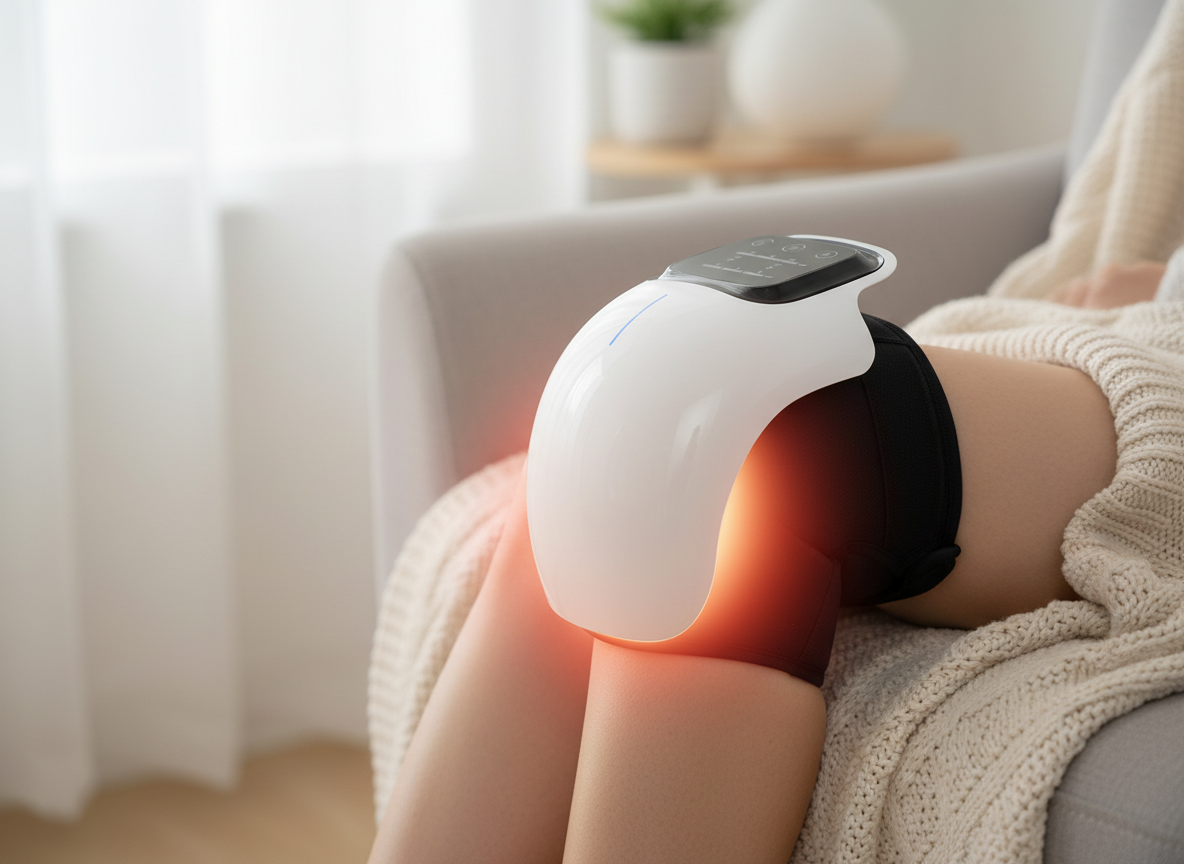
A knee massager, heated wrap, or compression sleeve can support comfort but cannot diagnose arthritis, regenerate cartilage, or suppress autoimmune disease. In RA, device use should fit the treatment plan, skin sensation, swelling, medication, and clinician advice. During active synovitis, tight compression or aggressive vibration may be uncomfortable.
The most valuable role of comfort tools is helping someone remain consistent with movement and daily routines. They should never hide worsening instability, rapidly increasing swelling, or systemic illness.
When to Ask for Rheumatology Assessment
Seek evaluation when morning stiffness is prolonged, several joints are visibly swollen, symptoms are symmetrical, hands or feet are involved, or fatigue and low-grade fever accompany joint problems. Persistent synovitis should not wait for severe pain or positive blood tests.
A primary-care clinician can begin examination and blood testing, but rheumatologists specialize in distinguishing inflammatory arthritis and choosing DMARDs. Early referral matters because inflammation can damage joints before late-stage deformity appears.
Urgent assessment is needed for a hot acutely swollen joint with fever or illness, sudden inability to bear weight, major trauma, or rapid swelling. Infection and crystal disease can mimic an inflammatory flare and require different treatment.
A Symptom Checklist Before Your Appointment
- Morning stiffness: Record how many minutes it lasts before you loosen up.
- Joint map: Note every swollen or painful joint and whether both sides match.
- Swelling: Photograph visible swelling during a flare if it changes before the visit.
- Systemic symptoms: Record fatigue, fever, appetite changes, dry eyes, breathlessness, or skin changes.
- Activity relationship: Note whether pain follows load, appears at rest, or improves with movement.
- Family and smoking history: Include autoimmune disease, psoriasis, gout, and long-term smoking exposure.
- Medication and supplement list: Bring exact names and doses, including over-the-counter products.
This record is more useful than trying to select your own diagnosis from an online symptom list. Arthritis patterns overlap, and treatment decisions depend on the whole clinical picture.
The Bottom Line
Knee osteoarthritis and rheumatoid arthritis can share pain, stiffness, swelling, and loss of function, but they are not interchangeable. Osteoarthritis is usually dominated by local joint remodeling and mechanical load. Rheumatoid arthritis is systemic autoimmune inflammation that often causes prolonged morning stiffness, soft warm swelling, symmetrical small-joint disease, fatigue, and flares.
Blood tests help with RA but do not diagnose or exclude it alone. X-rays can support osteoarthritis but do not determine how much pain a person should have. OA care centers on exercise, load management, weight management where relevant, symptom medication, and selected procedures. RA care requires early disease-modifying treatment and ongoing monitoring. The safest approach is not to ask which arthritis is “worse,” but which disease pattern is present, and then treat that disease early and specifically.
Frequently Asked Questions
What is the main difference between osteoarthritis and rheumatoid arthritis?
Osteoarthritis is a whole-joint disease involving cartilage, bone, synovium, and surrounding tissues, with symptoms often influenced by load and movement. Rheumatoid arthritis is an autoimmune disease in which persistent inflammation attacks the joint lining and can affect multiple organs. The treatments and urgency are therefore different.
How can you tell if knee pain is rheumatoid arthritis?
Rheumatoid arthritis is more likely when several joints are swollen, warm, and stiff on both sides of the body; morning stiffness lasts longer than 30 to 60 minutes; and fatigue, low-grade fever, loss of appetite, hand or foot symptoms, or repeated inflammatory flares occur. No single symptom confirms RA, so examination and testing are needed.
Can rheumatoid arthritis affect only one knee?
It can begin in a limited number of joints, and early disease does not always look perfectly symmetrical. Persistent swelling in one knee still has many other possible causes, including osteoarthritis, injury, crystal arthritis, infection, or a meniscal problem. A swollen joint should be examined rather than classified from pattern alone.
What blood tests diagnose rheumatoid arthritis?
Rheumatoid factor and anti-CCP antibodies can support the diagnosis, while ESR and CRP measure inflammation. None is a stand-alone diagnostic test: rheumatoid factor can be positive in other conditions or healthy people, anti-CCP can be negative in genuine RA, and inflammatory markers may be normal early in the disease.
Does osteoarthritis show up in blood tests?
There is no routine blood test that confirms osteoarthritis. Blood tests are often used to rule out inflammatory arthritis, gout, infection, or another cause. Osteoarthritis is diagnosed from symptoms, examination, and sometimes imaging, with X-rays used when the result will affect management.
Which is worse, osteoarthritis or rheumatoid arthritis?
They cannot be ranked simply. Severe osteoarthritis can cause major pain and disability, while uncontrolled rheumatoid arthritis can damage multiple joints and affect organs. RA generally requires earlier disease-modifying treatment because controlling autoimmune inflammation can prevent irreversible damage.
Can you have osteoarthritis and rheumatoid arthritis together?
Yes. A person with RA can also develop age- or load-related osteoarthritis, and the same knee may show features of both. Treatment may need to address systemic inflammation, local mechanical load, muscle weakness, body weight, and joint damage separately.
Is there a permanent cure for rheumatoid arthritis?
There is currently no permanent cure, but modern disease-modifying antirheumatic drugs can control inflammation, produce remission or near remission, reduce symptoms, and limit damage. Claims to cure RA permanently with diet or supplements can delay treatment that protects joints and organs.