Why tai chi is different from simply walking slowly
Tai chi combines coordinated movements, changes in weight distribution, attention, and breathing. Depending on the style and lesson, you may step, turn, reach, and move between supported positions. The pace is usually controlled, but slow does not mean effortless. Your legs still work to manage body weight, and your balance system still responds to a changing position.
For someone with knee osteoarthritis, this can offer a different entry point into exercise than a gym machine or a long walk. You can practice selected movements in a small space and make the range modest. The aim is not to perform an impressive low stance. It is to develop a repeatable movement practice that fits your current capacity.
This article focuses on tai chi as an exercise approach for established knee osteoarthritis. It does not diagnose new knee pain or replace our yoga modification guide. Although both activities can be adapted, their positions, transitions, and teaching methods differ. Choose instruction for the activity you actually intend to practice.
What clinical studies found, and what they did not
A trial of 204 adults with symptomatic knee osteoarthritis compared tai chi with a course of physical therapy. Both groups improved in outcomes including pain and function, and benefits were followed over a year. The tai chi programme was structured and taught, not a single generic internet routine. Results do not mean every online class equals individualized physical therapy.
A more recent randomized trial evaluated an online tai chi programme for knee osteoarthritis. Participants received a defined video-based programme and supporting information rather than an unlimited choice of social-media clips. Improvements in walking pain and function support the possibility of accessible home practice for suitable people. They do not remove the need to consider falls risk or clinical restrictions.
Other trials have compared tai chi with different exercise or education approaches and examined functional performance. Differences in participants, styles, supervision, and programme length make a single universal prescription inappropriate. A useful takeaway is that tai chi can be one evidence-supported way to keep moving, not that it is superior for every person or every outcome.
Clinical guidelines include tai chi among recommended options for knee osteoarthritis. That recommendation concerns symptom management and function. It is not evidence that tai chi rebuilds missing cartilage, corrects every alignment issue, or prevents all future surgery. Be cautious with a course that markets those promises rather than explaining how movements can be adapted.
Start with the environment, not the sequence
Choose a clear, level area with enough room to step without reaching furniture. Remove loose rugs and keep pets out of the movement path. Wear footwear that feels secure on the surface you will use. Socks on a slippery floor and shoes that catch unexpectedly can each interfere with a controlled weight shift.
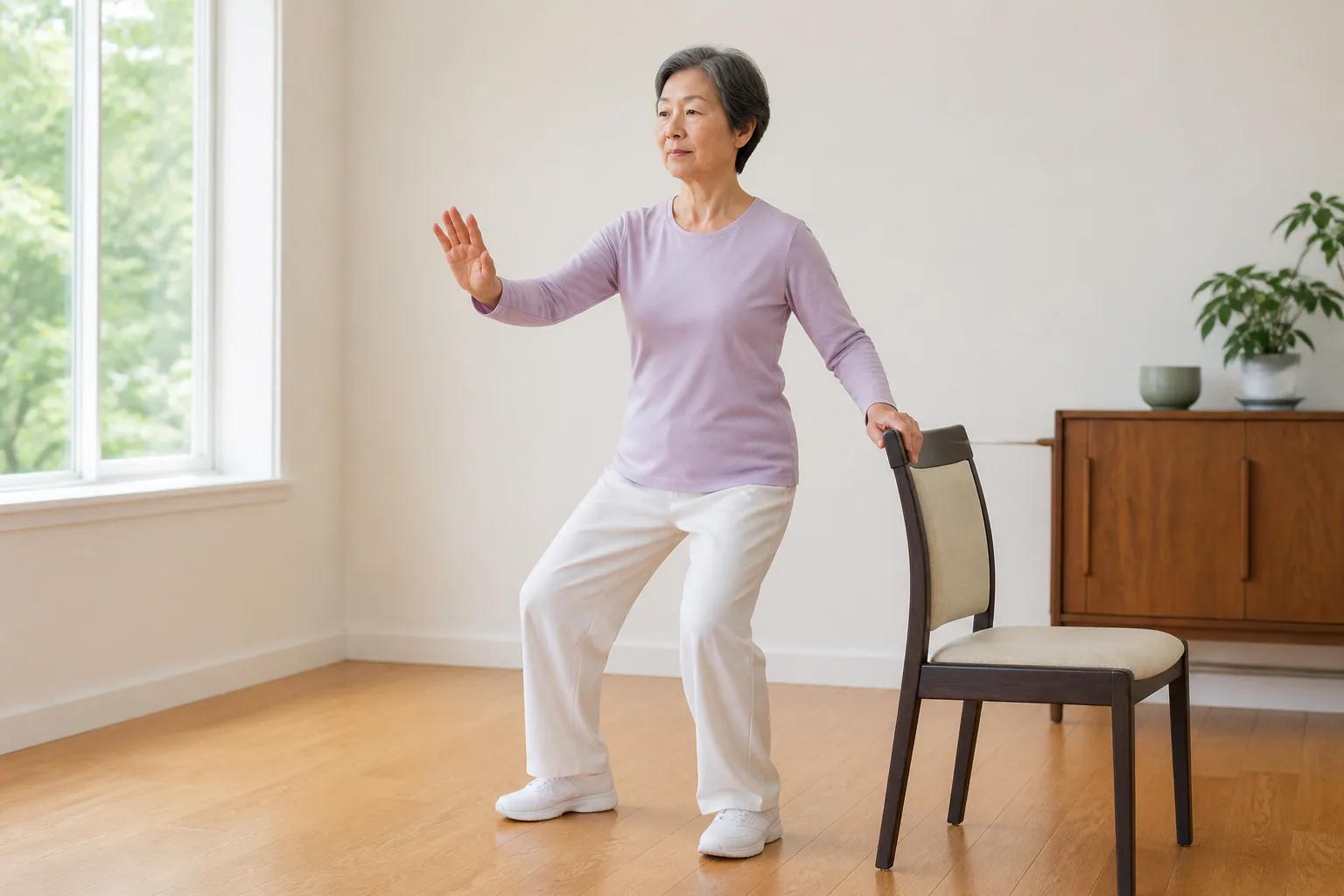
If you need support, use a stable chair positioned so it cannot slide, or another appropriate fixed surface. A lightweight folding chair is not automatically a safe handhold. Keep support close enough that you do not have to lunge for it. If standing balance is uncertain, ask a therapist or instructor how to practice safely before starting alone.
Learn a small part of the sequence first. Trying to remember arm shapes, breathing cues, foot placement, and a full routine at once can distract from your knees. It is reasonable to practice a simple shift while keeping the hands quiet. Add coordination after you can move comfortably and know how to stop.
Higher stances are a legitimate modification
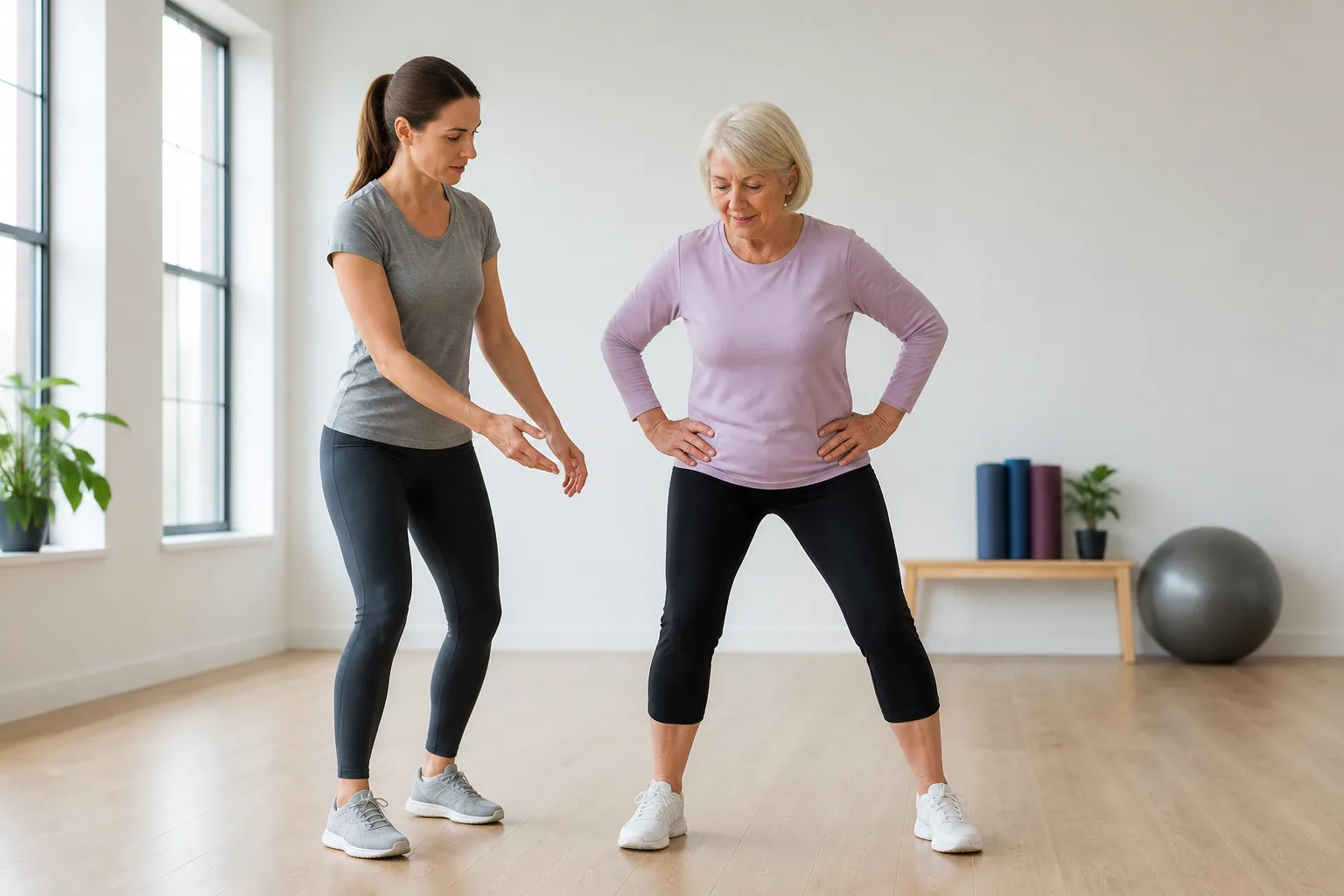
Many demonstrations use noticeably bent knees. You do not need to copy that depth to begin. Staying more upright can reduce the effort required to hold a position and make it easier to move out of it. The right depth is one you can control without an escalating ache, shaking effort, or a rushed recovery step.
Avoid locking the knees rigidly, but do not interpret a soft-knee cue as an instruction to sink low. Keep the bend modest and natural. If an instructor asks you to go lower, explain your arthritis and ask what the movement is meant to teach. Often the same coordination idea can be learned through a smaller range.
Pay attention to the transition, not just the final pose. A comfortable stance can become uncomfortable when you shift quickly into it or stay longer than you can manage. Shorten the hold, make the step smaller, or return to a neutral position sooner. These changes preserve practice without turning it into an endurance contest.
Weight shifting without twisting a planted knee
A beginner weight shift moves pressure gradually between the feet while you remain controlled. Start with a stance width that feels stable, rather than copying a wide athletic position. Transfer only as far as you can return smoothly. You do not need to lift a foot or balance on one leg to make the first drill useful.
Turns deserve particular care. Rotating the trunk while the foot remains planted can create an uncomfortable twisting demand at the knee. Learn the footwork from someone who can explain when to unload and reposition the foot. If a turn feels stuck, pause and reset instead of forcing the knee to follow the upper body.
Let the knee and foot move in a comfortable coordinated direction. Avoid aggressively pushing the knee outward or inward to satisfy an online alignment rule. Bodies vary, and a video cannot evaluate your joint range. The useful signals are a controlled movement, manageable symptoms, and a technique that an appropriate instructor can observe and adapt.
Tai chi walking versus a complete programme
Tai chi walking is often presented as slow, deliberate stepping with attention to weight transfer. It can be a helpful component of learning. However, a walking drill is not identical to every tai chi programme studied in a clinical trial. Studies may include additional movements, progression, teaching, and repeated sessions over several weeks.
If a video promises a complete arthritis solution through one walking pattern, look for what it leaves out. Does it explain how to use support, shorten steps, or stop when symptoms increase? Does it distinguish general exercise from treatment after surgery? Clear modifications are more useful than a dramatic claim about burning calories or reversing aging.
You can still choose a simple walking-focused lesson when it suits your goals. Just describe it accurately in your own plan: a short, controlled stepping practice. If your main goal is improving aerobic fitness, discuss how it fits with other activity rather than assuming a gentle lesson supplies every part of an exercise programme.
Common modifications at a glance
| Movement challenge | A gentler option | What to watch |
|---|---|---|
| Deep stance | Stay higher with a smaller knee bend. | Do not replace a low squat with rigid locked knees. |
| Wide stepping | Shorten the step and reduce stance width. | Keep enough space for stable balance. |
| Turning | Pause, unload, and reposition the foot as taught. | Avoid forcing rotation through a planted painful knee. |
| Single-leg balance | Keep a toe down or use suitable support. | Do not practice near stairs or hard obstacles. |
| Long sequence | Learn one short section with rests. | Fatigue can change the quality of later movements. |
| Standing intolerance | Ask about supported or seated instruction. | A seated adaptation is not the same protocol as every trial. |
Use modifications proactively rather than waiting until pain forces a stop. Before a class, tell the instructor which movements usually bother your knee and whether balance is a concern. Ask where you can stand near support without blocking other participants. Planning these details makes it easier to concentrate on learning instead of keeping up.
How much practice is a sensible beginning?
Research programmes use defined schedules, but those schedules are not a personal starting prescription. Begin with a brief lesson or a few comfortable movements that allow you to assess your response. Leave some capacity in reserve. You should be able to finish deliberately rather than because your legs can no longer maintain the position.
Consider three moments: during practice, later that day, and the following morning. A movement may feel acceptable while you are concentrating but leave the knee more irritable afterward. Record that pattern and reduce the next dose or range. Persistent swelling, worsening function, or repeated instability calls for assessment rather than another modification experiment.
Progress one element at a time. You might learn an additional movement, practice slightly longer, or reduce hand support if appropriate. Changing all three together makes it difficult to know what caused a flare. Consistency with a modest routine is more informative than alternating an ambitious class with several days of avoidance.
Choose an instructor or video that explains alternatives
A useful beginner instructor welcomes questions and does not insist that discomfort proves the exercise is working. Ask about experience adapting classes for arthritis, balance limitations, and joint replacements. Qualifications and teaching approaches vary, so look for a clear description of the class rather than assuming every wellness label means the same thing.
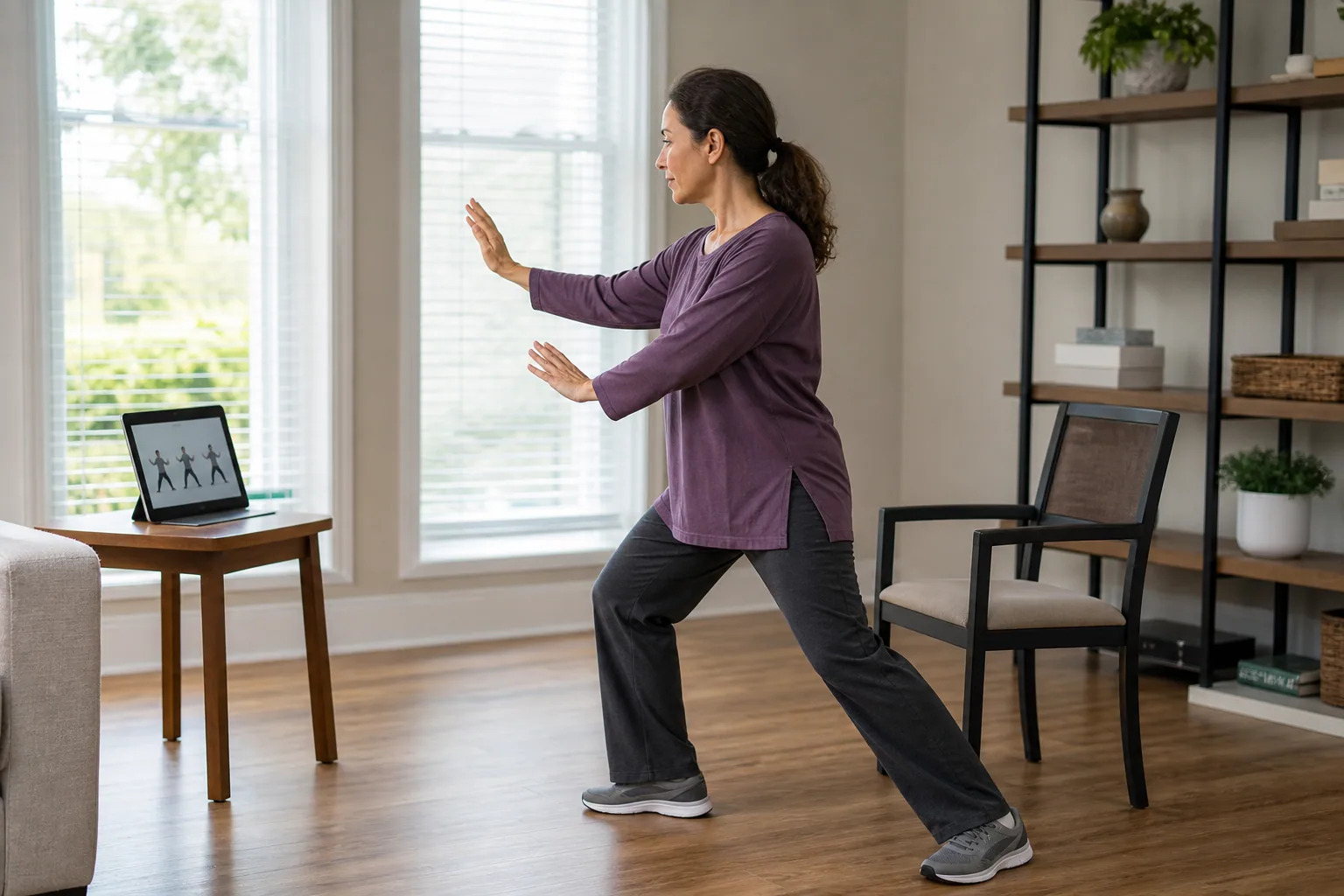
For online learning, choose a camera view that shows the feet as well as the upper body. Pause before a turn if you cannot see which foot moves. A video that displays a beautiful arm sequence but hides the stepping pattern is less helpful for knee-sensitive beginners. Do not speed up playback while trying to learn coordination.
A printable plan can be a memory aid once you understand the movements. It should not be the only instruction for unfamiliar balance tasks. If you cannot explain how to begin, stop, and recover your position, seek a demonstration. The best programme is one you can follow safely, not the one with the longest checklist.
Make progress visible without testing yourself every day
| Observation | A useful question | Avoid this interpretation |
|---|---|---|
| Ordinary walking | Does a familiar route feel more manageable? | One easy day proves structural healing. |
| Confidence | Can I shift weight with less hesitation? | Confidence means there is no falls risk. |
| Daily function | Are transfers or household tasks easier? | Every improvement must be caused by tai chi alone. |
| Practice tolerance | Can I repeat the same modest lesson comfortably? | More minutes are always better. |
| Symptoms | Is the later response stable or improving? | Pain should be ignored to finish the sequence. |
Choose one or two ordinary activities to follow over several weeks. Keep other major changes in mind, including medication, sleep, walking distance, or a new strength routine. This prevents you from attributing everything to a single class. Progress can include better confidence and more consistent activity even when pain does not disappear completely.
Do not turn practice into a daily score competition. If you need a formal functional assessment, a clinician can choose an appropriate measure and explain its limits. Our 30-second chair stand guide explains one example, but a test should not replace enjoyable movement or be attempted when unsafe.
Where support products fit
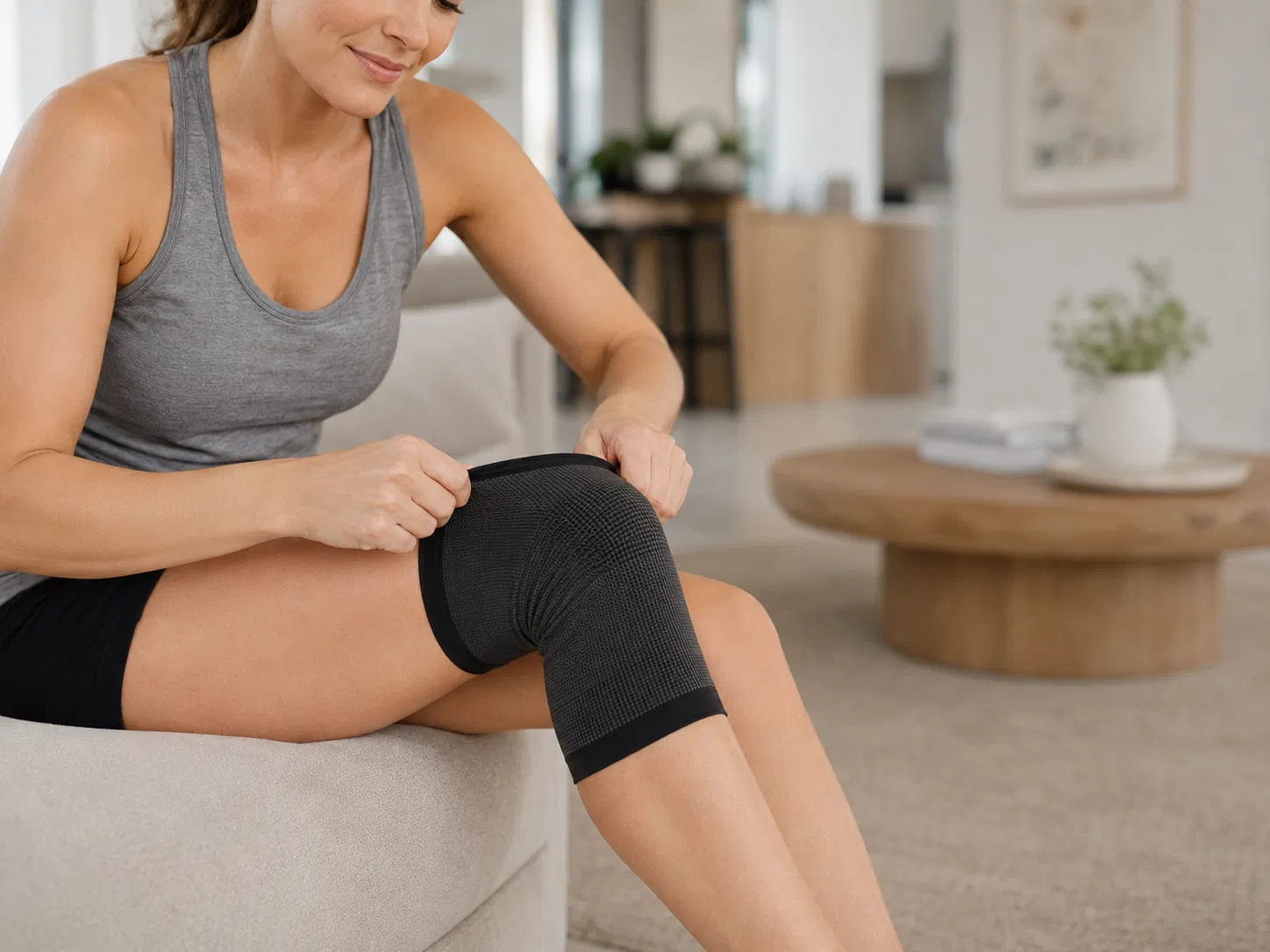
Comfortable clothing and a suitable practice space come before accessories. A sleeve may feel supportive to some people, but it should not bunch behind the knee or change footwork. Warmth may be a separate comfort option for familiar stiffness when appropriate; it does not make a swollen or acutely injured knee ready for practice.
You do not need to purchase equipment to begin a suitable lesson. If a course requires several devices before explaining the movement, ask what each item contributes. The central components are instruction, adaptation, and repeatable practice. Products are optional additions, not evidence that the routine will work better.
When to Get Medical Help
Seek assessment for persistent worsening pain, recurrent swelling, locking, or giving way. A hot red knee with fever, inability to bear weight, marked new weakness, or major swelling after injury needs urgent advice. After surgery, follow the rehabilitation team's restrictions before joining a class or trying unfamiliar turns.
Start with a movement you can return from comfortably
A modest weight shift, higher stance, and clearly taught step can be a worthwhile beginning. You do not need a deep pose or a long routine to take tai chi seriously. Build a practice around control and repeatability, review your response, and let the programme grow only when it continues to fit your knees and daily life.
Frequently Asked Questions
Is tai chi good for knee osteoarthritis?
It is a recommended exercise option and has improved pain and function in trials. Benefits vary, and a suitable adapted programme matters more than copying every movement.
Can tai chi damage arthritic knees?
Deep stances, twisting, or excessive practice can aggravate symptoms. Keep movements comfortable and seek assessment for persistent worsening, swelling, or instability.
Is tai chi walking the same as a full class?
Not necessarily. Walking drills cover only part of a programme that may also include balance, weight shifting, coordination, and breathing.
Can I use a chair for support?
A stable chair or fixed support may help during adapted practice. Seated tai chi is another option, but it is not identical to every standing programme studied.
How deep should I bend my knees?
Use a comfortable, controlled range rather than a prescribed deep stance. A qualified instructor or therapist can adapt the movement to your knee and balance.
How soon should tai chi help?
Trials usually study programmes over weeks, not immediate fixes. Monitor function and symptom response rather than expecting a particular day of improvement.
Does tai chi replace physical therapy?
Not when you need individualized rehabilitation, assessment, or postoperative restrictions. It may complement a plan or be one suitable exercise choice.
Can an online video be enough?
A well-designed beginner programme can help some people. In-person guidance is preferable when balance, injury, or adapting technique makes unsupervised practice unsafe.