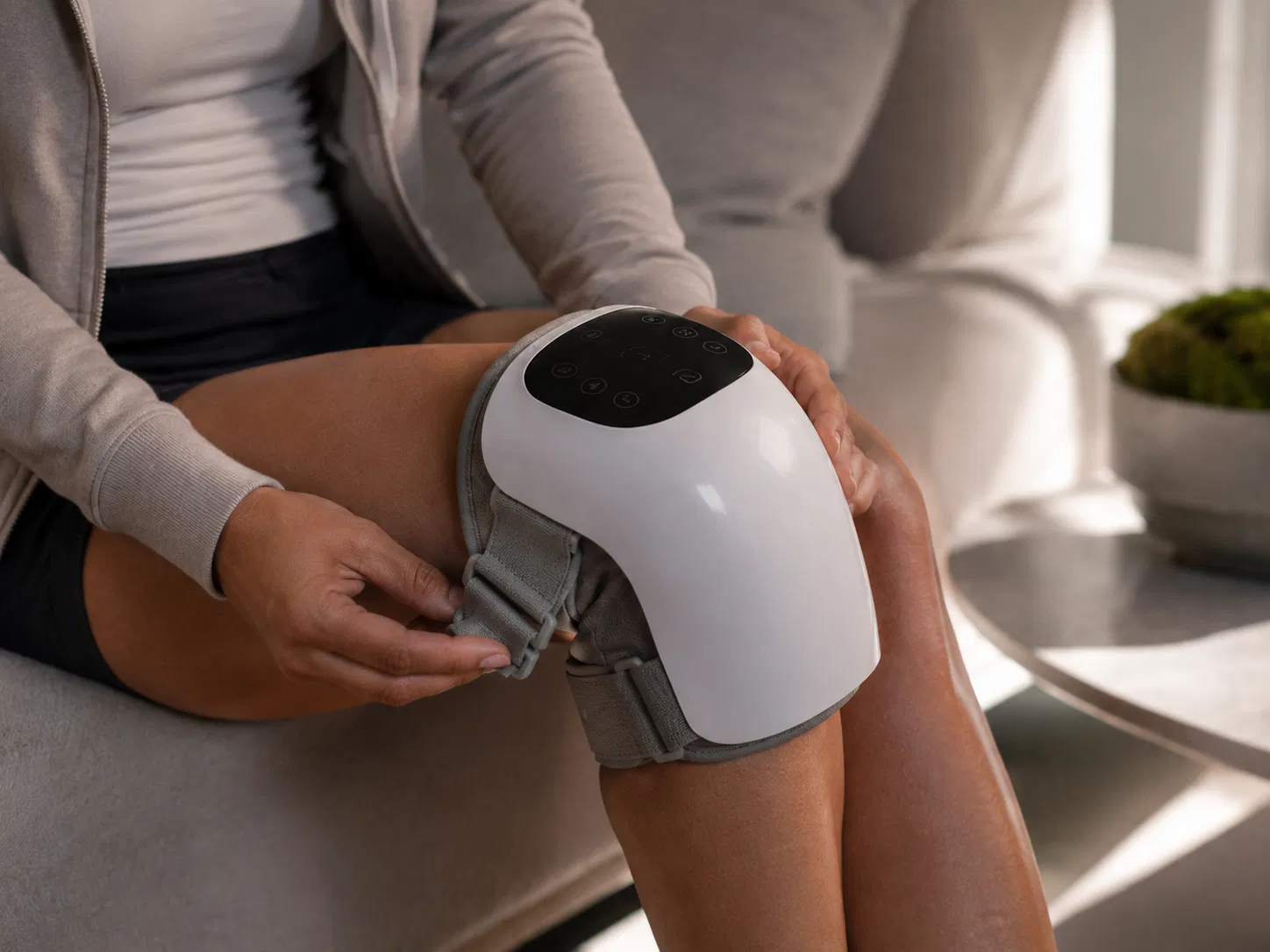
Familiar chair exercises for seniors, such as heel slides and seated leg extension, can be adapted into a knee-focused routine. The starting point here is a stable chair and a lower-demand position, with movements chosen for the person's abilities.
It does not duplicate our general home knee exercise guide, which includes floor and standing work. It also does not replace a post-operative protocol. If a surgeon or physiotherapist gave range, weight-bearing, or repetition limits, those instructions take priority.
Set Up the Chair Before You Exercise
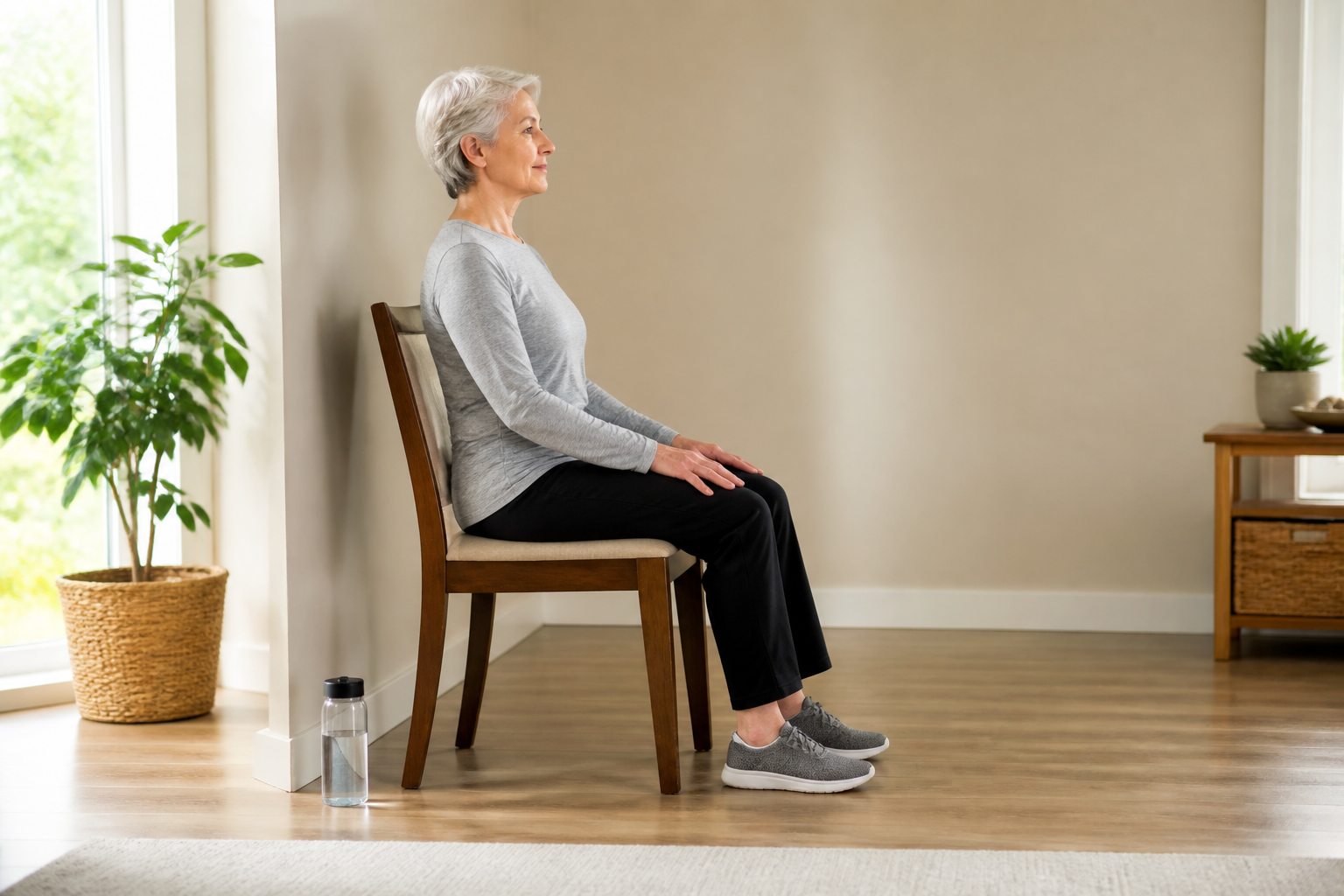
- Choose a stable chair. Use a firm seat without wheels. Place it against a wall if it can slide.
- Set the height. Feet should rest flat with the thighs supported and knees near a comfortable right angle.
- Clear the floor. Move rugs, pets, cords, footstools, and bags out of the working area.
- Keep support nearby. Chair sides, arms when present, or a stable surface may help with balance and repositioning.
- Wear suitable footwear. A secure shoe or bare foot on a non-slip surface is usually more predictable than loose slippers.
- Have a way to stop safely. Keep a phone nearby if you live alone or have a history of falls or sudden symptoms.
Sit back far enough that the thighs are supported, but not so far that the feet cannot reach the floor. An upright posture does not require military stiffness. Let the shoulders relax and keep breathing. If sitting unsupported is difficult, use the backrest and reduce the movement range.
The Seated Knee Exercise Routine
Begin with one round. Use a slow pace and leave several comfortable repetitions in reserve. The numbers below are starting examples for a stable, non-acute pattern, not a prescription. After surgery, a fracture, a tendon repair, or a significant neurologic or cardiovascular condition, use the dose your care team provided.
1. Ankle Pumps
Keep the heel on or just above the floor. Pull the toes toward you, then point them away through a comfortable range. Move smoothly for 20 to 30 seconds. Ankle pumps warm up the lower leg and let you check for cramping, numbness, or unusual calf symptoms before asking more from the knee.
This is not a treatment for a blood clot and should not be used to dismiss one-sided calf swelling, redness, warmth, or tenderness. Those symptoms, especially after travel or surgery, require medical guidance.
2. Heel and Toe Raises
With both feet flat, lift the heels while keeping the toes down, then lower slowly. Next, keep the heels down and lift the toes. Perform five to ten of each. The movement trains the calf and shin through a small range and can prepare the feet for standing and walking.
Keep pressure even across both feet. If one ankle is much weaker, use a smaller range rather than leaning the trunk or twisting the knee. New foot drop or rapidly changing weakness deserves assessment.
3. Seated Marching
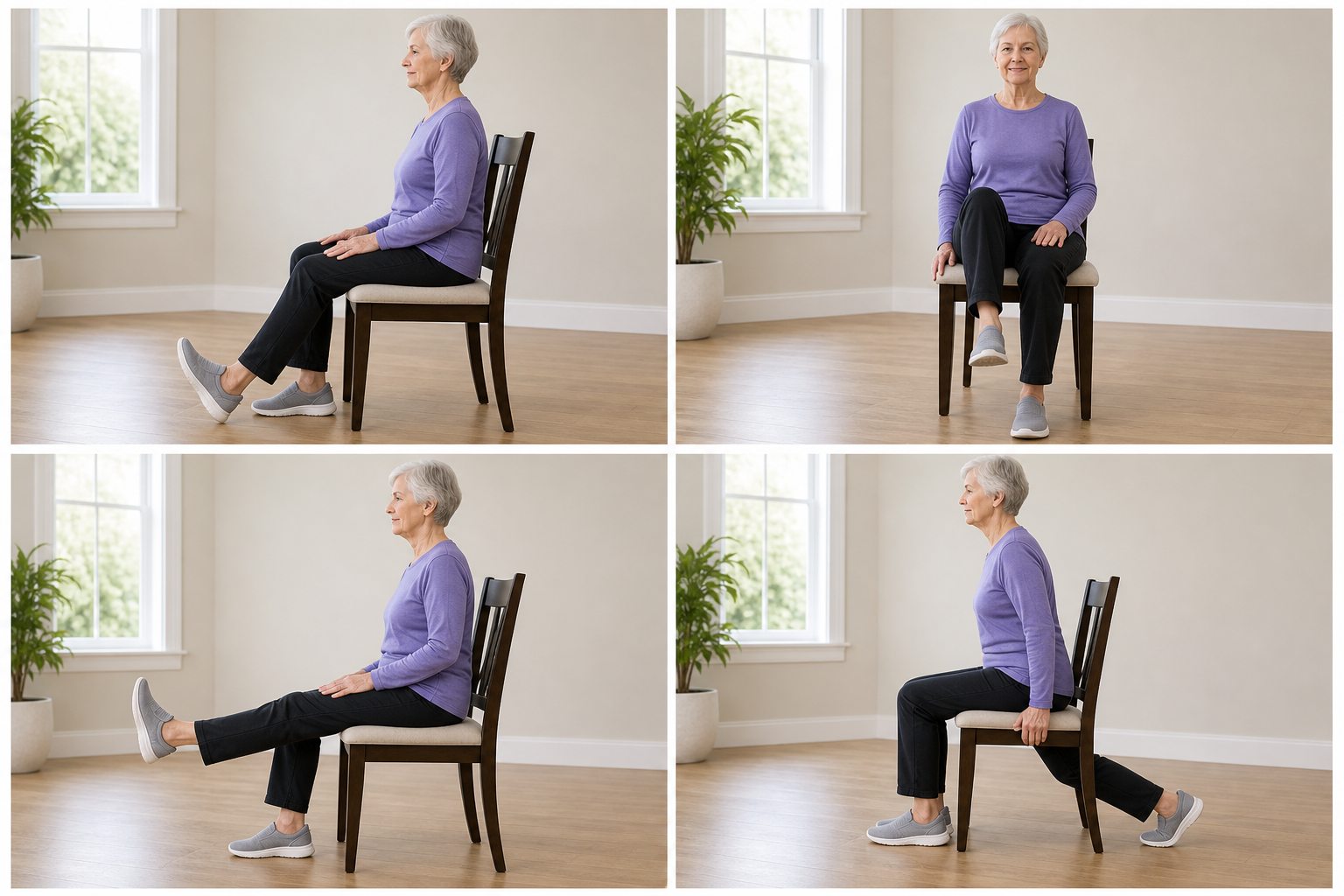
Sit tall and lift one knee a small distance, then lower the foot with control. Alternate sides for five to eight repetitions each. The goal is not maximum height. Keep the pelvis steady and avoid throwing the trunk backward to lift the leg.
Seated marching trains hip flexion and trunk control while the knee stays bent. If the front of the hip pinches, reduce the height. If the knee hurts simply from being bent, reposition the foot or use a slightly higher chair.
4. Seated Heel Slide
Place the foot on a smooth but controlled surface. Slide the heel back under the chair to bend the knee, pause briefly, then slide it forward. Keep the foot in contact with the floor and use five slow repetitions. A towel under the foot may reduce friction, but it can also slide unexpectedly, so keep the chair stable.
Work within the range available today. Do not force the heel farther back with the other leg unless a clinician prescribed assisted flexion. A full or blocked feeling, sharp joint-line pain, or a physically locked knee is not a cue to push harder.
5. Seated Knee Extension
Begin with the foot on the floor and the thigh supported. Tighten the front of the thigh and slowly straighten the knee until the leg reaches a comfortable endpoint. Pause for one to three seconds, then lower under control. Try five to eight repetitions per side.
Do not snap into the end range or let the leg drop. The quadriceps should do the work while the trunk stays quiet. A larger range is not automatically better. After some surgeries or tendon injuries, open-chain knee extension may be limited or progressed on a specific schedule.
6. Seated Adductor Squeeze
Place a folded pillow between the knees. Gently squeeze it for three to five seconds without holding your breath, then relax. Use five repetitions. This is a low-movement option for the inner-thigh muscles and can be useful when larger knee motion is not comfortable.
The squeeze should feel moderate, not maximal. It is not a way to realign the knee or treat every inner-knee pain pattern. Stop if it reproduces sharp groin or knee pain.
A Ten-Minute Beginner Chair Routine
| Time | Movement | Starting dose | Main check |
|---|---|---|---|
| 0:00 to 1:00 | Ankle pumps | 20 to 30 seconds, rest, repeat | Smooth foot and calf movement |
| 1:00 to 3:00 | Heel and toe raises | 5 to 10 each | Feet stay controlled |
| 3:00 to 5:00 | Seated marching | 5 to 8 per side | Trunk does not rock |
| 5:00 to 7:00 | Heel slides | 5 per side | Comfortable bend, no forcing |
| 7:00 to 9:00 | Knee extensions | 5 to 8 per side | Slow lift and lower |
| 9:00 to 10:00 | Adductor squeeze | 5 gentle holds | Keep breathing |
Rest between movements when needed. Ten minutes is a container, not a target you must complete. Three well-controlled exercises may be more useful than finishing the list with increasing pain, fatigue, or breathlessness.
How to Judge Pain and the Next-Day Response
Pain rules should fit the person and diagnosis. Some rehabilitation plans allow mild, stable discomfort that settles quickly. Others require a pain-free range because tissue has been repaired or protected. Use the instructions from your clinician when they exist.
For a general non-acute routine, stop or reduce the range when pain becomes sharp, escalates with each repetition, changes movement, or remains clearly worse afterward. Recheck ordinary walking, transfers, swelling, and morning stiffness the next day. If the routine repeatedly reduces function, the dose or exercise choice is not appropriate.
Muscle effort in the thigh is expected during knee extensions. Joint-line catching, a blocked movement, new swelling, or a knee that buckles is different. Do not convert a warning sign into a strengthening goal.
Progress Without Turning It Into a Different Workout
- Improve control. Make the lift and lowering smoother before adding repetitions.
- Increase comfortable range. Move a little farther only when the current range remains stable.
- Add repetitions. Move from five toward eight or ten without rushing.
- Add a brief hold. Extend a pause from one second toward three to five seconds.
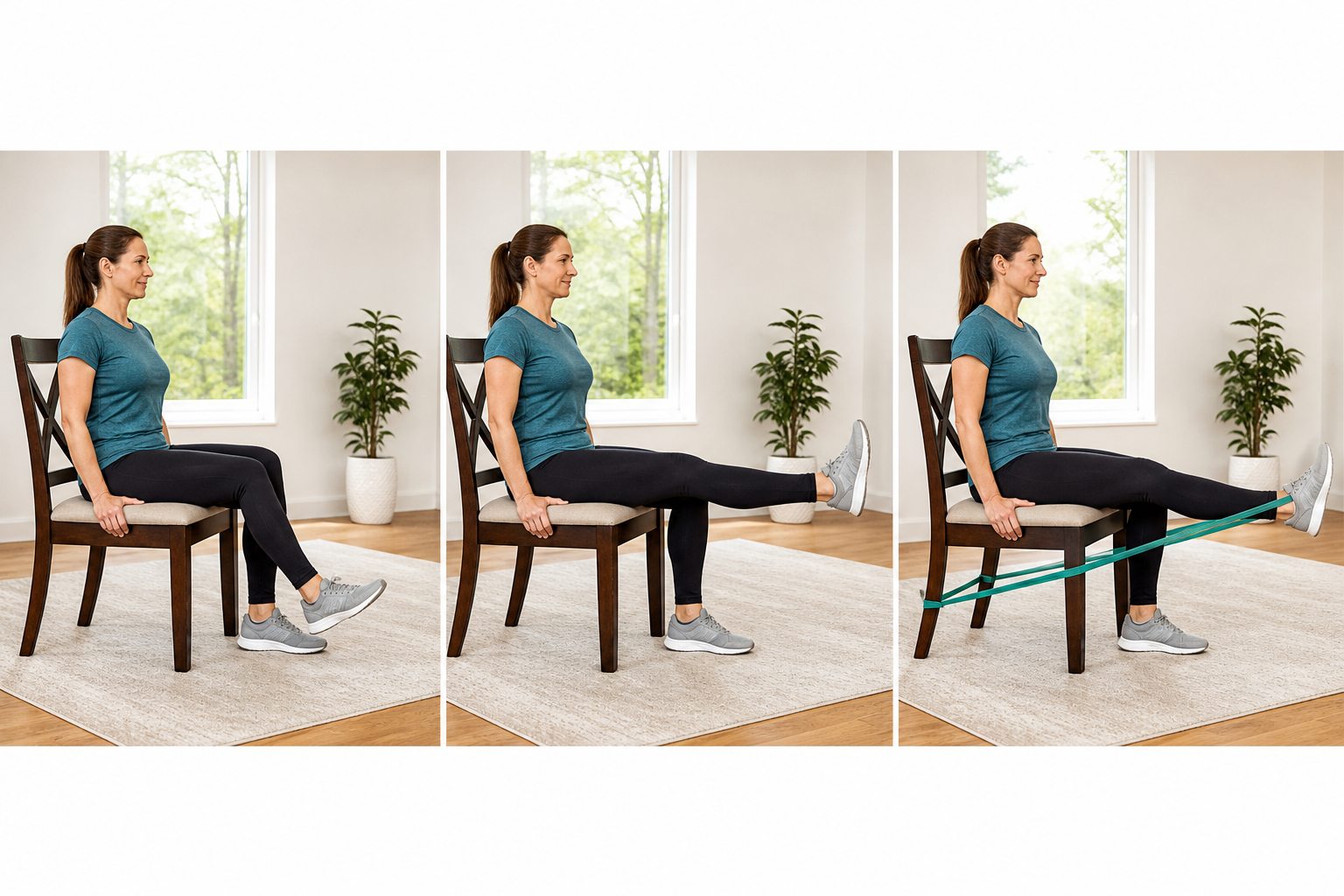
- Add light resistance. Use a suitable band or light ankle weight only when the movement is appropriate and controlled.
- Transfer to function. Practice a supported sit-to-stand or short walk when standing is safe and relevant.
The Trends rise for seated leg extension does not make it a complete program. Knee extension trains one important action, but walking and transfers also require hip strength, calf contribution, balance, and confidence. The getting up after sitting guide explains foot placement, seat height, and the forward weight shift when you are ready to practice standing.
Options for Very Limited Range or One Weaker Side
If the foot barely leaves the floor during a knee extension, begin with an isometric thigh contraction. Sit with the foot supported, tighten the front thigh gently, hold for three seconds, and relax. Another option is a smaller heel slide that stays within a reliable range. Progress from what you can control rather than having someone lift or force the leg.
When one side is much weaker, count quality repetitions separately. The stronger leg does not need to determine the weaker leg's dose. Sudden one-sided weakness, new foot drop, facial droop, speech change, or loss of coordination requires urgent medical help.
Chair Exercise Mistakes That Reduce the Benefit
- Using a rolling or folding chair. Stability should not be another exercise challenge.
- Sitting too low. A deep seat can increase knee and hip demand and make standing harder.
- Swinging the leg. Momentum hides how much control the quadriceps actually has.
- Adding resistance too soon. A heavier ankle weight may reduce range and provoke the joint.
- Holding the breath. Keep breathing through each repetition, especially with heart or blood-pressure concerns.
- Doing every exercise daily. Strength work needs an appropriate dose and recovery, not endless repetition.
- Ignoring the reason mobility is limited. Pain, breathlessness, balance loss, nerve symptoms, and general deconditioning need different plans.
How to Build a Weekly Chair Routine
A useful week separates gentle movement practice from harder strengthening. Ankle pumps and comfortable heel slides may suit short, frequent movement breaks. Seated knee extension with a challenging hold, band, or ankle weight is strength work and may need more recovery. The correct schedule depends on current capacity, medical conditions, and the reason mobility is limited.
Begin with two or three planned sessions rather than doing a large routine whenever the knee feels stiff. Keep the first week consistent enough to judge. If a ten-minute routine causes no meaningful change in symptoms or fatigue, add one or two repetitions to one exercise. If the next morning is clearly worse, reduce range, repetitions, resistance, or the number of exercises before abandoning all movement.
| Goal | Starting emphasis | Progress clue |
|---|---|---|
| Reduce long sitting | Brief ankle and knee movement breaks | You move more often without extra fatigue |
| Improve knee range | Slow heel slides and controlled extension | The same range feels smoother |
| Build quadriceps control | Knee extension with a brief hold | Less swinging and a steadier lowering phase |
| Prepare to stand | Marching plus an appropriate transfer drill | More confident weight shift and foot placement |
Make the Routine Easier to Repeat
Put the chair in the same clear location, keep the exercise list visible, and use a short timer instead of counting an exhausting total. Tie the routine to an existing cue such as after breakfast or before an afternoon walk. If concentration or memory is limited, a caregiver or clinician can simplify the list to two or three high-priority movements.
A printed 28-day challenge may be motivating, but a calendar does not know your recovery. Track function that matters, such as lifting the foot more smoothly, completing a transfer with less help, or walking to the next room with better control. Those changes are more valuable than checking off every repetition on a generic plan.
When Seated Exercise Is Not Enough
A chair routine can build a starting layer, but daily independence depends on transfers, standing balance, and walking when those activities are safe. If you can complete the routine easily but still cannot rise, a therapist can assess seat height, strength, strategy, fear of falling, blood pressure, and the need for an assistive device.
If you cannot walk far because of chest pressure, marked breathlessness, faintness, calf pain, or rapidly worsening weakness, the answer is not a larger set of seated knee extensions. Seek medical assessment of the limiting symptom. Exercise is most effective when it addresses the actual constraint.
When to Get Medical Help
Stop and seek urgent help for chest pain, severe breathing difficulty, fainting, sudden one-sided weakness, or a hot swollen joint with fever. Arrange assessment for new swelling, locking, repeated giving way, progressive weakness, new numbness, frequent falls, or a clear decline in walking and transfers. Follow your surgical or rehabilitation plan instead of this general routine after a recent operation or major injury.
For a formal performance measure rather than a workout, read the 30-second chair stand test guide. If the goal is getting off the floor, use the supported floor-transfer guide, which covers a different task and support needs. For other adapted options, explore tai chi with knee osteoarthritis and properly fitted cane support for walking.
The Bottom Line
Seated knee exercises can provide a practical entry point when standing or walking is limited. Use a stable chair, begin with ankle pumps, heel and toe raises, marching, heel slides, controlled knee extensions, and a gentle inner-thigh squeeze. Build control before range, range before repetitions, and repetitions before resistance. The goal is not to complete a generic list. It is to create a safe starting dose that supports the next function you need, with individual guidance when injury, surgery, weakness, balance, or medical conditions change the plan.
A small pedal device is another seated activity, but chair movement, device reach, and pedal height need separate checks. The pedal exerciser guide for knee pain explains how to test a brief comfortable session without replacing an individualized rehabilitation plan.
Frequently Asked Questions
What are the best seated exercises for weak knees?
Useful starting options include ankle pumps, heel and toe raises, seated marching, heel slides, and controlled knee extensions. The best choice depends on why the knee feels weak, current range, pain, surgery or injury history, and whether strength, circulation, or mobility is the main goal.
How many seated knee extensions should I do?
There is no universal dose. A reasonable uninjured starting experiment may be one set of five to eight slow repetitions per side, stopping before form or symptoms worsen. Follow a clinician's prescription after surgery or injury. Add repetitions only when the current dose feels controlled and recovery is stable.
Can chair exercises help if I cannot walk far?
Chair exercises can provide a lower-demand way to move the ankles, knees, and hips and practice muscle control. They do not replace evaluation of unexplained walking intolerance, breathlessness, chest symptoms, new weakness, balance loss, or rapidly declining mobility.
Can I do seated knee exercises every day?
Gentle range-of-motion movements may suit frequent practice, while resisted strengthening usually needs recovery and individualized dosing. Judge the response later that day and the next morning. Daily exercise is not automatically better if pain, swelling, fatigue, or function worsens.
Should I use an ankle weight for seated knee extensions?
Only after the unweighted movement is controlled and appropriate for your condition. A light resistance band or ankle weight increases knee-extension demand. Add one small change, monitor the next-day response, and seek guidance if there is surgery, major injury, joint replacement, marked weakness, or sharp pain.
When should I stop seated knee exercises?
Stop for sharp or rapidly increasing pain, new swelling, a knee that locks or gives way, dizziness, faintness, chest pain, unusual breathlessness, or new numbness or weakness. Seek urgent help for chest pain, severe breathing difficulty, sudden one-sided weakness, or a hot swollen joint with fever.