What a cane can change during a walk
A walking cane adds a contact point with the ground and lets you share some support through your arm. It can make walking feel more controlled when one knee is uncomfortable. It does not repair cartilage, identify an injury, or make an unstable knee safe for every activity. Think of it as a fitted mobility tool, not a test of independence.
The useful question is not whether you are old enough to need one. It is whether an appropriate aid helps you walk more comfortably and safely today. Someone who avoids leaving home because of knee pain may gain practical freedom from support. Someone who repeatedly falls or cannot bear weight may need substantially more than a single stick.
This guide covers cane selection and everyday technique. It does not replace a postoperative walking plan or provide a full arthritis exercise programme. If your main difficulty is standing after a chair, the after-sitting knee pain guide addresses that separate pattern. For floor transfers, use our supported floor-rise guide.
What the evidence says about knee arthritis
A randomized trial involving 64 people with knee osteoarthritis compared daily cane use with no walking aid over two months. The cane group received fitting and instruction, not simply a stick to take home. Several pain and functional outcomes improved. The study supports a practical role for a properly used cane, without proving that every design produces the same result.
Participants also needed time to adapt. That matters if the first walk feels unfamiliar or more tiring: coordination is a skill, and instruction can help. However, adaptation should not mean enduring wrist pain, repeated trips, or a worsening limp. Those are reasons to review the setup. A cane that is uncomfortable to use may remain beside the door.
The American College of Rheumatology and Arthritis Foundation guideline recommends cane use when knee or hip osteoarthritis substantially affects walking, stability, or pain. This is an individual decision rather than a requirement for everyone with an X-ray finding. Your daily tasks, hand strength, balance, and other health conditions belong in that decision.
Which hand: the usual opposite-side pattern
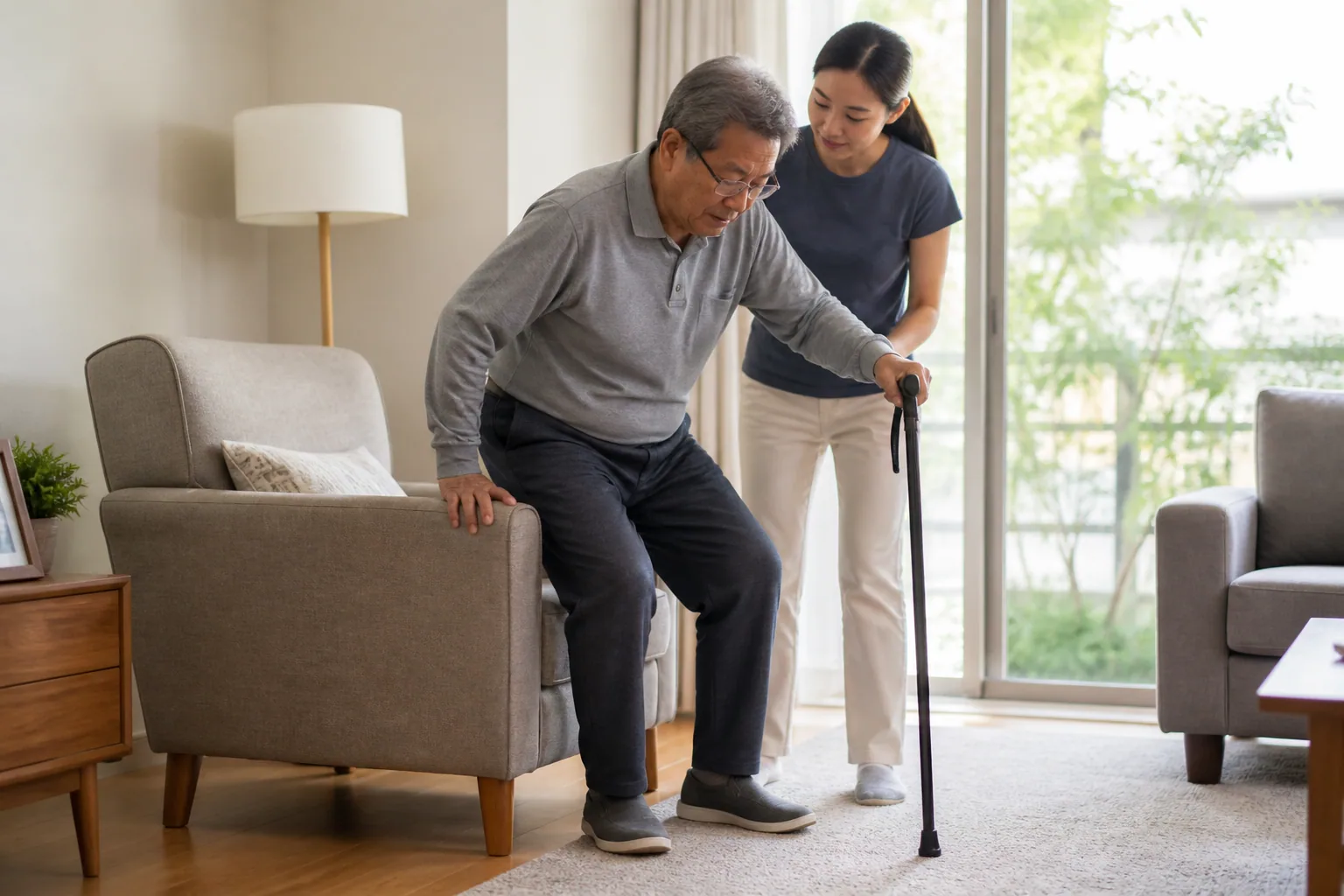
When one knee is the main problem, the usual instruction is to hold the cane in the opposite hand. For a painful right knee, that generally means the left hand; for a painful left knee, the right hand. This creates a coordinated pattern in which the cane supports the step involving the affected leg.
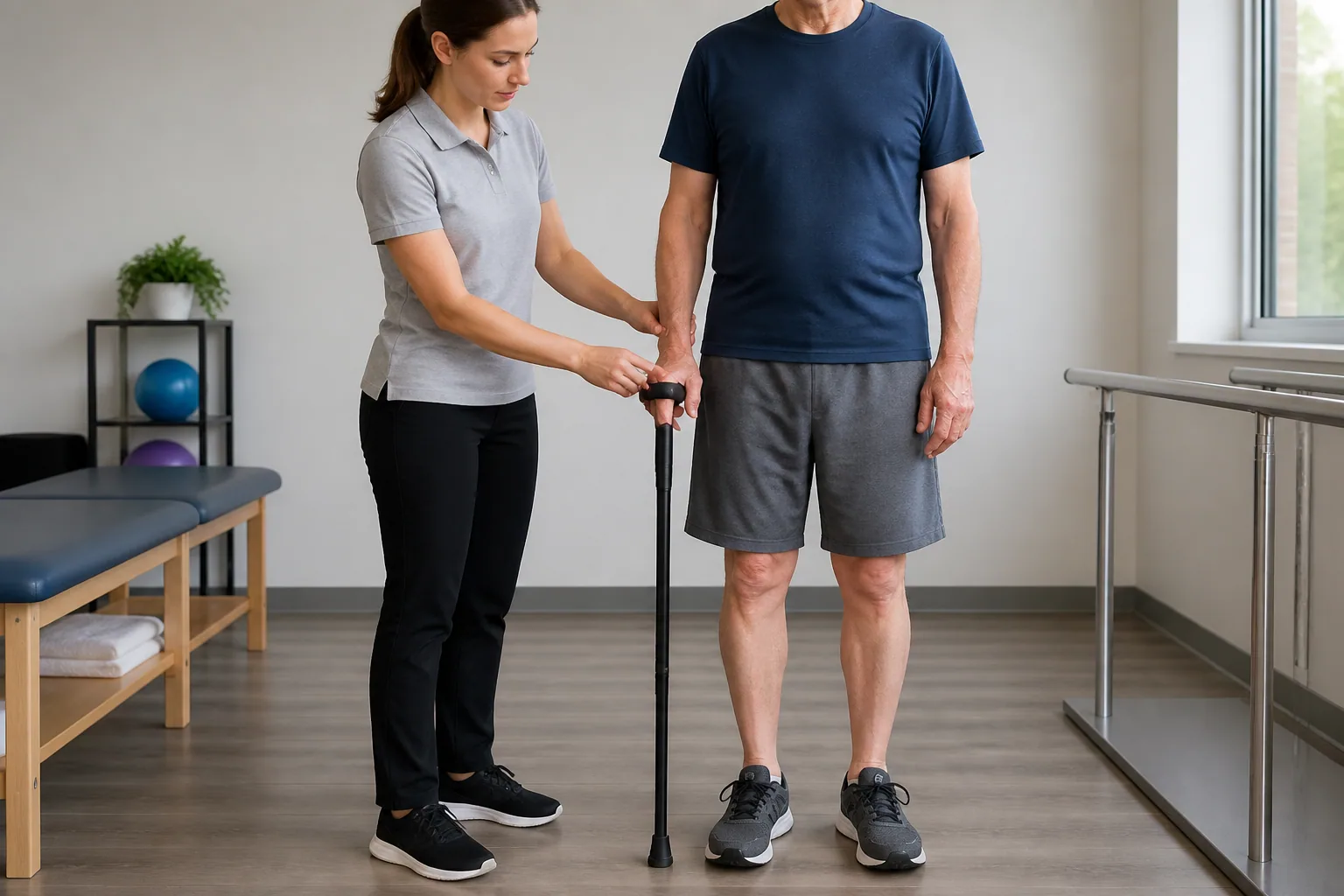
Start in a clear, level area. Bring the cane forward with the affected leg, place it securely, then step through with the other leg as instructed. Keep the movement manageable rather than reaching far ahead. A therapist can demonstrate the rhythm and watch you repeat it, which is often clearer than memorizing a sequence while moving.
There are exceptions. A painful wrist, weakness after a stroke, two painful knees, or specific surgical restrictions can change the best arrangement. Do not force opposite-side use if you cannot safely hold or load that arm. Ask for an alternative assessment instead of compensating by twisting your trunk or leaning heavily over the stick.
Set the height before judging the cane
Fit the cane while wearing the shoes you normally walk in. Stand comfortably upright rather than stretching tall or leaning sideways. A common starting reference places the handle around wrist-crease level with the arm relaxed; when holding it, the elbow remains slightly bent. This is a fitting guide, not a promise that one measurement suits every posture.
A cane that is too high may push the shoulder upward. One that is too low may encourage reaching, bending, or a sideways lean. Watch the whole movement, not just the number printed on the shaft. If your body position changes substantially when you take a step, ask someone qualified to check both height and technique.
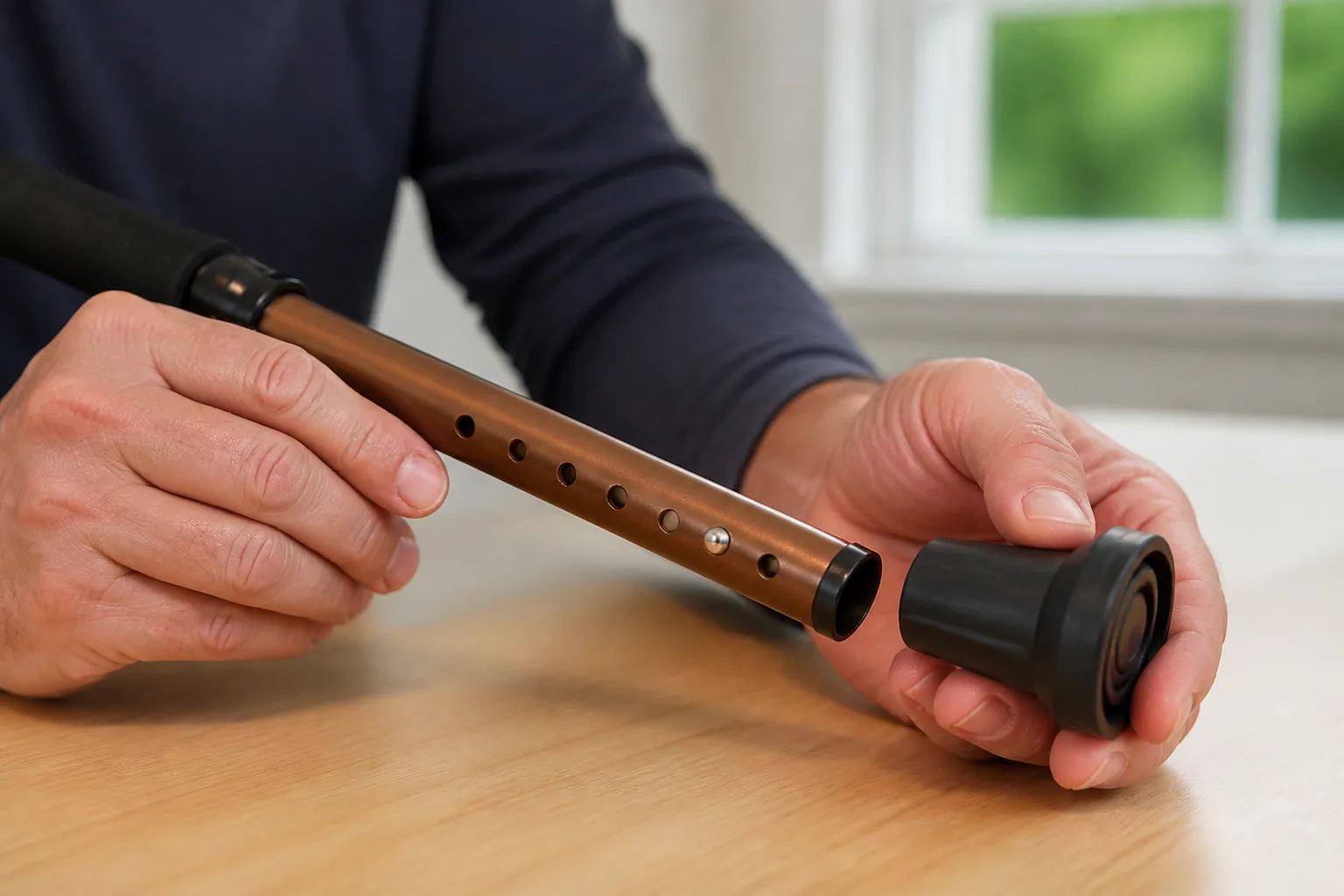
After adjusting a telescopic cane, make sure the locking button is fully engaged and any securing collar is tightened according to its instructions. Check a folding cane's joints as well. Do not assume a click means everything is secure. Inspect the equipment again after travel, storage, or another person borrowing the cane.
Choose the handle, tip, and base around your routine
| Part | Practical check | Reason for advice |
|---|---|---|
| Handle | Hold it without squeezing hard or bending the wrist awkwardly. | Arthritis, numbness, or weak grip makes support uncomfortable. |
| Rubber tip | Inspect tread, secure attachment, and replacement size. | The tip is smooth, cracked, loose, or slipping. |
| Single-point base | Check placement and clearance on your walking route. | Balance remains uncertain or the knee repeatedly gives way. |
| Multi-foot base | The required contact points should settle securely. | The base catches your foot, rocks, or does not fit stairs. |
| Shaft | Check rated use, height range, and locking mechanism. | Damage or poor fit prevents safe adjustment. |
A broader base is not automatically an upgrade. It occupies more space, may need a specific orientation, and can catch a foot if placement is poor. Likewise, an attractive handle is not necessarily comfortable after several minutes. Try the equipment with the tasks you actually perform, ideally with a mobility professional watching how you use it.
A wrist strap can help keep a cane nearby, but it should not become a tether that catches on furniture or interferes with letting go in an emergency. Follow the manufacturer's guidance. Keep the cane within reach when sitting, without leaving it across a walkway where someone can trip over it.
Stairs require a separate practice session
Stair technique depends on available rails, which leg is affected, the aid, and your allowed weight bearing. For someone allowed full weight bearing, a commonly taught step-to pattern leads upward with the stronger leg. Coming down, the cane and affected leg lead, followed by the stronger leg. A rail provides important support when available.
That description is not enough for every staircase. The rail may be on the opposite side, the step may be narrow, or a multi-foot cane may not fit securely. Have the actual sequence demonstrated before attempting stairs alone. Keep your hands free of bags and avoid carrying a drink while coordinating the rail and cane.
After surgery or an injury with restricted weight bearing, the instructions may be different and a cane may not be appropriate at all. Use the aid prescribed by your team. Do not treat a general walking article as permission to put more weight through the knee than you were told to allow.
Chairs, doorways, and short household trips
When rising from a chair, a stable armrest is usually a better pushing surface than the top of a cane. Position yourself as instructed, use the chair support, and take the cane once you are balanced. Reaching for a stick too early can distract from the transfer. A cane is not anchored like a grab bar.
Before sitting, approach closely enough to control the movement and locate the chair rather than dropping backward into it. Avoid low, unstable seats when they make standing unnecessarily difficult. A therapist can help modify the transfer if you have painful hands, weak legs, or a seat that is essential to your daily routine.
Doorways create a different problem: one hand may manage the door while the other holds the cane. Clear the route first and avoid rushing through a closing door. At home, remove loose rugs and cords from common paths. These small changes can matter more than buying a new cane with additional accessories.
Uneven ground, rain, and carrying things
Outdoor surfaces change constantly. Watch for gravel, wet leaves, uneven paving, and transitions between indoor flooring and a damp entrance. A rubber tip that grips a dry kitchen floor may behave differently outside. Shorten the task or choose a more accessible route when conditions exceed your confidence rather than treating every outing as practice.
Plan how you will carry essentials. A suitably light bag that leaves the hands available may be more practical than shopping bags swinging beside the cane, but its weight should not pull you off balance. For larger errands, assistance or a different mobility solution may be safer. The cane should not compete for attention with several other tasks.
Take a seat before fatigue noticeably changes your stepping pattern. A planned rest is easier than searching for somewhere to sit after the knee becomes very painful. On unfamiliar routes, identify benches, lifts, and crossings in advance. This is sensible route planning, not a requirement to avoid walking altogether.
When one cane is not enough support
Repeated giving way, substantial balance difficulty, or pain in both legs deserves assessment of the whole walking pattern. A walker or another prescribed aid may be more appropriate. Choosing a cane because it looks smaller can be a false economy if it leaves you unsafe or prevents you from walking a useful distance.
Hand, elbow, or shoulder symptoms matter too. Taking more load through an arm can expose problems that were less noticeable before. Report new tingling, weakness, or joint pain instead of simply padding the handle and continuing. The aim is to redistribute support appropriately, not move the problem from a knee to a wrist.
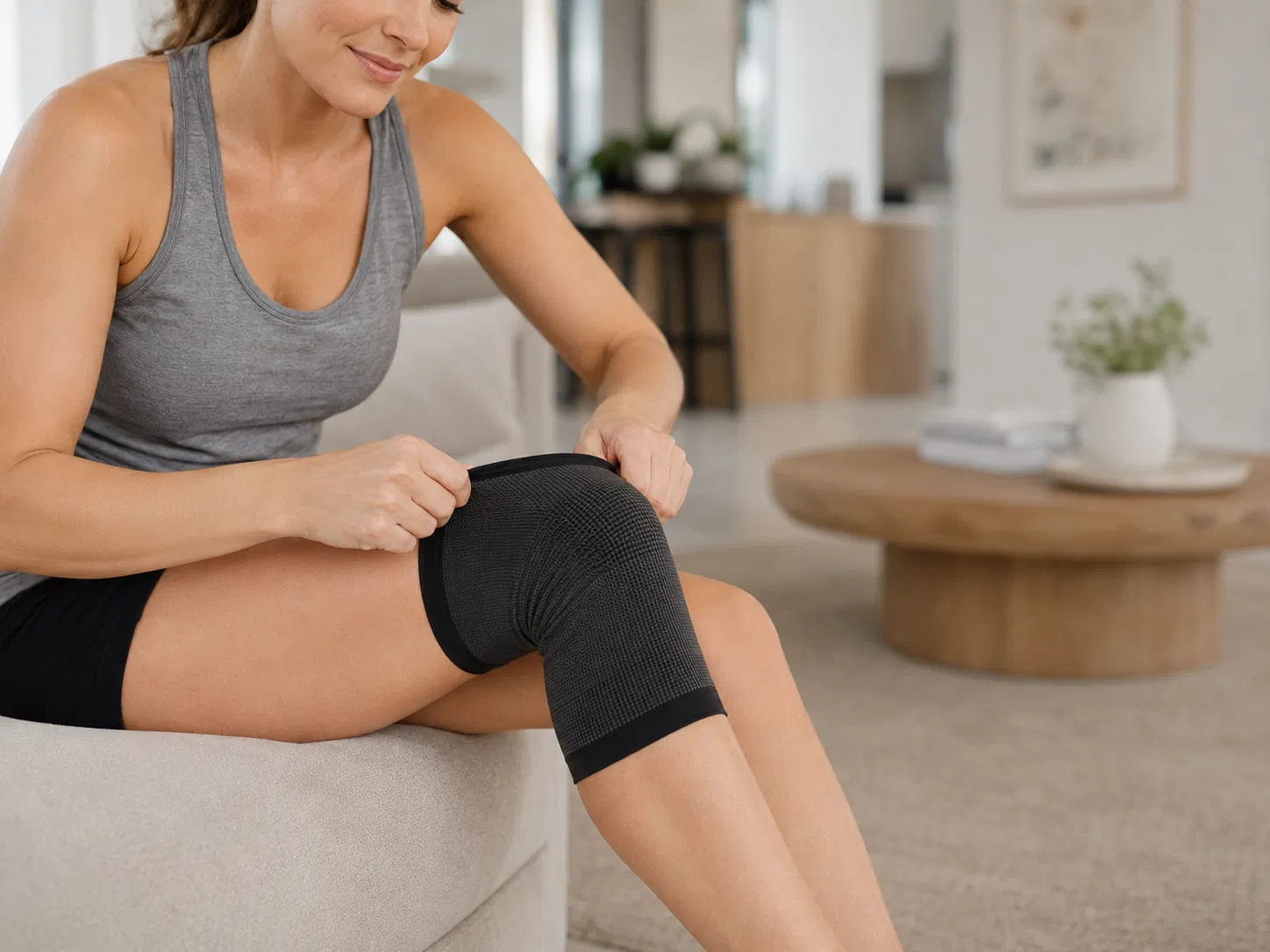
A knee sleeve does not replace a walking aid. It may offer a comfortable supported feel for some activities, but it does not provide another contact point with the floor. Similarly, a heated device used at home is not a balance aid. Match equipment to its actual function rather than assuming all knee products solve the same problem.
A practical first-week review
| What to note | Useful comparison | What not to conclude |
|---|---|---|
| A familiar short route | Comfort and steadiness with the fitted cane. | One good walk proves the knee has healed. |
| Turning and doorways | Whether the cane stays clear of your feet. | Straight-line practice makes every transfer safe. |
| Arm comfort | Whether grip and height remain manageable. | Arm pain is a necessary cost of support. |
| Later symptoms | The response after the outing and next morning. | Less pain permits unlimited distance. |
| Confidence | Tasks you can perform with appropriate help. | Needing an aid means stopping exercise. |
Keep notes brief enough to use: the route, approximate duration, knee response, and any equipment difficulty. Bring the cane to a follow-up appointment rather than describing it from memory. A clinician can inspect the tip, height, and grip while also reviewing whether the aid still matches your needs.
Do not abandon the cane solely because one morning feels better, or keep it forever without reviewing progress. The right amount of support can change. Exercise and treatment may improve walking capacity, while a flare or illness may temporarily increase support needs. Reassessment is a normal part of using an aid well.
Questions worth taking to a fitting appointment
Explain the hardest part of your day specifically. A ten-minute walk on level pavement, a steep entrance step, and standing in a crowded train require different decisions. Mention whether symptoms change during the day and whether you have fallen. Bring the shoes you usually wear, rather than choosing unusually supportive shoes just for the appointment.
Ask the clinician to watch a turn, a chair transfer, and a doorway as well as straight walking. Then repeat the instructions back in your own words. If someone helps at home, include that person in the demonstration so they understand where to stand and when to assist. Written instructions can support practice, but they should reflect the sequence actually taught to you.
Finally, ask what should trigger a review: new pain, equipment wear, improved walking, or a change in surgical restrictions. Knowing the next checkpoint prevents both unnecessary dependence and premature removal of support. A successful fitting is not just the moment the cane is adjusted; it is a plan you can use confidently in your own environment.
When to Get Medical Help
Get urgent help for new inability to bear weight, deformity, a physically locked knee, rapid swelling after injury, or a hot red knee with fever or feeling unwell. Repeated falls, worsening pain, and new weakness need assessment. After a fall with possible head, neck, back, or hip injury, or when you cannot rise safely, call for help rather than forcing yourself upright.
The useful cane is fitted to the person
Start with enough support, a secure tip, and instruction that fits your circumstances. Opposite-hand use and an appropriate height are important basics, but the real test is a controlled walk through your ordinary environment. A cane should help you do more safely, not persuade you to ignore a knee or balance problem that needs attention.
Frequently Asked Questions
Which hand holds a cane for right knee pain?
Usually the left hand. The cane and right leg advance together. A therapist may adapt this when arm problems or medical restrictions make it unsuitable.
Should I hold the cane on the painful side?
Opposite-side use is usual for one painful knee. Check before changing a prescribed technique; there may be a reason for a different arrangement.
How high should the handle be?
Wrist-crease height in normal shoes is a common fitting reference, with a slightly bent elbow when holding the cane. Leaning or shrugging suggests the fit needs review.
Does a cane help knee osteoarthritis?
It can reduce pain and support walking for some people. Correct fitting, instruction, and enough overall support remain important.
Is a four-foot cane always safer?
No. The base must fit the space and settle correctly. Some people need a walker, while others manage better with a simpler cane.
Can I use a cane after knee replacement?
Follow your team's weight-bearing and walking-aid plan. A cane may be appropriate later, not necessarily immediately after surgery.
What if both knees hurt?
Have your walking pattern assessed. One cane may not provide enough support; do not improvise a two-stick pattern when balance is uncertain.
Should I pull on a cane to stand up?
Usually push from a stable chair armrest and take the cane once balanced. A cane is not an anchored grab rail.