
For ingredient-specific evidence, formulations, and dosing considerations, read the separate guides to glucosamine and chondroitin, turmeric and curcumin, and collagen peptides.
What to Take for Knee Pain: Start With the Condition
The same capsule cannot be evaluated the same way for every diagnosis. Osteoarthritis, rheumatoid arthritis, tendon pain, a recent injury, gout, infection, and a nutritional deficiency have different mechanisms and treatment priorities. If the knee is hot, red, rapidly swollen, locked, unable to bear weight, or painful after a major injury, a supplement comparison is not the next step.
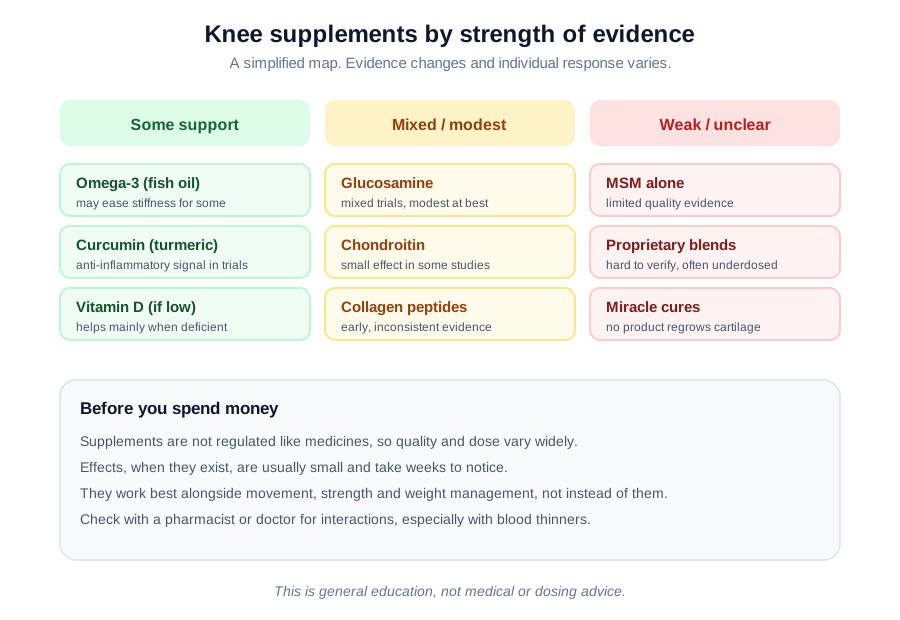
| Ingredient | What the evidence can support | Important limit | Who should check first |
|---|---|---|---|
| Glucosamine and chondroitin | Some trials and guidelines report possible symptom benefit for some formulations | Overall evidence and guideline recommendations conflict; no cartilage regrowth claim | People taking warfarin, with diabetes concerns, pregnancy, or shellfish-product questions |
| Turmeric or curcumin | Some small osteoarthritis studies report symptom improvement | Products, absorption, doses, and study quality vary; firm conclusions are not possible | People using anticoagulants or with gallbladder, liver, or surgery concerns |
| Collagen peptides | Early studies suggest a possible symptom signal | Evidence is not strong enough to promise repair or broad benefit | People with ingredient allergies or restrictive diets |
| Omega-3 | Established nutritional roles; some evidence in inflammatory disease contexts | Not an established standalone treatment for ordinary knee osteoarthritis pain | People taking anticoagulants or high-dose products |
| Vitamin D | Correcting a confirmed deficiency supports bone and muscle health | Extra vitamin D is not a universal knee-pain treatment | People considering high doses or with kidney, calcium, or medication issues |
| Magnesium | Correcting deficiency when clinically relevant | No established knee-pain or cartilage benefit | People with kidney disease or medicines affected by magnesium |
Glucosamine and Chondroitin: Why the Answer Is Conflicting
NCCIH summarizes a genuinely mixed picture. Some studies and professional recommendations suggest a possible benefit for certain people or formulations, while other large trials and guidelines do not recommend them. That is different from saying they definitely work or definitely never work. It also means a store cannot transfer evidence from one prescription-grade formulation to every retail blend.
Do not buy a product because it promises to regrow cartilage. Symptom improvement, if it occurs, is not evidence that joint structure has been restored. Warfarin interaction and blood-sugar questions are reasons to speak with a pharmacist or clinician before testing these ingredients.
Turmeric and Curcumin: Interesting Signal, Uneven Products
Curcumin studies are often cited as if every turmeric capsule were equivalent. They are not. Extract concentration, absorption aids, dose, duration, comparison treatment, and participant selection vary. NCCIH says the evidence is not sufficient for definitive conclusions about turmeric for health purposes. That leaves curcumin in the possible-but-uncertain group, not the proven-winner group.
Collagen: Joint Comfort Is Not Cartilage Regrowth
Collagen peptides and undenatured type II collagen are not the same product category, and early studies use different outcomes and formulations. A small improvement in a pain score cannot be translated into “rebuilding the knee.” Anyone testing collagen should record one practical outcome, such as stairs or morning stiffness, rather than judging the label promise.
Does Magnesium Help Knee Pain?
Magnesium is essential for nerve, muscle, bone, and many metabolic functions. That does not make it a treatment for a painful knee. A documented deficiency or another medical indication should be managed appropriately, but taking more when intake and status are adequate has not been shown to repair cartilage or reliably relieve knee osteoarthritis.
Supplemental magnesium can cause diarrhea, and it can interfere with absorption of some antibiotics and other medicines. Kidney disease changes the safety calculation. Use the NIH Office of Dietary Supplements fact sheet and a pharmacist rather than social-media dosing advice.
Vitamin D and Omega-3 Need Context
Vitamin D matters for bone and muscle health, and a confirmed deficiency deserves appropriate treatment. It should not be advertised as a general solution for knee pain in people with adequate levels. Omega-3 fatty acids have established nutritional and cardiovascular roles, and research in inflammatory conditions is not automatically evidence for every person with knee osteoarthritis or activity-related pain.
How to Run a Fair, Safer Supplement Trial

- Define the target. Choose one repeatable outcome such as morning stiffness duration, a familiar staircase, or walking tolerance.
- Check the diagnosis and interactions. Ask a clinician or pharmacist when pain is persistent, medication is involved, or the ingredient has a safety concern.
- Test one ingredient. Starting several products at once makes improvement and side effects impossible to attribute.
- Use a fixed review date. Follow product or clinical guidance, then compare with the written baseline.
- Stop for side effects or no meaningful benefit. Do not keep paying because a manufacturer moves the expected-result date.
Quality, Labels, and Marketing Claims
- Prefer a transparent single-ingredient label over a proprietary blend with hidden amounts.
- Look for independent quality testing, while remembering that purity testing does not prove clinical effectiveness.
- Reject “regrows cartilage,” “reverses arthritis,” or guaranteed-pain-relief claims.
- Check serving size, total daily amount, allergens, and interaction warnings.
- Do not assume “natural” means safe during pregnancy, surgery preparation, or prescription treatment.
Where Supplements Fit in a Knee Plan

For osteoarthritis, major guidelines place information, therapeutic exercise, and weight management when appropriate at the center of care. A supplement, at most, is an optional addition. It should not delay evaluation, replace progressive strength, or encourage someone to keep loading a swollen or unstable knee.
Use the daily knee care routine for repeatable habits and heat versus ice for symptom-based temperature decisions. Those pages answer different intentions and are not supplement comparisons.
The Bottom Line
The honest best-supplement answer is a decision process, not a winner. Glucosamine and chondroitin remain disputed, turmeric and collagen remain promising but uncertain, omega-3 evidence does not transfer cleanly to ordinary knee pain, and vitamin D or magnesium should be linked to a real deficiency or clinical reason. Choose one measurable goal, check safety, test one product at a time, and walk away from cartilage-regrowth promises.
Readers comparing the most searched newer options can now go deeper with our evidence reviews of collagen peptides and type II collagen for knee pain and turmeric and curcumin for knee osteoarthritis, including the doses, product forms, trial timelines, and safety questions that broad supplement lists cannot cover.
Frequently Asked Questions
What is the best supplement for knee pain?
No supplement is best for every type of knee pain. For knee osteoarthritis, guideline conclusions on glucosamine and chondroitin conflict, while turmeric and collagen studies remain limited or inconsistent. Vitamin D or magnesium should not be treated as knee remedies unless a clinician identifies a relevant deficiency or another indication.
What can I take for knee pain?
Start by identifying the pattern and discussing persistent pain with a clinician or pharmacist. A supplement cannot replace diagnosis, exercise, load management, or prescribed treatment. If you test one, choose a single ingredient, check interactions, record a baseline, and stop if there is no meaningful change.
Do glucosamine and chondroitin rebuild cartilage?
No. They have not been shown to reliably regrow lost human knee cartilage. Research and guideline conclusions on symptom relief are inconsistent, and product formulation may affect results. Avoid products promising joint regeneration.
Is turmeric or curcumin good for knee pain?
Some small studies report improved osteoarthritis symptoms, but formulations and study quality vary. NCCIH says there is not enough evidence for firm conclusions about turmeric for health purposes. It can interact with medicines and may not be appropriate for everyone.
Does magnesium help knee pain?
Magnesium is essential for health, but it is not an established treatment for knee pain or knee osteoarthritis. A deficiency should be diagnosed and managed appropriately. More magnesium is not automatically better and supplements can cause diarrhea or interact with medicines.
Does vitamin D help knee pain?
Correcting a confirmed vitamin D deficiency is important for bone and muscle health, but taking extra vitamin D has not been established as a general knee-pain treatment for people whose levels are adequate.
How long should I try a joint supplement?
There is no universal trial length for every ingredient. Use the product or clinician guidance, define one measurable symptom first, and reassess at a fixed date. Do not continue indefinitely because a bottle says results take longer.