Knee discomfort is one of the most common physical concerns people experience, yet many do not consider how body weight plays a role in how their knees feel day to day. Understanding the connection between weight and knee joint pressure can help you make more informed choices about your daily habits.
This guide explores how your weight affects knee pain, what happens to your joints during everyday activities, and how simple awareness can support better knee comfort over time. Whether you are walking, climbing stairs, or simply standing, the load on your knees is directly connected to your body weight.
How the Knee Supports Body Weight
The knee is one of the largest and most complex joints in the body. It connects the thighbone (femur) to the shinbone (tibia) and is supported by cartilage, ligaments, and muscles that work together to absorb and distribute force.
Every time you stand, walk, or move, your knees bear the load of your upper body. The knee joint acts as a hinge that must handle both compression and rotation, making it particularly sensitive to changes in the amount of weight it supports.
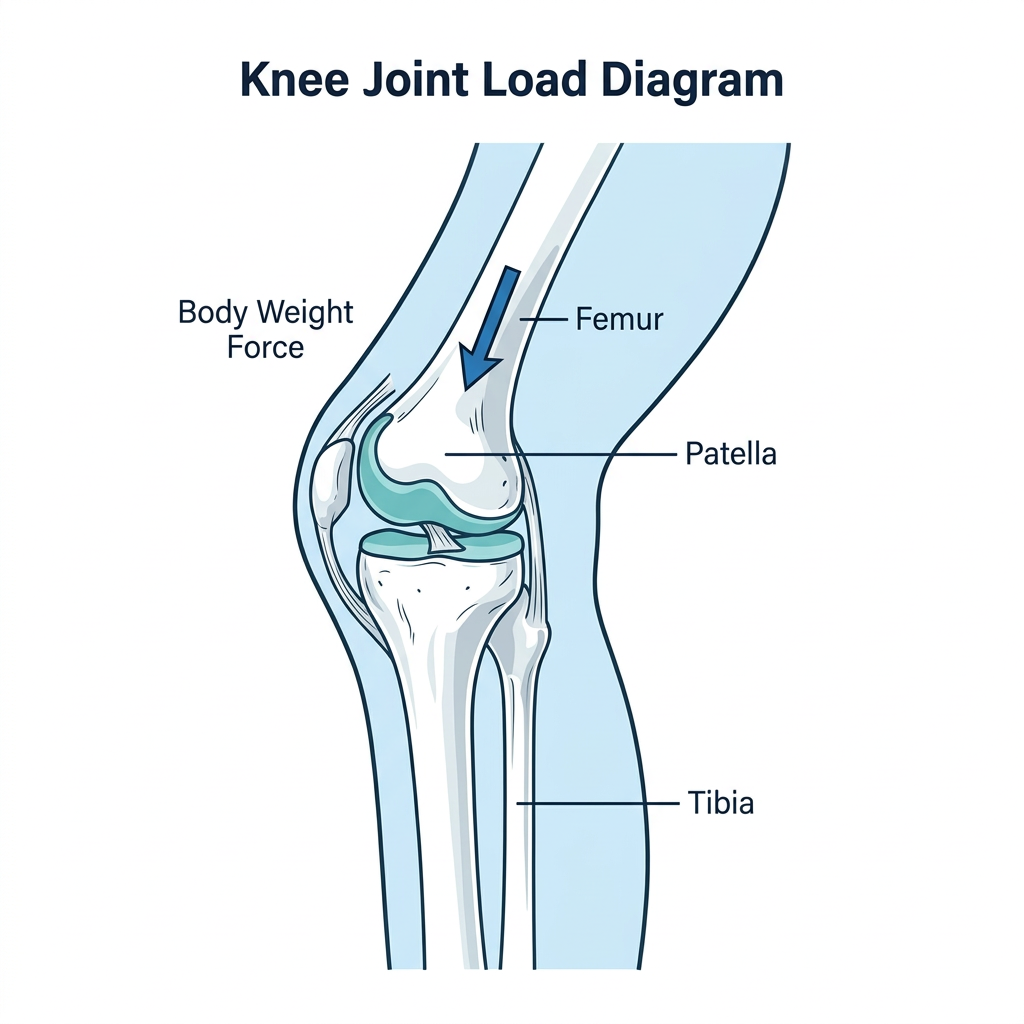
Weight distribution across the knee is not uniform. The inner (medial) side of the knee typically bears more load than the outer side, which is why many people notice discomfort on the inner knee first. The cartilage and meniscus act as cushions, but their capacity to absorb force has limits that can be influenced by how much weight they support daily.
For a deeper understanding of what causes knee discomfort in different areas, you may find our guide to common knee pain causes helpful.
Factors That Influence Knee Joint Load
Knee load changes with body mass, the activity being performed, speed, terrain, movement strategy, strength, and recovery. Body weight is one contributor, but it should not be treated as the only explanation for pain or used to blame the person experiencing it.

Walking, stairs, running, and jumping place different demands on the knee. A sustainable plan may include activity pacing, strength and balance work, footwear or technique changes, and, when personally appropriate, support for overall health or weight goals.
If you are interested in how aging interacts with these factors, our guide on why knee pain changes with age covers this topic in detail.
Key Insight
Why Daily Activities Feel Different With Added Weight
The impact of body weight on knee comfort becomes especially noticeable during specific daily activities. Understanding which activities create the most knee pressure can help you plan your day with greater awareness.
Walking
Walking is one of the most common activities that loads the knee joint. With each step, the knee absorbs and redistributes force. The walking load diagram below illustrates how this force multiplication works during the stance phase of walking.
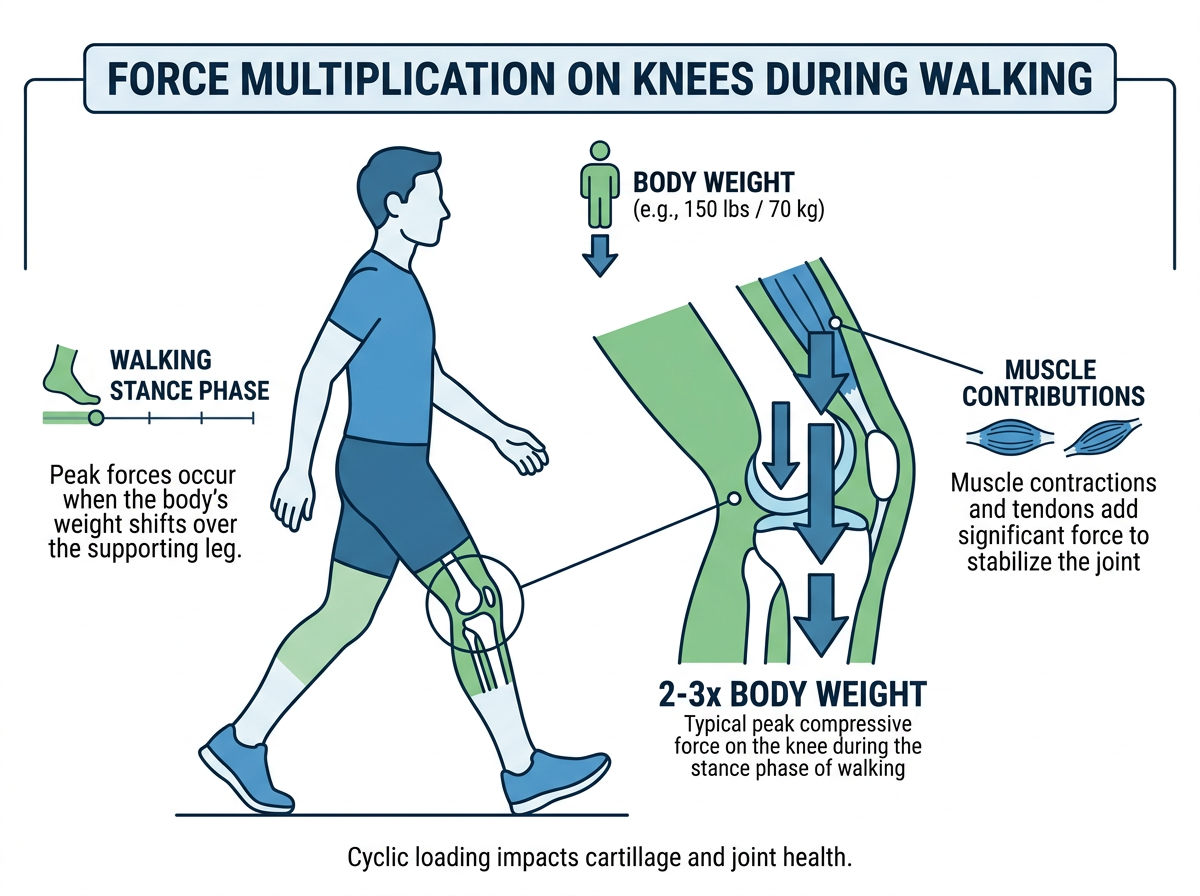
People who walk frequently throughout the day may notice that knee comfort can change depending on the surface, footwear, and duration of the walk. With added body weight, these factors become even more significant because the baseline force on the knee is already higher.
For tips on managing knee comfort during walks, check our guide to knee pain after long walks.
Climbing Stairs
Stair climbing is one of the activities that places the highest load on the knee joint. The force can reach three to four times body weight, particularly on the patellofemoral joint (the area behind the kneecap). This is why many people notice that stairs are one of the first activities where knee discomfort becomes apparent.
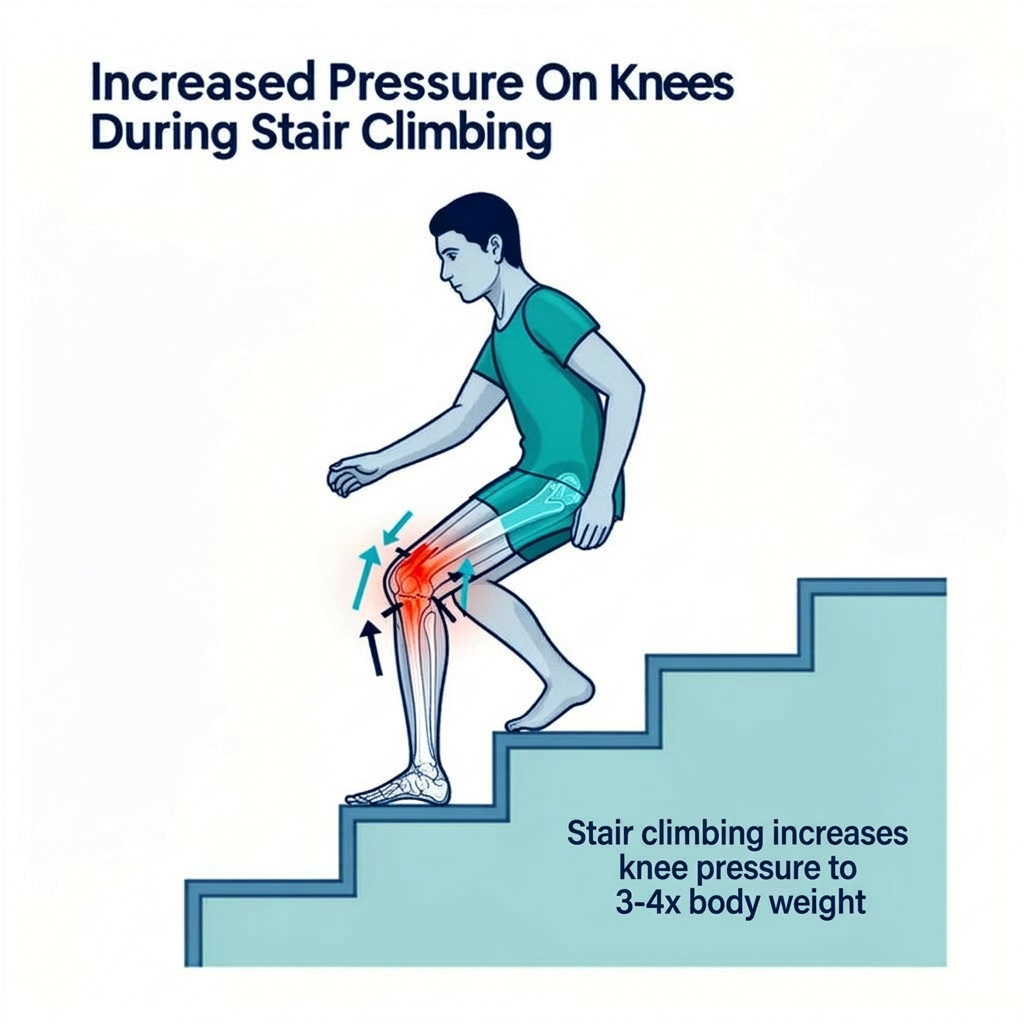
Going down stairs can be even more demanding on the knees than going up, as the joint must control deceleration while supporting the full body weight. Our guide to knee pain going down stairs explores this topic further.
Standing for Long Periods
While standing places less dynamic force on the knees compared to walking or climbing stairs, prolonged standing can still contribute to joint fatigue. When standing still, the muscles around the knee must continuously work to maintain stability, and the joint surfaces remain under constant compression. With added weight, this sustained load increases.
Learn more about how standing affects knee comfort in our knee pain after standing guide.
How Small Weight Changes May Influence Knee Comfort
Because the knee multiplies body weight during movement, even small changes in weight can have a noticeable effect on joint comfort. This is an encouraging concept because it means that gradual, realistic adjustments may lead to meaningful improvements.
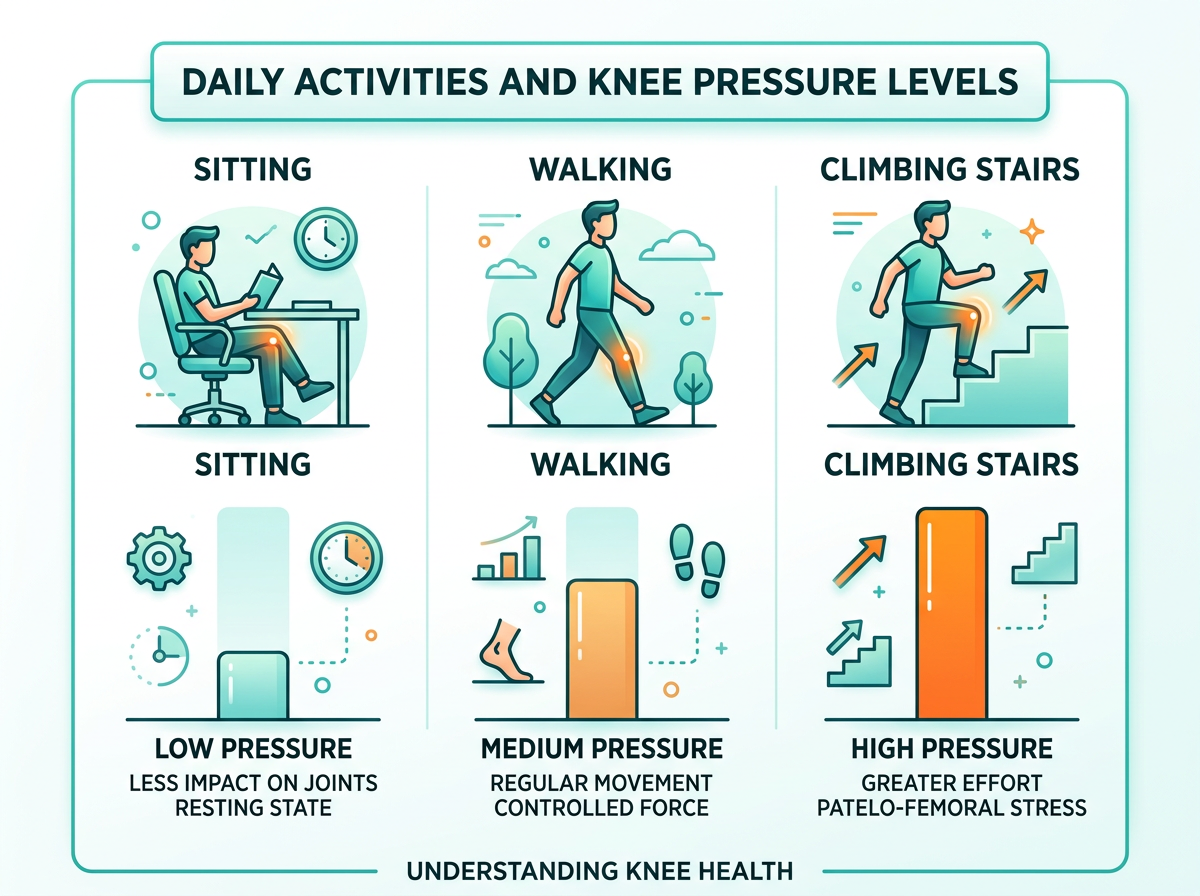
Consider the multiplication factor: if walking creates two to three times body weight in knee force, then a modest change in body weight is effectively multiplied at the knee. Over the course of a day with thousands of steps, this can represent a significant difference in total joint load.
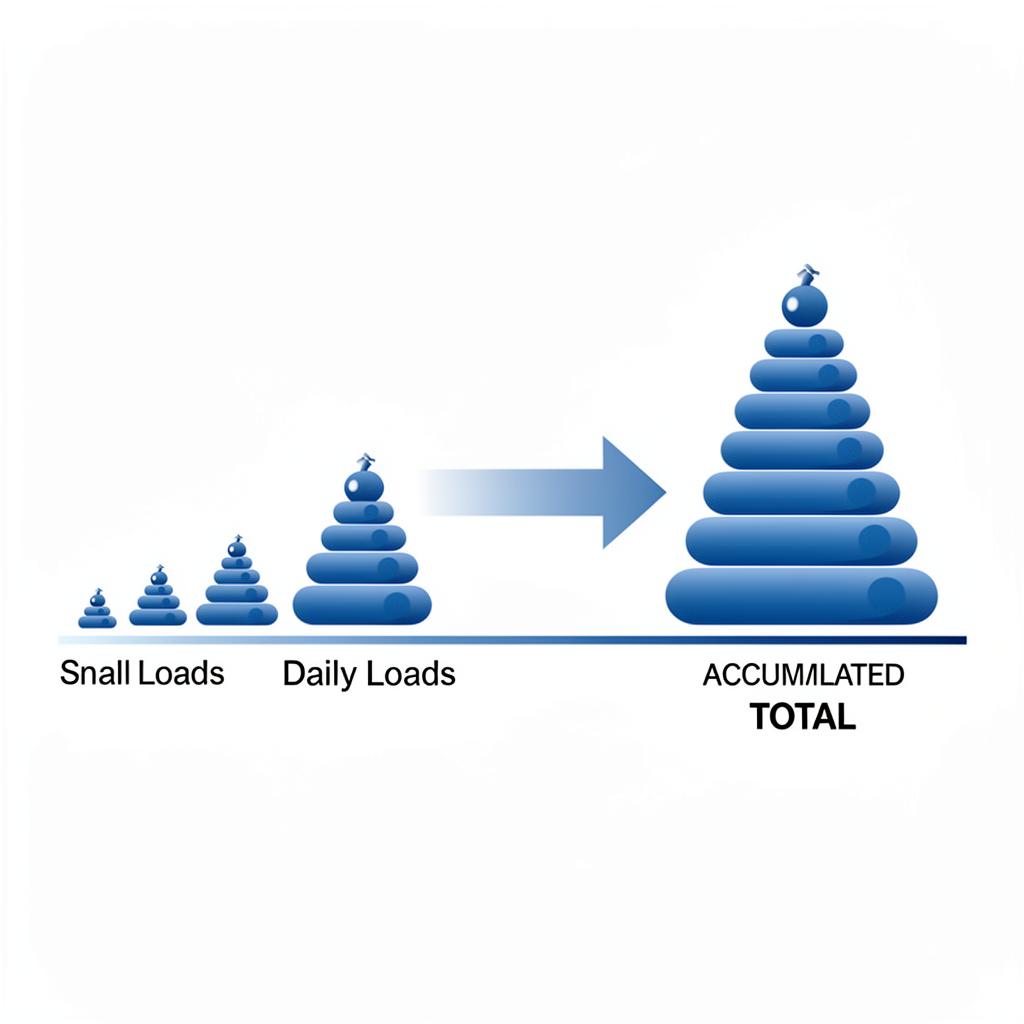
The key is to think about gradual changes rather than dramatic shifts. Small, consistent adjustments to daily habits tend to be more sustainable and can accumulate into meaningful differences over weeks and months.
Other Factors That Combine With Weight
While body weight is an important factor in knee joint pressure, it does not work in isolation. Several other daily habits and factors interact with weight to influence overall knee comfort.
Posture
How you hold your body affects how weight is distributed across your joints. Poor posture, whether standing or sitting, can shift more load onto certain parts of the knee, increasing strain in those areas. Maintaining balanced posture helps distribute weight more evenly across the joint surfaces.
Our guide on what makes knee pain worse covers posture mistakes in detail.
Movement Habits
The way you move throughout the day matters as much as how much you weigh. Sudden movements, repetitive patterns without variation, and poor walking mechanics can all increase the stress on your knees regardless of body weight. Balanced, varied movement helps distribute load more evenly.
Activity Level
Both too much and too little activity can affect knee comfort. Prolonged inactivity can lead to stiffness and reduced muscle support around the knee, while excessive activity without adequate recovery can overload the joint. Finding a balanced activity level is key.
For more on building balanced movement habits, explore our knee mobility after 50 guide.
Common Misunderstandings About Weight and Knee Pain
There are several widespread misconceptions about the relationship between weight and knee discomfort that deserve attention.
Oversimplification
It is tempting to attribute all knee discomfort to body weight alone, but the reality is more nuanced. Knee comfort is influenced by a combination of factors including muscle strength, flexibility, posture, footwear, activity patterns, and individual joint characteristics. Weight is one piece of a larger picture.
Unrealistic Expectations
Some people expect that weight changes alone will completely resolve knee discomfort. While weight management can certainly help reduce joint load, addressing knee comfort typically benefits from a comprehensive approach that includes movement habits, posture awareness, and consistent daily routines.
Ignoring Other Factors
Focusing exclusively on weight while ignoring posture, footwear, or movement patterns can lead to frustration. A balanced approach that considers all the factors affecting your knees tends to produce better results than focusing on any single element.
Important Reminder
Simple Habits That May Support Knee Comfort
Regardless of your current weight, there are several daily habits that can help support your knee comfort and reduce unnecessary strain on your joints.
Balanced Movement
Instead of long periods of sitting followed by intense activity, try to distribute movement throughout your day. Short walks, gentle stretching, and regular position changes can help keep your knee joints comfortable and reduce the impact of any single activity.
Posture Awareness
Pay attention to how you sit, stand, and walk. Keep your weight evenly distributed on both legs when standing. When sitting, avoid crossing your legs for extended periods and maintain a comfortable knee angle. Small posture adjustments throughout the day can reduce uneven stress on the knee joints.
Avoiding Overload
Be mindful of sudden increases in activity level or load. If you have been inactive for a period, gradually increase your activity rather than jumping into intense movement. This gives your joints time to adapt to changing demands.
Our guide on knee pain while climbing stairs offers practical tips for managing load during one of the most demanding daily activities.
Gradual Changes
Whether it relates to activity level, body weight, or daily routines, gradual changes tend to be more sustainable and easier on the joints than sudden shifts. Consistency over time is more valuable than dramatic short-term changes.
How to Build a Simple Daily Routine
Creating a daily routine that supports knee comfort does not require dramatic lifestyle changes. Small, consistent habits can add up to meaningful differences over time.
Step 1: Daily Awareness
Start by simply noticing how your knees feel during different activities throughout the day. Pay attention to which movements create more awareness in your joints and which feel comfortable. This baseline understanding helps you make informed adjustments.
Step 2: Movement Balance
Aim to break up long periods of sitting or standing with brief movement breaks. Even a short walk or gentle stretch every 30 to 60 minutes can help reduce the cumulative load on your joints and support better circulation around the knee.
Step 3: Consistency
The most effective daily routines are the ones you can maintain over time. Choose habits that fit naturally into your day rather than ambitious plans that are difficult to sustain. Consistency matters more than intensity when it comes to supporting long-term knee comfort.
For more on building sustainable knee comfort routines, explore our morning knee stiffness guide.
Step 4: Realistic Expectations
Changes in knee comfort often happen gradually rather than overnight. Be patient with yourself and focus on the process rather than expecting immediate results. Small improvements in daily habits can compound into significant differences over weeks and months.
Frequently Asked Questions
Does body weight affect knee pain?
Yes, body weight can influence the amount of pressure placed on the knee joints during everyday activities. Higher body weight typically means more force on the knees with each step, which may contribute to increased discomfort over time.
How much pressure does weight add to the knees?
During walking, the knees may experience forces equal to two to three times your body weight. During stair climbing, this can increase to three to four times. Even small changes in weight can noticeably affect the total load on your joints throughout the day.
Can losing weight help knee discomfort?
Many people notice improvements in knee comfort after gradual weight changes. Because the knee multiplies body weight during movement, even modest reductions in daily load may lead to noticeable differences in how the joints feel during activities.
Why do my knees hurt more when I walk?
Walking places repeated load on the knees with every step. The force on the knee joint during walking is typically two to three times your body weight, which means the knees absorb significant pressure throughout the day, especially during longer walks or on uneven surfaces.
Does weight affect knee pain when climbing stairs?
Stair climbing significantly increases the load on knee joints compared to level walking. The force can reach three to four times body weight, which is why many people notice more knee discomfort when going up or down stairs, particularly with added body weight.
Can small weight changes make a difference?
Yes, because the knee multiplies body weight during movement, even small changes can have a meaningful impact. A gradual reduction in daily load may reduce the cumulative stress on your knee joints over weeks and months.
Is knee strain only related to weight?
No, knee strain is influenced by many factors including posture, movement habits, activity level, footwear, and muscle strength. Weight is one important factor, but it works alongside other daily habits and lifestyle patterns to influence overall knee comfort.
What daily habits reduce knee pressure?
Balanced movement throughout the day, maintaining good posture, avoiding prolonged sitting or standing, wearing supportive footwear, and being mindful of sudden load changes can all help reduce daily knee pressure and support long-term joint comfort.