Start with the pattern, not the recovery product
After 26.2 miles, several different sensations can end up being described as sore knees. Your thighs might ache when you lower yourself onto a chair. One knee might hurt at a particular point. A knee that felt manageable while running might become stiff after a long journey back to the hotel. These experiences are not interchangeable, and choosing a remedy before describing the problem can hide the information you actually need.
This guide concerns the hours and days after a completed marathon. It is not a race-day permission slip to continue through an injury. If pain repeatedly develops during training, our running knee pain guide covers that broader pattern. Here, the immediate questions are simpler: did something happen during the event, has the knee swollen, can you move normally, and is the overall situation settling or worsening?
Finishing is an achievement, but it is not a diagnostic test. Adrenaline, the crowd and the desire to reach the line can influence decisions during the race. When you are somewhere calm, write down anything unusual while you remember it. Include a stumble, a sharp change in pain, a new limp or a section where you changed your stride. That history is more useful than guessing which structure hurts from a diagram.
Separate tired muscles from a knee that needs attention
Delayed muscle soreness can follow a demanding or unfamiliar effort. It is often felt across a worked muscle rather than only at a tiny point inside a joint. However, soreness beginning the next morning is not automatically harmless. The important distinction is not simply immediate versus delayed pain. Consider the location, whether there is swelling, whether you can straighten the knee and how everyday movement compares with your usual baseline.
| What you notice | Useful context | Next decision |
|---|---|---|
| Both thighs feel worked | Unfamiliar distance, hills and pace | Keep recovery straightforward and monitor normal function |
| One precise knee spot hurts | When it began and which ordinary tasks reproduce it | Do not assume it is simply delayed muscle soreness |
| Swelling, locking or a limp | A twist, fall, pop or worsening after the finish | Arrange appropriate assessment rather than a test run |
| Stiffness after the journey home | Time seated and response to comfortable movement | Review the trend without forcing range or stretching |
Do not repeatedly hop, squat deeply or run down a hallway to identify the problem yourself. Those checks can become additional loading and still cannot establish a diagnosis. A clinician may use particular examination tasks in context; copying one task from the internet is not equivalent. If something is clearly wrong with normal walking, you already have a reason to reconsider the day's plan.
The first hours: finish the event safely
If you feel well enough and can walk normally, move out of the finish area at an easy pace, collect your belongings and arrange a practical route to rest. Event medical staff are there for a reason. Tell them about severe knee pain or feeling generally unwell instead of assuming that every symptom belongs to marathon fatigue. If walking is not safe, ask for help rather than forcing the journey.
Hospital for Special Surgery's post-marathon guidance emphasizes the basics: a gradual transition after finishing, dry clothing, food, rehydration and sleep. These are useful foundations, not a promise that a specific snack or recovery schedule will resolve a painful knee. Your individual medical conditions and any clinician instructions still matter. You do not need to purchase a stack of recovery products before addressing these ordinary needs.
Plan the small logistics that become awkward when tired: who has the room key, where you can sit, how far the pickup point is and whether your accommodation requires several flights of stairs. A short taxi journey may be a more sensible choice than an extra long walk undertaken because the map makes it look close. The race distance does not include all the walking around it.
Why stairs can feel worse the following morning
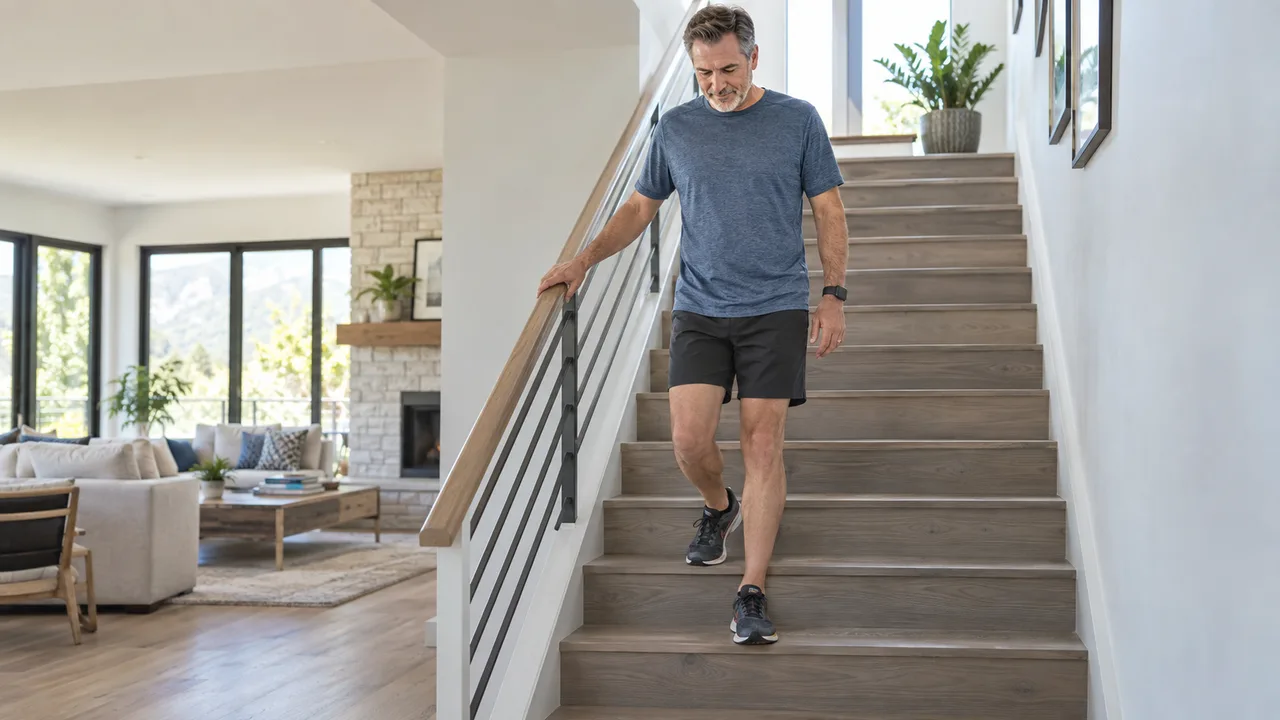
Descending stairs asks the legs to control the lowering of your body. When the thighs are sore after a marathon, this can feel surprisingly demanding. It is still important not to label every stair symptom as a tired quadriceps problem. Pain around the kneecap, a swollen joint and a knee that gives way deserve different consideration, even if they all appear on the same hotel staircase.
Use a handrail, leave yourself time and avoid carrying a heavy bag that blocks your view. Choose a lift when available if stairs are difficult. These are practical ways to reduce an unnecessary challenge, not a rehabilitation program. Do not walk backward down unfamiliar stairs because a social video suggests it, and do not use repeated flights as a daily readiness test.
Notice the trend during necessary activities instead. Is getting to breakfast becoming easier? Can you rise from a normal chair without changing your movement? Is one knee visibly different from the other? A brief note is sufficient. For an established stair-related problem that existed before the race, see our guide to knee pain going down stairs; the marathon may have exposed an existing issue rather than created a completely new one.
Food, fluids and sleep before complicated routines
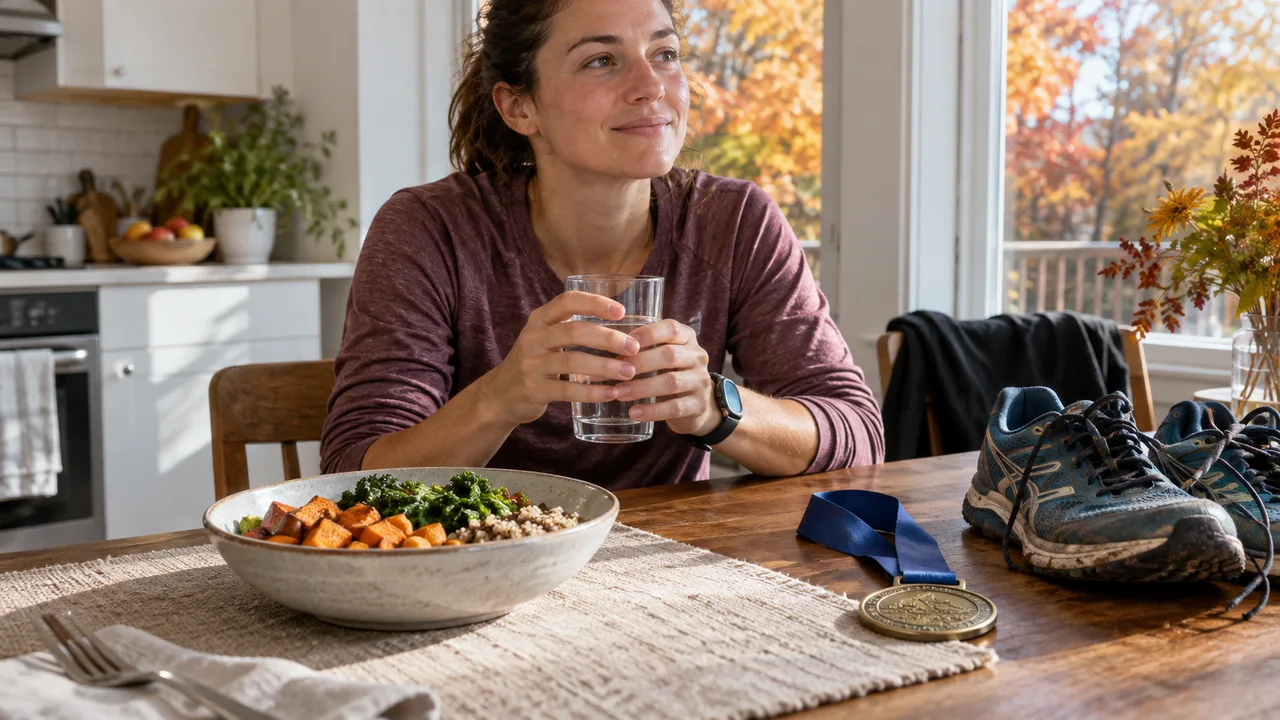
Race travel often makes the simplest recovery habits difficult. You might finish late, miss a normal meal, stand in a restaurant queue and then sleep poorly in an unfamiliar room. Before attributing every uncomfortable sensation to a failed recovery technique, look at that whole day. Organizing a meal, comfortable clothes and a realistic bedtime is a more repeatable starting point than adding several new interventions at once.
Avoid treating alcohol as the main recovery ritual, and do not take pain medication simply to make an ambitious sightseeing or running plan possible. Medicines have individual risks and interactions; a pharmacist or clinician can advise if you need them. Similarly, do not force large quantities of fluid because a generic checklist says more must be better. Follow sensible hydration advice and any restrictions that apply to you.
Your notes should remain proportional. A recovery diary does not need to log every bite or sensation. Write down the activities that matter, whether normal movement is changing and whether symptoms are improving overall. This helps you recognize progress without spending the entire day examining your knee. It also creates a clearer account if you subsequently need professional assessment.
Heat, cold and massage: comfort is not clearance
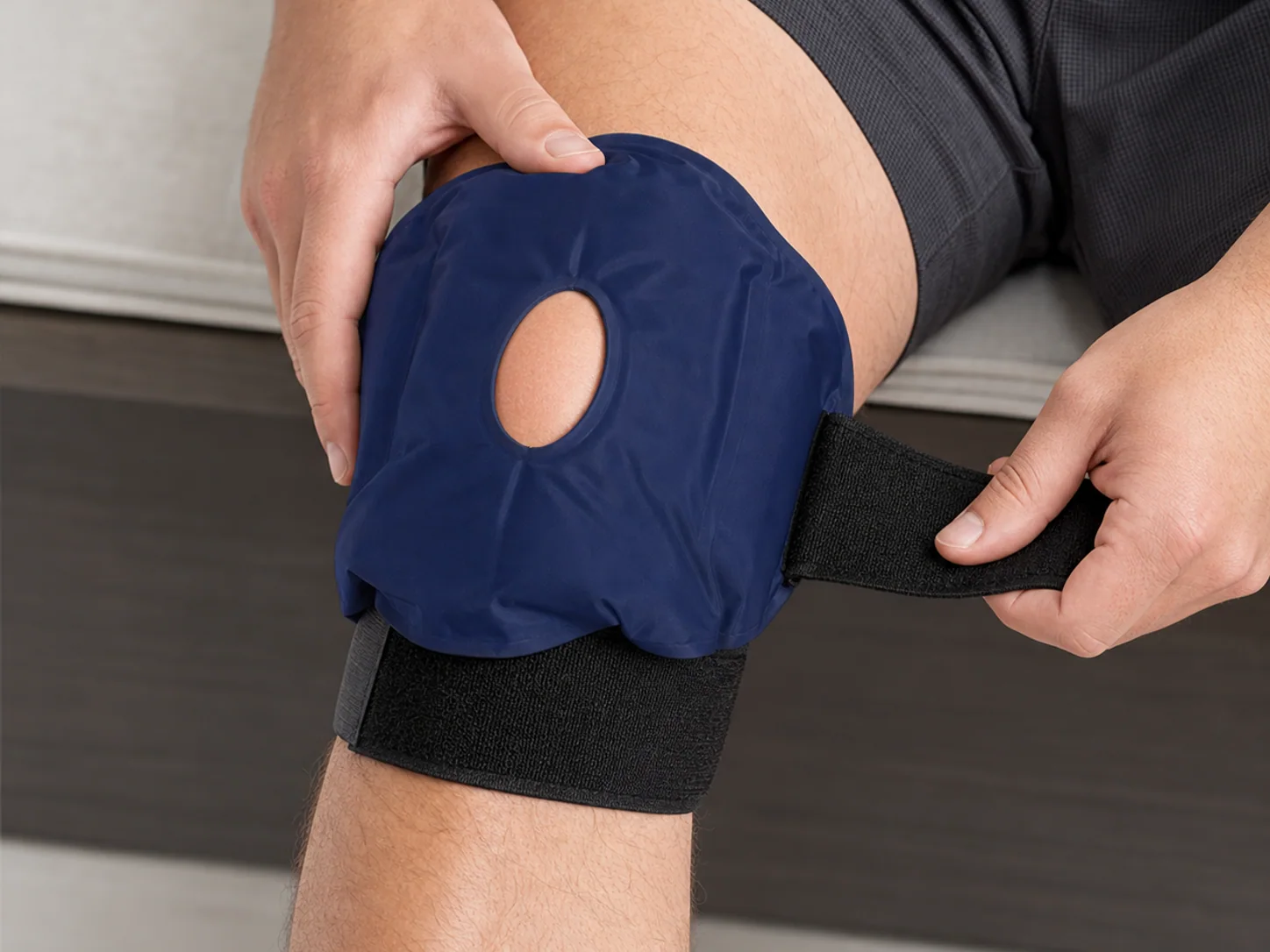
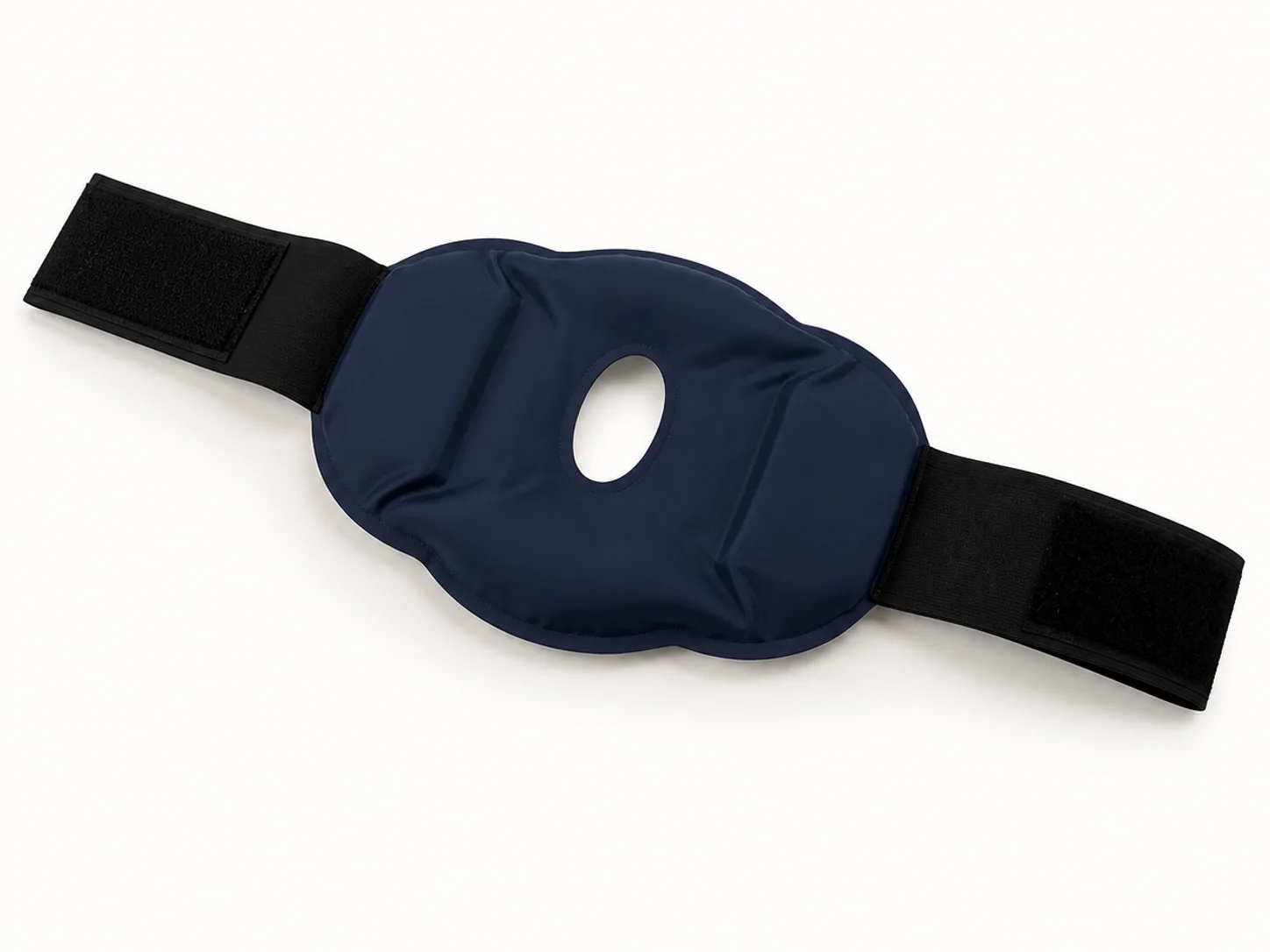
It is reasonable to want something soothing, but first separate a familiar stiffness routine from a newly injured, swollen or unusually hot knee. A cold pack may be considered for suitable short-term symptom relief with skin protection and appropriate instructions. Heat is not the default response to new swelling or an acute injury. Seek individual advice if you have altered sensation, circulation problems or another condition affecting safe use.
Neither warmth nor massage tells you whether the knee is ready to run. Temporary comfort is not proof that a tendon, joint or bone has recovered. This matters when a device advertisement uses the word recovery without explaining what was measured. A consumer heated vibration wrap is not the same intervention as hands-on sports massage, and one kind of evidence cannot automatically be transferred to the other.
Our heat versus ice guide explains those choices separately. Keep any suitable comfort measure optional, follow its actual instructions and stop if it irritates the skin or makes symptoms worse. Do not strap on equipment and then use the improved feeling to justify another hard session. The response during ordinary activity remains part of the decision.
The next day is not automatically a sightseeing day
A marathon weekend can include museum visits, airport corridors, train stairs and hours of standing. These are still activities even though your training app does not call them a workout. Review the itinerary before leaving the hotel. Choose shorter journeys, places to sit and a way to return early rather than committing to a route that has no easy exit once the knee becomes uncomfortable.
If you have a long drive or flight, plan comfortable position changes when feasible and follow any personal medical advice. Do not use compression or massage to self-treat unexplained one-sided calf swelling. New calf symptoms, chest pain or breathlessness need urgent medical attention, especially around prolonged travel. The knee pain after flights guide addresses travel considerations without treating every post-flight symptom as simple stiffness.
Communicate the revised plan to the people with you. It is easier to choose a nearby café at the start than to explain halfway through a long walking tour that you cannot continue comfortably. Recovery decisions are not a judgment on your fitness or your finish time. They are simply a response to how the event and subsequent activities have affected you.
Returning to running: use function, not a rigid countdown
There is no universal day on which every marathon finisher is ready to run again. Training history, race effort, previous injury, sleep and current symptoms differ. A calendar can help you reserve recovery time, but it should not override worsening pain or altered walking. An injured runner needs an individualized plan, not a shorter version of another person's schedule.
| Checkpoint | Useful observation | Do not substitute |
|---|---|---|
| Everyday movement | Walking and necessary stairs are becoming comfortable | A successful pain-masked jog |
| Knee response | No new swelling or deteriorating function | A fixed number of days since the race |
| Overall recovery | Food, sleep and energy are returning toward normal | Another runner's social-media schedule |
| Clinical restrictions | Any assessment and prescribed progression are followed | A sleeve, massage or reassuring online checklist |
When returning is appropriate, the first outing should not simultaneously test new shoes, a faster pace, a longer route and a hill session. Keep the question small enough to interpret. Review how you feel later as well as during the activity. If a short attempt leads to a limp or worsening symptoms, abandon the progression and seek advice instead of repeatedly restarting the same experiment.
When to get help rather than wait
Seek prompt medical advice for severe pain, a markedly swollen or misshapen knee, inability to bear weight, locking or giving way. Redness or unusual heat with fever or feeling unwell also needs urgent assessment. These are not situations in which a product trial or another recovery day should be used to decide whether help is necessary.
Less dramatic symptoms can still warrant an appointment. Persistent focal pain, symptoms that repeatedly interrupt sleep, or a pattern that stops improving should be discussed with a clinician. Bone stress injuries, for example, cannot be ruled out by the fact that you finished the marathon or that an online pain map seems to suggest something else. Bring the race history, recent training changes and your short notes.
A practical example: the medal is earned, the itinerary can change
Imagine a recreational runner who finishes a first marathon without a fall but wakes with sore thighs and difficulty descending the hotel stairs. Their original plan includes a city walking tour and a short celebratory run. A more useful first decision is to reduce the itinerary, use the lift and observe necessary walking. This example illustrates planning, not a diagnosis or a real patient's outcome.
If ordinary movement becomes easier and there are no concerning knee symptoms, the next decision can remain modest. If instead one knee swells or walking becomes increasingly painful, the plan changes toward assessment. In both cases, the important skill is responding to new information. You do not have to defend yesterday's ambitious itinerary just because it was booked before you knew how the race would feel.
The best post-marathon routine is one you can explain simply: address immediate needs, distinguish muscle fatigue from focal joint symptoms, make travel and stairs manageable, and let recovery guide the return to running. Celebrate the finish without turning the following days into another endurance challenge.
Frequently Asked Questions
Is knee pain the day after a marathon just muscle soreness?
Not necessarily. Broad thigh soreness can follow unfamiliar loading, but a focal painful knee, swelling, locking or changed walking should not automatically be called muscle soreness. Timing alone does not identify the cause.
Why are stairs harder after a marathon?
Stairs require the legs to control your body weight, particularly on the way down. Tired or sore thighs can make that difficult, but knee pain on stairs can have other causes. Use a handrail and seek assessment for substantial or worsening symptoms.
How many days should I wait before running again?
There is no single safe interval for everyone. Consider your training background, symptoms, normal walking, swelling and any medical advice. A calendar rule does not override a limp, worsening pain or an injury.
Should I use heat on a swollen knee after the race?
Do not treat a newly swollen, unusually hot or injured knee as an ordinary warmth routine. Seek suitable advice and follow any care plan. Comfort measures do not diagnose or repair the cause.
Can I walk around the city the next day?
Consider the walking itself as additional activity. Short necessary journeys with breaks may be more manageable than a long sightseeing itinerary. If walking is painful or altered, reduce the plan and get advice rather than trying to complete a step target.
Does finishing the marathon mean my knee cannot be injured?
No. Completing an event does not rule out an injury. Explain any twist, fall, sharp pain or change in gait to a clinician, including when symptoms first appeared.