Forty is not a diagnosis or a retirement deadline
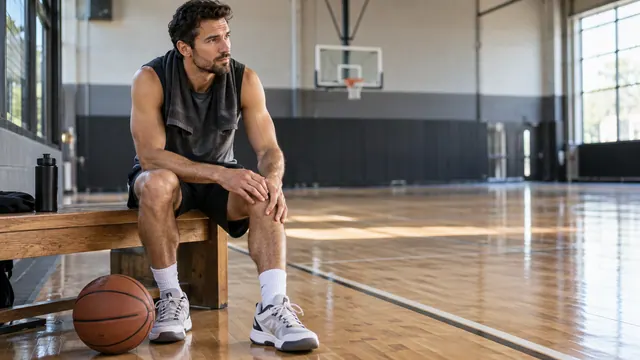
Two players of the same age can arrive at the court with very different histories. One has trained consistently for years; another has not played since college. One has a previous knee operation; another has no injury history but is sleeping poorly and working long shifts. A useful plan begins with those realities instead of treating everyone over forty as the same type of knee.
Do not automatically label new pain as wear and tear. Symptoms deserve the same attention they would at another age, particularly swelling, locking, instability or a change in ordinary walking. If you are resuming vigorous activity after a long break or have relevant medical conditions, discuss suitability with a healthcare professional. This article is a planning framework, not personal clearance for competitive sport.
Count the basketball you actually play
One weekly visit can mean a short shooting session or several hard pickup games with almost no breaks. Both appear as basketball on a calendar, but they are not the same exposure. Include warm-up jumps, chasing rebounds, extra games and conditioning when reviewing the week. The knee experiences the whole session, not just the minutes you intended to play.
Also include activity outside basketball. A demanding lower-body workout, a long workday on your feet and a weekend hike may all sit beside the game you blame for soreness. This does not mean every activity must be restricted. It means the plan should reflect the combined demands rather than pretending the court session occurs in isolation from the rest of your life.
Build a weekly picture before changing everything
| Question | Useful detail to record | Possible planning response |
|---|---|---|
| What was the court session? | Skills, half court, full court, minutes and breaks | Adjust the actual demand rather than only the visit count |
| What else loaded the legs? | Strength work, running, hiking or physical work | Avoid accidentally stacking the hardest tasks |
| How did the knee respond? | Symptoms, swelling and ordinary function later | Repeat a tolerated level or review a worsening pattern |
| What affected recovery? | Sleep, travel, illness and schedule pressure | Choose a realistic session rather than forcing the old plan |
Keep the notes simple enough to maintain. A few lines after a session can reveal that difficulty follows back-to-back hard days, not every basketball game. Conversely, symptoms that persist even during a lighter week deserve assessment rather than endless schedule tweaking. The purpose of tracking is to improve decisions, not to create a score that tells you to ignore what the knee is doing.
Use minutes, intensity and format as separate levers
If you want to play more sustainably, you do not always have to choose between a full session and nothing. A shorter run, longer breaks or a skills-focused visit can change the exposure. Discuss these options with your clinician when managing a diagnosed problem. Do not assume a shorter session is appropriate if the individual movements themselves are currently restricted.
Half-court basketball can reduce end-to-end running, but it may still involve crowded rebounds and frequent cutting. A relaxed shooting session can become a jumping workout when every miss is chased at speed. Describe the format by its actions and intensity. This helps you select a genuinely suitable version rather than a session whose reassuring name hides the same demands that caused trouble.
Agree your stopping point with friends before the game. It is easier to keep a reasonable limit when you are not renegotiating it after a close finish. Staying for one more game is a real workload change, not a minor social detail. A sustainable plan makes room for enjoying the group while keeping the next day's function part of the decision.
Keep strength work in the week, not only basketball
Public-health guidance and aging research support strength and other forms of physical activity for maintaining function. That does not provide a basketball-specific prescription for every person over forty, but it is a reason not to rely on games as your only form of preparation. Basketball tests your capacity; it does not necessarily develop every part of it in a balanced, progressive way.
Choose suitable strength exercises according to experience, symptoms and any clinical advice. A coach or physical therapist can help connect the program to your needs without turning every workout into maximal effort. If you are new to strength work, start with a manageable introduction rather than adding an unfamiliar hard leg session the day before your longest basketball run.
Our knee strengthening guide covers general options, while this article focuses on fitting preparation into a basketball week. Keep the distinction clear: a warm-up rehearses movement, a strength session develops capacity over time, and a game exposes you to sporting demands. Treating all three as interchangeable makes the schedule harder to manage.
Prepare before play, especially after a desk or car journey
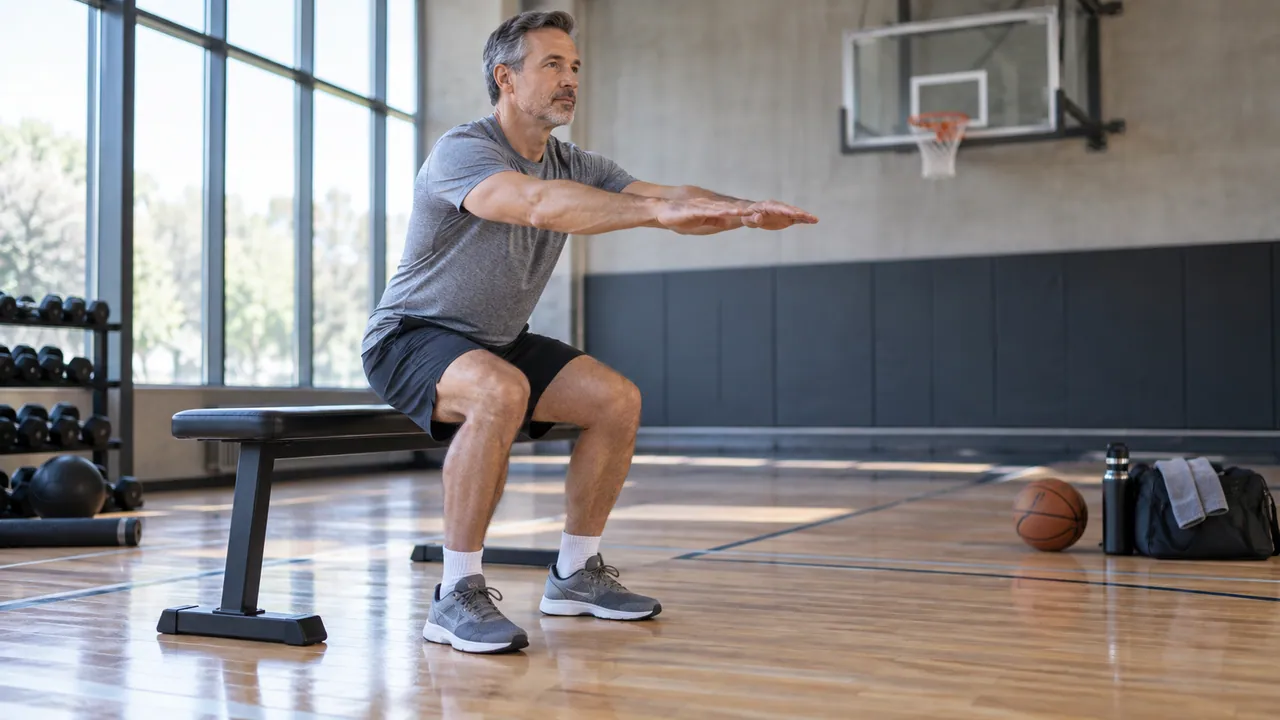
Build in enough arrival time to progress from easy movement toward the tasks of the session. A long drive followed immediately by a fast game is an abrupt transition. Use a familiar basketball knee warm-up with appropriate stopping and lateral preparation rather than only a few stationary shots. It should leave you ready, not exhausted.
If the warm-up reveals a new problem, let that information change the session. A sleeve or a few more minutes of movement should not be used to dismiss swelling, sharp pain or instability. Also check practical details such as shoe fit and the court surface. Small equipment or environmental problems are easier to address before they become part of a hurried competitive game.
After the game: return to a normal routine
Allow a calm transition out of play and notice how you are moving. Avoid turning recovery into another intense test of the knee. Get changed, drink according to your needs and return to an ordinary meal and sleep routine. There is no need to build an elaborate collection of recovery gadgets before addressing the basic question of whether the amount of basketball was appropriate.
Some people prefer gentle movement later rather than prolonged sitting, provided it is comfortable and appropriate for their condition. Others need a different plan after an assessed injury. Follow that plan instead of applying a universal active-recovery rule. New swelling, a limp or loss of movement is not a challenge to walk off through increasingly long evening strolls.
The next morning is part of the feedback
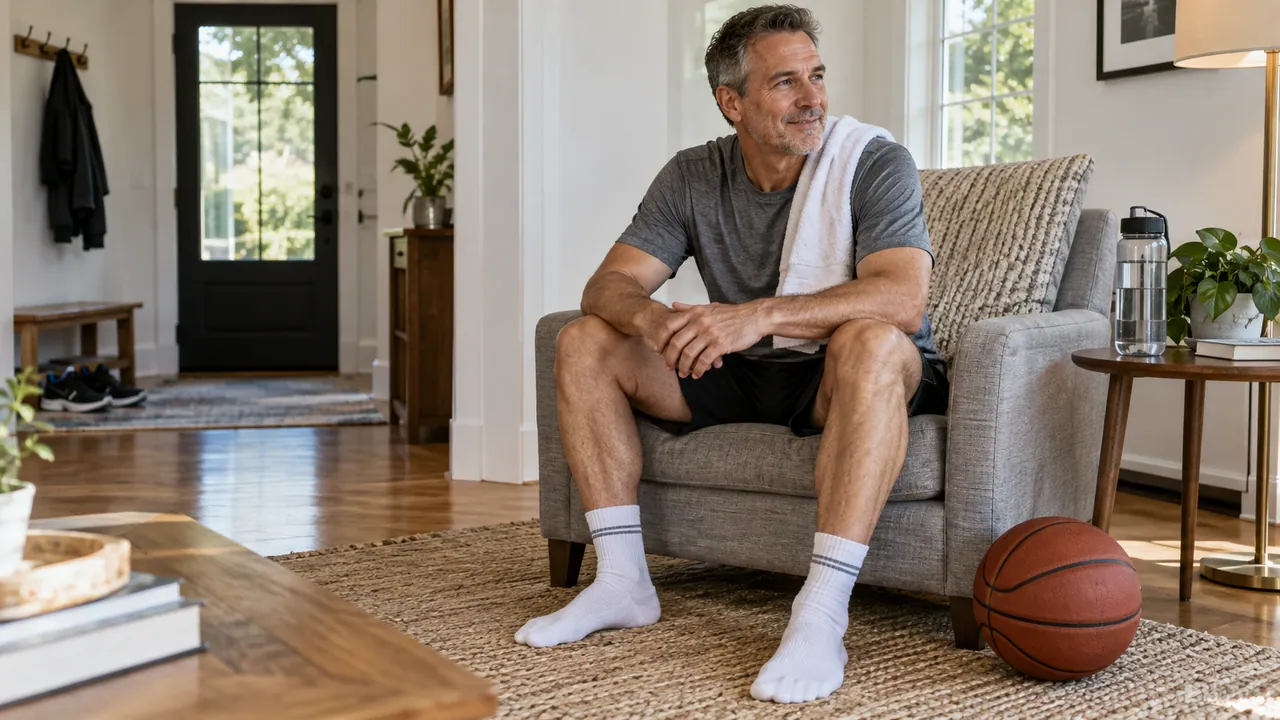
Compare the next day's ordinary tasks with your usual baseline. Notice getting out of bed, walking around the house and using stairs if those are normally comfortable. Record whether stiffness settles as expected or whether symptoms are new, stronger or associated with swelling. Do not judge the session solely by how good you felt while the game and teammates kept you distracted.
If the same difficult response follows each game, change the plan and consider an assessment. Reducing minutes may be one useful adjustment, but it should not become an endless attempt to avoid understanding persistent pain. The basketball knee pain article separates timing and location patterns, while a clinician can determine the explanation and appropriate management for your knee.
A practical weekly planning example
Imagine a recreational player who wants one demanding game and another lighter basketball visit. A sensible discussion might place suitable strength and other activity around those sessions, with room to observe the response before the next hard exposure. This is a planning example, not a fixed seven-day medical program. The actual spacing depends on the person's health, schedule, symptoms and current training.
If work suddenly adds a physically demanding day or sleep is unusually poor, the lighter visit may remain light or be changed. If the knee responds well over time, the player can discuss gradual progression rather than jumping directly to the old college workload. The key is that the schedule responds to evidence from the week instead of treating every calendar entry as a command.
| Situation | More useful decision | Less useful assumption |
|---|---|---|
| Extra hard game added unexpectedly | Review the next demanding leg session | Recovery plans can erase any extra workload |
| Returning after several inactive months | Rebuild from current capacity | Past skill means current tissue tolerance is unchanged |
| Repeated next-day swelling | Seek assessment and review exposure | Swelling is simply normal after forty |
| Comfortable, repeatable weeks | Consider measured progression if desired | Increase every training variable at once |
Old injuries and diagnosed arthritis need individual context
A previous operation or arthritis diagnosis does not produce one universal basketball answer. The relevant details include current symptoms, function, treatment history and the type of play you want. Discuss impact and pivoting demands with the clinician who knows the condition. Do not use another player's success story as proof that your knee should follow the same route or timeline.
Equally, avoid treating an old scan as the only explanation for every new symptom. A new injury, a change in workload or another problem may require a fresh assessment. The useful question is what the knee can appropriately do now and what needs changing. That gives you a practical plan rather than a permanent identity as someone with bad knees.
Where a knee massager can fit, and where it cannot
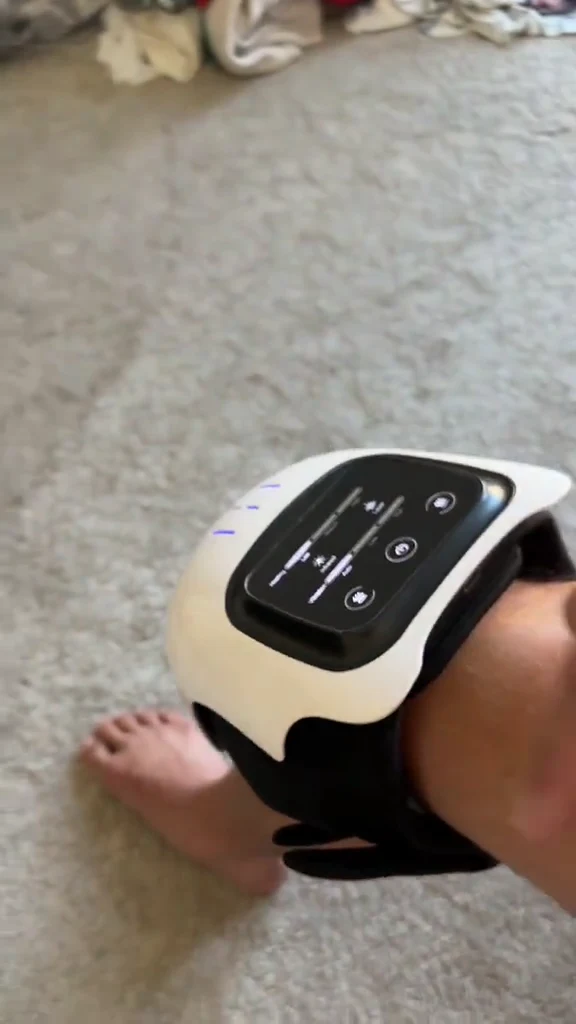
When warmth is appropriate, some people enjoy a quiet heat-based comfort routine between sessions. The FlexiKnee heated knee massager can be considered for that optional role, following its instructions and any medical advice. Its use video shows the device and routine. It is not evidence that the product accelerates return to sport, repairs joint structures or offsets excessive basketball exposure.
Do not apply heat to a newly injured, swollen or unusually warm knee, and seek advice first if sensation or circulation is impaired. Keep device use separate from decisions about readiness. Feeling temporarily more comfortable while sitting does not show that you can tolerate repeated rebounds or cuts. The right reason to consider a comfort product is comfort, not permission to ignore a worsening pattern.
Choose equipment by fit and purpose
Review basketball shoes for comfortable fit, court traction and lateral containment. Compare a knee sleeve only if you want its actual function, such as snug coverage, rather than assuming it prevents injury. A padded sleeve is a different product from a plain compression sleeve, and neither replaces a prescribed brace when one is needed.
Avoid changing all equipment at the same time as increasing games and starting a new strength program. When something feels better or worse, you want a reasonable chance of understanding why. Introduce manageable changes and keep notes. This approach may look less exciting than a complete gear overhaul, but it produces much clearer information for the next decision.
Plan for busy weeks instead of abandoning the routine
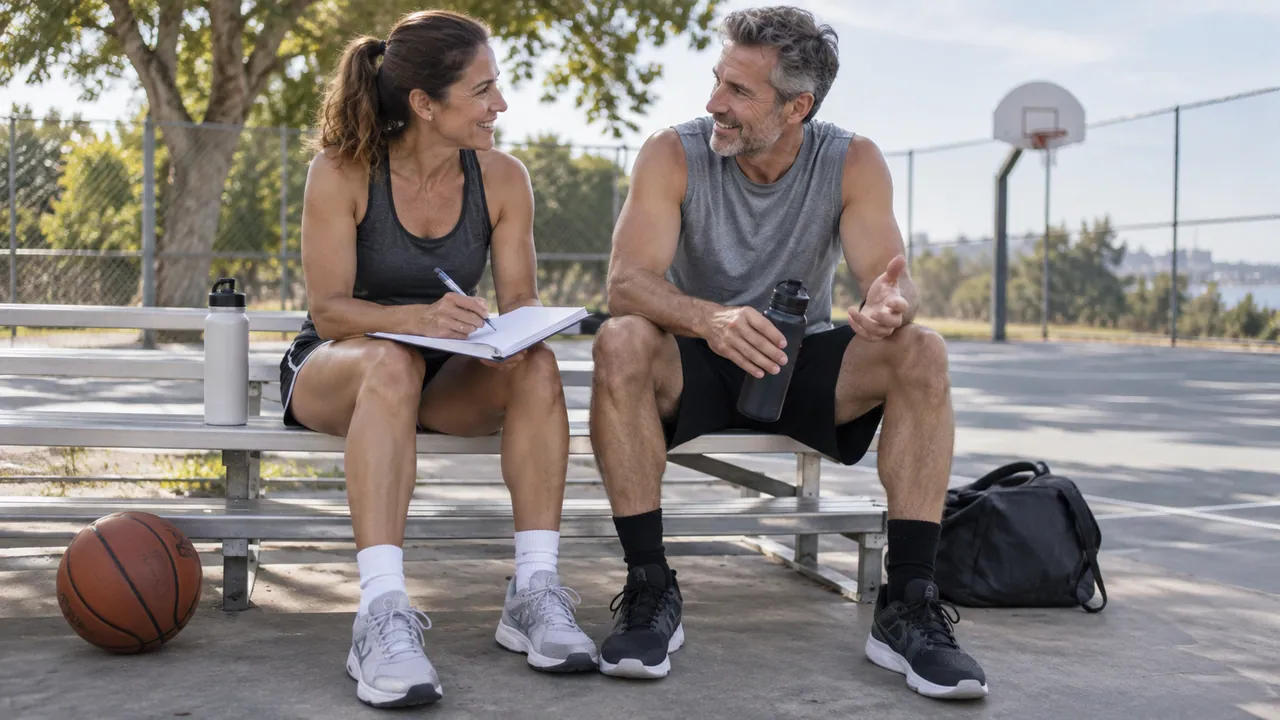
Work travel, family commitments and irregular sleep can interrupt even a well-designed basketball schedule. Decide in advance what a reduced week looks like. It might include a suitable shorter skills session and the essential parts of an established exercise plan, rather than compressing every missed activity into the weekend. The reduced version should still fit your health and any clinical restrictions.
After a break, return from the activity level you have actually maintained. Do not treat missed games as a debt that must be repaid with extra court time. Skill memory may return quickly, but that does not establish tolerance for the previous workload. If a long interruption followed injury or illness, ask whether the return needs additional assessment or a more structured progression.
Use practical signals to decide when the plan is working: you can complete the intended session, keep ordinary activities manageable afterwards, and repeat the week without a steadily worsening pattern. A single exciting game is less informative than a routine you can sustain. If the only way to play is to spend the following days compensating, the plan deserves a review rather than another recovery product added on top.
It can help to discuss this with the people you play with. Explain that leaving at the planned time is part of keeping basketball in your life, not losing interest in the group. Arrange another way to stay involved when you cannot join the full game, such as suitable skills work or simply watching. Preserving the social connection makes sensible adjustments easier to maintain without turning every decision into an all-or-nothing choice.
Make the goal sustainable participation
Decide what you value most: regular time with friends, maintaining skills, league competition or simply enjoying movement. The best format may not be the hardest available game. Choosing a group with appropriate pace and respect for limits can help the plan work in real life. You do not have to prove commitment by accepting every challenge or comparing every movement with your younger self.
If you are currently rebuilding after pain, use the return-to-basketball progression alongside professional guidance. If you are playing comfortably, keep the habits that make the week repeatable. Age alone should not decide the outcome. A clear view of current capacity, suitable preparation and an honest response to symptoms gives you a better basis for continuing the game.
Frequently Asked Questions
Is basketball bad for your knees after 40?
Age alone does not answer that question. Current health, prior injury, symptoms, conditioning and the amount and type of play matter. Persistent pain or swelling should be assessed rather than assumed to be an unavoidable part of getting older.
How many times a week should I play basketball after 40?
There is no universal safe frequency. Start from what you currently tolerate and consider intensity, minutes, other training and recovery. A shorter controlled session and a long competitive run are not equivalent simply because each counts as one visit.
Should I rest the day after basketball?
The next day's activity should reflect the session and your response. Easy suitable movement may be reasonable, while another demanding session may need adjusting. New swelling, altered walking or worsening symptoms calls for reassessment rather than a fixed recovery rule.
Will a knee massager speed up basketball recovery?
A heat-based massager may provide short-term comfort when suitable, but it is not proven to restore basketball readiness or replace sleep, appropriate training and clinical care. Avoid heat on a new swollen or unusually warm knee and follow device instructions.
Is half-court basketball safer for older knees?
Half court may reduce running distance but can still involve frequent jumping, cutting and contact. Choose a format by its actual demands and your current capacity, not by the label alone.
Do I need strength training if I already play basketball?
Basketball does not necessarily provide a balanced or progressively planned strength program. Suitable strength work can support general function and preparation. The exercises and load should fit your health, experience and any knee diagnosis.