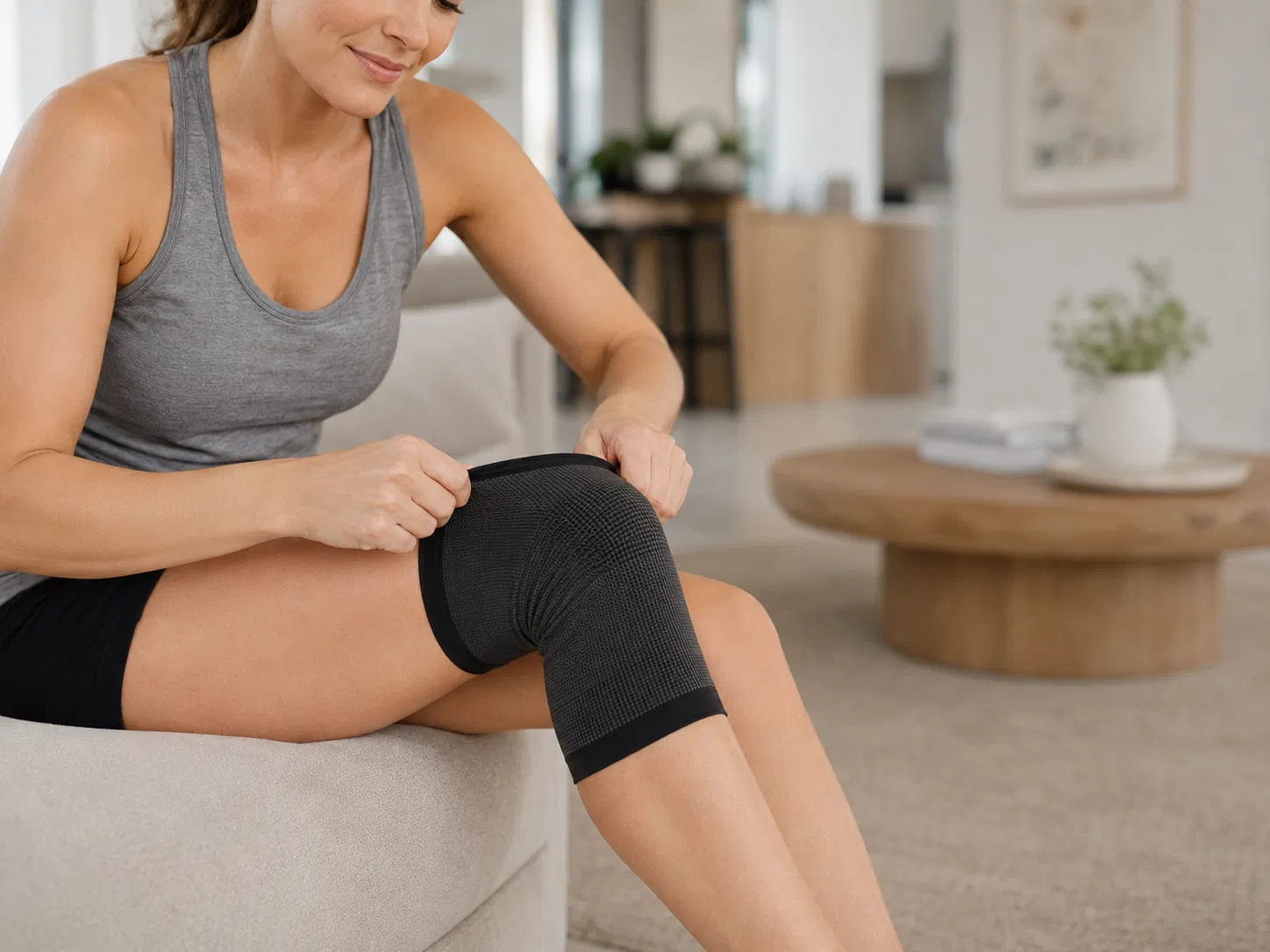
Choose the job before choosing the sleeve
Start with a sentence that describes your actual need: I want a light garment that stays comfortable during shooting; I keep knocking my knee against the floor; or my clinician has prescribed a particular support after injury. Those are three separate shopping decisions. A product marketed with all three promises still needs to demonstrate that its construction matches each job.
For an uninjured recreational player, preference and fit may be the main considerations. For someone with persistent pain, the equipment decision follows the assessment. A sleeve should not become a way to hide a limp, keep playing through a new swollen knee, or avoid asking why a previously comfortable movement now hurts. Our guide to knee pain after basketball separates those symptom patterns.
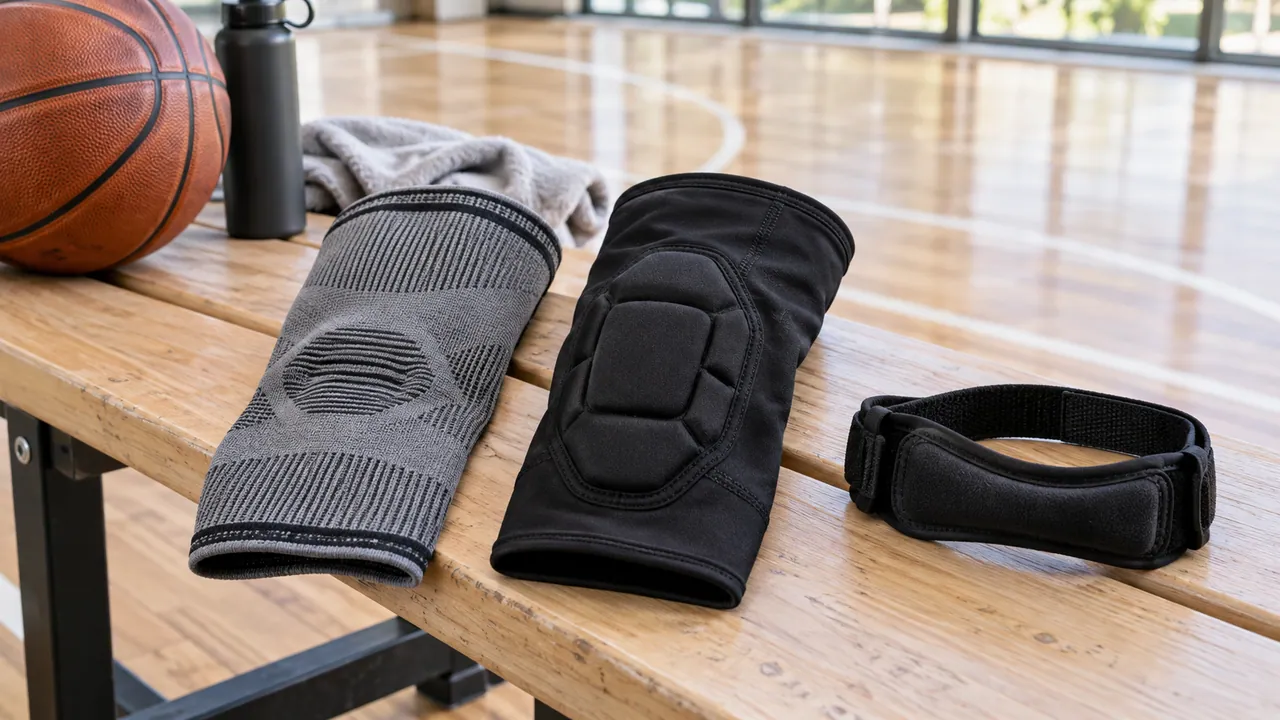
Compression sleeve, padded knee pad or long leg sleeve?
| Equipment | Primary purpose | What not to assume |
|---|---|---|
| Plain compression knee sleeve | Snug coverage around the knee | It is not necessarily padded or mechanically stabilizing |
| Padded basketball knee sleeve | Coverage plus padding over a contact area | Padding does not prevent twisting injuries inside the joint |
| Long basketball leg sleeve | Coverage extending onto the thigh or calf | Length alone says nothing about compression strength or protection |
| Patellar tendon strap | Localized pressure below the kneecap | It is not a tendon rehabilitation program |
| Prescribed supportive brace | A particular support role selected for an injury | A fabric sleeve is not an interchangeable replacement |
Online descriptions often use sleeve and pad interchangeably. Look at the actual knee panel. A raised protective layer is different from a printed hexagonal pattern or a textured knit. Also check where that panel sits with the knee bent. Padding below or beside the area that meets the floor will not serve the same purpose as a correctly positioned pad.
Long leg sleeves introduce another fit question: both ends must stay comfortable while the knee moves. A garment can fit around the knee but squeeze the upper thigh, wrinkle at the ankle, or slide because its proportions do not match your leg. The shortest or longest option is not inherently better. Choose the coverage you need rather than collecting extra fabric.
What can compression realistically do?
Some players prefer the snug feeling and covered warmth of a sleeve. That personal response can matter to comfort, but it should not be stretched into a claim that the garment repairs cartilage, holds every ligament safe, or corrects all landing mechanics. A comfortable accessory and an injury-prevention treatment are not the same category of evidence.
A small study of healthy male sports students tested knee movement perception with a brace, a sleeve and no support. It did not find a significant improvement from either support. That result does not answer every question about every patient or garment, but it illustrates why broad claims about guaranteed proprioception benefits deserve caution. It also did not test whether a sleeve prevents injuries during competitive basketball.
Consider the difference between feeling supported and having the capacity to absorb a rebound or stop a fast drive. The second involves strength, coordination, exposure to basketball demands and the circumstances of the play. A sleeve can accompany those things. It cannot replace them. Preparation belongs in the basketball knee warm-up, while rebuilding after symptoms belongs in a return plan.
Measure for the actual product, not your usual clothing size
Use a flexible tape and follow the exact landmarks in the manufacturer's chart. One brand measures around the middle of the knee; another measures the thigh a specified distance above it. Those measurements are not interchangeable. Write down the result and the location before comparing sizes. A medium in your previous sleeve is not a measurement for the next one.
Keep the tape level and comfortably against the skin without pulling it tight enough to indent the leg. Repeat the measurement if it falls near a size boundary or seems different from an earlier reading. Check both legs when buying a pair. If recent swelling changes your measurement, pause the equipment experiment and address the swelling rather than buying a tighter garment to contain it.
For between-size decisions, use that product's guidance or ask the seller for clarification. Do not automatically choose the smaller option because stronger compression sounds more effective. Conversely, a very loose sleeve may migrate and require constant adjustment. Our knee compression sleeve sizing guide explains measurements in more detail; the basketball-specific step is testing the fit through court movements.
The first fit check: standing is only the beginning
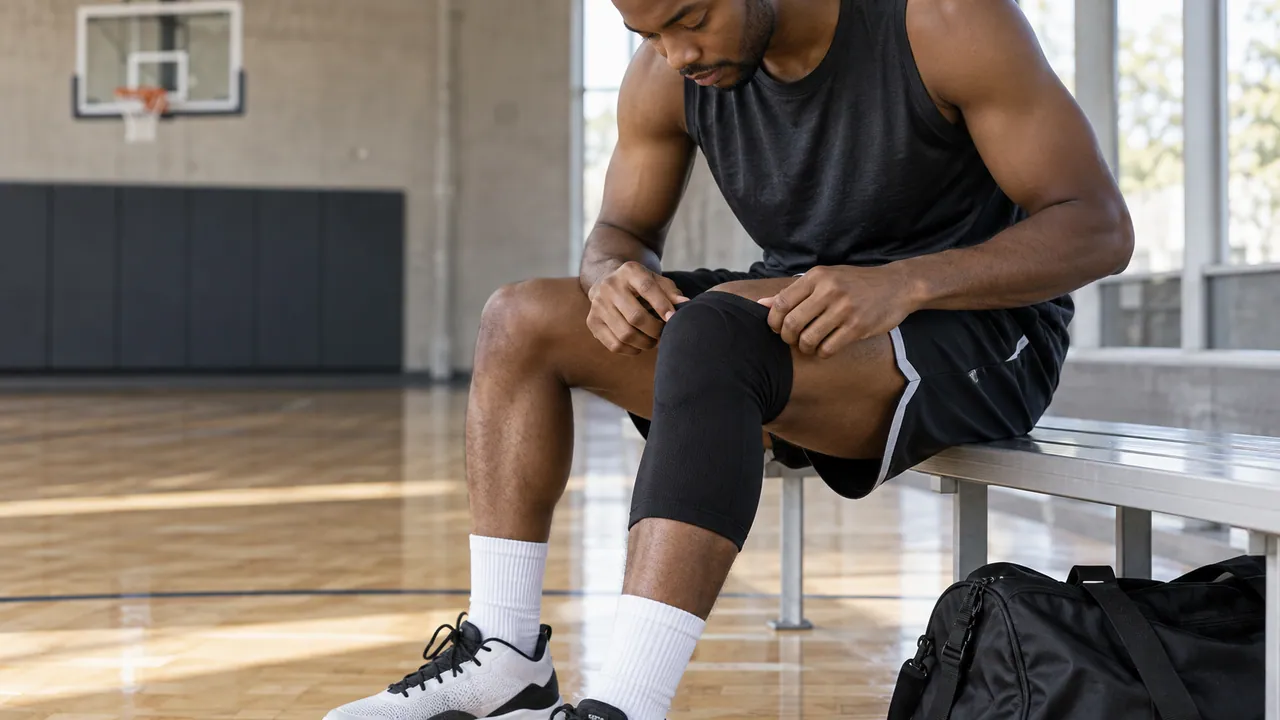
Put the sleeve onto clean, dry skin and arrange it according to its instructions. Smooth folds rather than leaving a thick roll behind the knee. For a padded design, center the protective section where the maker intends it to sit. Then stand, sit and bend comfortably. You should not have to keep pulling the garment into position after every change.
Look for pressure at the upper and lower edges, not just around the kneecap. A tight edge can be the part that becomes uncomfortable first. Notice whether the fabric bunches behind the knee as you sit on the bench. Try the sleeve with the shorts, socks and any other permitted equipment you actually use, because overlapping seams can change how a seemingly comfortable fit feels.
Stop using it if you develop numbness, tingling, increasing pain, skin color change or concerning swelling. Remove the garment and seek advice if those symptoms persist. People with known circulation problems, reduced sensation, significant skin conditions or a recent operation should ask a clinician about suitability rather than treating a general sports product as medical compression.
Test it in a short practice before a full game
Use a familiar, low-pressure practice rather than a tournament as the first trial. If you are well enough to perform them comfortably, begin with walking and easy shooting, then the controlled movements already included in your normal warm-up. The aim is to see whether the garment slips, catches or distracts you. This is an equipment check, not a test that clears an injured knee.
Make a few observations between blocks: Did the pad rotate? Did sweat change the grip? Did the back seam rub when bending? Did you start moving differently to avoid pressure? A sleeve that demands attention on every possession has failed a useful practical test even if its measurements appeared correct. Return or exchange options therefore matter more than a dramatic advertising claim.
Keep the rest of the practice reasonably familiar. Trying new shoes, a new sleeve and a much harder workout together makes it difficult to identify which change caused discomfort. Record the garment, size, activity and any skin or fit issue afterwards. You do not need a complicated spreadsheet; a few specific notes are more useful than deciding only that it felt good or bad.
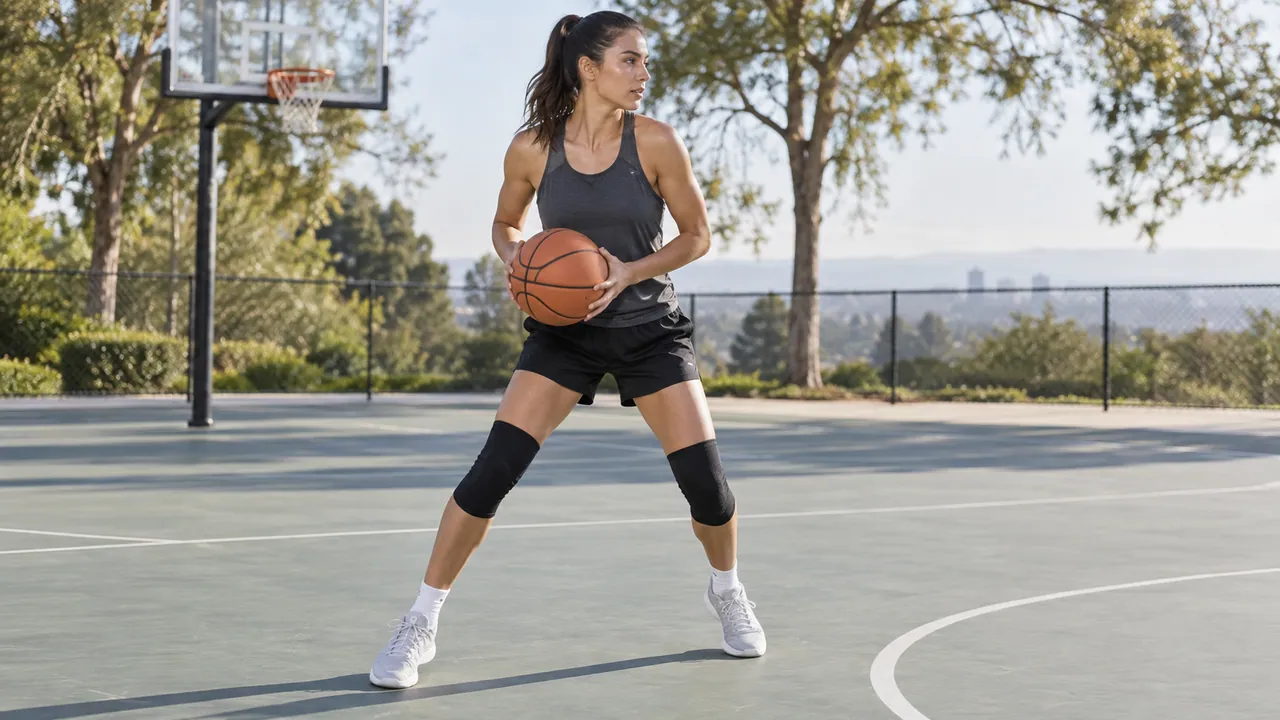
Common on-court problems and sensible adjustments
| Problem | Check first | Avoid |
|---|---|---|
| Sleeve keeps sliding | Correct size, orientation, fabric condition and dry starting skin | Adding improvised tight tape around the leg |
| Bunching behind the knee | Length, folds and whether the cut suits your leg | Playing through rubbing or pressure |
| Pad moves off the kneecap | Panel position while bending, not only while standing | Assuming thicker padding fixes poor placement |
| Skin irritation after games | Seams, cleanliness, drying and material sensitivity | Repeatedly covering irritated or broken skin |
| Knee still hurts with the sleeve | Symptoms, load and need for clinical assessment | Buying progressively tighter sleeves as treatment |
Some fit problems are about shape rather than size. A different cut may work better than repeatedly moving one size up and down within the same model. If a garment is comfortable when straight but uncomfortable in every defensive stance, that is relevant feedback. Basketball includes deep and repeated changes of position; a product cannot earn a good fit rating from standing still alone.
One sleeve, two sleeves or a tendon strap?
There is no universal rule that basketball players should wear matching sleeves on both knees. An asymmetrical preference does not need correcting for appearance. However, if one knee newly needs support because it hurts, consider the reason rather than simply copying the other side's equipment. The useful question is whether you are addressing comfort or trying to manage an unexplained symptom.
A strap below the kneecap is a separate choice, often discussed by people with tendon-related symptoms. If that is your situation, read jumper's knee in basketball and the patellar tendon strap guide. Do not layer several supports to create an improvised brace. More pressure and more material can add discomfort without providing the function you expect.
Care, replacement and the practical buying checklist
Follow washing and drying instructions for the specific fabric. Regularly inspect the grip areas, seams and padding. A sleeve that was secure when new may become stretched, and a padded model may develop a damaged or displaced protective layer. Do not assume washing hotter or tumble drying will safely restore its original compression. Replace worn equipment when its fit or function has clearly changed.
Before paying, verify whether the listing contains one sleeve or a pair, the size chart, material information, padding description, washing instructions and return conditions. Check your league's equipment requirements as well, particularly for braces or products with hard components. A sleeve can be a sensible modest purchase when its job is clear. It becomes a poor purchase when the description promises to solve every knee problem.
For plain compression, compare our support sleeve as a comfort garment, not as a padded basketball knee protector. If you need padding, seek a product specifically made and described for that purpose. If you need injury-specific stability, follow professional advice about the appropriate brace. The best equipment decision is sometimes choosing a different category rather than asking one sleeve to perform incompatible jobs.
Read the product listing like a fit checklist
Before comparing reviews, look for information that can actually change the purchase. Is the product a plain knit or a padded design? Is its length stated? Does the measurement chart show where to measure, rather than only offering small, medium and large? Does the seller explain whether the pictured pair is included? These details can prevent a mismatch before you spend time interpreting broad claims about performance.
Then read feedback for situations resembling yours. A comment about walking around the house does not answer whether a sleeve stays positioned during basketball, and a report from a powerlifter may describe a much thicker garment than you want for running the court. Treat reviews as individual experiences, not proof that a product prevents injury. Prefer specific observations about slipping, seams, washing and sizing over dramatic recovery stories.
For example, a player who mainly wants protection during floor contact should eliminate unpadded options even if those options have excellent comfort reviews. Another player who dislikes bulky material may prefer a plain sleeve but should accept that it is not a knee pad. The right comparison happens within the category that matches the need, rather than awarding one overall winner across products designed for different tasks.
Check return conditions before testing and keep the packaging until the initial fit decision is made. Some retailers limit returns after use or washing, so understand the permitted trial. Do not deliberately play through irritation just because the purchase cannot be returned. A poor fit remains a poor fit after payment, and protecting skin and comfortable movement is more important than making an unsuitable sleeve earn its price.
Keep the decision connected to your basketball routine
A useful final check has three parts: the garment matches your purpose, it fits during your normal movements, and it does not encourage you to ignore symptoms. Keep those criteria more important than color, endorsements or how many teammates wear the same model. Comfortable equipment should fade into the background so that attention stays on the game and on the signals your body provides.
If pain, swelling or instability is the reason you started searching for sleeves, make assessment and a sensible change in activity the priority. Equipment can remain part of the conversation, but it should not decide when you return to competition. Our court progression after knee pain explains why tolerating an accessory is a different question from tolerating basketball itself.
Frequently Asked Questions
Are knee sleeves good for basketball?
They can be useful when a player wants comfortable compression, warmth or coverage and the garment does not restrict movement. They are optional equipment, not a guarantee against injury or a replacement for assessment of knee pain.
Are basketball knee pads the same as compression sleeves?
No. A padded product has material intended to cushion contact with the floor or another player. A plain compression sleeve does not provide equivalent impact padding, even when its knit looks thick.
Should I wear one basketball knee sleeve or two?
Choose according to comfort, purpose and any clinical advice. Wearing a sleeve on one side does not require another on the other side. New one-sided pain should not be explained away as simply needing a sleeve.
How tight should a basketball knee sleeve feel?
It should feel snug without numbness, tingling, skin color change, painful pressure or restricted bending. Follow the specific product's measurement chart; sizing down for stronger compression is not a safe shortcut.
Can a sleeve replace a patellar tendon strap?
A sleeve covers a broader area, while a strap applies localized pressure below the kneecap. They are different tools. Neither independently treats the underlying tendon problem or establishes readiness to play.
Can I sleep in my basketball knee sleeve?
Do not assume a sports sleeve is intended for overnight use. Follow its instructions and any advice from your clinician. A garment that feels acceptable while moving may cause uncomfortable pressure during prolonged rest.