Start with body coverage
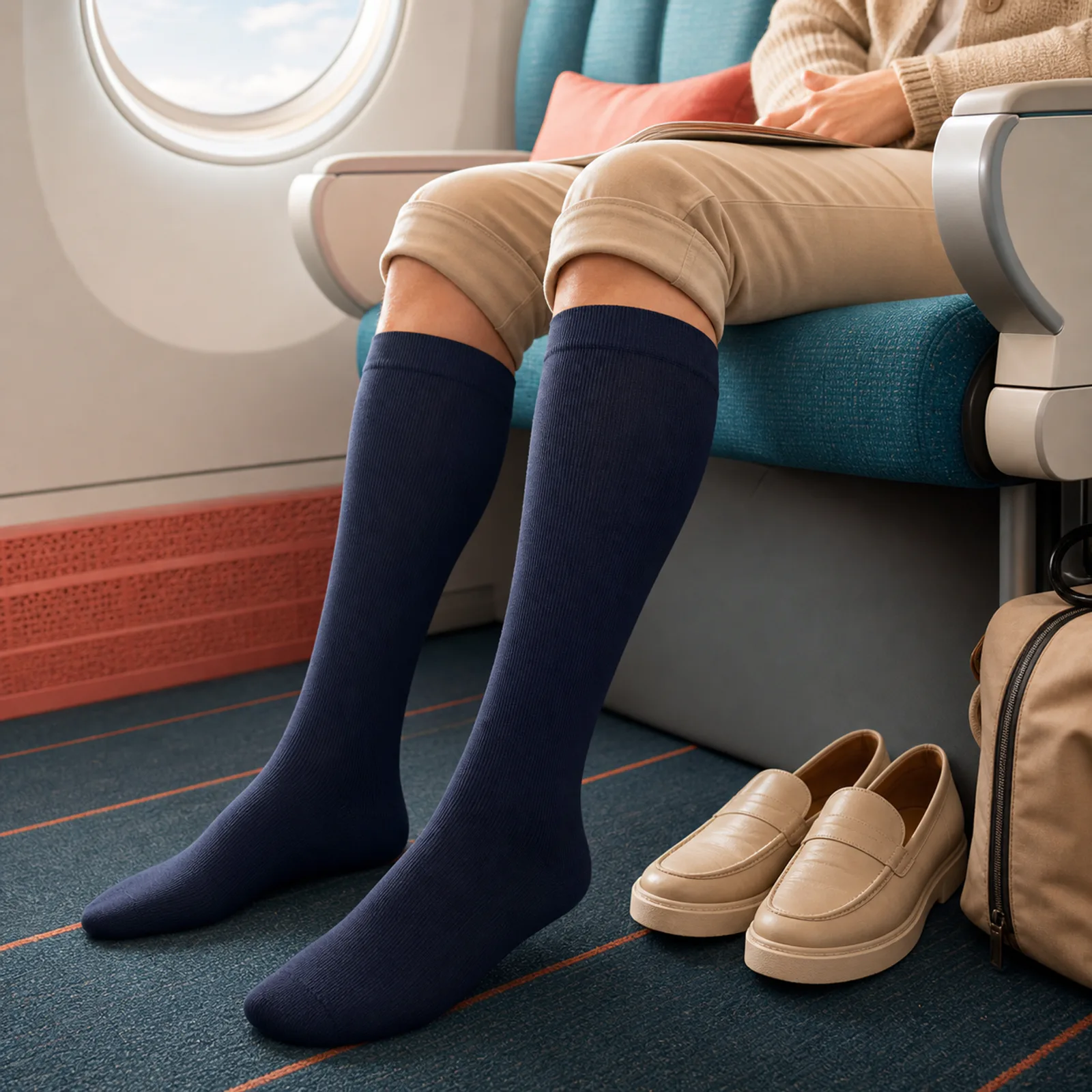
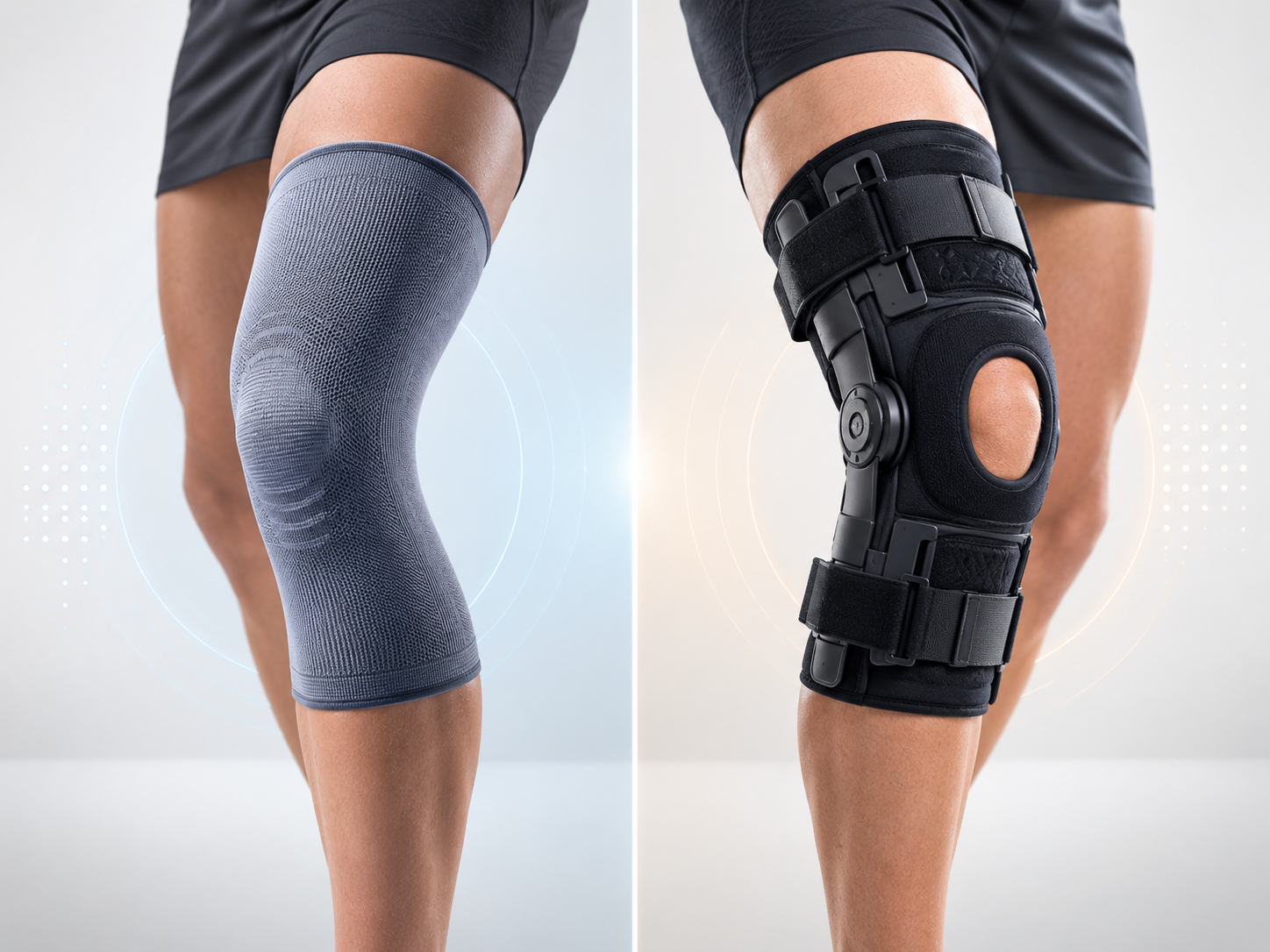
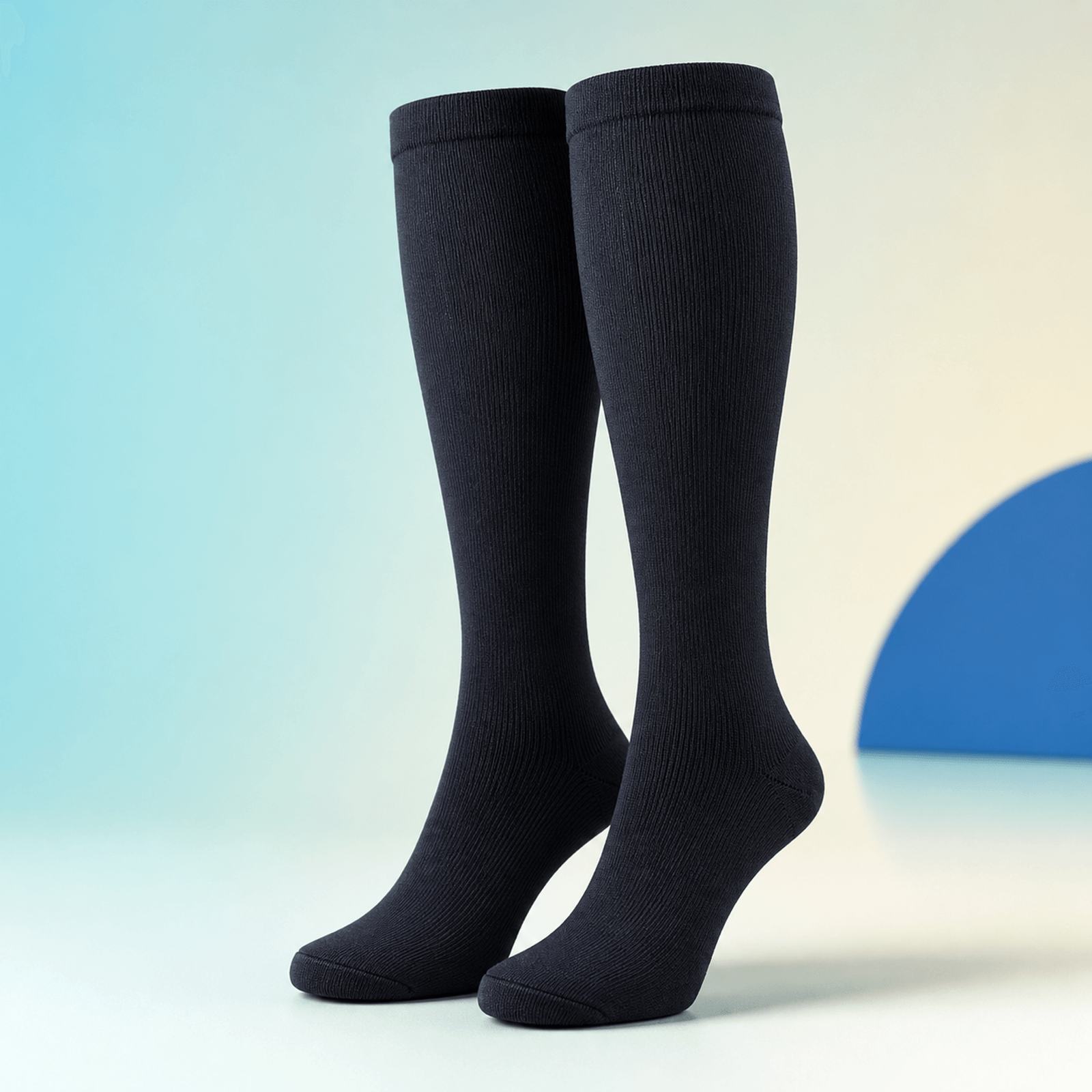
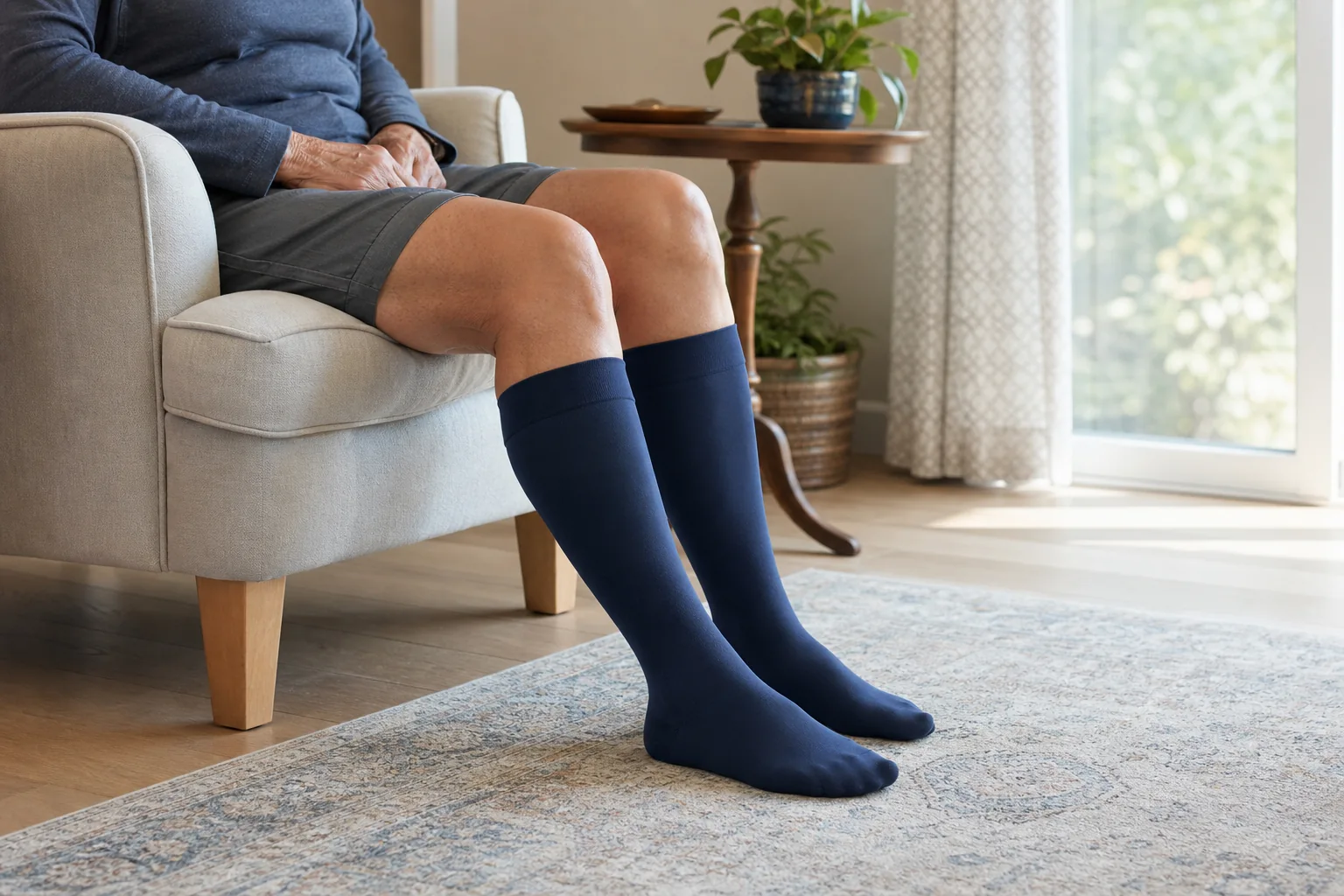
A knee-high compression sock normally starts at the toes or forefoot, passes around the heel and ankle, and covers the calf before ending below the knee. Open-toe versions still include the foot and heel area. A knee sleeve is a shorter tube centered on the joint, usually extending a little onto the lower thigh and upper calf. Seeing those boundaries makes the comparison much clearer.
The phrase knee-high causes understandable confusion. It describes the height of the sock, not a promise that the knee joint receives support. If the top ends below the kneecap, it is not covering the same area as a sleeve. Conversely, a sleeve around the knee does not provide the continuous foot-to-calf coverage of a sock. Buying the wrong category cannot be fixed simply by choosing a tighter size.
| Feature | Knee-high compression sock | Knee sleeve |
|---|---|---|
| Typical coverage | Foot, ankle, and calf, ending below the knee | Knee joint with nearby lower thigh and upper calf |
| Primary distinction | Lower-leg compression; medical styles have specific indications | Local knee compression or a supported feel |
| Pressure information | May specify a graduated pressure range | Often described by size and material rather than a validated pressure gradient |
| Fit measurements | Commonly ankle, calf, foot size, and leg length | Measurements around the knee or specified points above and below it |
| Important limit | Not a knee brace or a treatment for every swollen leg | Not a substitute for prescribed stockings or clot prevention |
What graduated compression socks are designed to do
Medical compression hosiery applies external pressure to the lower leg as part of care for particular circulation or swelling problems. Graduated products are designed with a pressure pattern along the leg, rather than simply being uniformly tight fabric. Their suitability depends on the clinical reason, pressure level, garment length, and fit. A consumer label such as recovery, travel, or support does not establish that those requirements have been met.
The Rotherham NHS guidance describes prescribed hosiery for uses including swelling, varicose veins, and care following a deep vein thrombosis. That is not an instruction to self-treat any new swelling. Similar-looking symptoms can have different causes, and some people need circulation checks before compression is considered. The useful first question is why your leg is swelling, not which sock has the highest pressure number.
There are also different medical garment categories. Anti-embolism stockings used around hospitalization or reduced mobility are not automatically the same prescription as daytime hosiery used for a chronic venous condition. Wearing schedules can differ. Keep the name and instructions for the garment you were actually given, and ask the issuing team before switching to a retail version that appears more comfortable or easier to buy.
What a knee sleeve may offer
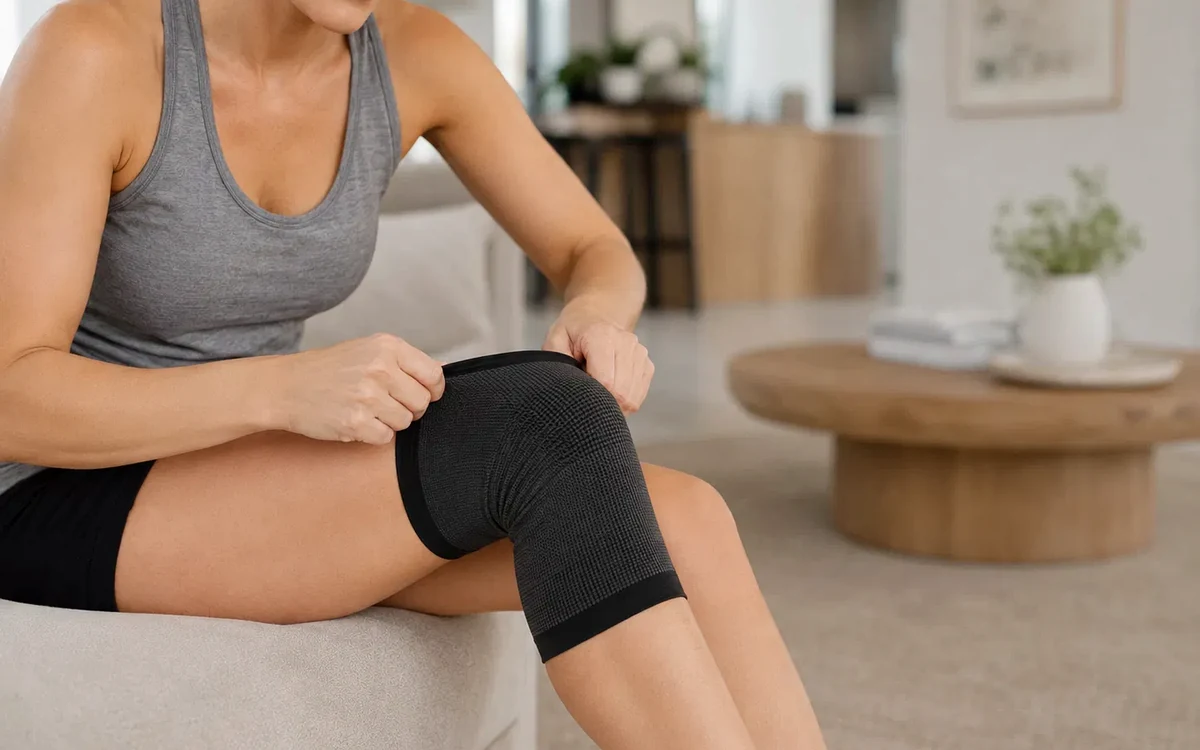
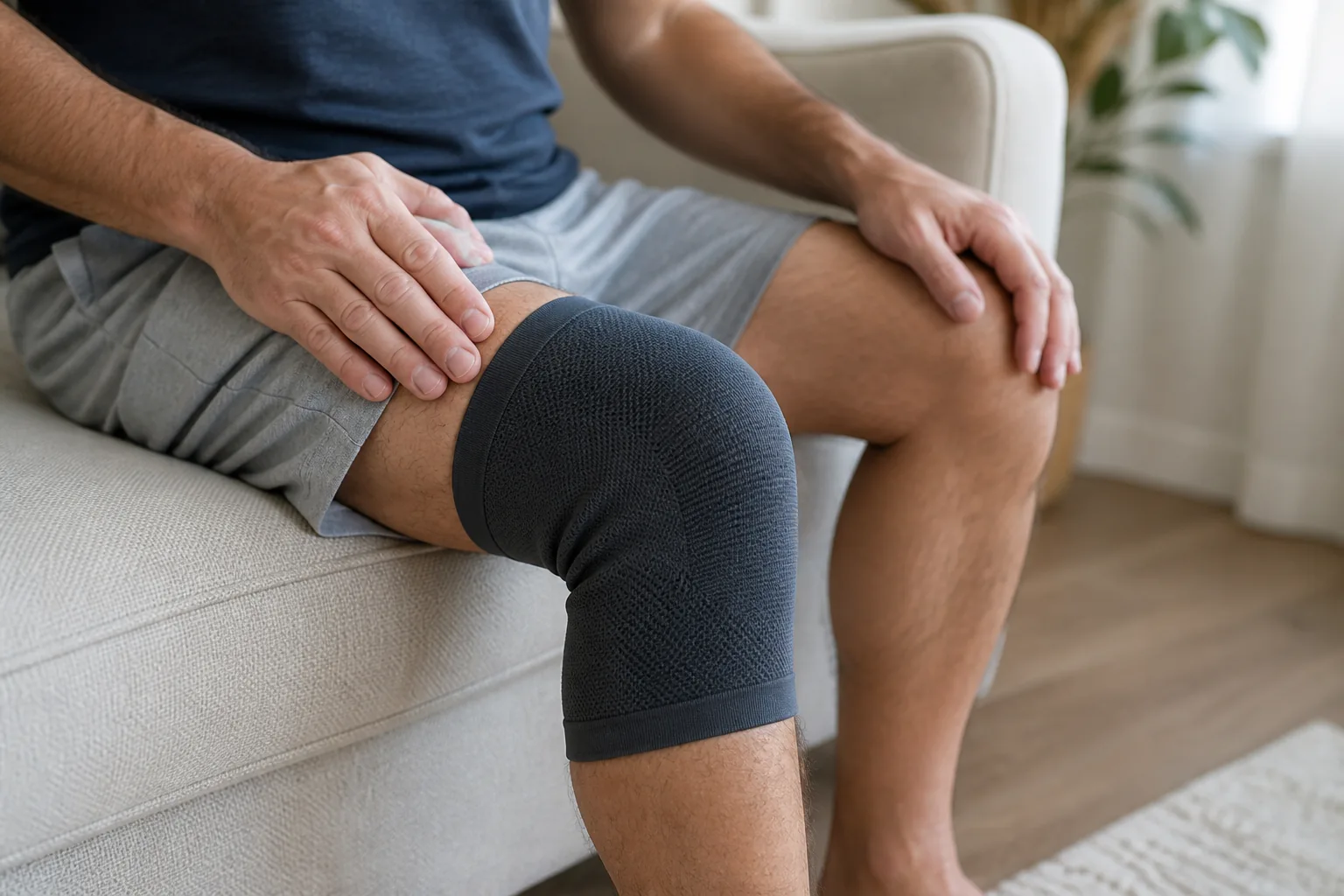
A soft sleeve surrounds the knee with stretchy fabric. Some people like the warmth, skin contact, or supported sensation during ordinary movement. Different materials, seams, and sleeve lengths feel different, and the response is individual. A comfortable sleeve may be a useful accessory within a broader activity plan, but the feeling of support is not proof that a damaged structure has healed or that the joint has become mechanically stable.
Clinical evidence should be described modestly. An older randomized trial found a small immediate functional benefit when an elastic sleeve was added to other knee-osteoarthritis care, but the between-group functional difference was not significant at eight weeks. It did not establish lasting benefit for all sleeves or all knee conditions. The original sleeve trial is more specific than broad claims that compression treats arthritis.
A more recent study of two neoprene sleeve designs reported immediate changes in pain and balance tests in people with knee osteoarthritis. Both groups wore a sleeve, and the study focused on acute effects. It therefore does not show that an ordinary sleeve prevents future falls, replaces exercise, or provides lasting improvement. Immediate comfort and long-term clinical outcomes are different questions.
If you need help controlling instability, postoperative movement, or a diagnosed ligament problem, a soft sleeve may not be the prescribed support. That is a separate decision covered in knee braces versus compression sleeves. Here, the main distinction is simpler: a garment around the joint and a garment around the lower leg have different coverage and jobs.
Match the question to the garment
It can help to finish a simple sentence before shopping: I want this garment for a particular activity or for the condition my clinician has explained. If the sentence is only that your whole leg feels wrong, the next step is to describe and assess the symptoms. A long list of product uses is not a substitute for knowing which problem you are trying to address.
Keep the expected outcome observable. You might want a sleeve that stays comfortable during a familiar walk, or prescribed hosiery that fits correctly throughout its recommended wearing period. Those are things you can check. Promises about repairing joints or improving every aspect of circulation are not useful home fit tests. If the original problem remains unchanged, do not keep escalating tightness or wearing time without reviewing the reason for using the garment.
Describe the problem in everyday terms before comparing products. Is the main issue a tired lower leg after standing, a diagnosed venous condition, a knee that feels uncomfortable on stairs, or a new swollen calf? Those are not variations of one symptom. If two concerns occur together, you may need two explanations rather than one garment promoted for everything.
For example, a sock that feels pleasant on the calf may leave kneecap discomfort unchanged because it does not surround the joint. A sleeve that feels reassuring while walking may do nothing for ankle swelling. Neither response is surprising. It tells you that comfort is local and purpose-specific, not that you need to increase compression until the garment affects a different body region.
| Your main concern | Relevant starting point | Boundary to remember |
|---|---|---|
| Known lower-leg venous or swelling condition | The compression plan recommended by your clinician | Do not change pressure or garment type independently |
| Preference for a local supported knee feel | A correctly sized soft sleeve, if appropriate | Comfort does not establish a diagnosis or treat instability |
| Long-distance travel with clot-risk factors | A personalized travel-risk discussion | A knee sleeve is not clot-prevention hosiery |
| New unexplained one-sided swelling | Prompt clinical assessment | Do not test socks or massage first |
| Postoperative instructions | The exact discharge and rehabilitation plan | Similar-looking garments are not interchangeable |
Read pressure labels without guessing
Compression stockings may list pressure in millimeters of mercury, abbreviated mmHg. That number refers to a pressure specification, not the severity of pain the garment can handle. A higher number is not a stronger painkiller, and it does not make a sock more effective for a knee problem. Product classes and labeling systems also differ, so compare the actual specification and instructions rather than a class name alone.
Many knee sleeves do not provide a graduated medical pressure specification. Their tightness changes with size, fabric, leg shape, and movement. You cannot infer a medical pressure level by how difficult a sleeve is to pull on, and you cannot assume that two layers create a known dose. If a clinical pressure was prescribed, obtain a garment that matches that prescription through an appropriate supplier.
A retail claim such as medical grade should prompt a closer look at the documentation rather than end the decision. Ask what standard, pressure range, sizing procedure, and intended use are described. An online review saying that a garment feels very tight does not verify any of those details. Keep screenshots or packaging information for a pharmacist, orthotist, or clinician if you need help interpreting the product.
Measure socks and sleeves differently
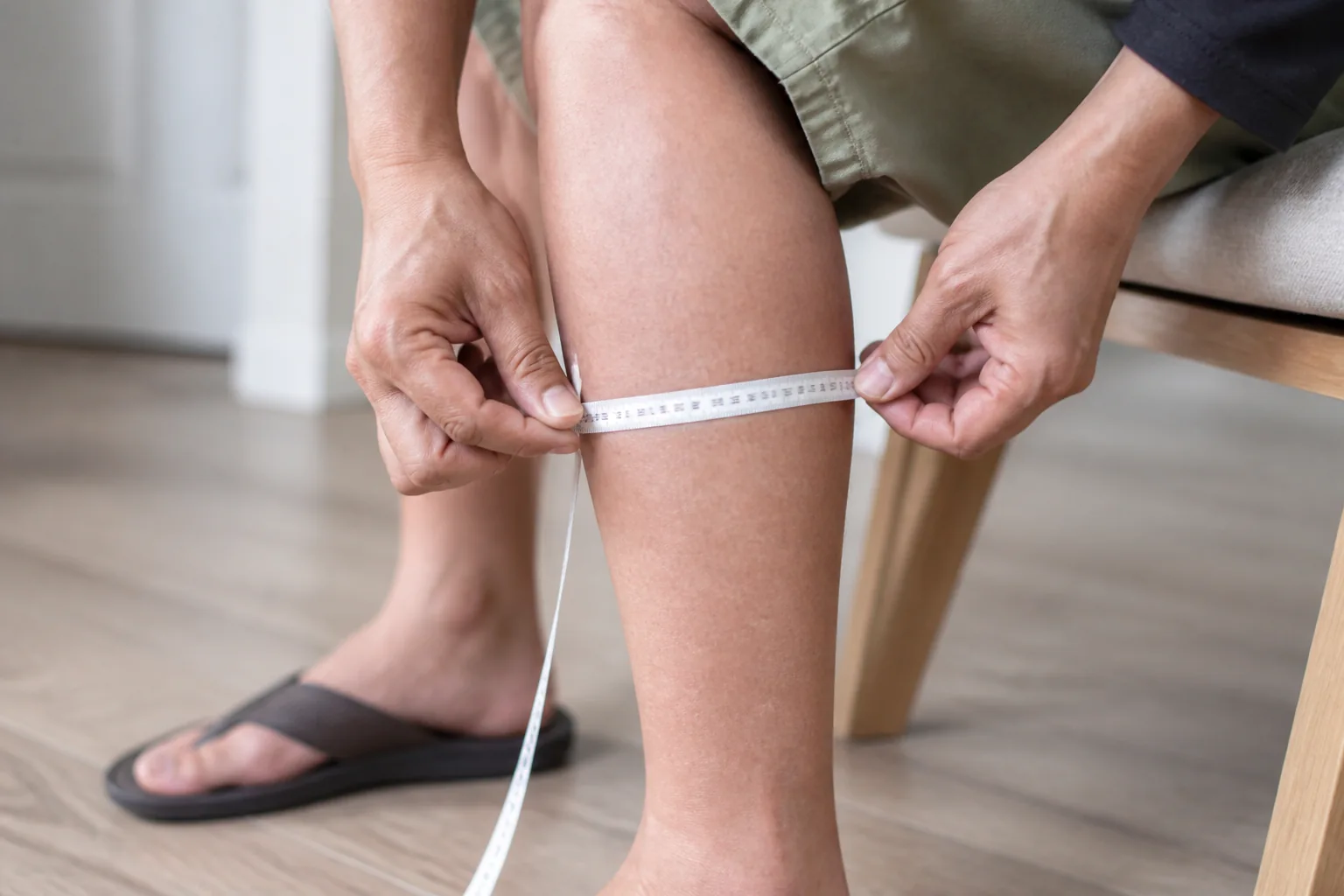
Use the specific manufacturer's chart. For socks, foot size alone may not be enough: ankle and calf circumference and lower-leg length often matter. Measure at the locations the chart specifies, with the tape level and resting against the skin rather than digging in. If your legs differ, measure both. A larger calf does not necessarily mean you should accept excess fabric around the ankle.
For a knee sleeve, the requested point may be directly around the knee or a defined distance above or below it. Do not substitute the calf measurement you used for socks. Keep the leg position consistent with the instructions, since bending can change the circumference. The sleeve sizing guide walks through that separate process.
Men's and women's labels may reflect styling, foot proportions, or the sizes offered. They do not replace measurement or determine the correct compression level. A garment advertised for women can still be wrong for a particular woman's calf length; a men's large can still be too narrow at the ankle. Use the actual fit information and ask about made-to-measure options when standard sizes do not match your proportions.
Check the fit during ordinary movement
A correctly positioned sock should have its heel section aligned with your heel and the fabric distributed smoothly. A sleeve should stay centered according to its instructions without a bulky fold behind the knee. Sit, stand, and take a few comfortable steps when safe. A garment that seems fine while standing still may bunch or roll when you bend the joint.
Do not roll down the top of a long sock or fold a sleeve to shorten it. That concentrates fabric and changes the fit. Repeated slipping may reflect the wrong size, wrong length, worn material, or a shape mismatch. Pulling the garment tighter every few minutes does not solve the underlying problem. Ask the supplier to review it, especially when it was medically prescribed.
Remove the garment for new pain, tingling, numbness, coldness, unusual color change, or skin damage, and seek advice. Persistent marks, rubbing, or blisters also deserve a fit review. People with reduced sensation may not receive a reliable pain warning, which is one reason professional assessment matters. A painful garment is not evidence that the compression is working more effectively.
Can you wear both together?
It is possible to have separate lower-leg and knee needs, but that does not make automatic layering a good plan. The upper edge of a sock and lower edge of a sleeve may overlap, roll against each other, or create an uncomfortable band. The combined pressure is not reliably calculated from the labels. A sleeve that fitted alone may behave differently over another garment.
If either item is prescribed, ask the team responsible for that prescription before combining them. Bring both garments or their specifications so the interaction can be checked. Even if they do not overlap, watch skin, comfort, and movement. Do not use layering to compensate for a sock that is too short, a sleeve that slips, or a compression level that seems insufficient.
Travel and standing days need different questions
For long travel, the important issue is your overall clot risk, not simply whether your knee aches while sitting. CDC guidance distinguishes travelers with additional risk factors from those at low risk and discusses properly fitted graduated stockings for selected situations. It does not recommend a knee sleeve as an alternative. Follow personalized advice if you have a previous clot, recent surgery, or other relevant conditions.
A garment is also not a reason to remain motionless for an entire journey. Plan appropriate movement breaks and follow any medical travel instructions. For the separate problem of bent-knee stiffness during travel, see knee pain after flights. An aching knee and a clot-risk discussion may overlap in time, but they are not the same clinical question.
On standing days, distinguish tiredness from new swelling or a changing symptom pattern. If you already have a clinician-approved compression routine, use it as directed and review problems with fit. If you do not, recurring swelling deserves an explanation before you build a wardrobe around it. Keep track of which leg, what part of the leg, when it starts, and whether it settles.
After surgery, follow the specific plan
Postoperative stocking instructions can be more specific than everyday garment advice. NICE describes trained fitting, remeasurement when swelling changes, skin inspection, and clinical exclusions for anti-embolism hosiery. Those details are part of a clot-prevention plan. Do not stop the prescribed stockings, change their schedule, or replace them with a knee sleeve because a shop description sounds more comfortable.
A pilot study comparing stockings with a particular non-compressive branded leg sleeve after knee replacement is sometimes cited in product discussions. It involved a specific garment and short follow-up, not ordinary elastic knee sleeves. It does not establish equivalent clot prevention or justify changing an individual's postoperative plan. If the prescribed item is uncomfortable, contact the surgical team for an appropriate adjustment.
Wearing time, cleaning, and replacement
Follow the schedule for the actual garment. Daytime prescribed hosiery is often put on in the morning and removed at bedtime, while anti-embolism instructions can differ. A general support sleeve does not automatically belong in bed. Ask whether you should wear it only during a particular activity, and remove it for the skin checks and hygiene recommended in your instructions.
Wash and dry according to the label so heat, detergent, or handling does not damage the elastic. Inspect seams, heel areas, and cuffs for wear. Replacement schedules vary with the product and prescription, and changing leg measurements can require reassessment before the fabric looks worn out. Keep a second appropriate pair if your routine requires daily use and drying time makes that difficult.
When to Get Medical Help
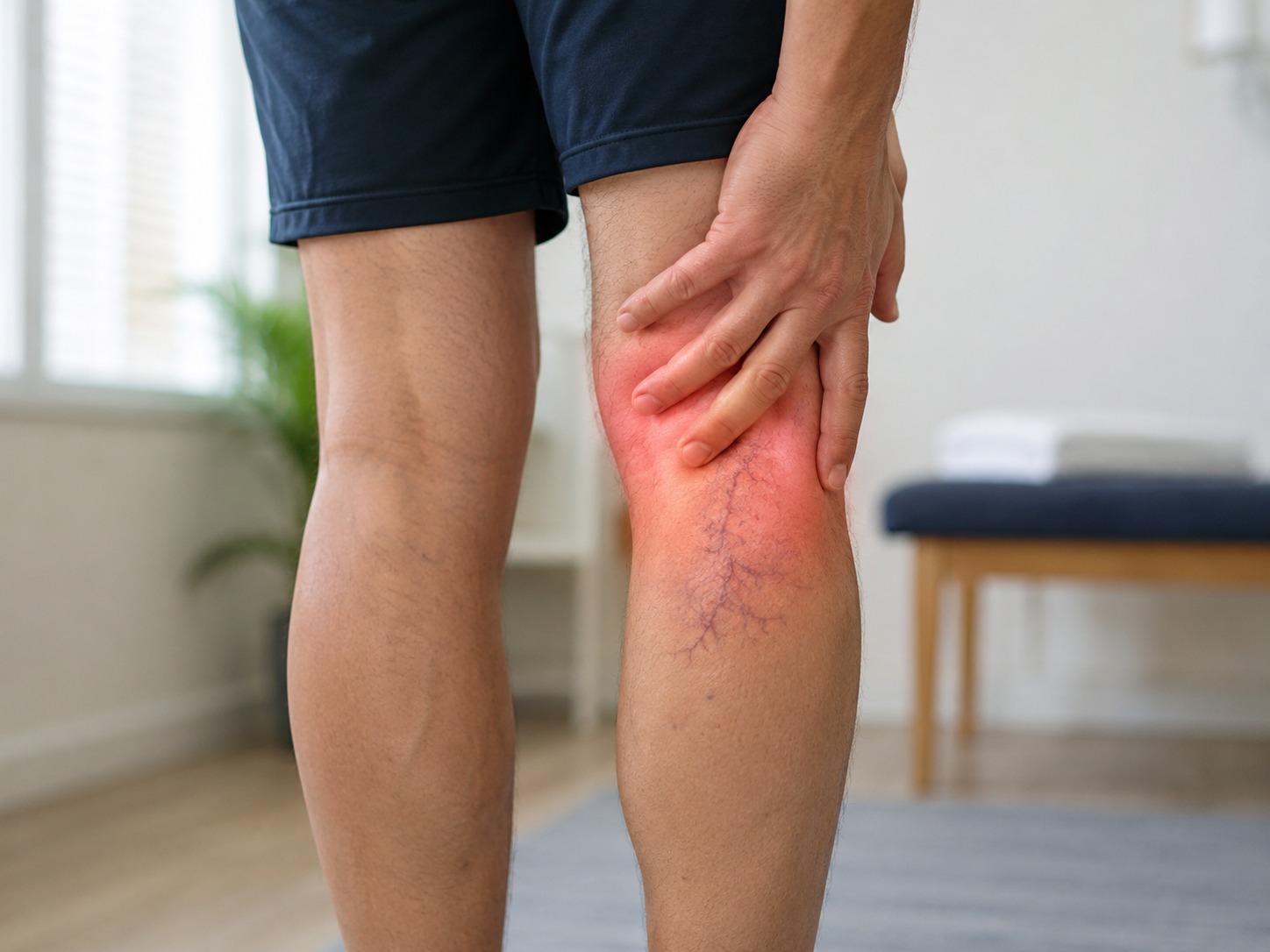
New one-sided calf or leg swelling, warmth, discoloration, or unexplained tenderness needs prompt assessment for possible causes including a clot. Chest pain or sudden breathlessness requires emergency help. Do not massage or compress an unexplained swollen leg while waiting to see whether it improves. Seek advice for garment-related numbness, coldness, skin injury, or persistent pain, particularly with arterial disease or reduced sensation.
The clearest buying decision starts with a clear purpose. Choose the correct coverage, confirm safe compression and fit, and judge comfort without turning it into a treatment claim. If you cannot explain what the garment is meant to do in your situation, ask that question before choosing between socks and a sleeve.
Frequently Asked Questions
Are compression socks and knee sleeves the same?
No. Knee-high socks usually cover the foot, ankle, and calf and stop below the knee. Knee sleeves cover the knee itself, with short extensions above and below it. Their intended purposes and pressure characteristics differ.
Do compression socks support the knee joint?
A below-knee sock does not surround the joint, so it is not a substitute for a knee sleeve or prescribed brace. It may have a role in a separate lower-leg compression plan, but that does not establish treatment for knee-joint pain.
Can a knee sleeve replace compression stockings after surgery?
No. Follow the exact postoperative plan. Stocking type, fit, wearing schedule, and any clot-prevention medication are clinical decisions. A retail sleeve or a study of a different garment does not authorize substitution.
Can I wear compression socks and a knee sleeve together?
Do not automatically layer them, especially if the garments overlap or either is prescribed. Added pressure, rolling edges, and changes in fit may create problems. Ask the clinician or supplier responsible for your compression plan to check the combination.
Which is better for ankle swelling and knee pain?
Those symptoms may require separate assessment rather than one garment for both. Compression hosiery can be appropriate for some diagnosed causes of lower-leg swelling, while a sleeve has a different local role. New unexplained one-sided swelling needs prompt medical assessment.
Should compression socks go over the knee?
A knee-high pair is designed to end below the knee without bunching into the crease. Thigh-high and other medical styles exist, but they are different products selected for particular needs. Do not stretch a shorter sock over the joint or fold its top down to change its length.
Can I sleep in compression socks or a knee sleeve?
Follow the instructions for the specific garment and your clinical plan. Daytime compression hosiery is often removed at bedtime, while prescribed anti-embolism stockings may have a different schedule. A general daytime sleeve should not automatically become overnight wear.
Are men's and women's compression socks medically different?
The labels may describe sizing, shape, or styling, but they do not determine the right pressure or fit for you. Use the product's measurement chart and clinical instructions rather than assuming a gender label establishes suitability.
What are signs that compression is too tight?
Pain, numbness, tingling, coldness, color change, blisters, or persistent skin marks are reasons to remove the garment and seek advice. Do not solve these symptoms by tolerating them longer or choosing an even stronger compression level.