Search results often place a thin compression sleeve, a patellar strap, and a hinged brace in the same list. They are not interchangeable. A runner who wants a little warmth on an easy road run has a different problem from someone whose knee buckles after a twist. Start by naming the job. If you cannot describe what you want the support to change, it is difficult to judge whether it has helped.
This guide focuses on soft sleeves that allow normal running motion. If your main question is whether you need more structure, compare a knee brace with a compression sleeve. If the pain itself is not yet clear, map its location and timing with the runner's knee pain location guide before shopping for support.
What Does a Knee Sleeve Do While You Run?
A soft sleeve surrounds the knee with elastic fabric or neoprene. It may retain warmth, apply light circumferential pressure, and increase sensory feedback from the skin. Those changes can make the joint feel more noticeable or supported. A subjective benefit is still useful when it helps someone move comfortably, but it should not be confused with a repaired tendon, stronger cartilage, or a mechanically stable ligament.
Broader compression-garment research helps set realistic expectations. A 2025 systematic review and meta-analysis included randomized trials across several garment types and found no significant improvement in race time or time to exhaustion. Soft tissue vibration was reduced, but the certainty of evidence was low to very low. A separate 2025 review of compression socks likewise found no clear advantage for running performance, physiology, perceived exertion, or soreness. These studies do not test every knee sleeve, yet they make a performance guarantee difficult to defend.
Patellofemoral research is also mixed. A Cochrane review found very low-quality evidence and no clinically important short-term advantage when knee orthoses were added to an exercise program. An older randomized study found that a sleeve or patellar brace did not speed improvement beyond home strengthening. A more structured realignment brace has shown some short-term benefit when combined with exercise, but that device applies a specific directional force and should not be treated as evidence for every elastic sleeve.
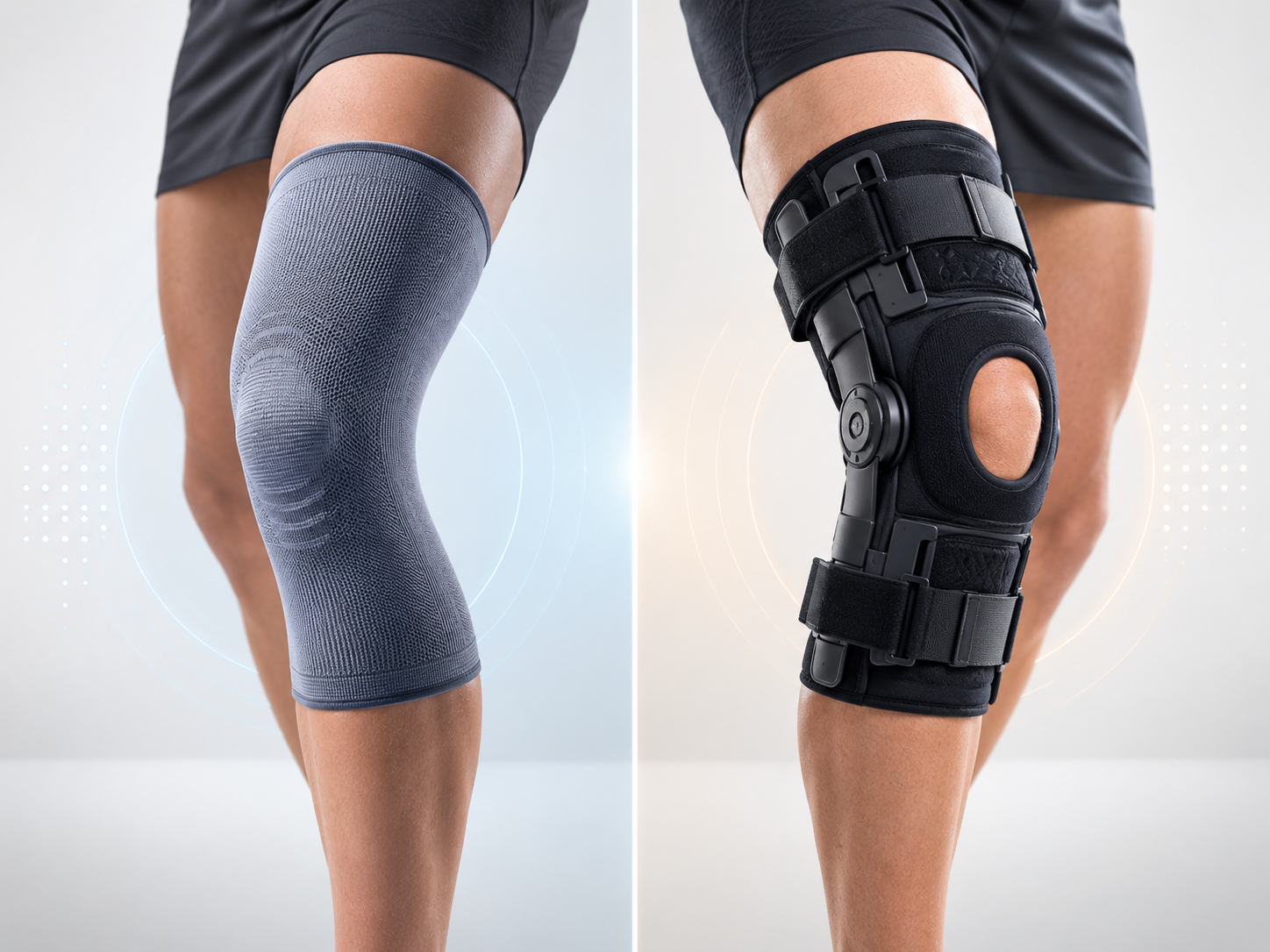
Knee Sleeve vs Brace vs Patellar Strap
| Support type | What it is designed to provide | Possible running use | Important limit |
|---|---|---|---|
| Soft compression sleeve | Warmth, light pressure, and tactile feedback | A comfort trial for a stable knee during familiar mileage | Does not provide ligament-level stability |
| Patellar strap | Focused pressure below the kneecap | Sometimes tested for a clinician-identified tendon pattern | Not a general answer for all front knee pain |
| Patellar brace | Kneecap guidance through a buttress, ring, or straps | Selected patellofemoral cases after assessment | Fit and direction should match the person and task |
| Hinged brace | Greater side-to-side restraint or protected motion | Clinician-directed return after some injuries or surgery | Bulky and not a self-selected substitute for diagnosis or rehabilitation |
A seven-millimeter lifting sleeve is also not automatically a better running sleeve. Thick neoprene can feel useful under a heavy squat because the task is brief and controlled. During a long run it may trap more heat, bunch at deeper knee angles, or change how freely the leg swings. Running fit usually favors enough structure to stay in place without turning normal knee motion into work.
When a Running Sleeve May Be Worth Testing
A trial makes the most sense when the knee is stable, symptoms are mild and familiar, and the purpose is specific. You might want warmth during a cold easy run, a light supported feeling after returning to familiar mileage, or a layer that reduces direct rubbing from another piece of gear. The sleeve should improve comfort without being necessary to override sharp pain or complete a session that otherwise feels unsafe.
Front knee discomfort during running is often described as runner's knee, but that label covers more than one pattern. Pain around or behind the patella that is also provoked by stairs, squats, or prolonged sitting may fit patellofemoral pain. Read the broader guide to pain behind the kneecap rather than assuming compression corrects tracking. A sleeve can be one optional aid while strength and running load are addressed.
Mild puffiness after a known workload increase is another reason people reach for compression. A sleeve may change how swelling feels, but it does not explain why fluid has accumulated. Recurrent or visible knee swelling after running or exercise deserves a separate look, especially when motion is reduced or the pattern is becoming easier to trigger.
When a Sleeve Is the Wrong Tool
Do not use a soft sleeve to test whether a newly injured knee is stable. A pop, rapid swelling, inability to continue, repeated giving way, or a physically locked knee changes the decision. The absence of pain inside a sleeve does not prove that a ligament, meniscus, bone, or tendon is ready for impact. A structured brace, if needed, should follow an examination and a clear purpose.
Compression also deserves caution when sensation or circulation is reduced, the skin is damaged, or unexplained calf swelling is present. Ask a clinician before use after surgery, with a known vascular or nerve condition, or when another medical device already applies pressure. A general online size chart cannot account for those risks.
Finally, a sleeve should not be used to preserve a training plan that is already producing a worsening trend. If the same route hurts earlier each time, next-morning symptoms keep rising, or your stride changes to protect the knee, reduce the run demand. The complete running knee pain guide covers training load, common locations, and a more useful return process.
How to Choose the Right Fit and Compression

There is no universal measuring location. One company may ask for knee circumference, another may specify a point above the kneecap, and another may use both thigh and calf measurements. Measure the exact location shown while the leg is in the stated position. If you fall between sizes, use the brand's guidance and return policy rather than automatically sizing down for more compression. The complete knee sleeve sizing guide explains the process in detail.
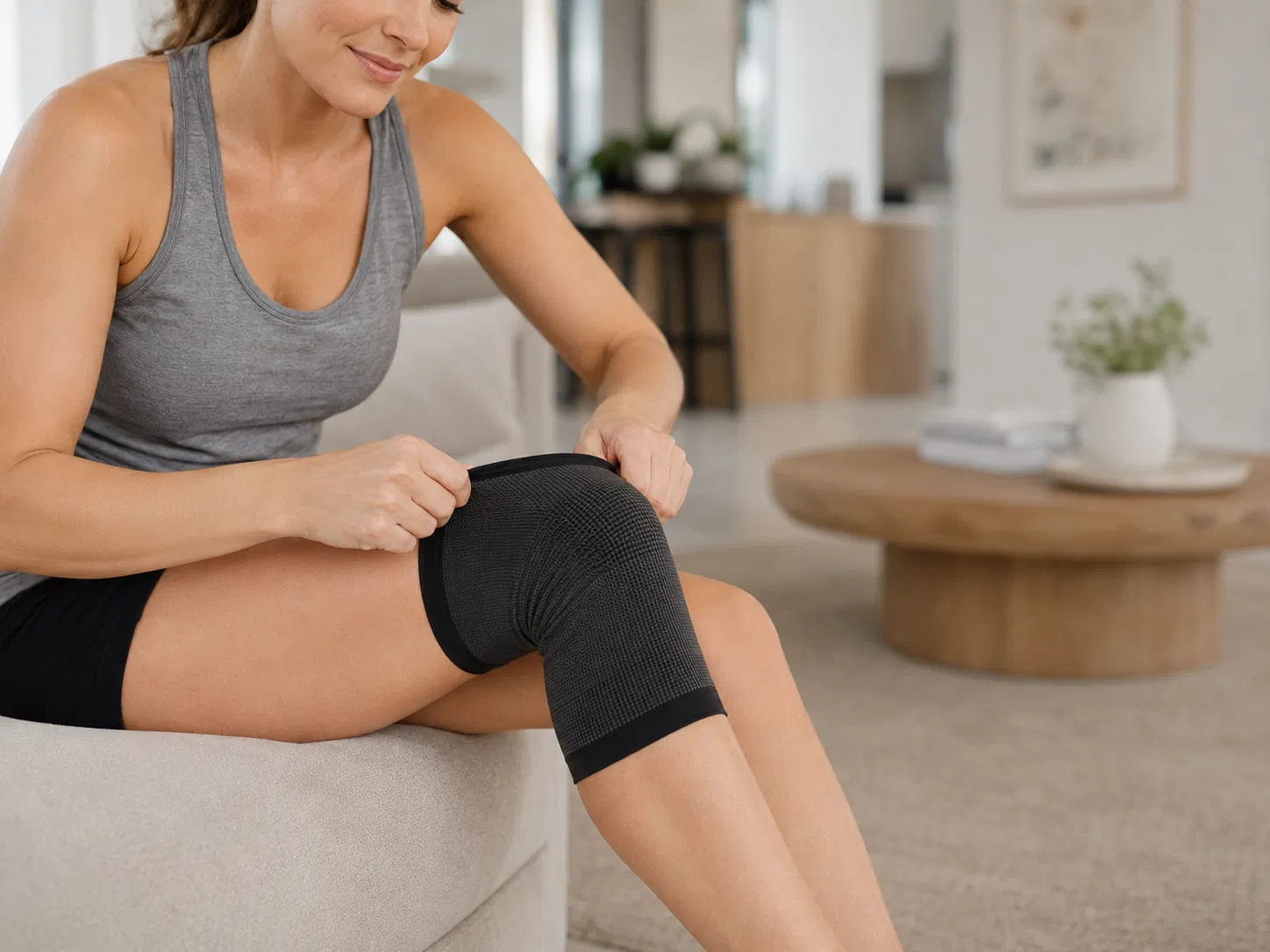
Pull the sleeve on gradually and smooth the fabric rather than yanking the top edge. Center any shaped panel or opening as directed. Bend and straighten the knee several times, walk, perform a shallow squat, and jog in place. The sleeve should remain centered without cutting into the back-of-knee crease or forming a tight rolled band at the thigh or calf.
A useful running fabric balances breathability, stretch, seam placement, and enough grip to resist movement. Silicone grippers can help some designs stay up but may irritate sensitive skin. Neoprene retains more warmth and moisture than many knitted blends. Try the actual material against bare skin because a technically breathable sleeve can still rub at a seam on your body.
How Tight Should a Knee Sleeve Be?
Snug means that the sleeve stays in contact with the skin and does not slide with every stride. It does not mean the strongest pressure you can tolerate. A fixed two-finger rule is not a validated standard across every knit, thickness, and leg shape. Functional signs are more useful: full knee bend remains comfortable, the edges lie flat, your stride feels normal, and the foot maintains its usual warmth, color, and sensation.
Remove the sleeve for numbness, tingling, burning, a cold or discolored foot, swelling below an edge, increasing pain, or deep marks that remain painful. Skin redness that fades quickly can occur with close clothing, but persistent redness, a blister, or broken skin is not a successful fit. Wash and dry the sleeve as directed because sweat, body oils, and stretched elastic change both grip and skin tolerance.
A First-Run Test That Gives Useful Information

- Record the baseline. Note the pain location, confidence, swelling, and how walking or stairs feel before putting the sleeve on.
- Keep the route familiar. Choose a level surface and an easy pace. Do not combine the test with new shoes, speed work, or a mileage increase.
- Start short. Ten to twenty easy minutes can reveal slipping, rubbing, heat, and movement restriction without committing to a long route.
- Check during the run. Stop if pain escalates, your stride changes, the sleeve rolls into a band, or sensation and color change below it.
- Inspect the skin afterward. Look at the seams and edges, not only the center of the knee.
- Recheck the next morning. Compare stiffness, swelling, stairs, and ordinary walking with your usual response.
If the first test goes well, increase only one demand at a time. Extend duration before adding hills or speed. Downhill running has its own braking and exposure demands, so use the downhill running knee pain guide rather than assuming a sleeve cancels the extra load. Test the final race setup in training, including shorts, socks, anti-chafe strategy, and weather.
Rolling, Slipping, Chafing, and Heat
Rolling usually points to a size or shape mismatch, a worn garment, poor positioning, or an edge that sits where the leg changes circumference. Thick thighs and a narrower calf can make one cylindrical design difficult to fit. A different cut may work better than a smaller size. Repeatedly pulling up a sleeve during a run is a sign to stop the test, not an invitation to tape the edge to the skin.
Slipping can also come from lotion, fabric worn over leggings, heavy sweat, or stretched elastic. Follow the manufacturer's skin and clothing instructions. If wearing it over a thin layer prevents chafing but makes it move, the design may not suit that combination. Never add an extra tight wrap around the top, because it creates a concentrated pressure band.
For heat and chafing, inspect the back of the knee and both edges after every early test. Wash the sleeve between sweaty runs and allow it to dry fully. Rotate equipment if daily use prevents proper cleaning. A sleeve that is comfortable in cool weather may not be suitable for a humid long run, and a race-day temperature change can matter as much as the distance.
What Actually Addresses Recurring Running Knee Pain?
Recurring symptoms usually need a plan that extends beyond equipment. Compare weekly mileage, long-run duration, hills, speed sessions, strength work, sleep, and recovery with the weeks before the problem began. Reduce the most likely spike rather than stopping every activity indefinitely. A stable bike or pool session may maintain fitness while running volume is rebuilt, depending on the symptom pattern.
Strength work can improve capacity when it is matched to the problem and progressed gradually. The hip, quadriceps, calf, and trunk all contribute to running tasks, but no single weak muscle explains every painful knee. Use a broad knee strengthening plan or individual clinical guidance instead of collecting random corrective exercises.
Shoes matter mainly through fit, comfort, and how they interact with the runner. Maximum cushioning is not automatically best, and a sleeve cannot compensate for a shoe that is too small or unstable on the chosen surface. The guide to running shoes for knee pain offers a practical comparison without promising one universal model.
When to Get Medical Help
Arrange an assessment when pain keeps worsening, repeatedly changes your stride, or returns with swelling despite a sensible reduction in running load. Seek prompt medical guidance after a clear injury if the knee rapidly swells, looks deformed, locks, repeatedly gives way, or cannot bear weight. A hot red swollen knee with fever, new calf swelling with chest pain or breathing difficulty, or a cold discolored foot needs urgent care rather than a tighter sleeve.
The Bottom Line
A knee sleeve is an optional comfort tool, not required running equipment. It may add warmth, light compression, and useful sensory feedback for a runner with a stable knee. Evidence does not justify claims that it reliably improves race performance, prevents runner's knee, or provides structural stability after injury. Measure with the specific brand chart, test it first on a short easy run, and judge the full response through the next morning. Keep it only if it stays comfortable, leaves movement unchanged, and supports a broader plan rather than replacing one.
Frequently Asked Questions
Are knee sleeves good for running?
A light, well-fitted sleeve can be a reasonable comfort aid for a runner with a stable knee who likes warmth, compression, or tactile feedback. It is not necessary for every runner, and research does not support promising faster race times or reliable injury prevention. Judge it by comfort, normal movement, skin response, and how the knee feels later that day and the next morning.
Can a knee sleeve prevent runner's knee?
There is not good evidence that a soft sleeve prevents patellofemoral pain, which is commonly called runner's knee. Training load, strength, recovery, terrain, and individual symptoms still matter. A sleeve may make a familiar task feel better for some people, but temporary comfort does not prove that the cause has been corrected or that a larger training increase is safe.
Should I wear a knee sleeve if my knee hurts while running?
Do not use a sleeve as the only response to new or increasing pain. Reduce the provoking load and consider the location, timing, swelling, and next-day response. A short sleeve trial may be reasonable for mild symptoms in a stable knee, but sharp pain, rapid swelling, locking, repeated giving way, or inability to bear weight needs assessment rather than tighter compression.
How tight should a running knee sleeve be?
It should stay in place through normal knee bending without pinching, bunching, changing your stride, or creating deep painful marks. There is no universal finger test because sleeve fabrics and designs differ. Follow the brand's measuring location and size chart. Remove it if you develop numbness, tingling, a cold or discolored foot, swelling below the edge, or increasing pain.
Can I wear a knee sleeve for a marathon?
Only use equipment that has already been comfortable in training over progressively longer runs. Sweat, heat, fabric movement, and swelling can change the fit over distance. A race is not the place to test a new sleeve or smaller size. If symptoms require compression just to finish training, reassess the problem and race plan before relying on the sleeve.
Should I wear a knee sleeve during or after running?
The answer depends on the purpose and product. Some runners test a sleeve during activity for warmth or a supported feel. Evidence does not establish one universal post-run duration. Follow the product instructions and any clinician guidance, inspect the skin, and do not sleep in a sleeve unless a qualified clinician has specifically advised that use.
Do knee sleeves weaken the knees?
A soft sleeve does not switch off the muscles around the knee. The more practical concern is relying on temporary comfort while skipping strength work, load management, or assessment of recurring symptoms. Keep the sleeve in a supporting role and continue a progressive plan that builds the capacity needed for your running.
Why does my knee sleeve roll down while running?
Rolling can result from the wrong size, a shape mismatch between the thigh and calf, worn elastic, sweat, fabric bunching, or positioning the edge over a changing leg contour. Recheck the brand's measuring point and application instructions. Do not solve rolling by automatically choosing the tightest size, because excessive compression can create a different problem.